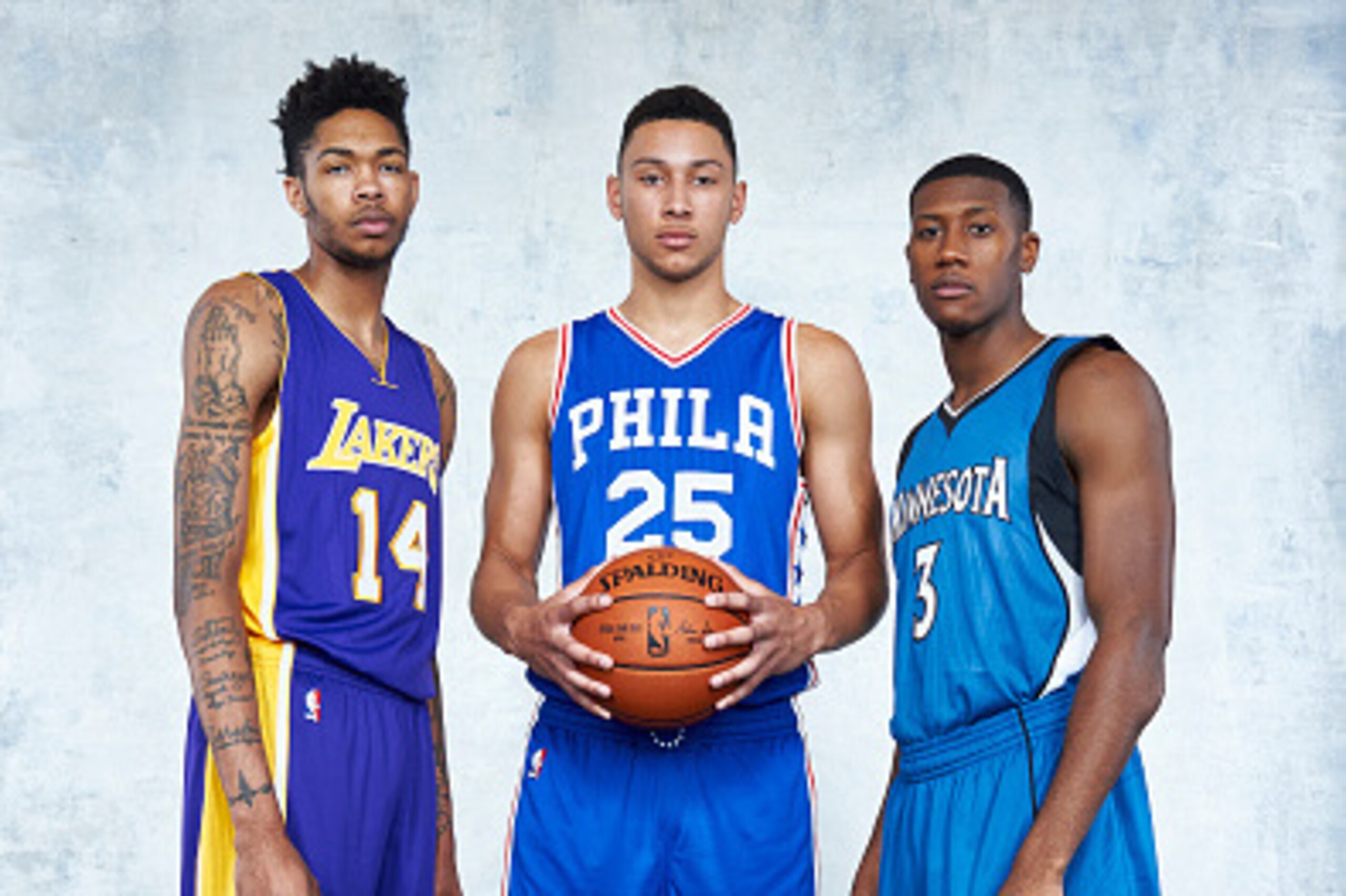

Early Predictions for the 2016-17 NBA All-Rookie Teams
Good news: After checking and rechecking the rulebook, it turns out celebrating the contributions of NBA rookies before they make their debuts is allowed.
Sure, forecasting the league's All-Rookie squads this far in advance can be a bit dicey. College, overseas and summer-league performances are the only samples we have, and they are not precise gauges for the future.
But we do have enough material to make better-than-educated guesses.
We know the league's top-selected newbies typically shine brightest. We have a feel for which inbound prospects will fill the biggest voids and assume the most prominent roles. We understand which incoming skill sets should mesh best with their new team. We also have no qualms about singling out sleepers before they wake up.
Above all, we have the unabashed gall necessary to use this knowledge as a basis for our rookie hierarchy.
2nd Team: Jaylen Brown, Boston Celtics
1 of 10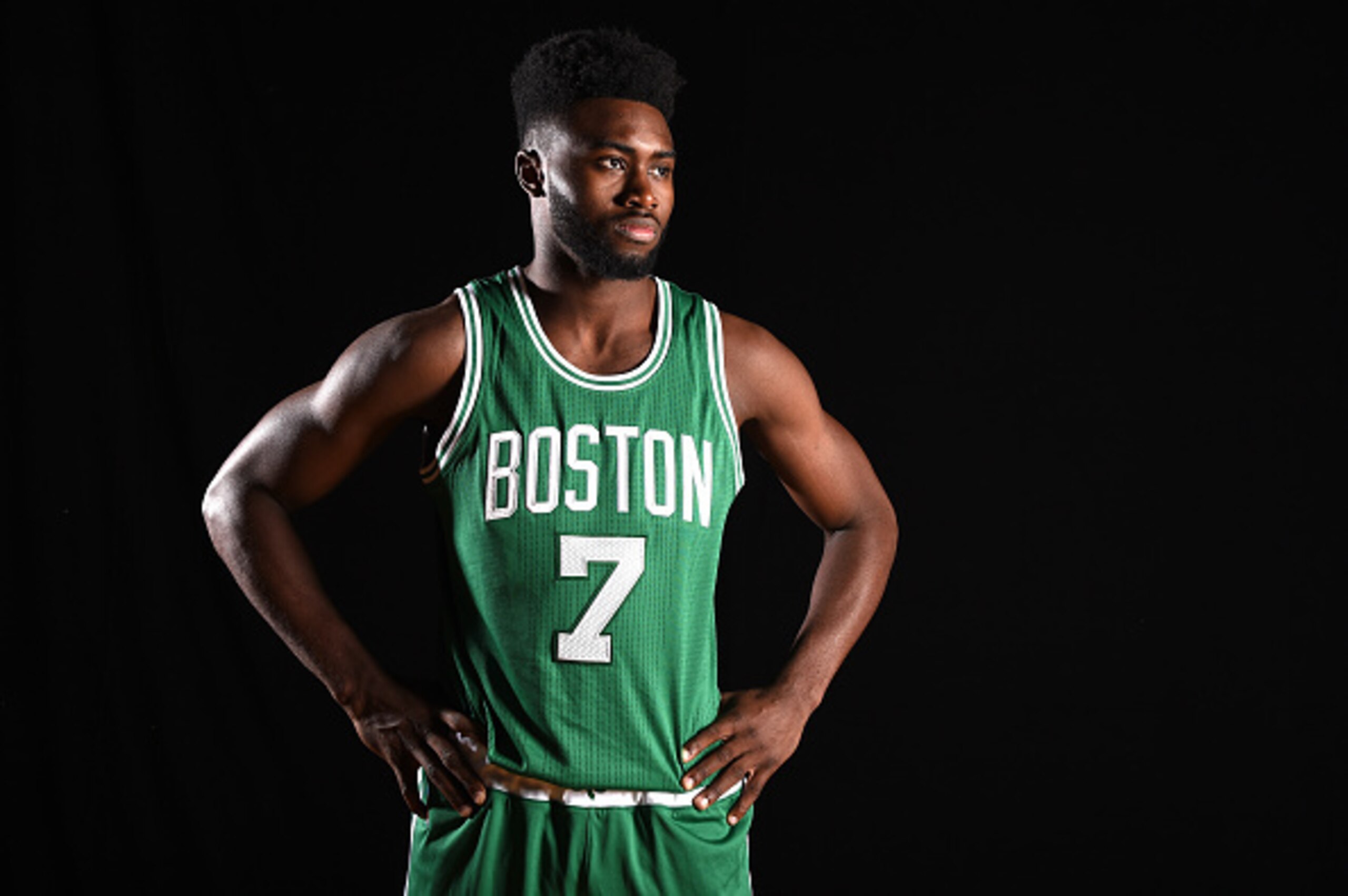
Concern over Jaylen Brown's jump shot exists in abundance, and rightfully so. He failed to crack 30 percent from distance, and according to Hoop-Math.com, he barely put down 30 percent of his two-point jumpers during his lone season at California.
This absence of range will at times render him an offensive liability. The Boston Celtics need him to slash toward the basket off screens and must hope he develops as a distributor or stash him in the corner to mask his limitations—which is fine. They did much of the same with Evan Turner, now of the Portland Trail Blazers, and it worked.
Brown will fill that role, aside from the pseudo-point guard responsibilities. He is a strong finisher around the rim and has the controlled athleticism to contribute in a fast-paced system. And at 6'7", with a near-seven-foot wingspan, he is a coach's defensive dream.
Celtics head coach Brad Stevens assigned Turner to guard all non-centers, and Brown is similarly versatile. He may not switch onto point guards from the jump, as Boston has Avery Bradley and Marcus Smart to pick up that slack. But Brown matches up better with forwards than either of those two, and his playing time beside Jae Crowder should reflect as much.
The Celtics' experience with incorporating—and sometimes reinventing—below-average shooters (Crowder, Turner, Jared Sullinger) will take care of the rest. Brown should have no trouble distinguishing himself from his peers or validating Boston's decision to take him third overall.
2nd Team: Marquese Chriss, Phoenix Suns
2 of 10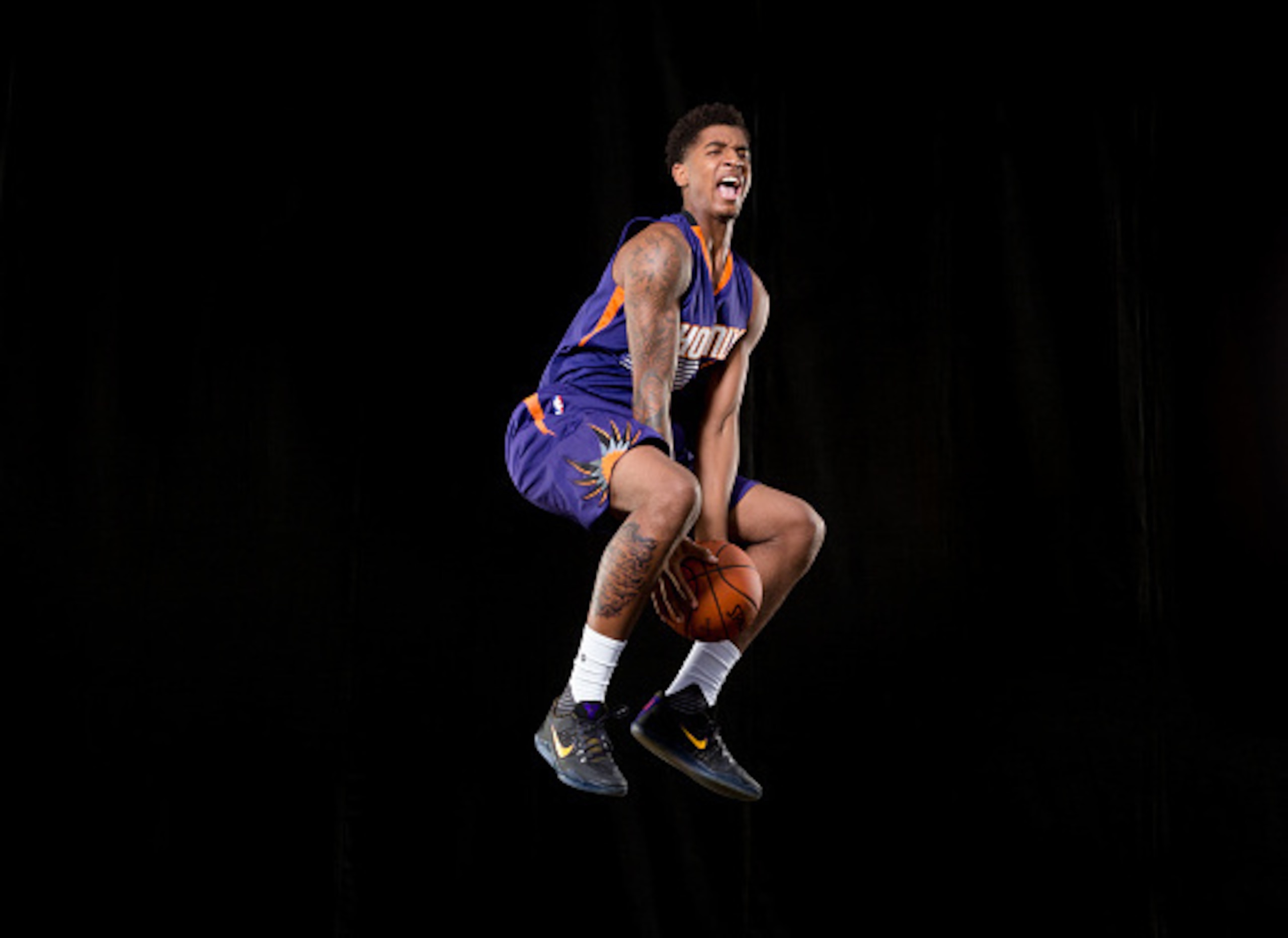
Marquese Chriss' path to an All-Rookie bid is rife with hurdles. He will compete for playing time with rookie teammate Dragan Bender, and whatever minutes Jared Dudley and T.J. Warren see at the 4 won't do him any favors. Consistent ticks as a small-ball 5 are out of the question if both Tyson Chandler and Alex Len are healthy.
Yet this pick is justifiable due to Chriss' vast upside. As Jonathan Tjarks wrote for The Ringer:
"The big selling point is his athleticism. At 6-foot-10, 233 pounds, with a 7-foot wingspan, Chriss is a big man who moves like a guard. He gets off the ground quickly and he plays way above the rim. He’s like a video game character whose turbo button is jammed. He just moved faster than anyone he faced this season; there aren’t many guys who can win a running-and-jumping contest against him.
"
Phoenix has only one other above-average pick-and-roll rim-runner—Chandler, and he will be 34 when the 2016-17 season tips off. Chriss instantly becomes its best option as a slasher.
He shot 68.5 percent at the rim as a freshman at Washington, per Hoop-Math.com, and his three-point rate (35.0 percent) was good enough to ensure defenses couldn't pack the paint any time he stepped behind the free-throw line. He has trouble creating his own shot, but the Suns need a big who can explode off screens if Eric Bledsoe, Devin Booker and Brandon Knight are going to split ball-handling duties.
Chriss' hack-happy defense is a bigger issue. He averaged 6.5 fouls per 40 minutes last season—1.5 more than the NCAA allows during a 40-minute game. That problem won't solve itself: Chriss doesn't have the girth to play all NBA 4s and 5s straight up, and the Suns can not afford to chain someone who profiles as their best shot-blocker to a conservative approach.
Many of these defensive warts will prove immaterial in the end. Few frontcourt rookies are defensive masterminds out of the gate, and Phoenix cannot get much worse on the less glamorous end. Chriss' fit on the offensive side is more important for now.
2nd Team: Caris LeVert, Brooklyn Nets
3 of 10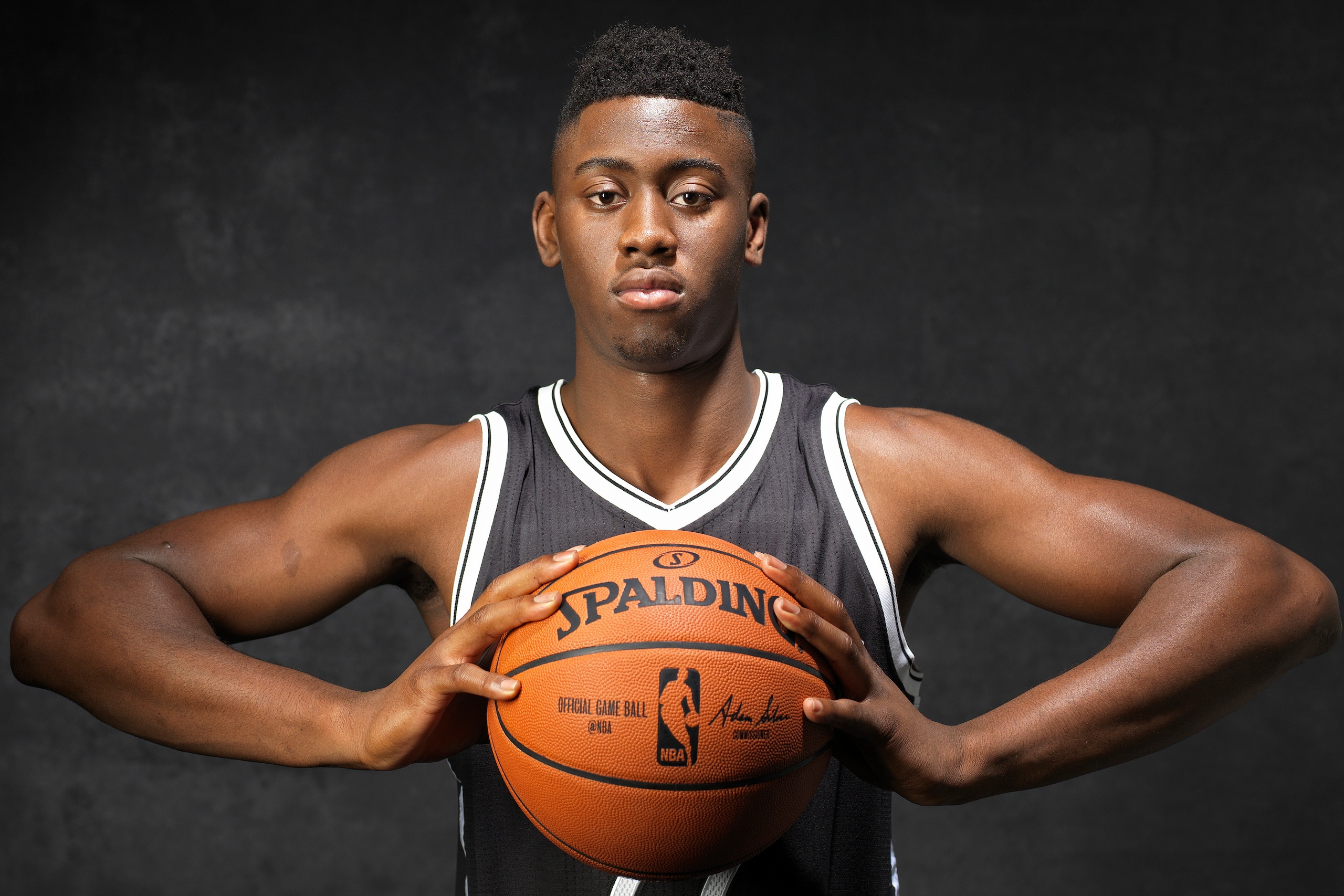
Let's step out on another limb, shall we?
Caris LeVert appeared in just 33 games during his final two years at Michigan. Left foot and leg injuries torpedoed what should have been a top-seven draft stock, allowing the Brooklyn Nets to scoop him up, via the Indiana Pacers, at No. 20.
Most skepticism surrounding his durability is fair. It is not, however, enough to lower his ceiling.
LeVert shot over 40 percent from long range during each of his final three seasons with Michigan, and he dabbles in off-the-bounce playmaking. His wingspan (6'10") is similar to Klay Thompson's predraft measurement (6'9"), which is fitting, because he can function in a similar defensive capacity.
All he needs, aside from good health, is playing time. And the Nets have minutes to spare. They are committed to a full-scale rebuild after dealing Thaddeus Young, and LeVert can log minutes at shooting guard, small forward and point guard if Brooklyn's in a pinch.
Getting touches should be easy. LeVert is at his best as a scorer, and the Nets offense isn't bogged down by an excess of chuckers. As the team's second-best playmaker, behind Jeremy Lin, he'll have the ball often, headlining enough possessions to put up numbers that are vital to All-Rookie recognition.


2nd Team: Taurean Prince, Atlanta Hawks
4 of 10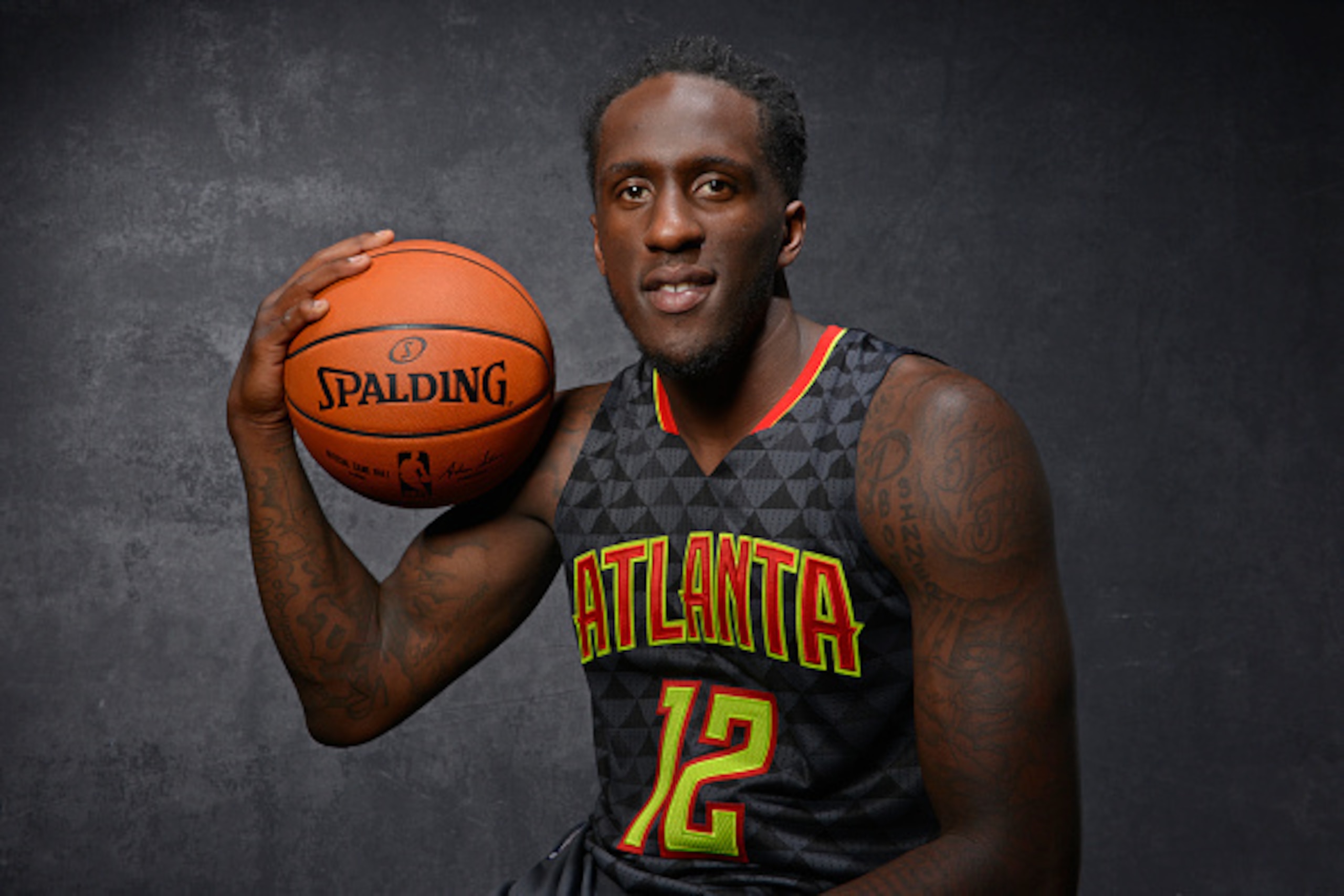
Holy three-and-D, Batman.
Taurean Prince has a chance to help the Atlanta Hawks from the onset. The four years he spent at Baylor developing into the consummate off-ball shooter and perimeter defender make him a perfect systematic fit and shorten the usual learning curve for a beginner.
Even if his jumper wilts, as it did during summer-league play, he is a defensive difference-maker who doesn't cramp ball movement. He guards both forward positions and to some 2s, and his vision off jab steps and drives has flown under the radar for two years.
Just four other players in the nation matched Prince's 2015-16 assist (14.8), steal (2.4) and block (2.7) percentages while eclipsing 1,000 minutes of action. Adjust for his three-point efficiency (36.1 percent), and his company includes only one other name (Northern Iowa's Jeremy Morgan).
Prince projects as a great complement to fellow three-and-D player Kent Bazemore. He doesn't need the ball in his hands, can finish strong around the rim and is better equipped to chase top-flight perimeter scorers than the aging Kyle Korver, 35, or Thabo Sefolosha.
The Hawks, in turn, shouldn't have any problems squeezing him into the rotation. They forged a defense-first identity last season and doubled down by whiffing on Al Horford's free agency and trading Jeff Teague to make way for Dennis Schroder. Prince pushes that bill further and stands to outplay his draft-day status (12th overall) so long as Atlanta doesn't deviate from its current recipe.
2nd Team: Dario Saric, Philadelphia 76ers
5 of 10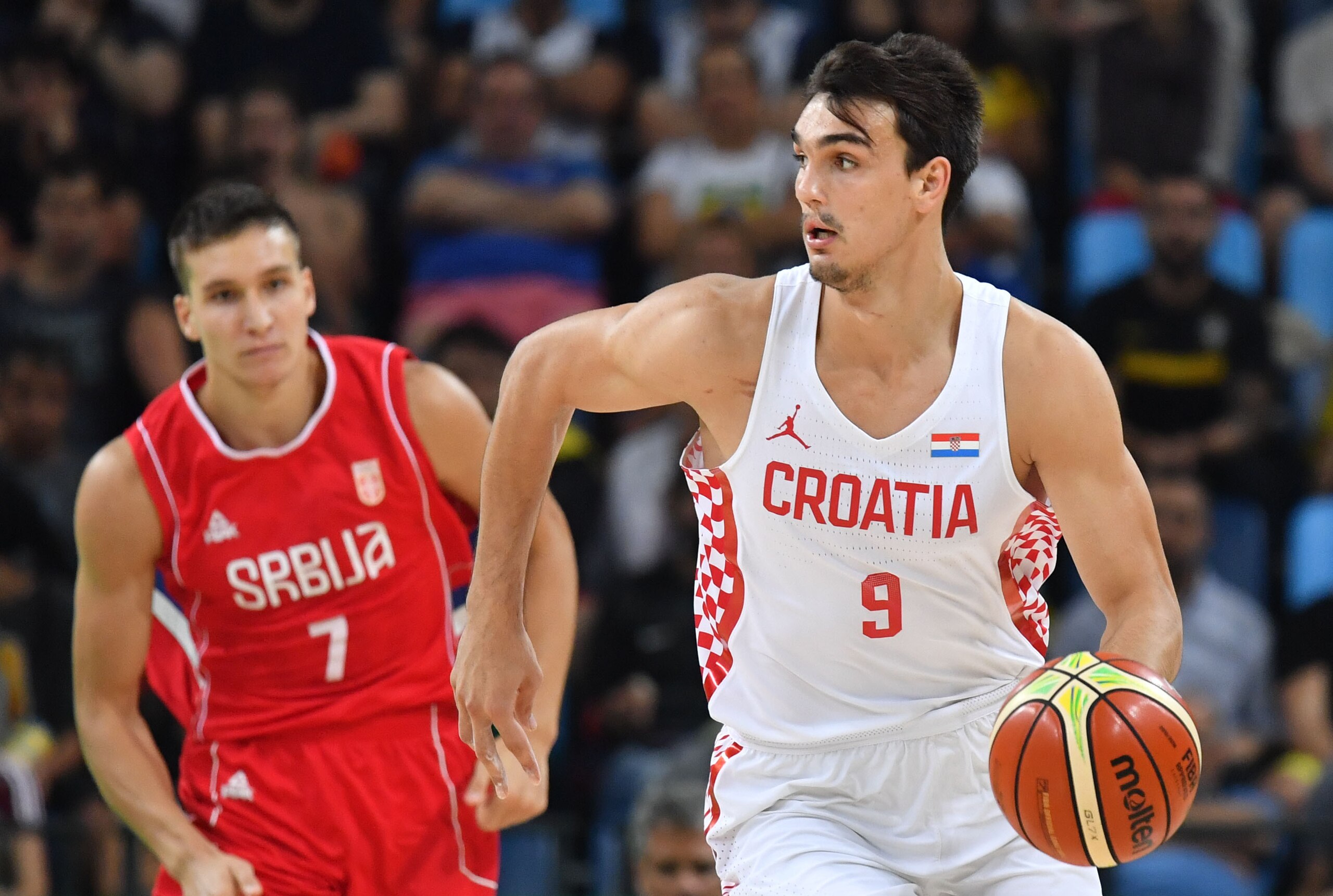
After watching Dario Saric play for Croatia at the Rio Olympics, Philadelphia 76ers fans should love the concept of him, without prematurely falling head-over-heels for his shooting.
Saric put down 26.3 percent of his three-point attempts during the Olympics and has only cleared 31.0 percent accuracy from downtown once in his career—his most recent professional season, during which he drilled 40.3 percent of his triples amid moderate volume.
Everything else you've heard about Saric is real.
He won't blow up the box score, but he's a crafty scorer on the move and can excel as a primary playmaker. This bodes well for a Sixers squad that figures to run out lineups that stick Ben Simmons at point guard. Saric will let him see time off the rock, and the two can flutter between ball-handler and roll man in the two-man game.
Surviving on defense will be the key for Saric's All-Rookie candidacy. He is more than capable of keeping pace with today's power forwards, but the Sixers will need to slot him against 3s at least half the time. Saric is quick enough to get by against conventional wings. He tries hard and plays the space over the man when facing elusive guards and forwards.
Think along the lines of Kevin Love's defense on Stephen Curry during the closing minute of Game 7 in the NBA Finals—uncoordinated and exhaustive, but often effective. That hustle will keep Saric on the floor as a key member for some of Philly's best lineups and help him post balanced, if modest, stat lines throughout the year.
1st Team: Kris Dunn, Minnesota Timberwolves
6 of 10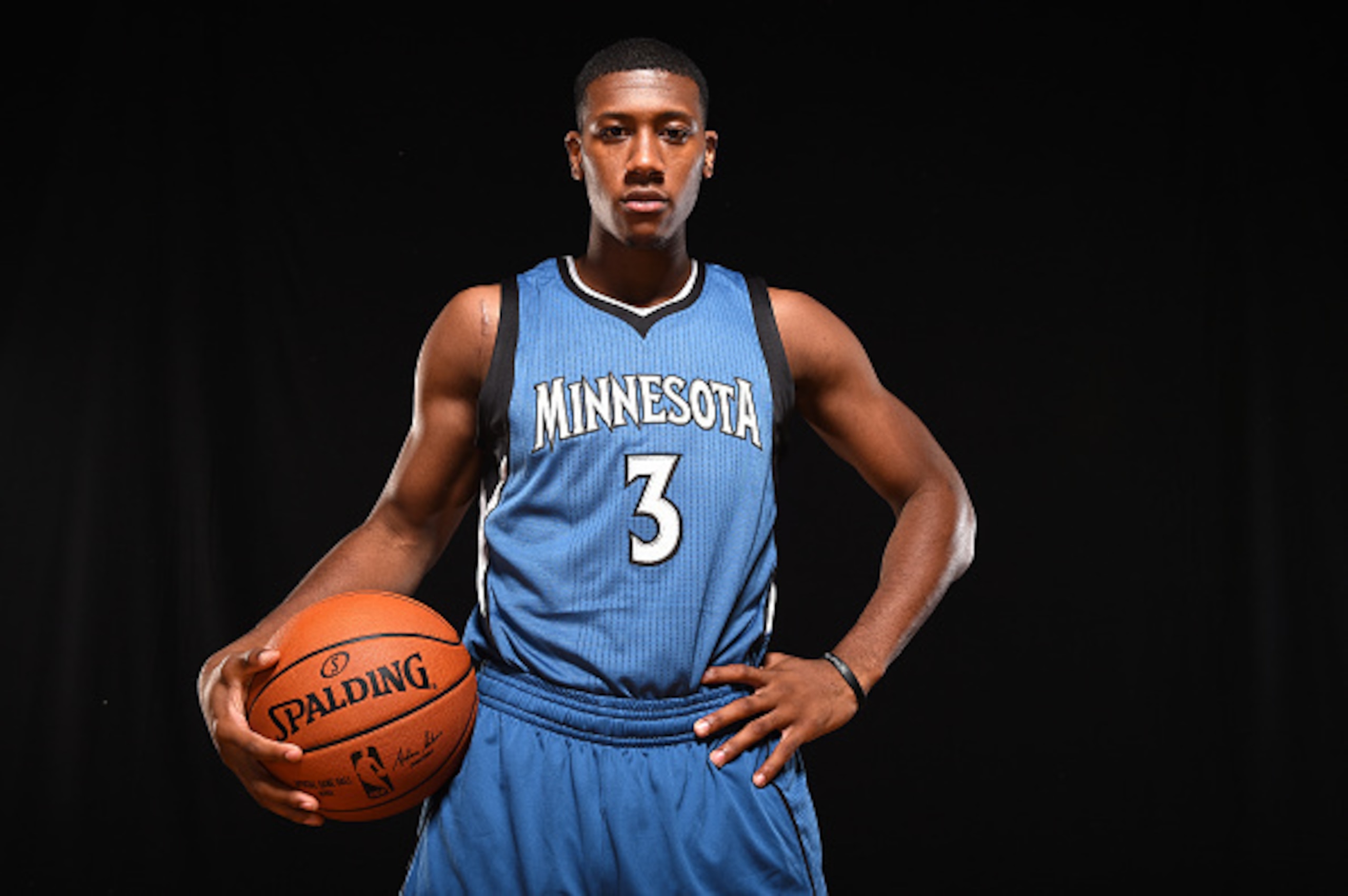
Selecting Kris Dunn for a first-team nod doesn't spell good things for Ricky Rubio. These two are an iffy fit together at best.
Dunn's increasing three-point percentages during his final two seasons at Providence suggest he can play off his new running mate, but he didn't start launching threes until he was a junior. Rubio, meanwhile, shot under 33 percent on catch-and-shoot treys last year—and that nearly represented a nine-point improvement over his 2014-15 mark.
Any success Dunn has will likely come at the expense of Rubio. His fellow rookies, for what it's worth, believe he'll get that opportunity. Twenty-nine percent of the newbies polled by NBA.com identified Dunn as the Rookie of the Year favorite. None of his peers, including Brandon Ingram and Ben Simmons, received even 26 percent of the vote.
Not that rookie surveys are barometers for success. In the seven previous polls, the league's beginners correctly selected the future Rookie of the Year only once, in 2007-08 (Kevin Durant). Dunn is also playing for a head coach, Tom Thibodeau, who isn't known for quickly grooming youngsters.
But he's too good to bench. He can defend either guard position at 6'4", and his 62.6 percent success rate around the rim, per Hoop-Math.com, is far better than anything Rubio has posted since entering the NBA in 2011-12.
Though Thibodeau won't hand Dunn the starting gig right away, or at all, he is invested in his immediate performance. He had the floor general atop his draft board, according to The Vertical's Adrian Wojnarowski.
It's a safe bet that he plugs Dunn into a prominent role almost immediately. It's even safer to assume Dunn's offensive aggression suits a Timberwolves team in need of a distributor who attacks with purpose and doesn't have the sole intent of deferring to those around him.
1st Team: Joel Embiid, Philadelphia 76ers
7 of 10
If we could just guarantee Joel Embiid would stay healthy, if we could promise he wouldn't be forced to play power forward and if we could swear he wouldn't be placed on a minutes cap, a first-team selection would be a no-brainer.
Alas, he is finally healthy, but his fine fettle is not without attached strings.
"Probably,” Embiid said of facing limitations in his first season, per CSNPhilly.com's Jessica Camerato. “But I think the restrictions would probably be about the fact that I haven’t played in two years. It’s not going to be about because people are worried that I’m going to re-injure myself, which I don’t think is going to happen.”
Assuming Embiid has a clean bill of health—which is dicey in itself—that won't alleviate the 76ers' frontcourt pileup.
Their top five prospects (Embiid, Nerlens Noel, Jahlil Okafor, Dario Saric and Ben Simmons) are all 6'10" or taller. Embiid's minutes will be curtailed until Philly clears part of the deck on the trade market. He can only make so much of an impact if he's struggling to log 20 minutes per game or spending most of his time at center.
At the same time, he is perhaps the most talented player of this rookie class. That was true in 2014, when he was first drafted, and it's accurate now, when his sole competition is knee-jerk Simmons comparisons to Draymond Green and LeBron James.
Get him on the floor for 15 minutes, and Embiid will leave his mark. No current NBA player employs cleaner or nimbler post moves. He has range outside the paint, unlike Noel and Okafor. His presence at the rim should rival Hakeem Olajuwon—or at least show us how a prime Amar'e Stoudemire would have played if he was blessed with any sort of defensive faculties.
Basically, Embiid will make the most of his inaugural NBA campaign, however he's used, and that's enough to get us excited.
1st Team: Brandon Ingram, Los Angeles Lakers
8 of 10
So what if Kris Dunn's colleagues favor him to win Rookie of the Year honors? Those same basketball compatriots believe Brandon Ingram—not Dunn or Ben Simmons—will have the better career.
We can confidently conclude they feel this way because they watch basketball. Sweet-shooting wings who defend three different positions are in vogue, and Ingram is by far the best example of this infatuation since Paul George. And the latter entered the league in 2010 to substantially less fanfare, as most of the Association was scouring the globe for Dwight Howard's successor.
Much of Ingram's rookie ceiling depends on how the Los Angeles Lakers decide to use him, which is either encouraging or harrowing. Will he vacillate between both forward spots with Luol Deng and be given the freedom to develop as a featured weapon? Or will he forfeit minutes to Julius Randle (and Deng) while ceding touches and status to Jordan Clarkson and D'Angelo Russell?
Your confidence level in first-year head coach Luke Walton's decision-making might not matter. Ingram falls under the "too good to limit" umbrella. The Lakers won't have another three-and-D option on the roster unless Deng parties (read: shoots) like it's the 2016 postseason, and they are thin on legitimate rim protectors until Timofey Mozgov remembers how to use his hands.
Expectations for the Duke product should be high. The comparisons to Kevin Durant, after all, weren't born from nothing.
Last season, Ingram became just the second freshman since 1993-94 to total 600 points, 40 steals and 45 blocks while shooting 40 percent from the outside. His statistical sibling was Durant—who, much like Ingram is now, proved to be a shoo-in for a first-team All-Rookie nod.
1st Team: Jamal Murray, Denver Nuggets
9 of 10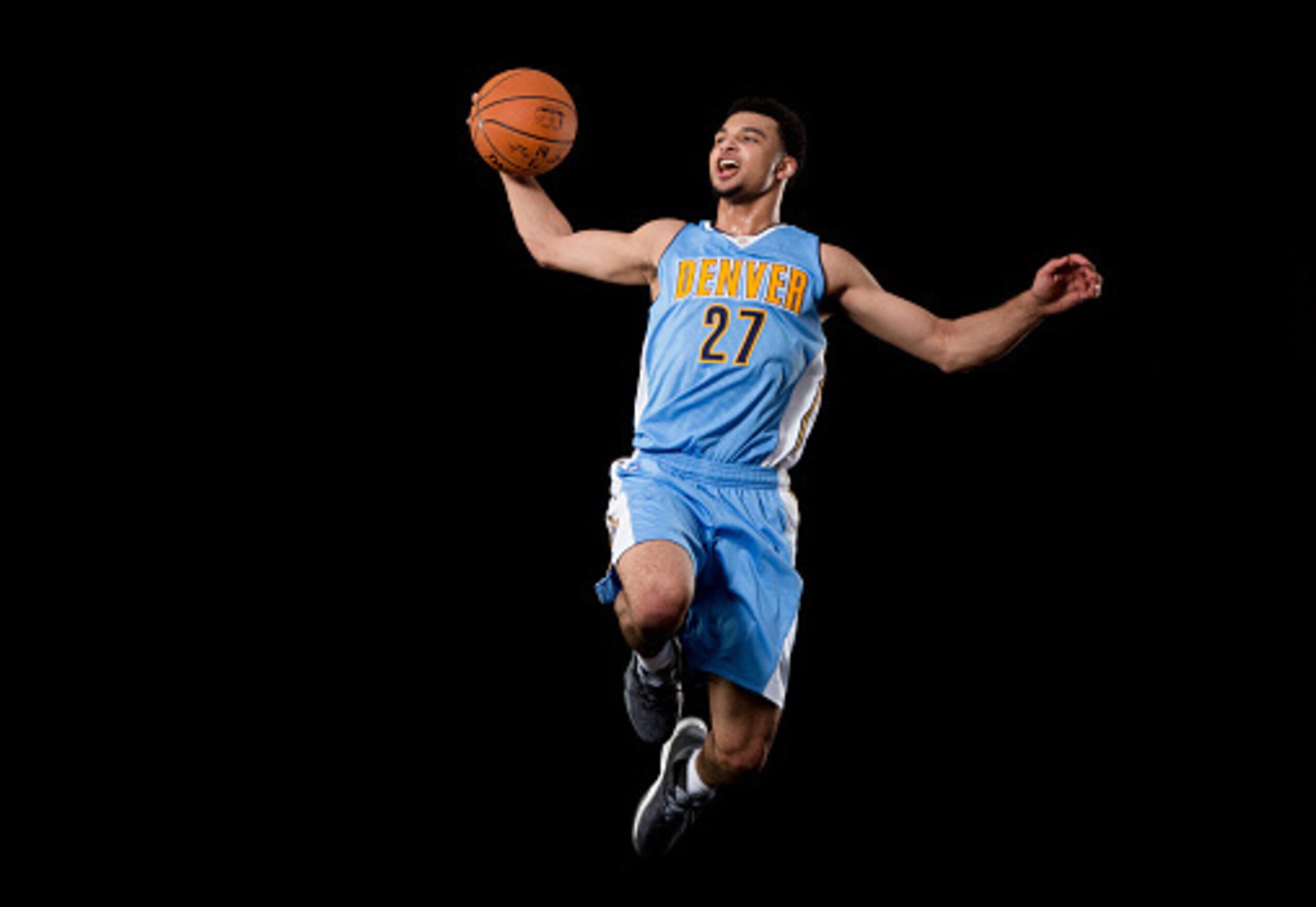
Penciling in any Denver Nuggets wing, let alone a new kid on the block, for a big season should border on insane. The team's depth chart is teeming with that much perimeter talent. While a good problem to have, it diminishes the likelihood of a breakout performance from an unproven contributor.
Other than Jamal Murray, that is.
There will be no confining his exposure—not to the degree he'll be an afterthought in the All-Rookie discussion. As Ryan Mccabe wrote for Nugg Love:
"Simply put, Murray can find a way to score from just about anywhere on the floor. He has a near picture-perfect jumper, and he has a knack for knocking down shots in times of duress. But he doesn’t only use his jump shots to score, his ability to finish at the rim with both hands is an incredibly valuable asset in this league. It allows him to attack from any side on the floor, which in turn allows for unpredictability.
What’s seemingly more valuable though, is his passing and ball handling abilities.
"
Murray's playmaking polish will allow him to separate from the Will Barton-Malik Beasley-Wilson Chandler-Gary Harris logjam, as the go-to backup point guard Denver doesn't have behind Emmanuel Mudiay. Jameer Nelson, 34, is more of a leadership fixture, and Nate Wolters is (likely) on a make-good contract.
That clears the way for Murray to shine as an offensive pilot. He will be easier to use over Mudiay in certain lineups, since he's a cross between Harris and the former. Like Mudiay, he can direct the offense, but he can also orbit the three-point line beside Denver's other secondary playmakers, (Barton, Danilo Gallinari, Nikola Jokic), like Harris.
Plus, the Nuggets aren't done making moves. Their roster is primed for asset consolidation. They already traded Joffrey Lauvergne to free up minutes in the frontcourt, per The Vertical's Adrian Wojnarowski, and will be forced to take the same approach on the outside. Either way, Murray's positional malleability should keep him in the rotation and, by extension, in the running for a first-team finish.
1st Team: Ben Simmons, Philadelphia 76ers
10 of 10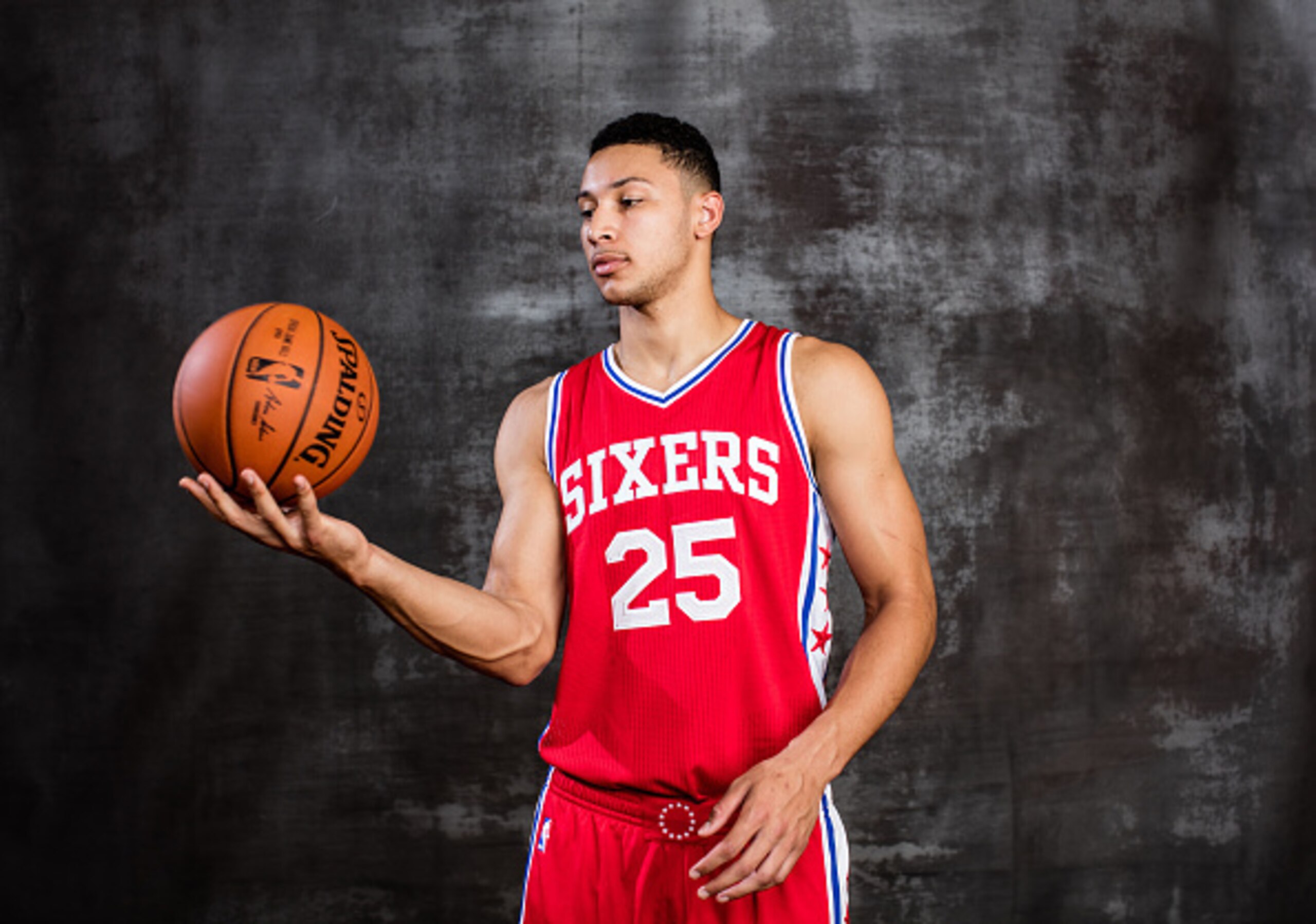
Ben Simmons has his work cut out for him with the Sixers. He will bounce between point guard, small forward and power forward, and a clunky frontcourt will restrict his operating space.
On the flip side: Simmons is already the Sixers' best playmaker. The ball will always be in his hands. His usage rate could be higher than it was at LSU (26.4).
That's good for statistical business. Philly doesn't have the surrounding facilitators to help Simmons hone his shaky jumper, and his field-goal percentage will suffer as a result. But he will accumulate points and assists through exceptional volume, the crux of most first-team All-Rookie campaigns.
The remainder of Simmons' case should take shape on the defensive end. He rebounds like Anthony Davis and borrows his blend of quick hands and shot-blocking from Paul Millsap.
Not surprisingly, Simmons is the only qualified freshman since at least 2009-10 to post a defensive rebounding rate of at least 26.0, along with steal and block percentages of 2.5 or better. He is, without question, the most well-rounded prospect of this class and remains destined to contend for, if not run away with, Rookie of the Year honors.
Of course, it would hardly be shocking if he didn't. The Sixers' jumbled depth chart and relative inexperience could end up holding back his production on both ends of the floor. And yet, even then, the bigger surprise would be his failure to parlay extensive court time into a first-team selection.
Stats courtesy of Basketball-Reference.com, Sports-Reference.com, DraftExpress.com and NBA.com unless otherwise cited.
Dan Favale covers the NBA for Bleacher Report. Follow him on Twitter, @danfavale.



.jpg?w=2560 "NFL investigating 2 referees for separate viral exchanges")
.jpg?w=2560 "OBJ Calls Out Giants 😳")


.jpg?w=2560 "Ward Nearly Walks Out of Presser 😳")
.jpg?w=2560 "Tyreek makes another cryptic post amid Chiefs rumors")