
Building a perfect roster is extremely rare. Each college football program has a clear strength, but there's typically a glaring shortcoming, too.
In several cases, the power of a couple of units can atone for weaknesses elsewhere on the roster. Some programs aren't as fortunate. Plus, an external factor such as the schedule can present a significant obstacle and hold the team back.
Each program must address the primary issue to achieve its biggest goal in 2016. For a few teams, that's simply a bowl game. For others, it's chasing a conference title and the College Football Playoff.
The list is organized alphabetically by school and includes a pair of independent schools—BYU and Notre Dame.
Alabama
1 of 66
Strength: Defense
How many future first-round draft picks are in this unit?
Up front, Jonathan Allen and Tim Williams compose what should be one of the nation's most dynamic tandems. Allen demands double-teams in the middle, and Williams is explosive off the edge.
Reuben Foster highlights a deep front seven that also includes Ryan Anderson, Dalvin Tomlinson and Shaun Dion Hamilton. The secondary boasts even more depth, as Eddie Jackson, Marlon Humphrey and Minkah Fitzpatrick headline the group.
Weakness: Quarterback
Bleacher Report's Christopher Walsh noted the quarterback battle is a two-man race between Cooper Bateman and Blake Barnett. David Cornwell and Jalen Hurts aren't really in the picture.
Although head coach Nick Saban and offensive coordinator Lane Kiffin have earned the benefit of the doubt, this is a potential issue.
College football nation will be closely watching this situation.
Arizona
2 of 66
Strength: Speed
The Arizona offense was wildly inefficient in 2015, but it sure could be fun. The Wildcats had 44 gains of 30-plus yards, which ranked 10th in the Football Bowl Subdivision.
While the 2016 campaign could bring more of the same, the trick is turning athleticism into victories. With Anu Solomon behind center—theoretically, at least—Arizona has an experienced dual-threat quarterback and several big-play options at running back and receiver.
Weakness: Defensive Line
Marcel Yates is implementing a 4-2-5 alignment with an aggressive mentality, but the roster might not match the desire.
The Wildcats ranked 71st in the country with 75 tackles for loss last season. Jack Banda's four leads all returning linemen, and Sani Fuimaono managed three.
Arizona needs its experienced linebackers—Cal transfer Michael Barton, DeAndre' Miller, Jake Matthews and converted safety Paul Magloire Jr.—to carry the front seven.
Arizona State
3 of 66
Strength: Pass Rush
In 2015, only Boston College and Missouri averaged more tackles for loss than Arizona State. Additionally, the Sun Devils tallied 3.54 sacks per game, tying Penn State for the nation's No. 1 spot.
Though Antonio Longino (11) used up his eligibility, DJ Calhoun (6.5), Salamo Fiso (4.5) and JoJo Wicker (4.0) all return. Tashon Smallwood is an experienced lineman ready for a major role.
Weakness: Quarterback Experience
Not only will Arizona State have a new starter under center, but the quarterback will attempt his first official college pass.
Manny Wilkins was the backup in 2015, but he only appeared in four games and logged seven carries. Brady White—a 4-star prospect two cycles ago—took a redshirt season.
Losing four starters on the offensive line only complicates matters for the Sun Devils.
.png?w=2560)
Arkansas
4 of 66
Strength: Defensive Line
Arkansas was excellent up front in 2015, and it shouldn't be any different this season with Deatrich Wise Jr. leading the unit.
Jeremiah Ledbetter, Taiwan Johnson, JaMichael Winston and Tevin Beanum also return, while the Razorbacks added a 5-star talent in McTelvin Agim this offseason. Agim will boost what was a mediocre pass rush, but the D-line should again shut down opposing rushers.
Weakness: Unproven Offensive Backfield
Bret Bielema always seems to find a sufficient answer in the backfield, but Arkansas is undergoing major transition. Brandon Allen, Alex Collins and even Jonathan Williams are gone.
Allen's brother Austin has taken the reins under center, bringing 19 career pass attempts. Kody Walker (394 yards and Rawleigh Williams III (254) are the top returning rushers, though freshman Devwah Whaley has a chance to become the featured back.
Auburn
5 of 66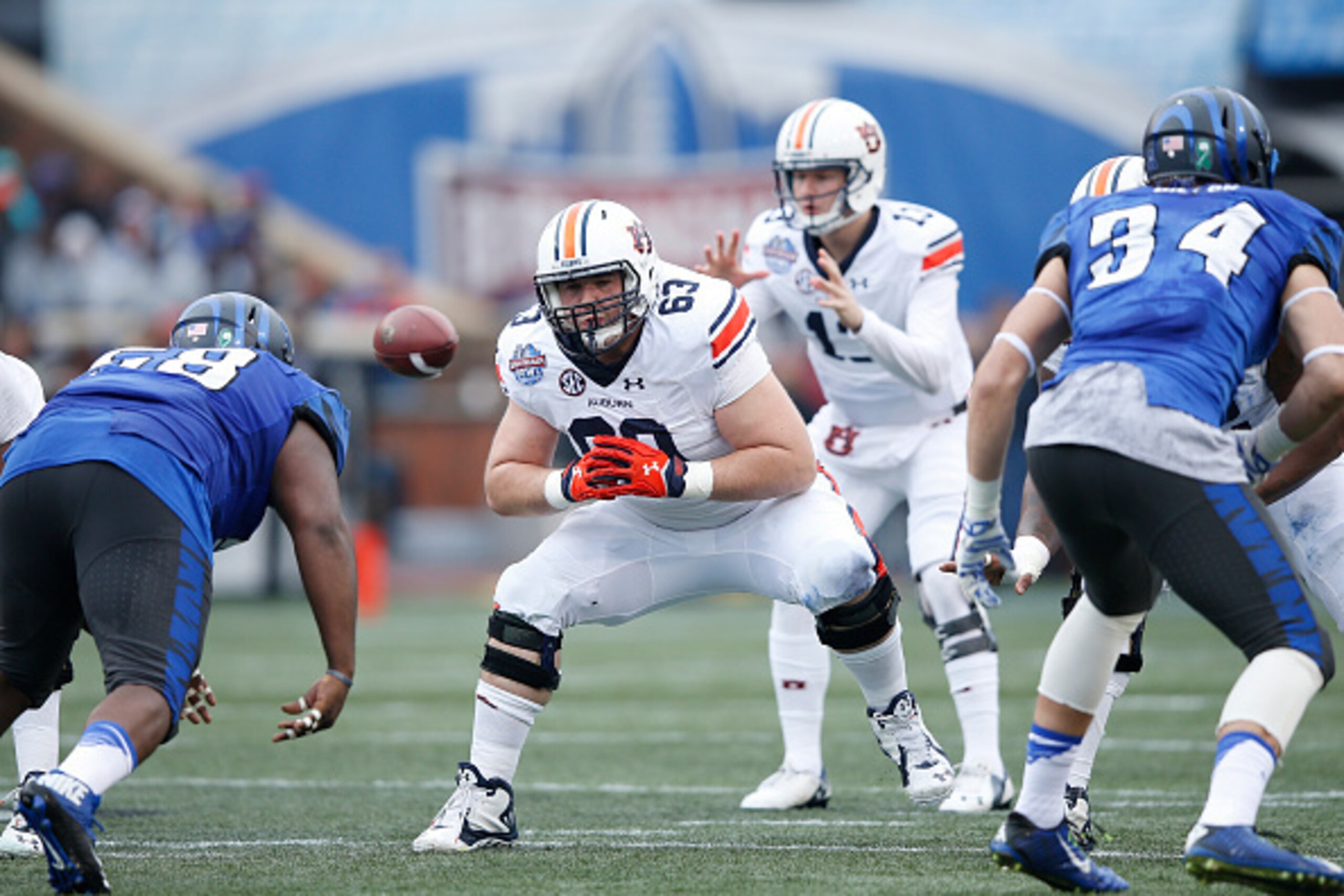
Strength: Offensive Line
Although the quarterback situation is an issue, Auburn's eventual signal-caller will be well-protected.
Alex Kozan is a two-year starter, while Austin Golson and Braden Smith each have 20-plus appearances. Xavier Dampeer and Robert Leff may officially work into the starting lineup, and Texas transfer Darius James will at least factor into the rotation.
Weakness: Linebacker
The Tigers have significant production to replace at linebacker. Kris Frost and Cassanova McKinzy combined for 170 tackles.
Illinois transfer T.J. Neal will ease the transition, and Tre' Williams notched 55 stops last season. Montavious Atkinson, Cameron Toney and Jeff Holland will compete for the final starting spot.
Baylor
6 of 66
Strength: Seth Russell
Baylor lost five notable players on the offensive line and receiver Corey Coleman, but a healthy Seth Russell is a dangerous one.
In seven games last season, he tallied 2,104 yards and 29 touchdowns through the air. Russell added 402 yards and six scores on the ground, guiding the Bears to a 7-0 start.
Russell is cleared after rehabbing from neck surgery, and he'll keep Baylor competitive throughout the season.
Weakness: The Trenches
All-conference center Kyle Fuller is the lone returning starter on either the offensive or defensive line. The Bears lost 133 starts on offense and five of the D-line's top six tacklers.
Only Fuller's presence stops us from saying this is a complete rebuild.
Russell can help offset the offensive dilemma by distributing the ball quickly, but the Bears may struggle to win the trenches.
Boston College
7 of 66
Strength: Run Defense
Boston College decided to build a home in the opposing backfield last season. Matt Milano collected a team-best 17.5 tackles for loss, Harold Landry had 14.5, and Connor Strachan added 12.5.
Truman Gutapfel and Kevin Kavalec will replace Mehdi Abdesmad and Connor Wujciak. The Eagles lost coordinator Don Brown, but they're in good hands. Jim Reid led Iowa's No. 15 rush defense last year.
Weakness: Offense
Put simply, the Boston College offense stunk in 2015. Despite the defense ceding just 15.3 points per game, the team finished 3-9. Turning around the nation's third-worst offense isn't easy.
Darius Wade and Kentucky transfer Patrick Towles will compete for the starting job. The Eagles return a decent bit of experience at skill positions, but there's no major returning production because nobody fit that mold last season.
Steve Addazio needs a bunch of dudes.
BYU
8 of 66
Strength: Safeties
The 2016 campaign may not bring many celebrations for BYU, but the safeties should provide several highlight-reel plays.
Kai Nacua was a ball hawk last year, picking off six passes and breaking up six more. Plus, Micah Hannemann is moving from corner to safety. He had seven pass breakups and two interceptions.
Weakness: Offensive Line
Two—or maybe three—players won't return from a unit that was BYU's weak spot in 2015. Perhaps change is good, and projected starter Brad Wilcox is keeping a positive outlook.
"We will still be one of the team's strengths," he said, according to Jay Drew of the Salt Lake Tribune.
But the Cougars are undergoing many changes. The offensive line will need to back up its confidence once the season begins.
Cal
9 of 66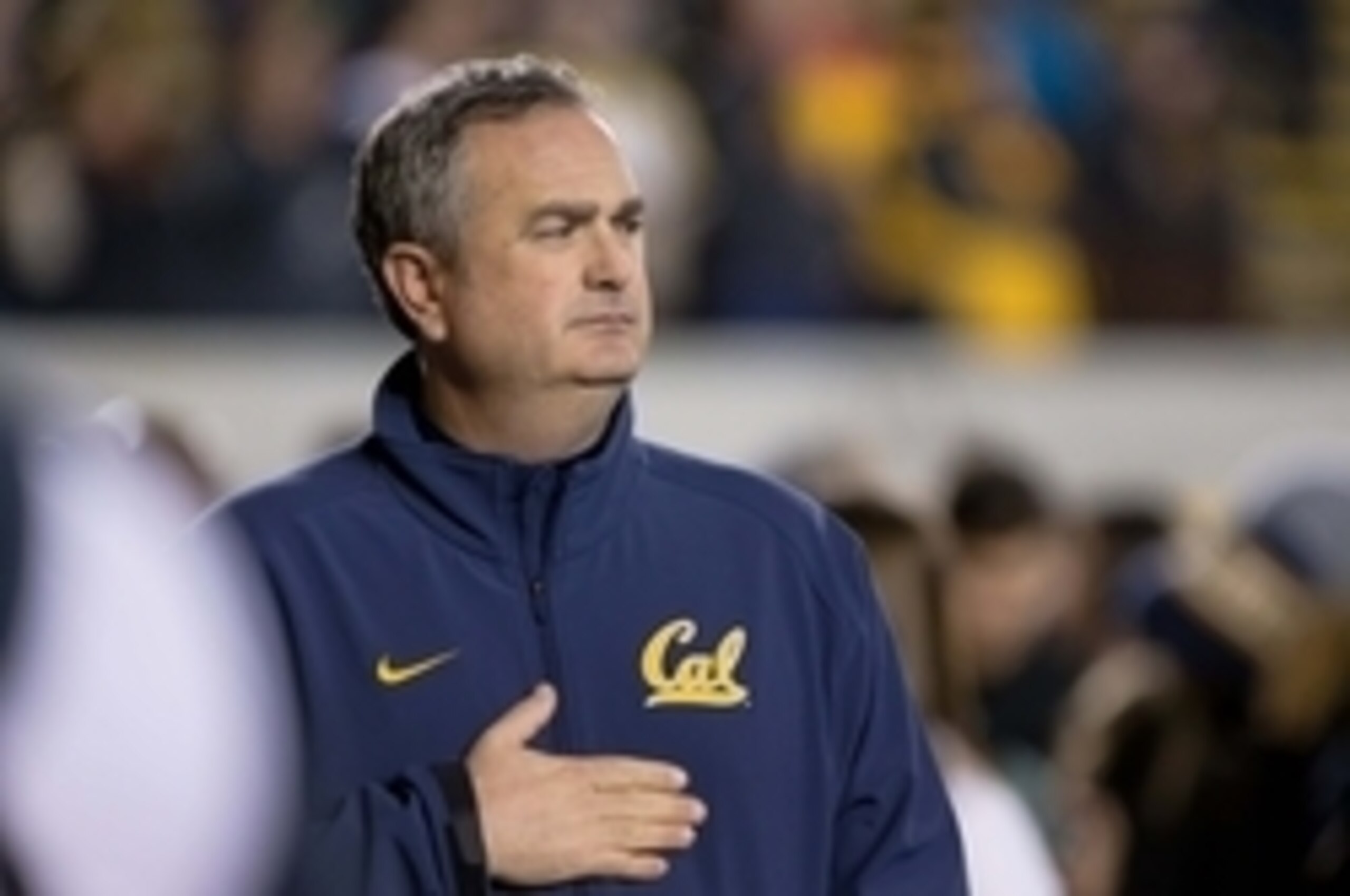
Strength: Right QB for Sonny's System
Thank you, grad transfer rule.
Following the departure of No. 1 overall pick Jared Goff, Cal's quarterback situation looked bleak. But Davis Webb headed to Berkeley after a few seasons with pass-happy Texas Tech.
Webb has 23 appearances, 747 attempts, 5,557 yards and 46 touchdowns. He's a perfect addition to run the Bear Raid attack.
Weakness: Linebackers
You know what? Forget you, grad transfer rule.
In addition to Jalen Jefferson using up his eligibility, leading tackler Hardy Nickerson chose to play his final season for his father at Illinois, and Michael Barton bolted for Arizona.
Raymond Davison, Devante Downs and Aisea Tongilava are expected to hold down the starting roles.
Clemson
10 of 66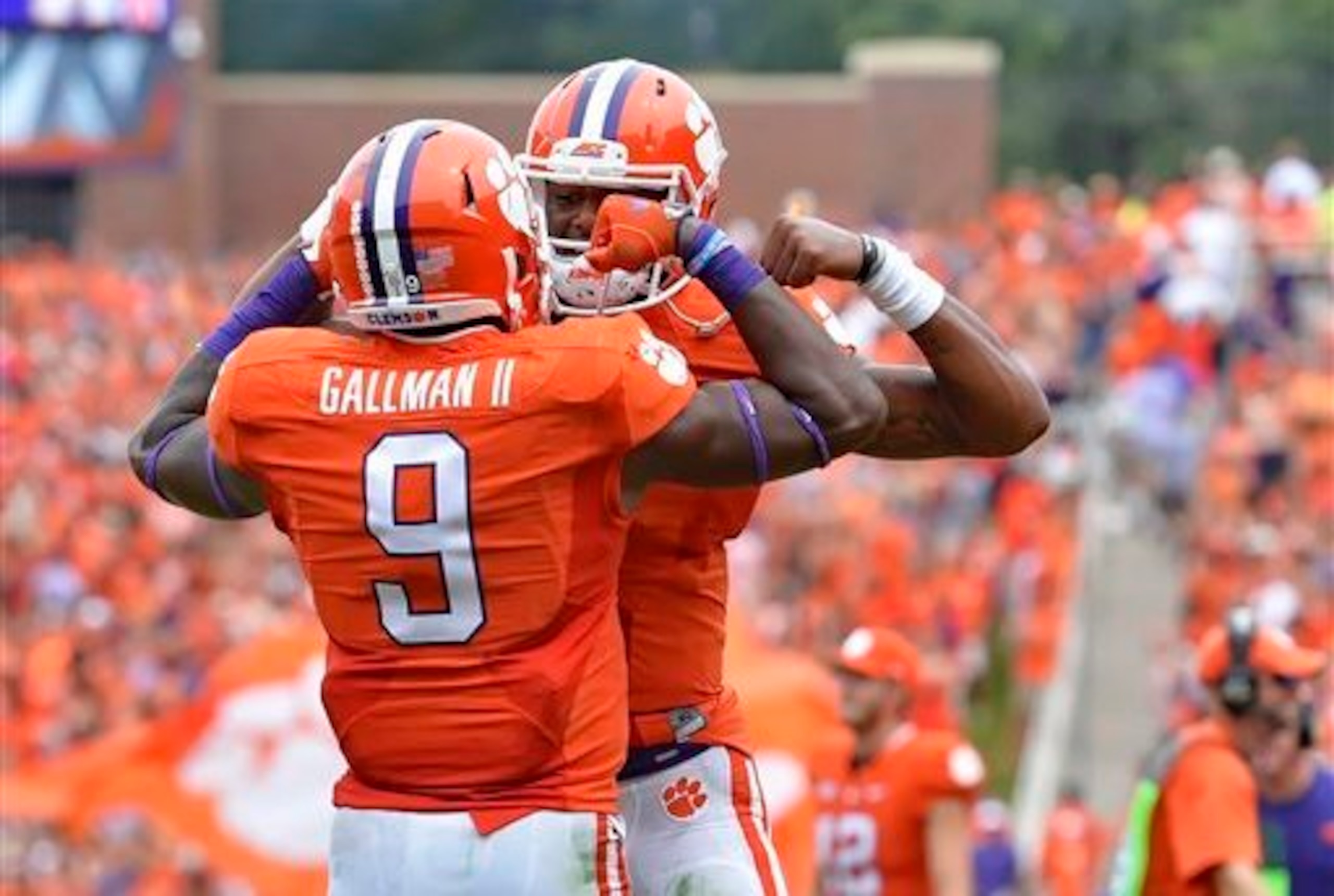
Strength: Skill-Position Talent
If it seems like the Clemson offense has received nonstop hype throughout the offseason, there's an excellent reason why—and it travels well beyond quarterback Deshaun Watson.
Last year, Wayne Gallman set the program's single-season rushing mark, while Jordan Leggett caught eight touchdowns. Artavis Scott has back-to-back 900-yard outputs. Mike Williams eclipsed the 1,000-yard barrier in 2014. Deon Cain (582 yards) and Hunter Renfrow (492) are superb depth pieces.
Weakness: Inexperienced Secondary
After losing three players to the NFL, Cordrea Tankersley is the only returning starter. The return of Korrin Wiggins is important, but the Tigers need to piece together a fresh-faced unit.
Still, Tankersley isn't worried.
"We're going to be fine," Tankersley said, per Zach Lentz of the Times and Democrat. "I'll tell you right now, by the end of the season, we will not be a weakness of this team."
Colorado
11 of 66
Strength: Secondary
Led by Chidobe Awuzie, Colorado should have a strong defensive backfield. Awuzie led the defense with 85 total stops and 12 tackles for loss last season, adding two interceptions.
Tedric Thompson finished fourth with 63 tackles, while Ryan Moeller, Ahkello Witherspoon and Isaiah Oliver played significant roles. Afolabi Laguda will be an important piece this season.
Weakness: Quarterback Situation
Sefo Liufau was expected to miss 2016 because of a foot injury. Then, backup quarterback Cape Apsay was dismissed from the team, and Webb elected to enroll in Berkeley instead of Boulder.
Fortunately for the Buffs, Liufau is cleared for the season. If he stays healthy, great, but Colorado has a history of losing close games. How will Liufau reverse the trend this year?
Duke
12 of 66
Strength: Thomas Sirk
This one comes with an asterisk. Thomas Sirk ruptured his left Achilles tendon in February and was expected to miss 2016. Somehow, he participated in the first practice of fall camp.
If Sirk is completely healthy, that's excellent news for Duke. He registered 3,428 yards of total offense and 24 touchdowns last year. But recovering from an Achilles injury is tough.
Will Sirk be the same? Early returns suggest yes, but we'll find out once September arrives.
Weakness: Pass Rush
Though the Blue Devils aren't in terrible shape on the defensive line, it's not exactly a havoc-wreaking unit. Last year, Duke managed just 17 sacks, which ranked 109th in the country.
A formidable secondary kept the defense from getting shredded—and the same may be true in 2016—but the Blue Devils need improvement up front to keep pressure off DeVon Edwards and Co.
Florida
13 of 66
Strength: NFL-Caliber Defenders
Florida likely has a draft pick at every level of the defense. Caleb Brantley, Jarrad Davis, Jalen Tabor and Marcus Maye have already received or should garner first-round buzz.
The linebacking corps is relatively thin, but the Gators have playmakers up front (Bryan Cox Jr. and CeCe Jefferson) and potential breakout players (Quincy Wilson and Duke Dawson) in the secondary.
Weakness: Offensive Line
While it didn't help that the internal clocks on Florida's quarterbacks were broken, the line allowed an FBS-worst 45 sacks. Jim McElwain has a serious problem to address in the trenches.
Both Martez Ivey and David Sharpe have all-conference potential, and Tyler Jordan should be a solid starter. Now, the trick is finding reliable pieces to complete a complicated puzzle.
Florida State
14 of 66
Strength: Defensive Line
The secondary also presents an excellent case, but the Florida State defensive line might cause nightmares.
DeMarcus Walker and Josh Sweat should be one of the nation's best combinations at end. Derrick Nnadi started 13 games at tackle last season. Demarcus Christmas will play an integral role up front.
Although the Seminoles could be a little thin in the depth department, their starting unit is terrific.
Weakness: Linebacker
Reggie Northrup and Terrance Smith combined for 159 tackles in 2015. Both players leave massive voids, particularly since FSU doesn't have a ton of options to fill them.
Michael Thomas is a wild card behind Ro'Derrick Hoskins and Jacob Pugh. Thomas—a 5-star prospect three cycles ago—was suspended last season. Sh'Mar Kilby-Lane appeared in 11 games but had just four tackles. Everyone else is a freshman or seldom-used sophomore.
Georgia
15 of 66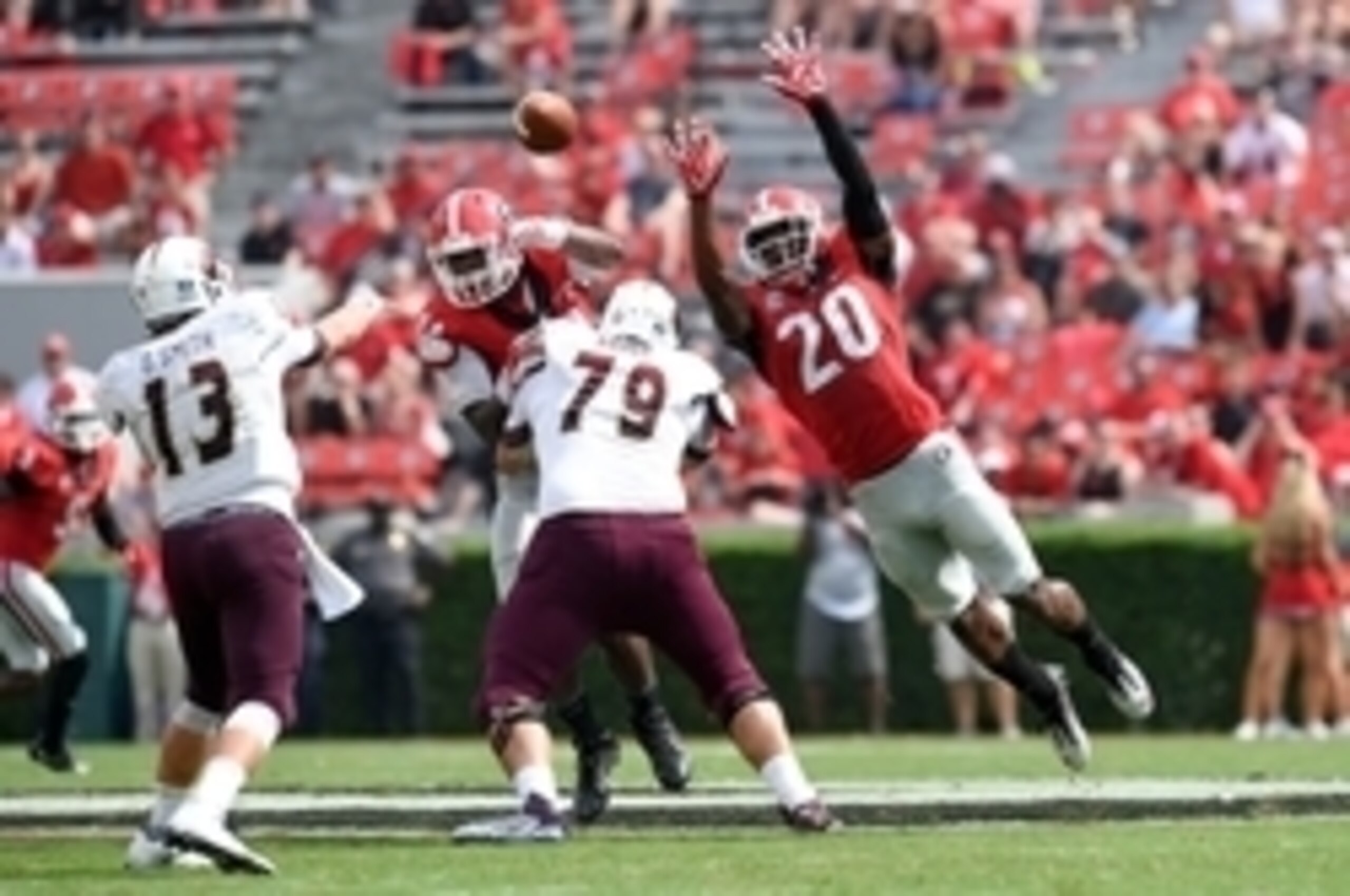
Strength: Secondary
Whenever Nick Chubb and Sony Michel are both fully healthy, the running backs are undoubtedly Georgia's strength. For now, though, the secondary owns the title.
Granted, there's a possibility we're overestimating the secondary despite its No. 1 finish last season. Leonard Floyd and Jordan Jenkins won't be providing constant pressure up front. But Dominick Sanders, Quincy Mauger, Aaron Davis and Malkom Parrish are all back.
Weakness: Tough September with Uncertainty at Quarterback
Let's pretend Greyson Lambert earns the starting nod. He's a capable starter, but Lambert isn't a game-changing quarterback. Can he survive North Carolina, Ole Miss and Tennessee unblemished?
But what if true freshman Jacob Eason wins the competition? Does he encounter the inevitable freshman struggles at the perfectly wrong moment, leaving the Bulldogs scrapping for a division crown?
Georgia has to make the perfect choice right away.
Georgia Tech
16 of 66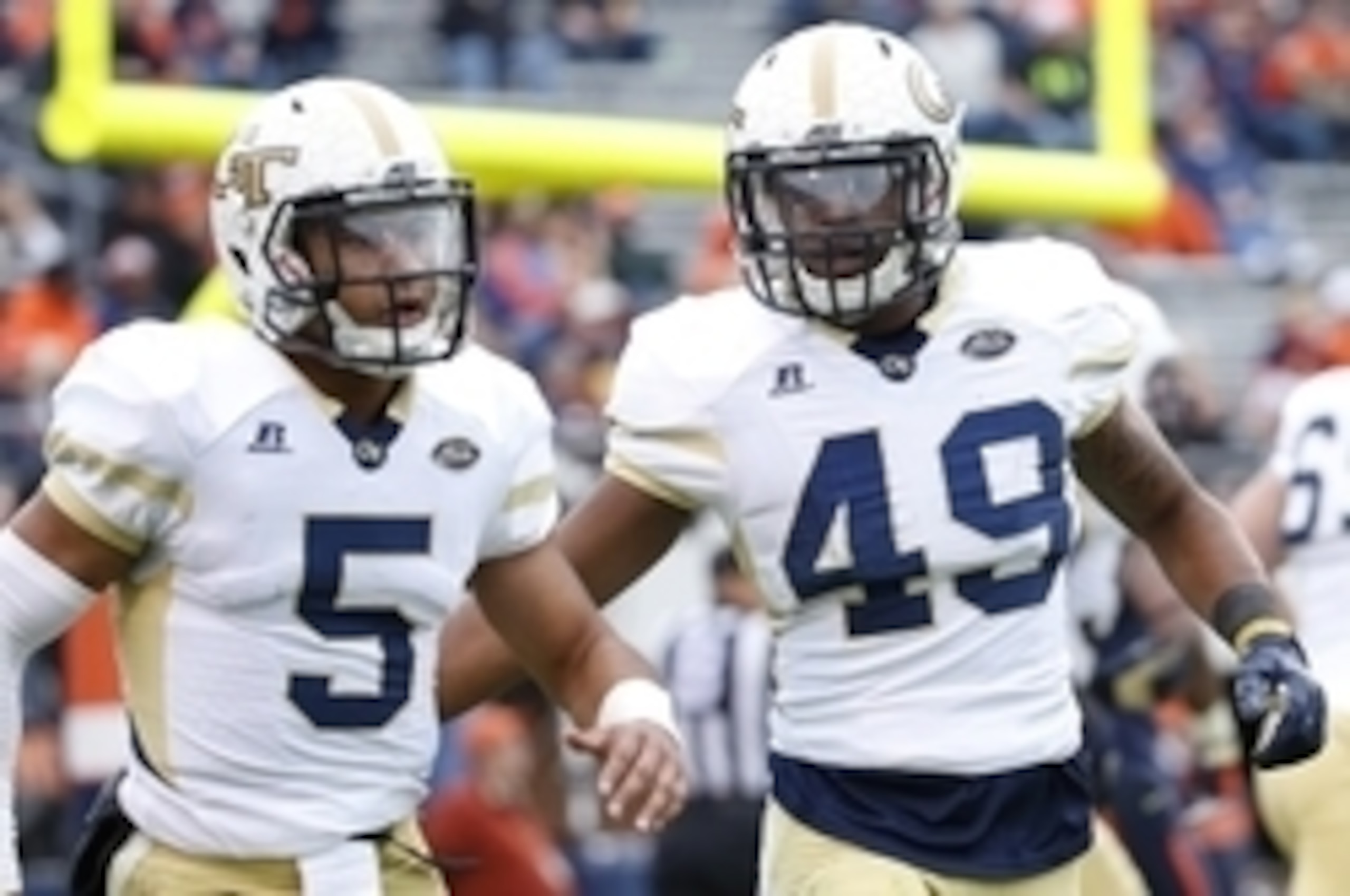
Strength: Seasoned Youth
Partially because of a below-average offensive line, Justin Thomas' effectiveness plummeted in 2015. A fresh bunch of A-backs didn't help.
Heading into 2016, the outlook is more promising. Marcus Marshall had 654 rushing yards, while Clinton Lynch ran for 466 and tallied 273 as a receiver. Ricky Jeune pulled in 24 passes for 520 yards.
Now, can the offensive line catch up?
Weakness: New Secondary
Georgia Tech's pass defense was respectable last season, but four of the secondary's top five players are gone. At least A.J. Gray, Corey Griffin and Lawrence Austin bring notable experience.
Fortunately for the Yellow Jackets, they won't encounter many pass-happy teams. But when Watson or Brad Kaaya is on the other side of the field, the secondary may get exposed.
Illinois
17 of 66
Strength: Wes Lunt
Illinois has a renewed sense of hope thanks to Lovie Smith, but Wes Lunt is the biggest reason for optimism in Champaign.
A two-year starter after transferring from Oklahoma State, he's tossed 28 touchdowns compared to nine interceptions. Lunt will need to continue that efficiency without Geronimo Allison—and Mike Dudek, for that matter—but Malik Turner and Desmond Cain are promising.
Weakness: Cornerback
Led by Taylor Barton, the safety position is in decent shape despite Clayton Fejedelem's departure. Cornerback? Not so much.
V'Angelo Bentley and Eaton Spence were preeminent pieces of the Illini's 15th-ranked pass defense. Some combination of Darius Mosely, Cameron Watkins and Frank Sumpter will flank Jaylen Dunlap.
Indiana
18 of 66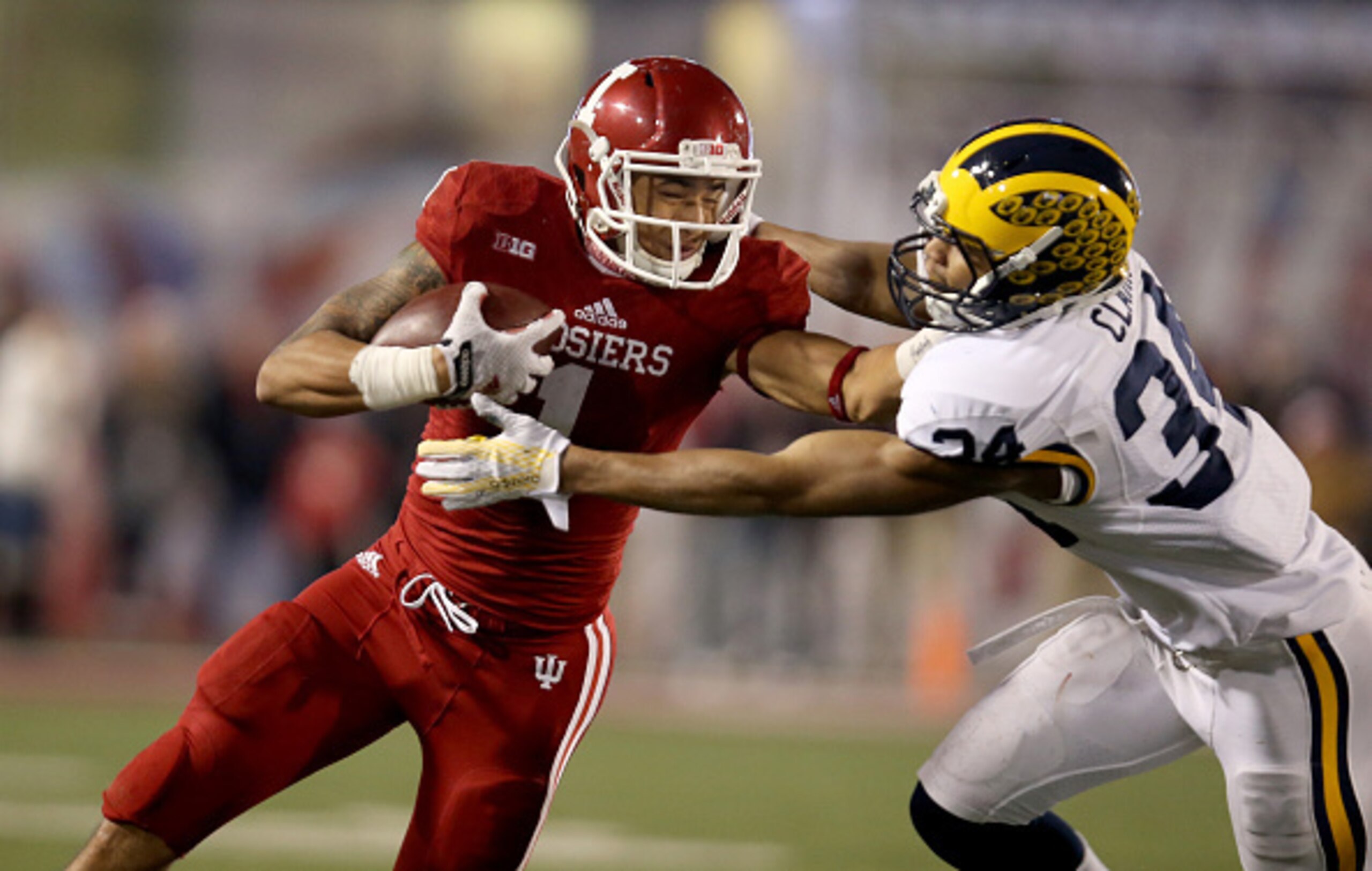
Strength: Skill-Position Talent
Devine Redding ran for 1,012 yards as Jordan Howard's backup and fill-in starter. Each of Simmie Cobbs Jr., Ricky Jones Jr. and Mitchell Paige had 50-plus receptions, and the first two topped 900 yards.
With those four players, the Indiana offense is in good shape. The Hoosiers desperately need a quarterback to emerge, and considering the weapons, Richard Lagow is the preferred choice. Zander Diamont will compete for the job, too.
Weakness: Pass Rush
Indiana has the offensive weapons to make some noise in the Big Ten, but the defense could be in trouble. Zach Shaw, Nick Mangieri and Darius Latham each notched double-digit tackles for loss and totaled 17.5 sacks. They're all gone.
The Hoosiers secondary—which allowed the second-most yards per game last year—should improve, but the unit might not get much assistance up front.
Iowa
19 of 66
Strength: Secondary
With Desmond King locking up one side, Iowa has a massive advantage. Miles Taylor and Greg Mabin returning only helps.
Depth is a problem, but the starting unit should be among the best in the Big Ten. King is the defending Thorpe Award winner, Taylor had 69 tackles, and Mabin broke up eight passes.
Weakness: Pass-Catching Depth
Nobody should be concerned about Iowa's running game. Although Jordan Canzeri graduated, the backfield is loaded—plus quarterback C.J. Beathard will run when healthy.
Matt VandeBerg is a superb No. 1 option at receiver, and it's fair to expect George Kittle will sufficiently replace Henry Krieger Coble. After the duo, though, the Hawkeyes only have unproven targets.
Iowa State
20 of 66
Strength: Secondary
When healthy, Kamari Cotton-Moya is a star. In 2014, he was the Big 12 Defensive Freshman of the Year. Injuries limited Cotton-Moya to six games last year, however.
Iowa State found another breakout freshman. Brian Peavy registered a team-best 82 tackles and 10 pass breakups. D'Andre Payne should play opposite Peavy at cornerback, and Mike Johnson figures to flank Cotton-Moya at safety.
Weakness: Offensive Line
Matt Campbell helped Toledo build a run-based offensive identity. Mike Warren gives the Cyclones a standout runner, but the offensive line may have a difficult time keeping him upright.
Jamison Lalk, Brock Dagel, Daniel Burton, Oni Omoile and Wendell Taiese each opened at least six games in 2015 but don't return. Only two-year starter Jake Campos is back.
Campbell's rebuilding project must begin up front.
Kansas
21 of 66
Strength: Linebackers
Everything is relative. Kansas doesn't have a positional unit that will overpower any opponent in the fall, but the team should be confident in its linebackers.
Joe Dineen Jr. collected 86 tackles, and Marcquis Roberts finished with 71. Behind the duo, the Jayhawks will lean on Courtney Arnick while hoping for rapid progression from Osaze Ogbebor and Maciah Long, a pair of promising young players.
Weakness: Receiver
Ryan Willis' learning curve was unfriendly, but a lack of weapons will plague him in 2016. Leading receiver Tre' Parmalee exhausted his eligibility, and only four other players topped 200 yards.
In fairness, Kansas' problems run much, much deeper than the receiving corps. But when the Jayhawks are inevitably trailing, the passing game won't regularly cut into the deficit.
Kansas State
22 of 66
Strength: Linebackers
Continuity doesn't necessarily equate to success, but it sure doesn't hurt. Kansas State returns all of its key linebackers.
Elijah Lee is an all-conference talent who posted 80 tackles and five sacks. Charmeachealle Moore and Will Davis both eclipsed the 50-tackle mark. The unit has high expectations.
"I think we'll be the best" in program history, Moore said, according to ESPN's Jake Trotter.
Weakness: Offensive Line
Cody Whitehair was a fixture on the Kansas State offensive line, starting 51 games. But the Wildcats also lost Boston Stiverson, Matt Kleinsorge and Luke Hayes, who each opened at least 25 contests.
The only returning full-time starter is Dalton Risner.
"Last year, I was always trying to prove myself to those guys every day," Risner said, per Ken Corbitt of the Topeka Capital-Journal. "And now I'm on the other end of the spectrum where I have to get guys ready to get going. We have a lot of young guys and a lot of spots to be filled."
Kentucky
23 of 66
Strength: Returning Offensive Production
Nobody was elite by any metric, but Kentucky has a respectable bunch of returning players at the skill positions.
Stanley "Boom" Williams accrued a team-high 855 yards and six touchdowns. Jojo Kemp rushed for 555 yards and six scores, while Mikel Horton chipped in 318 yards. Plus, literally every receiver is back, led by Garrett Johnson, Dorian Baker and Jeff Badet.
Your move, Drew Barker.
Weakness: Linebackers
Unlike the receiving corps, the linebacker unit returns very little. Josh Forrest (93 tackles), Khalid Henderson (62) and Ryan Flannigan (53) are all gone, leaving only edge-rusher Denzil Ware.
The Wildcats will rely on Josh Allen, Courtney Love and Jordan Jones, but expectations should be tempered.
Louisville
24 of 66
Strength: Dynamic Quarterback—Plus Knowledge
Lamar Jackson was electrifying as a true freshman. He totaled 2,800 offensive yards and 23 touchdowns, leading a furious comeback at Kentucky and a great postseason win over Texas A&M.
"I really didn't know any of the plays last year," Jackson said, per Steve Jones of the Courier-Journal.
Plus, Jackson won't need to deal with a timeshare. The sophomore is clearly ahead of Kyle Bolin and Reggie Bonnafon.
Weakness: ACC Atlantic Division
No, the Cardinals aren't so amazing that their roster lacks a weakness, but the biggest obstacle is the schedule. More specifically, two Atlantic Division foes: Florida State and Clemson.
If Louisville stuns FSU on Sept. 17, the hype train will begin picking up steam. However, a loss means the Cardinals will be overlooked while likely putting together a nine-win campaign.
LSU
25 of 66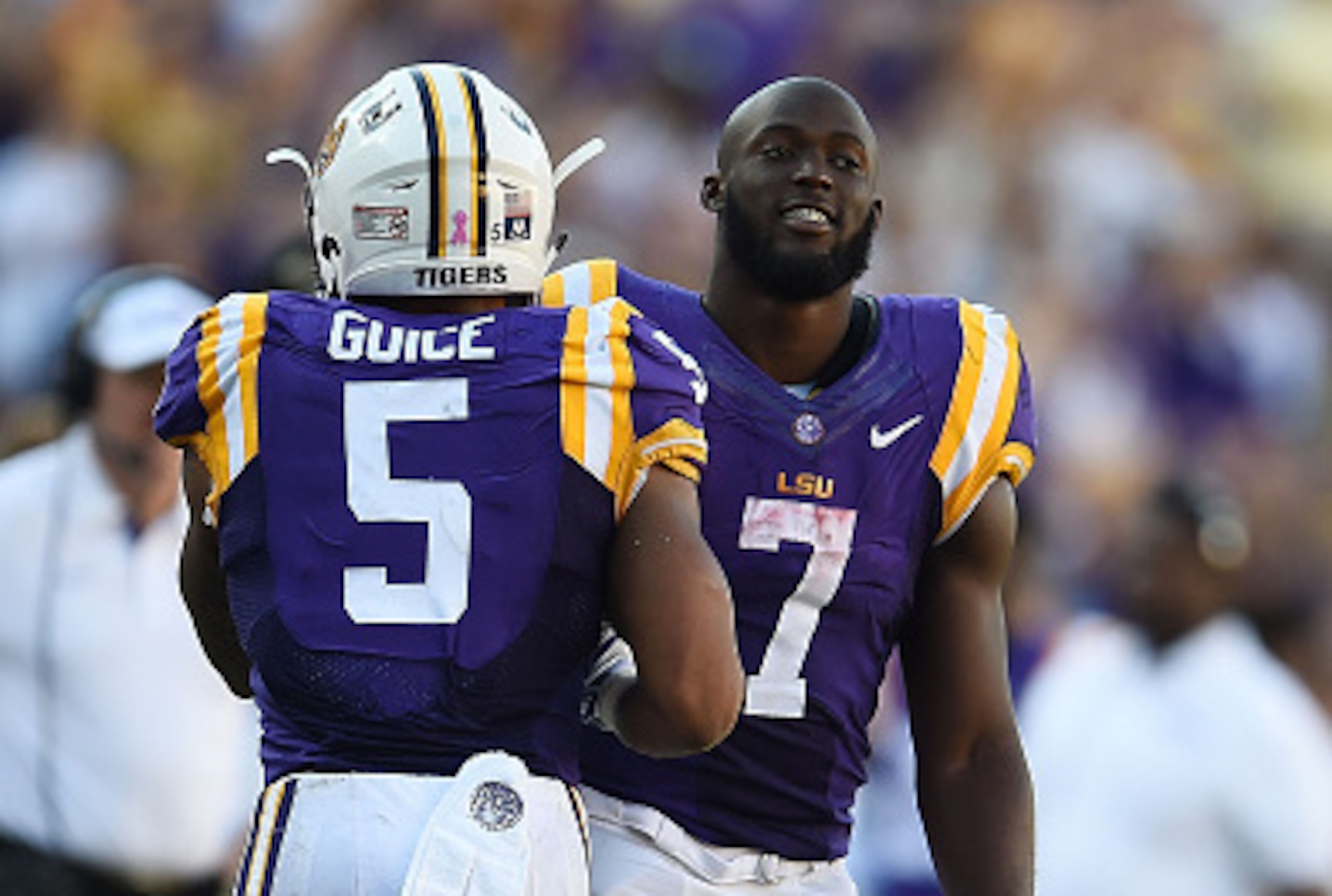
Strength: Running Back
Yes, we need to gush about Leonard Fournette. He paced the nation with 162.8 rushing yards per game, also tallying 22 touchdowns.
But LSU has excellent depth at the position, too. Derrius Guice slashed his way to 436 yards, and Darrel Williams pounded in four red-zone scores. The Tigers' backfield is in tremendous shape.
Weakness: Quarterback
Brandon Harris is a fine quarterback. He's elite at handing the ball off to Fournette, which is important. However, Harris struggles when LSU needs him to take over a game.
During nine wins last season, Harris had 10 touchdowns, two interceptions and a 143.01 rating. In three losses, those numbers changed to three, four and 110.13, respectively.
Fournette and the defense can guide the Tigers to the brink of a conference—and potentially a national—championship, but Harris must be capable of taking the final step.
Maryland
26 of 66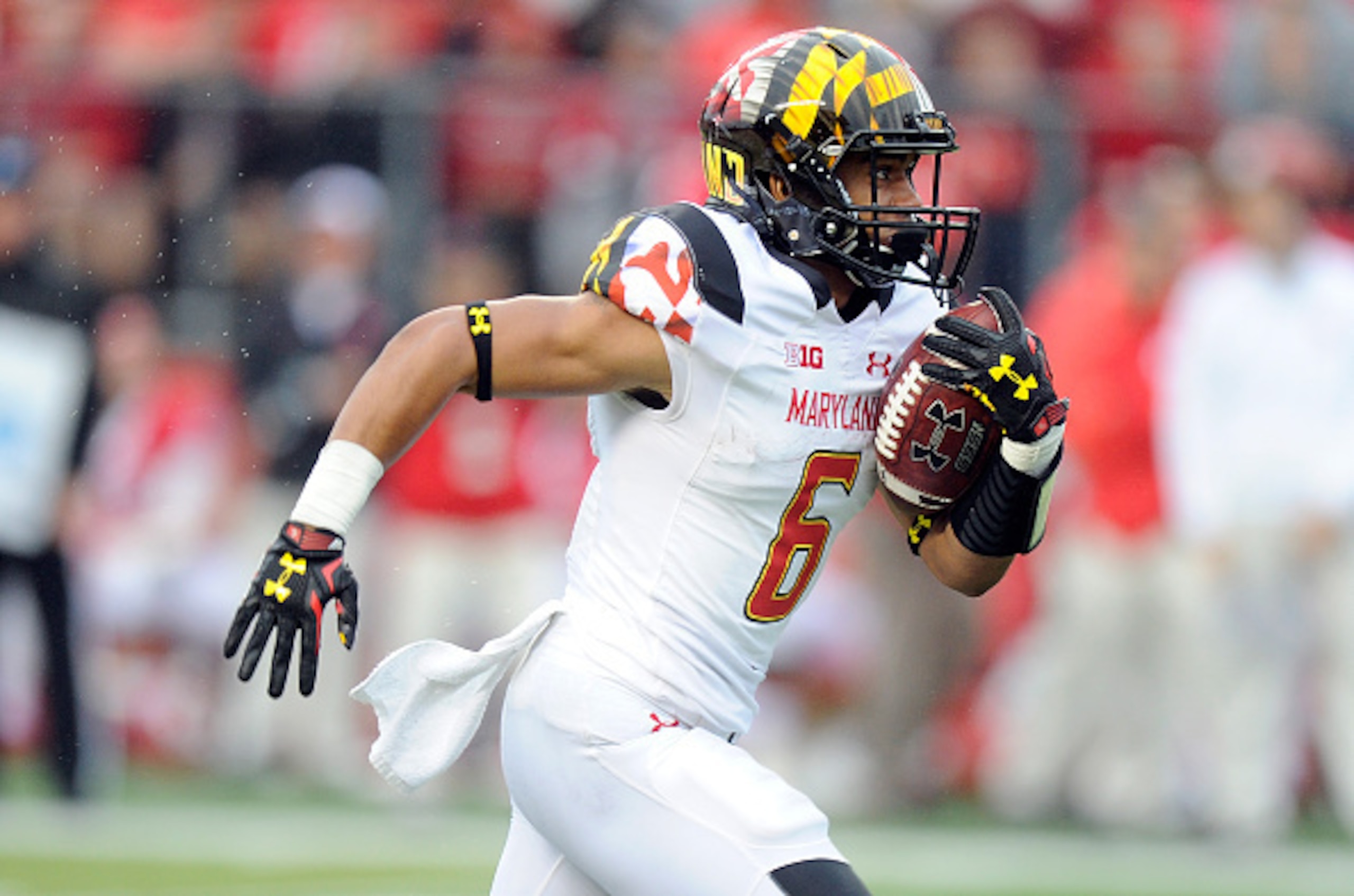
Strength: Running Back Depth
Wes Brown is suspended for three games, but Maryland's running game won't have a problem replacing him.
The Terrapins added graduate transfer Trey Edmunds from Virginia Tech, and Ty Johnson averaged 7.1 yards per carry as a freshman. Plus, if Perry Hills is the starting quarterback, he's a dangerous runner. Ohio State can confirm that.
Weakness: Quarterback
Whether or not Hills wins the competition doesn't matter. Maryland has a simple request: Please stop throwing interceptions.
Last season, Caleb Rowe watched 15 of his 165 attempts fall into the wrong set of hands, and opponents swiped 13 of Hills' passes. Overall, the quarterbacks tossed 29 picks in 387 attempts.
Yikes.
Miami
27 of 66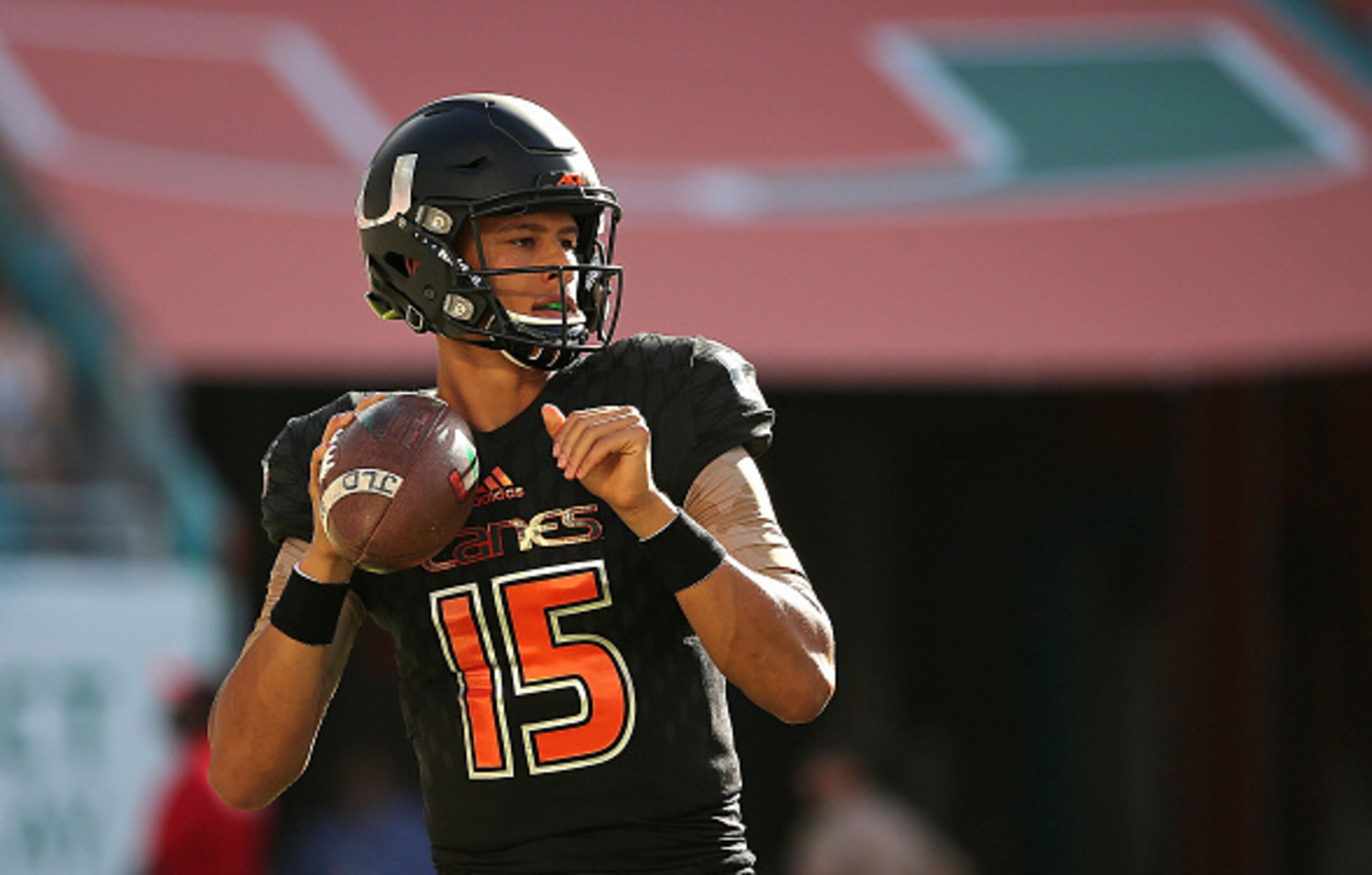
Strength: Brad Kaaya
If Miami is going to surprise during Mark Richt's debut season, Brad Kaaya must be the catalyst.
Heading into his third year as the starter, Kaaya is a cerebral quarterback with excellent touch. He tossed just five interceptions in 389 attempts last season, tallying 3,238 yards and 16 scores.
Kaaya's efficiency should only improve in Richt's offensive system. That combination will need to carry the Hurricanes, too.
Weakness: Those Protecting Brad Kaaya
Cornerback is an issue, but Texas transfer Adrian Colbert is easing the worry on defense. The big unknown, though, is how the Miami offensive line will perform.
Last season, the unit was not good.
Fortunately for the 'Canes, they have a stud center in Nick Linder. Danny Isidora is experienced, but otherwise they're hoping new position coach Stacy Searels will help Trevor Darling and KC McDermott reach their potential and develop a reliable fifth starter.
Michigan
28 of 66
Strength: Defensive Line
Jabrill Peppers and Jourdan Lewis receive most of the attention, but the Michigan defensive line is going to be outstanding.
Led by potential first-round draft pick Chris Wormley, the Wolverines boast a true two-deep unit. If Taco Charlton, Bryan Mone and Maurice Hurst Jr. start with Wormley, Rashan Gary, Ryan Glasgow, Matt Godin and Chase Winovich will compose the second unit.
"We were up there [last year]," Wormley said, per Nick Baumgardner of MLive.com. "This year, [the expectation] is to take the next step and, without question, be the best defensive line in the country."
Weakness: Uncertainty at Quarterback
Two factors work in Michigan's advantage. Jim Harbaugh helped Iowa castoff Jake Rudock become a sixth-round draft pick, so the concern level probably isn't high. And the schedule allows for a slow start from the new quarterback.
Still, the battle between John O'Korn and Wilton Speight has potential championship implications. Defense will carry the Wolverines, but the quarterback will need to come up clutch a few times in 2016.
Michigan State
29 of 66
Strength: Linebackers
Trae Waynes highlighted the "No Fly Zone" two years ago. Shilique Calhoun led a dangerous defensive line in 2015. It's the linebackers' turn to guide the Spartans.
Riley Bullough paced Michigan State with 106 tackles last season, and Jon Reschke added 75. Ed Davis—who tallied 58 stops in 2014—received a sixth year of eligibility.
And no, Spartans fans, "Disrespekt" is not a strength.
Weakness: Wide Receivers
Aaron Burbridge and Macgarrett Kings Jr. accounted for 208 of the offense's 384 targets and 125 of 244 receptions last season.
R.J. Shelton was a superb complementary piece, but is he a featured receiver? The leading returning wideouts had two catches, so MSU may need true freshmen Donnie Corley and Cam Chambers to hold significant—not just rotational—roles. Are they ready?
Minnesota
30 of 66
Strength: Running Game
Minnesota has an exciting future at running back. As freshmen, Shannon Brooks and Rodney Smith combined to tally 1,379 yards and nine touchdowns, adding 33 receptions.
Dual-threat quarterback Mitch Leidner complements the duo. Through three seasons, he's scampered for 1,129 yards and 23 scores.
Weakness: Major Losses at the Second Level
Antonio Johnson recorded a team-high 101 tackles, and De'Vondre Campbell registered 92. Eric Murray and Briean Boddy-Calhoun broke up 13 passes and intercepted five passes.
The Gophers bring back a few quality defenders such as Cody Poock and Damarius Travis, but replacing that production will be difficult.
Mississippi State
31 of 66
Strength: Linebackers
Although Richie Brown is the lone returning starter, Mississippi State is loaded with talent at linebacker.
Brown paced the Bulldogs with 109 tackles, while J.T. Gray (65) and Gerri Green (49) were regular contributors. Redshirt freshmen Leo Lewis and Tim Washington will join the mix in 2016.
Weakness: Quarterback
Dak Prescott quietly torched opponents last season, accumulating 4,381 yards of total offense and 39 touchdowns. The Mississippi State offense is certain to be less threatening.
That's not to say Nick Fitzgerald, Damian Williams or any of the other contenders cannot develop into a solid player. It's simply not going to happen, especially while they're sharing reps in the fall.
Missouri
32 of 66
Strength: Defensive Line
Walter Brady's dismissal stings, but Missouri remains in excellent shape along the defensive line. Charles Harris—who posted 18.5 tackles for loss and seven sacks—is the featured player.
Player development has always been a strength, so the departure of position coach Craig Kuligowski may have a considerable impact on the unit. Still, the Tigers have promising players in Josh Augusta, Terry Beckner Jr., Marcell Frazier and Ricky Hatley.
Weakness: Offensive Line
Drew Lock needs to develop. There is absolutely no way around that. The Missouri offense was anemic in 2015, and the pressure is on Lock and coordinator Josh Heupel to change that.
Accomplishing that improvement won't be easy. The Tigers lost Evan Boehm, Connor McGovern, Taylor Chappell, Brad McNulty, Mitch Hall and Nate Crawford, who combined for 152 starts.
Nebraska
33 of 66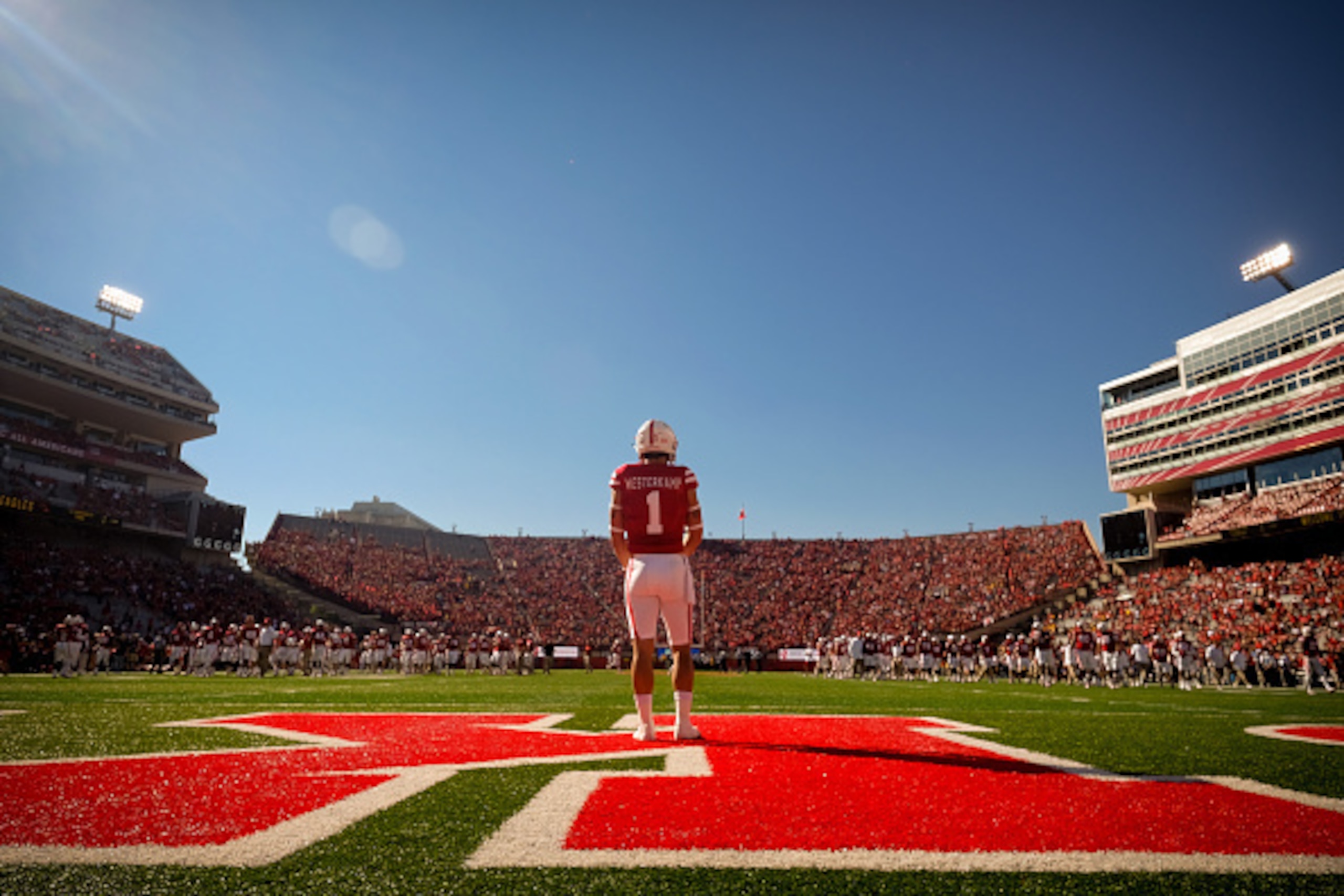
Strength: Receiving Corps
If Tommy Armstrong Jr. can cut down on interceptions, Nebraska's passing attack will legitimately be great. Jordan Westerkamp (66/926/7) leads a balanced unit.
Brandon Reilly, Alonzo Moore, Cethan Carter and Stanley Morgan Jr. all return. More importantly, big-play threat De'Mornay Pierson-El is on track to be healthy.
Weakness: Winning Close Games
It was painful to watch Nebraska go 6-7.
Six of those seven shortcomings were by eight points or fewer. In addition to four losses by three or fewer, the Cornhuskers dropped the season opener to BYU on a last-play Hail Mary.
The 2016 squad needs to overcome the "here we go again" feelings, because the upcoming season will include many tight finishes.
North Carolina
34 of 66
Strength: Skill-Position Talent
Scoring shouldn't be a problem for UNC. Mitch Trubisky received plenty of snaps as the backup quarterback, so he's familiar with the Tar Heels' group of offensive weapons.
Elijah Hood piled up 1,463 yards and 17 touchdowns last season, while T.J. Logan chipped in 400 and five, respectively. Mack Hollins is a dangerous downfield threat, Ryan Switzer is a versatile playmaker, and Bug Howard is a solid No. 3 receiver.
Weakness: Run Defense
Although the starting secondary is a clear strength, the front seven presents a major question mark. There's experience on the line, but nobody was dominant last year.
North Carolina needs to improve on the seventh-worst run defense of 2015. However, the team must accomplish it while replacing linebackers Shakeel Rashad (126 tackles) and Jeff Schoettmer (97).
North Carolina State
35 of 66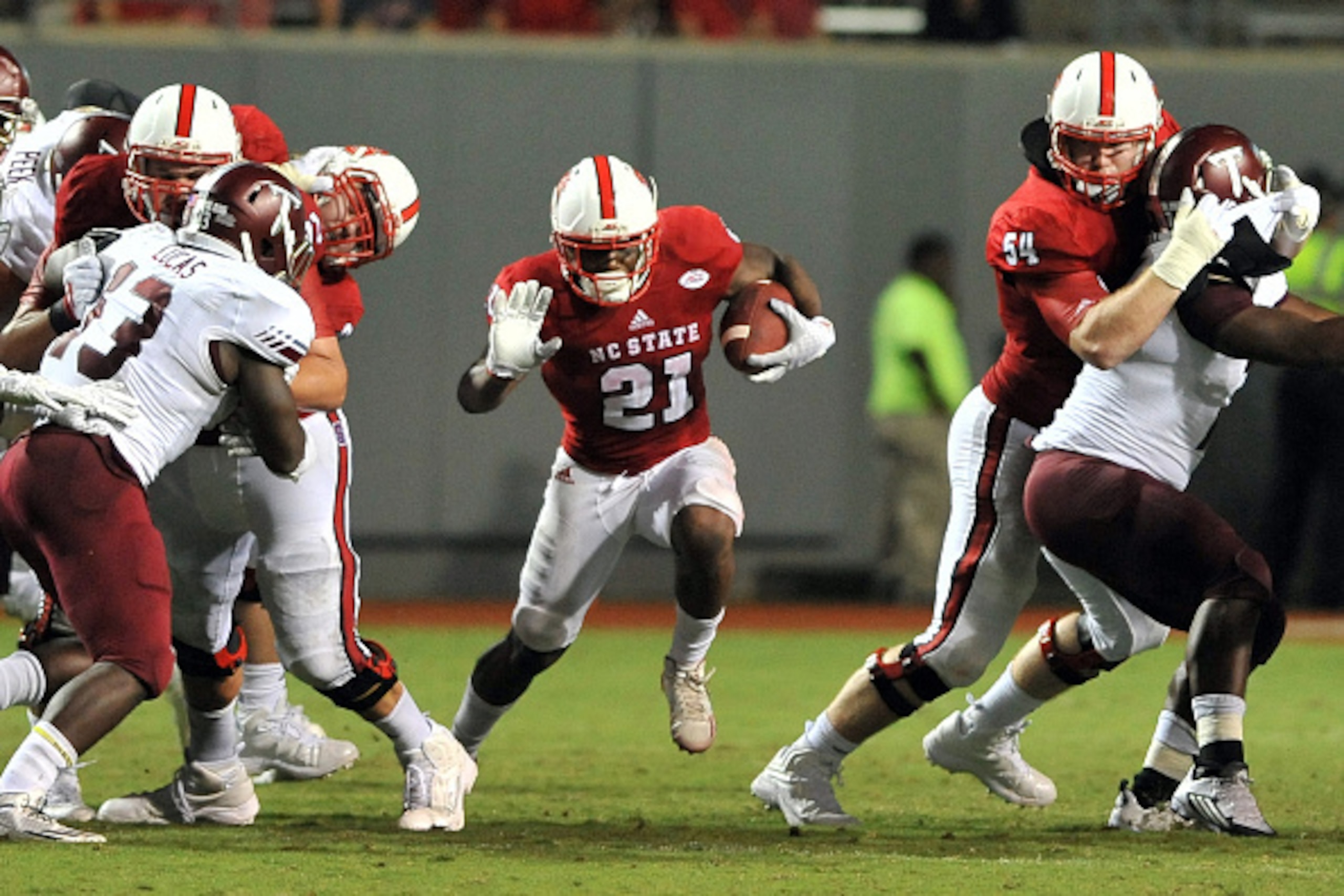
Strength: Skill-Position Talent
Perhaps that isn't the perfect title, but it's difficult to find a proper summary for "Matt Dayes and whatever Jaylen Samuels is." The duo are the driving forces of North Carolina State's attack.
Dayes put up 865 yards and 12 touchdowns before a season-ending injury. Samuels had 65 receptions, 56 carries and 16 total scores while contributing as a tight end/running back/unique weapon.
Weakness: Consistency
North Carolina asserted itself against inferior competition (four dreadful nonconference teams and the three worst ACC opponents) but folded against tougher opponents (everyone else).
Finding that consistency won't be easy. Jacoby Brissett couldn't do it, and it's doubtful the 2016 quarterback is better than him.
Northwestern
36 of 66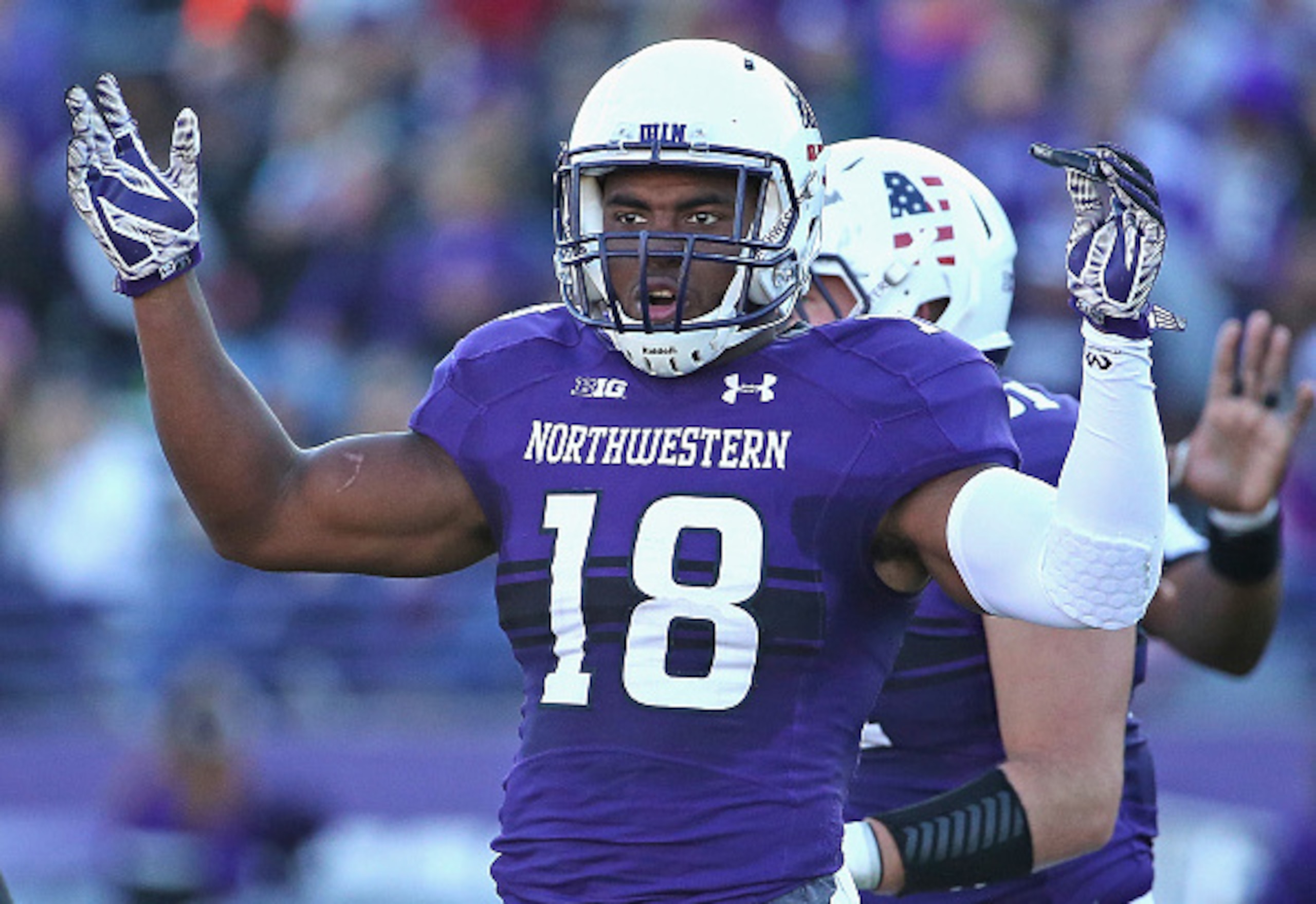
Strength: Anchor in the Middle
Northwestern needs a sturdy defense to navigate a slate that includes road games against Iowa, Michigan State and Ohio State. Anthony Walker is about as solid as you'll find.
Walker gathered 120 total tackles last season, tallying 20.5 for loss and registering four sacks. He also broke up four passes while helping the defense finish No. 13 nationally.
Weakness: Passing Game
Unfortunately for Northwestern, the offense had absolutely no balance. Justin Jackson was a workhorse runner, but freshman quarterback Clayton Thorson struggled with a thin group of receivers.
Thorson managed a meager 1,522 yards, tossing seven touchdowns compared to nine interceptions. Only two players had more than 300 receiving yards, and just one of them—Austin Carr—returns.
Notre Dame
37 of 66
Strength: Quarterback Depth
Heading into fall camp, the competition to lead the Notre Dame offense has the nation's attention. Either DeShone Kizer or Malik Zaire will emerge victorious.
In 2015, Kizer took over after Zaire's season ended because of a broken right ankle. Though the offensive style will vary slightly depending on the winner, both players are dual-threat quarterbacks.
Just in case disaster strikes, 2015 4-star prospect Brandon Wimbush is patiently waiting for an opportunity.
Weakness: Inexperienced Wide Receivers
Notre Dame's weaknesses are manageable, but Torii Hunter Jr. is the only wide receiver who has more than one career reception.
Plus, one hope was Alize Jones would help offset the transition. However, the hybrid target is academically ineligible, leaving a collection of former reserves vying for significant roles.
Equanimeous St. Brown, Miles Boykin, C.J. Sanders and Corey Holmes have spent at least one season with the program, while true freshmen Kevin Stepherson, Javon McKinley and Chase Claypool could be pushed into the rotation immediately.
Ohio State
38 of 66
Strength: Coaching
Ohio State needs to replace 12 NFL draft picks and a few other undrafted free agents, yet the team is still considered a Big Ten favorite.
Give Urban Meyer the credit for that. Only Alabama has recruited better than the Buckeyes since Meyer's arrival, and his coaching staff is outstanding at developing talent. They're going to be fine.
Weakness: Experience
Thanks to the recruiting success, Ohio State doesn't necessarily have a weak unit. But not many players have, well, played.
A Week 3 showdown at Oklahoma will test the Buckeyes' youth. J.T. Barrett, Pat Elflein and Raekwon McMillan will carry a heavy leadership burden into Norman.
Oklahoma
39 of 66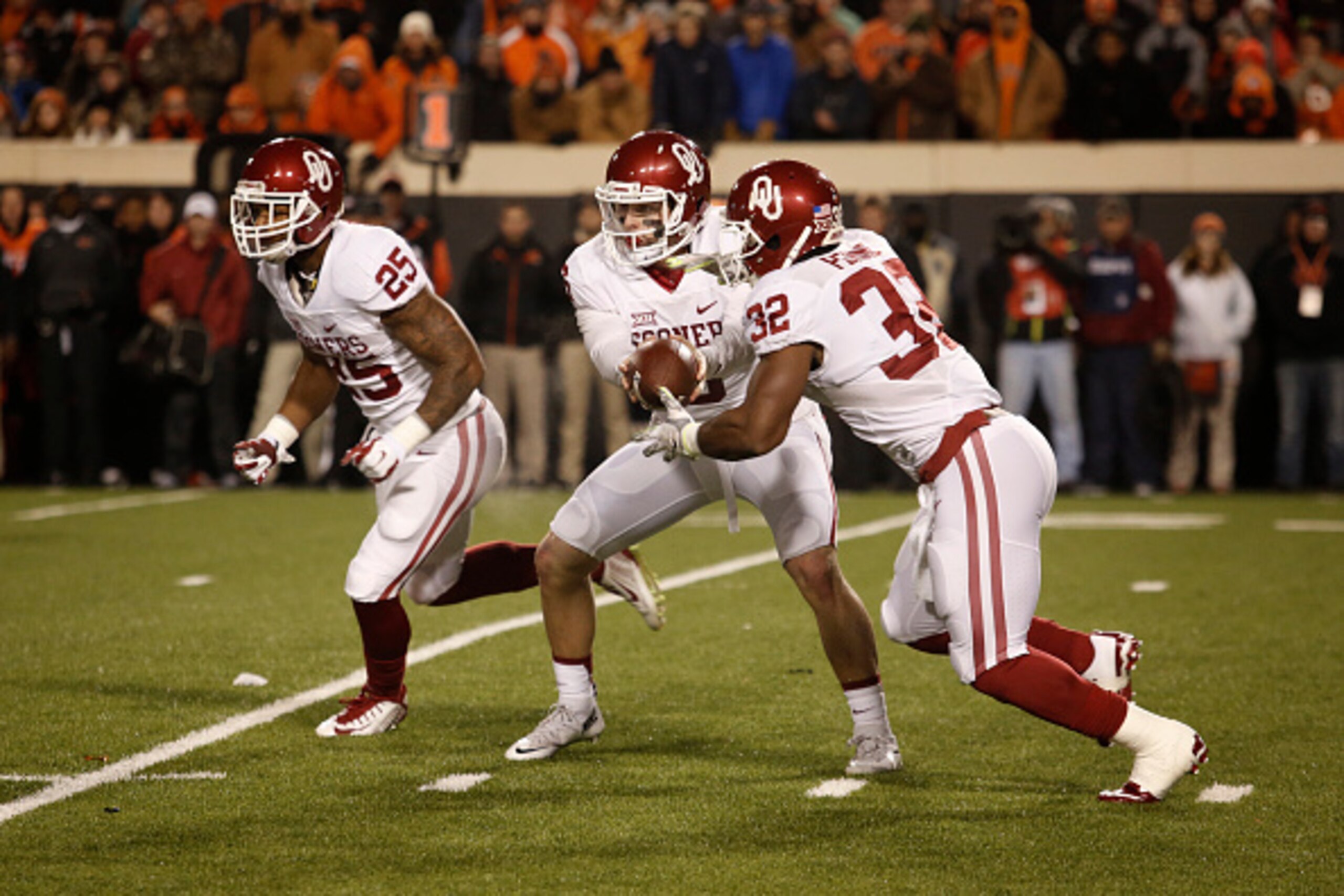
Strength: Offensive Backfield
The departure of Sterling Shepard stings. He was an elite route-runner and dependable target for Baker Mayfield. But the gunslinger's partners in the backfield form an excellent duo.
Samaje Perine has already amassed 3,000-plus yards and 37 touchdowns in two seasons. Joe Mixon piled up 1,109 offensive yards and 11 scores during his Sooners debut.
Mayfield is an expert at executing the run-pass option, and Lincoln Riley is a rising star at offensive coordinator. The Oklahoma offense will once again be among the nation's most feared units.
Weakness: Experience at Outside Linebacker
And that's a good thing, too, because the Sooners defense is considerably less dangerous on the outside.
Eric Striker accumulated 36 tackles for loss and 16.5 sacks during 2014 and 2015. Devante Bond added seven tackles for loss while sharing starting duties with P.L. Lindley last season.
Redshirt freshman Ricky DeBerry, two-year reserve Ogbonnia Okoronkwo and true freshman Caleb Kelly are among the players expected to fill the void. They'll need to grow up quickly.
Oklahoma State
40 of 66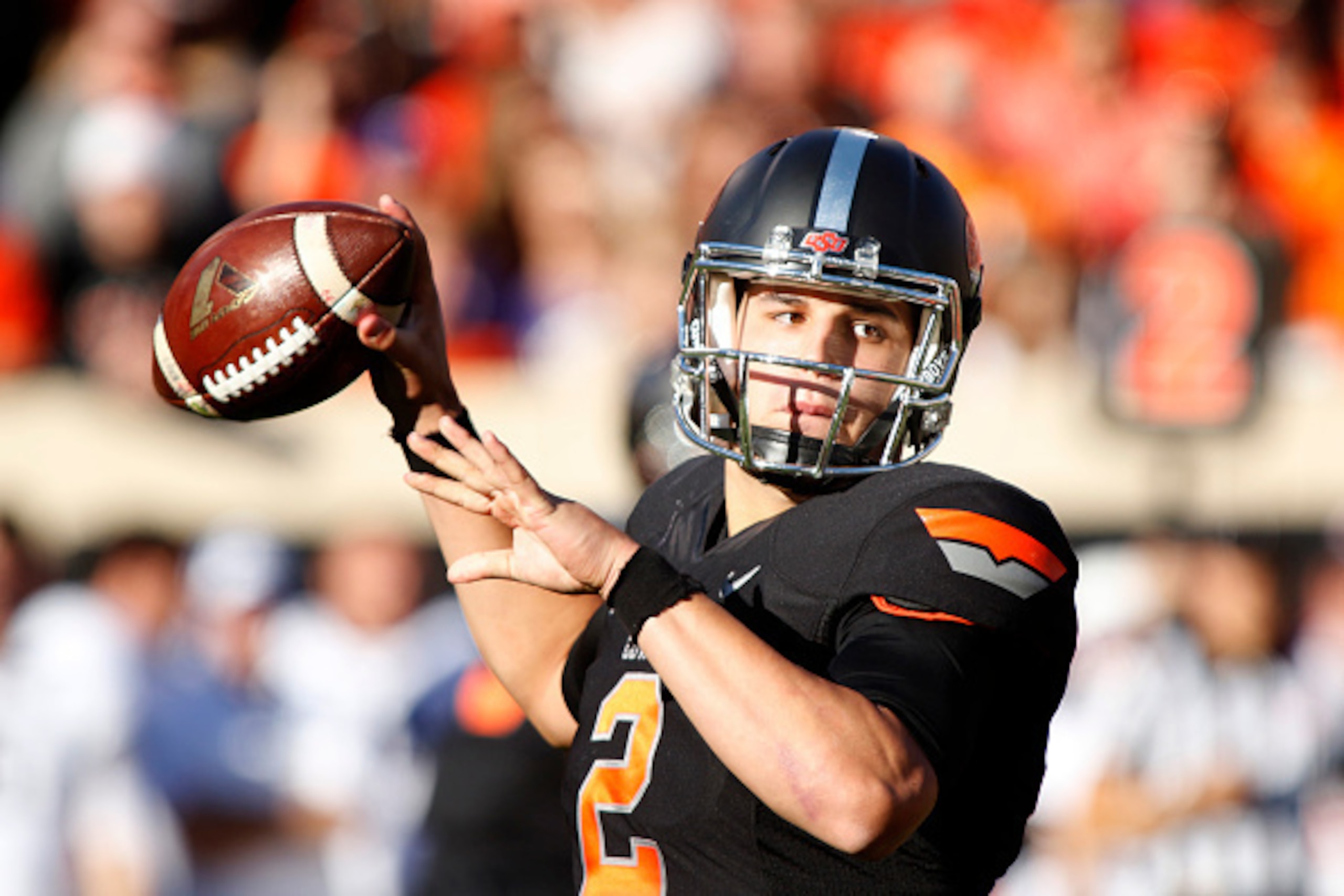
Strength: Passing Attack
Mason Rudolph is back after throwing for 3,770 yards and 21 scores. He set up numerous other opportunities before professional touchdown vulture J.W. Walsh entered in the red zone.
James Washington paced Oklahoma State with 1,087 yards and 10 trips to the end zone, while Marcell Ateman (45/766/5) and Jalen McCleskey (29/253/3) held notable roles. Jhajuan Seales, Austin Hays and Blake Jarwin all return, too.
Weakness: Running Game
Balance? Who needs balance?
Oklahoma State doesn't lack names in the backfield. Chris Carson, Rennie Childs and Jeff Carr return. Barry Sanders Jr. transferred from Stanford. Justice Hill and LD Brown joined the team.
Production is a different story. A shaky offensive line didn't help; the team mustered just 3.6 yards per carry in 2015. Only 14 teams had a lower average. Somebody needs to shine in 2016.
Ole Miss
41 of 66
Strength: Chad Kelly
Chad Kelly's redemption tour is off to an excellent start. Last season, Kelly totaled 4,542 yards of offense and scored 41 times, including 17 in Ole Miss' final four games.
The Rebels will miss standout receiver Laquon Treadwell and No. 2 option Cody Core, but Kelly will still put up gaudy numbers while throwing to Quincy Adeboyejo, Damore'ea Stringfellow and a promising cast of young targets.
Weakness: Stability on Offensive Line
Ole Miss lost all five starters on the offensive line, but previous injuries and suspensions created a relatively experienced core of backups. The major problem is the constant shuffle up front.
Versatility is great. Robert Conyers, Rod Taylor and Sean Rawlings can each handle at least two positions on the line to flank Jordan Sims and Javon Patterson. But what happens if Greg Little is ready to start as a true freshman? How soon will the lineup be finalized?
Oregon
42 of 66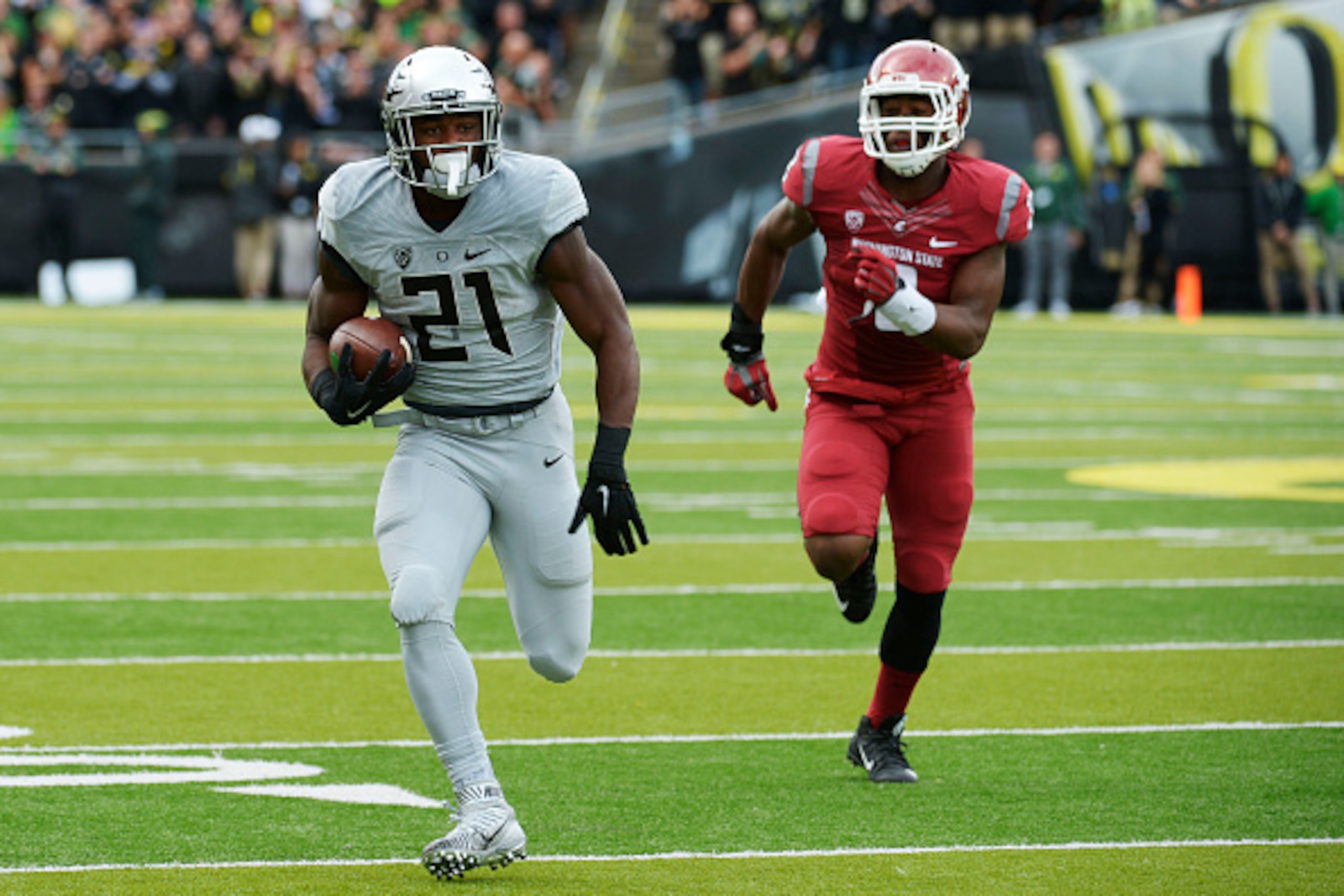
Strength: Speed
Believe it or not, Oregon has some quickness on offense.
Running back is deep. Royce Freeman scampered for 1,836 yards and 17 touchdowns, while Taj Griffin, Kani Benoit and Tony Brooks-James each averaged at least seven yards per carry.
Darren Carrington highlights the wide receivers, which should have Charles Nelson on a full-time basis and a healthy Devon Allen. Dwayne Stanford and Evan Baylis return, too.
Weakness: Linebackers
The Ducks will need that speed to overcome defensive issues, particularly at linebacker. Joe Walker, Rodney Hardrick, Tyson Coleman and Christian French each used up their eligibility.
Johnny Ragin III and Jimmie Swain are penciled in as starters, while Danny Mattingly and A.J. Hotchkins are battling for the final starting spot. They have big shoes to fill on the Pac-12's worst defense. Yeah, it might get worse.
Oregon State
43 of 66
Strength: Jordan Villamin
Oregon State is still at least one season away from even notable contention, but Jordan Villamin is worth watching.
A 6'4" receiver listed at 242 pounds, Villamin has the makings of an NFL receiver. He caught 43 passes for 660 yards and five touchdowns last year, and those numbers should only rise as the Beavers settle their volatile quarterback situation.
Weakness: Forcing Turnovers
Without an elite offense, Oregon State needs the defense to create some game-changing plays. That didn't happen in 2015.
The Beavers mustered just 12 takeaways, which tied for the third-lowest total nationally. During conference action, Oregon State stole possession seven times in nine games. It's no mystery that translated to zero Pac-12 victories.
Penn State
44 of 66
Strength: Offensive Weapons
Trace McSorley shined in the spring game. With this cast of running backs and receivers, we might see that in the fall, too.
As a freshman, Saquon Barkley eclipsed the 1,000-yard mark, and Miles Sanders—a 5-star running back—joins the team. At receiver, the Nittany Lions have three potential NFL options in Chris Godwin, DaeSean Hamilton and Saeed Blacknall.
Weakness: Rebuilt Defensive Line
Austin Johnson, Carl Nassib and Anthony Zettel combined for 171 total tackles with a staggering 45.5 for loss. They were integral parts of Penn State's 14th-ranked defense.
Nassib's departure can be overcome, but losing Johnson and Zettel on the interior could result in noticeable regression against the run. That's a significant problem in the Big Ten East Division.
Pittsburgh
45 of 66
Strength: Running Game
Pitt should be among the ACC's most feared rushing offenses, and the running back depth is simply a part of the reason. Considering the backfield includes James Conner and Qadree Ollison, that's a massive credit to the offensive line.
Adam Bisnowaty and Dorian Johnson are the veterans of an experience unit, each opening at least 28 games so far. Alex Officer and Brian O'Neill were full-time starters last year, too.
Weakness: Receiver Depth
Tyler Boyd leaves a difficult void to fill. He amassed 129 targets, according to NCAAsavant.com. The second-highest receiver—Dontez Ford—saw just 46 passes come his direction.
Ford, Scott Orndoff and Zach Challingsworth are the leading returning options. Pitt needs both a primary and big-play option to emerge. No one receiver will replace Boyd's contributions.
Purdue
46 of 66
Strength: Markell Jones
Markell Jones broke out against Michigan State with a 157-yard, two-touchdown performance, but he shared the backfield with D.J. Knox throughout the 2015 season. Jones finished his debut with 875 yards and 10 touchdowns.
However, an unfortunate injury to Knox will make Jones the unquestioned featured back this year. If Purdue pulls any upsets in 2016, it's extremely likely Jones put together a massive game.
Weakness: Defensive Playmakers
Jake Replogle, Gelen Robinson and Evan Panfil compose a solid unit in the trenches. The Boilermakers' troubles will be most evident in their bend-until-it-breaks defense.
Purdue forced a respectable 21 turnovers last year, but Anthony Brown and Frankie Williams snagged a combined seven interceptions. Williams also recovered a fumble. Will any pair match them?
Rutgers
47 of 66
Strength: Running Game
Expect Rutgers to pound the football in 2016. Chris Muller, J.J. Denman, Dorian Miller and Derrick Nelson were all full-time starters up front, though, yes, Denman is currently second on the depth chart, per Keith Sargeant of NJ Advance Media.
Robert Martin and Josh Hicks highlight the backfield. Between the two, they accumulated 1,437 yards and 10 touchdowns.
Weakness: Linebackers
Steve Longa made the surprising—not necessarily wrong—decision to declare for the NFL draft, but it left the Scarlet Knights without a returning starter at linebacker.
Quentin Gause and Kaiwan Lewis joined Longa as the top three tacklers. They collected 280 stops with 21 for loss. Rutgers may have trouble improving on its 84th-ranked run defense.
South Carolina
48 of 66
Strength: Linebackers
Oh, South Carolina. It could be one of those years. Linebacker was the clear choice for strength before we found out Skai Moore will be sidelined for the season because of a neck injury.
However, the quarterback situation is a problem. No running back is really special. No receiver is proven. The offensive and defensive lines lost most of their pieces. The secondary is merely fine.
Which brings us back to the linebackers. T.J. Holloman and Jonathan Walton combined for 103 tackles. Pretty great, right?
Weakness: Skill-Position Experience
Steve Spurrier really didn't do many favors for his successor, Will Muschamp. The proverbial cupboard is bare, especially after Pharoh Cooper wisely bolted for the NFL.
Assuming freshman Brandon McIlwain holds down the starting role, South Carolina's leading returning rusher is David Williams. He had 299 yards and zero touchdowns. Deebo Samuel is the top receiver, though he caught 12 passes and scored once.
Stanford
49 of 66
Strength: Christian McCaffrey
You didn't expect anything else, right?
Christian McCaffrey set the single-season all-purpose yardage record. He topped 2,000 yards as a rusher and snagged 45 receptions, also adding more than 1,000 kick-return yards.
Stanford can sprinkle in some Bryce Love to keep McCaffrey fresh, but the Cardinal's success depends on the versatile junior.
Weakness: Brutal Six Games with a New Quarterback
Saying the team will rely on McCaffrey isn't merely a "well duh, he's the best player." Stanford lost its longtime quarterback Kevin Hogan, and the new signal-caller—whether it's Keller Chryst or Ryan Burns—will be greeted with a gauntlet.
The Cardinal open the season against Kansas State before getting a week off. Then, they meet USC, travel to UCLA and Washington, host Washington State and head to Notre Dame.
Welcome to college football, right? McCaffrey will shoulder a heavy burden through October 15.
Syracuse
50 of 66
Strength: Dino Babers
After averaging just 319.9 yards per game last season—which ranked 119th of 128 FBS teams—Syracuse plucked offensive-minded Dino Babers from Bowling Green.
Babers will institute a fast-paced offensive scheme that should slowly make the Orange more competitive in the ACC. The program managed just three conference wins in the last two years.
Weakness: Not the Right Personnel for Babers...Yet
It would be foolish to expect a rapid turnaround for multiple reasons, but Syracuse isn't ready for Babers' offense. Even he admitted that, per Stephen Bailey of Syracuse.com.
"I have to say, this is our most daunting task," Babers said. "This was an option-based football team, and we're trying to turn it into a football team that likes to throw the ball first. We've got some athletes, but it's going to take a while."
For reference, Bowling Green ran the nation's second-most plays (1,136 total; 81.1 average) in 2015. The Orange snapped the ball 751 total with an average of 62.6, the second fewest in the country.
TCU
51 of 66
Strength: Experienced Replacement Starters
Injuries stink, especially the season-ending issues. In an unfortunate fortunate sense, those injuries are actually helping TCU this year.
Josh Doctson, Kolby Listenbee, Terrell Lathan, Corry O'Meally and Derrick Kindred all need to be replaced. Deante' Gray, Ty Slanina, James McFarland, Ranthony Texada and Kenny Iloka each return after missing a majority of the 2015 season.
Weakness: Quarterback
There are several reasons to be optimistic about the Horned Frogs, but the quarterback battle will determine their success.
Kenny Hill had an explosive beginning to his Texas A&M career before trailing off and ultimately transferring. Foster Sawyer entered four games as a redshirt freshman. They're surrounded by weapons at the skill positions, but both struggled in the spring.
Tennessee
52 of 66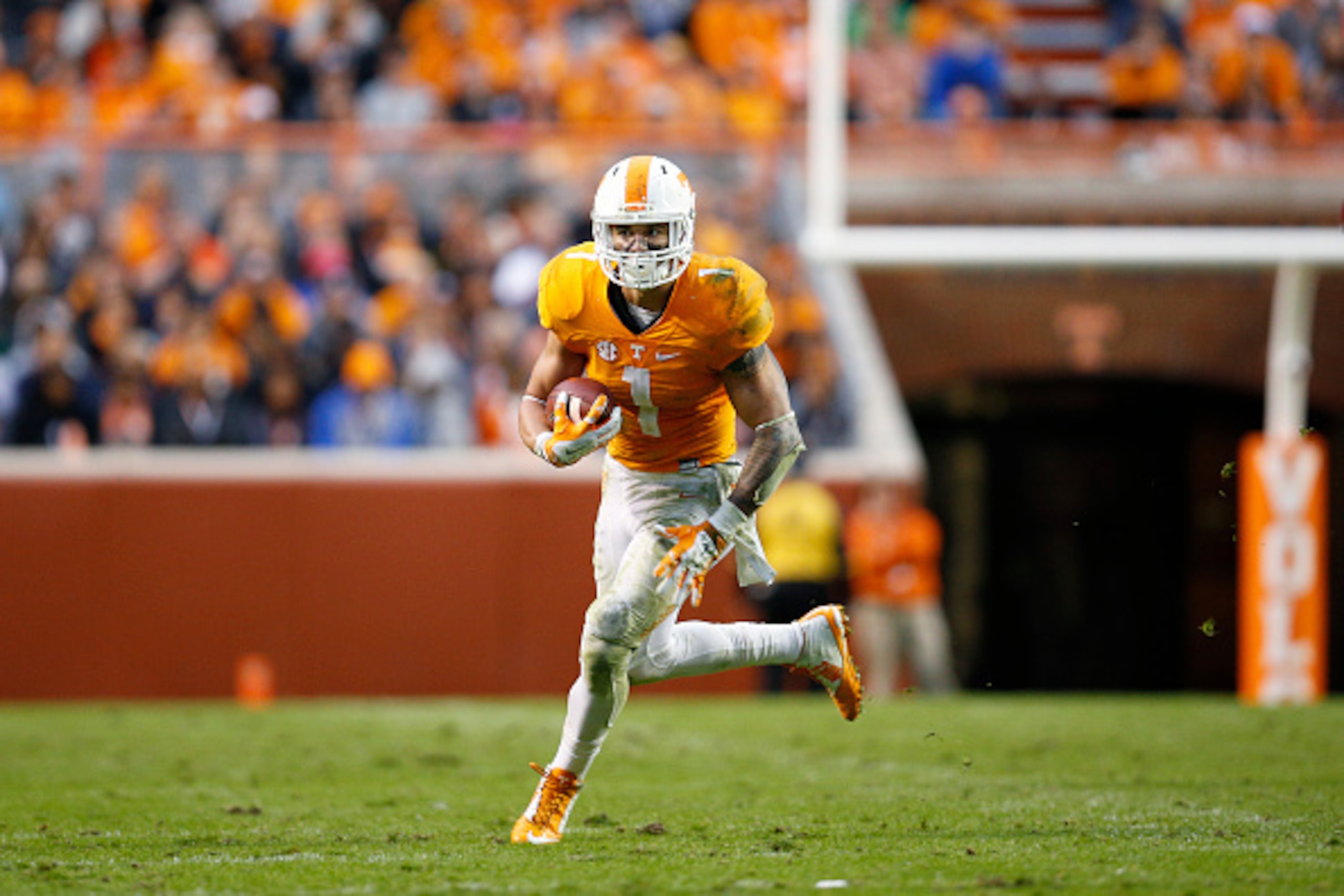
Strength: Running Backs
Jalen Hurd is one of the nation's most underrated backs. After totaling 1,120 yards and seven touchdowns as a freshman, he improved to 1,478 and 14 last season while sharing touches.
Alvin Kamara exploded onto the college football scene, scoring in three different ways. He reached the end zone seven times as a runner, thrice as a receiver and once as a punt returner.
Weakness: Passing Game
It's a good thing Tennessee has options to run the ball, though. The receiving unit hasn't been dangerous in a while, and Joshua Dobbs is simply an average passer.
The Vols hope JUCO transfer Jeff George can change the trend outside. They certainly need that, since it's unlikely Josh Malone and Josh Smith are anything better than complementary options.
Texas
53 of 66
Strength: Linebacker
Perhaps the secondary deserves the nod, but let's get the linebacker hype train rolling. Texas has some exciting young linebackers, most notably the 6'3", 232-pound Malik Jefferson.
Jefferson had 61 tackles with seven for loss as a freshman, and Anthony Wheeler tallied 34 during his debut season. Tim Cole, Edwin Freeman and Jeffrey McCullough round out the unit.
Weakness: Wide Receiver
The Longhorns need a quarterback, but he can't throw to air. The only returning player with more than 15 catches or 200 yards is John Burt, and just three others reached 100.
Collin Johnson, Devin Duvernay and Jake Oliver give Texas hope for the future, but will that translate into production now?
Texas A&M
54 of 66
Strength: Defensive Line
Choosing between the receiving corps and defensive line is like splitting hairs, but the superstar gets the nod. Myles Garrett is an absolute freak who wants to shake a sophomore slump—you know, the one where he had 12.5 sacks.
The easy reaction is "just double-team Garrett!" but Texas A&M can counter with Daeshon Hall, who has an NFL future. Zaycoven Henderson, Daylon Mack and Kingsley Keke will be primary contributors.
Weakness: Linebacker
Same old song and dance, right, Aggies fans?
Injuries plagued the unit last season, so the returns of Richard Moore and Otaro Alaka at least inspire some hope. Shaan Washington (81 tackles) is also back.
Texas A&M has surrendered more than 200 rushing yards per game in each of the last three seasons, though. The Aggies need the unit to stay healthy and finally stop the run.
Texas Tech
55 of 66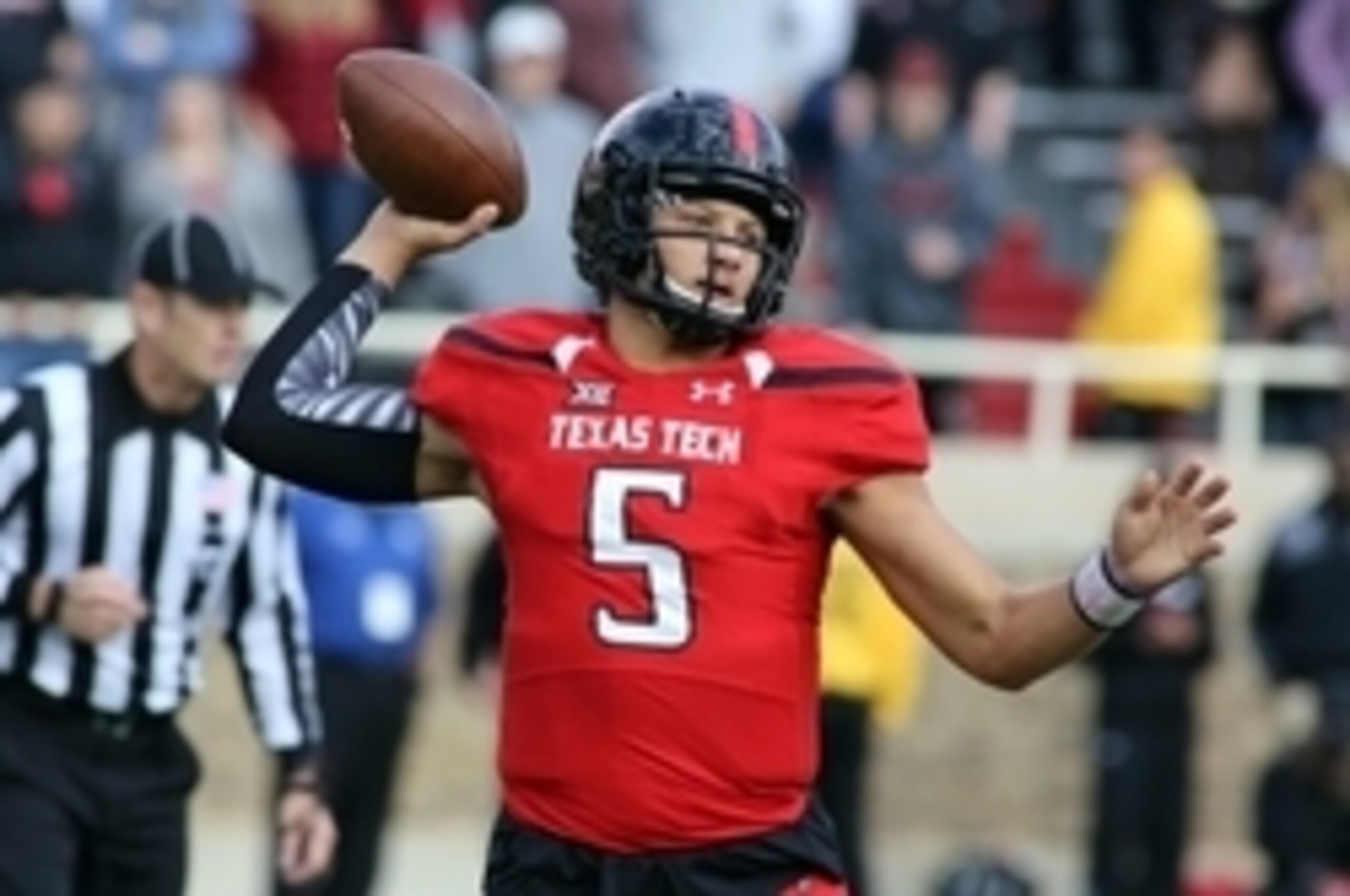
Strength: Playing Offense
Texas Tech seems to have a never-ending supply of receivers and team speed, and Patrick Mahomes II is a master of the Air Raid. He amassed 5,109 yards of total offense and 46 touchdowns last year.
As a team, the Red Raiders averaged 579.5 yards and 45.1 points. Those numbers are impressive, period. But they'd be exponentially more useful if the defense could stop, like, anyone.
Weakness: Playing Defense
It's a miracle Texas Tech managed seven victories, considering the defense surrendered 43.6 points per game. Only New Mexico State, SMU and Kansas—which combined for five wins—allowed more.
The secondary will probably be the bright spot of the unit, but a rebuilding front seven won't help. The Red Raiders won't stop anyone on the ground, and that will only hurt the pass defense.
UCLA
56 of 66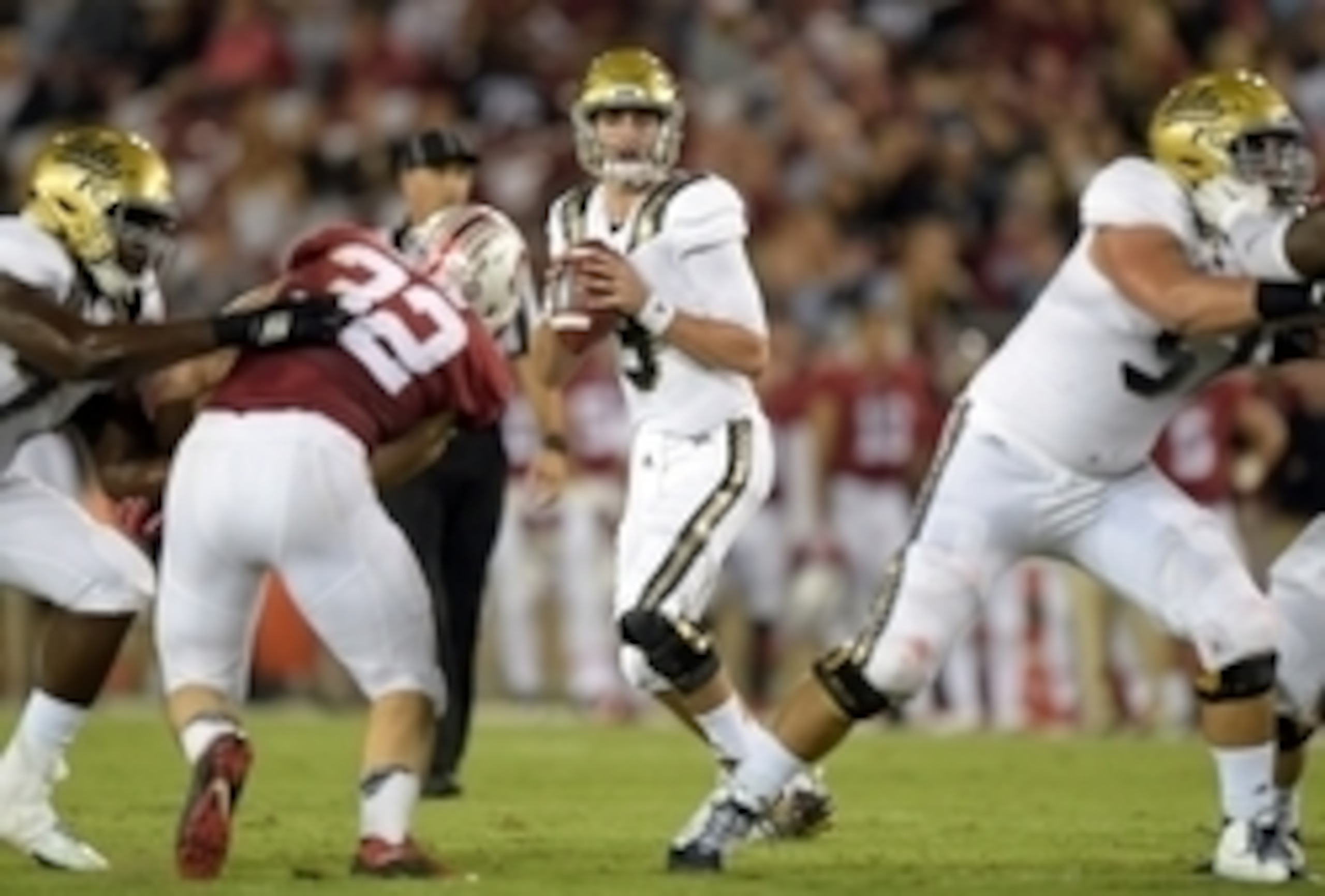
Strength: Josh Rosen
The defensive line deserves a nod because of Eddie Vanderdoes, but UCLA's Pac-12 title dreams rest on Josh Rosen's arm.
Rosen will be leading a more conventional pro-style offense this season, a shift from former coordinator Noel Mazzone's spread philosophy. The change should suit Rosen's skill set perfectly.
Weakness: Offensive Line
Much of the attention dedicated to the Bruins focuses on departures at receiver. However, they also lost three starters on the offensive line and didn't add Texas transfer Jake Raulerson.
Now, Scott Quessenberry, Kenny Lacy and Kolton Miller, and Poasi Moala should join the starting unit, too. But the Bruins want to run the ball more often in 2016. The O-line needs to progress quickly in the fall, especially after a shaky spring.
USC
57 of 66
Strength: Offensive Line
Longtime starter Max Tuerk is gone, but an injury sidelined him for much of 2015 anyway. USC returns six other key contributors, led by All-Pac 12 tackle Zach Banner.
Chad Wheeler, Toa Lobendahn, Viane Talamaivao, Damien Mama and Khaliel Rodgers each opened at least six games. Veteran running back Justin Davis and explosive weapon Ronald Jones II should have plenty of running lanes to attack.
Weakness: Defensive Line
The Trojans are banking on defensive coordinator Clancy Pendergast continuing his success despite overseeing a thin unit.
Five of the top seven tacklers will not return. Kenny Bigelow Jr. was expected to occupy a significant role, but a torn right ACL this spring ended his season before it began.
Utah
58 of 66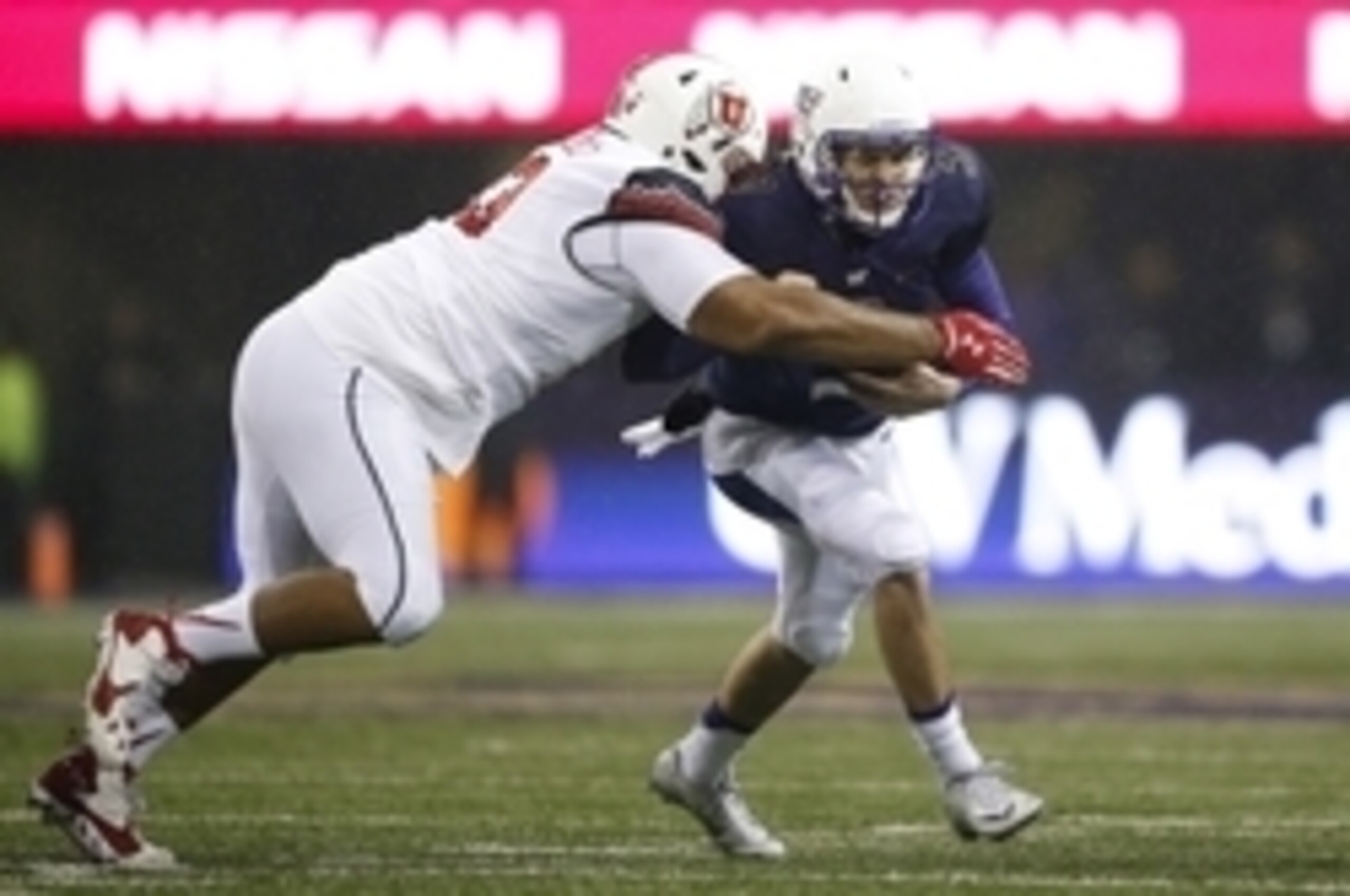
Strength: The Trenches
Utah has serious rebuilding to do, but an ability to consistently win the line of scrimmage will keep the Utes a tough opponent.
On the offensive front, three full-time starters—Isaac Asiata, J.J. Dielman and Sam Tevi—as well as Salesi Uhatafe (13 career starts) return. Garrett Bolles is the lone new blocker.
Defensively, Lowell Lotulelei is an absolute force at tackle. He and Filipo Mokofisi will attempt to free Kylie Fitts, Hunter Dimick and Pita Taumoepenu on the outside.
Weakness: Wide Receiver
Quarterback is unsettled, but the eventual signal-caller needs someone to catch the ball. In addition to versatile running back Devontae Booker, Utah must replace its top three receivers.
Tight end Harrison Hundley is the leading returner, but he managed just 21 catches for 286 yards. Tyrone Smith had 18 receptions in 2015, and Tim Patrick snared 16 passes two years ago. Cory Butler-Byrd has potential—and one career catch.
Vanderbilt
59 of 66
Strength: Anchors at Linebacker
For Vanderbilt to have a legitimate chance at pulling some upsets, the defense must completely shut down the favorite. Having Zach Cunningham and Nigel Bowden is a good start.
Bowden collected a team-best 78 tackles in 2014 before missing the 2015 campaign because of injury. Meanwhile, Cunningham racked up 103 stops en route to first-team All-SEC honors last year.
Weakness: Quarterback
That whole scoring thing is such a burden. The Commodores tied North Texas for the fourth-worst average last season, managing 15.2.
Kyle Shurmur will be the starter this season. As a freshman, he appeared in five of Vanderbilt's final six contests. If Shurmur can lead the program to a bowl game, consider that a successful season.
Virginia
60 of 66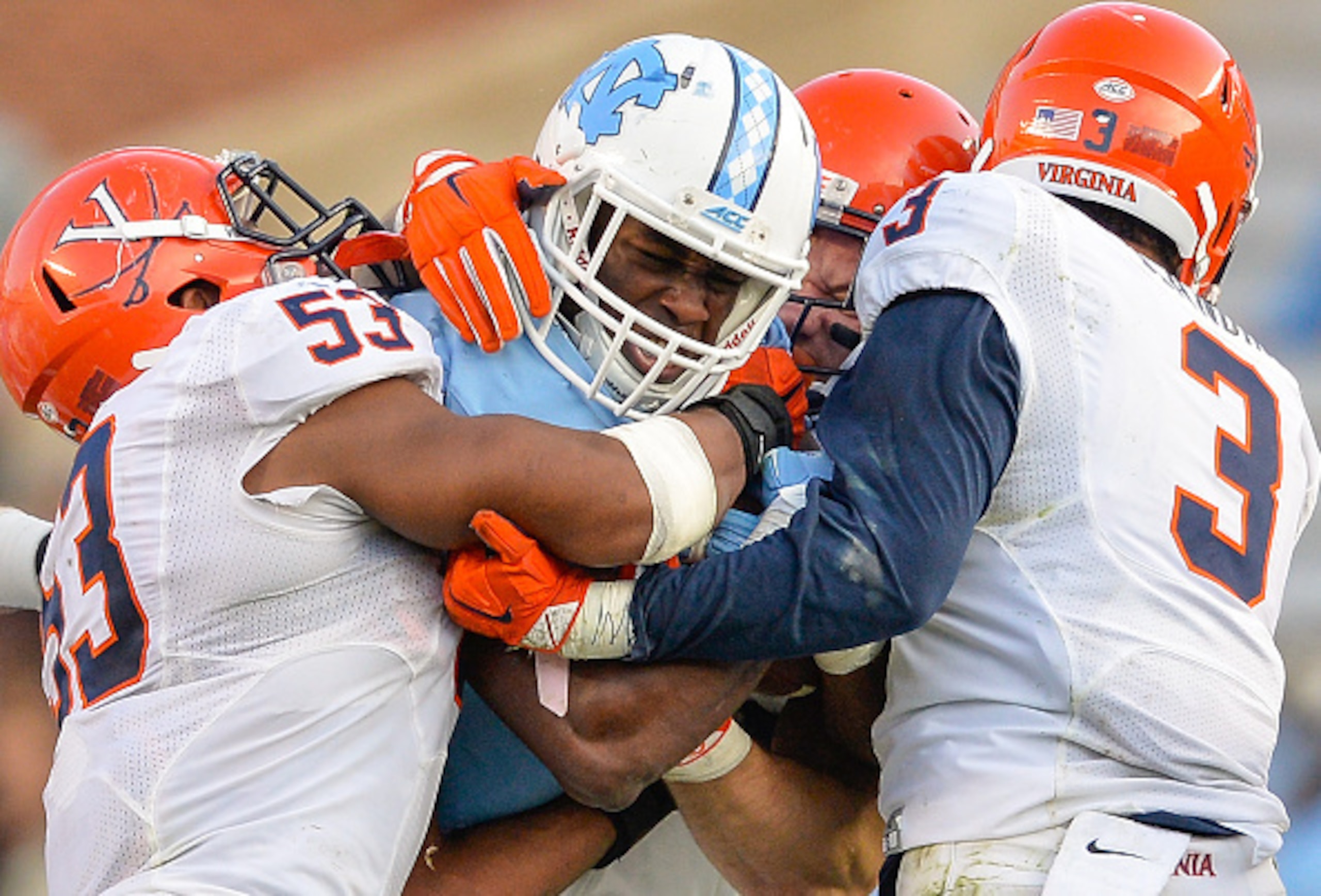
Strength: Solid Up the Middle
Virginia returns its four leading tacklers, and all four will occupy a central position in the 3-4 defense. Micah Kiser (117) and Zach Bradshaw (53) are inside linebackers, while Quin Blanding (115) and Kelvin Rainey (68) are safeties.
Outside linebacker and cornerback are potential weaknesses for the Cavaliers, but they have every reason to be confident about the middle of the defense.
Weakness: Wide Receiver
On the bright side, Taquan Mizzell returns in 2016 after racking up 75 catches and 721 yards. The problem is he's a running back.
Canaan Severin and T.J. Thorpe have no eligibility remaining. Virginia's next-best targets are Olamide Zaccheaus (21/216), Evan Butts (16/182) and Keeon Johnson (13/173).
If nobody emerges as a reliable option, Matt Johns won't have much reason to stop throwing checkdowns.
Virginia Tech
61 of 66
Strength: Offensive Weapons
Do the Hokies have a quarterback? The answer to that question is unknown, but we're aware of the other options.
Travon McMillian ran for 1,042 yards as a freshman. Isaiah Ford recorded 75 catches, 1,164 yards and 11 touchdowns, all of which were team-high marks. Cam Phillips and Bucky Hodges both had 40-plus receptions and 500-plus yards.
First-year head coach Justin Fuente could put together a special season for an offense that has struggled lately.
Weakness: Run Defense
Injuries plagued the defensive backfield in 2016, which created unexpected opportunities for freshmen. The secondary may finally be the strength of the defense.
Transition in the front seven only furthers that belief. Luther Maddy, Dadi Nicolas, Corey Marshall and Deon Clarke are major losses, yet the Hokies ranked 75th against the run last season anyway.
Wake Forest
62 of 66
Strength: Run Defense
Wake Forest was actually pretty stout against the run in 2015, and the defense finished No. 52 nationally. Duke Ejiofor and Wendell Dunn both notched 7.5 tackles for loss, too.
Finding adequate replacements for Brandon Chubb and Hunter Williams is paramount, but the Demon Deacons should contain opposing running backs. Getting to the passer is a different matter.
Weakness: Running Game
Disaster might be an understatement. Tyler Bell averaged 3.4 yards per carry, Matt Colburn mustered 3.6 on 66 carries, and Isaiah Robertson managed 3.1 on 39 attempts.
True freshman Cade Carney may earn the starting spot immediately. No matter what, Wake Forest will try to establish a shred of balance to complement what should be a respectable receiving corps.
Washington
63 of 66
Strength: Secondary
Sophomore duo Jake Browning and Myles Gaskin garner much of the attention, but the Washington secondary is full of NFL talent. Though the unit allowed the 68th-most yards last year, the Huskies picked off 15 passes and ceded just 11 touchdowns.
Kevin King and Sidney Jones combined for seven interceptions, and Budda Baker broke up seven passes and had two picks. Darren Gardenhire notched 45 tackles at nickelback. JoJo McIntosh will flank the four returners in 2016.
Weakness: Receiving Corps
Browning should develop into an all-conference quarterback, but he needs somebody to catch the ball. Jaydon Mickens (58/692) and Joshua Perkins (36/539) used up their eligibility.
The return of John Ross is much-needed, and he'll immediately become a leading option alongside Dante Pettis and Brayden Lenius. Washington has potential here, but the pass-catchers must progress from complements to primary targets.
Washington State
64 of 66
Strength: Wide Receivers
Considering the running backs are practically more active as pass-catchers than runners, Washington State isn't going to run out of pass-catching options. But this receiving corps is awesome.
Gabe Marks is the clear headliner, reeling in 104 balls for 1,192 yards and 15 touchdowns. River Cracraft is a reliable 600-yard man, while Ky Priester, Robert Lewis and Tavares Martin provide depth. Don't forget about John Thompson or Kyle Sweet, either.
Weakness: Front Seven
When Luke Falk was healthy, Washington State could win a shootout. The offense will be even more critical in 2016, though, because the front seven may take a step back.
Jeremiah Allison (96 tackles) graduated, as did top edge-rushers Ivan McLennan and Kache Palacio. Darryl Paulo and Destiny Vaeao produced 10 sacks but exhausted their eligibility.
The Cougars would settle for average. Can it happen?
West Virginia
65 of 66
Strength: Offensive Line
Tyler Orlosky highlights a unit that returns five players who started at least six games in 2015. Marquis Lucas is the lone departure, though he opened 30 contests for West Virginia.
Adam Pankey, Kyle Bosch, Marcell Lazard and Yodny Cajuste complete a lineup that will protect Skyler Howard, who should lead the offense to a top-20 finish nationally.
Weakness: Linebacker
Conversely, there's basically no experience at linebacker. Nick Kwiatkoski, Shaq Petteway and Jared Barber each had 10-plus tackles for loss, and Edward Muldrow III added 28 stops.
Al-Rasheed Benton, Sean Walters and Xavier Preston are expected to start (and Justin Arndt should get the initial nod while Preston serves a suspension). But it would be foolish to anticipate 2016's unit to match the production of 2015.
Wisconsin
66 of 66
Strength: Front Seven
Vince Biegel is expected to snatch Joe Schobert's role as the leading edge-rusher, and Wisconsin is well-prepared to handle the shift at linebacker. T.J. Edwards, Jack Cichy, Chris Orr and T.J. Watt provide both experience and versatility.
Up front, all three starters—Chikwe Obasih, Conor Sheehy and Arthur Goldberg—are back, giving the Badgers one of the Big Ten's most solid front sevens.
Weakness: Brutal Schedule
There's a legitimate chance Wisconsin is the second-best team in the Big Ten West. There's also a legitimate chance that means the Badgers begin the season 2-5.
Wisconsin's opening slate includes LSU, Michigan State, Michigan, Ohio State and Iowa. Nebraska and Northwestern—a pair of possible Big Ten West Division contenders—follow that gauntlet.
Maybe the Badgers will be the best 7-5 team in college football history.
Recruit ratings and information courtesy of 247Sports unless otherwise noted.
.jpg?w=2560 "Florida Shooting")
.png?w=2560)


.jpg?w=2560 "Latest Peyton-Colts Rumors")


.jpg?w=2560 "Landing Spots for Trade Candidates 📍")
.jpg?w=2560 "Ugly Jets Scoring Stat 😳")