Kevin Durant's Decision All About How He Views Himself: As a Winner
There’s a powerful exercise we can all do when deciding whether it is worth it to make a major change in our lives.
Close your eyes and visualize what your future self will be like with the change. Do it in great detail, feeling out this version of you and what you’ll project to others. Imagine a year from now, five years from now, 10 years from now, even 20 years from now…
What will you feel like and what will people think of you if you go down this new road? Imagine how your children, even if they’re your unborn children, will look at you. What will people ultimately say to those children about you if you take this new road and make it yours?
TOP NEWS

Brown with an all-time summary of relationship with Tatum

Heat, Giannis were down by 20+ in each of their 3 losses

Power Ranking Every NBA Team's Starting Lineup 🔢
The point of the visualization is to check whether life will feel deeply better.
Is there enough motivation inside you to endure the trouble of making such a major change, which is often obstructed by inertia or loyalty or the simple fear of taking a risk?
Kevin Durant could have closed his eyes and visualized himself staying with the Oklahoma City Thunder and becoming the winner he knows he already is deep down.
Yet if Durant closed his eyes and visualized himself going to the Golden State Warriors, it would have been palpable.
It fits. It feels right and real already.
This is, bear in mind, someone who just three years ago openly and earnestly admitted to Lee Jenkins of Sports Illustrated, “I’m tired of being second.”
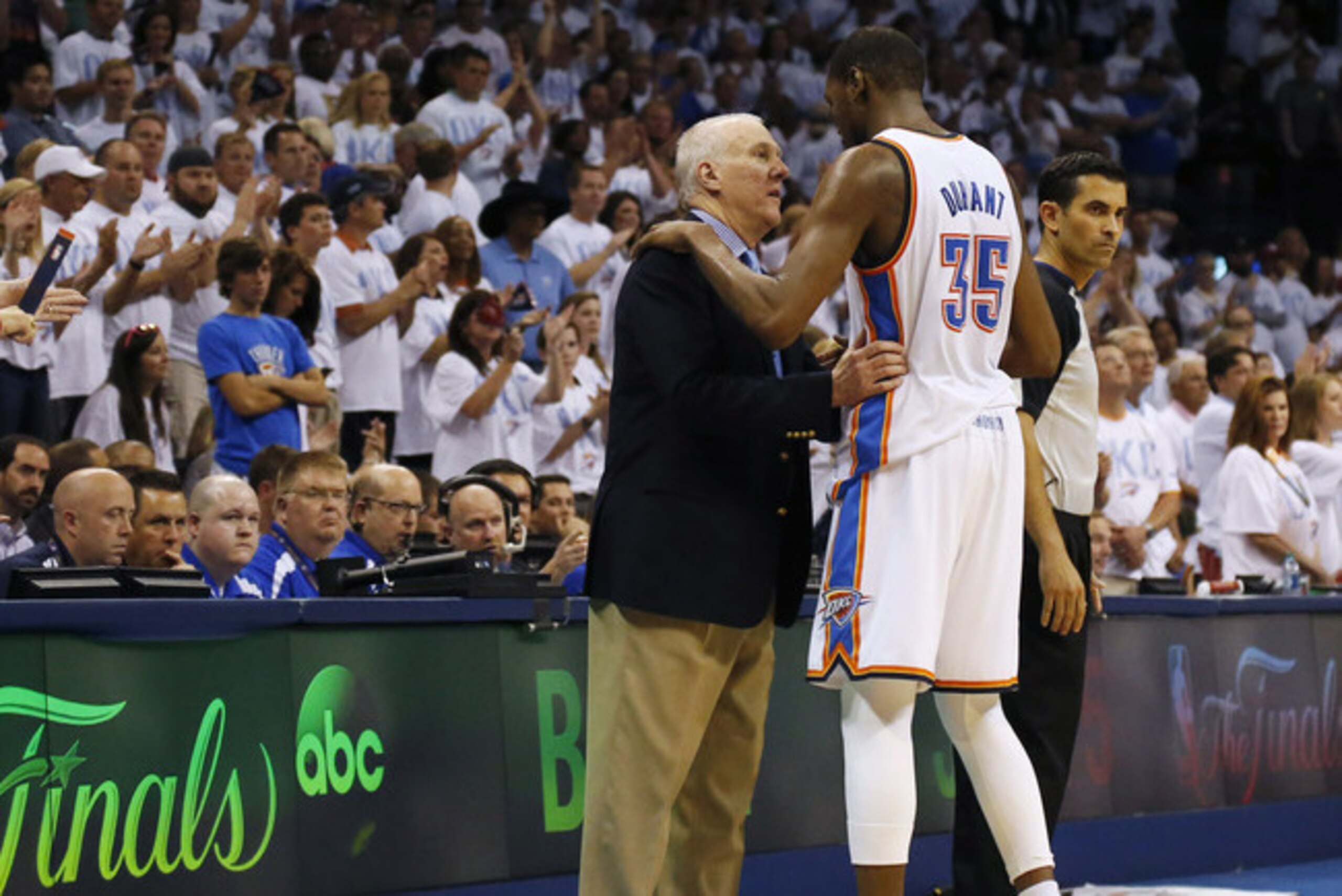
He repeated that sentiment after the Thunder lost to the eventual champion San Antonio Spurs in the 2014 Western Conference Finals. The second overall pick in the 2007 draft was again lamenting the pain of never quite being on top as he filmed a documentary for HBO.
Durant doesn’t just see himself as a winner. He feels it. He has felt it.
He just hasn’t proved it.
After committing to join the Warriors in free agency on Monday, if Durant closes his eyes and visualizes how he will be viewed a year from now or 20 years from now, it’s obvious he will be that winner.
He cited his motivation to change in his Players’ Tribune announcement, using the phrase “evolution as a man” to convey the importance of shifting his paradigm on his “greatest potential.”
If Durant was already that winner, he wouldn’t have to go.
But his pain is even greater now than it was after losing to the Spurs two years ago. Despite two prior surgeries, his right foot “had a crack in it,” triggering some serious introspection. The foot required rebuilding and rehabilitation for him to come back last season—only for Durant’s Oklahoma City Thunder to blow their 3-1 Western Conference Finals lead to the Warriors.
Except the Warriors also blew a 3-1 lead, losing the NBA Finals to the Cleveland Cavaliers instead of rolling to a second consecutive championship. That opened the door for Durant to go to Golden State.
Of course, some will view him as still “second” because it’s Stephen Curry’s team. Or that this is bandwagon-jumping. But Durant can now make a tangible impact for a team.
It’s indisputable: The Warriors did not win without him this past season.
That is a critical change if they do win with him next season.
Meanwhile, the pressure of immediately becoming the overwhelming favorite to win is hardly daunting to Durant. He is tired of being second. He wants that mountain.
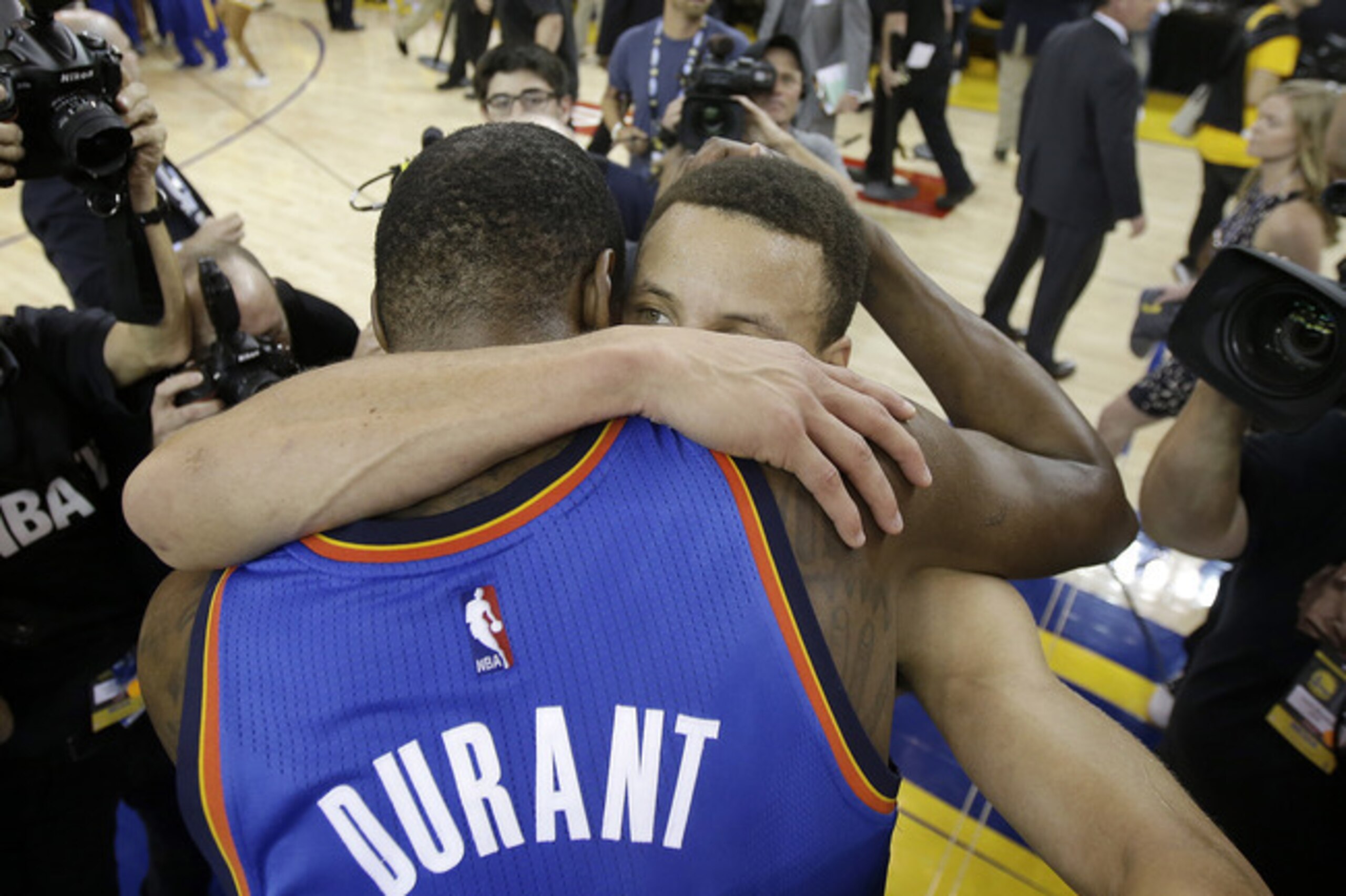
And if you think concretely that Curry is a better player than Durant, you’re wrong. It is, at best, a toss-up considering how much more unstoppable Durant is in a playoff series when opponents can smother smaller players and take away their tendencies.
Durant knows this. He also knows he and Curry have games that can be complementary, especially in Golden State’s team-schemed style that Durant truly admires.
The key aspect, though, is that Durant, 27, and Curry, 28, are mature for their ages. They each have a strong sense of self in wanting to be significant, sure, but they are willing to suppress ego for team harmony and success.
As amazing of a singular force as Russell Westbrook is, good luck to him finding a player as great and giving as Durant in the future.
Curry would be a legitimate rival in that competition, however.
So as Durant visualizes his future, he sees himself immersed in the feeling of being around fellow winners and guys with the ability—like himself—to share credit and the ball. He envisions his scoring average going down but his expectations of overall excellence going way, way up.
And 50 years from now, when we’re evaluating Kevin Durant’s place in history, it’s going to be most decidedly different.
Those future images aren’t cloudy dreams. They have already become more distinct and brilliant.
The odds of Durant being understood as an all-time great and all-time winner just went up astronomically.
Kevin Ding is an NBA senior writer for Bleacher Report. Follow him on Twitter @KevinDing.

.png?w=2560 "Week 8 Winners & Losers 📊")


.jpg?w=2560 "Jonathan Taylor Landing Spots")