Thunder Face Severe Stylistic Shift vs. Warriors After Eliminating Spurs
Not many teams could show the type of resiliency necessary to bounce back from a 32-point blowout in Game 1 to advance in six contests, especially after spending the season blowing leads in crunch-time situations.
But the Oklahoma City Thunder have now done the impossible. They completed their quest in style, eliminating the San Antonio Spurs with a 113-99 Game 6 victory Thursday, in front of their hometown faithful at Chesapeake Energy Arena.
OKC deserves a little time to revel in its victory. While possibly ending the Tim Duncan era, it rather handily beat a Spurs squad that went down as one of the all-time greats—San Antonio won 67 games and tied for the third-highest net rating in NBA history, per my databases.
TOP NEWS

J-Dub Suffers Gruesome Injury
Mazzulla Weighs In on Brown-Tatum Drama

Blockbuster Trade Idea To Shake Up the East
OKC center Enes Kanter was a monster on the glass. Steven Adams was a defensive stud against a tough San Antonio front line. Shooting guard Dion Waiters has finally started to play as if he's in control of everything he does on the offensive end. Kevin Durant and Russell Westbrook both lived up to the superstar billing.
But now, there's another tough task lying in wait.
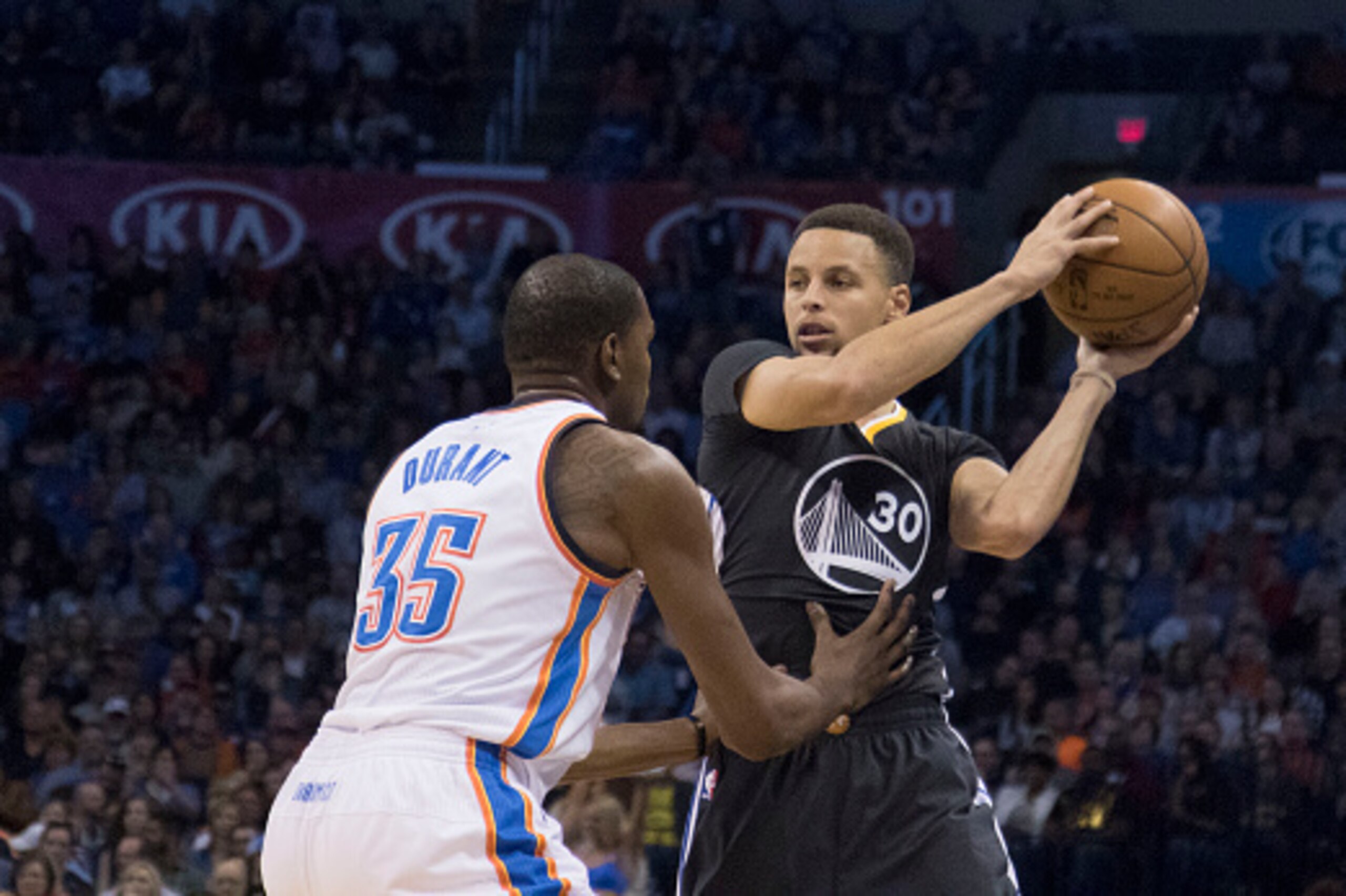
The Golden State Warriors and back-to-back MVP Stephen Curry are waiting in the Western Conference Finals, eager to continue a championship run that's already seen them win a record 73 regular-season contests and advance through the first two playoff rounds in just 10 combined games.
Adjusting from one opponent to another is always difficult during the postseason. At a minimum, you've just spent four games lining up against the same foes and learning all of their tendencies. You've watched endless hours of tape in single-minded preparation.
But the stylistic shifts between rounds are usually a bit more subtle. The contrast between San Antonio and Golden State is a jarring one, even if both squads are near—or, in the Warriors' case, at—the pinnacle of the sport.
It all starts with the pace of the game—something both teams usually try to dictate while establishing control of a series.
OKC used an average of 96.7 possessions per 48 minutes during the regular season. It was the 10th-fastest pace in the Association, only slightly higher than the league-average mark of 95.8.
They've shown they can play both quick and slow games, but they've also just finished a series in which everything ground to a halt—something that typically happens to Spurs opponents. Heading into the decisive Thursday night contest, the average pace in the second round was just 92.5.
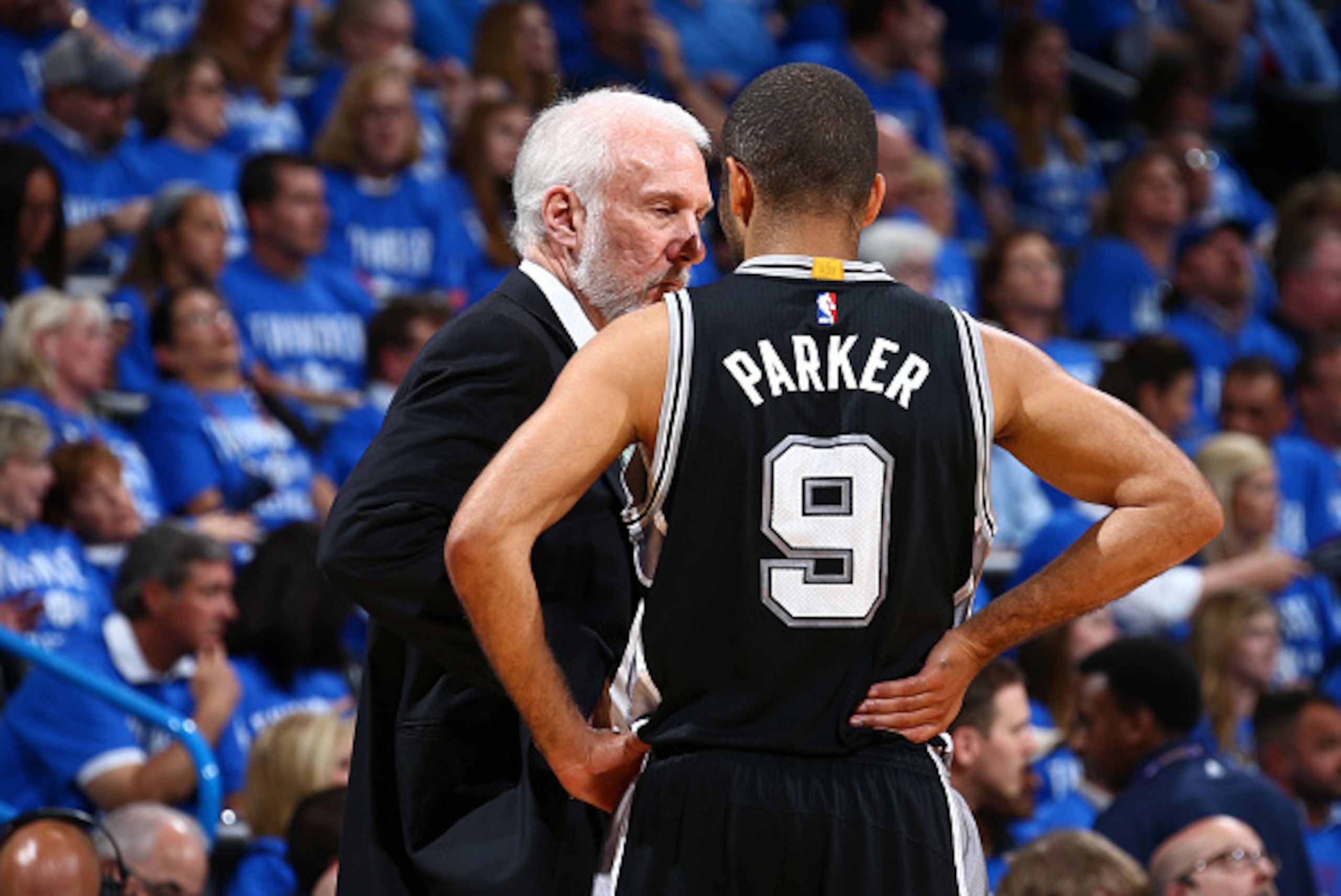
Now, they'll be swinging to the opposite end of the spectrum against a team that posted a pace less than 92.5 only 11 times in 92 combined regular-season and postseason outings.
The Spurs were the seventh-slowest team during the regular season, while the Warriors trailed only the Sacramento Kings and used an additional 5.5 possessions per 48 minutes. Even throughout the first two rounds of the playoffs, which usually see slower schemes prevail as everyone places a higher value on each possession, Golden State has maintained a pace of 98.4.
San Antonio wanted to force the ball into half-court sets and let LaMarcus Aldridge or Kawhi Leonard go to work in isolation. The Warriors want to run as much as possible, jacking up three-point attempts early in the shot clock and maximizing the number of possessions at their dynamic offense's disposal.
"They're an historically great team with Steph on the court and they're a great team without him," Portland Trail Blazers head coach Terry Stotts said about Curry and the Warriors, per the Oregonian's Mike Richman. "They have a lot of ways to score. Their style of play doesn't change. They still shoot threes. They still get out and run."
But this is about more than pace. San Antonio sought to use its historically excellent defense, and Golden State wants to shoot its way to victory.
Though both squads are great on each end, each has that unique identity. We can see this rather distinctly by looking at their adjusted offensive and defensive efficiencies:
Impressive as all four of those numbers may be, let's take this one step further.
By subtracting the adjusted defensive efficiency from its offensive counterpart, we can look at how offensively tilted each team is. The higher the score, the greater the degree by which the team's offense was superior to its defense. If it's negative, the squad was better at preventing points than scoring them.
Just by looking at the scores of all 30 teams in 2015-16, you can see how the Warriors and Spurs established themselves as polar opposites:
This also holds true in a historical context.
According to my databases, which contain info on all 1,375 teams since 1951, the Warriors' offensive tilt puts them in the 90.8 percentile. San Antonio's leaves it in the 18.3 percentile—though it's worth noting the low score isn't a bad thing, just a stylistic observation.
The defending champions aren't the ones that need to make a significant adjustment in the Western Conference Finals. They're going from the Blazers to the Thunder, and both opponents had decisive offensive leanings throughout the year.
OKC has no such luxury. It has to prepare for an entirely different pace, a speed so different than its previous opponent.
Guarding Curry, Klay Thompson and Draymond Green is always a tough task. Few teams have been up for the challenge during the Warriors' record-setting campaign, as evidenced by the sparse losses scattered throughout their schedule.
The Thunder may be rolling, and they deserve to pat themselves on the back after knocking out a fellow juggernaut in the Spurs. Now, a new assignment awaits in the Western Conference Finals. Whether it's tougher remains to be seen, but we already know it's an entirely different one.
Adam Fromal covers the NBA for Bleacher Report. Follow him on Twitter @fromal09.
Unless otherwise indicated, all stats are from Basketball-Reference.com, Adam's own databases or NBAMath.com.



.jpg?w=2560 "Latest Peyton-Colts Rumors")
.jpg?w=2560 "Ugly Jets Scoring Stat 😳")

.jpg?w=2560 "Landing Spots for Trade Candidates 📍")