Denver Broncos' 2016 NFL Draft: The Good, the Bad and the Baffling
The Denver Broncos showed incredible patience leading up to the 2016 NFL draft. Everyone knew that adding a quarterback was at the top of the priority list for general manager John Elway, yet the team was still able to sit at the end of the first round and see a favorite passer fall in its range.
The Broncos traded with the Seattle Seahawks to move up to the 26th overall pick to find their franchise quarterback. Paxton Lynch of Memphis was the player the team had targeted all along in the first round, and according to Elway, Denver had been working the phones for several hours prior to the draft in an effort to move up.
The move for Lynch was just one of their selections in the draft. Not every move yielded such a potential playmaker for the team like Lynch. There were some picks and missed opportunities that left some fans and analysts scratching their heads. There were also some players the Broncos were better off not selecting in the draft.
Here’s a recap of what the Broncos did in the draft this year—highlighting the good, bad and baffling picks as well as developments stemming from the event.
The Good: Moving Up for QB Paxton Lynch
1 of 6
The need for a quarterback was great, but the Broncos ended up with a fantastic pick in Lynch. Not only can he develop into a starter for the Broncos, Lynch can be the long-term solution this team needs at the position.
Lynch is tall, athletic and has the arm strength to make every throw in the NFL. He played in a shotgun-heavy system at Memphis where he was asked to make reads quickly and get rid of the football in a flash. Lynch will have to get used to playing from under center and executing the type of play-action fakes that make head coach Gary Kubiak's offense so dangerous. The team seems to believe he can make that adjustment quickly.
Before the draft, the Broncos arguably had the worst quarterback situation in the division. The AFC West features veteran passers like Philip Rivers (San Diego Chargers) and Alex Smith (Kansas City Chiefs). Then there’s Derek Carr (Oakland Raiders), who is one of the most exciting young quarterbacks in the league. While Lynch lacks experience, he gives the Broncos a similar outlook to what Carr brings to the Raiders—both are young passers who could battle in the AFC West for a decade.
Mark Sanchez may begin the season as the starting quarterback for the Broncos as Lynch does need time to develop. However, the 22-year-old may be ready to start sooner than some think. The Broncos are going to try to microwave his learning curve so he can get on the field as soon as possible.
The Bad: Reaching in Round 2 for DT Adam Gotsis
2 of 6
This offseason, the Broncos lost defensive end Malik Jackson to the Jacksonville Jaguars in free agency. They did add veteran Jared Crick to the roster earlier this year, but he’s not the same type of pass-rusher that Jackson is. Entering the draft, they needed to find a replacement for Jackson.
The good news is, this draft class was arguably the best defensive line class in NFL history. The 2016 class was chock-full of talented defensive linemen who could come in and compete for a starting job with the Broncos right way.
Instead of drafting one of those players in the second round, the Broncos selected Adam Gotsis out of Georgia Tech.
Gotsis, a native of Australia, has only been playing football for a few years, and his best football may be in front of him. However, he’s coming back from a knee injury he suffered late last season playing for the Yellow Jackets. Gotsis may not be ready for the start of the regular season with the Broncos, and there’s a chance he could begin his pro career on the physically unable to perform list.
D-line coach Bill Kollar trumpeted the pick. He was immediately impressed with the young prospect on film and in person.
“Watching film on him, he is the type of player we like," Kollar said. "He plays hard, runs to the ball, has some pass-rush ability that we are happy about. When we met him at the combine and found out what type of guy he is, we really liked him.”
There were other defensive linemen at the time the Broncos could’ve grabbed instead of Gotsis. NFL.com's Lance Zierlein projected Gotsis to be a fourth- or fifth-round pick.
Even by his own admission, Gotsis did not expect to go off the board at the time the Broncos drafted him. Talking to him shortly after the Broncos picked him, I asked him what he needed to do in order to be a better pass-rusher.
“I definitely feel like if you put him in the game in a positive situation, I can get to the quarterback,” Gotsis said.
He’s not like Jackson, but could Gotsis develop into a player like Derek Wolfe? Only time will tell, but with so much talent available at the position, it was shocking to see the Broncos reach for an injured player with potential but not a lot of production from college.
The Baffling: Why Did RB Devontae Booker Fall?
3 of 6
Players fall for all sorts of reasons in the draft. This year in the draft, there were more than a few players who fell in the selection process—some for reasons we’d never seen before. Some fell for off-field issues, but some fell due to health concerns.
Devontae Booker, the Broncos' fourth-round pick, was one of those players who fell in the draft due to a medical issue. He had a meniscus injury that cut his final season at Utah short. The problem was cleaned up twice, and now Booker is on the road to full strength.
Booker feels good about where he’s at in his recovery: “I’m doing good right now; I’m about 90 percent. I’m just doing everything I need to do to get it back strong, and it’s coming along great.”
With decisiveness and power, Booker can make his living between the tackles. He doesn’t waste a lot of motion in the backfield, and he’s patient when waiting for blocks to develop in front of him. Booker is also a fantastic receiver out of the backfield, snaring 80 catches over the final two years in college.
C.J. Anderson is the clear-cut lead back with the Broncos, but Booker does a lot of the things that Anderson does well. Booker may begin the season as a third-string back behind Anderson and Ronnie Hillman. However, as he gets healthier and more experience as a pro, we could see him leapfrog Hillman to be the second-string back.
Booker has the upside of a solid starter in the pros. He’ll back up Anderson early in his career, and one day soon he should be a reliable spot starter if needed.
Even with this knee injury, Booker's natural talent and skill set should've gotten him drafted much earlier.

.jpg?w=2560 "LA Premiere of \"Chad Powers\"")
The Good: No Connor Cook
4 of 6
Heading into the draft, most expected the Broncos to select a quarterback. One passer who was sometimes linked to the Broncos was Michigan State’s Connor Cook.
Seen as a top-five quarterback in this draft class during the predraft process, Cook was linked to the Broncos for a couple of reasons. First, the need at quarterback and the fact the Broncos were picking at the end of the opening round. Second, the Broncos had brought Cook in for a private workout in April to get a closer look at him.
Several mock drafts had Cook going to the Broncos at the end of Round 1. These mocks failed to ignore the fact that Cook was not a good fit for the Broncos offense. Steve Palazzolo of Pro Football Focus wrote a piece on ESPN.com that highlighted some of the reasons why Cook wouldn’t be a good fit for the Broncos offense.
Cook ended up falling to the fourth round of the draft. It was the Oakland Raiders who finally decided to take a chance on the quarterback. Cook now will try to develop behind Derek Carr and Matt McGloin in Oakland.
The Broncos made the right decision by not adding Cook in the draft.
The Bad: No Inside Linebacker Drafted
5 of 6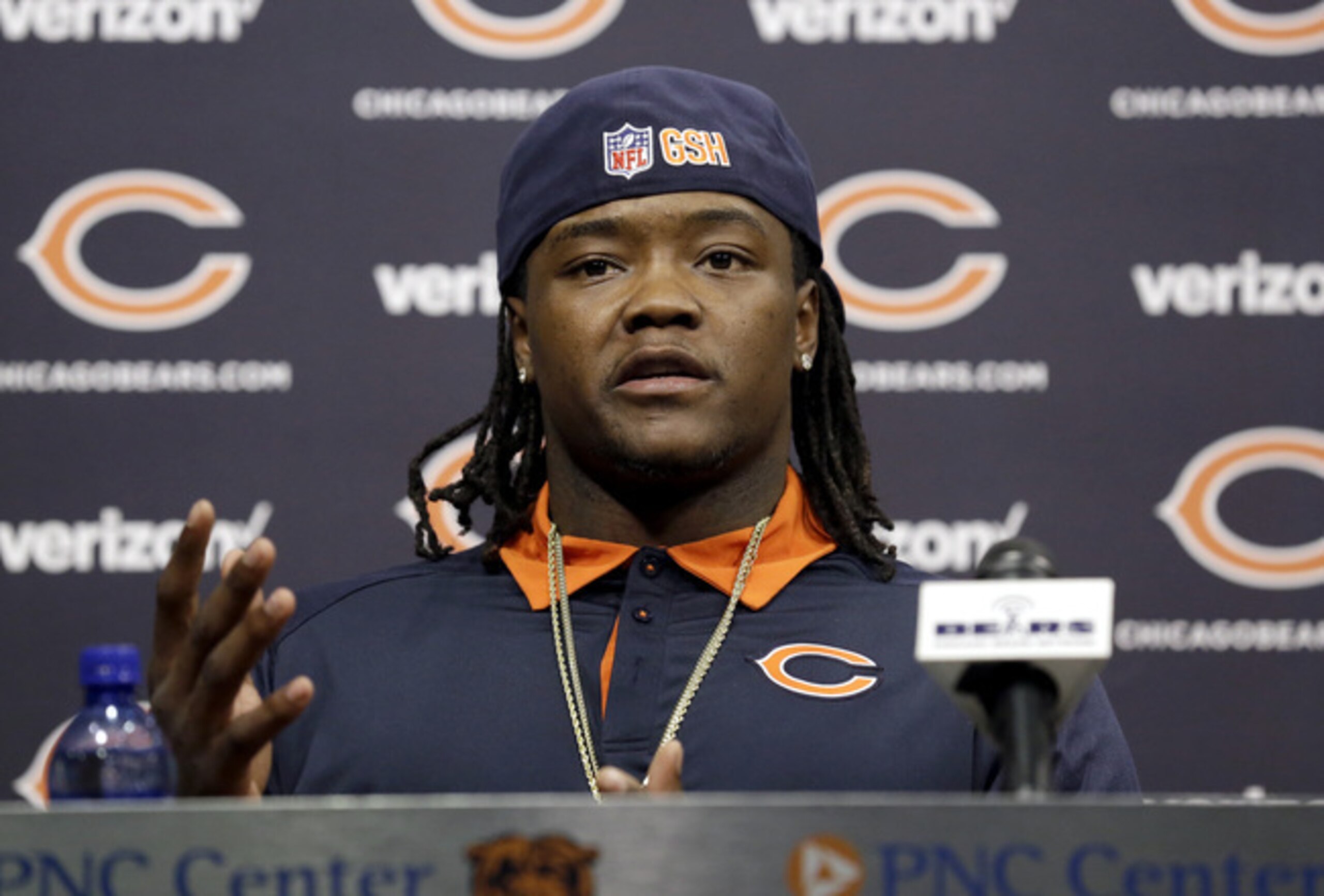
The Broncos may still have the best defense in the league this season. However, they will be operating without two key players who helped the team win Super Bowl 50. Defensive end Malik Jackson (Jacksonville Jaguars) and linebacker Danny Trevathan (Chicago Bears) were two starters for the Broncos last year who decided to move on in free agency.
The Broncos ended up drafting defensive lineman Adam Gotsis in the second round of the 2016 draft. He could perhaps one day compete for a starting job in Jackson’s old spot.
However, the Broncos did not select any inside linebacker help to compete for Trevathan’s old job.
Trevathan played weak-side inside linebacker in the Wade Phillips defense. His range and athleticism made him dangerous in coverage, and Trevathan was known as a sound open-field tackler with the Broncos.
Instead of looking to the draft for help, the Broncos may already have Trevathan’s replacement on the roster.
Todd Davis is the first player who should get a shot at replacing Trevathan. He may not be as athletic as Trevathan, but Davis is a hard-hitting linebacker who can fly to the football in a hurry. Davis arrives at the ball with natural violence, and he does a good job of bringing his man down quickly and forcefully.
Corey Nelson is also in the mix to replace Trevathan. He may be better in coverage than Davis, and that natural athleticism allows him to roam the field to make plays from sideline to sideline. Nelson is not a thumper like Davis, but he doesn’t let many opponents out of his grasp.
Finally, Zaire Anderson may be the dark-horse candidate in this competition at linebacker. Spending last year on the team’s practice squad as a rookie, Anderson may have gained the experience needed to get a shot on the final roster this year. During his college career at Nebraska, Anderson was known as a tackling machine with the fluid athletic ability to make plays in space.
The Broncos could’ve used a pick on a linebacker in this draft. Instead, they must have full confidence in the players already on the roster.
The Baffling: Drafting a Punter
6 of 6
The Broncos went in an odd direction with their last pick in the 2016 NFL draft. In the seventh round, Elway decided to add punter Riley Dixon (Syracuse) with the 228th overall pick.
Dixon is a directional punter with a strong leg and an even stronger personality. He’s not afraid to tuck the ball and run on a fake punt. In fact, Dixon is not your ordinary punter. He’ll run people over when attempting to move the chains, and Dixon has the speed and athleticism to be a threat as a runner.
As a punter, Dixon lacks a strong leg but boasts impressive numbers in terms of hang time and distance. During the last two years, Dixon has a 40.8 percent (2014) and a 42.4 percent (2015) fair-catch ratio. Imagine him kicking in the thin air of the Mile High City.
Even at that late juncture, many have wondered why the team would take a punter when it already has veteran Britton Colquitt on the roster.
Colquitt is one of the highest-paid punters in the league in terms of average annual salary at $3.8 million earned per year. This season, Colquitt is on the books for a $4 million cap hit. However, there is only $750,000 in dead money, meaning the Broncos could cut Colquitt and save $3.2 million against the cap. For a team with limited cap space, this could be an option later in 2016.
At the very least, Dixon gives the Broncos leverage if they want to renegotiate Colquitt's contract.
All quotes and injury/practice observations obtained firsthand. Record/statistical information provided by the Broncos' media department unless otherwise noted.
Contract and salary-cap information provided by Spotrac. Transaction history provided by Pro Sports Transactions. Draft grades provided by CBSSports.com.
.jpg?w=2560)


.jpg?w=2560 "Landing Spots for Trade Candidates 📍")