NBA 2020 Project: Which Ex-Kentucky Big Man Will Reign Supreme?
Remember the patented 18-foot jumpers of Tim Duncan and Kevin Garnett? How about Dirk Nowitzki's signature mid-range fadeaway? They're relics of the past, practitioners approaching Hall of Fame inductions. Instead, Kristaps Porzingis is knocking down turnaround three-pointers off one foot, basically laughing at the mid-range legacy of his predecessors.
Remember when it was only guards who could produce ankle-breaking crossovers? Karl-Anthony Towns is putting opponents on skates with handles comparable to what Stephen Curry showed during his record-setting MVP campaigns.
Anthony Davis is even shattering backboards that were supposedly shatterproof—perhaps they're weighed down by all the decals that make the Association a bit more in ad revenue.
TOP NEWS
.jpg?w=2560 "NBA Gambling Charges")
Malik Beasley Negotiating Plea Deal (AP)

Yaxel: Luka Not MJ 🗣️
Knicks, Spurs On Wrong Side of History
Though you have to wait until the eSports and Ultimate Frisbee highlights have run their course (as is the case every night), the NBA portion of the rundown always features big men doing things you'd never have imagined were possible even four years ago.
Forwards and centers who can space the court, handle the ball and switch onto smaller guys while playing defense are coveted, and they'll be ruling the league by the time the 2020-21 campaign is underway. Obviously, we're talking about Towns and Davis. Draymond Green will still be at a high level. Even less heralded youngsters such as Myles Turner and Nikola Jokic will be making an impact.
We've always been able to see the future, as Bleacher Report's C.J. Moore and I did some four years ago, when we perfectly projected the best guards, wings and bigs in the year 2020. We analyzed current levels of production, the amount of untapped potential left in the tank and everything else that could help a contributor succeed four years into the future.
And we nailed it.
We divided it up into guards, wings and big men. Bigs, who are defined as power forwards and centers who live on the interior of the half-court set, came last.
— October 30, 2020
20. Aaron Gordon
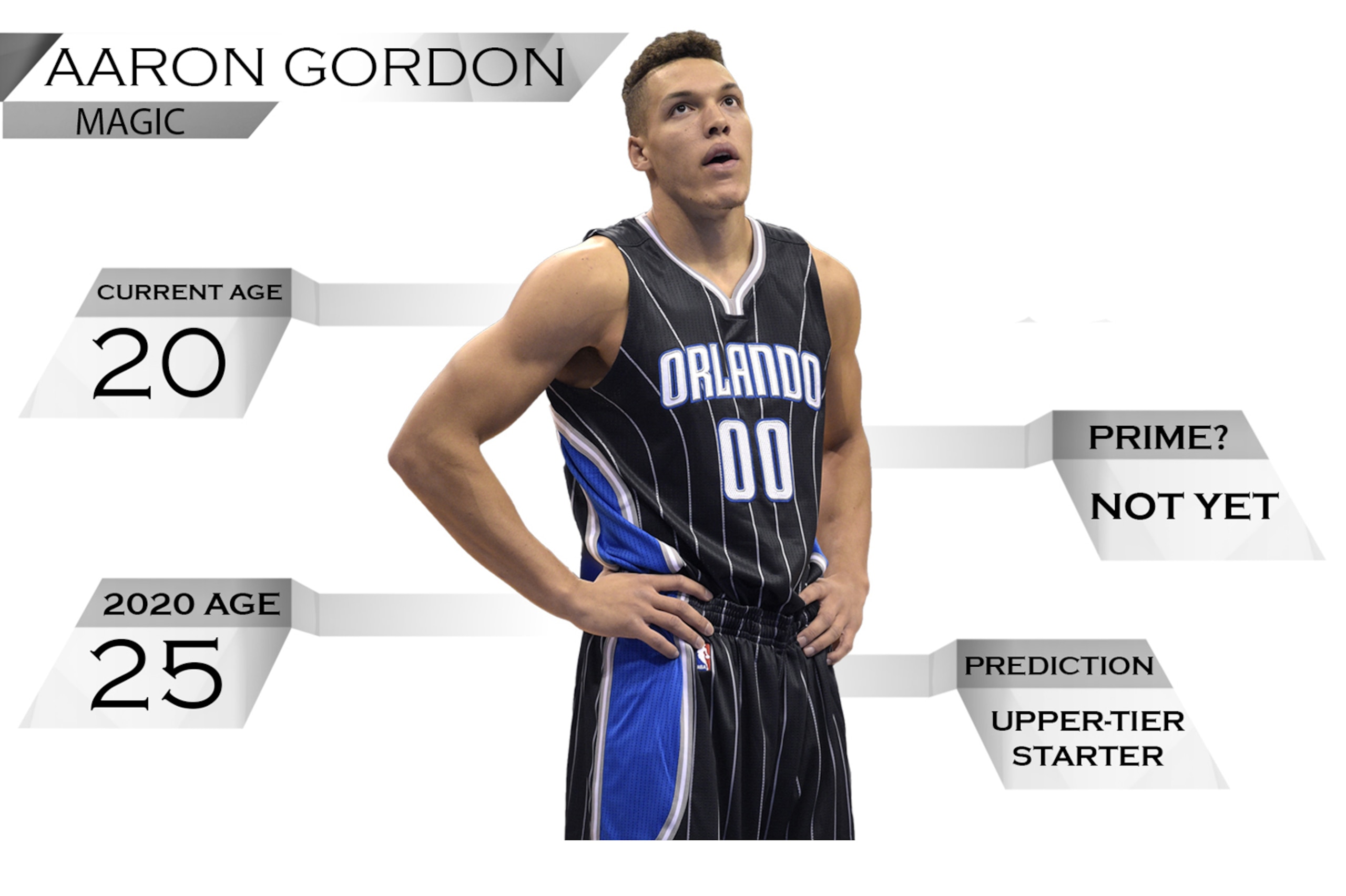
At this point, it's obvious Aaron Gordon is tremendously athletic. He's showcased the leg springs on multiple occasions, whether during the Slam Dunk Contest against Zach LaVine (that he should've won) or during in-game transition opportunities.
Now he must become a more polished player. Continuing to shoot less than 30 percent from downtown isn't going to cut it, especially because Gordon seemed to be able to knock down perimeter jumpers during preseason and summer-league action.
Still, he has overcome his shooting woes by becoming a valuable player in other facets of the game. Gordon's already a terrific rebounder and rim protector who can handle the ball and create for his teammates when given the opportunity.
All he's missing is that shot, and his free-throw percentage at the NBA level shows he's capable of finding it.
19. DeAndre Ayton

The hardest thing to find in basketball will always be legit 7-footers who can move and are skilled. So when one comes along, it's easy to get excited.
DeAndre Ayton, who is entering his senior year of high school, is the next massive man to intrigue NBA scouts.
"He's pretty gifted," a scout said. "He's got legit size—7'0" with a 7'5" wingspan and 245 pounds. Pretty good athlete. Pretty coordinated. Can shoot a little bit. He has all the tools. There aren't that many big guys that have a 7'5" wingspan and weigh 245-250 and can move well enough."
If Ayton continues to develop his skill, the ceiling is high. He's already able to face up and stretch the floor with his shooting. Through 11 games on the EYBL circuit this spring, he's made nine threes and is averaging 19.8 points and 11.6 rebounds.
18. Marvin Bagley
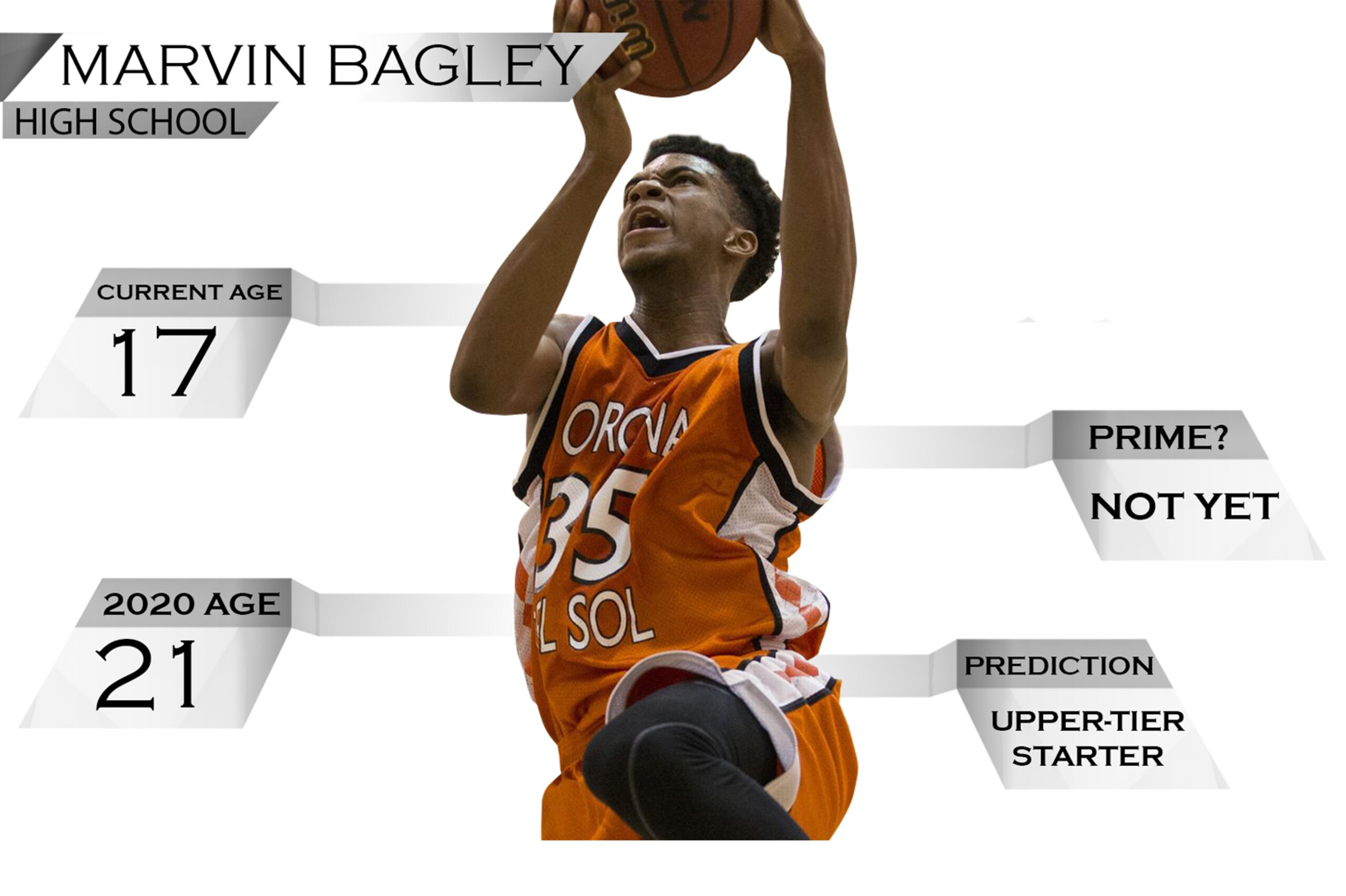
Marvin Bagley would only have been a sophomore in 2020-21, and it's rare for a second-year player to be one of the league's top 20 names at his position. But Bagley is a once-in-a-decade prospect.
At 6'10", he has guard skills and shares some similarities to Ben Simmons in how smooth he is running the floor, handling the ball in the open court and terrorizing defenses in transition. Unlike Simmons, Bagley can shoot and is more of a true scorer.
"He's one of the best of any position that I've scouted," Jerry Meyer, director of basketball scouting for 247Sports, said. "He has the total package: a skilled, face-up power forward who could probably project in the NBA even as a small forward."
There will be debates in the years to come about what position Bagley will play. But at this point, it looks like his versatility would be best served as a power forward. Right away, he'll be one of the most skilled bigs in the league.
17. Myles Turner
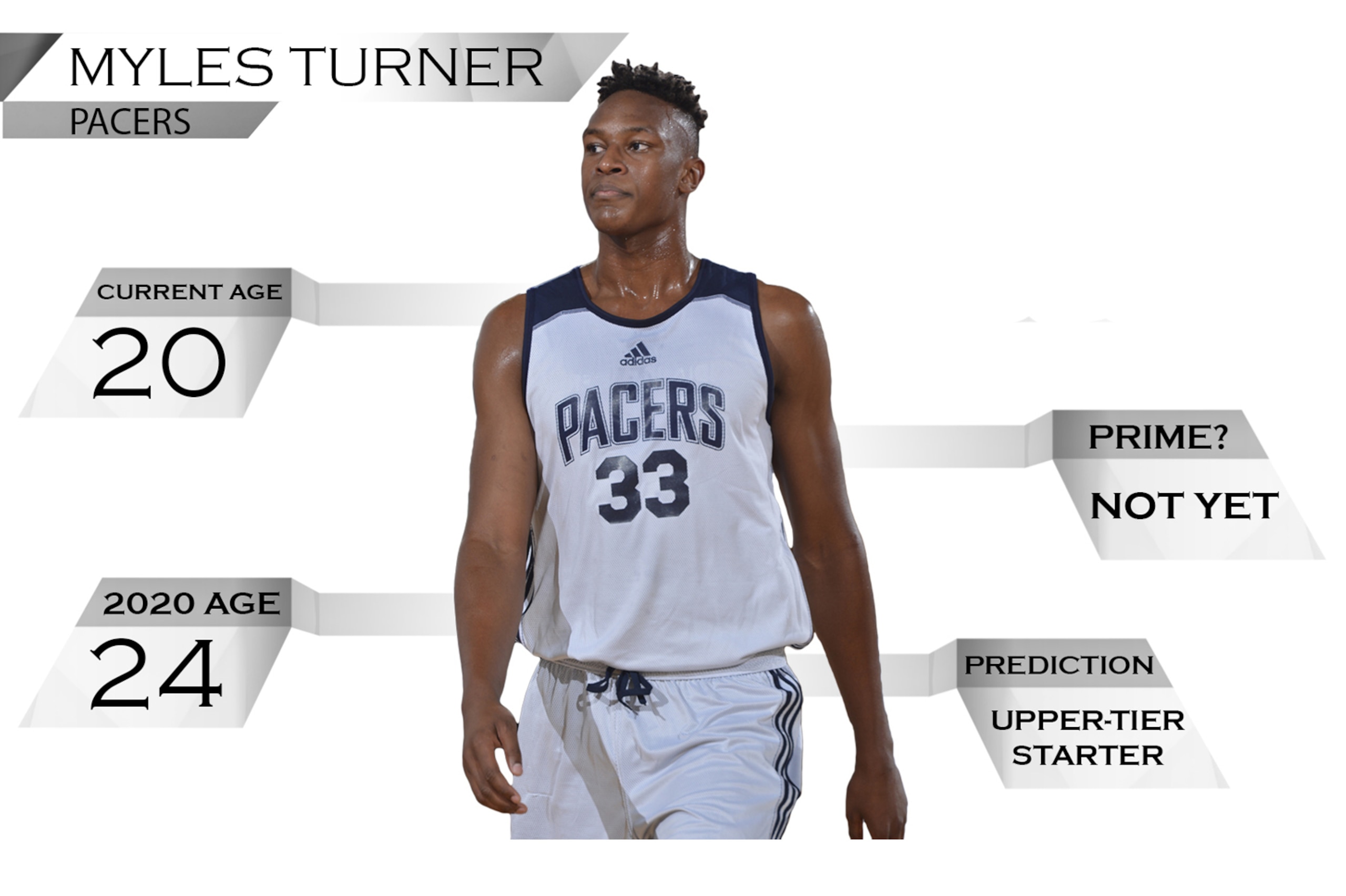
Though his Texas career left questions about his running style and the consistency of his perimeter shooting, Myles Turner used his rookie season to prove he could serve as a prototypical modern center who can both protect the rim and space out the court.
He was incredibly involved around the hoop, facing off against 7.1 shots at the rim per game despite only logging an average of 22.8 minutes, per NBA.com's SportVU data. And despite that heavy responsibility, he held the opposition to 50.7 percent shooting in that closest range.
On offense, his range didn't extend out to three-point territory, but he was consistent on long twos. From 10 to 16 feet, he connected at a 40 percent clip, which actually rose to 42.5 percent when he fired away from beyond 16 feet.
Every time Turner stepped onto the floor, it seemed like he sparked more success for the Indiana Pacers—success that came despite the former Longhorn serving as one of the NBA's nine teenagers.
16. Jahlil Okafor

Jahlil Okafor has plenty of shortcomings in the modern NBA.
As a lumbering big who needs the tempo slowed down so he can receive the ball in a post-up situation, he doesn't fit in with the pace-and-space direction so many teams are going. It also doesn't help that he's a defensive liability unless he's not forced to move laterally.
But this young man can score the basketball.
Whether showing off his deft touch from mid-range locations (think young Tim Duncan) or torturing defenses with his back-to-the-basket moves (think Al Jefferson), he's capable of putting the rock through the nylon. Averaging 17.5 points and shooting 50.8 percent from the field ain't easy—especially as a 20-year-old rookie.
As the Philadelphia 76ers add offensive talent who can generate easy looks for him, those numbers will only improve. Of course, they're already going to improve as he becomes more accustomed to NBA basketball.
15. Jonas Valanciunas

Jonas Valanciunas looks like the type of center you might create in NBA 2K16 if building a physically imposing big who would terrify every opponent trying to keep him off the glass. He plays like it, as well.
The Lithuanian has developed into a rebounding terror who can protect the rim on one end and provide interior scoring on the other. However, if he seems like a limited player, it's because he is—he still doesn't have much range or lateral quickness.
But lest we forget, Valanciunas celebrated his 24th birthday in early May as his Toronto Raptors were battling against the Miami Heat during the second round of the playoffs. He still has time to add more finesse and work on his floor-spacing jumper.
Strong as he may already be, there's a metric ton of untapped potential lying dormant.
14. Rudy Gobert
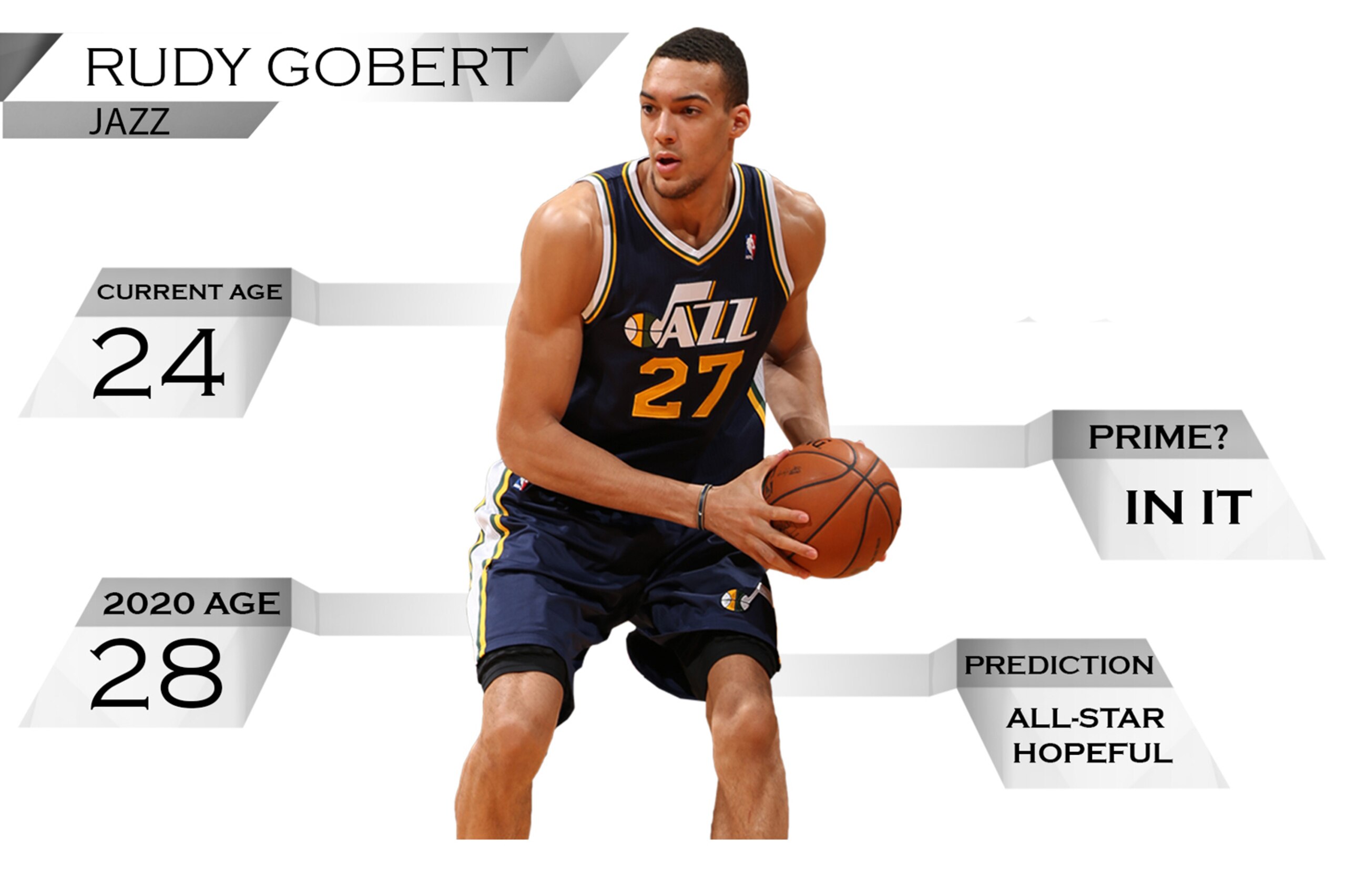
Even if Rudy Gobert never hones his mid-range jumper and remains a glaring liability on the offensive end, his ability to prevent points is nothing short of immaculate. By every measure imaginable, he's one of the best defensive players the modern NBA has to offer.
Per ESPN.com's defensive real plus/minus, he was the No. 8 defender at any position this past season, as well as No. 6 among centers. According to the defensive portion of NBA Math's TPA metric, he saved more points than any player not named Draymond Green, Paul Millsap or DeAndre Jordan despite only suiting up for 61 contests.
Basketball-Reference.com's on/off numbers show the Utah Jazz allowed 2.8 fewer points per 100 possessions when he was on the floor. NBA.com's SportVU data indicates he allowed opponents to shoot just 41 percent at the rim while defending 8.2 close-range attempts per game—easily the top mark among the 81 players who suited up for 40 contests and faced at least four shots per game.
No matter how you slice it, Gobert is one of the league's best defenders, and that won't change anytime soon.
13. Nerlens Noel
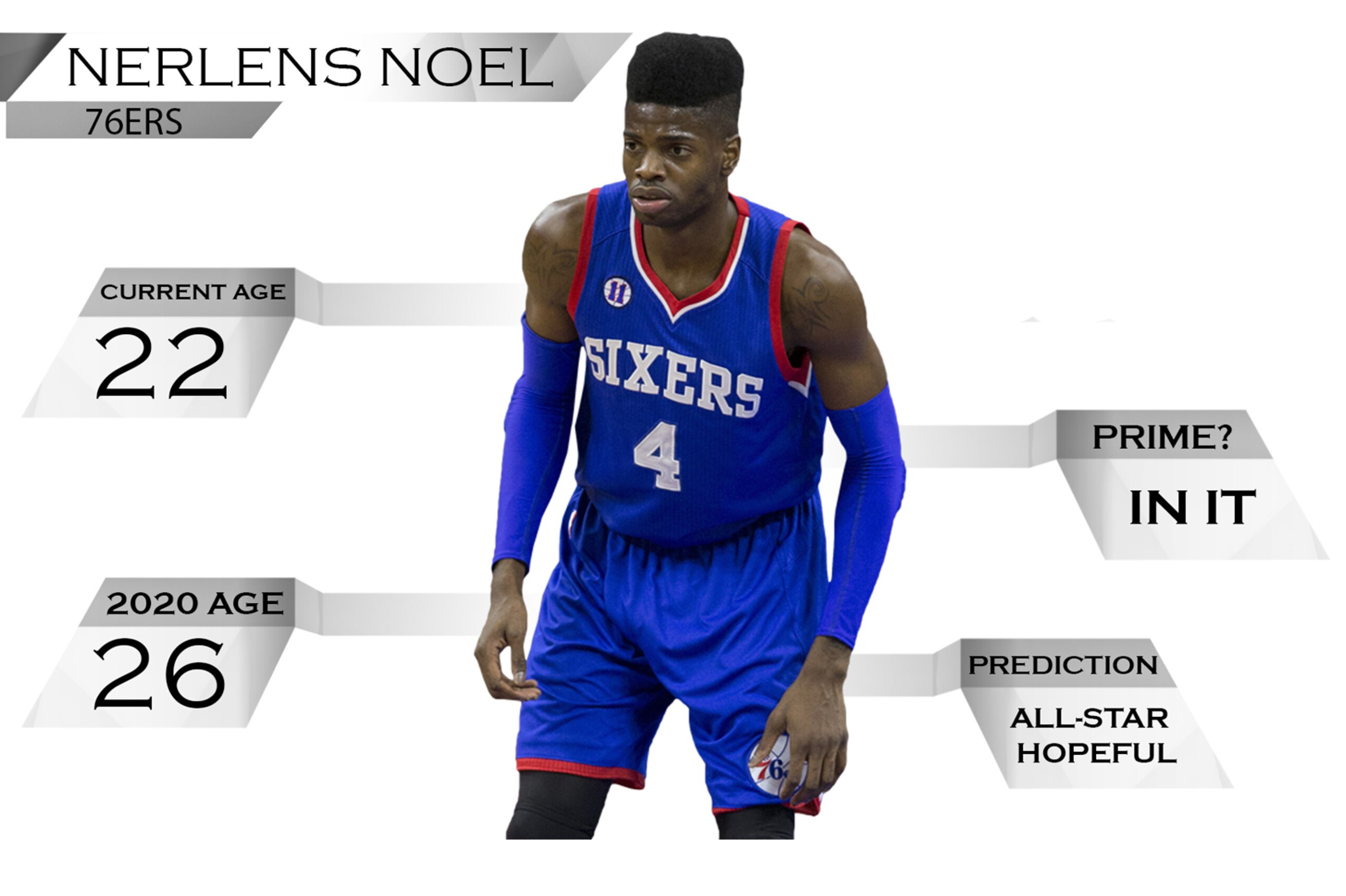
"Just going to the basket a little bit stronger, continue to work on my right-hand and left-hand hooks, continuing to build it throughout the summer," Nerlens Noel told Sixers.com's Brian Seltzer about his offseason goals. "I thought I did get stronger this year, being able to bang a little better."
He's already an elite defensive player who would've garnered significant consideration for Defensive Player of the Year if he'd stayed healthy and played on a competitive squad. NBA Math's defensive points saved had him finishing No. 1 overall as a rookie in 2014-15, then following it up with a No. 10 finish in 2015-16.
If this particular Kentucky product can develop on the offensive end, he'll be a terrifying presence.
Already, he's shown flashes of mid-range ability, and he can finish plays around the basket by making use of his jaw-dropping athleticism. The focus of the next few years will be adding skill to his repertoire, because with points will come even more widespread recognition.
Even if Noel never develops on offense, his floor is a top-20 big.
12. Nikola Jokic

"That kid is gonna get paid a lot if he just keeps the course, because he just brings a different aspect," Kenneth Faried told Bleacher Report about Nikola Jokic midway through the season. "He can step out and shoot the three. He makes his free throws down the stretch. He plays great defense. Rebounds the ball. He's just coming into his own. ... I mean, he is going to be phenomenal. I can't wait until we're talking about him in the All-Star Game."
The sentiment is shared throughout the Denver Nuggets organization.
"Young kid who works hard, who loves it, who has a passion for it? His ceiling is unlimited," head coach Mike Malone said.
Jokic has already shown he has just about every tool in the bag. He can finish creatively around the hoop, stretch out the floor, serve as an offensive hub, rack up assists, protect the rim and position himself to cut off drives and passing lanes. The mental acumen he showed as a rookie might lead you to believe he was already in his 30s rather than beginning as a 20-year-old.
Four years from now, it would be downright shocking if he didn't have at least one All-Star appearance under his belt.
11. Ben Simmons
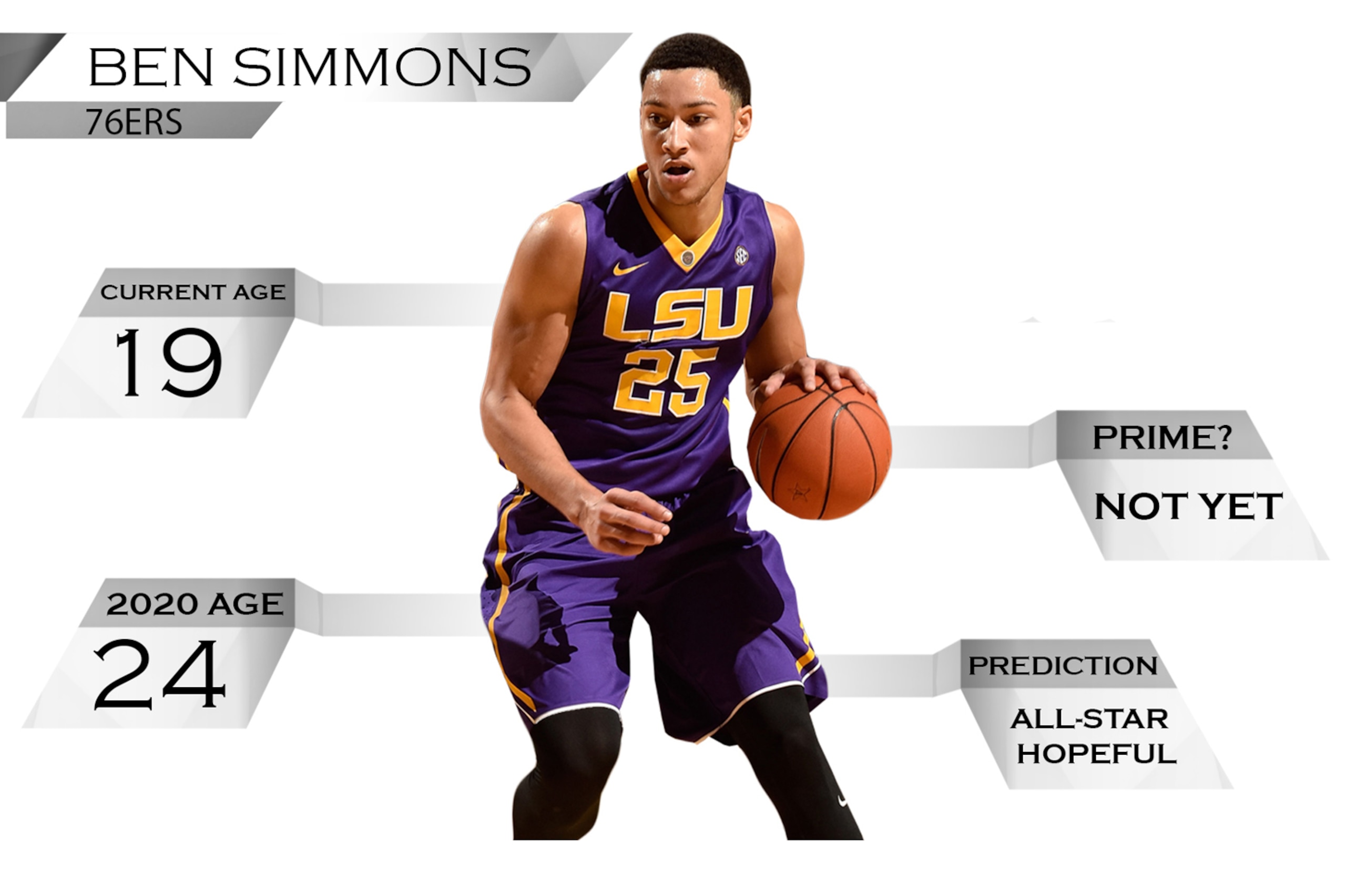
Ben Simmons dominated the college level this past year at LSU, and the NBA could be an even better fit for his game.
The spacing should allow Simmons to exploit mismatches, and, similarly to Draymond Green, his ability to make plays and create for teammates could be incredibly valuable. At 6'10", his game is similar to Lamar Odom's. But Simmons is more aggressive, while Odom's shot was further along at the same age.
"The shooting thing is going to be a huge issue," an NBA scout said. "I think he'll be able to figure it out. He's going to have to be rebooted a little bit."
Simmons was not in an ideal situation at LSU, and while he deserves some of the blame for the team's struggles (i.e., not making the NCAA tournament), he put up huge numbers as one of the toughest covers in college basketball.
10. Derrick Favors
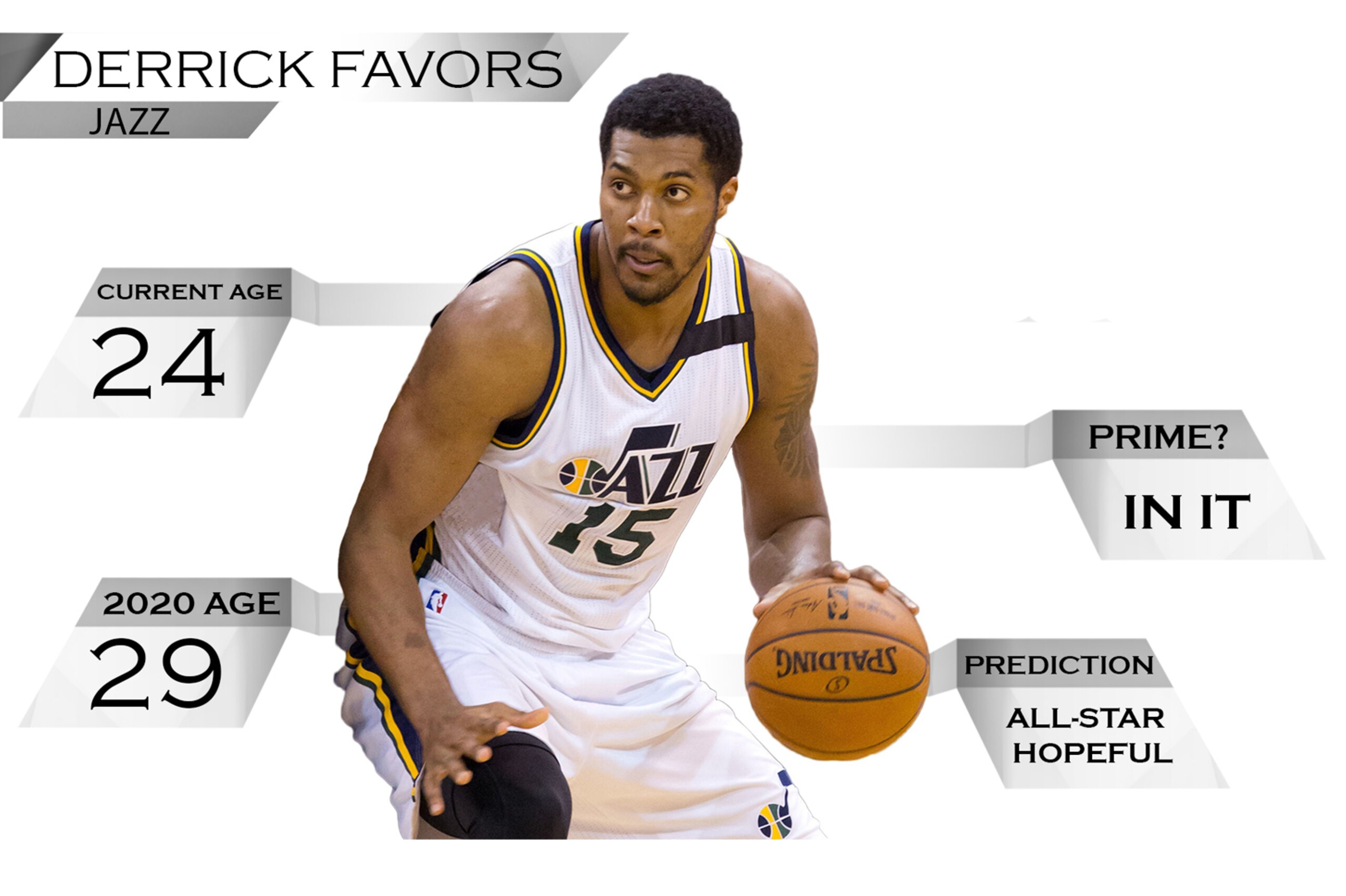
"When he wants to go out and do something, when he's being aggressive, he can do pretty much anything," Utah Jazz forward Trey Lyles said about his teammate, per CBS Sports' James Herbert. "If he wants to dunk on you, he'll dunk on you. If he wants to shoot a jumper, he'll make it. Anything, when he's being aggressive, he can pretty much do."
Derrick Favors has become a two-way force for the Utah Jazz, even if he tends to fly well underneath the national radar.
Using his physicality and ability to switch onto smaller players, he's become an interior stopper, and his offensive game is expanding each year. Though the mid-range jumpers don't fall with enough consistency, Favors can handle a larger scoring load, averaging "just" 16.4 points because the Jazz have to spread the ball throughout the deep roster.
Lest we forget, because he's been around for a while, Favors will only be 29 years old during the 2020-21 season. That's far too soon to expect any sort of significant decline, and his rate of improvement over the last few campaigns bodes well for his future development.
9. Harry Giles
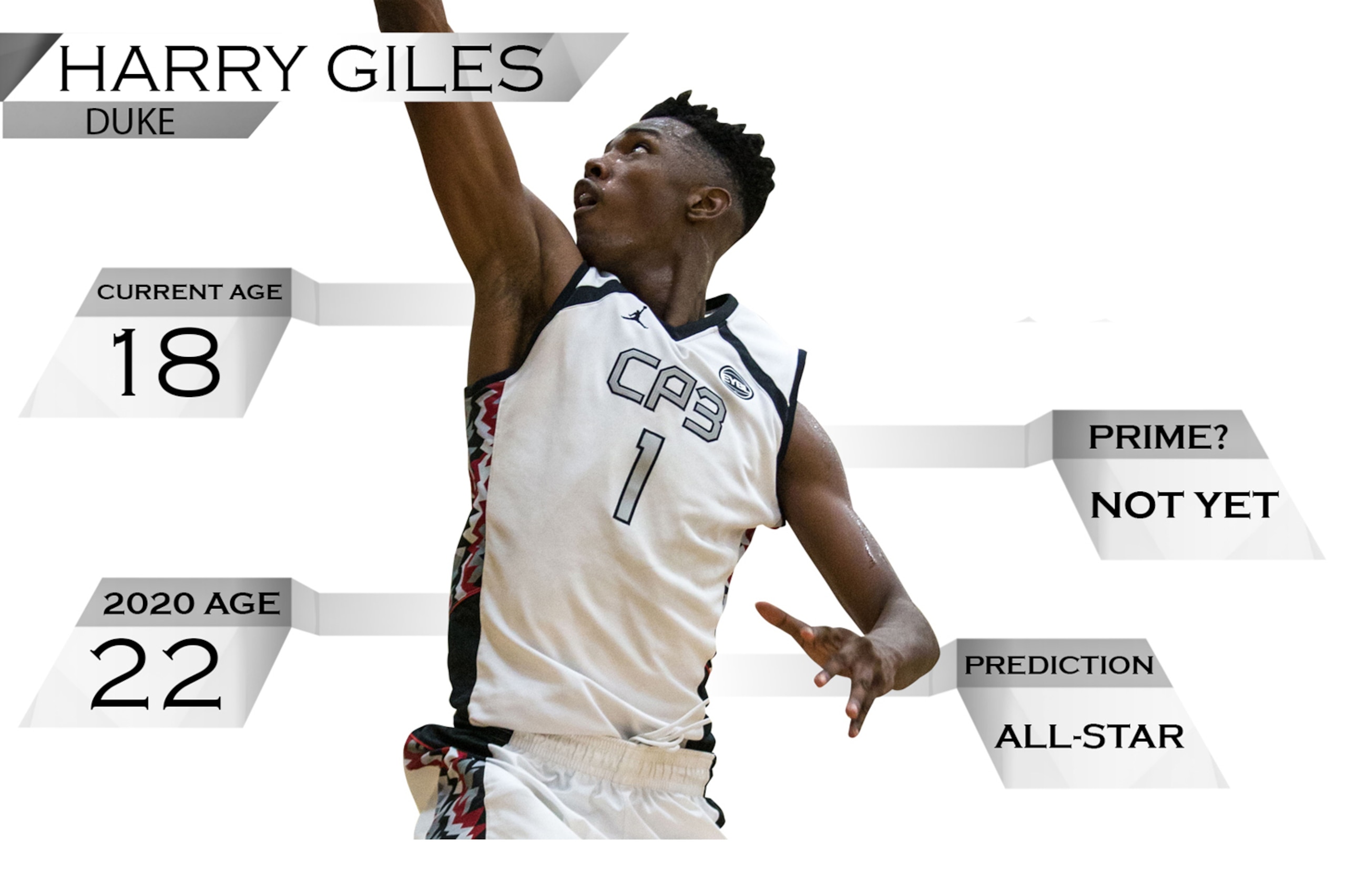
The attributes that make Karl-Anthony Towns perfect in today's NBA—scoring inside and out, ability to defend all over the floor, switch on a ball screen and protect the rim—are what make Harry Giles such a promising prospect.
Giles is the next freak on his way to the NBA after a pit stop at Duke. The only thing tempering the expectations is that he's torn his ACL twice.
"He's so gifted and talented, you just want to roll the dice on him," an NBA scout said. "He's such a monster. He's going to be a center and guard and rebound and push out. He's just so enticing."
Giles is already built like an NBA big man at 6'11" and 222 pounds, and he plays hard. Last summer, he added to the hype by starting to show a jumper and some perimeter skills to go along with his ability to control the game in the paint.
The consensus is that as long as Giles can stay healthy, he's as close as it gets to a sure thing.
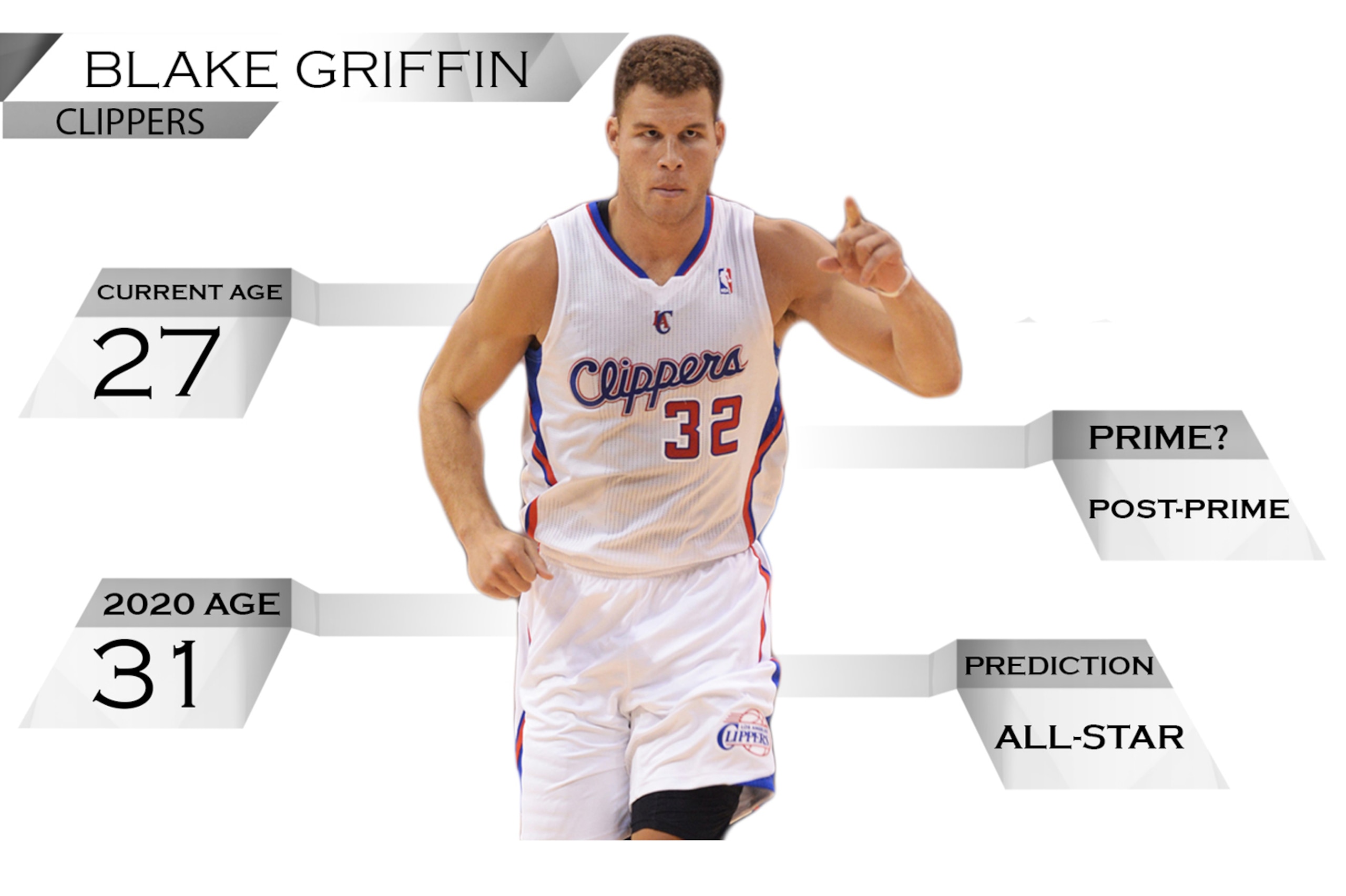
Blake Griffin isn't going to be a dunking machine forever. Already, we've seen his throw-down ability diminish over the last few seasons, partially because injuries have held him back:
That's OK, because Griffin is by no means just a dunker.
He's gradually become an adept defender, overcoming his Tyrannosaurus arms with proper positioning and the smarts necessary to wreak havoc in passing lanes. He's one of the best frontcourt passers in the NBA, to the point where he can play point forward when Chris Paul isn't on the court with him. He often serves as an offensive hub in head coach Doc Rivers' half-court schemes.
Best of all, he's learned how to shoot.
Griffin still doesn't have three-point range, but he's fully capable of spreading out a defense with his foul-line jumpers and shots from the elbows. He could stand to become a bit less reliant on them and establish himself in the post instead, but building that weapon has done wonders for his long-term prospects.
If you're concerned about the lack of aesthetic ability on the blocks, keep in mind that effectiveness is far more important than beauty. Griffin may look like an out-of-control whirling dervish with his back to the basket, using unorthodox moves to get around defenders, but the strategy still works.
7. Hassan Whiteside
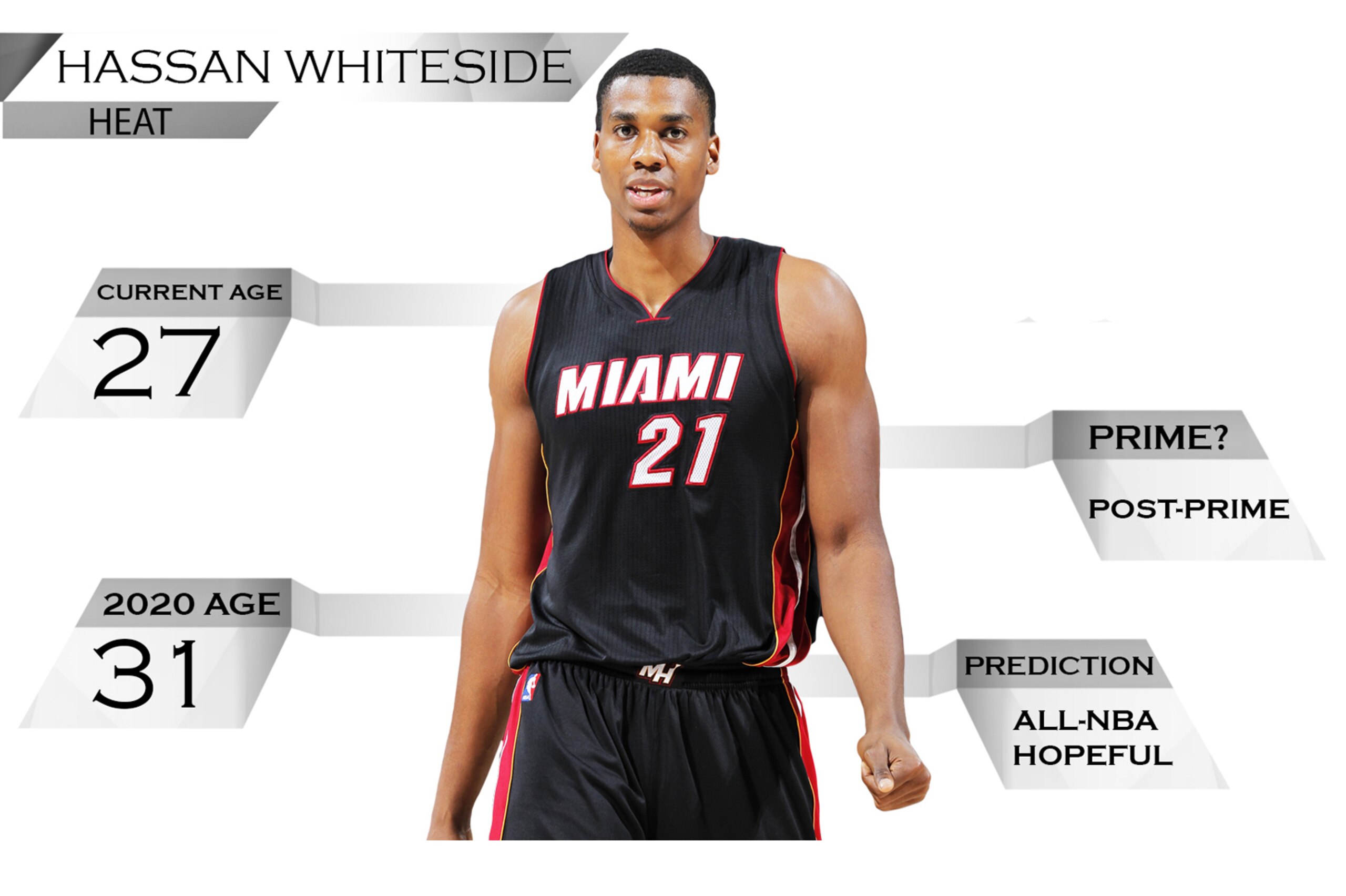
Everything clicked for Hassan Whiteside in 2015-16, even if a sprained MCL forced him to watch his Miami Heat suffer second-round elimination at the hands of the Toronto Raptors.
The late-blooming center finally realized he didn't have to chase every block opportunity in order to play effective defense. He still paced the league with a ridiculous 3.7 rejections per game and blocked a league-best 9.7 percent of two-point attempts while he was on the floor, but he started worrying about positioning more.
By the end of the year, he was shutting down the paint, scaring opponents away from even thinking about attempting close-range shots. Pair that with a developing jumper, soft touch around the basket and jaw-dropping athleticism that lets him rise high for constant flushes as a roll man, and you have what's quickly becoming a complete product.
Whiteside doesn't even act like assists are the scariest things in the world anymore.
Sure, he's going to be 31 in 2020. But given the late start to his career and the inconsistent minutes he played in his early 20s, he should age better than most bigs.
6. Kristaps Porzingis
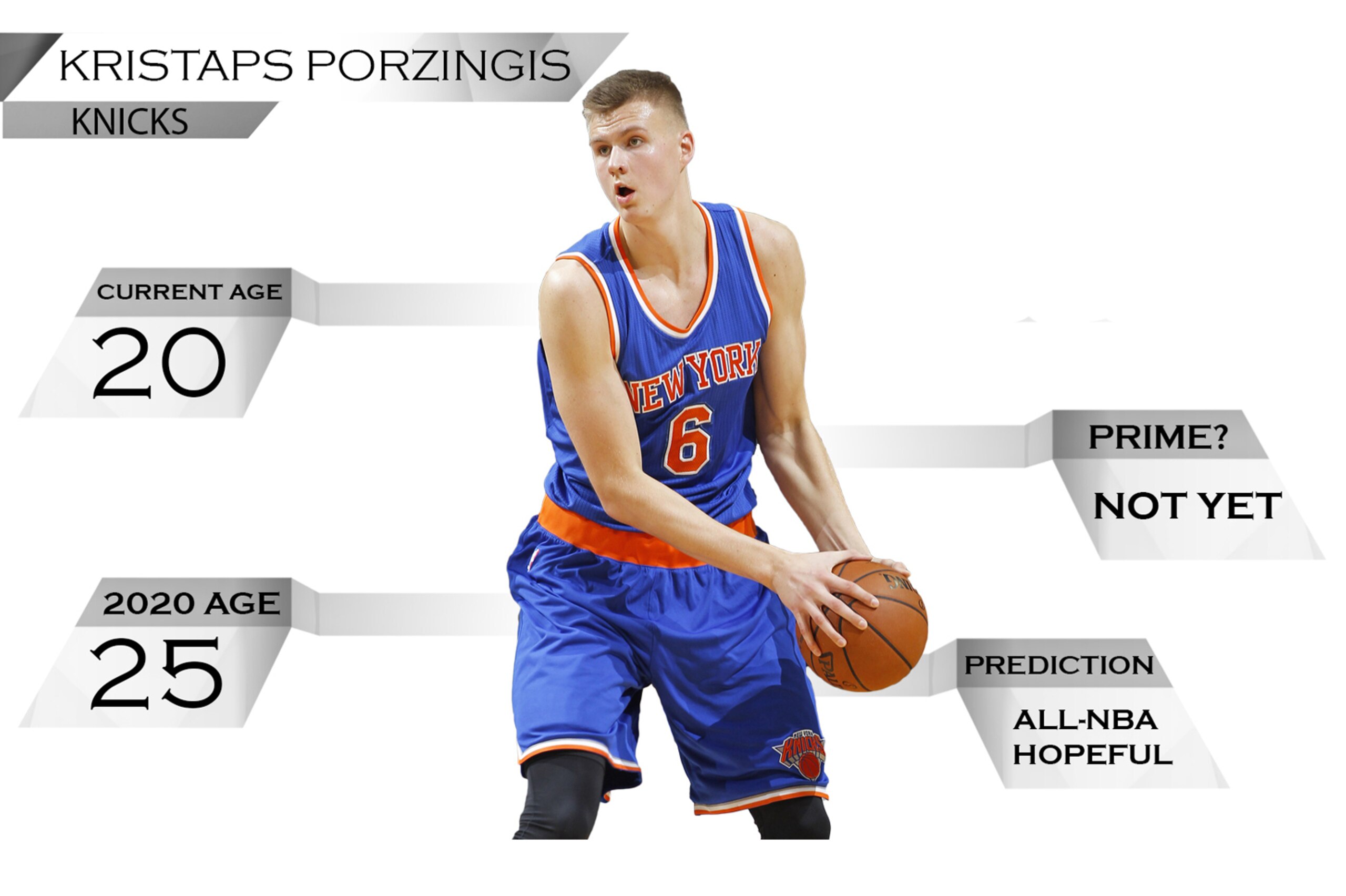
Kristaps Porzingis sure feels like the future.
It's not like 7'3" basketball players grow on trees, but they're even rarer when they can shoot jumpers and handle the ball on the perimeter. That combination alone should make the New York Knicks big man a matchup nightmare, even if he fails to add more weight to his frame and doesn't develop as a post-up player.
But Porzingis should do both. He'll naturally fill out as he transitions from his teenage years into full-fledged adulthood, and working with NBA coaches will only help him become a more well-rounded player. All the while, he'll maintain his versatility.
"You don't know what to do, whether you go under the screen or even if he's going to set a screen, because a lot of times, he's just going to run up and slip out, which causes you to lose your man or our big man to lose him, and he gets open for threes and spreads the court," Mike Conley said about the Latvian 7-footer, per Fred Katz, writing for Bleacher Report in April.
Just imagine the pickle defenders will find themselves in when he's fully developed in 2020.
5. Andre Drummond
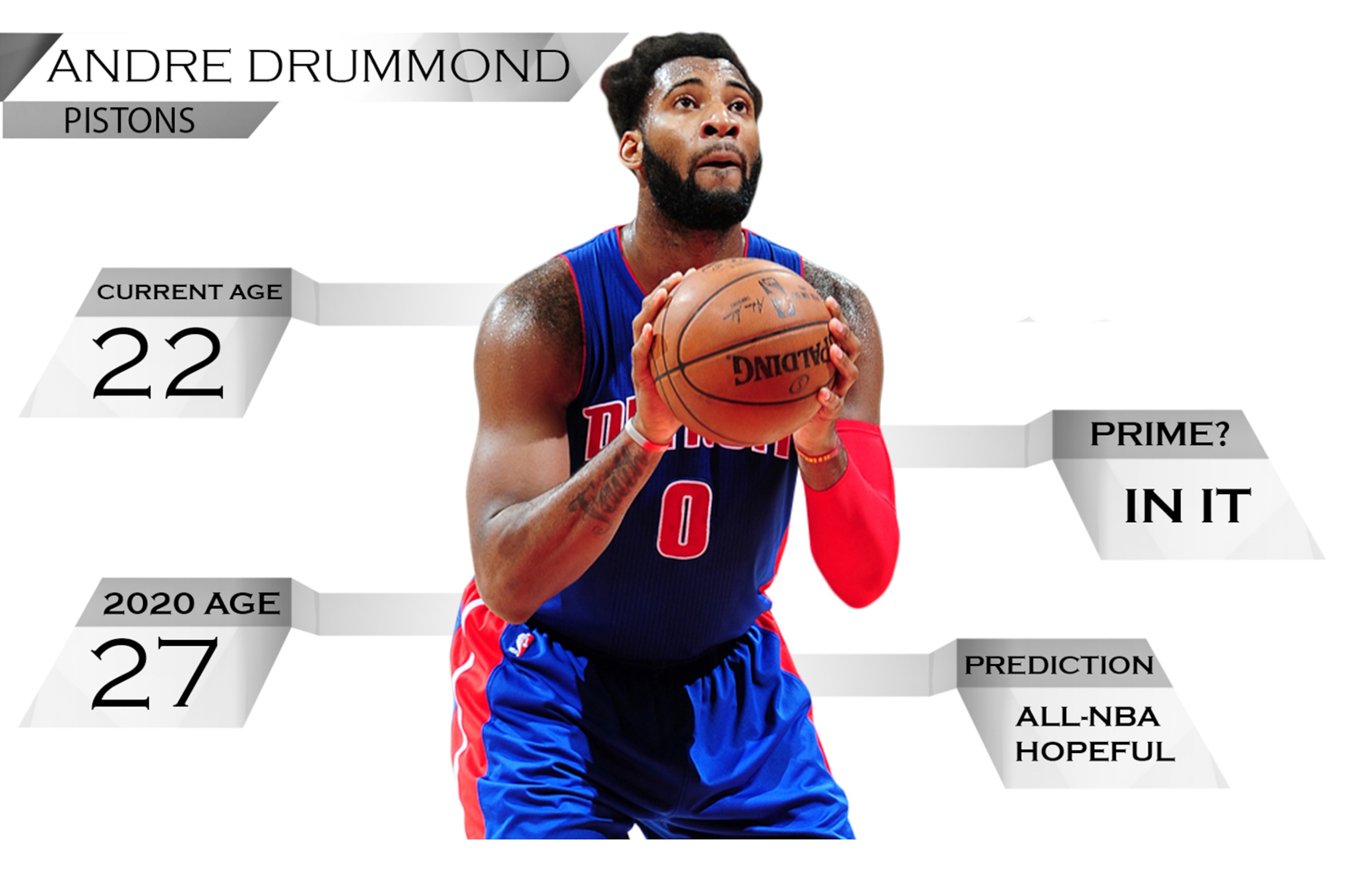
Head coach Stan Van Gundy built the Detroit Pistons' offensive schemes around Andre Drummond for good reason. The four-out-one-in system works when you're surrounding a big with capable shooters, but it also requires the post man to hold his own.
Drummond's interior presence allows the Pistons to worry about spacing the court rather than helping him in the paint. They're well aware he's become the best rebounder in the NBA, as well as a terrific garbage scorer. And to be clear, that's a compliment—he's adept at collecting offensive boards and finishing the follow-up attempts around the rim.
Drummond does have a few weaknesses he must shore up as he continues to mature over the next four years. He's a limited post-up player whose predictability often holds him back, his defense isn't nearly as strong as it should be and he's a career 38 percent free-throw shooter.
The Detroit center has the athletic tools necessary to become one of the league's better rim protectors, but he needs more discipline and a better fundamental understanding of positioning. Once that comes, he'll have a much stronger chance to assert himself as an All-NBA player.
4. Draymond Green
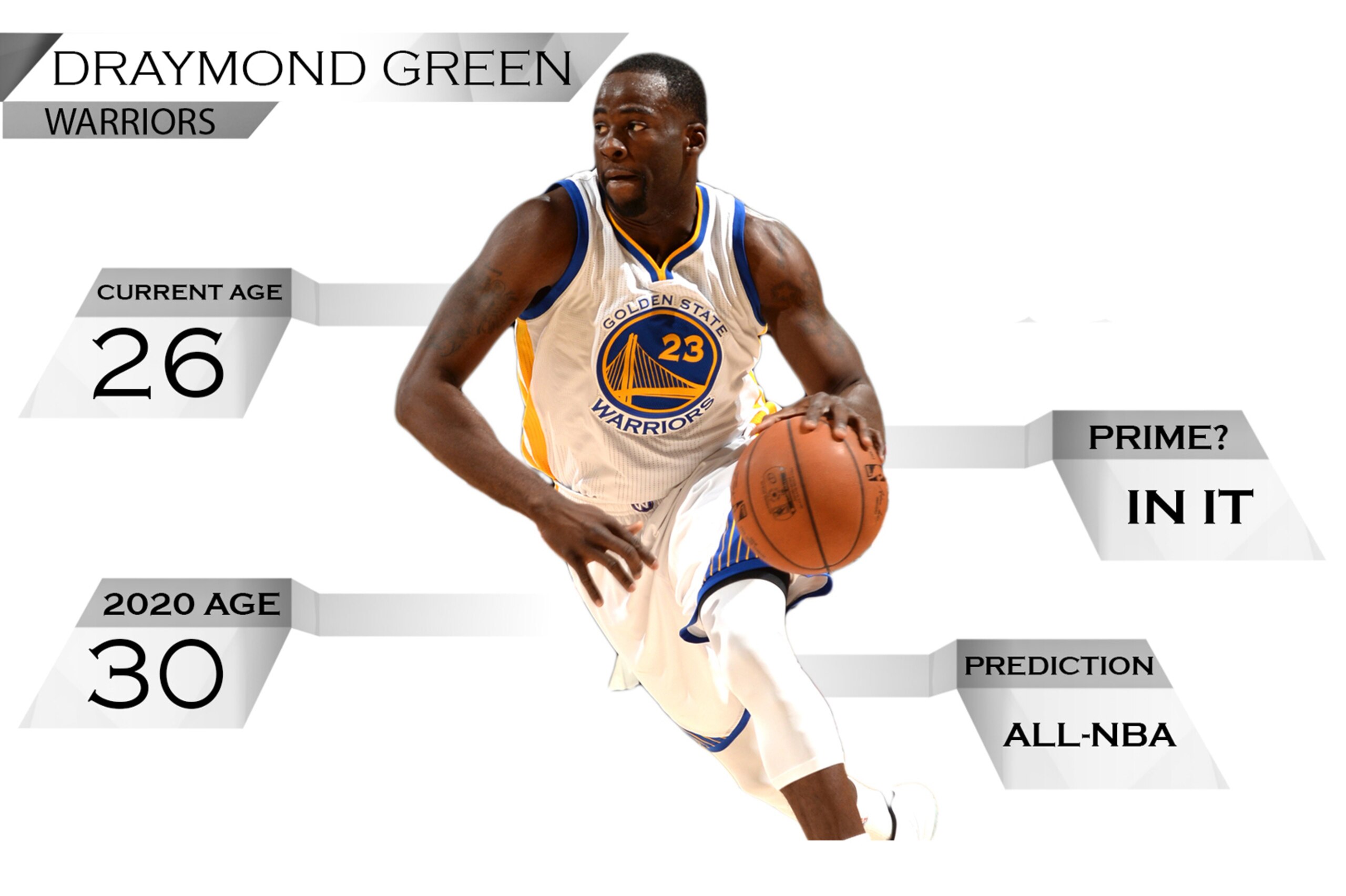
Draymond Green's career progression has been fascinating.
As you can see below by looking at where each professional season fits among all NBA players from 2015-16 in terms of NBA Math's offensive points added and defensive points saved, he's come a long way in just four years:

Green has always been a positive presence on defense, but it's only in the last two years that he's become one on offense, too. Now he's coming off a year in which he led a 73-win squad in assists per game and provided an on/off impact on par with Stephen Curry's. He's in a realm of his own as a Defensive Player of the Year candidate who has also become one of the Association's most versatile offensive players.
Though he may not fit the traditional superstar mold, given his lack of scoring, Green most assuredly has the impact of a superstar. The NBA has become a league perfectly tailored toward his skill set—especially the ability to switch any screen on defense and stretch the court with his scoring and passing on the other end.
That's not changing anytime soon, and he's taking advantage.
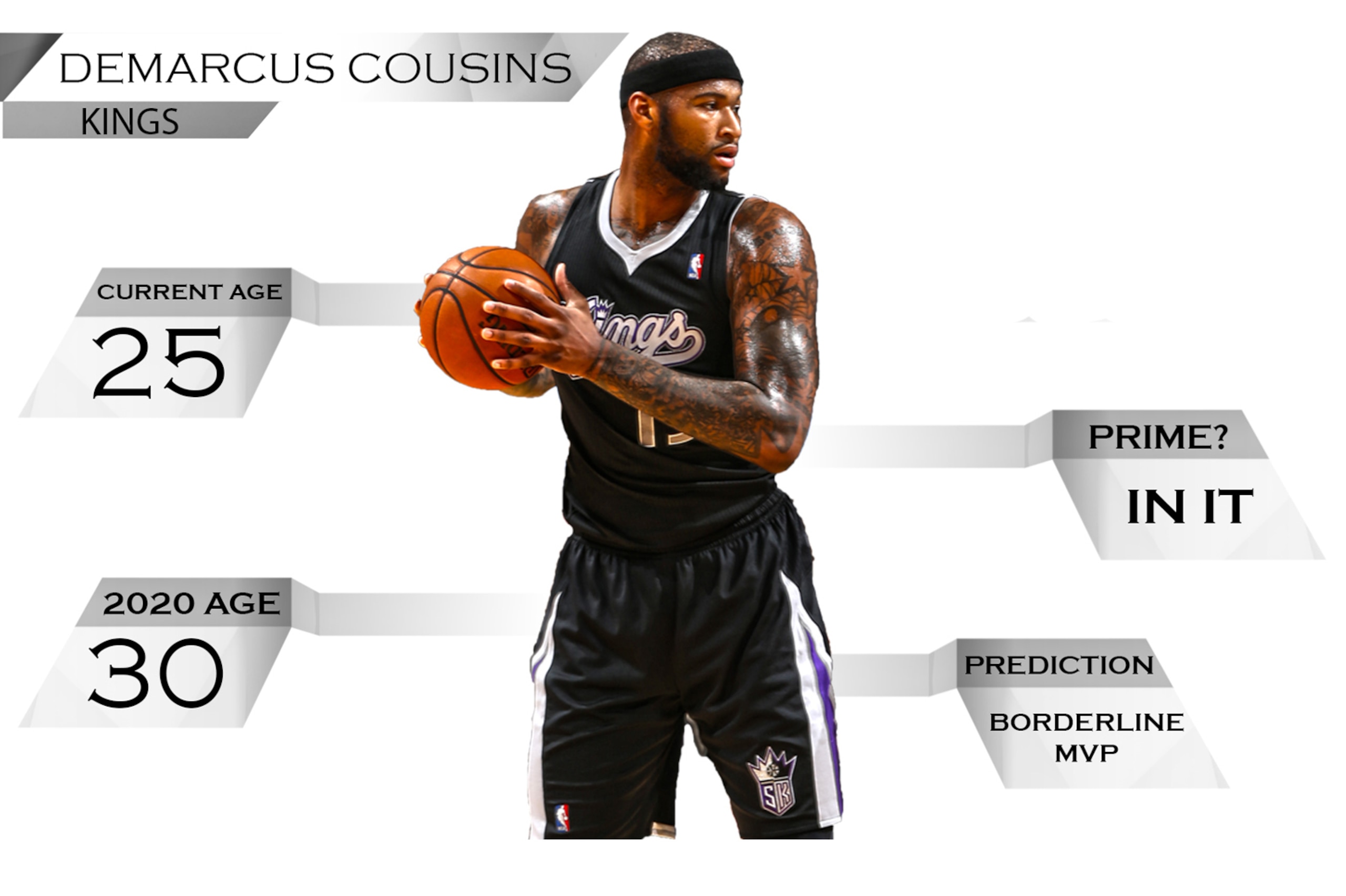
By the time 2020 rolls around, DeMarcus Cousins may have played for another seven coaches and drawn a half-dozen more suspensions. But the Sacramento Kings (or whoever else he's playing for, given that general manager Vlade Divac would only commit to not trading him "this year," per Sean Cunningham of ABC 10) will surely put up with the headaches in order to utilize the big man's immense talent.
Why wouldn't they?
He still has one of the best combinations of physicality and finesse we've seen in recent NBA history, allowing him to bully smaller opponents and agilely slip past bigger ones on the offensive end. His range is expanding, he's a deft passer and he's even proved himself a quality defender when he decides to try on that end.
We're still waiting to see what might happen when Cousins plays on a competitive team. But if he's locked in for an entire season, this No. 3 placement might seem terrifyingly low.
2. Karl-Anthony Towns
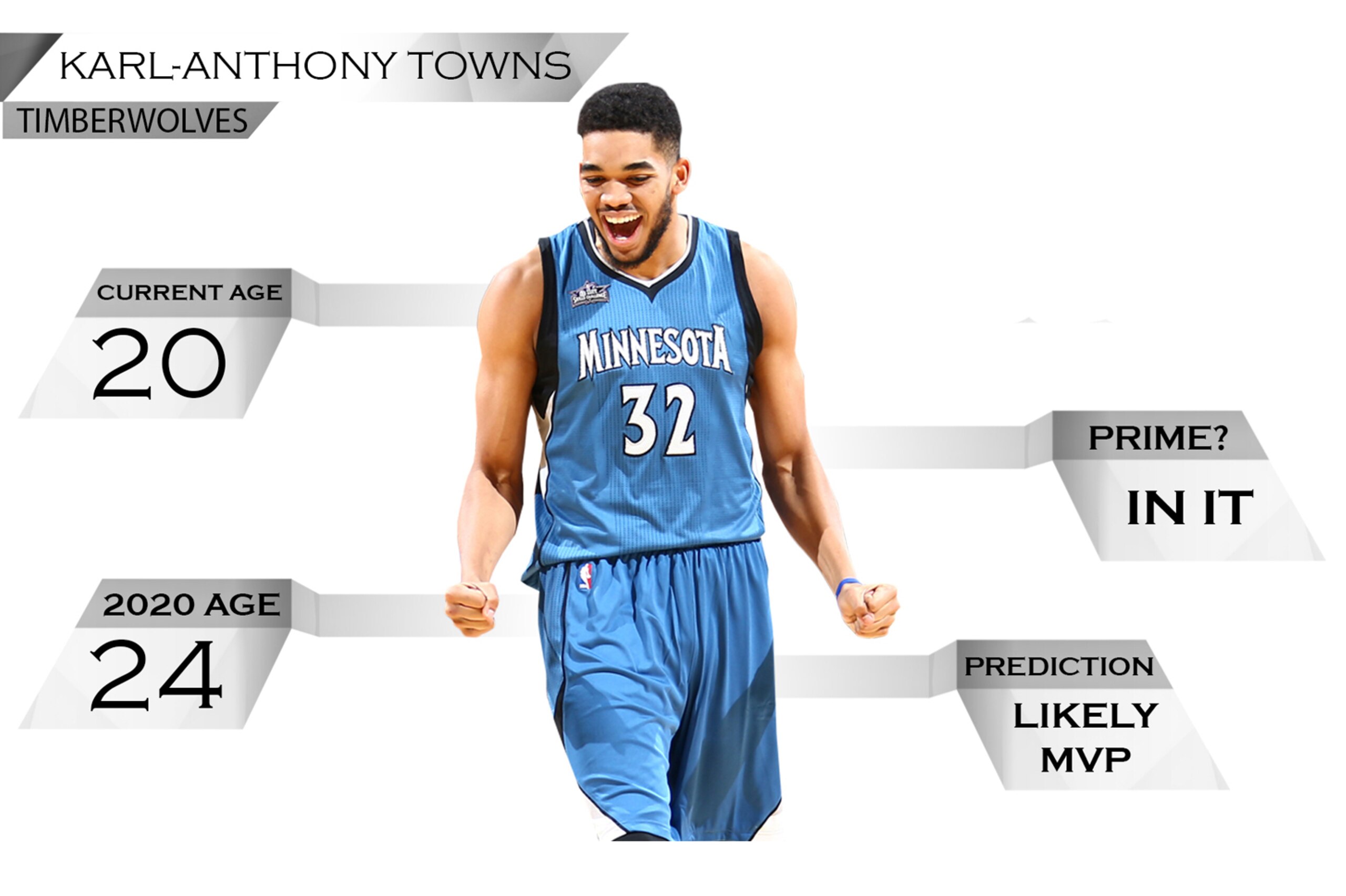
"[Karl-Anthony] Towns has earned this status; he deserves to be placed beside [Anthony] Davis already," Bleacher Report's Dan Favale wrote about the Minnesota Timberwolves rookie. "He is the most productive rookie Kentucky has ever sent to the pros. More than that, as one of the architects of a new playing style for bigs like himself and Davis, Towns is the most important rookie the school has ever delivered."
The unanimous Rookie of the Year is everything you could want in a modern big man.
He can shoot the ball from the perimeter, knocking down 34.1 percent of his three-point attempts during his first professional season. He can torture defenders on the interior—NBA.com's SportVU data shows he finished in the 74th percentile on post-up possessions. He's a capable defender with the foot speed necessary to switch over onto smaller marks.
What's not to love?
Throughout the three parts of this NBA 2020 series, we graded out only three players as strong MVP candidates four years into the future—the highest designation available.
Even Stephen Curry, who will be 32 years old, was just on the cusp of earning that grade. Towns, however, was one of the three, joining Kawhi Leonard and our No. 1 big man.
1. Anthony Davis
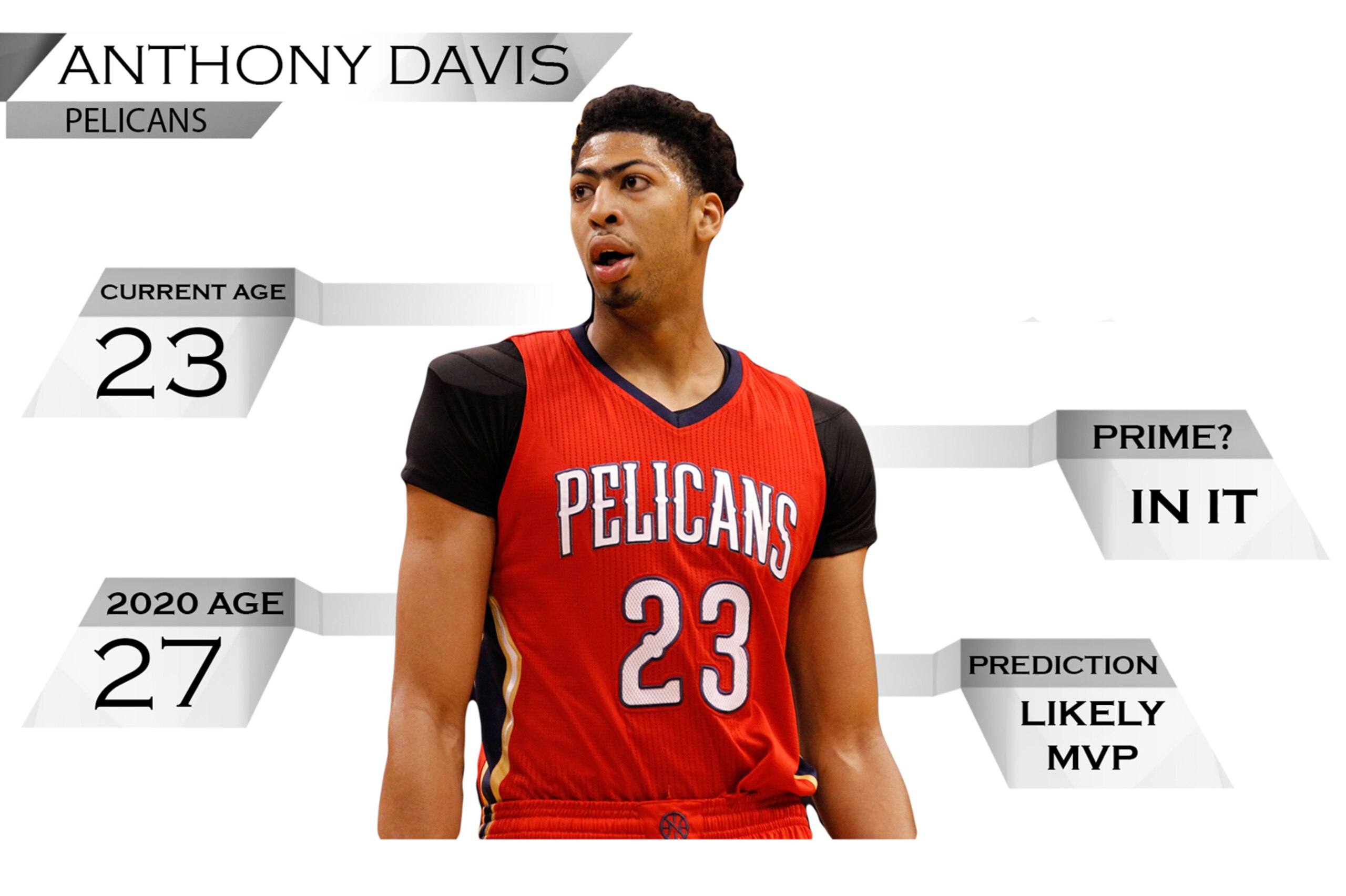
Though Towns serves as a prototypical big in today's NBA, so does Anthony Davis. The New Orleans Pelicans superstar also has the luxury of a few years' head start and will still be moving toward his athletic prime by the time we reach 2020.
Davis may no longer be the shiny new toy in the Association, but he remains supremely talented and more polished than Towns on both ends of the floor. Though he's been held back by nagging injuries and took some time to adjust to the Pelicans' new systems once Alvin Gentry took over as head coach, he's still an MVP candidate at this early stage of his career.
The 2015-16 campaign was a disappointing one, yet he averaged 24.3 points, 10.3 rebounds, 1.9 assists, 1.3 steals and 2.0 blocks while shooting 49.3 percent from the field. Once the Pelicans put more established (and healthy) talent around him, he'll have the freedom to pick his spots and become increasingly efficient.
Towns is new and exciting. But let's not forget just how good this former Wildcat has already become.
Adam Fromal covers the NBA for Bleacher Report. Follow him on Twitter @fromal09.
C.J. Moore covers NCAA basketball for Bleacher Report. Follow him on Twitter @CJMooreBR
Unless otherwise indicated, all stats are from Basketball-Reference.com or NBAMath.com, and all quotes are obtained firsthand.




.jpg?w=2560 "Aikman Blasts Cowboys WR 🫣")
.jpg?w=2560 "Jonathan Taylor Landing Spots")