


One NBA season isn't enough to judge a draft class in totality. The league won't know what to make of most of these 20-somethings for another few years, at least until they're all of legal age to purchase an adult beverage.
What we can do, though, is consider how the 2015 draft would have turned out had the league's executives known what they know now. This class has already shown the potential to shape the NBA's future, as it features skilled bigs such as Karl-Anthony Towns and Kristaps Porzingis, plus do-it-all guards such as Devin Booker and D'Angelo Russell.
And that's without including Nikola Jokic, the sensational first-year center for the Denver Nuggets who won't be mentioned here since he was a second-round pick in 2014.
The Association is in good hands for years to come. For the time being, let's have a look at how the first round of last year's draft might have turned out if it happened today, based on team needs and rookie production. All players' actual draft slots and teams by whom they were picked are listed in parentheses up top.
1. Minnesota Timberwolves: Karl-Anthony Towns, C (Minnesota Timberwolves, No. 1)
1 of 30
Karl-Anthony Towns' boffo first-year numbers are enough to justify keeping him at No. 1 under all circumstances. The Kentucky product led all rookies in points (18.3) and rebounds (10.5), and was second in blocks (1.7). League-wide, he finished eighth in field-goal percentage (54.2 percent) and third in double-doubles (51).
For his efforts, Towns swept this season's Western Conference Rookie of the Month honors and is in line to be the Minnesota Timberwolves' second straight Rookie of the Year after Andrew Wiggins.
What really makes KAT worthy of this spot, though, isn't just what he's already done, but what he'll do going forward. He's not one to rest on his laurels, as he made clear when reflecting on a 103-90 loss to the Utah Jazz on Jan. 29.
"I think the people closest to me understand I'm never satisfied," he told CBS Sports' Zach Harper. "I can have games like I had in Utah and say I honestly felt I didn't play well. It's upsetting sometimes, but I think maybe when my career is over, I can look back and start appreciating a little more what I was able to accomplish and what I was blessed to do."
Keep in mind, Towns finished with 32 points on 13-of-17 shooting and 12 rebounds in that defeat. He could have at least been happy with how he performed.
But he wasn't, and it's that obsession with winning above all else that will push Towns and the T-Wolves into contention before long.
2. Los Angeles Lakers: Kristaps Porzingis, PF/C (New York Knicks, No. 4)
2 of 30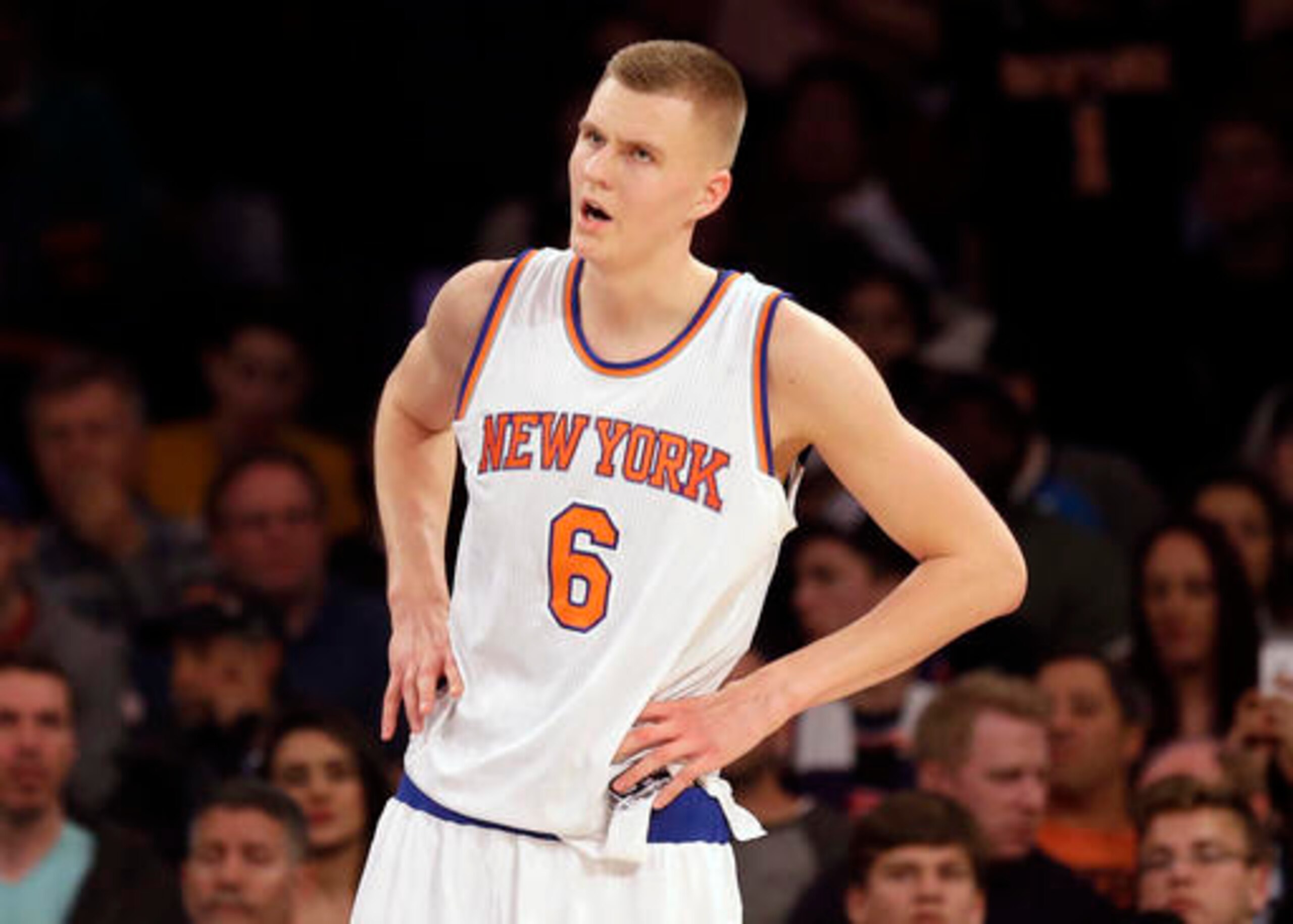
Kristaps Porzingis went from high-flying, putback-dunking, three-point-nailing, Madison Avenue sensation early in his debut season to mere mortal down the stretch.
Not that Porzingis played poorly, per se. During the New York Knicks' 10-28 finish, he averaged 14.7 points, 6.4 rebounds, 1.4 assists and 1.7 blocks, albeit while sitting 10 times due to injury.
As Fred Katz noted for Bleacher Report, some of the slippage in Porzingis' game, particularly rebounding, was the result of the league adjusting to the lithe Latvian's unique combination of size and skill:
"Credit the defensive scouting reports that eventually made the 7'3", 240-pound Porzingis a top priority. He wasn’t a target heading into many November and December games, but that predictably changed. He came to see different coverages that went beyond just getting into his face and displacing him from his favorite spots on the floor.
"
Now, the onus is on the 20-year-old to make those scouting reports obsolete. That will come as Porzingis fills out his 7'3" frame, hones the finer points of his game and builds more confidence in his outside shot during the offseason.
The Knicks, too, have a heavy hand to play here. Their next coaching hire, Kurt Rambis or otherwise, must be someone who appreciates what Porzingis is and what he could be—then figures out how to motivate and deploy him accordingly.
Had the Los Angeles Lakers opted for Porzingis, they'd have a clearer idea of their frontcourt going forward, with Julius Randle at the 4. That would still leave at hole at point guard; though, given D'Angelo Russell's rookie travails, the team might've been better off filling it some other way.
3. Philadelphia 76ers: Jahlil Okafor, C (Philadelphia 76ers, No. 3)
3 of 30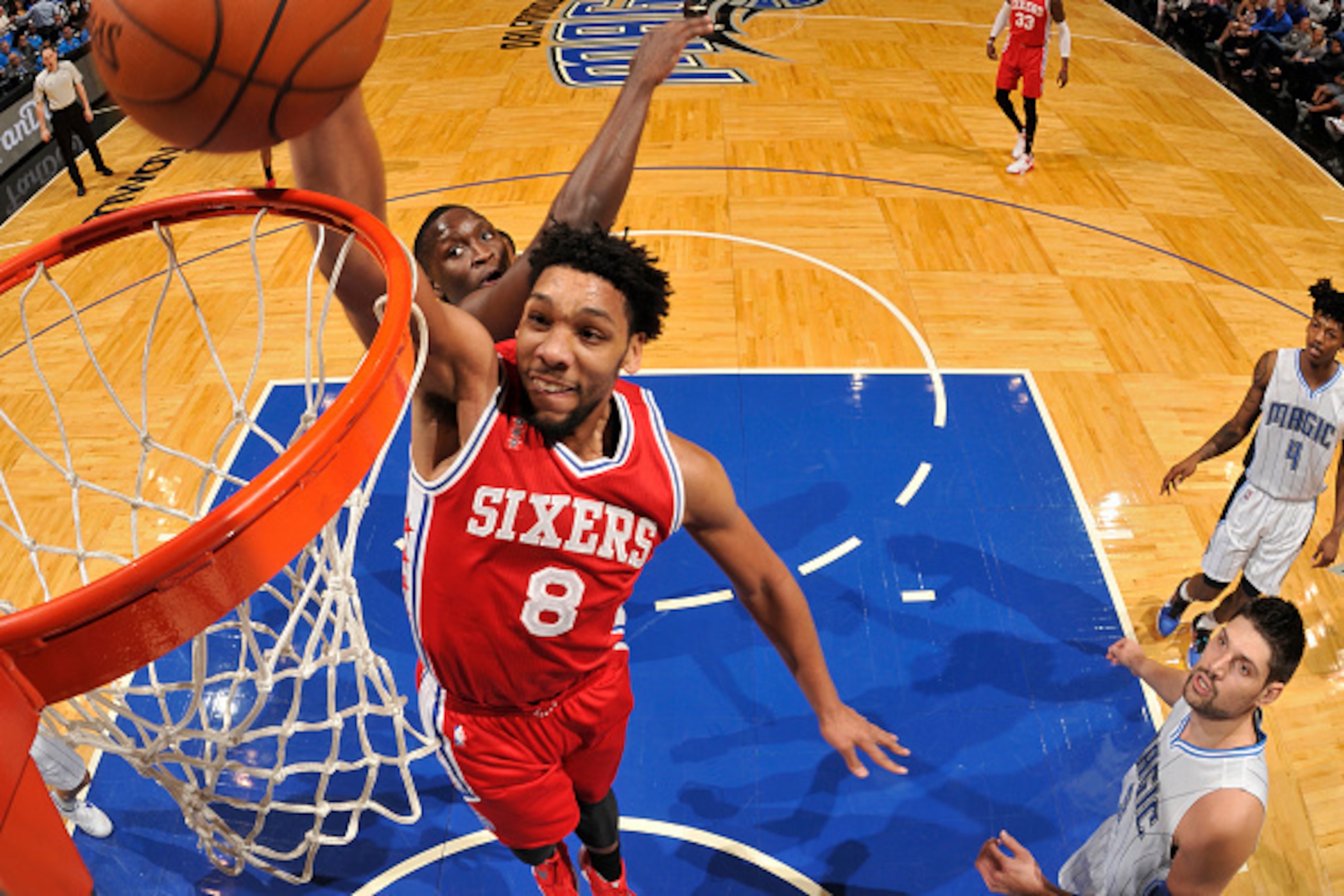
Jahlil Okafor's rookie season with the Philadelphia 76ers was a rocky one, to say the least. NBA.com's David Aldridge recently recounted some of the Duke product's missteps:
"Okafor made news off the floor for all the wrong reasons, getting pulled over by Delaware police for excessive speeding over the Ben Franklin Bridge in October, and getting in a fight with a fan in Boston outside a club in November. The 76ers suspended him for two games in December, and he's been trouble-free since, finishing the season averaging 17.5 points and 7.0 rebounds.
"
For all his foibles, Okafor still finished second among rookies in scoring and third in rebounding while shooting 50.8 percent from the field and a hack-proof 68.6 percent from the free-throw line.
His defense was often atrocious, though perhaps not as much so as the Sixers' 10-72 record in 2015-16. Okafor's own campaign ended on a down note because of knee surgery.
But the 20-year-old is still oozing with offensive skill. In a league where low-post play is on the path to extinction, Okafor's back-to-the-basket game makes him both unique and uniquely valuable.
A summer spent rehabbing and studying at his old stomping grounds in Durham, North Carolina, should do his body and mind plenty of good. Whether the Sixers keep him or find a new home for him this summer, Okafor should have a bright future somewhere in the Association.


4. New York Knicks: Devin Booker, SG (Phoenix Suns, No. 13)
4 of 30
Had Devin Booker not been buried on the Phoenix Suns' depth chart for the first two months of 2015-16, he might have given former Wildcats teammate Karl-Anthony Towns a serious run for his money in the Rookie of the Year race.
From Jan. 8 on, Booker started all 44 games in place of the injured Eric Bledsoe and averaged 18.5 points, 3.0 rebounds and 3.8 assists in 35.2 minutes per night. Over that same span, he scored 30 or more points six times and flashed a nifty passing game, notching 15 contests of five or more assists.
Like many young guards, Booker struggled defensively and turned the ball over frequently (2.1 turnovers per game). All told, though, the Suns got some strong results out of the NBA's youngest player after thrusting him into big minutes far earlier than anticipated.
"I got hit with almost everything this year," Booker told Robby Baker of KPNX. "I'm going to expect everything next year. I'll be able to train better this summer."
And, presumably, come back an even better player next season, with some minutes at small forward awaiting him.
The New York Knicks wouldn't have had much trouble finding a place for Booker had they drafted him, what with Jose Calderon on the decline and Arron Afflalo heading into the summer with an opt-out clause in his contract. As far as the triangle offense is concerned, Phil Jackson has long preferred taller shooters at the point—a profile that the 6'6" Booker fits almost to a T.
5. Orlando Magic: Justise Winslow, SF (Miami Heat, No. 10)
5 of 30Judge Justise Winslow by his overall impact on the Miami Heat this season.
According to NBA.com, the Heat's defense was nearly five points stingier per 100 possessions when Winslow was on the floor. He also featured prominently in three of Miami's six best five-man units (minimum 40 minutes played).
Whenever the Heat needed someone to take on a tough defensive assignment, Winslow was there to be a human blanket. Whenever Miami needed an energy boost off the bench, Winslow was there with the spark.
His personal numbers (6.4 points, 5.2 rebounds, 1.5 assists) were anything but eye-catching. His jump shot (27.6 percent from three, 27.7 percent from the corners) left much to be desired.
But if you want to know what Winslow can do, just tune into the Heat during these playoffs. The 20-year-old Houstonian is already slotted for big minutes, and he made the most of them in Game 1 vs. Charlotte with eight points, four rebounds and one sick Eurostep, as seen in the video above.
Surely, the Orlando Magic wouldn't have minded adding another athletic playmaker to a team with Aaron Gordon now at the forefront.
6. Sacramento Kings: Emmanuel Mudiay, PG (Denver Nuggets, No. 7)
6 of 30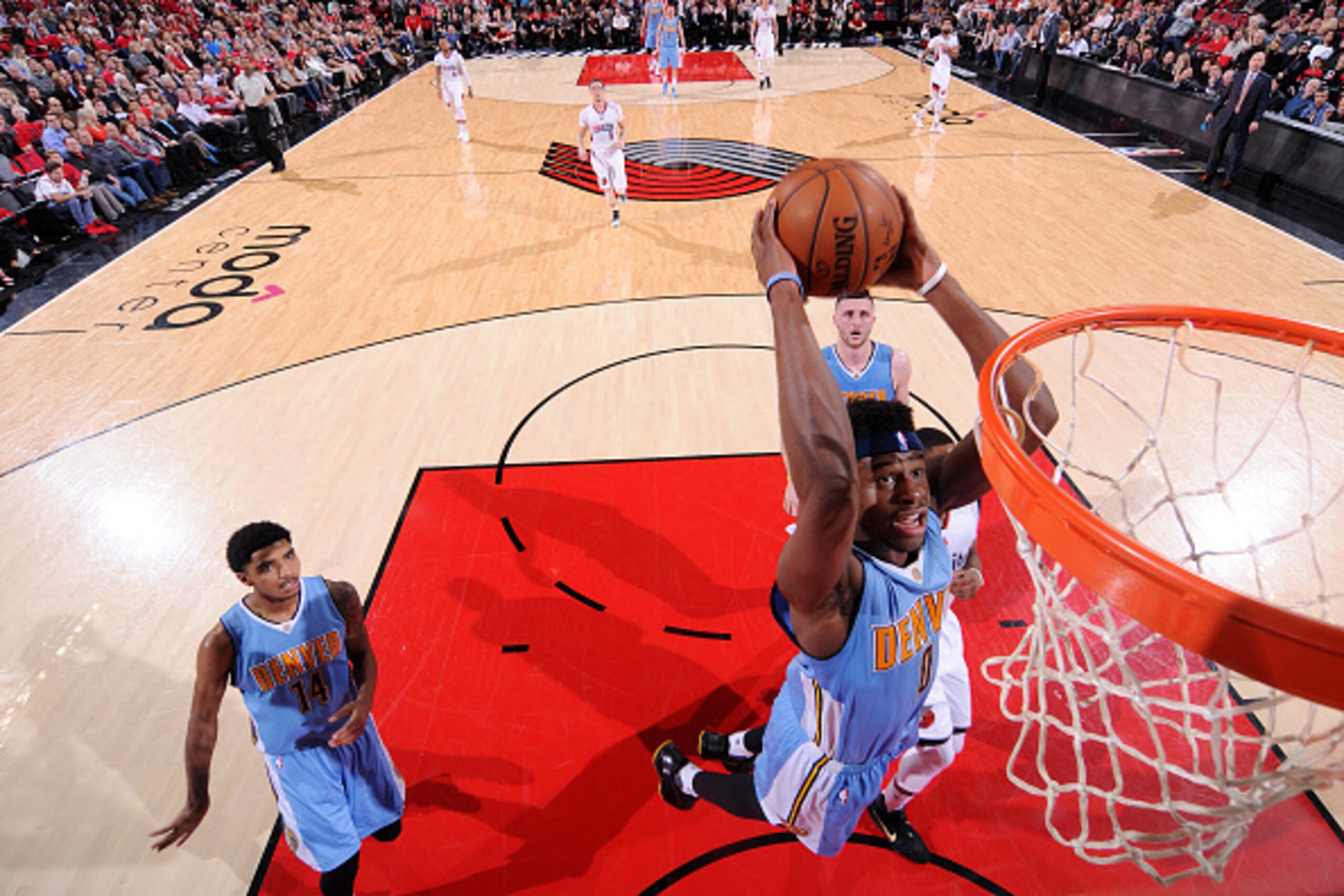
The Sacramento Kings passed on Emmanuel Mudiay with the No. 6 pick last year, in part because the then-19-year-old refused to work out for the NBA's most dysfunctional franchise. They could still use a floor general of Mudiay's youth and potential, especially if Rajon Rondo doesn't re-sign this summer.
But Mudiay wound up instead with the Denver Nuggets, with whom he put together a rookie season that, for NBA.com's David Aldridge, was a mixed bag with a decidedly positive bent:
"Mudiay was among the bright spots in Denver's rebuilding season, leading all rookies in assists, and averaging more dimes per game than the likes of Tony Parker or Kemba Walker. He will have to improve his shooting, to be sure. Only six of the 39 rookies who, like Mudiay, played 30 or more games this season shot worse than his 36.1 percent.
"
Clearly, Mudiay's jumper could use some work this summer. So could his handles, after he turned the ball over 3.2 times per game in 2015-16. Just don't expect him to tell you what's in store for his offseason.
"I can't expose what I'm going to do," Mudiay told the Denver Post's Christopher Dempsey. "But it's going to be putting in some work."
And, with that close-to-the-vest approach, perhaps he'll be brushing up on Sun Tzu's The Art of War.
7. Denver Nuggets: D'Angelo Russell, PG (Los Angeles Lakers, No. 2)
7 of 30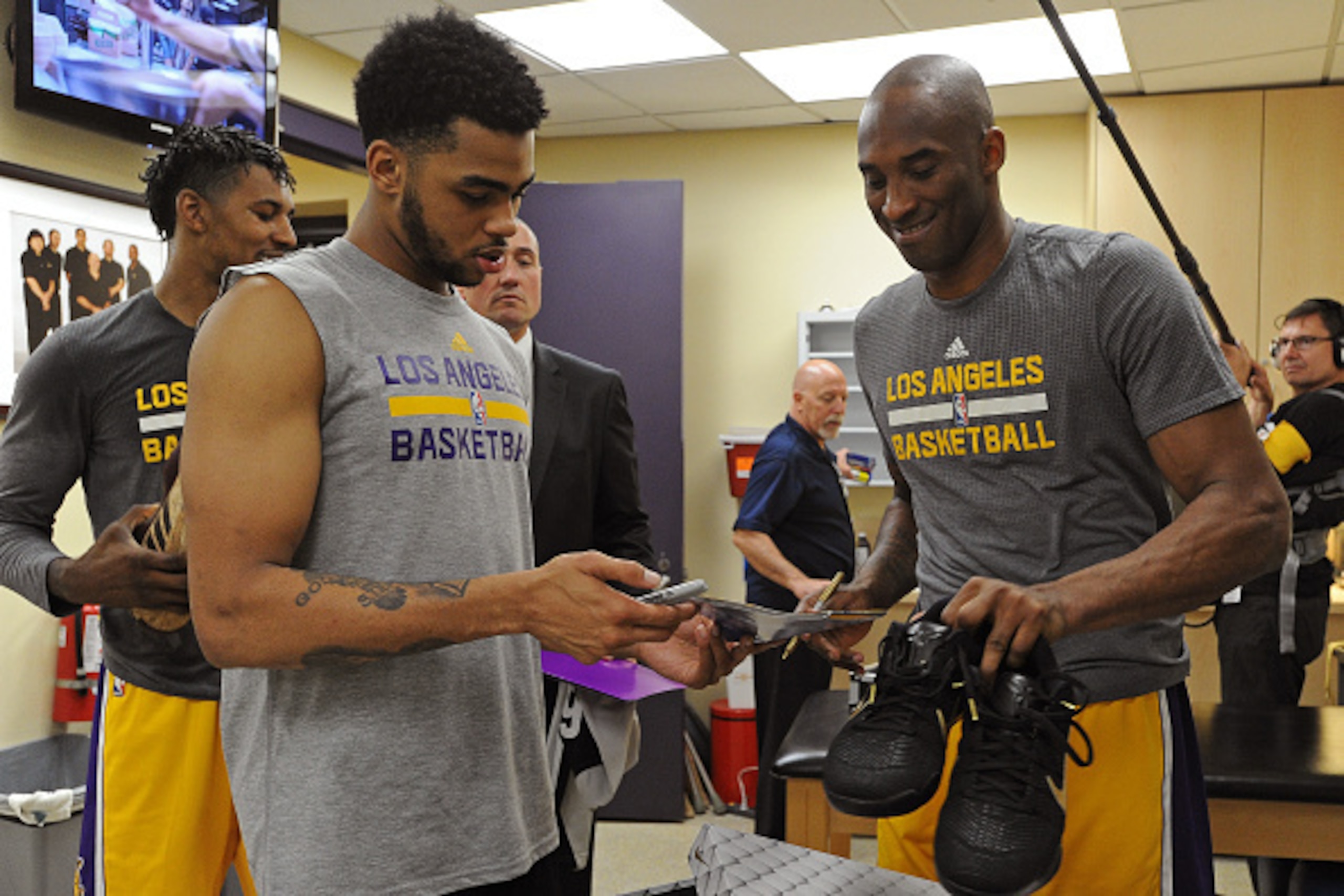
It's tough to entirely separate D'Angelo Russell's off-court shenanigans from his on-court ups and downs. To be an effective NBA point guard requires the trust of one's teammates, which Russell will have to earn back (assuming he ever had it in the first place) after the silly firestorm he sparked regarding Nick Young.
In time, though, the 20-year-old Ohio State product could and should find himself back in the Los Angeles Lakers' good graces. He'll mature, as will his game, which is already tantalizing in its own right.
From the time Lakers coach Byron Scott reinstated his prized rookie as a starter in late February, Russell averaged 15.4 points, 3.3 assists and 1.2 steals while draining 39.2 percent of his threes.
Is Russell equipped to lead the Lakers into an uncertain future without Kobe Bryant? Not yet, and maybe not ever—not as the guy, anyway.
But he's not lacking for confidence. With more talent around him, and without the Mamba's retirement circus sucking the life out of the team, Russell could put his superb court vision to good use as he helps restore the historic sheen to the Purple and Gold.
And since the Denver Nuggets, at this point, would still be in need of a point guard, nabbing Russell would be their best option.
8. Detroit Pistons: Myles Turner, C (Indiana Pacers, No. 11)
8 of 30
For the Detroit Pistons' sake, Myles Turner might have been a poor fit next to All-Star center Andre Drummond. From a pure talent standpoint, though, Turner is the best rookie left on the board and might have found a way to thrive next to Drummond anyway, thanks in no small part to his smooth jumper.
The 20-year-old Texan made his biggest offensive mark in the mid-range for the Indiana Pacers. According to Basketball-Reference, Turner shot 40 percent or better from every distance category inside the arc, including a sturdy 42.5 percent on long twos. With some offseason work on his outside shot, he could become just the sort of athletic, stretchy big that most teams covet.
Turner has already done terrific work around the rim. From mid-January on, he averaged 6.3 rebounds and 1.7 blocks. During his playoff debut, the No. 11 pick in 2015 turned away five Toronto Raptors shots in a 10-point win for the Pacers.
If Indy parlays its split north of the border into a postseason upset over Toronto, it'll have everything to do with what Turner contributed off Frank Vogel's bench.
9. Charlotte Hornets: Willie Cauley-Stein, C (Sacramento Kings, No. 6)
9 of 30
Count Willie Cauley-Stein among the many Sacramento Kings who probably weren't sad to see George Karl go. Back in March, the Kentucky product had some stern remarks for his coach after catching wind of Karl's concerns about Cauley-Stein's defensive versatility or supposed lack thereof.
"That’s funny, that’s funny, kind of flimsy, cus’ I can guard five positions, so that’s redundant otherwise I wouldn’t be here," Cauley-Stein said, per Cowbell Kingdom's Leo Beas. "There should be no matchup problems ever. So that’s just an excuse I think. However, I’m not the coach."
That didn't stop Cauley-Stein from flashing an intriguing offensive repertoire down the stretch. Over his final 11 games, the 2015 draft's No. 6 pick averaged 11.7 points, 6.8 rebounds and 1.5 assists, including posting games of 26 and 21 points during back-to-back 22-point victories in late March.
With the Charlotte Hornets, Cauley-Stein might've had more of an opportunity to flex his two-way muscle. The team has done well enough with Cody Zeller starting and Al Jefferson coming off the bench, but neither sports the overall upside and sheer ups that Cauley-Stein brings to the table.
Finding shots for him will be a tall order for the Kings going forward, assuming DeMarcus Cousins doesn't move from his spot up front. Still, whoever succeeds Karl would do well to maximize Cauley-Stein's top-shelf athleticism and surprising skill as part of Sacramento's always murky future.
10. Miami Heat: Trey Lyles, PF (Utah Jazz, No. 12)
10 of 30
Big minutes were tough to come by for Trey Lyles with the Utah Jazz. But when head coach Quin Snyder was able to squeeze him into his crowded frontcourt rotation, Lyles looked like a star in the making.
Over the final month of the 2015-16 season, the native Canadian scored in double figures 10 times on the way to averaging 11.4 points and 4.4 rebounds while knocking down 38.7 percent of his threes.
That's pretty good for a 20-year-old who played out of position in college and had to scrounge for playing time behind Derrick Favors, Rudy Gobert and Trevor Booker.
"I've just had to learn and stay prepared," Lyles told the Salt Lake Tribune's Gordon Monson. "At the beginning, everything was faster, but, once you get used to it, you get a little more comfortable. You start to understand what you're supposed to do, and then it slows down and you can process it a little better."
If Lyles doesn't force his way into Utah's starting five, don't be surprised when he develops first into a glue guy off the bench and then into an intriguing trade chip for the Jazz to wield as they please.
Had the Miami Heat up picked Lyles, he would've been stuck in a similar logjam at the outset. But between Chris Bosh's persistent problems with blood clots and Hassan Whiteside's impending free agency, the Heat's frontcourt could've used another tall forward to step in sooner or later.
11. Indiana Pacers: Norman Powell, SG (Milwaukee Bucks, No. 46)
11 of 30
Don't get too worked up about Norman Powell's playoff demotion. The Toronto Raptors, who acquired him in a draft night trade, were bound to put DeMarre Carroll, their top offseason signing and presumed defensive ace, back into the starting lineup at some point.
The second-round pick out of UCLA was a revelation in Carroll's stead. During a streak of 17 straight starts to end his rookie season, Powell poured in 12.7 points, 4.1 rebounds and 1.9 assists, shot 48.1 percent from the field (47.8 percent from three) and spent the season's final week torching the Indiana Pacers for 27 points and the Brooklyn Nets for 30 in the finale.
Powell might not be ready for prime time just yet, but if DeMar DeRozan splits in free agency this summer, the Raptors can feel good about their ability to find a stopgap—if not a permanent replacement—already on their roster.
For the Indiana Pacers, Powell could've provided a more permanent solution at shooting guard, where Monta Ellis, while productive, may turn out to be more of a temporary fix. He's not the big to fill the frontcourt that Myles Turner turned out to be, but without the UT product on the board, Powell's athleticism and tenacity on the wing wouldn't have been a bad fallback.
12. Utah Jazz: Josh Richardson (Miami Heat, No. 40)
12 of 30
Speaking of second-round picks who played like lottery talents in 2015-16, Josh Richardson is half the reason the Miami Heat have survived a storm of injuries this season.
Richardson didn't truly rise up until after the trade deadline once Tyler Johnson, another of Pat Riley's diamonds in the rough, was officially done for the season.
By the time he returned from the team's NBA Development League affiliate in Sioux Falls, he had turned his jump shot into one of the league's most lethal weapons. Following the All-Star break, the Tennessee product hit a scorching 53.3 percent of his threes and averaged 10.2 points per game as a key member of Miami's bench mob.
As Richardson and Heat coach Erik Spoelstra told the Palm Beach Post's Jason Lieser, the rookie's three-point-shooting leap started back in December, when, during an after-hours workout, Spoelstra insisted that Richardson not leave the gym until he'd nailed 70 of 100 long balls.
"Just setting a standard has been big," Richardson said. "I never leave the gym until I hit 70. Lately it’s been every time. I never shoot under 70 now."
As a result, Richardson is now a crucial cog in Miami's revamped basketball machine. For the Utah Jazz, his shooting ability and comfort on the ball would've made him valuable in a dribble-drive offense where Gordon Hayward and Rodney Hood share much of the creative burden.
13. Phoenix Suns: Stanley Johnson, SF (Detroit Pistons, No. 8)
13 of 30
Stanley Johnson was one of several players out of the 2015 draft class to stink it up from the field. The Arizona product shot 37.5 percent overall and 30.7 percent from three for the Detroit Pistons this past season.
But outside shooting has never been Johnson's calling card. His star rose in high school and college on the strength of his physique, his defensive tenacity and his unwillingness to back down from anyone on the court.
"Stanley's toughness and competitiveness and the fact that he'll never back down, that's not been a concern all year," Pistons coach Stan Van Gundy said, per ESPN.com's Nick Friedell. "What he's got to do is play smarter, make better decisions and continue to work on his skills. I never have a doubt about his competitiveness."
Johnson showed all that and more during Detroit's 106-101 Game 1 loss to the Cleveland Cavaliers. He went after LeBron James defensively, shot 3-of-3 from beyond the arc and ripped down eight rebounds in a tidy 16 minutes.
If Johnson can fashion his jumper into even a league-average threat and improve his on-ball work, he could be a star-caliber staple in the Motor City for years to come. For the Phoenix Suns, Johnson would've been a more natural fit at small forward than Devin Booker, their actual pick at No. 13, might have to be.
14. Oklahoma City Thunder: Mario Hezonja, SF (Orlando Magic, No. 5)
14 of 30
From day one of his rookie season, Mario Hezonja hardly (if ever) met a shot he didn't like—as much as the Orlando Magic might have preferred otherwise. That kind of confidence should serve the young Croatian well on his quest to become a key contributor in the Magic Kingdom.
It certainly did during the final week of the 2015-16 season. Hezonja started each of Orlando's last three games, including a 107-98 win over the Milwaukee Bucks where he tallied career highs in assists (seven) and steals (five) to go along with 19 points.
"I love to get everybody involved," Hezonja said, per the Orlando Sentinel's Josh Robbins. "When I score, I'm alone. But if I can get everybody involved, then I'm even more happy. So that's what it's all about."
Hezonja will need to hone his defense if he wants to stick in Scott Skiles' rotation over the long haul. He has the requisite athleticism to be a factor on that end and is already capable of impacting the game in a number of ways on offense.
If the Oklahoma City Thunder had a shot at Hezonja, they could've tapped him as a potential fallback option in the event of a Kevin Durant departure. At the least, he could've offered the Thunder some upside and Durant a slight reprieve at small forward.
15. Atlanta Hawks: Frank Kaminsky, C (Charlotte Hornets, No. 9)
15 of 30
Frank Kaminsky looked nothing like Frank the Tank during his playoff debut for the Charlotte Hornets. The No. 9 pick in the 2015 draft didn't take a shot from the field, missed both of his free throws and racked up three fouls during his team's 32-point blowout loss to the Miami Heat in Game 1.
"I was playing to not make mistakes," Kaminsky said, per the Charlotte Observer's Jonathan Jones. "I did that at times at Wisconsin and it didn’t go well for me. I think that’s a big part of the reason why it didn’t go well (Sunday) night."
Fortunately for Kaminsky, the NBA isn't the NCAA, where teams get one shot to advance in the postseason. Instead, he'll have at least three more games to get the hang of playoff basketball.
Charlotte knows what he can do. Over the final five games of the regular season, when the Hornets were still battling for seeding in the East, he averaged 11.4 points and 5.6 rebounds while knocking down 53.8 percent of his threes.
The more of that Kaminsky that Charlotte can get, the better equipped the team will be to push Miami in the first round.
For the Atlanta Hawks, Kaminsky could've offered some of the size that Tiago Splitter was only able to bring in spurts on account of injury. If Al Horford walks this summer, Kaminsky could've stepped in as Atlanta's next skilled shooting center to spread the floor in Mike Budenholzer's offense.
And maybe, just maybe, the Hawks would've hung on to this pick if Kaminsky were here. In reality, they flipped it to the Washington Wizards in the three-team deal that pried Tim Hardaway Jr. from New York.
16. Boston Celtics: Cameron Payne, PG (Oklahoma City Thunder, No. 14)
16 of 30
Cameron Payne's rookie season proved to be a roller coaster for the Oklahoma City Thunder.
At first, he was stuck behind an ineffective D.J. Augustin. Then, he rose to prominence midseason as Russell Westbrook's understudy. His playing time ebbed and flowed over the final two months on account of injuries and Randy Foye's arrival, though he did put up 17 points and seven assists while starting in OKC's season finale.
Now, Payne finds himself on the shelf with a sore hip that kept him out of Games 1 and 2 of the Thunder's playoff series against the Dallas Mavericks.
"I just don’t think the medical staff wanted to have something like this prolonged over the course of the series," head coach Billy Donovan said, per the Oklahoman's Erik Horne. "I think they felt like they could get it to calm down and he could get back to playing sooner than later if we rested him."
Either way, the Thunder won't likely call upon Payne to play a major role during this most crucial of postseason runs. What's more important is that he watch, learn and prepare himself for a bigger role next season, be it as Westbrook's backup or as a potential backcourt partner should Kevin Durant depart and force OKC to reshuffle its deck.
For the Boston Celtics, Payne probably would've fared better than their actual pick, Terry Rozier, who shot an unsightly 27.4 percent from the field during his 39 games in Beantown this season.
17. Milwaukee Bucks: Bobby Portis, PF (Chicago Bulls, No. 22)
17 of 30
All signs point to a serious retool for the Chicago Bulls this summer, particularly up front. Joakim Noah and Pau Gasol are both ticketed for free agency, with new destinations seemingly in the offing for this pair of Windy City stalwarts.
That could (and should) mean more opportunities for Bobby Portis. The Arkansas product saw his role shrink and grow several times during his rookie year, though he still managed to log six double-doubles.
Despite modest season-long marks (7.0 points, 5.4 rebounds, 42.7 percent from the field), Portis has the support of his superiors in Chicago.
"Bobby, he’s obviously going to be a huge part of the future of this franchise," Bulls coach Fred Hoiberg said, per Pro Basketball Talk's Dan Feldman.
Portis, an energetic and trigger-happy forward by trade, has confidence in himself as well.
"Everyone’s story is different. This is my story," Portis said, per Pro Basketball Talk. "This is what is going to make Bobby Portis who Bobby Portis is."
In Milwaukee, that would've meant more skill for a frontcourt that's already oozing with talent—and more production than what Rashad Vaughn (3.1 points on 30.5 percent shooting) brought to the Bucks with the actual No. 17 pick.
18. Houston Rockets: Rondae Hollis-Jefferson, SF (Portland, No. 23)
18 of 30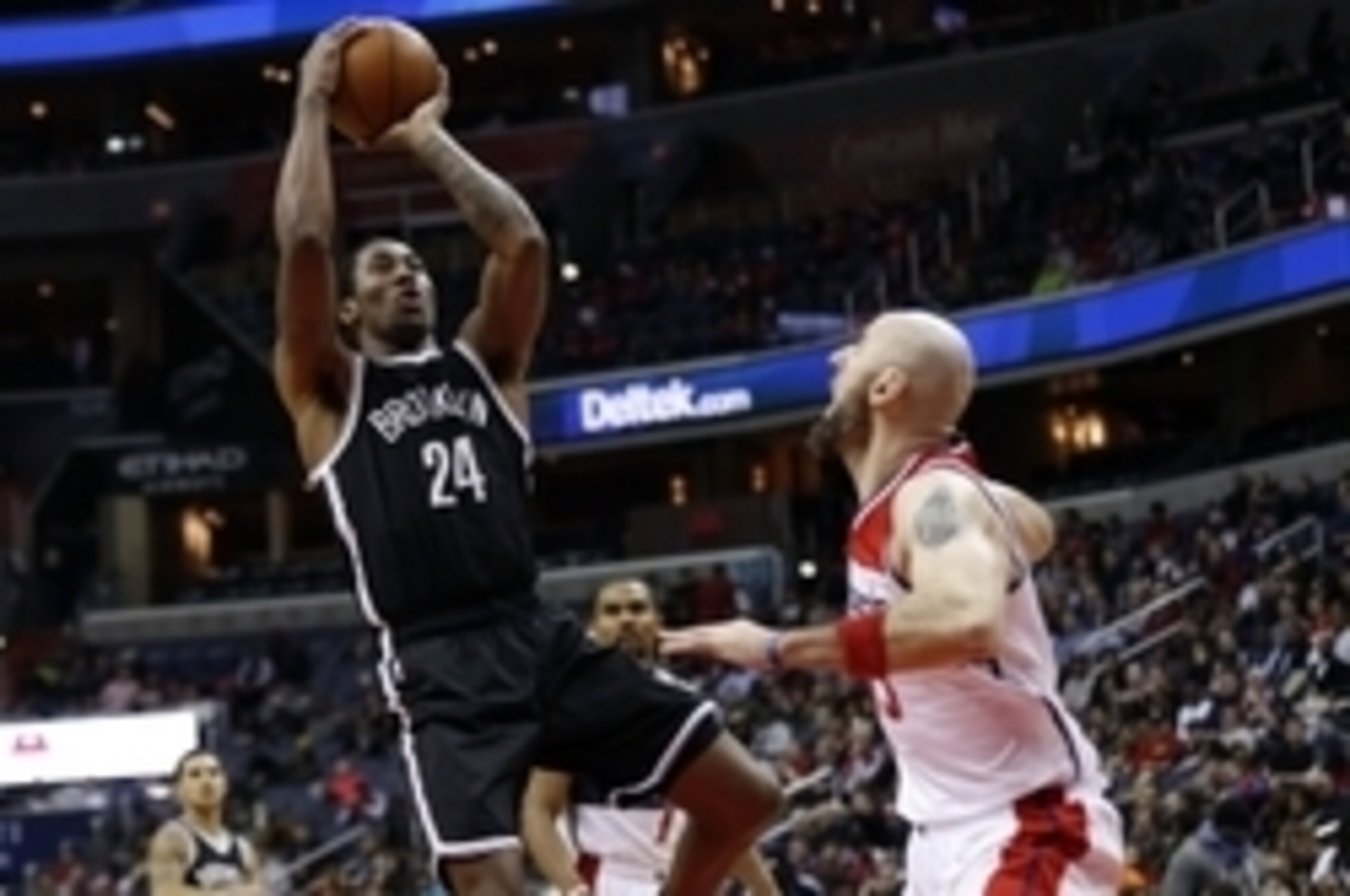
Rondae Hollis-Jefferson already has the "D" part of three-and-D down. In fact, the Brooklyn Nets, who acquired his rights on draft night, were so impressed by Hollis-Jefferson's defensive prowess, they made him a starter just six games into his rookie season.
A nasty ankle injury sidelined the Arizona product from early December until mid-March. He came back strong, putting up 6.8 points, 3.8 rebounds, 1.6 assists and 2.0 combined steals and blocks over his final 10 games, three of which were starts.
It's now incumbent upon Jefferson to hone his jump shot so he can be a two-way threat in Brooklyn, one who fits well around former All-Star Brook Lopez.
To that end, Jefferson will be in good hands. The Nets were the league's fourth-best three-point-shooting team from Feb. 1 on after hiring a new shooting coach (David Nurse).
The franchise's further commitment to player development, with former San Antonio Spurs assistant general manager Sean Marks leading the front office and current Hawks assistant Kenny Atkinson bound for the bench, should only improve Jefferson's prospects of becoming a quality rotation player for the Nets.
With the way the Houston Rockets slogged through their 2015-16 season—that is, without much passion or commitment to defense—a hard-nosed competitor like Hollis-Jefferson could've brought more life and lockdown ability to the operation than Sam Dekker, the actual No. 18 pick, who played just three games due to injury.
19. Washington Wizards: Larry Nance Jr., PF (Los Angeles Lakers, No. 27)
19 of 30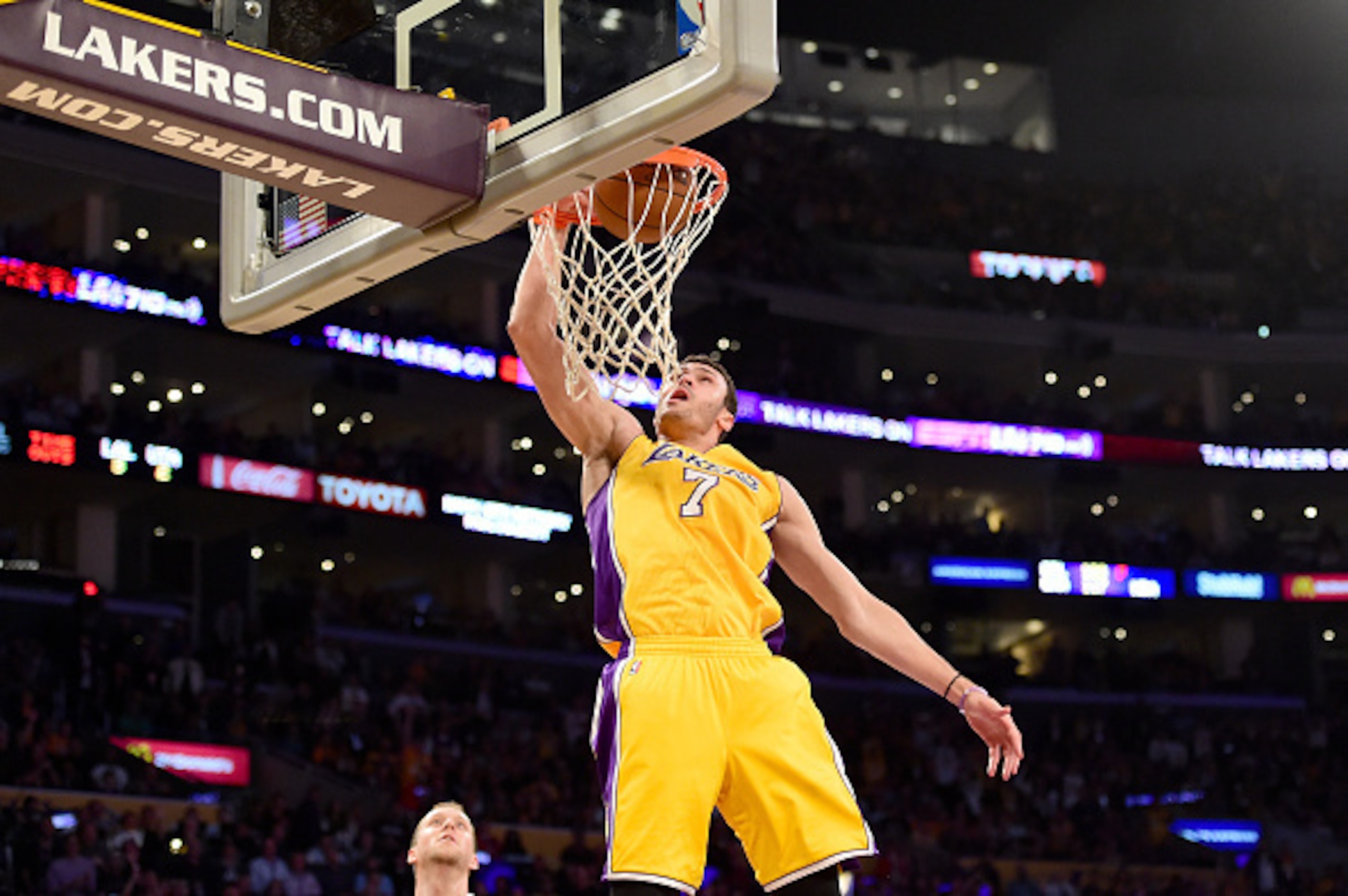
There may be no higher flyer from this year's rookie class than Los Angeles Lakers forward Larry Nance Jr. The son of the NBA's 1984 Slam Dunk champion, Nance Jr. inherited a hefty helping of his father's hops.
He's much more than just a dunker, though. At least, the Lakers hope so. They've pegged the Wyoming grad to spend more time at small forward in the future, now that Kobe Bryant is out of the picture.
"I have a lot of skill left untouched right now," Nance said, per the Los Angeles Daily News' Mark Medina. "Playing [small forward] and learning how to play the [position] will be a good way to tap that unused potential."
Even if Nance doesn't take to the wing, he should be able to carve out a comfortable career with his infectious energy on both ends of the floor. He averaged 5.1 points and 5.0 rebounds post-All-Star break, after putting up 7.3 points (on 55.6 percent shooting) and 6.0 rebounds during a stretch of 22 straight starts midseason.
Whatever role they put him in, the Lakers can count on Nance to go at it with full force.
"I love the way Larry comes to play," head coach Byron Scott said, per Medina. "He’s one of the guys where you can tell him something once or twice and he’s pretty much got it."
With the Washington Wizards, Nance's hustle and athleticism would've been a fine fit alongside John Wall and Bradley Beal, and might've made Randy Wittman's pivot toward an uptempo style more successful in the end.
That is, if Wittman called upon Nance more than he actually did with Kelly Oubre Jr., whom the Wizards acquired from the Atlanta Hawks in a draft-day deal.
20. Toronto Raptors: Jarell Martin, PF (Memphis Grizzlies, No. 25)
20 of 30
The Memphis Grizzlies' sad, unending spate of injuries opened up time for Jarell Martin to justify his selection at No. 25 in the 2015 draft.
The 21-year-old forward out of LSU did that and then some. He averaged 12.2 points and 5.6 rebounds over a five-game stretch in mid-March and finished the season strong with back-to-back double-digit outings, albeit in blowout losses to the Los Angeles Clippers and Golden State Warriors.
Not bad for a guy who didn't start playing organized basketball until his junior year of high school. It's a good thing, then, that Martin has come up around a slew of savvy veterans since arriving in the NBA.
"They all guide me, things to do off the court and stuff," Martin told the Memphis Flyer's Kevin Lipe. "Doing the right things, working hard, staying in the gym, and they do a great job of that, giving back."
Martin may not find much playing time next season, with Marc Gasol rejoining Zach Randolph in Memphis' frontcourt.
In Toronto, though, his size and skill would've been welcomed with open arms to a frontcourt rotation that could use some grit and grind alongside Jonas Valanciunas and Luis Scola. As nice a player as Delon Wright, the actual 20th pick, may turn out to be for the Raptors, he hardly played for the team this season.
21. Dallas Mavericks: Delon Wright, PG (Toronto Raptors, No. 20)
21 of 30
Delon Wright's true arrival into the NBA was delayed by a number of factors—chief among them, the Toronto Raptors' perimeter depth and his own injuries.
But the 6'5" point guard out of the University of Utah finished his up-and-down rookie campaign on a high note. Over his last four regular-season games, he averaged 14.3 points, 3.8 rebounds, 4.3 assists and 1.0 steal while hitting 53.8 percent of his field goals.
You won't see much of Wright during these playoffs outside of garbage time. He stepped in for the final 1:21 of Toronto's Game 2 win over the Indiana Pacers on Monday.
That's to be expected on a Raptors squad with a settled perimeter rotation. Kyle Lowry and DeMar DeRozan use the lion's share of the backcourt minutes, with rookie Norman Powell now combining with Cory Joseph to sop up the rest.
The Dallas Mavericks would've had no such trouble finding time to play Wright. With all the injuries at guard through which they've suffered, particularly those to Deron Williams and J.J. Barea, Wright might be starting in the playoffs for the Mavs right now.
22. Chicago Bulls: Kelly Oubre Jr., SF (Atlanta Hawks, No. 15)
22 of 30
The Washington Wizards' desperate—and ultimately futile—dash for a playoff spot forced Kelly Oubre Jr. to the fringes of Randy Wittman's rotation. Not until the Wizards were knocked out of contention for good did the rookie out of Kansas get to strut his stuff again.
He did just that, chipping in eight points and four rebounds per game over his final three, including a 14-point, six-rebound effort during a win over the Brooklyn Nets.
"You saw how I swagged it out a little bit?" Oubre asked, in reference to a buzzer-beating 30-footer he hit to end the first half of that game, per the Washington Post's Jorge Castillo.
The Wizards can only hope he'll carry that swagger into next season. Whoever winds up replacing Wittman may have to call upon Oubre to play major minutes on the wing, especially if Washington strikes out this summer in pursuit of a certain Oklahoma City-based superstar free agent with ties to the Washington, D.C., area.
The Chicago Bulls could have a similar quandary on their hands if they dangle Jimmy Butler on the trade market this summer. Even if Butler stays, Oubre could've come in handy to deepen a wing rotation that often looked to Mike Dunleavy Jr. as a potential savior this past season.
23. Portland Trail Blazers: Chris McCullough, PF (Brooklyn Nets, No. 29)
23 of 30
Chris McCullough came back from his torn ACL with a vengeance.
The Syracuse product finished his abbreviated rookie year by posting 9.2 points, 3.8 rebounds and 2.6 steals over his final five games, four of which were starts.
"I knew Brook (Lopez) and Thad(deus Young) were out, so I knew at some point they were going to give me a starting position before the end of the season," McCullough told Scout.com's Michael McAllister. "I was ready for it. I took it on and I played great."
On the whole, McCullough was a mini-revelation in Brooklyn. For the season, he averaged 1.2 steals on one end and knocked down 38.2 percent of his threes on the other.
Those would be strong numbers for a young guard. But for a 6'11" power forward? They could make McCullough a prominent part of the Nets' plans going forward.
The same would be true for the Portland Trail Blazers, who've leaned heavily on the likes of Meyers Leonard and Noah Vonleh to bring the sort of size and shooting of which McCullough is capable.
24. Cleveland Cavaliers: Jerian Grant, PG (Washington Wizards, No. 19)
24 of 30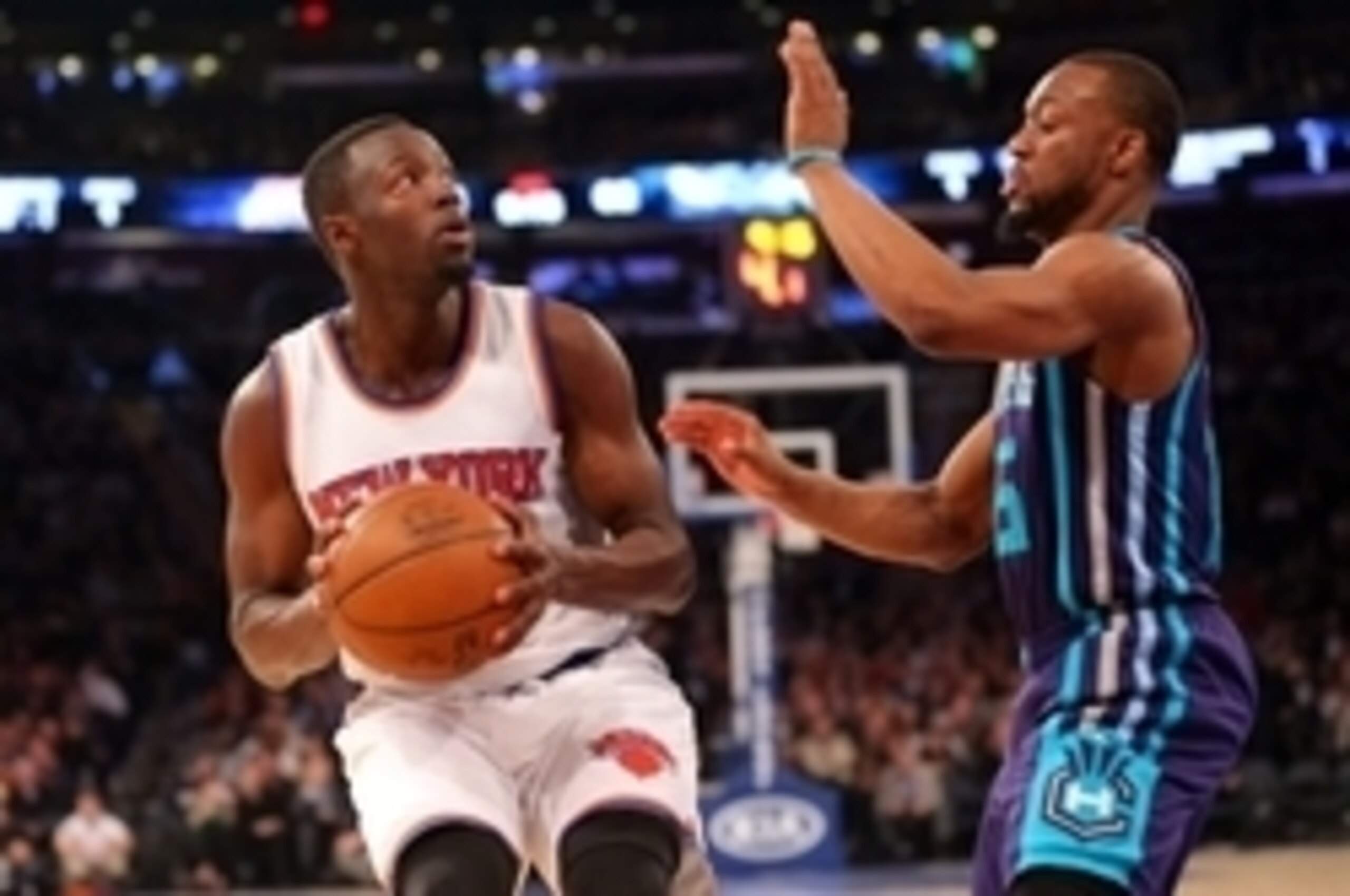
Through the darkness of the New York Knicks' slog to the finish line shone a light. His name was Jerian Grant.
The Notre Dame grad garnered the first six starts of his NBA career during the Knicks' throwaway April. He made the most of the opportunity, pouring in 14.5 points, 3.7 assists and 1.3 steals while shooting 49.3 percent from the field (36.8 percent from three).
"When you get in there, you know you can just play a little bit," Grant said, per Newsday's Al Iannazzone. "You’re not looking over your shoulder every second after you make a mistake or miss a shot. You move on to the next play."
Grant may not have that luxury next season. New York could have $30 million in cap space to fill and figures to use some of it to address the team's glaring weakness at the point.
But if the Knicks strike out on that front, they can at least take comfort in knowing they have an intriguing option to work with, as they consider bigger questions this summer—like, say, how Carmelo Anthony fits into the picture and who should coach the team.
Chances are, Grant would've had as much trouble scrounging for minutes at the point with the Minnesota Timberwolves that Tyus Jones, the actual no. 25 pick, did once the Cleveland Cavaliers traded his rights up north.
25. Memphis Grizzlies: Montrezl Harrell, PF (Houston Rockets, No. 32)
25 of 30
Montrezl Harrell was a bulging bundle of energy for the Houston Rockets, for better or worse.
On one hand, he was a bulldozer in the middle. The Louisville product converted 64.4 percent of his shots, two-thirds of which came within three feet of the rim.
On the other, he also bulldozed an official, for which he served a five-game suspension.
In the (likely) event that Dwight Howard leaves Space City this summer, the Rockets will need a strong, hustling forward like Harrell around to gobble rebounds, finish at the hoop and take up space in the middle on defense.
The Memphis Grlzzlies might not need a player of Harrell's skills over the long run, though his willingness to mix it up would've fit well into that team's culture had it taken him over LSU's Jarell Martin at this spot.
26. San Antonio Spurs: Tyus Jones, PG (Cleveland Cavaliers, No. 24)
26 of 30
Tyus Jones had to wait for the Minnesota Timberwolves to buy out Andre Miller for his first extended NBA opportunity.
Since then, last year's Final Four Most Outstanding Player has struggled to recapture his collegiate magic at the pro level. In 24 games following Miller's departure, Jones shot 35.5 percent from the field and 26.7 percent from three.
On the bright side, the Duke product dished out 3.5 assists for every turnover over that same span.
The Minnesota Timberwolves won't need much more than steady distribution out of Jones going forward if he's going to stick. They already have another shot-challenged passing savant (Ricky Rubio) manning the point, with a bevy of offensive weapons—Karl-Anthony Towns, Andrew Wiggins, Zach LaVine and Shabazz Muhammad, among others—ready to put the ball in the hoop at a moment's notice.
The San Antonio Spurs wouldn't have been in any desperate need for help at the point either, what with Tony Parker and Patty Mills already entrenched. But Jones might've been just the sort of savvy understudy the Spurs could've groomed to climb the depth chart down the line.
That is, if they hadn't been motivated as much by cap concerns, which likely played into the selection of draft-and-stash prospect Nikola Milutinov at No. 26.
27. Los Angeles Lakers: Richaun Holmes, PF (Philadelphia 76ers, No. 37)
27 of 30
Richaun Holmes suffered through a slew of injuries, including a sore Achilles, in the early and ending portions of his season for the Philadelphia 76ers. In between, he revealed himself to be another potent prospect plucked from under the radar by now-departed general manager Sam Hinkie.
The three-year college player out of Bowling Green averaged 5.4 points on 51.4 percent shooting with 2.6 rebounds during just 13.4 minutes per night as a rookie.
In most circumstances, Holmes would be a sneaky second-year breakout candidate with better health. In Philly, though, the requisite playing time could be hard for him to come by.
The Sixers could start the 2016-17 campaign with four other young bigs—Jahlil Okafor, Nerlens Noel, the oft-injured Joel Embiid and overseas sensation Dario Saric—vying for playing time.
With the Los Angeles Lakers, Holmes still would've had to compete for minutes, albeit with a smaller pack. Julius Randle would've been at the head of that, but with Larry Nance Jr. already off the board in this alternate universe, Holmes could've been a second-stringer in the City of Angels.
28. Boston Celtics: Darrun Hilliard, SG (Detroit Pistons, No. 38)
28 of 30
There's only so much room for rookies when a team is fighting for its playoff life. Darrun Hilliard learned that lesson the hard way.
The first-year forward out of Villanova played just seven times over the final 19 games of the season and didn't appear in the Detroit Pistons' playoff-opening loss to the Cleveland Cavaliers. Two of those appearances came in starts: an 11-point, six-rebound, three-assist outing in a win over the Orlando Magic, and four points, four rebounds and two assists during a season-ending win by the Pistons' B team over its Cavaliers counterparts.
The 23-year-old has the potential to become another effective three-and-D wing on Stan Van Gundy's watch. Hilliard's overall field-goal percentage (39.7 percent) was far from sparkling, though he did well to drain 38 percent of his threes. That's well ahead of the 30.2 percent clip at which R.J. Hunter, the Boston Celtics' selection at No. 28, hit his threes in 2015-16.
29. Brooklyn Nets: Rashad Vaughn, SG (Milwaukee Bucks, No. 17)
29 of 30
Like so many rookies playing on lottery-bound squads, Rashad Vaughn got an extended look down the stretch for the Milwaukee Bucks.
For Vaughn, the late-season recall from the D-League turned out unevenly, at best. During his last seven games, the UNLV product started six times and scored in double figures on three occasions but did so while shooting 31 percent from the field (24.4 percent from three).
For someone who came in with a scorer's reputation, Vaughn will have trouble sticking around the NBA if he doesn't develop a more efficient game this summer. With Giannis Antetokounmpo slated to run point from the get-go in 2016-17, Milwaukee will need all the wing scorers and shooters it can find—Vaughn included—to open up the floor for its revolutionary big man.
With the Brooklyn Nets, Vaughn may have found more time to work out the kinks in his game. If Joe Johnson's buyout and injuries across the roster could open up time for the likes of Sean Kilpatrick and Markel Brown, Vaughn could've surely sopped up some minutes on a bottom-feeder in Brooklyn.
30. Golden State Warriors: Justin Anderson, SG (Dallas Mavericks, No. 21)
30 of 30
Desperate times for the Dallas Mavericks have drawn Justin Anderson further into the fold with solid results.
He finished his rookie campaign by averaging 8.2 points, 5.7 rebounds, 1.6 assists and 1.2 blocks over his final 11 regular-season games, eight of the last nine of which were starts. That included a double-double (19 points, 10 rebounds) in a critical win over the Memphis Grizzlies on April 8.
Anderson isn't done yet, though. He's already figured prominently into the Mavs' postseason series against the Oklahoma City Thunder. In Game 2, he blocked a crunch-time attempt by Kevin Durant to help Dallas steal an 85-84 win in OKC.
"I had enough time to recover and get my hand on KD's shot," Anderson recalled, per SportsDay's Eddie Sefko. "They got the rebound. Somebody else had a shot and then Adams' last shot, that 20-second review seemed like five minutes."
If his first playoff action is any indication, Anderson could be an important piece of the Mavericks' uncertain future. With the Golden State Warriors, he would've been buried as deeply on the bench as Kevon Looney, the No. 30 pick, was, but without the injuries that limited Looney to five games.
Stats per NBA.com and Basketball-Reference.com unless otherwise cited.
Josh Martin covers the NBA for Bleacher Report. Follow him on Twitter (@JoshMartinNBA), Instagram and Facebook.

.jpg?w=2560)


.jpg?w=2560 "Latest Peyton-Colts Rumors")

.jpg?w=2560 "Landing Spots for Trade Candidates 📍")
.jpg?w=2560 "Ugly Jets Scoring Stat 😳")