Combating Small Ball Key to Playoff Success for Blake Griffin, LA Clippers
The Los Angeles Clippers’ path to the NBA Finals is littered with booby traps, unscalable walls and, in all likelihood, the history-making Golden State Warriors. To overcome it all, they need the impossible to happen, and that starts with Blake Griffin turning into a small-ball-crushing cyborg.
In Game 1 of L.A.’s first-round series against the Portland Trail Blazers, that’s exactly what he was. Griffin finished with 19 points, 12 rebounds and six assists en route to a 115-95 victory against a team that refused to fight size with size.

This is already one of the most intriguing stylistic matchups in the first round.
L.A.’s main strength is its starting lineup, where Chris Paul, J.J. Redick, Griffin and DeAndre Jordan form one of the most continuously devastating combinations in the sport. They're big and traditional.
Portland is not.
After spending most of this season with a traditional-looking starting five, Trail Blazers head coach Terry Stotts replaced power forward Noah Vonleh with the 6’9” Maurice Harkless in a March 23 win over the Dallas Mavericks.
The next night, the Clippers beat Portland (and its new starting five) by two points with Griffin still sidelined with a quad injury; the win came with Paul Pierce at power forward.
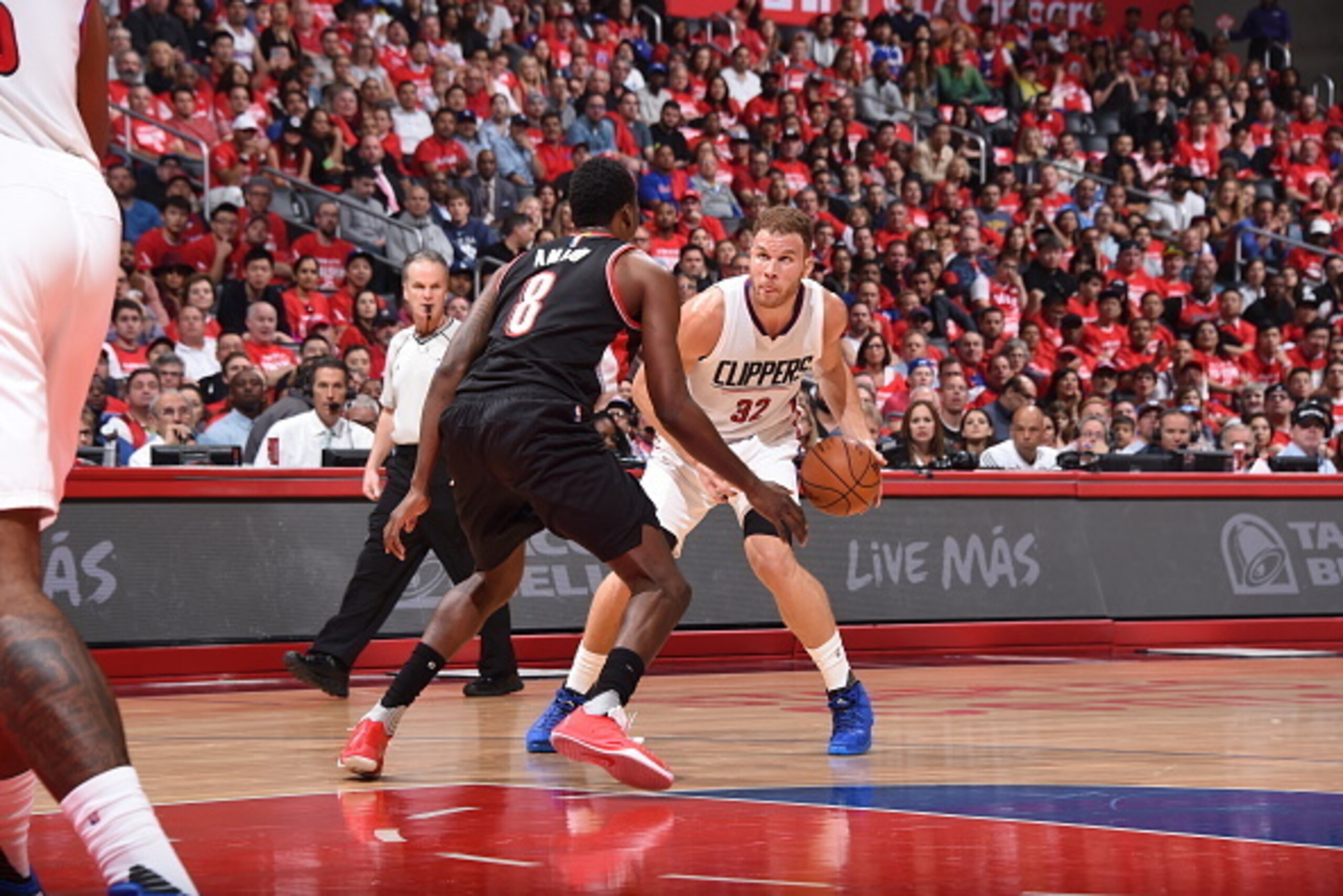
But in Game 1 Sunday, facing a smaller, more versatile Trail Blazers front line, Los Angeles got its first crack at full strength. The disparity was evident from the opening tip, with Portland sticking Al-Farouq Aminu on Griffin, hopeful its speed and shooting would be enough to overcome the size-related drawback.
It wasn’t. Griffin scored 13 points (with nine free-throw attempts) and grabbed eight rebounds in the first half alone. (The entire Trail Blazers team only had six free-throw attempts in the first two quarters.) The Trail Blazers tried several strategies, but none really worked.
"We switched on him," Portland point guard Damian Lillard said. "We had guards on him sometimes. We had Chief [Aminu] on him to start the game on him. You know, he just kind of bulldozed his way to the rim.
"You know, it’s tough with a guy that’s athletic and strong like him. If you get too physical, then it’s a foul, because, you know, he’s spinning in there and jumping in the middle of the spin, and it’s tough to defend. So when he’s playing a physical game, and if you get too physical, he’s at the free-throw line or getting an and-1."
In between its typically steady diet of Redick and Paul blitzkrieg, the Clippers offense was intent on exploiting Griffin’s individual advantage. Time and time again, he overpowered Aminu and slaughtered everyone else the Trail Blazers threw his way.
"He was great, assertive. I loved his energy," Clippers head coach Doc Rivers said. "I mean, like I said before the game, I’ve been surprised with him—his energy, his endurance. Today I thought was the first day he had great timing as well, so that was good for us."
Harkless’ early foul trouble aside, if the Trail Blazers can’t get a handle on Griffin and struggle to make open threes on the other end, they’ll have a hard time winning the series. Aminu finished 2-of-8 from beyond the arc and Harkless finished 0-of-3.
Stotts has adjustments to make—doubling Griffin as soon as he puts the ball on the floor or going to a beefier frontcourt (which helps out on the boards, too)—but abandoning a lineup that outscored opponents by 14.4 points per 100 possessions in the regular season, per NBA.com, may not be the best call.
"I thought it was the best [Griffin] played since he's come back from his injury," Stotts said. "He had a lot of bounce, got off to a good start in the first quarter."
For the Clippers, this convenient mismatch could eventually help out in the next series, when they’re likely matched up against a Warriors team that loves to go small (and implode solar systems) with its notorious lineup of death: Stephen Curry, Klay Thompson, Andre Iguodala, Harrison Barnes and Draymond Green.
Offensively, Griffin should be a competent option in the pick-and-roll, duck-ins and basic post-ups. It’s the other end of the floor where Los Angeles is uncomfortable, and the Warriors’ outside shooting is even better than Portland’s when they spread the floor. (Portland shot just 10-of-30 from three in Game 1, but it finished the regular season fifth in three-pointers made and fourth in three-point percentage.)
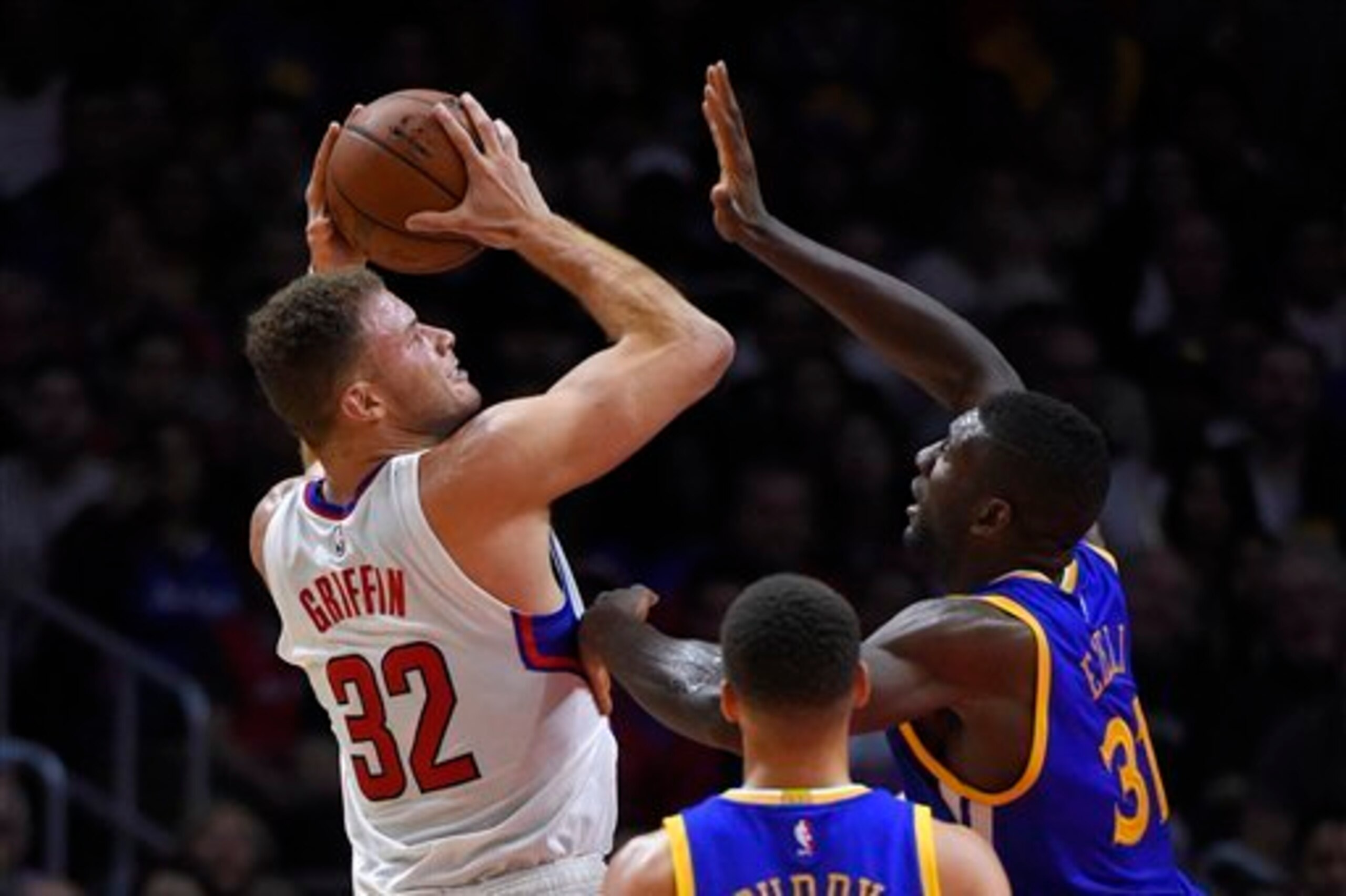
In 30 games before the All-Star break, Griffin averaged 23.2 points, 8.7 rebounds and 5.0 assists per game. His post-up numbers were decent, but he’s obliterated opponents in isolation all year, averaging 1.05 points per possession, which ranked in the 92nd percentile, per NBA.com.
Feeding him down low—or on the wing—every now and then slows the game down while still letting the Clippers offense stay efficient in the half court. It’s an option Rivers will be wise to lean on as much as possible throughout L.A.’s playoff run, whether Griffin is at power forward or center, but particularly against a Golden State team that cuts deep in an uptempo setting.
Los Angeles needs Griffin to be the best player (or close to it) in that series to have a chance to advance. But getting there means taking down the Blazers in the current best of seven, likely by following the blueprint it created for itself Sunday night.
All quotes in this article were obtained firsthand unless otherwise noted.
.jpg?w=2560 "Chiefs, Steelers Eye WR Trades")