


The Orlando Magic made progress in 2015-16, but it wasn't the leap year the organization hoped it would be.
Still, with a final tally of 35 wins against 47 losses, the Magic posted their best record since Dwight Howard's final run through Disney's home in 2011-12.
More importantly, their on-court improvements came largely as a result of the growth seen in their key 25-and-under core. Four prominent young pieces upped their player efficiency ratings (PER)—Aaron Gordon (17.0 from 11.4), Victor Oladipo (16.7 from 15.9), Evan Fournier (14.6 from 12.4) and Elfrid Payton (13.9 from 13.8)—while Nikola Vucevic nearly matched the PER from his breakout 2014-15 campaign (21.0 from 21.5).
TOP NEWS
🚨 Ben Simmons Tore Achilles
Stephen Curry injured at practice
Ben Simmons Calls Doc Rivers 'A Piece of S--t'
Orlando seems to be trending in the right direction, and head coach Scott Skiles has a knack for helping young clubs find their playoff footing. But this roster still needs work in terms of expanding the youthful collection and supporting it with a star (or near-star) veteran (or two).
5. Decide Which Role Players are Replaceable
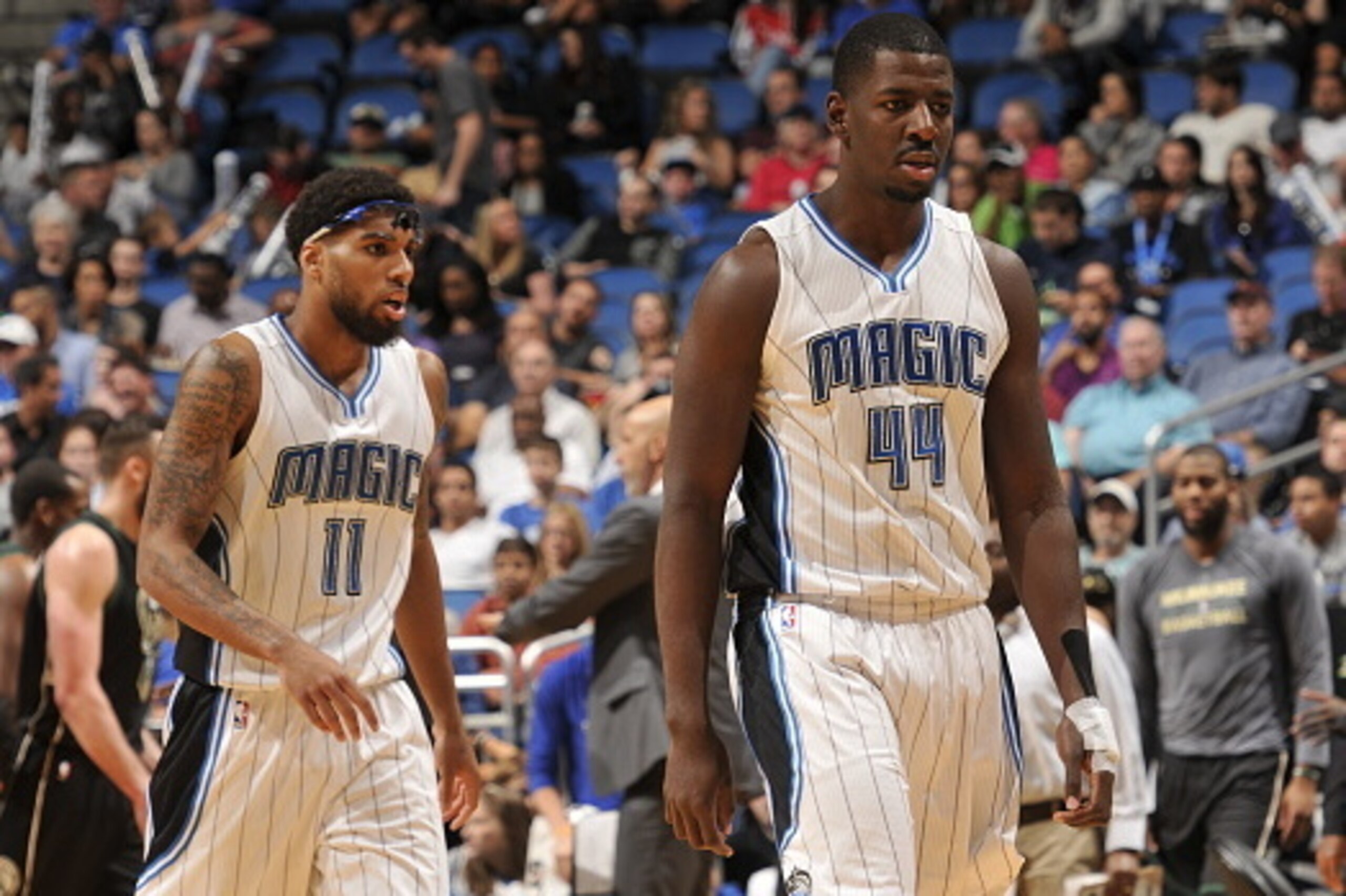
With gobs of cap space and another lottery pick in the holster, the Magic are well-armed for a productive offseason; its success with big-ticket items will ultimately make or break this summer. But it still has work to do in the margins, opting whether to keep or cut bait with a handful of support pieces.
Brandon Jennings and Jason Smith are both headed for unrestricted free agency; Ersan Ilyasova could join them if the Magic erase his partially guaranteed $8.4 million 2016-17 salary by July 1. If Orlando opts against giving qualifying offers to Andrew Nicholson and Dewayne Dedmon, they'll be added to the list. Former second-round pick Devyn Marble also holds a non-guaranteed $980,431 salary.
It's tough to tell how many keepers the Magic have in this group. A weak point-guard crop in the free-agent class could price Jennings out of Orlando. Smith and Ilyasova both look disposable, since Orlando could keep those spots open for prospects or free-agency additions. Marble has barely graced the floor during two years with the team, so he wouldn't be missed.
Nicholson and Dedmon are interesting, though.
At the right price, Dedmon provides an athletic, above-the-rim presence the Magic need behind Vucevic. And Nicholson's addition of the three ball (career highs in makes and percentage this season) increases his value to the frontcourt. Unless the market loves either one, they could each have a future in Orlando.
4. What To Do With Evan Fournier?

Free agency couldn't be arriving at a better time for the 23-year-old swingman. Not only is he coming off his best year as a pro—posting a slew of personal bests, including PER, points (15.4 per game) and three-point makes (156)—he's also entering a market flush with cash.
In a vacuum, he looks like a pivotal piece to keep around. He was Orlando's top sniper in volume and efficiency. Couple that outside stroke with an ability to make plays off the dribble, and he seems to fit snugly alongside athletic slashers Payton and Oladipo.
Not to be overlooked is Fournier's stated desire to stay with the Magic.
"I really like to play for this team," Fournier said in March, per Brian Schmitz of the Orlando Sentinel. "I'm having my best year so far. There's no reason for me to leave."
That said, Fournier's next deal won't be cheap. He reportedly declined a four-year, $32 million offer before the season, sources told The Vertical's Shams Charania, and has since played his way "into a much bigger contract," as NBC Sports' Dan Feldman sees it.
Orlando has to tread carefully here. Fournier is a nice piece, but he's not a cornerstone of a good—let alone great—team.
Rookie Mario Hezonja, last summer's No. 5 pick, has a chance to be special. And he happens to play a similar role as Fournier, while bringing far superior athleticism to the equation.
If Hezonja develops as some expect, he could become a long-term fixture in Orlando's starting unit. The Magic must keep that in mind when setting a cap on Fournier's contract. If the bidding goes too high, they could invest that money elsewhere and clear Hezonja's path for major minutes.
3. (Keep) Building Through Draft
The Magic are trying to construct a self-made contender. It'll take a few outside splashes (in trades and/or free agency) to push them over the top, but the league's annual talent grab remains the most fertile source of young, cheap, potential-rich talent.
If Orlando can somehow sneak into the top of the draft board, it can snag the best player available and worry about the fit later. This roster doesn't have roadblocks big enough to bypass a gift like Ben Simmons' versatility, Brandon Ingram's sweet long-range stroke, Dragan Bender's unique skills for a 7-footer or Buddy Hield's explosive scoring chops.
But barring a lucky pull during the draft lottery, Orlando won't have a shot at this crop's top-10 prospects. The Magic are currently slated to snag the No. 11 pick, and the names in that range lack the sizzle of the aforementioned quartet.
| Jonathan Wasserman, B/R | Jakob Poeltl, C | 17.2 PPG, 9.1 RPG, 1.6 BPG |
| Tom Ziller, SB Nation | Marquese Chriss, PF | 13.7 PPG, 5.4 RPG, 1.6 BPG |
| Chad Ford, ESPN.com | Ivan Rabb, PF/C | 12.5 PPG, 8.5 RPG, 1.2 BPG |
| Gary Parrish, CBS Sports | Denzel Valentine, SG | 19.2 PPG, 7.8 APG, 7.5 RPG |
Save for perhaps Valentine, an AP All-American first-teamer, these aren't the sexiest names. But there's talent here, plus parallels running through (most of) them.
Poeltl is a 7-footer. Rabb packs 220 pounds on his 6'11" frame, while Chriss boasts a 6'9", 225-pound build. Beyond the sheer size, each player could also scratch one of this frontcourt's worst itches. Chriss is a modern perimeter-oriented power forward, and Rabb has the mobility to guard multiple positions. Poeltl might feel redundant with Vucevic around, but the former Ute could have a higher two-way ceiling.
"What the Magic really need is a center who can anchor the paint on defense without hurting the offense," Andrew Sharp wrote for Sports Illustrated. "That is Poeltl. ... Vucevic hurts them on defense almost as much as he helps on offense. If Poeltl falls this far in June, the Magic should grab him."
Orlando must prioritize ability over need. Getting an intimidating two-way presence like Poeltl could allow the organization to land both.
2. To Extend Or Not Extend Victor Oladipo
Selected second overall in 2013, Oladipo is the highest-drafted player of Orlando's post-Dwight Howard rebuild. For the most part, Oladipo has been exactly as advertised by Bleacher Report's Jonathan Wasserman: always active, hyper-athletic, relentless on defense and a bit shaky as a shooter.
Celebrating his strengths is easy. He'll typically leave fingerprints all across the stat sheet: He's one of only 11 players to average at least 16 points, four assists, four rebounds and 1.5 steals over this season and last. And with all the explosiveness packed into his 6'4", 210-pound frame, he's a nightly candidate to become basketball Twitter's next viral star.
Still, he's yet to quiet concerns about his outside shot. Of the 74 players to attempt at least 750 threes since the start of 2013-14, Oladipo ranks 66th with only a 33.9 percent conversion rate. Given that Payton has fared even worse from distance (career 30.6 percent), the jury remains out on whether this backcourt combo can coexist over the long haul.
"Because Orlando is featuring a frontcourt including two players, Gordon and Nikola Vucevic, that aren't three-point threats, the Magic's offense is already choked for space," wrote Tim Bontemps of the Washington Post. "... The possibility of breaking up Payton and Oladipo has to be considered—unless one or both of them can take a significant step forward."
Unfortunately for Orlando, that question could need answering already this summer. With three years of NBA service now under his belt, Oladipo is eligible to ink a contract extension this offseason. And with his ceiling far from set, a comfortable price tag is just as difficult to peg down.
It may behoove both parties to wait another summer before putting pen to paper. The Magic shouldn't extend more than a low-but-respectable offer, since he continues to fight against inconsistency and inefficiency. Delaying this decision could allow the opportunity to see Oladipo play alongside what could be an upgraded supporting cast.
As for the player himself, he should have an eight-figure salary in mind. And if that number doesn't match what Orlando offers, he has next season to prove he's worthy of it.
1. Finding Their Big Fish
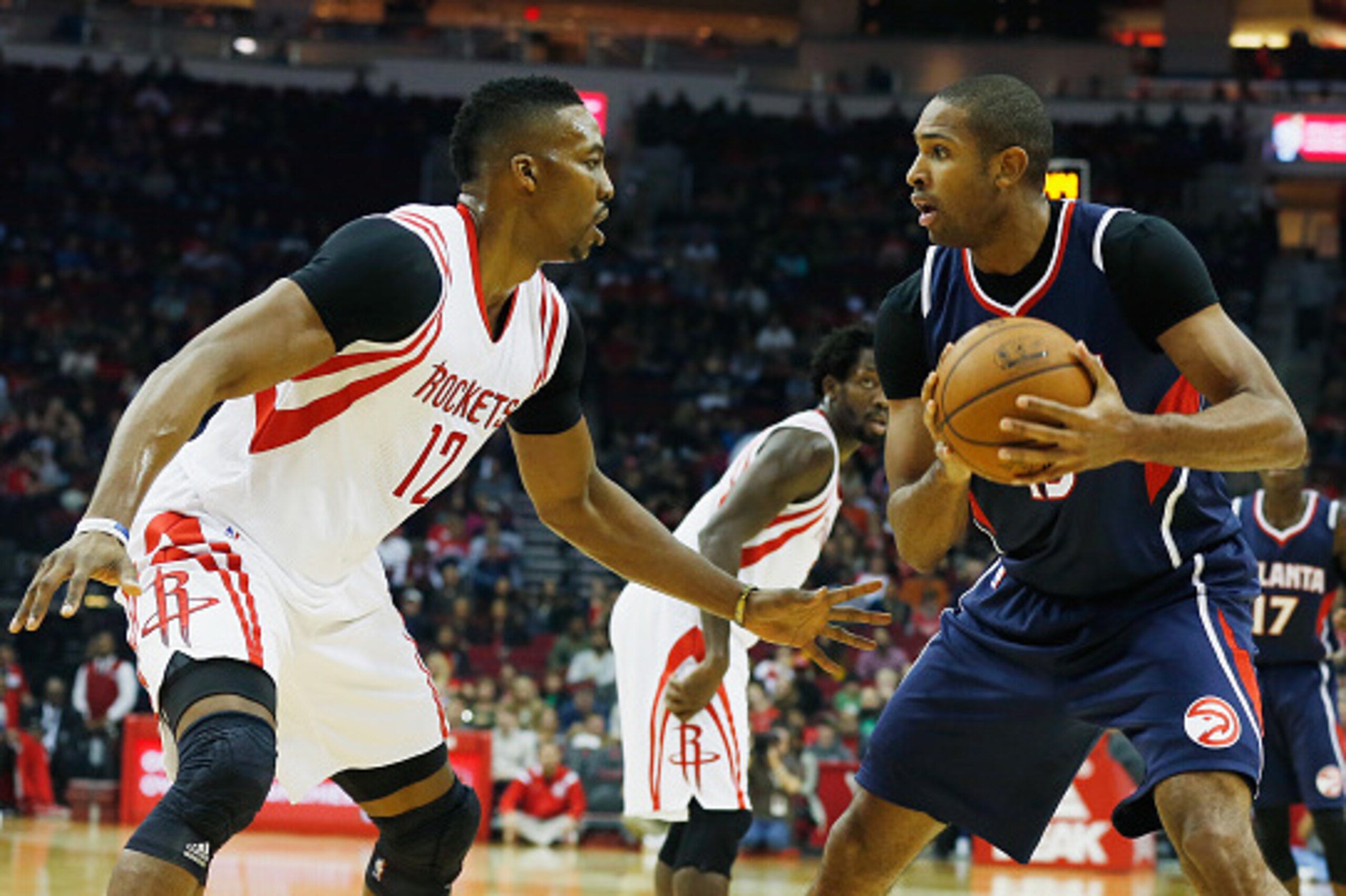
The Magic have banked their immediate hopes on striking free-agent gold. They parted with promising 23-year-old Tobias Harris at the trade deadline—a mere months after giving him a four-year, $64 million deal—to increase their offseason buying power.
Orlando could be looking at upwards of $50 million in cap space, perhaps room enough to pursue two high-level targets. But without a track record of recent success, the Magic probably can't aim higher than the second-tier of available talent, as Schmitz explained:
"The Magic would be wasting their time pursuing Kevin Durant, LeBron James or Dwyane Wade. Don't even mention Howard, although ... is Orlando desperate enough for a reunion?
I think the Magic's focus is to be all-in on the next level of free agents: [Al] Horford, Mike Conley, DeMar DeRozan, Bradley Beal, Nicolas Batum, Chandler Parsons, Ryan Anderson and Harrison Barnes.
"
If the Magic can find a veteran difference-maker, the position may not matter. They can rework the rotation later, even flip one of their prospects for better fits if they have to. But in an ideal world, Orlando exits free agency with an intimidating interior presence and a sweet-shooting, two-way wing.
Horford, a former Florida Gator, would be a tremendous get as both a defensive backbone and an offensive fulcrum. Batum, a do-it-all swingman, could fill Harris' old scoring role while providing the defensive and playmaking ability the prospect never could.
If there's not enough money for both—or the veterans don't see enough win-now potential there—the Magic could make calculated gambles on up-and-comers like Hassan Whiteside and Harrison Barnes. Whiteside paced the league with 269 total blocks, only 148 fewer than Orlando had as a team. Barnes would offer positional versatility and pure outside shooting, perhaps finally tapping into his massive scoring potential.
Orlando has options. And a ton of money to burn. That can be a tricky situation, as major missteps could set back the organization for years to come.
But the opportunities for significant upgrades are both obvious and substantial. With great weather, no state income tax and a promising nucleus of young talent in hand, the Magic could be a more appealing destination than many realize. And if that brings the right free agents to town, this organization can finally make its highly anticipated rise back to relevance.
Unless otherwise noted, statistics used courtesy of Basketball-Reference.com and NBA.com. Salary information obtained via Basketball Insiders.
.jpg?w=2560)
.jpg?w=2560 "Skattebo Has 0 Touch Game 😬")
.jpg?w=2560 "49ers FB Slams CJGJ 😳")
.jpg?w=2560 "Jameis Benched by Giants")
.jpg?w=2560 "Chargers Fall to 0-6")
.jpeg?w=2560 "Colts DT's Harsh Quote 😨")