

The Biggest X-Factor on Every Projected 2016 NBA Playoff Team
What could be better than mixing NBA playoff predictions with X-factor assessments?
These playoff premonitions are generated using the league's current playoff picture, the most recent performances of teams in that picture and the strength of remaining schedules for everyone in the hunt. Fringe squads that have underachieved of late and have a difficult slate of games to finish out the season will not be seen in the same light as streaking hopefuls with smoother paths ahead.
Stats and season-long efforts will be the driving force behind our X-factor excavation.
We must journey ever so slightly off the beaten path, looking beyond a given squad's two or three best players, to find a contributor who will help define not just the rest of a team's regular season, but its entire postseason push.
The Jilted
1 of 17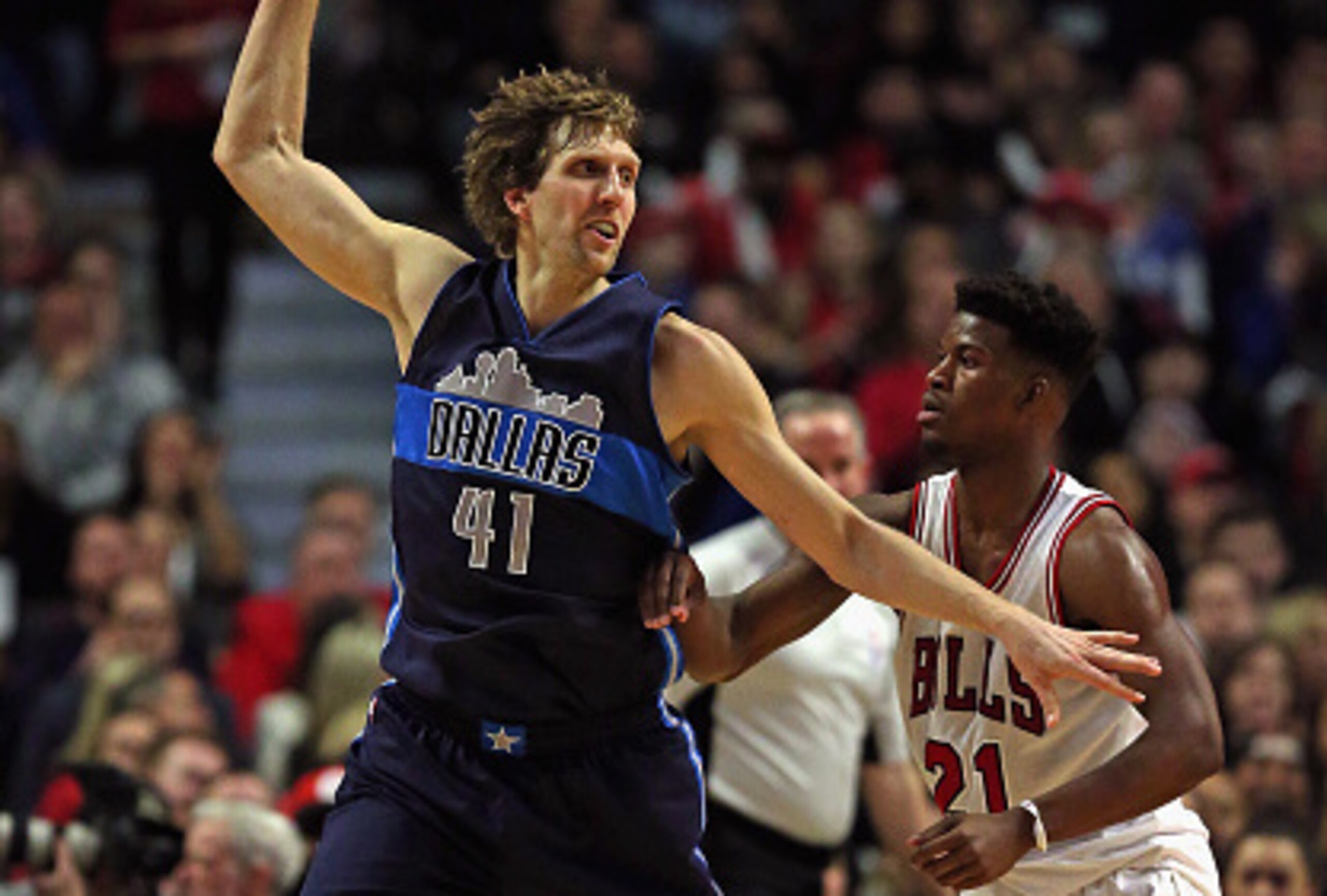
Chicago Bulls
Give Jimmy Butler this as he returns to the Chicago Bulls after missing 15 of the last 17 games with a left knee injury: The dude is determined.
"You gotta risk it to get the biscuit," he said of possibly aggravating his injury, per K.C. Johnson of the Chicago Tribune.
The biscuit in this case is a first-round playoff exit. The Bulls are in eighth place out East and aren't good enough even with Butler to climb much higher. They are barely a net positive with him on the floor, and two of the primary teams in front of them, (the Detroit Pistons and Indiana Pacers), face easier schedules to close out the season.
Dallas Mavericks
This was a tough one, mostly because the idea of a 37-going-on-27-year-old Dirk Nowitzki missing the playoffs feels dirty. But the Dallas Mavericks have the second-hardest remaining schedule in the West and are an unimpressive 6-13 against fellow top-eight teams in the conference.
Washington Wizards
The Washington Wizards will have the East's second-easiest schedule the rest of the way, but the 3.5-game gap sitting between them and the final playoff spot leaves no margin for error.
Basketball-Reference.com's playoff probabilities report pegs their chances of securing a postseason berth at just over 3 percent. This is one of those times where it makes sense to just shut up and trust the math.
Atlanta Hawks: Kent Bazemore
2 of 17
Age: 26
2015-16 Per-Game Stats: 11.8 points, 5.0 rebounds, 2.3 assists, 1.3 steals, 44 percent shooting, 13.3 player efficiency rating
Atlanta's Predicted Playoff Seed: 5
With all due respect to analytical dream Dennis Schroder, Kent Bazemore is the Atlanta Hawks' clear-cut X-factor.
Bazemore remains Atlanta's DeMarre Carroll replacement. He lands the toughest perimeter defensive assignments on a daily basis, and the Hawks need him to shoot and drive without bogging down their ball movement.
It's a role in which Bazemore has thrived thus far. He is averaging the third-most drives on the team, behind only Schroder and Jeff Teague, and splashing home more than 42 percent of his standstill treys. Opponents are shooting at below-average clips when he defends them, and he has the second-highest net rating of any Hawks starter, ahead of both Al Horford and Paul Millsap.
Just five players besides Bazemore are clearing 11 points, five rebounds, two assists and one steal per game while drilling 36 percent or more of their threes, and they're all stars: Stephen Curry, Paul George, Draymond Green, Gordon Hayward and Kawhi Leonard.
And if you think DeMarre Carroll 2.0, sans the capacity to play power forward, isn't someone who can shape a team's playoff clout, think again. The real Carroll led Atlanta in postseason win shares just last season before bolting for the Toronto Raptors.
Boston Celtics: Kelly Olynyk
3 of 17
Age: 24
2015-16 Per-Game Stats: 10.1 points, 4.3 rebounds, 1.6 assists, 0.6 blocks, 46.1 percent shooting, 16.8 PER
Boston's Predicted Playoff Seed: 3
Kelly Olynyk hasn't played since separating his shoulder Feb. 10. Fortunately for the Boston Celtics, he's nearing a return to action, per ESPN.com's Chris Forsberg.
This news couldn't come at a more needed time. Jae Crowder is expected to miss a few weeks with a high ankle sprain, and Olynyk is the only other Celtic currently posting an above-average offensive box plus-minus (OBPM) and defensive box plus-minus (DBPM).
It would not be a stretch, then, to say he's Boston's second-best two-way player.
Olynyk has the best net rating of any Celtic to appear in at least 12 games. Opponents shoot more than five percentage points worse than their season average when challenging him inside 10 feet of the basket, and his outside touch allows head coach Brad Stevens to deploy five-out lineups that stretch defenses beyond function.
That Olynyk is barely cracking 20 minutes per game is criminally insane. Well, that or a harbinger of how ridiculously crowded Boston's frontcourt rotation remains. Stevens doesn't have another reason not to experiment more liberally with Olynyk.
After all, the only other players hitting 18 points and one block per 36 minutes while draining 39 percent or more of their three-balls are, as it turns out, pretty good at basketball: Kevin Durant and Kawhi Leonard.

Charlotte Hornets: Marvin Williams
4 of 17
Age: 29
2015-16 Per-Game Stats: 11.3 points, 6.8 rebounds, 1.3 assists, 1.0 blocks, 44.9 percent shooting, 16.6 PER
Charlotte's Predicted Playoff Seed: 6
Nicolas Batum has been good for the Charlotte Hornets. Kemba Walker has been even better.
Marvin Williams has been just as good as either of them.
Walker is the only Hornets player with more win shares than Williams. Likewise, along with Batum, they are Charlotte's only with above-board box plus-minus (BPM) scores on both ends of the floor.
Wait, it gets better.
According to Nylon Calculus' rim-protection numbers, fewer than 20 players are saving more points at the net per 36 minutes than Williams. That puts him ahead of more heralded defenders like Draymond Green, Robin Lopez, Nerlens Noel, David West and, well, you get the point.
Wait, it gets even better.
Three players throughout NBA history have surpassed 875 points, 550 rebounds, 80 blocks and 140 made three-balls in a single season. Williams is on track to become the fourth. He will join Shawn Marion, Paul Pierce and Nowitzki.
Is that good? I feel like that's good.
Cleveland Cavaliers: Channing Frye
5 of 17
Age: 32
2015-16 Per-Game Stats: 5.4 points, 3.4 rebounds, 1.0 assists, 44.8 percent shooting, 41.8 percent three-point shooting, 13.0 PER
Kevin Love will probably start making three-pointers again. We think. Maybe.
His sub-21 percent shooting from long range since the All-Star break isn't killing the Cleveland Cavaliers, mostly because Channing Frye has forgotten how to miss.
Frye is torching twine on a brain-bending 47.2 percent of his outside missiles since arriving in Cleveland. He is comparably consistent when firing off the catch (42.8 percent), and his long-distance marksmanship skyrockets past 83 percent—83 percent—when catching passes from LeBron James.
Cleveland is pumping in more than 120 points per possessions during the limited time Frye has spent on the floor. That's nearly eight points more than the Golden State Warriors, who own the Association's best offense.
The Cavaliers are also playing slightly faster with Frye than they do with Love. And while neither big is a staunch rim protector, having Frye affords head coach Tyronn Lue the option of running five-out lineups—stretchy combinations Cleveland will see, and must be able to combat, if it meets Boston or Golden State during the playoffs.
Detroit Pistons: Stanley Johnson
6 of 17
Age: 19
2015-16 Per-Game Stats: 8.7 points, 4.2 rebounds, 1.6 assists, 0.7 steals, 39.1 percent shooting, 9.6 PER
Detroit's Predicted Playoff Seed: 7
Pistons coach and president Stan Van Gundy is not pleased with the team's defense.
"I don't think our focus has been great," he explained, per Jeff Zillgitt of USA Today, "but we've been utterly unable to defend the ball at all."
Detroit ranks an unimpressive 17th in defensive efficiency since the All-Star sabbatical. Van Gundy has his troops, for the most part, doing a nice job of guarding the three-point line, but the Pistons fall inside the bottom six of shooting guard and power forward defense, according to HoopsStats.com.
Although not yet old enough to order his own umbrella-garnished mango margaritas, the 6'7" Stanley Johnson has the size, strength and mobility necessary to defend the 2, 3 and 4 spots.
The Pistons allow slightly more points per 100 possessions with him on the hardwood, and he has struggled when defending three-point shooters and dribble penetrators. But Johnson was drafted primarily because of his defensive potential, and Detroit doesn't have much else outside of its starting lineup.
Assured of a first-round date with the Cavaliers or Toronto Raptors, two teams with plenty of perimeter firepower, the Pistons need a stud of their own to step up. Tobias Harris has been a defensive enigma his entire career, and Kentavious Caldwell-Pope doesn't have much positional range.
Which means it's critical to the Pistons' playoff aspirations that Johnson start providing a more tangible defensive pick-me-up.
Golden State Warriors: Andre Iguodala
7 of 17
Age: 32
2015-16 Per-Game Stats: 7.3 points, 4.1 rebounds, 3.4 assists, 1.2 steals, 48.4 percent shooting, 12.7 PER
If the Warriors really want to know how much signing Durant over the offseason would adversely impact their depth, they're about to get a miniature what-if test run.
Andre Iguodala, last year's NBA Finals MVP, is expected to miss a minimum of two weeks after spraining his left ankle.
"It's a big deal. It's a really big deal," Warriors head coach Steve Kerr said, per ESPN.com. "Andre is so important to everything that we do. It's not just schematically, but in terms of emotion: He settles us down. … He's one of our guys who knows what's happening on the floor."
Our dive into Iguodala's X-factor-ism could probably stop here. Kerr is coaching an all-time great in Curry, a superstar Swiss army knife in Green and an All-Star 2-guard in Klay Thompson. Yet here he is bemoaning the loss of a role player.
Except Iguodala is no ordinary role player. He helps mold the Warriors into the positionless pests they are. He has adapted his once ball-dominant game to include a 40-plus percent knockdown rate on catch-and-shoot threes and, much like Harrison Barnes or Green, Golden State's small-ball "Death Squad" doesn't exist without his ability to guard anyone who isn't a center.
Iguodala is posting the Warriors' fourth-highest net rating, and he joins Green as Golden State's lone players with positive BPMs on both sides of the court. Having him healthy and in the rotation is, in fact, a "really big deal."
Houston Rockets: Trevor Ariza
8 of 17
Age: 30
2015-16 Per-Game Stats: 12.4 points, 4.6 rebounds, 2.3 assists, 2.1 steals, 40.9 percent shooting, 12.7 PER
Houston's Predicted Playoff Seed: 6
Trevor Ariza's post-All-Star tear has found its way back to the mean, but his importance to Houston is only increasing.
The Rockets' perimeter defense has been porous at best this season. They are among the worst teams at defending the deep ball and rank in the bottom seven of fast-break prevention, according to TeamRankings.com.
There are times when it appears James Harden has completely checked out—when he stands utterly still instead of rotating or offers no resistance against incoming dribble penetration. Unless interim head coach J.B. Bickerstaff is suddenly playing K.J. McDaniels 25-plus minutes per game, the burden falls upon Ariza to get Houston's wings in order.
Ariza is the Rockets' only perimeter defender to appear in more than three games and have a positive DBPM. Houston's numbers improve when he steps off the floor, but that's more a symptom of playing time, matchups and a lack of defensive prowess around him.
Rotations shorten once the playoffs tip off anyway, so the Rockets will become that much more reliant on their core talent when it matters most. If they cannot boost the standing of their bottom-feeding defense, their postseason nuptials will be short-lived. And they won't improve without Ariza helping shore up a total absence of three-point protection.
Indiana Pacers: Myles Turner
9 of 17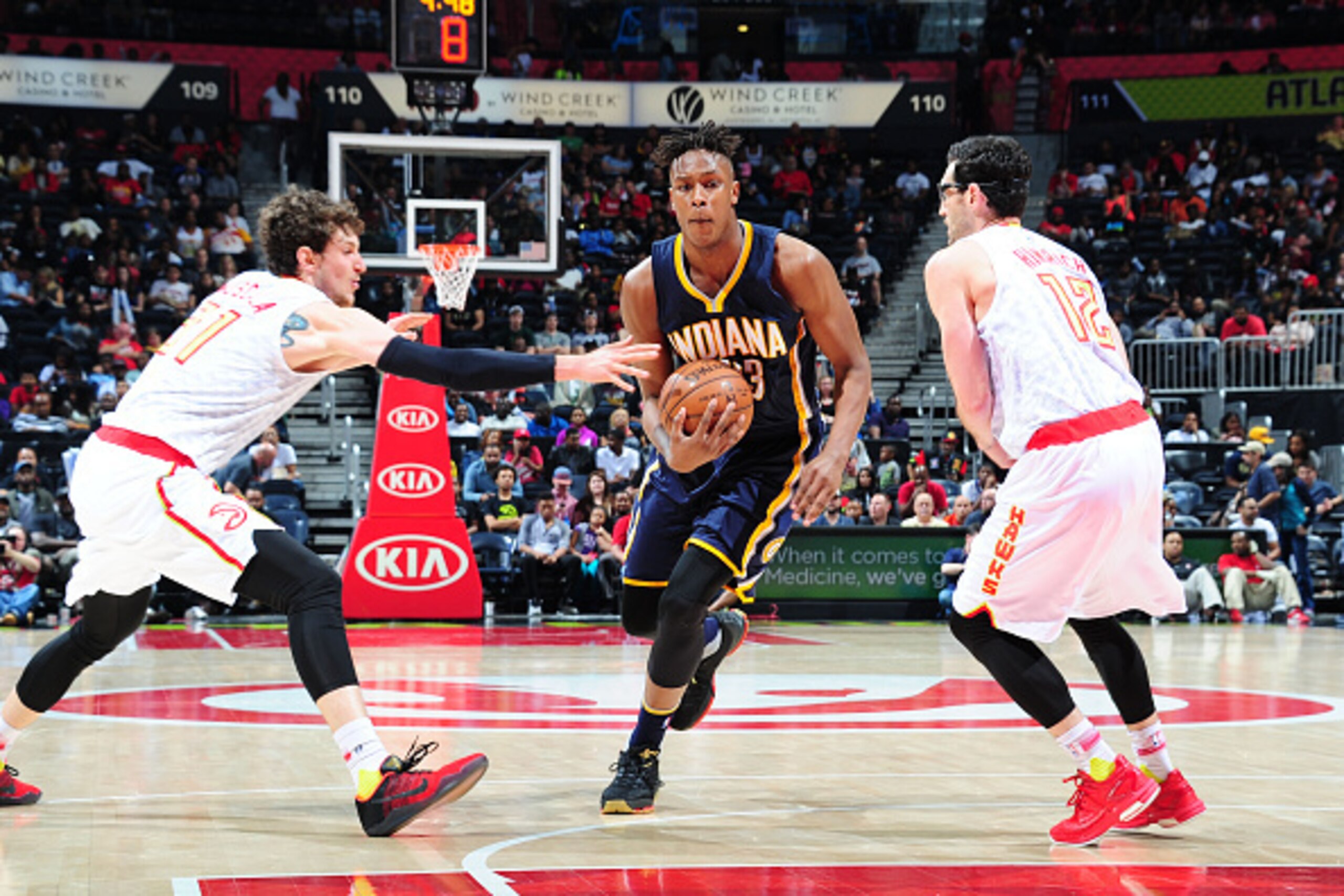
Age: 19
2015-16 Per-Game Stats: 10.7 points, 5.1 rebounds, 1.5 blocks, 50.6 percent shooting, 16.1 PER
Indiana's Predicted Playoff Seed: 8
Myles Turner has become one of the most important Pacers players, period.
Still a teenager, he offers frontcourt flexibility to an Indiana team stuck in the throes of an identity shift and searching for answers that solve offensive problems without compromising defensive structure. As Indy Cornrows' C. Cooper wrote:
"Before Myles Turner joined the starting lineup against the Atlanta Hawks, it could have been said that the Indiana Pacers were the NBA embodiment of the Goldilocks Principle. They were too small and inconsistent with C.J. Miles at the four-spot. Faster (103.19 possessions per 48 minutes), but unable to keep opponents off the boards or away from the rim (DefRtg: 106.9).
When head coach Frank Vogel replaced the streaky shooter with Lavoy Allen, they were almost too big. The starters held down the paint and cleaned the glass, but they played at a snail's pace (97.63 possessions per 48 minutes) and scoring points was like pulling teeth (OffRtg: 96.5).
Turner's addition makes them just right.
"
Not 20 games into its starting tenure, the Pacers' opening five of Monta Ellis, Paul George, George Hill, Ian Mahinmi and Turner is outscoring opponents by 8.8 points per 100 possessions on the season—a net rating that would rank third in the league, trailing only the Warriors and San Antonio Spurs.
But that lineup succeeds because of its defensive will. That version of the Pacers' starting five scores just 101 points per 100 possessions, a mark that would check in at 24th overall.
Everything Indiana needs in a stretch 4/5 can be found in Turner. He is shooting nearly 41 percent between 16 feet and the three-point line, has fired behind the arc at times and holds opponents to conversion rates almost eight points below their season average inside six feet of the hoop.
Indy's offense is nevertheless statistically worse with Turner in the game. But he improves the quality of a top-three defense and is the Pacers' best, and only, shot at enhancing an inefficient attack without ditching their defensive roots.
Los Angeles Clippers: Jeff Green
10 of 17
Age: 29
2015-16 Per-Game Stats: 12.0 points, 4.5 rebounds, 1.9 assists, 0.7 steals, 43.4 percent shooting, 13.7 PER
Los Angeles' Predicted Playoff Seed: 4
Los Angeles Clippers coach and president Doc Rivers bet big when he shelled out a protected first-round pick to acquire Jeff Green's expiring contract from the Memphis Grizzlies. His gambit appears to be paying off.
For now.
Green is doing exactly what the Clippers need him to do: succeed as a complementary weapon to the team's bigwigs. Since arriving in Hollywood, more than 60 percent of his made buckets are coming off assists—a stark change from his days in Memphis—and opponents are shooting under 30 percent from three when he's on their case.
Seldom considered a three-point threat, Green is finding nylon on more than 37 percent of his outside looks with the Clippers. That number climbs above 43 percent when he's acting as a spot-up shooter.
Here's the colossal caveat: Around 85 percent of his minutes in Los Angeles have come as a power forward, with Rivers even using him sporadically at center. Though best suited at the 4—or, more radically, the 5—Green won't have that freedom once Blake Griffin returns from his fractured right hand and subsequent suspension.
Playing beside the Clippers' Big Three will force Green to spend more, if not all, of his time at the 3. Will his three-point efficiency hold up when he's being chased around by more explosive wings? Will his strong defensive showing continue when he's forced to keep pace with those same explosive wings?
The Clippers sure hope so. So much of their postseason potential depends on it.
Memphis Grizzlies: Lance Stephenson
11 of 17
Age: 25
2015-16 Per-Game Stats: 6.8 points, 3.0 rebounds, 1.7 assists, 0.6 steals, 50.5 percent shooting, 12.8 PER
Memphis' Predicted Playoff Seed: 5
This is a scary proposition. Then again, maybe not.
Lance Stephenson, who is dealing with a right wrist sprain, has once again found his niche in Memphis. The Grizzlies champion a slow-paced, half-court style that plays to Stephenson's ball-dominant strengths, and his value to the team has soared in the wake of injuries to Mike Conley and Marc Gasol.
Prior to Memphis' March 12 loss to the Hawks, Patrick Redford of Deadspin summed up what the Grizzlies need and what they should expect from their new hero:
"He’s only been with the team 11 games and he’s come off the bench in every single one, but he’s their highest scoring healthy player (Matt Barnes is second. Like I said, they’re deeply weird). Every scoring outburst has been matched by an ugly-as-hell play, but that’s all part of the Lance Stephenson experience.
Dude is gonna make some truly stupid plays, miss a boatload of layups, but despite his very obvious flaws, he’s probably the most talented scorer the anemic Grizzlies have, so as far as the rest of the regular season goes, it’s Lance time baby.
"
Stephenson is averaging 14.2 points, 4.8 rebounds and 2.8 assists on 51.9 percent shooting since arriving in Memphis. He still can't consistently make threes, but his shooting percentage between 16 feet and the three-point arc has erupted.
Memphis is statistically worse with him in the game, something that hasn't changed even over his last five outings. But Stephenson's individual production has experienced a dramatic uptick, and the Grizzlies are a collective statistical paradox. They are winning more than 58 percent of their games but have a negative point differential that would rank as the worst in NBA history among every team to match their projected victory total.
Miami Heat: Joe Johnson
12 of 17
Age: 34
2015-16 Per-Game Stats: 12.2 points, 3.8 rebounds, 3.9 assists, 42.7 percent shooting, 39.5 percent three-point shooting, 11.6 PER
Miami's Predicted Playoff Seed: 3
Joe Johnson is changing the way we view the Miami Heat by being exactly what they need: a swingman who will score, throw some nifty passes, space the floor and not threaten to jeopardize everything head coach Erik Spoelstra has built on the defensive end.
Since acquiring Johnson, the Heat look like a totally different offensive team. They are scoring 111.9 points per 100 possessions, up from the 101.5 beforehand.
Their offense has been on the up and up since the All-Star break, as they've embraced a faster-paced brand of play, but that progression was nowhere near as pronounced; through the five games the Heat played between the All-Star tilt and Johnson's signing, they were dropping in 102.6 points per 100 possessions.
It's no coincidence this real mutation has coincided with the Johnson era. Take a gander at the impact he's having on what has been, through his first eight games, a top-five offensive machine:
| 116 | 1 | 105.1 | 20 | 10.9 | 3 | |
| 104.4 | 10 | 99.5 | 3 | 4.9 | 6 |
Sample sizes under 10 games shouldn't be taken as gospel, but the blueprint for sustainability is there.
Johnson doesn't impact the touches of Goran Dragic or Dwyane Wade, he can run the pick-and-roll with Hassan Whiteside and his defense stands up to most other small-ball 4s. His 66-plus percent clip on spot-up triples will dip, but he's shooting over 41 percent on such shots for the season.
Johnson is going to be just fine. The Heat, as a result, are positioned to be better than just fine—all because they won the post-trade-deadline lottery.
Oklahoma City Thunder: Enes Kanter
13 of 17
Age: 23
2015-16 Per-Game Stats: 12.0 points, 7.7 rebounds, 0.4 blocks, 57.4 percent shooting, 23.6 PER
Oklahoma City's Predicted Playoff Seed: 3
Enes Kanter has to show that he can stay on the floor for the Oklahoma City Thunder to be successful. His per-game numbers are patently insane for someone who barely plays 20 minutes per evening. It makes you wonder why he doesn't receive even more spin.
Then it hits you: For as much as Kanter can do for the Thunder, he often hurts them even more.
Oklahoma City's offensive efficiency slightly improves without Kanter on the floor. The team's pace drops by a substantial margin when it has to account for his half-court touches. And while his accuracy on long twos is well above the league average, he doesn't generate enough space to open up the Thunder's driving lanes.
The Thunder defense improves by almost six points per 100 possessions when Kanter sits compared to when he plays. Opponents are shooting just over 52 percent against him at the rim and, of the 175 players to have logged at least 1,300 minutes this season, his DBPM ranks 171st.
There are nights when Kanter can determine the outcome of games with his second-unit scoring punch, and his offensive game is better built for the ground-and-pound rigors of postseason basketball. He ranks in the 75th percentile of post-up efficiency, and more than 70 percent of his field-goal attempts come in tight and very tight spaces.
How much of an impact Kanter is allowed to have, though, rests on whether he can remain in the game long enough, making him an X-factor for better or worse.
Portland Trail Blazers: Ed Davis
14 of 17
Age: 26
2015-16 Per-Game Stats: 6.4 points, 7.2 rebounds, 0.6 steals, 0.8 blocks, 61.2 percent shooting, 18.3 PER
Portland's Predicted Playoff Seed: 7
Mason Plumlee is the big who gets more playing time, but it's Ed Davis who provides more defensive balance to the Portland Trail Blazers than anyone.
Part of Portland's unexpected rise through the Western Conference can be traced back to its defensive renovation. Head coach Terry Stotts simplified schemes, and the Blazers have since seen their defensive numbers improve. Those adjustments wouldn't have been possible without Davis.
Most of his minutes come at power forward, even though he's a natural center. Shimmying between both of those positions in today's league is no small feat. Contemporary 4s live on the perimeter, chucking threes and putting the ball on the floor. Davis has accepted the dual responsibility of protecting the rim and giving chase to players who operate outside his comfort zone.
Now the Blazers are borderline inept without him. They're allowing 106.9 points per 100 possessions when he rides the pine, which would rank 26th in the league on the season. When he plays, that number drops to 104.2: a more respectable 18th.
Any fight against one of the West's superpowers in the first round of the playoffs will demand offensive perfection from Damian Lillard and C.J. McCollum. But not even they will be able to headline that conflict without Davis, Portland's primary defensive anchor.
San Antonio Spurs: Boris Diaw
15 of 17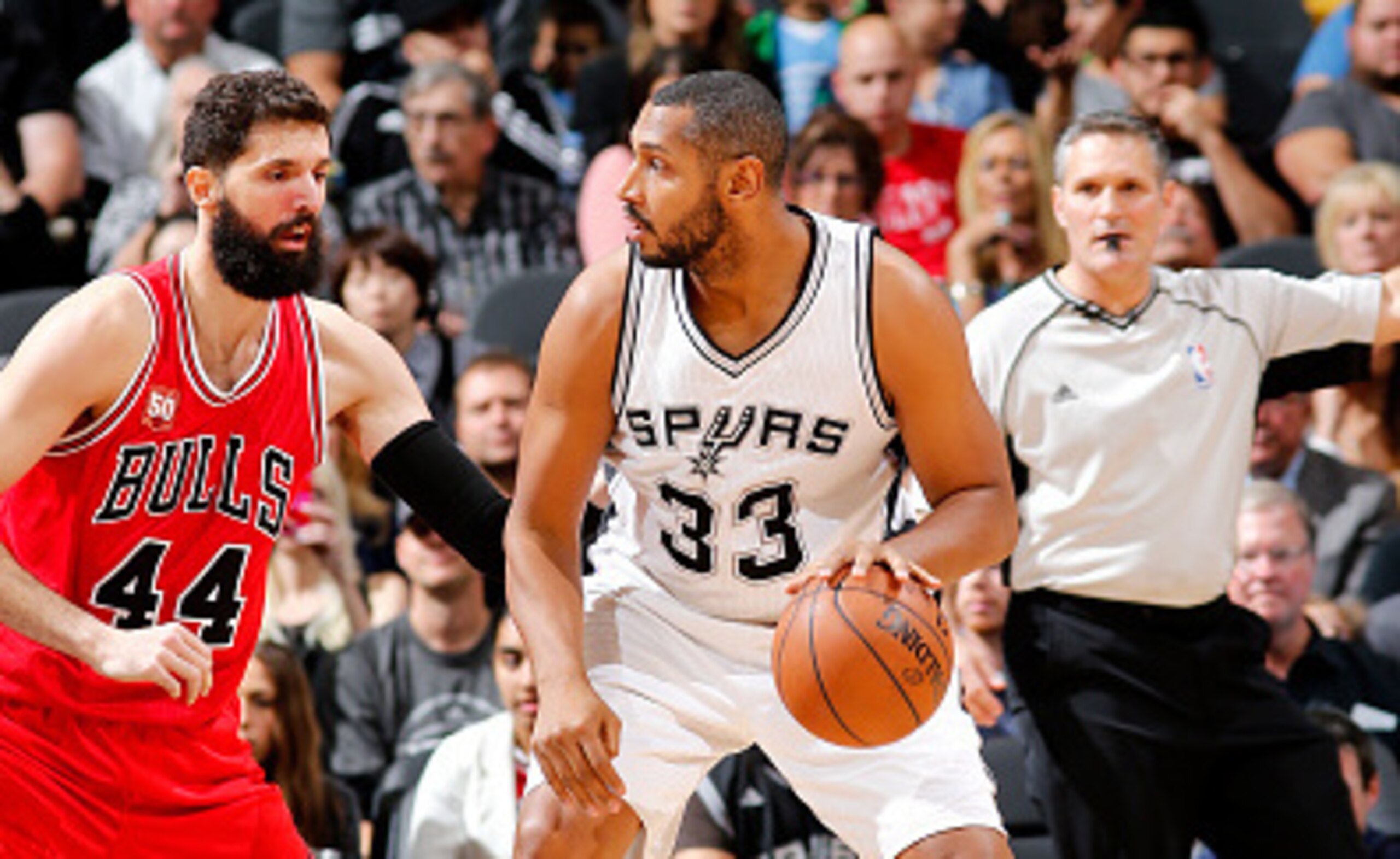
Age: 33
2015-16 Per-Game Stats: 6.3 points, 3.0 rebounds, 2.4 assists, 52.3 percent shooting, 39.1 percent three-point shooting, 14.4 PER
San Antonio's Predicted Playoff Seed: 2
If the Spurs deviate from their everyday model in order to combat the Warriors' size-slighting lineups, their ability to do so begins and ends with Diaw.
Right now, the Spurs are, by design, the antithesis of the Warriors. They are opportunistic, not fast; methodical, not deliberately chaotic. San Antonio ranks in the bottom seven of pace, and there are just four teams that have dedicated a smaller number of offensive possessions to transition sets.
Where the Warriors run small, the Spurs have turned back the clock, reverting to dual-big frontcourts that typically feature two of LaMarcus Aldridge, Tim Duncan and David West. And, to many, that's how you beat the Warriors: dictate the pace, disrupt their offensive flow, make them play your game.
The Spurs are big enough, their defense historically stingy enough, to perfect that approach.
But all bets are off once the Warriors, as they do, trot out Draymond Green at center. Nothing is assured of unseating those combinations because they're so unprecedented.
The Spurs will at some point fight video game lineups with their own. To do that, they'll need to sit Aldridge and Duncan in favor of a smaller, faster option at center while moving Leonard to the 4.
That will be Diaw. There is no one else.
Toronto Raptors: DeMarre Carroll
16 of 17
Age: 29
2015-16 Per-Game Stats: 11.7 points, 4.8 rebounds, 1.0 assists, 1.7 steals, 38.8 percent shooting, 11.4 PER
Toronto's Predicted Playoff Seed: 2
Sources told TSN Sports' Josh Lewenberg that DeMarre Carroll, who hasn't played since Jan. 3 after undergoing arthroscopic surgery on his right knee, is planning to return sometime before April. Raptors fans are free to high five and fist bump and what have you.
Adding Carroll is going to be huge. After maintaining a top-10 defense for much of this season, mostly without him, the Raptors have sputtered. They rank 24th in points allowed per 100 possessions this side of the All-Star festivities, and their current starting lineup of DeMar DeRozan, James Johnson, Kyle Lowry, Luis Scola and Jonas Valanciunas defends with bottom-three integrity.
Carroll wasn't setting Toronto on fire before being tethered to the shelf, but he instantly becomes the best three-and-D option in the Raptors' arsenal. He is already shooting 38.6 percent on standalone three-pointers, and it was just last season that he held his own in Atlanta while lining up against the opposition's most lethal perimeter scorer.
Welcoming back Carroll helps DeRozan more than anyone. He is getting torched from beyond the arc by rival scorers, letting up a 43.3 percent success rate, and few are worse as close-out defenders. Of the 184 players who have defended at least 100 spot-up possessions this season, DeRozan ranks 120th in points allowed per possession.
The Raptors need Carroll to tighten up their defense and further safeguard them against the first-round exit they've suffered in each of their last two playoff bids.
Utah Jazz: Rodney Hood
17 of 17
Age: 23
2015-16 Per-Game Stats: 14.5 points, 3.3 rebounds, 2.8 assists, 0.9 steals, 42.1 percent shooting, 14.3 PER
Utah's Predicted Playoff Seed: 8
Low-usage wings that make high-end impacts are tough to come by, and the Jazz will need every aspect of Rodney Hood's game to simply grab a playoff berth, let alone make any noise once they reach the NBA's spring dance.
He doesn't have one of the Utah Jazz's five highest usage rates, yet Hood has the second-best net rating of any starter. (Rudy Gobert is the only player with a better mark.)
Utah's performance has actually suffered with Hood on the floor this side of the All-Star break, but even during that stretch, he remains one of just two starters with a positive net rating. The one player in front of him, Shelvin Mack, has made fewer than 15 appearances with the team this season.
He is their best shooter by volume. He's putting in over 36 percent of his triples while attempting more than five per game, and his efficiency on catch-and-shoot looks tops 38 percent.
Hood becomes especially important when the Jazz choose or are forced to run small, benching one of Gobert or Derrick Favors. Trey Lyles has been head coach Quin Snyder's floor-spacing 4 of choice for most of this season, but at 6'8", Hood has Khris Middleton-like range in rotations, with an ability to soak up time at the 2, 3 and 4 slots.
Stats courtesy of Basketball-Reference.com and NBA.com and accurate leading into games on March 14, unless otherwise noted. Salary information via Basketball Insiders.
Dan Favale covers the NBA for Bleacher Report. Follow him on Twitter @danfavale.

.jpg?w=2560 "Dak to Stroud: Get Some Wins 💯")
.jpg?w=2560 "5 NFL Players Getting Trade Buzz")

.jpg?w=2560 "NFL Won't Fine 'Beverage' Celebrations 🍻")