

Top 3 Most Predictable Premier League Tactical Failings This Season
Last week, Bleacher Report took a look at the biggest tactical surprises to affect the Premier League this season. From Leicester City’s bombastic 4-4-2 to Christian Eriksen taking a backseat at Tottenham Hotspur, we covered the shimmies and shakes that have governed the successes in the league.
This week we’ll tackle the opposite—the tactical failures that were highly predictable.
For every success there is a balancing failure, and there have been plenty of managers culpable of some silly errors most saw coming from the off.


.jpg?w=2560)
Christian Benteke Can’t Mesh At Liverpool
Brendan Rodgers’ decision to drop £32.5 million on Christian Benteke last summer essentially made a rod for his own back. With the thrills of 2013-14’s Premier League title race long banished to the memory banks, it was the success of this transfer that would define how long the Northern Irishman was given this campaign.
Liverpool fans feared another Andy Carroll. The wounds of that similarly priced transfer are still fresh, and it’s interesting that both he and Luis Suarez (one a failure, one a roaring success) were signed in the same window, just as Benteke (impending failure) and Roberto Firmino (impending success) were.
Benteke is a far superior technician to Carroll and has cleaner, crisper feet than compatriot Romelu Lukaku. He is, overall, one of the most refined target men in the game...but that doesn’t make him a good fit for Liverpool’s system, and it’s probable he’ll never quite manage to slot in.
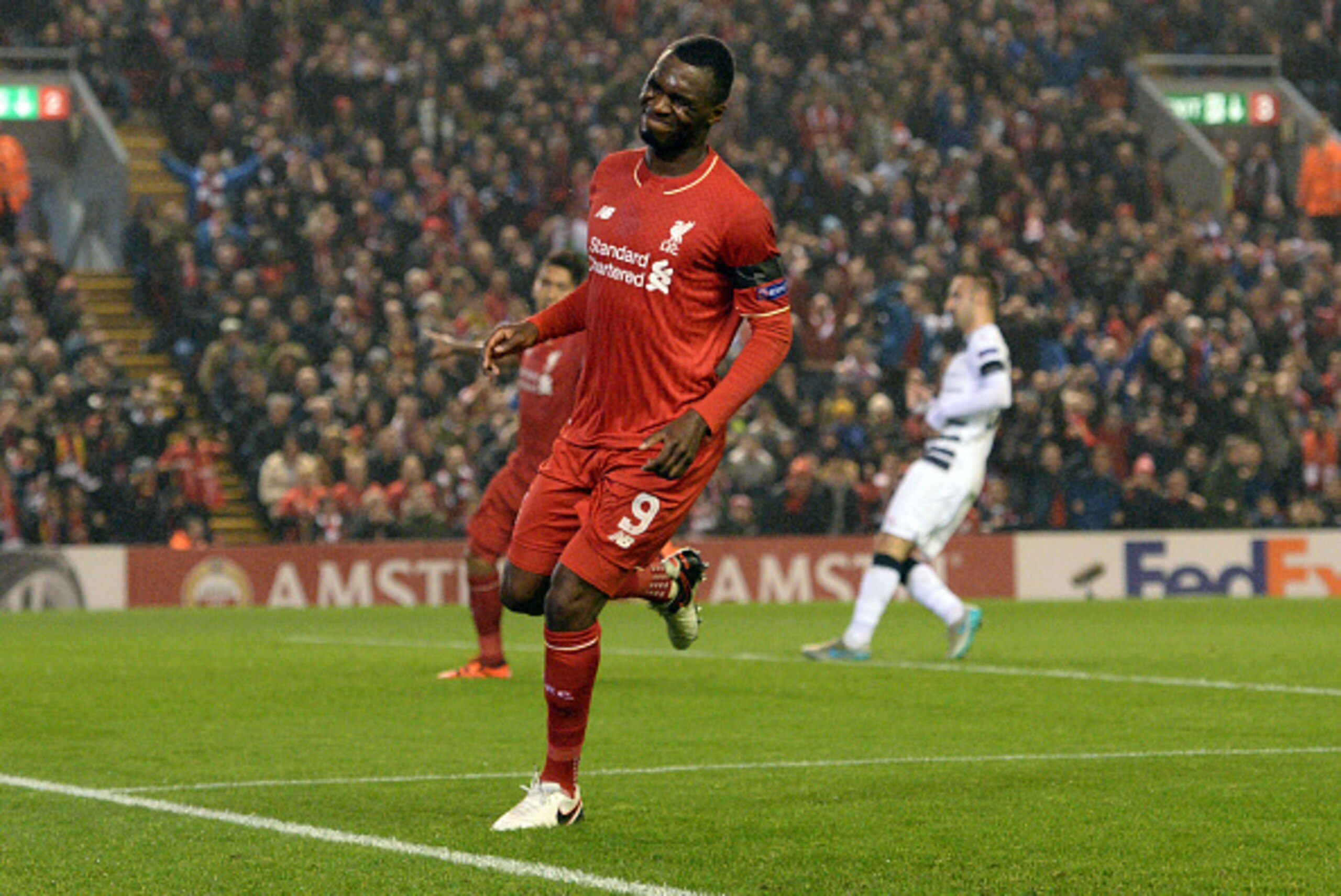
It’s nothing to do with Benteke being “unable” to hack it at a big club; if he had signed for Chelsea under Jose Mourinho, he’d likely have provided a stellar rotational option for Diego Costa and played very well. Why? Because in many ways he’s more the “next Didier Drogba” than Lukaku ever was, and the Blues are a team built for that type of forward. Liverpool are not.
Benteke’s biggest weakness emerged pretty early during his Aston Villa days: timing of runs and picking space to penetrate. He was an all-star player for the Midlands club, but even they played to his limitations: stick the ball into his feet and let him dictate the attacking movement and offensive plan.
At Liverpool, the attack doesn’t run through him—and it never will. Rodgers’ sole job last summer, when choosing striking targets, was to buy players that can mesh with Philippe Coutinho and Firmino—the current and soon-to-be controllers in the Reds’ attack.
We’ve seen countless examples of Benteke’s awful runs ruining attacks already, and he just isn’t the type of player who can utilise the service Coutinho provides.
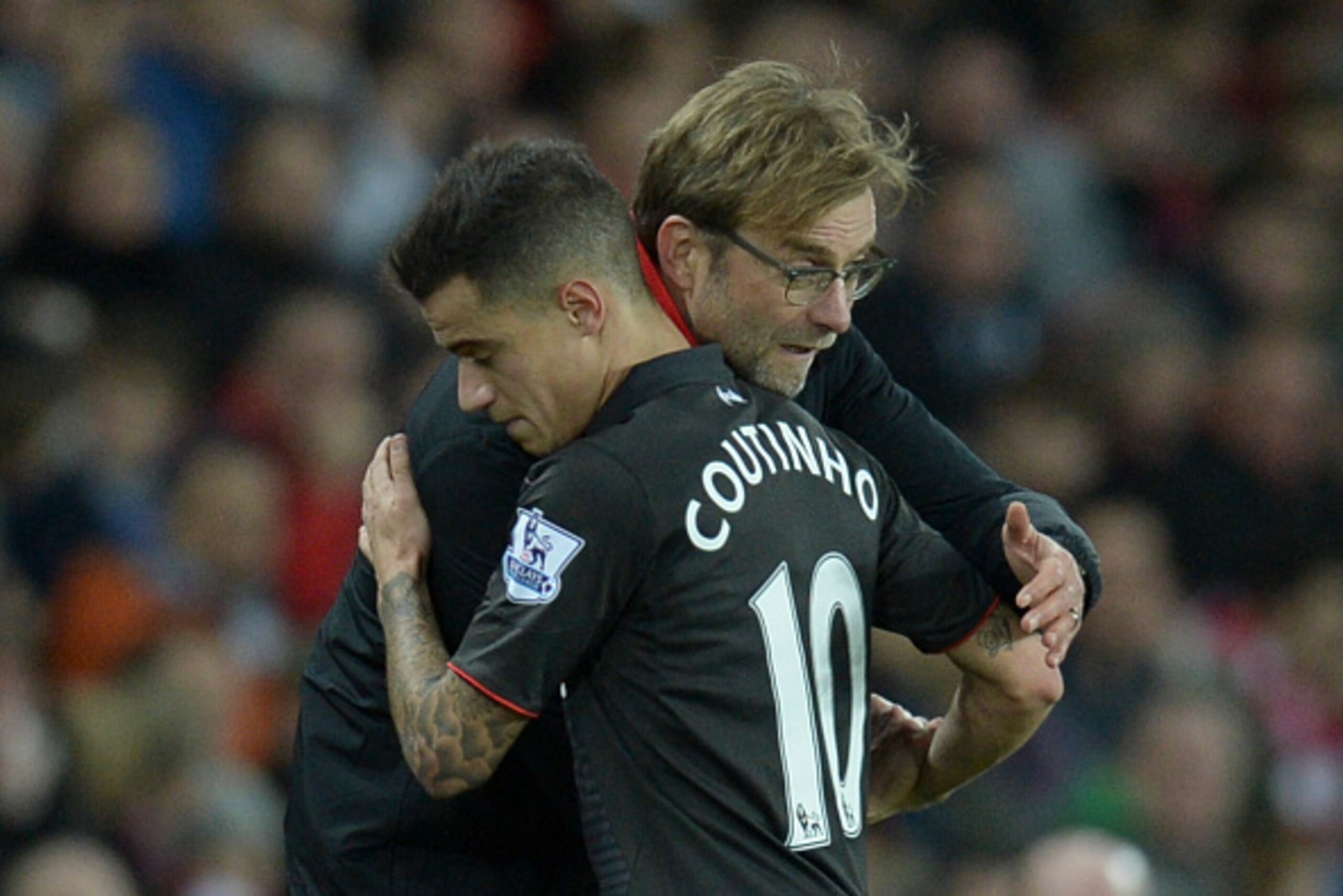
Is Divock Origi a better player than Benteke? Of course not; it’s not even a contest. But Origi is the type of channel-running striker who can play in this Liverpool side and fulfil a tactical brief. Danny Ings, too, has the legs to commit to a pressing striker role under Klopp and, fitness permitting, has an obvious future at Anfield.
Benteke is another question. His goal tally looks pretty respectable because he’s capable of conjuring a moment of magic to permeate 89 minutes of awkwardness, bad decisions and poor movement.
What Jurgen Klopp will do with him this coming summer is anyone’s guess, but unless the German changes the midfield personnel, Benteke won’t find success at Anfield.
Aston Villa Signing Rudy Gestede, Then Not Crossing To Him
From the club who signed Benteke to the club who released him, Aston Villa have had a horrid season—rooted to the bottom of the table and simply unable to conjure the goals required to escape.
Benteke has, of course, been a big miss; it’s clear now that his goals were at least 50 per cent of the reason the club hung onto Premier League survival for the previous three seasons. His excellence (in their system) was perhaps taken for granted by some fans.
In his place, then-manager Tim Sherwood signed Rudy Gestede—an even taller, even more towering target man from Championship side Blackburn Rovers. The last time the 27-year-old played in the top tier (with Cardiff City) he hardly set the world alight, so the plan to maximise his use would have to be nailed on for success.
Put simply, it wasn’t.

Gestede is about as immobile as target men come; stick it directly on his forehead or into his chest and he’ll hold off two markers on his own—he’s strong!—but if the ball is yard off the mark, he can’t stretch to reach it.
Benteke could play a thoroughly isolated role up front for Villa and balance out the lack of quality deeper on the pitch because his mobility allowed him to turn hopeful punts into passes; the same luxury is not possible with Gestede.
Alarmingly, not only is Villa’s long-pass distribution into him lacking in accuracy, but crossing has been largely absent for the entire season. Imagine that: signing a 6’4” behemoth who scored more than 15 headed goals the previous season, then not swinging the ball into the box for him?
Jordan Amavi was, seemingly, the only player capable of lifting the ball into the Benin international’s vicinity, but once his ACL popped, the supply almost entirely dried up. Leandro Bacuna’s crossing has dipped ferociously, most of Alan Hutton’s end up in the stands—as do Aly Cissokho’s—and Villa lack a true winger in their squad.
Carles Gil and Jack Grealish are centrally inclined players who are a little reluctant to send in crosses and very often cut inside rather than stick to the sidelines.
Scott Sinclair, linked with a return to Swansea City this month, per the Mirror's James Nursey, is of a similar ilk, though he often dribbles into blind alleys and loses possession.

Sherwood failed to place the correct peripherals around Gestede to make him a success, and Villa manager Remi Garde hasn’t been able to recruit any.
Garde has done a reasonable job with the hand dealt and may not be able to avoid relegation, but next summer he cannot afford not to purchase two crossers to unlock Gestede’s best in the Championship.
It’s an oft-used and sometimes abused line, but it’s absurd how badly Villa need a Marc Albrighton right about now.
Eder and Bafetimbi Gomis Failing to Replace Wilfried Bony
The biggest benefactor of Wilfried Bony’s January 2015 move to Manchester City was not Bony, nor the club itself. In the short term, at least, the man who prospered the most from the switch was Swansea City’s reserve striker Bafetimbi Gomis.
Signed as a free agent in the summer of 2014, the Frenchman had to wait for his chance to shine up front in south Wales, stepping into the void after Bony’s departure to the Africa Cup of Nations and then the north of England. At 29 years of age and with more than 300 Ligue 1 appearances under his belt, the transition was expected to be smooth.

After scoring just two goals before the turn of the year, stuck in Bony’s shadow, he exploded into life in 2015 with a brace in the cup. He scored six Premier League goals from February onward after taking a short time to settle into the side, and his brute-force physicality and directness became a weapon for the Swans to utilise—particularly out of former manager Garry Monk’s diamond.
But Gomis’ purple patch didn’t last too long, and it became clear even early in 2015 that he wasn’t the striker Swansea could rely on to bag 15 goals in a season.
He started 2015-16 like a house on fire, netting in the club’s first four fixtures, but he has dried up badly since, scoring just once in the following 18. He wasn’t in the squad for the victory at Everton last weekend.
It must be noted that Monk perhaps foresaw this issue in the summer, and in targeting Rafael Santos Borre—who was denied a work permit and subsequently sold to Atletico Madrid instead—acknowledged the fact that Gomis could not be relied upon.
His back-up plan, though, was to go for Eder—an entirely different type of player to Santos Borre and a far-too-similar type to Gomis.
Both Eder and Gomis lack the finesse and playmaking ability of Bony, and that’s something Swansea were genuinely built around. The Ivorian’s ability to drop in and link with Gylfi Sigurdsson was the main source of attacks, and it freed up so much space elsewhere as a result of concentrated attention.

Monk’s temporary solution (the diamond) was a good one, increasing the midfielder number from three to four and pushing more players closer to Gomis to aid him, but upon resumption of the 2015-16 season, a one-striker formation was adopted and the juice soon fizzled out.
That Francesco Guidolin has played Wayne Routledge nominally up front so far while he’s been in charge speaks volumes; Swansea need to use that Bony money to find another playmaking target man, and it won’t be easy.
Quick Hits:
- Sunderland’s 3-5-2 was rightly short-lived. Playing with five at the back requires a) defensive nous from wing-backs that’s sorely lacking, and b) three truly reliable centre-backs, which they don’t have.
- Leicester City’s attempt at a 4-3-3 that still allowed Jamie Vardy to drift wide was a predictable failure. If no strike partner is there to hold the middle while he drifts, there’s no presence up top.
- Ashley Young at right-back. No thanks.
- Not so much a tactical issue, but Roberto Martinez’s persistence with Tim Howard is harming Everton and, seemingly, everybody knows it but him.
.jpg?w=2560 "Rams Eagles Football")
.jpg?w=2560 "Texans-Mixon Released Football")

.jpg?w=2560 "2 NFL Officials Suspended")

.jpg?w=2560 "Mahomes' Wife Trolls Kubiak 💀")
