

Should Cleveland Cavaliers Be Active at the NBA Trade Deadline Again?
Even with LeBron James, Kyrie Irving and Kevin Love leading the way, the Cleveland Cavaliers struggled to a 19-20 start last season. With a less-than-ideal supporting cast, general manager David Griffin was forced to turn to the midseason trade market in order to save the newest Big Three's first year together.
Separate deals for Timofey Mozgov (Denver Nuggets) and then Iman Shumpert and J.R. Smith (New York Knicks) sparked the Cavs to a 34-9 finish and an eventual run to the NBA Finals.
Now a year later, and with a much-improved 23-9 start, should Cleveland once again be active before next month's trade deadline? What do the Cavs even have to offer in return?
TOP NEWS

LeBron's Special Helicopter Deal

MJ Makes Record-Setting Donation 🙌
Report: Embiid Down to Rookie Weight
Would standing pat and giving this group time to jell actually be better?
What Cleveland Needs

Thankfully, not nearly as much as last year.
The Cavs are much deeper this season. While players like Alex Kirk, A.J. Price, Will Cherry and Lou Amundson were all holding down roster spots before, they've since been replaced by Mo Williams, Richard Jefferson, Jared Cunningham and Sasha Kaun.
With Irving and Shumpert back, the Cavaliers' biggest dilemma now becomes who to sit with all the added depth. Players like Williams and Anderson Varejao (arguably the Cavs' best members four years ago) have now been reduced to garbage-time minutes.
Coach David Blatt has the luxury of setting his new rotation, something he admits is a group effort, given Cleveland's upgraded roster.
"It’s something the coaching staff discusses together at length. All of us. Generally you’re thinking about your defensive schemes and having shooting on the court and having ball-handing on the court together and who’s playing the best basketball right now. I think those are the three main things."
Every individual position appears to be two-to-three players deep, led by the three-headed point guard monster of Irving, Williams and Matthew Dellavedova.
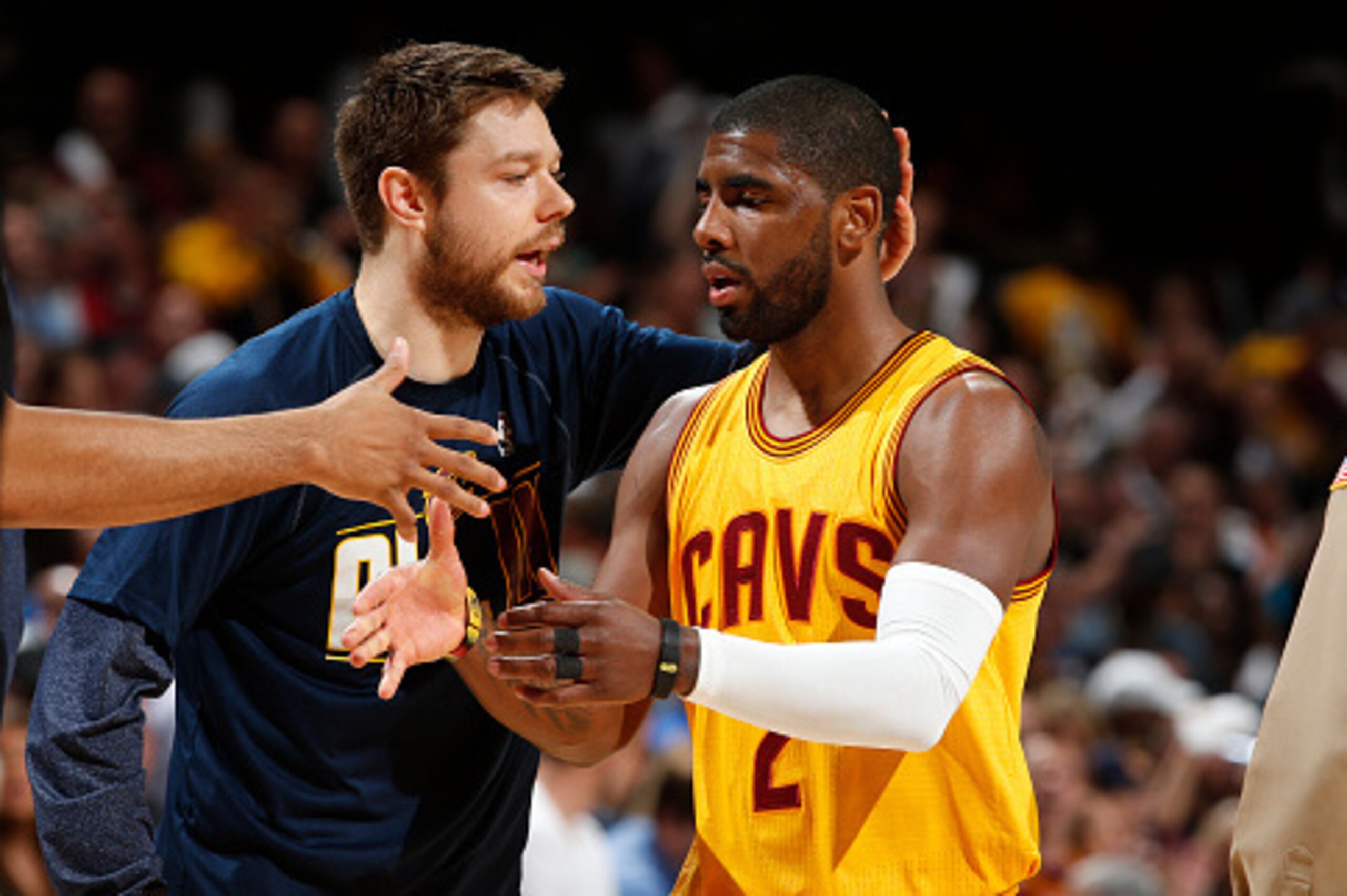
As long as Cleveland can stay relatively healthy, it doesn't need to pull off the kind of roster-shaking moves of yesteryear. The core group of James, Love and Irving went 33-3 in the second half of the 2014-15 season. This is a drink that only needs to be slightly shaken, not stirred.
A recent shakeup to the opening lineup has resulted in a small potential trade option, however. With Tristan Thompson promoted to starting center, the Cavaliers have less post versatility off the bench; Mozgov is now strictly a backup center, whereas Thompson could take over either big position.
This change leaves the Cavs in need of a reliable backup power forward, preferably one who can space the floor when Love needs a breather.
While the Cavaliers can get by with James Jones in this role at times, an upgrade via the trade market would be wise.
What the Cavs Can Offer

With no Dion Waiters to offer as trade bait this season (seriously, the Oklahoma City Thunder fell for that?!?), Cleveland has to be more creative in what they can send back.
For starters, four players carry no-trade clauses due to one-year Bird rights and must give the Cavs their permission to be dealt. This list includes James, Dellavedova, Smith and Jones, according to ESPN's Marc Stein.
It's safe to say that Irving, Love, Thompson, Shumpert, Williams, Jefferson and Kaun aren't going anywhere, either. The first four are all valuable members of the rotation, while the others were all recently signed this offseason and provide much-needed depth.
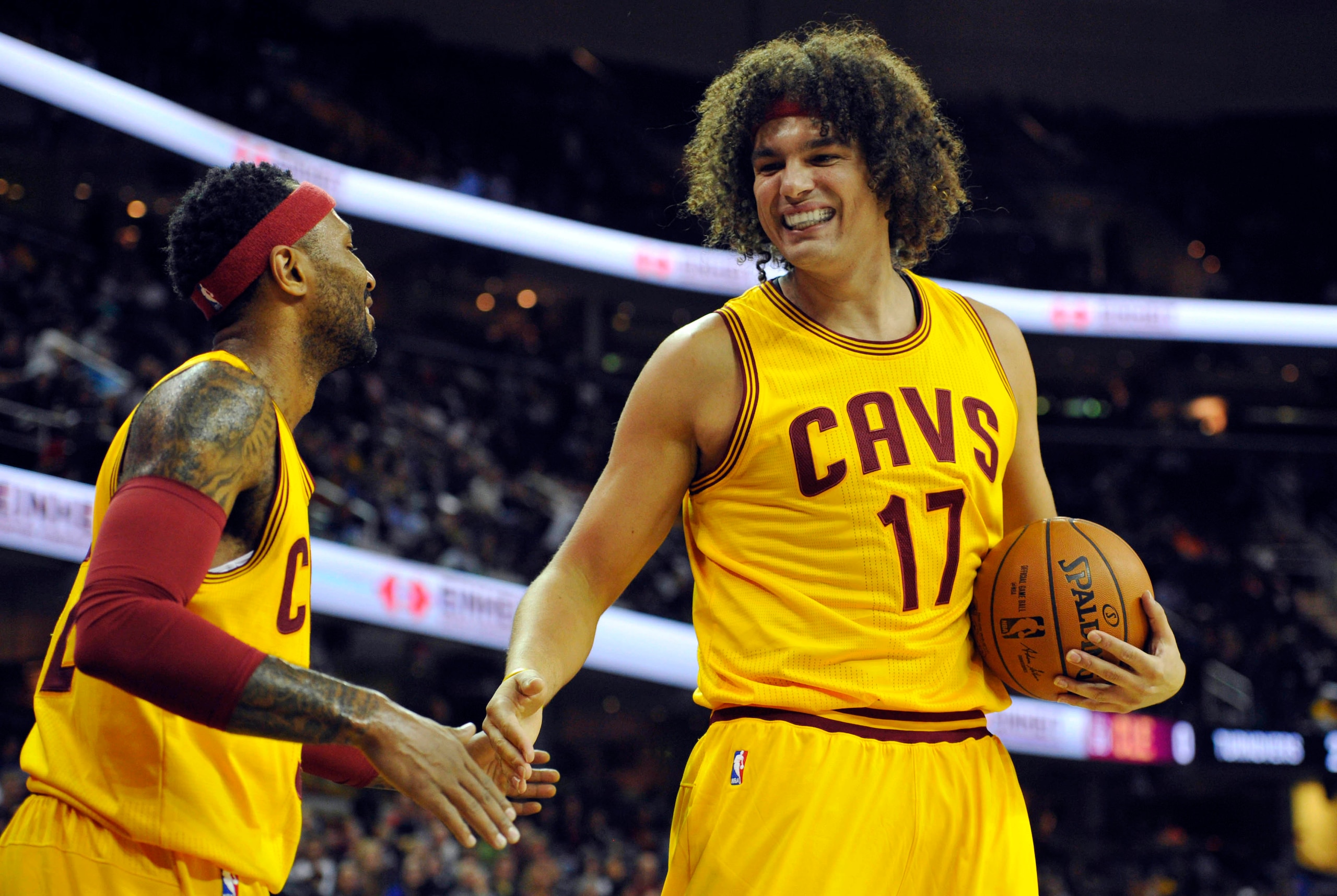
This leaves second-year shooting guard Joe Harris (who's expected to miss the next two-to-three months following foot surgery, according to ESPN), Varejao, Mozgov and Cunningham as the only potential trade ammunition. At this point, it would be a shock to see Cleveland part ways with its longest-tenured player (and LeBron buddy), Varejao, or give up on a potential defensive anchor like Mozgov.
What the Cavaliers do have, however, are free passes for financially strapped teams to get out of big contracts. These are affectionately known as trade exceptions.
Griffin orchestrated two separate trades with the Portland Trail Blazers this summer, sending off Brendan Haywood and Mike Miller. In return, Cleveland was rewarded with two exceptions in the amounts of $10.5 million and $2.85 million, as noted by Chris Haynes of the Northeast Ohio Media Group.
These exceptions cannot be combined and will expire July 26, 2016. For teams looking to free up money, the Cavs can absorb any combination of salaries so that they do not exceed either amount. The Haywood exception of $10.5 million is currently the largest in the NBA.
While they may not have the players to send back in order to entice a team to part with someone for free, Cleveland can still offer their 2018 first-round draft pick and less favorable 2019 second-round pick between the Los Angeles Lakers and Minnesota Timberwolves, according to RealGM.
Not exactly a king's ransom.
Given that the Cavs had to sacrifice two first-round picks and part of a trade exception just for Mozgov, don't expect any big names to be walking through the door this trade season.
What Cavaliers Should Do
First of all, standing pat wouldn't necessarily be the worst idea.
Cleveland stayed atop the Eastern Conference without two of their best players to begin the year, thanks to the tremendous depth already on the team. They can withstand guys missing games here and there, and even a serious (non-James) injury for a stretch before the playoffs begin.
Remember, both trade exceptions can be used deep into the summer and certainly don't have to be utilized now. However, if Cleveland does indeed wish to upgrade the roster, a few players could be had for reasonable prices.
Markieff Morris of the Phoenix Suns is almost certain to be dealt before the deadline and could serve as a young backup power forward.
Rumors of Orlando Magic big man Channing Frye and Minnesota Timberwolves veteran shooter Kevin Martin have already popped up in trade talks, as reported by Zach Lowe of Grantland and the Associated Press' Jon Krawczynski respectively. All would fit under the Haywood exception and shouldn't cost all that much.
For Cleveland, a swap for Frye would make sense. He's an excellent three-point shooter for a big man and is owed roughly $15 million over the next two seasons, as noted by HoopsHype. Orlando, while three games above .500, is currently out of the playoff picture in the East and has dropped three straight contests. Dumping Frye's salary and clearing room for Aaron Gordon may be tempting for the young team, especially if draft picks are involved.
If the Cavs pull off a minor move like this, great. If not, they're still championship contenders with the current roster (when healthy).
Cleveland should still be active in talks around the trade deadline but avoid any major shakeups to the team's core.
Greg Swartz is the Cleveland Cavaliers Lead Writer for Bleacher Report. Follow him on Twitter, @CavsGregBR. All quotes are originally obtained. Stats via Basketball-Reference.com unless otherwise sourced and are current as of Jan 6.


.jpg?w=2560 "Viral Rams Coach Vid 🖕")
.jpg?w=2560 "Injury-stricken Seahawks signing veteran RB")
.jpg?w=2560 "2 NFL Officials Suspended")

.jpg?w=2560 "Mahomes' Wife Trolls Kubiak 💀")
.jpg?w=2560 "Grading WWE Raw 🔠")