

New England Patriots Made the Right Call Kicking in Overtime
I didn't need a bunch of win probability statistics to tell me whether or not head coach Bill Belichick made the right decision for the New England Patriots to kick instead of receive in overtime against the New York Jets.
Yes, it was much easier to criticize Marty Mornhinweg when the former Detroit Lions head coach elected to kick in overtime back in 2002—long before the current regular-season overtime rules were implemented in 2012.
But in 2015, when there is little to no decided advantage for teams that receive the opening kickoff of overtime, kicking and receiving is almost immaterial no matter how you look at it.
TOP NEWS

New NFL Power Rankings 📊
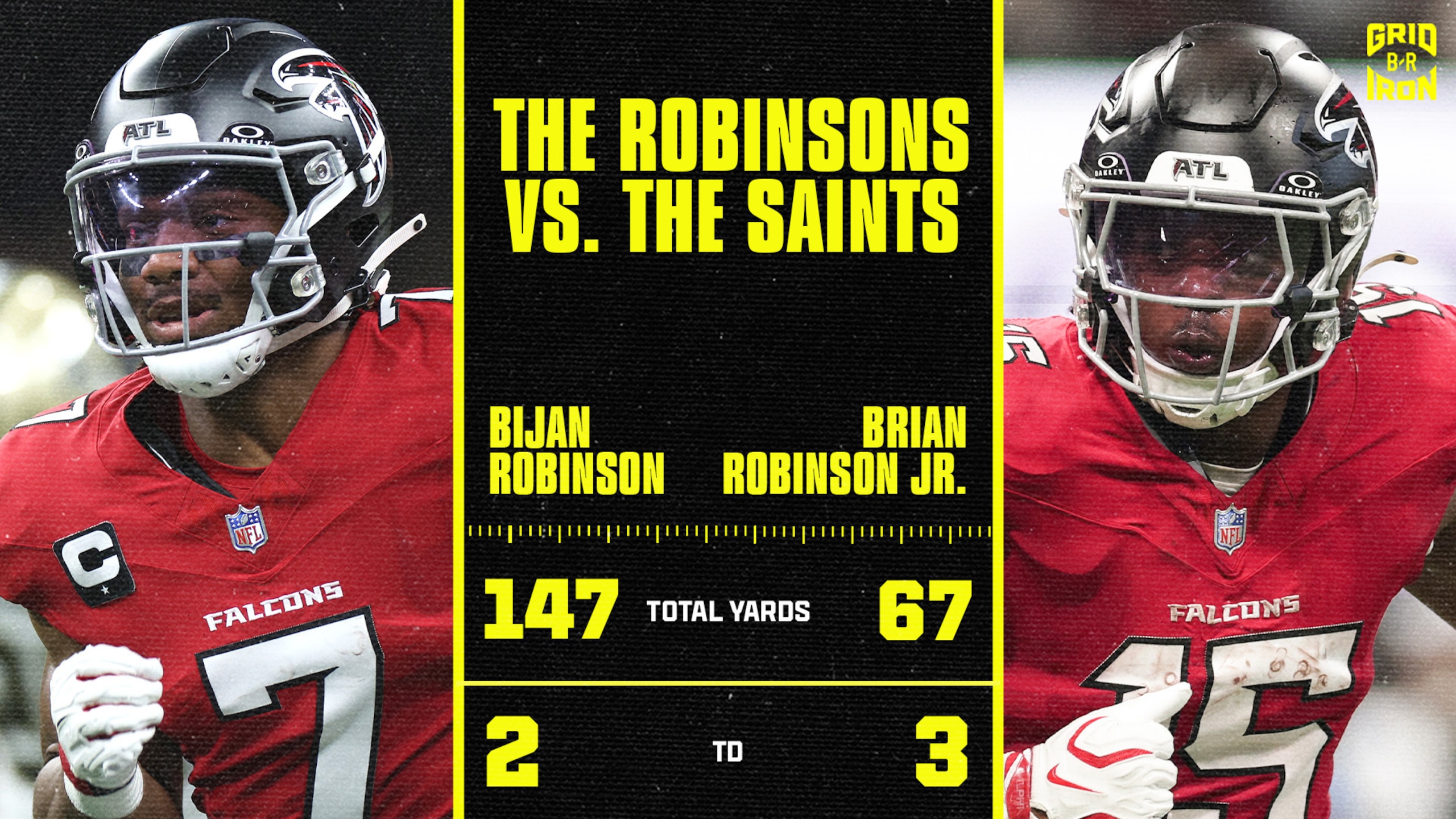
The Robinsons POUND the Rock 🪨
Takeaways from Falcons' dominant MNF win
If you look at it through the lens of the past, and how these decisions have panned out through history, you'll find almost no correlation to victory for the team that has the ball on the opening possession of overtime. Prior to Sunday, teams that received the opening kick of overtime were 32-32-3, according to Bleacher Report's Brad Gagnon.
| Wins on first possession | 11 of 68 | 9 of 45 |
| Record of receiving team | 33-32-3 | 19-25-2 |
That means that with Belichick's decision, the scales tipped by one game in favor of the receiving team.
If you choose to look at it through the prism of probability, you still won't find much that grossly favors receiving over kicking. According to Neil Paine of FiveThirtyEight.com:
"Conditional on how its opponent's previous drive ends, the average team kicking at the start of OT can have a pretty good opportunity to quickly counter-attack and end the game. Although a team that allows an opening touchdown by definition loses 100 percent of the time, and a team that allows an opening field goal loses 69 percent of the time, the kicking team scores a game-winning touchdown or field goal on 49 percent of drives that follow a zero-point opponent possession to begin overtime.
(One big reason? Such drives start roughly 11 yards closer to the opponent’s goal line than drives after an opponent field goal.) If the kicking team can force a stop on the first drive of OT, it briefly finds itself very well-positioned to win the game.
"
And think about how the game had unfolded up to that point. The Patriots offense had been almost entirely stifled, outside of one 11-play, 66-yard touchdown drive in the fourth quarter. The defense, on the other hand, had held the Jets to two straight three-and-out possessions to end the game as well as just three points in the final 24 minutes of regulation.
All the defense needed was one well-timed stop to hold the Jets to either a field goal or no points at all. Belichick wasn't foolish to think his defense could accomplish that task; they had already done it for most of the second half.
One stop at the right time would have given the Patriots good field position, with a chance to score an easy game-winning field goal with their almost-automatic kicker Stephen Gostkowski.
"Look, the bottom line is field position," Belichick said. "[With] good field position, you don't have to take it as far. [If you] get a stop, need a field goal [to win]. That's really more a field-position consideration, similar to other overtime games that we've been in, regardless of which way the wind was, the Denver game from a couple of years ago or the Denver game from this year, where we had the ball, got stopped, gave it to them in good field position. They ended up scoring a touchdown but they didn't have very far to go to get into field-goal range."
And Belichick was almost proved right in his decision—and might have been proved right, were it not for a collision between backup cornerback Leonard Johnson and backup safety Tavon Wilson, which allowed Jets receiver Quincy Enunwa to break a 48-yard catch-and-run down to the Patriots' 30-yard line.
Belichick bet on his defense, which had played better that day and was healthier overall than the offense. If they had delivered, the Patriots might have had to move the ball just 35 to 40 yards to give Gostkowski a good shot at a game-winning field goal.
Just because the decision to kick didn't achieve the desired results doesn't make it the wrong decision. There's enough evidence here that Belichick knew what he was doing, but weren't the four Super Bowl rings evidence enough before that?
Unless otherwise noted, all quotes obtained via team news release.

.jpg?w=2560 "Commanders Eagles Football")
.jpg?w=2560 "Grading WWE Raw 🔠")



.jpg?w=2560 "Viral Rams Coach Vid 🖕")