

Top 5 NBA Players at Every Position So Far
Forget everything you've learned about the NBA in previous seasons. Toss the accumulated knowledge away and wipe the archives as best you can.
From this point forward, what's happened in 2015-16 is all that matters. Reputations are utterly irrelevant, whether we're talking about a player who was nothing more than mediocre last year or someone who was previously an MVP candidate. They're all starting with blank slates, ones filled with notes pertaining only to what's happened during the last five weeks.
Despite the fact that we're still just a fraction of the way into the current campaign, the cream has already risen to the top at each of the five traditional positions. There are a few exceptions, of course, but evaluating players without using anything more than the results from the 2015-16 season provides results quite similar to what you might expect if you didn't erase all memories of previous years.
We're looking at per-game stats, advanced metrics, on/off splits, impact on teammates, intangibles and everything else that makes a basketball player great. Some stand out in every single category, while others are so good at one facet of the game that it covers up serious flaws in other areas.
Basically, be the best, and you'll be rewarded accordingly.
No. 5 Point Guard: Chris Paul
1 of 25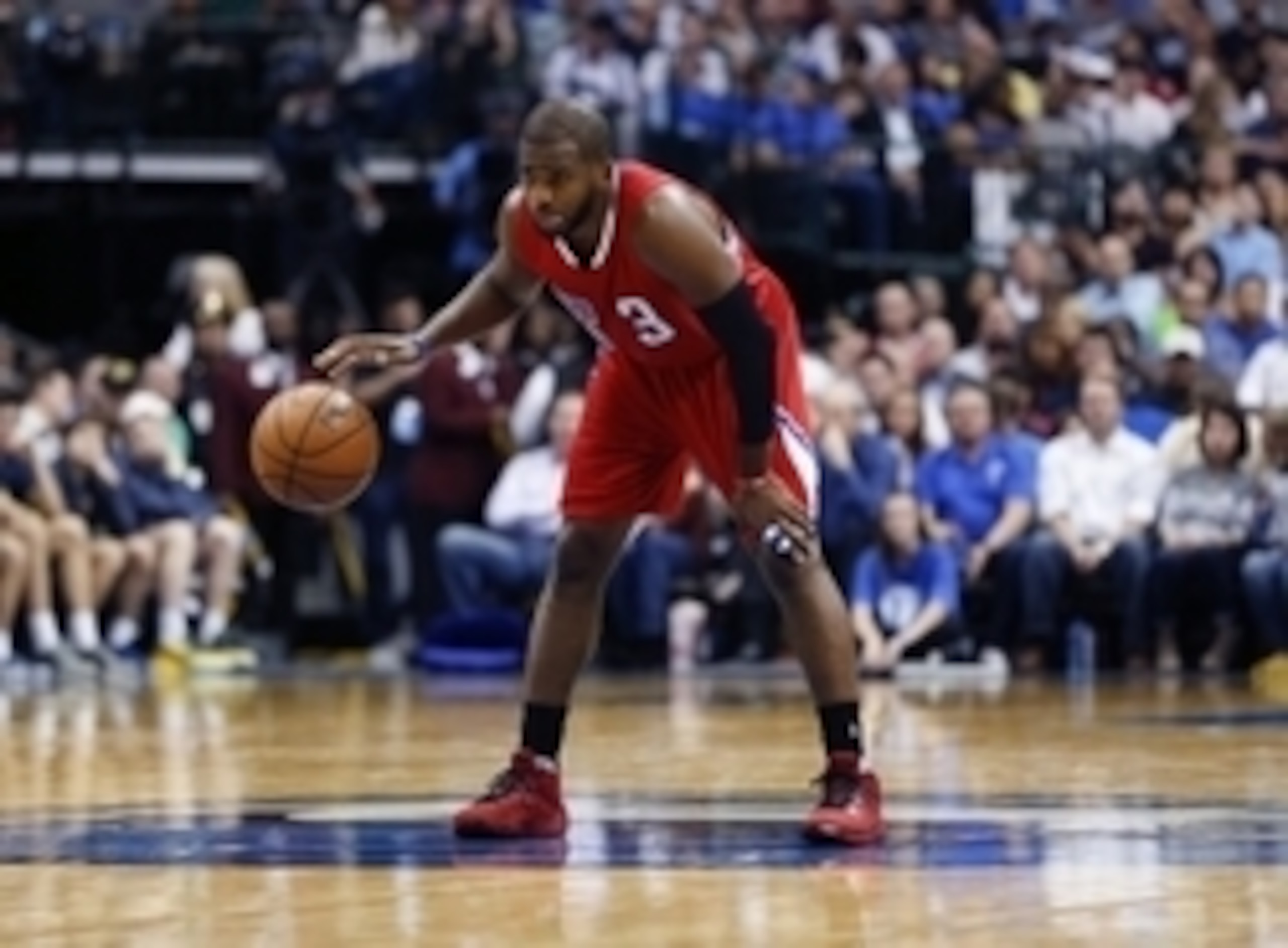
Team: Los Angeles Clippers
Age: 30
2015-16 Per-Game Stats: 17.0 points, 3.5 rebounds, 8.3 assists, 1.7 steals, 23.4 PER
Though Chris Paul hasn't quite been the Chris Paul who has torched countless opponents over the last few years, he's still asserted himself as one of the best at his position. Remember, this is an all-time talent we're talking about, so even a diminished version is still awfully tough to beat.
During the early portion of 2015-16, Paul has struggled to find twine at times, shooting 46.1 percent from the field, 34 percent from beyond the arc and 87 percent from the charity stripe. Accordingly, his true shooting percentage has sunk to 57.1 percent—still a great number for almost any floor general, even if it would be his worst mark since his sophomore season with the 2006-07 New Orleans/Oklahoma City Hornets.
A similar narrative applies to his assist numbers. Are 8.3 dimes per game anything to scoff at? Not exactly, unless you're comparing those numbers to the ones Paul has produced in previous campaigns.
As the Los Angeles Clippers continue to gain chemistry and figure out how to best utilize the talents of their new additions to the second unit, they'll trend in the right direction. So too will Paul, and he's already working from an awfully nice starting point.
Honorable Mentions: George Hill, Reggie Jackson, Damian Lillard, Kemba Walker, John Wall
No. 4 Point Guard: Eric Bledsoe
2 of 25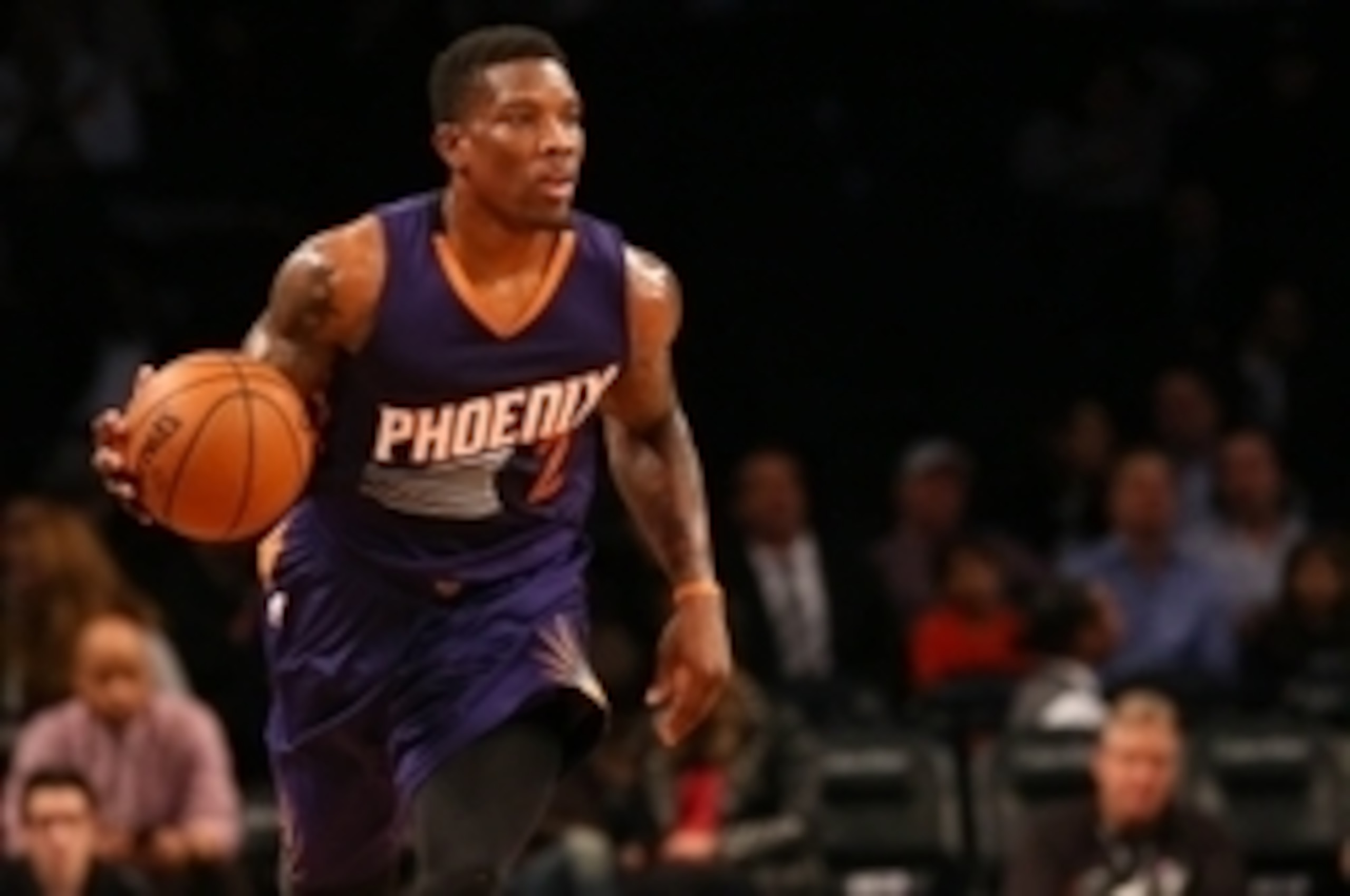
Team: Phoenix Suns
Age: 25
2015-16 Per-Game Stats: 22.2 points, 3.8 rebounds, 6.4 assists, 1.9 steals, 0.6 blocks, 22.2 PER
This is exactly what the Phoenix Suns hoped Eric Bledsoe would become when they chose to acquire the dynamic point guard from the Los Angeles Clippers in a three-way trade that also involved the Milwaukee Bucks. Not only has the 25-year-old continued to serve as a whirling dervish on the defensive end, but he's become a dangerous offensive weapon.
While maintaining the aggressive mentality that allows him to get to the rim and draw contact, Bledsoe has improved substantially as a perimeter threat. Last year, he knocked down 32.4 percent of his three-point attempts while taking 3.4 per game, but those numbers are up to 40.7 and 4.5, respectively, in 2015-16.
In fact, we might still be able to expect more from this guard, seeing as he's improved from every area of the court except the restricted one. Within three feet, his field-goal percentage has dropped from 64.4 percent to a career-worst 55.7, and he should only grow more potent as that mark regresses to the established mean.
Bledsoe has become an even more complete offensive player, which should terrify the rest of the league. After all, he was already a two-way threat in the past.
No. 3 Point Guard: Kyle Lowry
3 of 25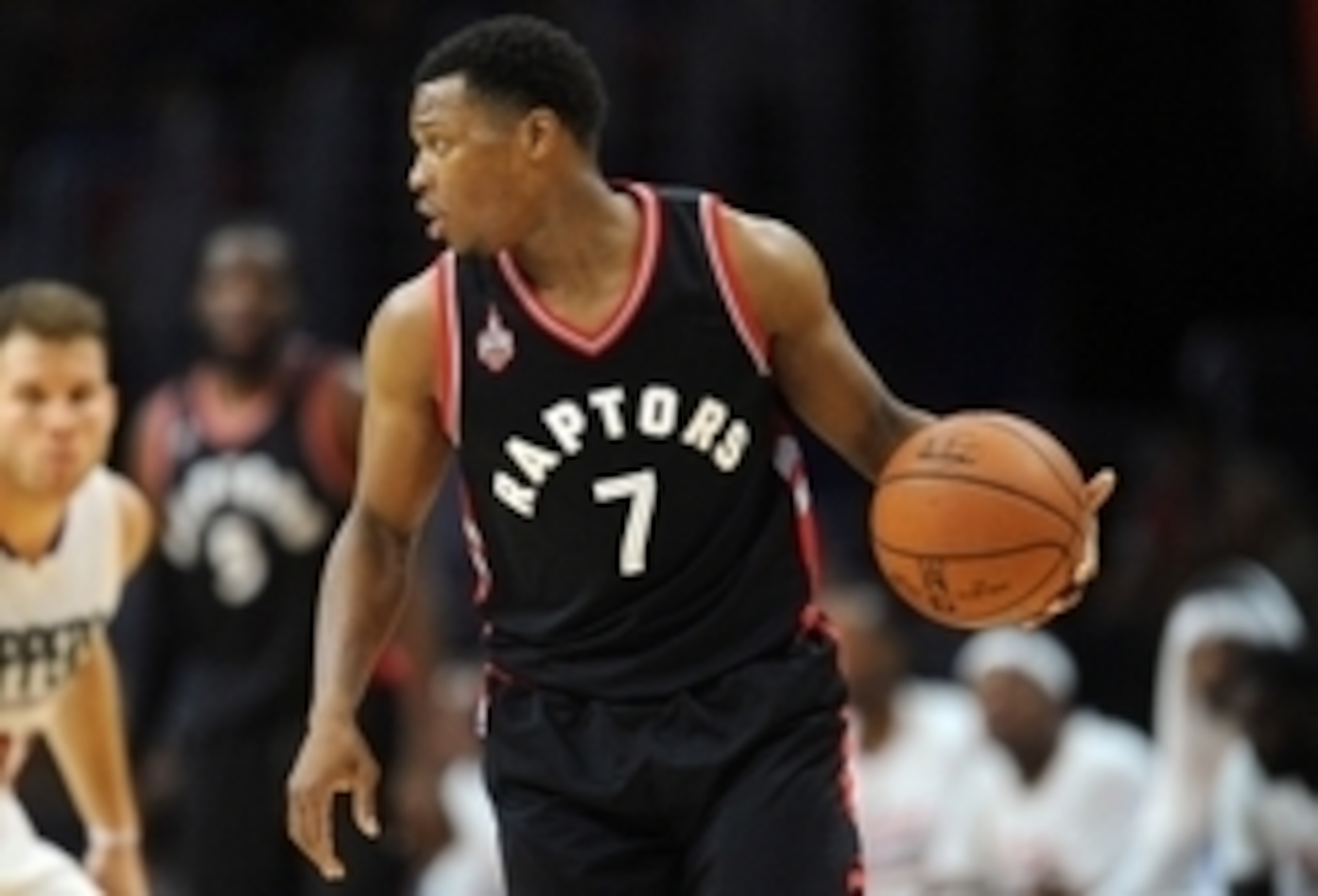
Team: Toronto Raptors
Age: 29
2015-16 Per-Game Stats: 21.3 points, 4.8 rebounds, 6.1 assists, 2.6 steals, 0.5 blocks, 24.8 PER
When Kyle Lowry scored 22 of his 31 points in the fourth quarter of a Dec. 2 comeback win over the Atlanta Hawks, the 12-minute stretch essentially served as a microcosm of his current campaign. The svelte point guard has meant everything to the Toronto Raptors, carrying an inordinately large burden without allowing his back to bend by even the tiniest margin.
"Lowry's late career breakout was unexpected, yet unlike last year, it can be sustained," Jesus Gomez wrote for SB Nation after the final-period heroics. "He's simply doing everything that already made him a good player at an even higher level and is in better physical condition to prevent him from wearing down."
A 29-year-old point guard with a checkered history isn't supposed to suddenly develop another gear, but that's exactly what's happened after Lowry used the offseason to trim down. He's getting to the hoop with ease, creating separation from mid-range zones and using the threat of an increasingly quick first step to enjoy space for perimeter jumpers.
And that's saying nothing of his defensive prowess.
Using the same bulldog mentality that has always carried him—one that he uses to get in the way of drives, to hound passing lanes and to stick with virtually any opponent—he's been one of the premier stoppers at his position. According to defensive box plus/minus (DBPM), which estimates how many points better an average defense is per 100 possessions with the player in question on the court rather than a league-average defender, no floor general has been Lowry's superior on that end.



No. 2 Point Guard: Russell Westbrook
4 of 25
Team: Oklahoma City Thunder
Age: 27
2015-16 Per-Game Stats: 27.6 points, 7.4 rebounds, 9.8 assists, 2.4 steals, 0.3 blocks, 31.9 PER
Though Russell Westbrook's MVP candidacy was a bit overblown in 2014-15—the product of triple-doubles that weren't necessarily the most efficient outings and the narrative that he was pushing the Oklahoma City Thunder into the playoff hunt—he's been even better one year later.
Significantly better, even.
Don't worry about the fact that the 27-year-old is averaging 0.5 fewer points per game. That's a misleading statistic, despite how much time it spends in the public consciousness. It's far more impressive that Westbrook is shooting more efficiently from just about everywhere on the court, leading to a rise in true shooting percentage from 53.6 to 57.6 percent.
And that's not all.
In addition to becoming one of the best defenders at his position, Westbrook is actually providing assists on over half of the field goals that his teammates make while he's on the court. For such a dominant scorer, that's nearly unheard of, particularly because only four qualified players in NBA history have recorded an assist percentage over 50: Steve Nash (four times), Chris Paul (twice), Rajon Rondo and John Stockton (seven times). No previous member of the group scored more than Paul's 22.8 points per game in 2008-09.
Westbrook has been the second-best player in basketball—maybe even with room to spare—during the early portion of the 2015-16 season. It's just unlucky for him that the clear-cut top dog also plays point guard.
No. 1 Point Guard: Stephen Curry
5 of 25
Team: Golden State Warriors
Age: 27
2015-16 Per-Game Stats: 32.0 points, 5.1 rebounds, 6.0 assists, 2.4 steals, 0.2 blocks, 35.0 PER
Stephen Curry is breaking basketball.
Not only has he become a decent defender who doesn't always need to be switched off a tough assignment, a superb finisher around the basket, one of the best rebounders at his position and one of the game's premier passers, but he remains the best shooter in NBA history. It wasn't close before, but now there's a gaping chasm between this 27-year-old and everyone else.
Prior to this season, no qualified player had taken more three-point attempts per game than Baron Davis, who launched an average of 8.7 treys in 2003-04 while making only 32.1 percent of them. Two men are on pace to break that record this season: James Harden (8.9 attempts per game on 29 percent shooting) and Curry (11.1 attempts per game on 45.9 percent shooting).
The reigning MVP, who also doubles as this year's prohibitive favorite for the NBA's top individual honor, is quite literally off the charts.
No one has ever knocked down such a high percentage of his perimeter tries while taking more than six attempts per game. Last year's version of Kyle Korver came closest, connecting on 49.2 percent of his three-point shots while taking exactly six during the average Atlanta Hawks contest.
That's not to mention Curry's ability to impact a game without even touching the ball, as his gravitational pull severely affects a defense whenever he's on the court. It's yet another major part of the reason he's currently on pace to have the best offensive season in NBA history.
After 20 victories and no losses, Curry's offensive box plus/minus (OBPM) is a staggering 13.4. Not only is that the No. 1 mark in the league, but it would rather easily displace Michael Jordan's 9.82 OBPM in 1987-88 as the top score of all time.
In fact, the current separation between the two is as large as the gap between '88 Jordan and 1993-94 Mark Price, who sits at No. 75 on the historic leaderboard.
No. 5 Shooting Guard: Bradley Beal
6 of 25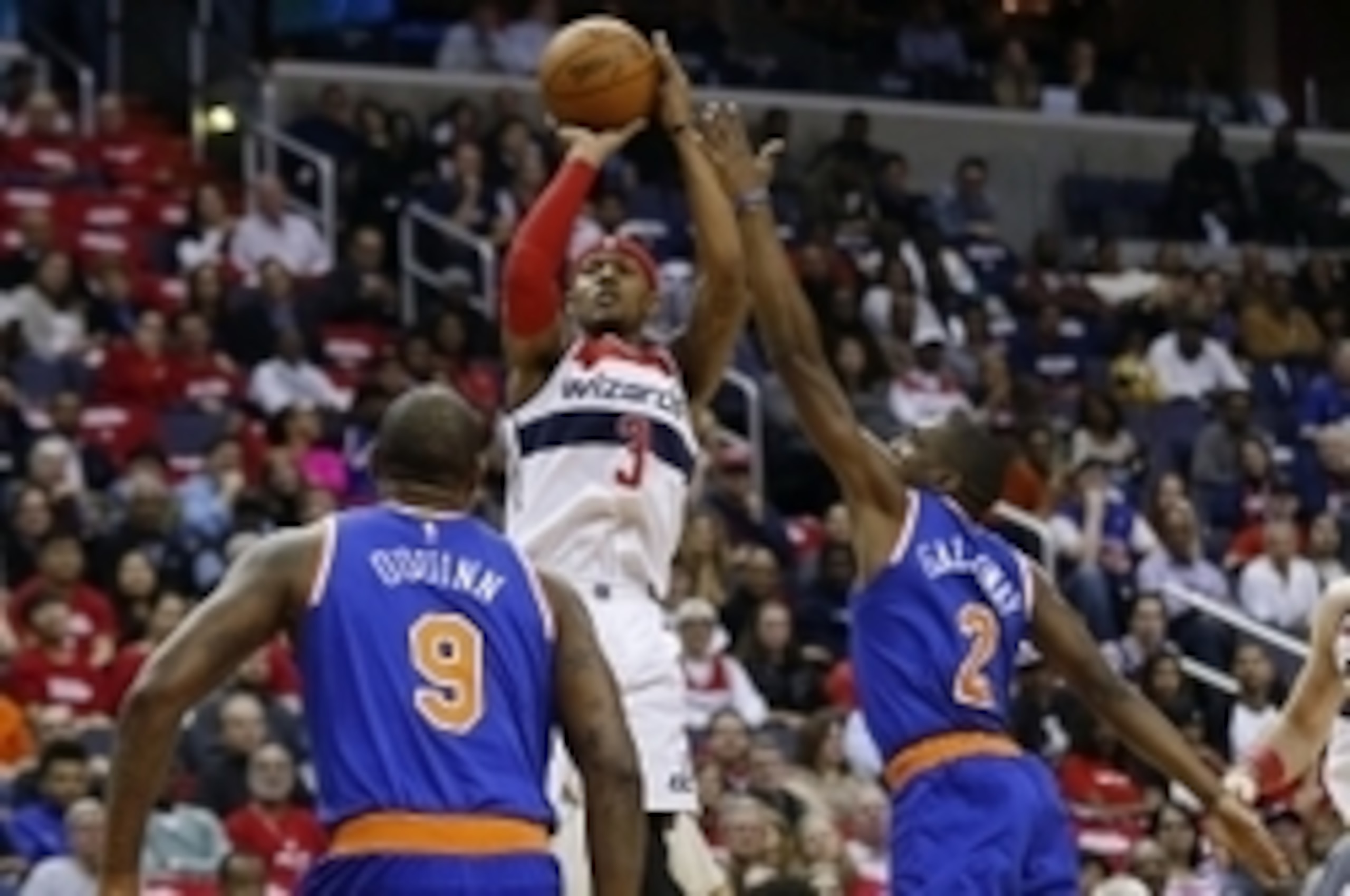
Team: Washington Wizards
Age: 22
2015-16 Per-Game Stats: 18.8 points, 4.5 rebounds, 3.2 assists, 1.2 steals, 0.4 blocks, 14.9 PER
This is what we wanted to see from Bradley Beal.
Not only is he playing with unmitigated confidence, regardless of the situation, but he's taking the right kind of shots. While the young 2-guard was previously content to let fly from deep two-point zones, this year's version is taking a step back and firing up a three-point attempt or attacking the hoop with much more frequency.
In 2013-14, 36.1 percent of Beal's shot attempts came from at least 16 feet but inside the arc. That number declined to 27.7 percent last year, and it's all the way down to 21.3 percent during the current campaign. Correspondingly, he's been more accurate, checking in with a field-goal percentage of 43.2 from that zone this season—10.1 percentage points higher than 2014-15.
But that's not the only way in which this former Florida Gator is improving.
He's also starting to keep his head up as he drives, giving him the ability to find open teammates and generate more assists. Though he does need to find a way to limit turnovers, this willingness to spread the rock around has opened up a new element in his developing game, one that should pay large dividends as his career progresses.
Honorable Mentions: Avery Bradley, Andre Iguodala, C.J. McCollum, Klay Thompson, Dwyane Wade
No. 4 Shooting Guard: James Harden
7 of 25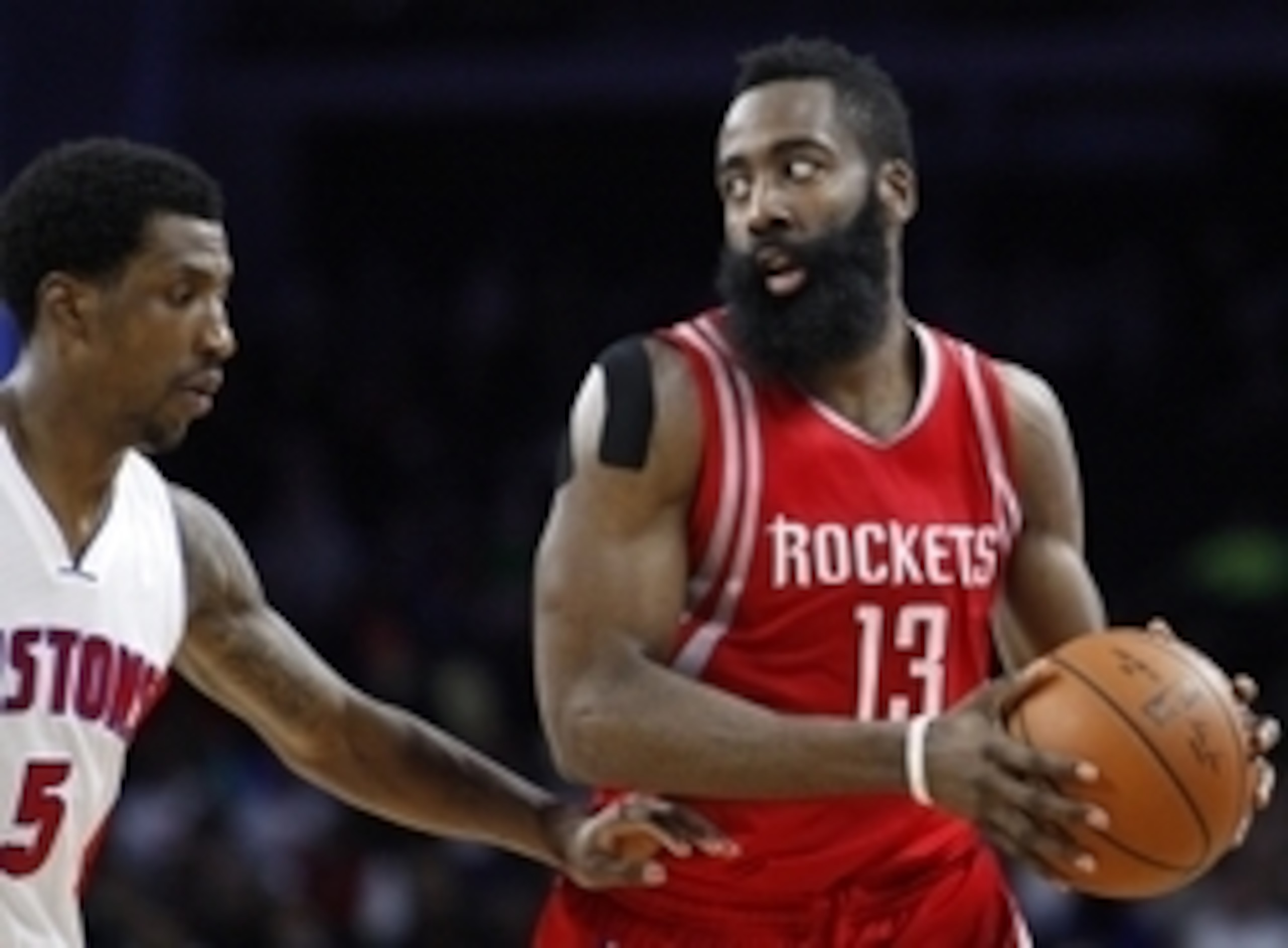
Team: Houston Rockets
Age: 26
2015-16 Per-Game Stats: 29.5 points, 6.7 rebounds, 6.6 assists, 1.9 steals, 0.8 blocks, 25.3 PER
The above line looks quite strong, doesn't it? James Harden is racking up tons of points, rebounds and assists. He's stealing the ball away from the opposition frequently. His player efficiency rating is well over the league-average mark of 15.
Too bad it's all a bit misleading.
Let's begin with Harden's PER, as that advanced metric notoriously rewards volume shooting. Take more shots without shooting Kobe Bryant-esque percentages, and you're going to receive a boost, even if you're not actually helping out your team. That's why Harden fares better than he should, despite knocking down only 39.8 percent of his shots from the field and 29 percent of his three-point attempts.
Additionally, he's averaging a career-high 4.6 turnovers, and that's happening while he staunchly refuses to play defense for minutes at a time. The apathetic nature of his play has been contagious for the Houston Rockets—one of the many reasons the organization is struggling to play .500 basketball after earning the No. 2 seed in the Western Conference last year.
Nonetheless, Harden is still a fantastic player.
He's remarkably adept at getting to the charity stripe and converting freebies, which helps mitigate some of the damage his poor shooting does. He's terrific at getting his teammates involved. He draws an inordinate amount of defensive attention, which also aids the rest of the Rockets. His team is even 13.2 points per 100 possessions better when he's on the floor.
But the intangibles have to matter, and so too do the misleading elements of his per-game stat line.
No. 3 Shooting Guard: DeMar DeRozan
8 of 25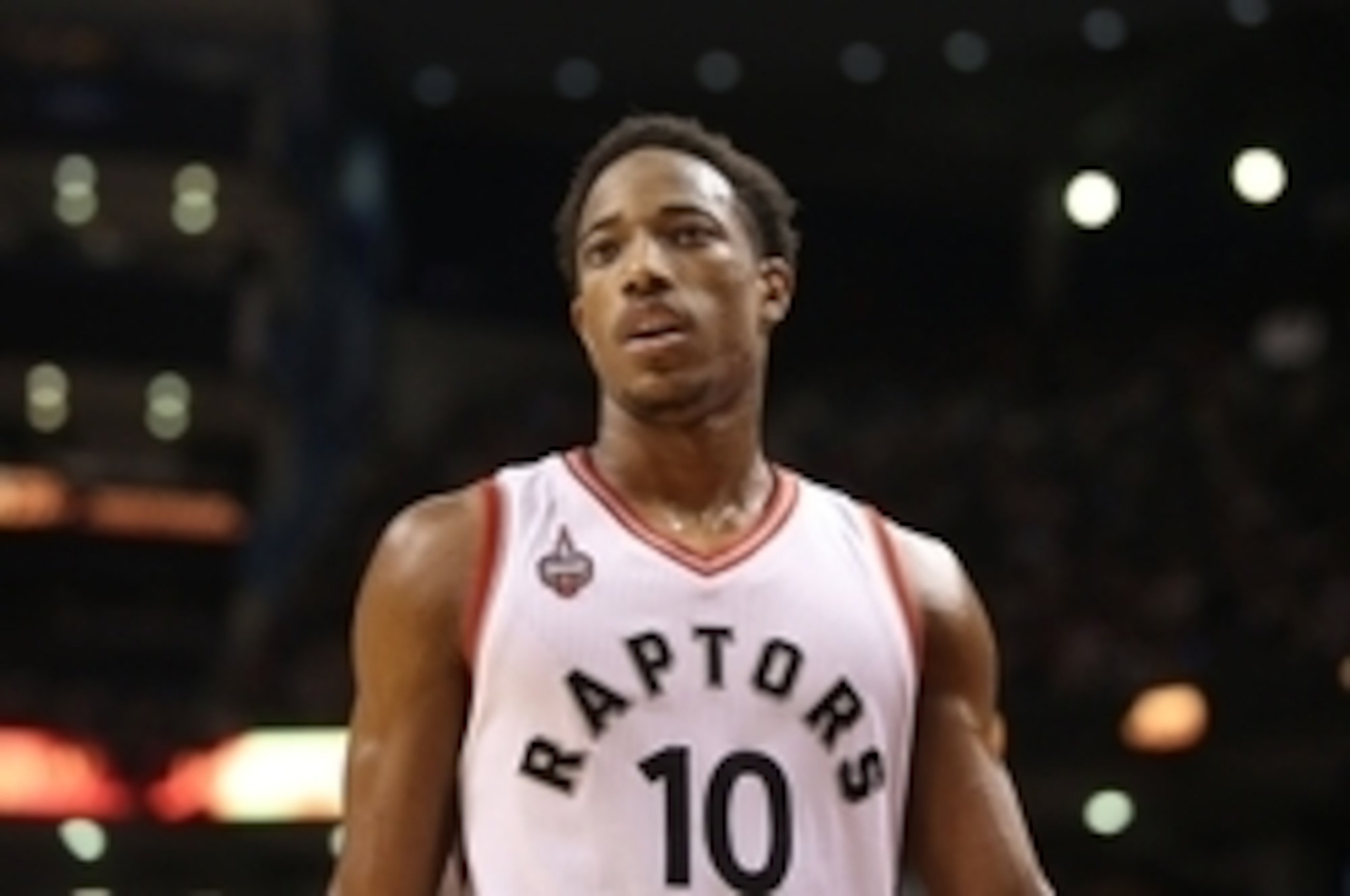
Team: Toronto Raptors
Age: 26
2015-16 Per-Game Stats: 21.0 points, 4.2 rebounds, 4.1 assists, 1.0 steals, 0.3 blocks, 19.0 PER
During the 2014-15 season, DeMar DeRozan averaged 3.8 assists in Toronto Raptors victories, as opposed to the three dimes per game he logged in unsuccessful outings. The team was significantly stronger when he was willing to play the part of secondary distributor, even if he didn't do so with too much regularity.
This season, he is.
DeRozan is doing a praiseworthy job attacking the basket with aplomb and limiting the number of ill-advised jumpers he takes during any given contest, but the most laudable aspect of his game this year has been the willingness to become a distributor. Never before has he averaged more than four assists per 36 minutes, and his assist percentage is correspondingly at a career-best 20.7 percent.
This 2-guard remains a fundamentally flawed player in today's NBA because of his inability to connect on shots from outside the painted area. He's still hitting only 25 percent of his three-point attempts, and that number puts him on track to see his accuracy dip for a second straight season.
But DeRozan is doing everything in his power to cover up the warts by taking fewer deep looks and working to get his teammates involved. Plus, he's making the most of his athletic ability and conserving energy for the defensive end.
It's hard to ask for much more.
No. 2 Shooting Guard: Brandon Knight
9 of 25
Team: Phoenix Suns
Age: 24
2015-16 Per-Game Stats: 21.8 points, 4.4 rebounds, 5.4 assists, 1.4 steals, 0.4 blocks, 20.2 PER
Brandon Knight isn't typically viewed as a shooting guard, but that's the role he's been slotted into while working alongside Eric Bledsoe in the Phoenix Suns backcourt. Despite his tendency to line up at the 1 in previous years, he's spent 81 percent of his minutes at the 2 (and even played sparingly at small forward), per Basketball-Reference.com.
It's worked wonders for the Suns, who are making the most of their ability to use two dominant ball-handling threats with reliable perimeter shots.
"When we got him last year, he was just trying to adjust," Phoenix head coach Jeff Hornacek explained to CBS Sports' James Herbert. "I think he was a little shell-shocked he got traded, so he was probably hurt by that and then trying to figure out our system in the middle of the season."
The adjustment period is over.
The former Kentucky Wildcat is shooting 38.8 percent from three-point territory and is using his speed to get past any defender caught leaning in the wrong direction. He's limiting his turnovers but still making the most of his passing chops—an obvious byproduct of the days when he was a pure point guard for the Detroit Pistons or Milwaukee Bucks.
He might not be your typical shooting guard, but he's been an extremely effective one in the desert.
No. 1 Shooting Guard: Jimmy Butler
10 of 25
Team: Chicago Bulls
Age: 26
2015-16 Per-Game Stats: 20.2 points, 5.1 rebounds, 3.4 assists, 1.9 steals, 0.9 blocks, 20.8 PER
Jimmy Butler has quite clearly been the cream of the shooting guard crop during the early portion of the 2015-16 campaign. While James Harden has put up glamorous—and misleading—statistics in losing efforts, other big-name 2-guards have struggled with their shots and rising youngsters such as Brandon Knight haven't reached Butler's level, the Marquette product has just continued to excel.
Last year's scoring exploits were no fluke.
Butler is on pace to top the 20-point barrier for the second consecutive season, and he's doing so without sacrificing any efficiency. Though he's been a bit less adept shooting from mid-range zones in 2015-16, his work from beyond the arc has allowed his true shooting percentage to drop by only 0.7 percentage points, and it's still hovering at an impressive 57.6.
However, scoring alone doesn't make Butler special. Neither does his ability to feed his teammates—something he's doing better than ever.
The 26-year-old has become an elite defender once more. Last year was filled with adjustments as he realized it was hard to play the role of leading offensive threat while still locking down top-notch opponents.
This season, he knows what it takes, and the burden hasn't been too much for him to bear.
No. 5 Small Forward: Nicolas Batum
11 of 25
Team: Charlotte Hornets
Age: 26
2015-16 Per-Game Stats: 16.8 points, 6.3 rebounds, 4.4 assists, 1.2 steals, 0.6 blocks, 18.0 PER
Nicolas Batum already has an Eastern Conference Player of the Week selection on his resume, despite the fact that he's only played in that half of the NBA for a little more than a month. During his seven seasons with the Portland Trail Blazers, he never received the corresponding award for the Western Conference.
This is a different player we're seeing with the Charlotte Hornets. Not only is he thriving as a defensive ace, helping make up for the enduring absence of Michael Kidd-Gilchrist, but he's also become a potent perimeter sniper who can routinely dazzle the opposition with the all-around versatility of his game.
In Rip City, Batum continuously declined as a three-point shooter, but he's bounced back extraordinarily well during his first year in Buzz City. Knocking down 38.8 percent of his deep tries while taking 5.7 per game, he's added a new element to the Charlotte attack, constantly spacing out the floor for his more paint-oriented teammates.
As Kenny Ducey broke down for Sports Illustrated, Batum has been unleashed, and so too has the vastly improved Hornets offense:
"The new season has also led to the Hornets ripping the wrapping paper off Batum and unleashing his full offensive arsenal. For the first time in his career, he's a primary option on offense with 62.4 touches per game (second on team), and he's responded in a big way, earning Eastern Conference Player of the Week honors and scoring 20 or more points in four of his last five games. That equals the number of 20-point games he recorded in his prior 78 games dating back to the start of last season, according to Elias Sports.
Batum is one of the driving forces behind the facelift of the Hornets' offense, which is noticeably different just 12 games into this season. They're shooting over seven more threes per game on average, and their three-point percentage is up to No. 8 in the league at 35.8%. With Batum on the floor, the team is scoring 106.9 points per 100 possessions (up from 100.1 last year). Without him, their offensive rating is just 98.1.
"
The Hornets were supposed to fall down near the bottom of the Eastern Conference standings after Kidd-Gilchrist went under the knife. But with Batum helping lead the charge, they've emerged as true contenders for one of the eight coveted playoff spots.
Honorable Mentions: Giannis Antetokounmpo, Carmelo Anthony, Tobias Harris, Gordon Hayward, Andrew Wiggins
No. 4 Small Forward: Kevin Durant
12 of 25
Team: Oklahoma City Thunder
Age: 27
2015-16 Per-Game Stats: 28.4 points, 7.4 rebounds, 3.4 assists, 0.9 steals, 1.8 blocks, 31.5 PER
It might seem blasphemous to have Kevin Durant listed behind three other small forwards. Truthfully, I feel a little bit dirty slotting him in at No. 4, even if it's justifiable.
This position has been that stacked with mind-numbing talent during the 2015-16 campaign, to the point that four different players have legitimate claims to be called top-five contributors at any slot in the typical NBA lineup. And unfortunately for Durant, he's missed a significant chunk of what's already come to pass, playing in only 12 of the Oklahoma City Thunder's first 18 contests because of a hamstring injury.
Missing 33.3 percent of the possible games isn't a good way to move past the other top contenders, even if you could make a legitimate argument that Durant, when healthy, has been the very best small forward in the Association.
Apparently, the 2014 MVP isn't satisfied with his lone entry in the 50/40/90 club.
He's knocking down 52.2 percent of his attempts from the field, 47.3 percent of his three-point attempts and 91.1 percent of his looks at the free-throw line. All three of those numbers are higher than the ones he posted back in 2012-13, and they're coming while he actually averages an additional 0.3 points during his normal outing.
Durant was already an offensive deity, but this may well be his best scoring season yet.
No. 3 Small Forward: Kawhi Leonard
13 of 25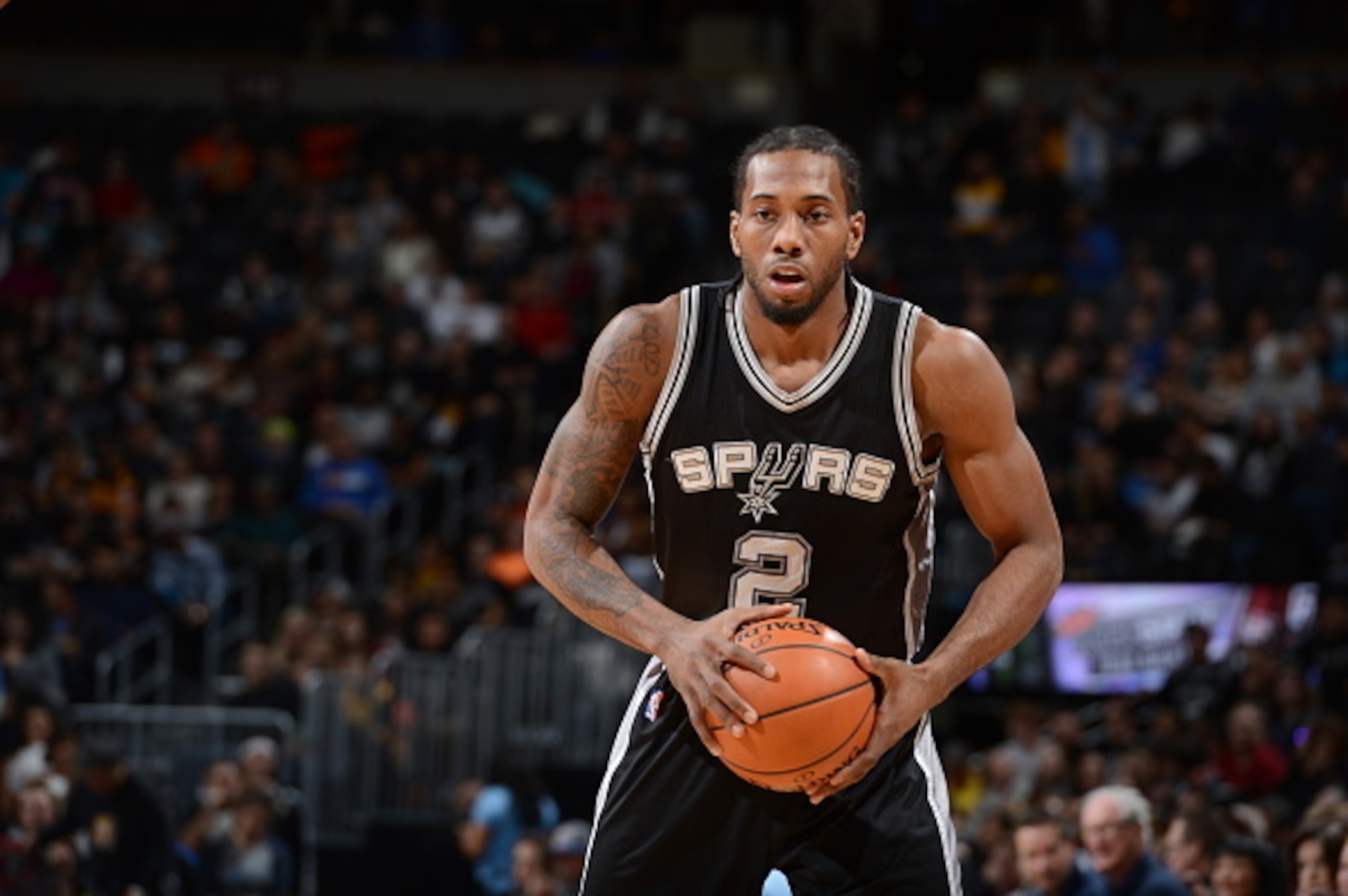
Team: San Antonio Spurs
Age: 24
2015-16 Per-Game Stats: 21.7 points, 7.5 rebounds, 2.6 assists, 1.8 steals, 1.2 blocks, 26.6 PER
The San Antonio Spurs are allowing opponents to score just 94.1 points per 100 possessions, putting them 3.6 clear of the Indiana Pacers and the rest of the NBA. No one stopper can make that happen all by his lonesome, but it certainly helps when the reigning Defensive Player of the Year is in your corner.
Kawhi Leonard hasn't exactly regressed on the less glamorous end. Despite the workload he takes on for the San Antonio offense, he's consistently guarded the opposition's best wing player and looked good doing so.
According to NBA.com's statistical databases, Leonard's matchups typically shoot 43.6 percent from the field. But when he's smothering them with his long arms and massive hands, they're knocking down only 34.8 percent of their looks. The impact is even larger from beyond the arc, as Leonard drops the percentage from 35.4 to 22.2.
It shouldn't be surprising that the Spurs are so significantly better when he's on the floor, per Basketball-Reference.com:
| Offensive Rating | 107.4 | 98.6 |
| Defensive Rating | 93.1 | 95.7 |
| Net Rating | 14.3 | 2.9 |
What's particularly crazy is that this team normally has such a strong system in place that on/off splits are minimized. It still does, but Leonard is good enough that he can break through those customary confines.
No. 2 Small Forward: Paul George
14 of 25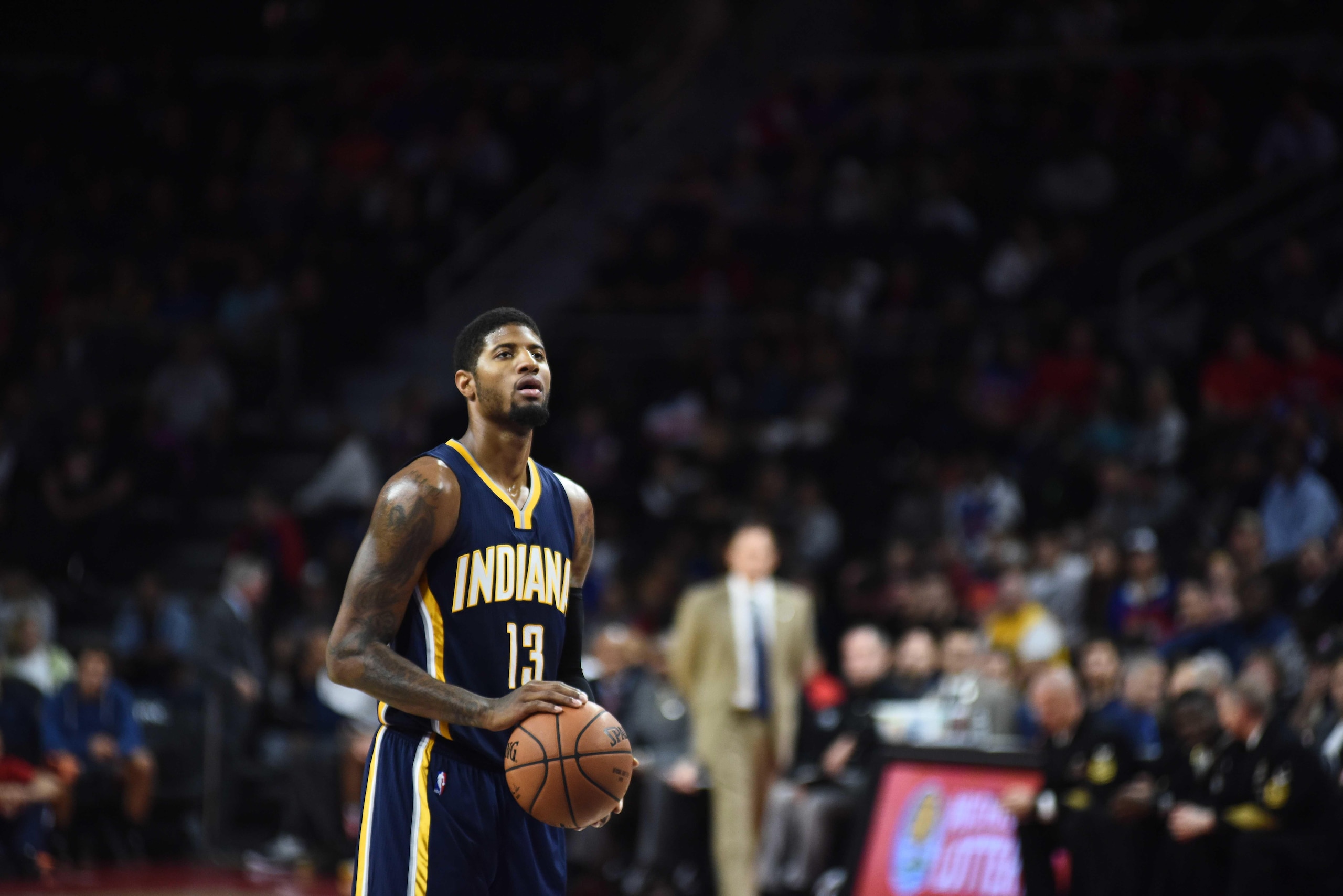
Team: Indiana Pacers
Age: 25
2015-16 Per-Game Stats: 27.4 points, 8.2 rebounds, 4.4 assists, 1.6 steals, 0.2 blocks, 26.6 PER
I'd say that Paul George is on fire, but I don't want to sell him short.
Though the numbers you can see up above are impressive enough, the 25-year-old small forward has actually been getting even better as he gains comfort playing with the new-look Indiana Pacers. During his last six outings, he's averaged 32.8 points, 7.5 rebounds and 3.8 assists while shooting a should-be-impossible-for-anyone-not-named-Stephen-Curry 49.2 percent from the field, 51.8 percent from downtown and 84 percent from the free-throw line.
Technically, we could be listing George as a power forward, where he'd ascend to the No. 1 spot in the positional rankings. But his split between the two forward positions has been fairly even, and the Pacers have been even better with this superstar—yes, superstar—playing at the smaller spot in the lineup.
Neil Paine, writing for FiveThirtyEight, has more:
"This year, they’re outscoring opponents by 14.5 points per 100 possessions when George is the designated small forward in a five-man unit, versus 7.8 when he’s the power forward. For all the concerns about how George would have to change his game to fit a new role, he’s been able to play a style that’s still both familiar and highly efficient this season.
"
Though I was higher than most on the Pacers heading into the 2015-16 season, I still didn't see them rising near the very top of the Eastern Conference standings. In theory, it was going to take an adjustment period for him to fit in with his new teammates, he'd have to overcome mental hurdles (the natural byproduct of suffering such a devastating injury), and Indiana would need to adjust to its new offensive tilt.
So much for that.
The offense is getting by with George at the helm and has been 9.2 points per 100 possessions better when he's on the court. He's also been a large part of the reason the defense hasn't suffered following the departures of both Roy Hibbert and David West. In fact, the Pacers' defensive rating goes from 102.8 when he's on the bench to a suffocating 96 when this MVP candidate is playing.
No. 1 Small Forward: LeBron James
15 of 25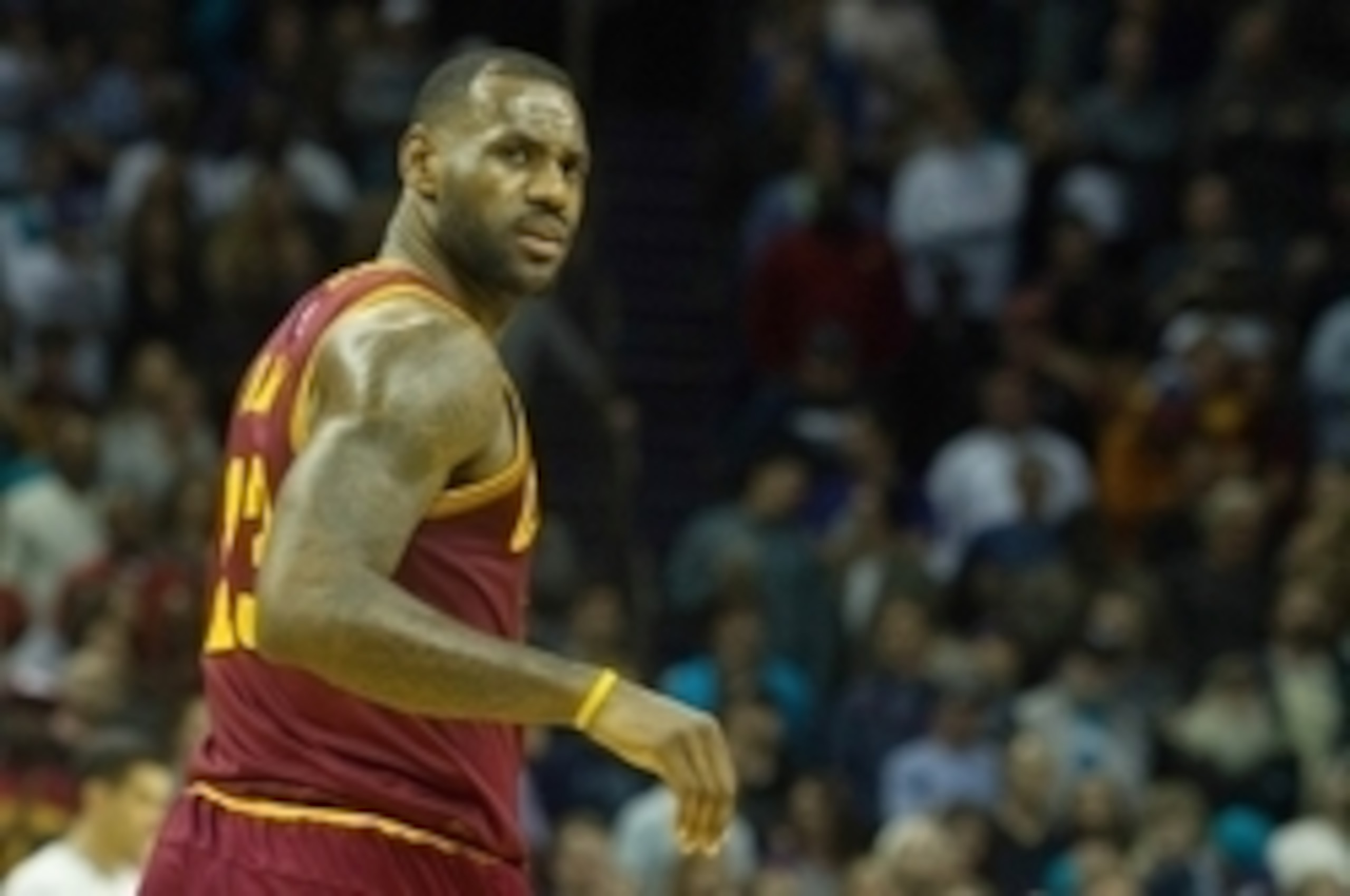
Team: Cleveland Cavaliers
Age: 30
2015-16 Per-Game Stats: 25.6 points, 7.8 rebounds, 6.4 assists, 1.3 steals, 0.6 blocks, 26.3 PER
Let's not take LeBron James for granted.
Even though he's in his 30s, is struggling with his perimeter stroke and hasn't posted the same per-game numbers that have become customary for this perennial MVP candidate, he's been one of the very best players in the sport. James has even looked healthier in 2015-16, shrugging off the nagging back injuries of the past to provide the Cleveland Cavaliers with even more defensive effort when he's not torching the other team.
Though the Cavs' season has already become a bit of a roller-coaster ride, subject to players-only meetings and inexplicable losses to opponents who should be overmatched, the team still sits atop the Eastern Conference standings. And that's happened because James has been able to almost single-handedly overcome the absences of Kyrie Irving and Iman Shumpert.
When this four-time MVP is resting, Cleveland has posted offensive and defensive ratings of 95.2 and 110.8, respectively. The former would rank No. 29 in the Association, better than only the putrid mark posted by the Philadelphia 76ers' anemic offense, while the latter would also fall in at No. 29, this time better than just the injury-riddled New Orleans Pelicans.
But when James plays, the Cavaliers score 111.5 points per 100 possessions while allowing just 99.3 over the same stretch. This time, the offensive rating would trail only the Golden State Warriors' mark, and the defense would lag behind just the league's top five defenses.
My FATS model (based on historical comparisons and explained in full here) can make that even easier to digest. With James, the Cavaliers play like a 57-win team. When he's not in the lineup, the victory expectation drops all the way to 18.1.
No. 5 Power Forward: Derrick Favors
16 of 25
Team: Utah Jazz
Age: 24
2015-16 Per-Game Stats: 16.7 points, 8.6 rebounds, 1.6 assists, 2.0 steals, 1.3 blocks, 26.4 PER
As Sports Illustrated's Rob Mahoney wrote near the end of his fantastic breakdown of Derrick Favors' development, the Utah Jazz big man finds himself in a unique position:
"Favors might just be one of the rare players in the modern NBA who can really help his team by playing down a position. Most teams would do fine with Favors playing the role of a mobile, rim-protecting center. For the Jazz, Favors accomplishes much more as a center option playing high-leverage minutes at power forward. Favors's emerging skill set is perfect for bullying the overmatched forwards typical of the small-ball set without surrendering much in the way of tracking or defending them.
"
Though the 24-year-old still needs to develop a reliable mid-range jumper, the rest of the pieces all seem to be falling into place.
He's significantly more comfortable going to work in the post, has the passing chops necessary to kick the ball out if a second defender comes toward him and has worked on his offensive game without sacrificing his defensive ability.
With Rudy Gobert set to miss an undetermined amount of time while his MCL sprain heals, Favors will be asked to serve as the Jazz's primary rim protector, and it's something he's more than capable of doing. According to NBA.com's SportVU data, he's allowed 44 percent shooting at the basket while facing six shots per game, and that comes despite his spending a lot of time on the perimeter while Gobert does the heavy interior lifting.
Favors' reputation still lags well behind his actual on-court impact. Given how important he's become on both ends, that needs to change.
Honorable Mentions: Chris Bosh, Kevin Love, Dirk Nowitzki, Kristaps Porzingis, Jared Sullinger
No. 4 Power Forward: Paul Millsap
17 of 25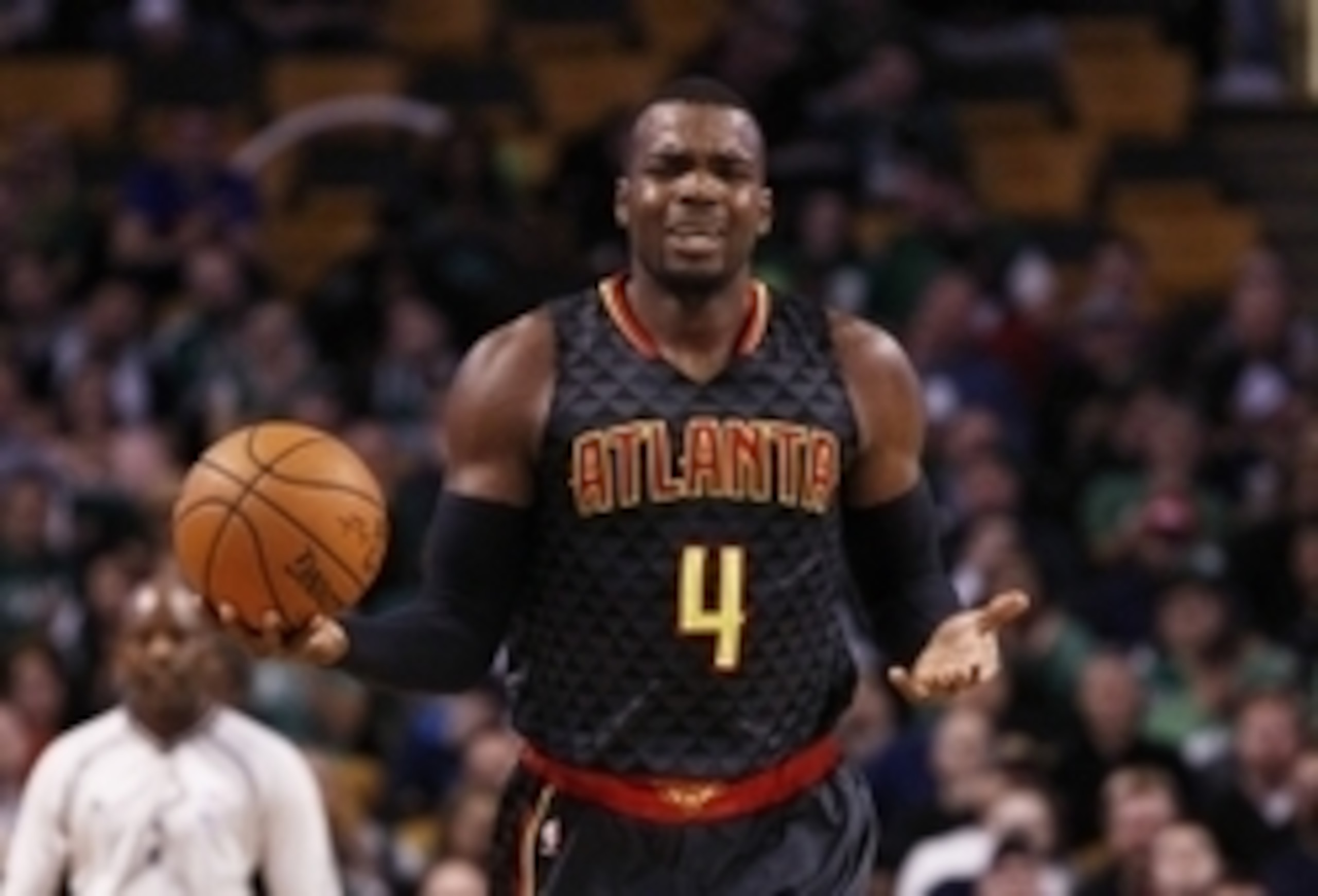
Team: Atlanta Hawks
Age: 30
2015-16 Per-Game Stats: 18.4 points, 9.6 rebounds, 3.6 assists, 1.9 steals, 1.1 blocks, 23.6 PER
What can't Paul Millsap do?
Using his devastating pump fake to get to the rim, where he routinely displays an ability to either draw contact and make his way to the stripe or finish through the paint-dwelling trees, he's been a significant scoring threat for the Atlanta Hawks. Even when his shot isn't falling, he can make an offensive impact by serving as a hub for head coach Mike Budenholzer and displaying his passing chops all over the court.
Beyond that, Millsap has been allowed to crash the offensive boards more often in 2015-16, even though the Hawks typically eschew second-chance opportunities in order to get back and play transition defense.
"Teams are going to the offensive glass on us to put pressure on us," the power forward said, per NBA.com's KL Chouinard. "I think us putting pressure back on opposing teams wears them down a little bit and puts a little pressure on them."
That's not the only type of pressure he's asserting.
Millsap may be a bit undersized, but he uses his long arms to make a defensive impact, and he's rarely caught out of position. That combination of blocks and steals is impressive enough, but so much of what he does also fails to be captured by the box score.
No. 3 Power Forward: Blake Griffin
18 of 25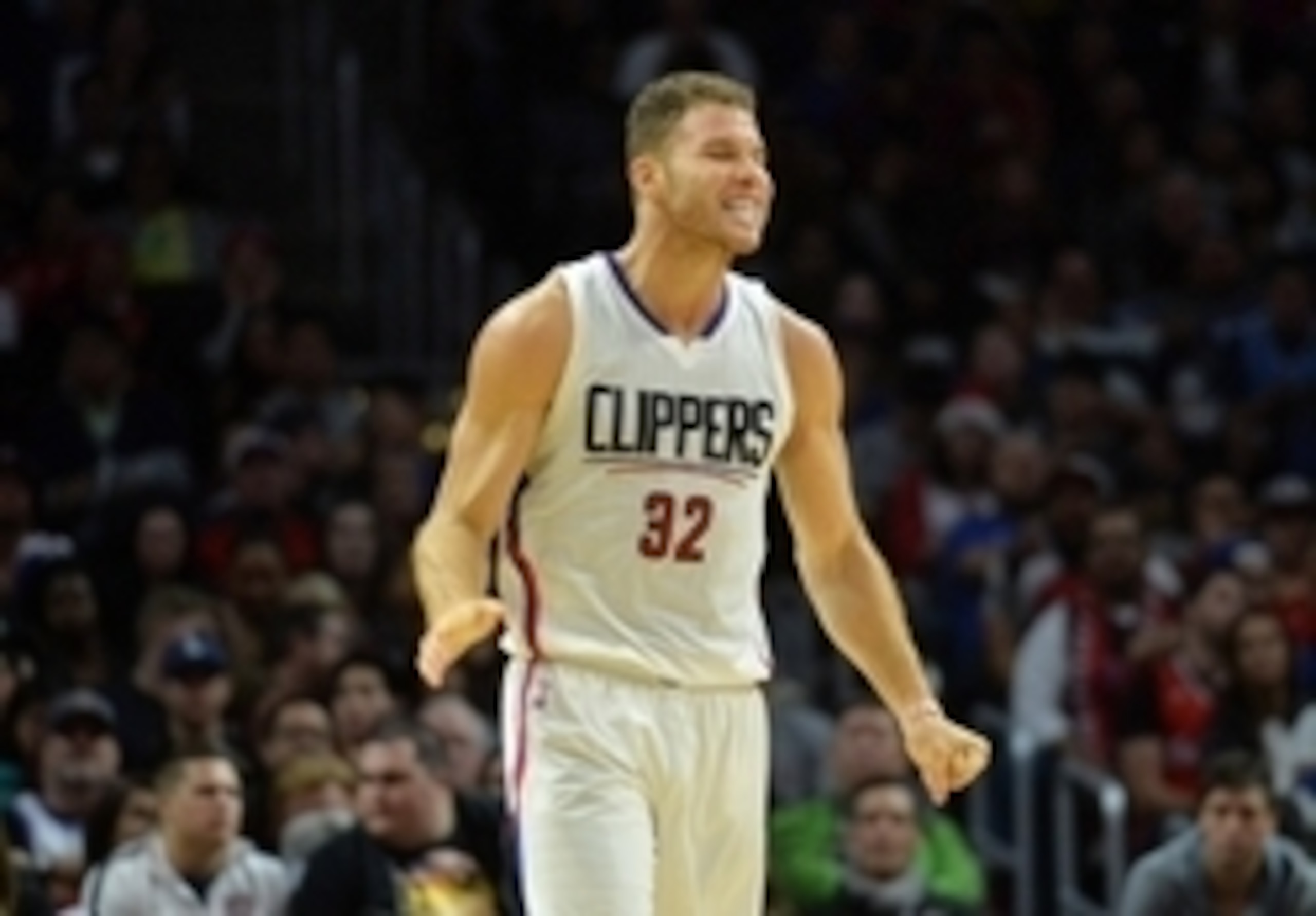
Team: Los Angeles Clippers
Age: 26
2015-16 Per-Game Stats: 24.7 points, 8.3 rebounds, 4.8 assists, 0.7 steals, 0.6 blocks, 27.0 PER
With the right work ethic and an unquenchable thirst for success, any player can become a potent mid-range shooter. Blake Griffin is living testimony, as he entered the league wholly incapable of connecting on long two-point jumpers and has now turned into a machine from just inside the arc.
Throughout his career, the 26-year-old has consistently made the area between 16 feet and three-point territory into more and more of a weapon, simultaneously increasing his reliance on the zone and his accuracy from within it:
| 2010-11 | 15.4 | 33.5 |
| 2011-12 | 22.3 | 38.2 |
| 2012-13 | 22.9 | 34.3 |
| 2013-14 | 26.7 | 37.2 |
| 2014-15 | 37.8 | 40.4 |
| 2015-16 | 42.5 | 43.0 |
Griffin is now almost too dangerous on the offensive end.
He can finish plays around the hoop, convert at the free-throw line if he draws a whistle, knock down the occasional three-pointer and torture opponents with mid-range jumpers. And if that's not enough, he's one of the premier facilitators at his position, routinely taking over as a primary ball-handler when Chris Paul or Jamal Crawford isn't on the floor.
However, Griffin isn't a stud on both ends. He's a decent defender at this stage of his career, but the lack of impact there prevents him from taking over one of the two leading spots at his position.
No. 2 Power Forward: Anthony Davis
19 of 25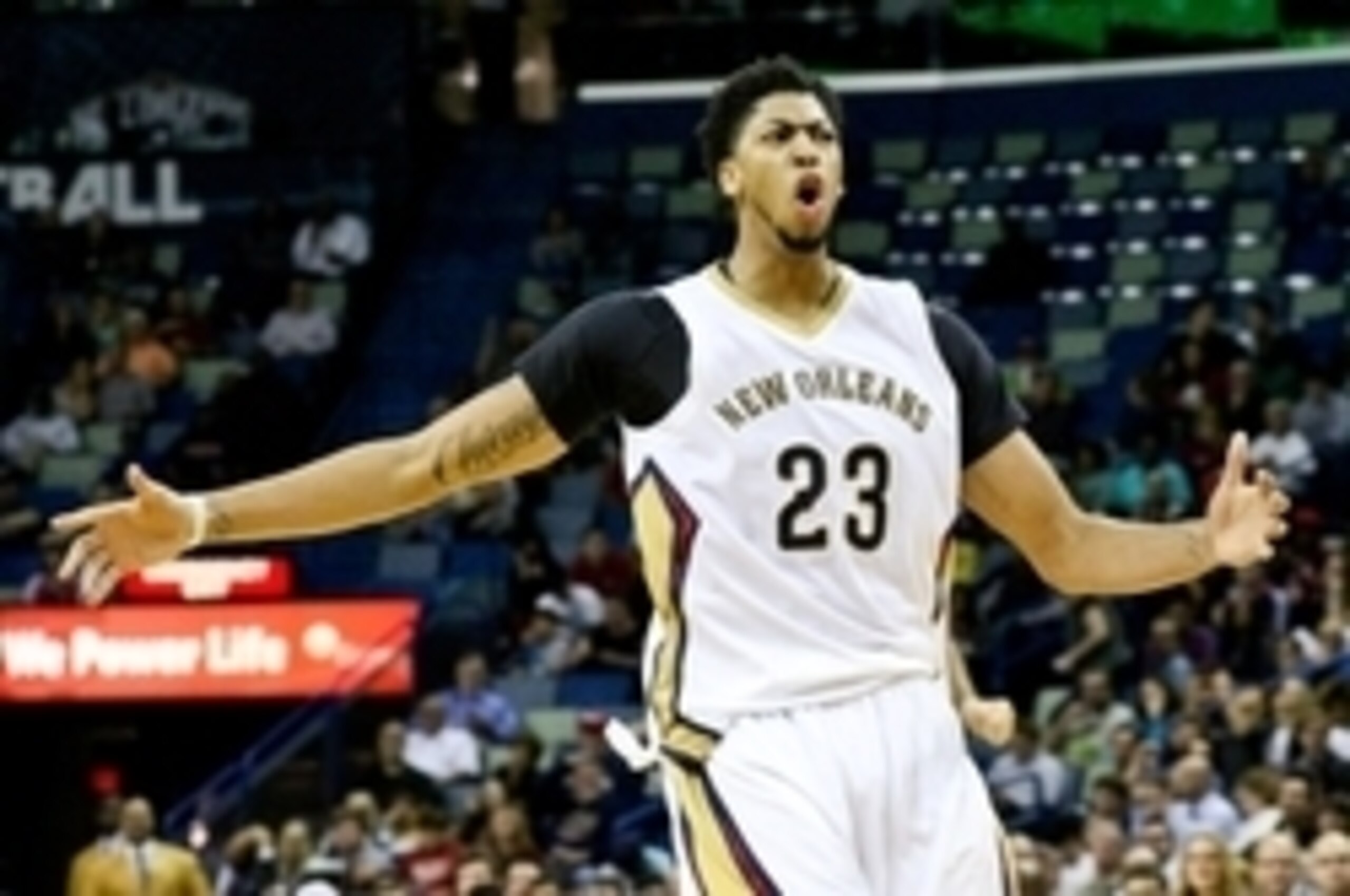
Team: New Orleans Pelicans
Age: 22
2015-16 Per-Game Stats: 23.8 points, 10.9 rebounds, 1.6 assists, 1.3 steals, 2.8 blocks, 25.9 PER
Anthony Davis admittedly hasn't been the world-beater some—including yours truly—expected him to become at 22 years of age. But it's only if we hold him to those impossibly lofty standards that his individual efforts register as anything even remotely disappointing.
Granted, the New Orleans Pelicans have struggled to win games while working with a pieced-together rotation crippled by injuries and while playing in a new offensive system under head coach Alvin Gentry. Sure, the defense as a whole has been flat-out embarrassing.
But just imagine how miserable this season would be for the Pelicans if Davis weren't present.
Put aside your expectations for a moment, however high they may have been. Then imagine a player who's averaging 23.8 points, 10.9 rebounds, 1.6 assists, 1.3 steals and 2.8 blocks—per-game marks achieved by only Hakeem Olajuwon, Kareem Abdul-Jabbar and David Robinson throughout all of NBA history.
Now, factor in that the player in question is shooting 48.4 percent from the field, knocking down 35.7 percent of his three-point attempts while taking 1.8 per game and hitting 75.4 percent of his free-throw tries. And if that's not enough, he's produced a 1.3 DBPM, indicating that he's been significantly better than average on the point-preventing end.
That's still a ridiculous season from a ridiculous player, even if Davis' mere presence hasn't been able to lift the Pelicans above .500.
No. 1 Power Forward: Draymond Green
20 of 25
Team: Golden State Warriors
Age: 25
2015-16 Per-Game Stats: 12.7 points, 8.3 rebounds, 7.2 assists, 1.1 steals, 1.5 blocks, 18.2 PER
How many people in NBA history have managed to average at least 12 points, eight rebounds and seven assists while blocking at least one shot and stealing the ball away from at least one opponent whenever they take to the court? Not many.
Here's the entire list:
- [Empty]
Conspicuously absent from that list? Well, everyone, though lots of NBA legends came close—Larry Bird, Grant Hill, LeBron James, Magic Johnson, Michael Jordan, Jason Kidd and Fat Lever all missed out solely because of their limited block totals. Bird fell just two rejections shy of gaining entry in 1990-91.
But a certain big man who's listed as a power forward and often shifts up to the center position in small-ball lineups could soon become the founding member of the club—Draymond Green.
Though he doesn't score enough points to register as a superstar with casual basketball fans, he certainly has the impact of such a player. For example, he's a major reason behind the Golden State Warriors' offensive success, as teams still have no idea how to deal with his screening for Stephen Curry and then catching a pass as he rolls toward the hoop. The options when the rock finds its way into his hands are seemingly limitless.
"If we are going to look at the things that both fans and coaches value—production, contribution to winning, and the ability to influence how a game is played—Draymond Green must have a spot in Toronto in two months," Matt Moore wrote for CBS Sports, providing a litany of reasons the forward is a deserving All-Star candidate. "Anything else is misappropriation of the selection process."
We can take it one step further.
Assuming Curry is the prohibitive favorite for MVP, Green may also be one of the top three candidates. That's not entirely unreasonable, given the Dubs' undefeated record. Basketball-Reference.com actually has this Michigan State product at No. 4 on its MVP Award Tracker, trailing only his teammate, Russell Westbrook and Kawhi Leonard.
Need numbers? Fine.
The Warriors' net rating improves by 21.3 points per 100 possessions when Curry moves from the bench to the court. When Green does the same, Golden State improves by 19.1 points per 100 possessions.
Enough said.
No. 5 Center: Rudy Gobert
21 of 25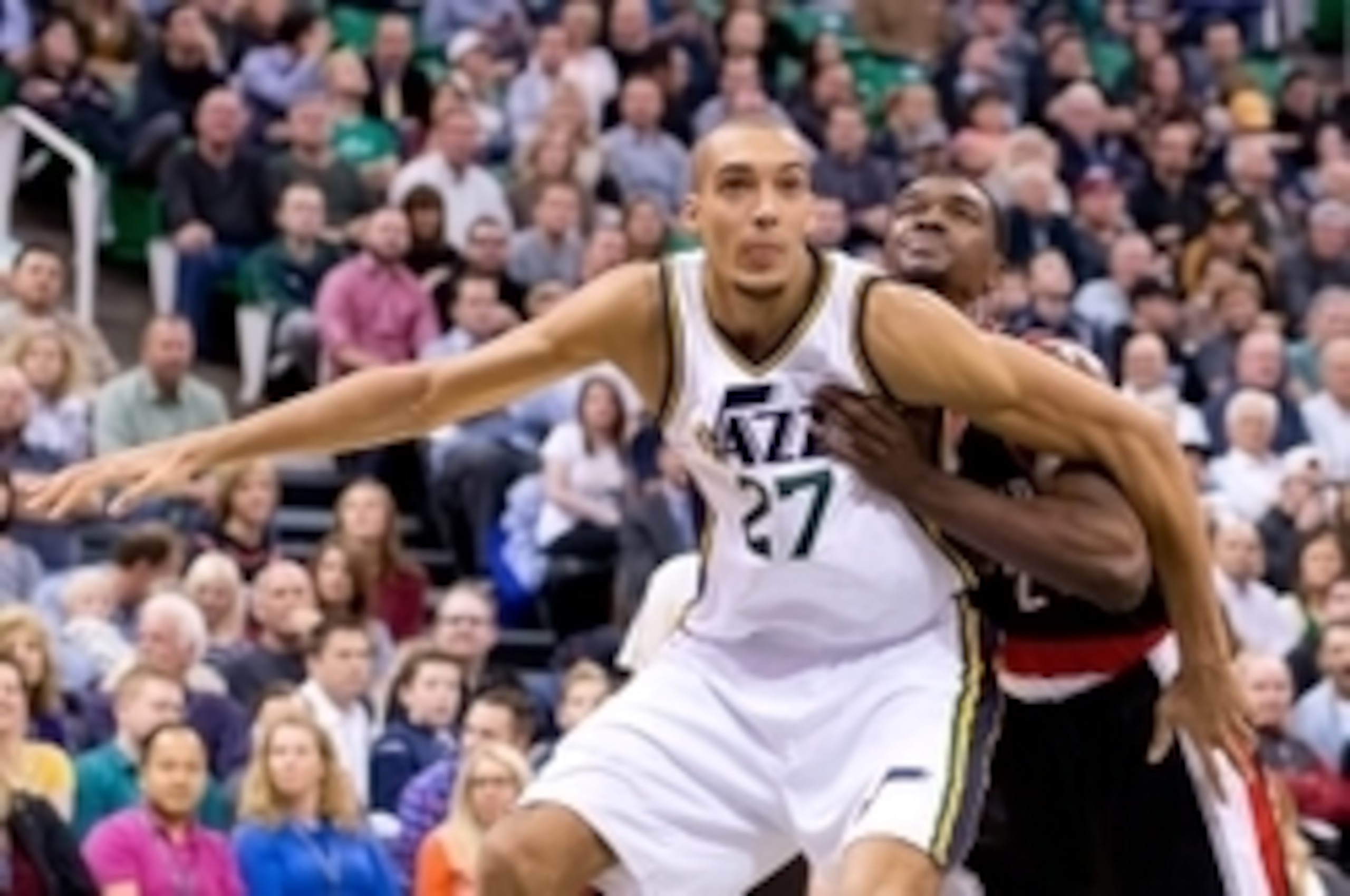
Team: Utah Jazz
Age: 23
2015-16 Per-Game Stats: 9.2 points, 10.9 rebounds, 1.6 assists, 0.9 steals, 2.6 blocks, 17.0 PER
Soon enough, this spot will belong to one of the many deserving honorable-mention candidates, but the inclusion of Rudy Gobert isn't merely one made out of pity. Prior to spraining his MCL in a Utah Jazz practice, the French 7-footer was legitimately one of the most impactful players in the game.
Gobert still doesn't offer much outside garbage buckets on the offensive end. It also doesn't matter, because he's just that good at cleaning up misses and providing the Jazz with an interior anchor on defense. In fact, he may well be the best rim protector in basketball.
According to Nylon Calculus' numbers, Gobert edges out Hassan Whiteside and Tim Duncan to save the most points per 36 minutes of anyone spending at least 20 minutes per game.
It all stems from NBA.com's SportVU numbers, which show that the 23-year-old is holding opponents to 35.7 percent shooting at the rim while facing nine shots per game. Among the 56 players who have dressed out in at least 10 games while going up against five or more attempts during the average outing, no one has been better. Draymond Green is next, giving up 39.5 percent shooting on six shots per contest.
Gobert could sit down at midcourt whenever the Jazz have the ball, staunchly refusing to play a second of offensive basketball. He'd still emerge as one of the Association's most valuable centers.
Honorable Mentions: Marc Gasol, DeAndre Jordan, Brook Lopez, Mason Plumlee, Hassan Whiteside
No. 4 Center: Andre Drummond
22 of 25
Team: Detroit Pistons
Age: 22
2015-16 Per-Game Stats: 18.6 points, 16.7 rebounds, 0.8 assists, 1.8 steals, 1.5 blocks, 24.6 PER
It's been a long time since anyone managed to average 18 points and 16 rebounds for an entire season. Andre Drummond is currently on pace to do so, but Moses Malone was the last to finish a campaign with the necessary marks, submitting 24.8 points and 17.6 boards per game all the way back in 1978-79.
In fact, only 12 players have ever hit the numbers, and every single one of them is now a member of the Hall of Fame.
Obviously, Drummond has a long way to go before we can put him in that category. Despite the gaudy nature of his statistics, he still has plenty of room for improvement, especially since he's shooting so poorly at the free-throw line and has yet to become a capable distributor.
Thus far, the 22-year-old big man has helped make the Pistons run, eating up space on the interior and giving shooters room to fire away while he positions himself for the ensuing second-chance opportunities. But until he becomes more adept at creating his own looks in the post and blossoms into a top-notch defender, his impact won't be as large as it could become.
It's tempting to see Drummond's scoring and rebounding averages, then rush to call him the best center in basketball. Unfortunately for the Pistons, there's much more to the game, and he's not particularly close to earning that designation at this stage of his young career.
No. 3 Center: Al Horford
23 of 25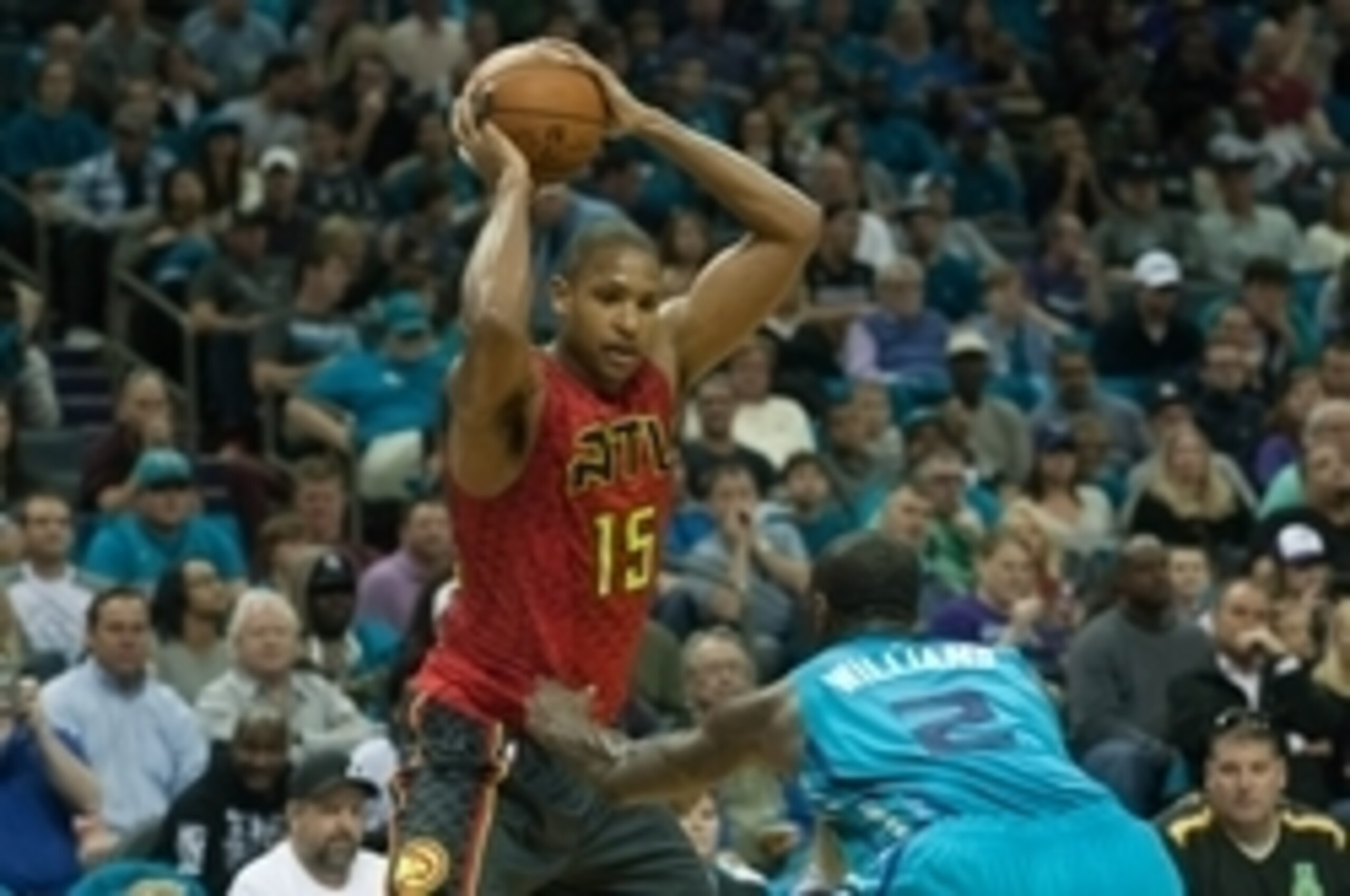
Team: Atlanta Hawks
Age: 29
2015-16 Per-Game Stats: 15.8 points, 7.3 rebounds, 2.8 assists, 0.6 steals, 1.5 blocks, 21.3 PER
The Atlanta Hawks don't just have one Swiss army knife in the frontcourt. Al Horford joins Paul Millsap as a do-it-all big man.
Though the 29-year-old center hasn't been able to make as large of a defensive impact, his offensive game continues to get even better. Already a deadly assassin from mid-range zones, Horford has added a working three-point stroke to his ever-growing arsenal, connecting on 36.8 percent of his deep tries while taking 3.2 per game.
Prior to this season, Horford had taken a grand total of 65 shots from beyond the arc throughout his entire career, making 21 of them. But in the first 21 games of the 2015-16 campaign, he's already knocked down 25 of his 68 looks.
As Andrew Snyder explained for Soaring Down South, this isn't the case of a player unnecessarily altering his game but rather an All-Star working within the flow of an offense to add a new strength:
"It's not as if Horford is trying to do something he doesn't have the ability to do. He can shoot, he's just extending his range a bit. He's such a smart player that he knows to only take these shots when they make sense and the opportunities present themselves within the natural flow of Atlanta’s offense. Horford is not the type of player to launch a contested jumper 5 seconds into the shot clock. He's not reinventing himself completely, just adding another ingredient to an already delicious meal.
"
No one on the Atlanta Hawks has emerged as the clear-cut best player on the team up to this point in the season. Instead, Horford, Millsap and others seem to take turns filling the role.
But if the center can continue this type of play throughout the entire season, he won't leave much room for doubt. He'll have earned that status once and for all, even if some of his teammates shoulder the burden during the occasional outing.
No. 2 Center: Tim Duncan
24 of 25
Team: San Antonio Spurs
Age: 39 Irrelevant
2015-16 Per-Game Stats: 10.1 points, 9.1 rebounds, 2.9 assists, 0.8 steals, 1.6 blocks, 19.7 PER
Father Time isn't undefeated. Tim Duncan just refuses to decline in any substantial way.
Despite his age and the ill effects the passage of time is supposed to force, he's still playing at a remarkable level. The dips in per-game output you see stem more from playing time and a willingness to take on a lesser role than any obvious decline in skill. Duncan is actually shooting 52.9 percent from the field, which would be his best mark since 2006-07. He's also averaging more assists per 36 minutes than he has since 2008-09.
But what's most impressive is that we can take offense entirely out of the equation, and Duncan would still emerge as one of the NBA's premier centers. Not just because his rebounding numbers are right in line with where they've always been but because he's been one of the best defenders in the Association.
According to Nylon Calculus' database, only Rudy Gobert and Hassan Whiteside have saved more points per 36 minutes, looking at every big man logging at least 20 minutes per game. Basketball-Reference.com shows that Duncan's DBPM of 5.6 leads every qualified player, and it's not even that close. Whiteside (5.2), Gobert (5.1) and Ian Mahinmi (4.9) are the only other contributors on the right side of an even four.
However, what might be even crazier than a 39-year-old robot asserting himself as a front-runner in the race for Defensive Player of the Year is the impact he's having on the Spurs.
Without him on the floor, San Antonio is already a great defensive team, allowing only 94.9 points per 100 possessions. But when Duncan plays, that number dips to a hard-to-believe 93.2. Taking the era into account by looking at adjusted defensive efficiency (DRtng+, as explained in full here), the Spurs would have a 111.16 DRtng+ with Duncan on the floor, leaving them tied with the 1964-65 Boston Celtics for the No. 2 score in NBA history.
Take that, Father Time.
No. 1 Center: DeMarcus Cousins
25 of 25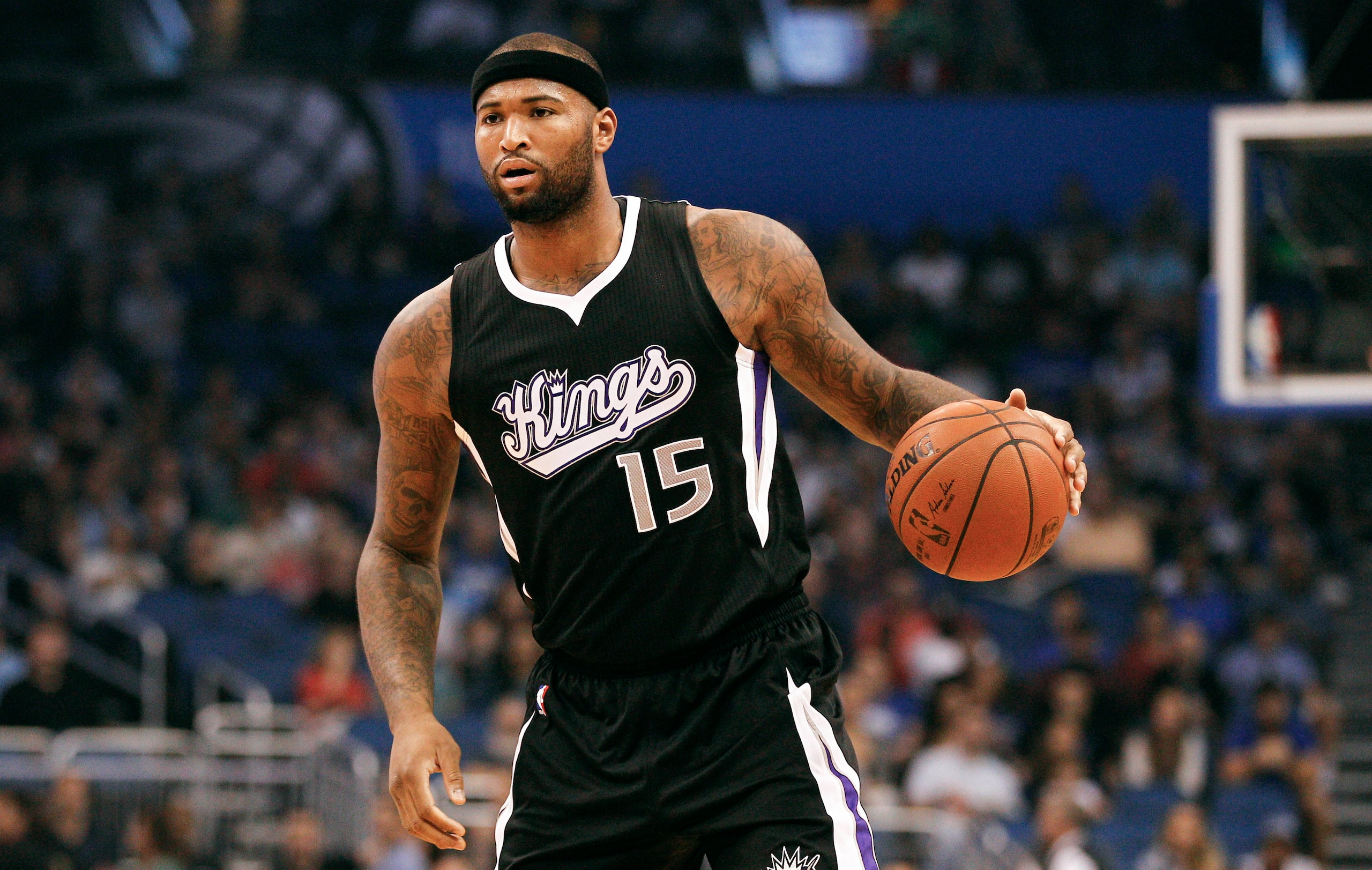
Team: Sacramento Kings
Age: 25
2015-16 Per-Game Stats: 28.2 points, 11.0 rebounds, 2.8 assists, 0.7 steals, 1.5 blocks, 27.3 PER
DeMarcus Cousins is another player who's added one more weapon to the already-potent arsenal. In 2015-16, he's gone 17-of-50 from beyond the arc, which is particularly notable since he'd shot just 11-of-69 during the rest of his professional career.
The percentage is nothing to call home about, but the willingness to step out into three-point territory and connect with enough frequency to scare opponents is. Writing for Hardwood Paroxysm, Derek James detailed why:
"While Cousins' 34.5 percent shooting from beyond the line isn't exactly elite, it is average, and enough to force opponents to respect the shot. When Cousins is taking shots from deep, he's also forcing the other team’s big man out of the paint. That means on nights they play the Clippers or Pistons, DeAndre Jordan or Andre Drummond have to choose between defending the three, or patrolling the paint.
"
Already, Cousins was one of the most dangerous offensive players in basketball.
His combination of physicality and finesse around the hoop made him virtually unguardable, and that status was only aided by his ability to put the ball on the floor and create for his teammates. Now that he's exerting a gravitational pull from the perimeter, it's no wonder that the Sacramento Kings are scoring an additional 4.9 points per 100 possessions when he's on the floor.
That said, Cousins isn't flawless. His spot atop the center leaderboard is by no means resistant to attacks from some of the league's other prominent big men, and it won't be until he begins playing better defense—as he did in 2014-15—and remembers how to finish plays around the hoop as efficiently as he has in previous seasons.
Cousins has been the best of the bunch, but only by a small margin this year.
Note: All stats, unless otherwise indicated, come from Basketball-Reference.com and are current heading into Dec. 3's games.
Adam Fromal covers the NBA for Bleacher Report. Follow him on Twitter: @fromal09.


.jpg?w=2560 "Raiders Could Start Mendoza")
.jpg?w=2560 "Rodgers Iced Out on Plane 💎")
.jpg?w=2560 "🚨 Week 8 AP Top 25 Poll")
