

Why 4-3-3 Should Be the Go-To Formation for Thomas Tuchel's Borussia Dortmund
Borussia Dortmund will begin a new league campaign without any promise of Champions League football to look forward to for the first time in six years, alongside the usual excitement of the Bundesliga season.
Yet one thing that has done well to tackle the absence of Europe's premier competition and the warm glow it emits is the arrival of Jurgen Klopp's successor and the one man who will now carry the weight of expectation upon his shoulders: Thomas Tuchel.
The similarities between Tuchel and the man he replaces are obvious for most fans. Both coaches had rather underwhelming playing careers, both made their name at Mainz before moving on to Dortmund, and both have been heralded at one time or another as the next best German coach around. Yet that's probably where the similarities end between these two.

Where Klopp was very much a manager who galvanised his squads and prioritised individual talent and team morale over the necessities of specific formations, Tuchel is very much a student of the old tactics board and certainly prefers to let his team selections and shapes do the shouting and screaming for him.
As such, the new manager has wasted little time bringing forth his ideas about how Dortmund should play their football next season. With the utmost respect for his predecessor, Tuchel has no intention of sticking by the system that did so poorly for the club last season.
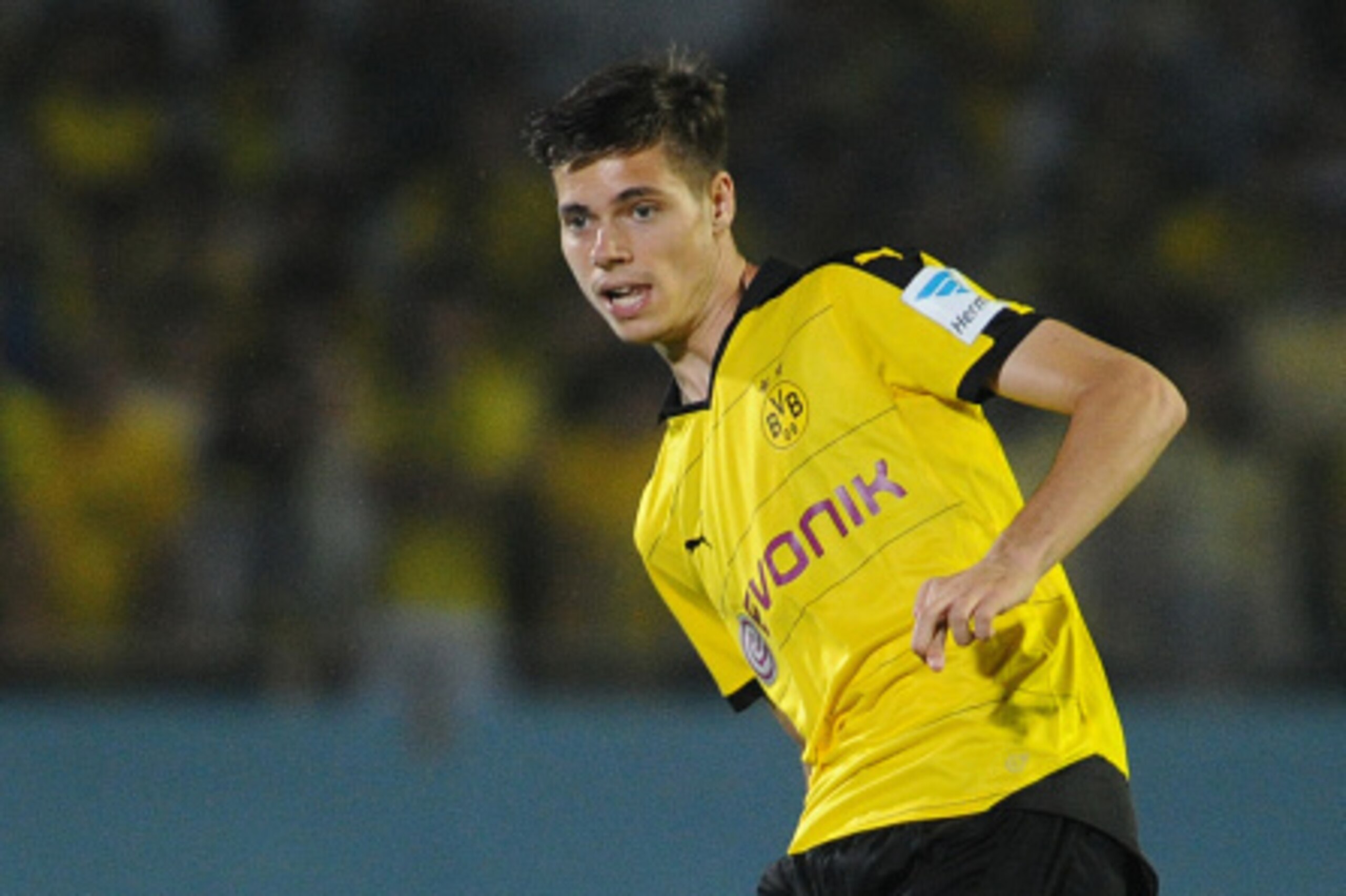
The former Mainz manager has begun such a transformation with the acquisition of Roman Burki in goal, along with Bayer Leverkusen star Gonzalo Castro and 1860 Munich young talent Julian Weigl, who both play in central midfield. Rather than a complete overhaul and a deep dip in to the transfer market, Tuchel has picked up just a few, precise signings for his side.
Burki's signing is rather straightforward. He'll come in and replace the error-prone Roman Weidenfeller almost immediately and join up with a defensive system that probably won't vary all that much from the one Klopp had implemented himself.
Erik Durm will probably claim the right-back position as his own, Sokratis Papastathopoulos may pip Neven Subotic to the second centre-back position, but by and large Dortmund will continue to play with a flat back four and two attack-minded full-backs.
Yet, when we look at the latter two signings we begin to see exactly just what changes Tuchel has planned for this side.
One of the key faults in Dortmund's side last season was the manner in which Klopp's team simply didn't function in the middle of the pitch. Ilkay Gundogan had been distracted by bright lights across the English Channel, Nuri Sahin was fighting off recurring injuries, Sven Bender was still trying to recover his form and Sebastian Kehl was rapidly approaching retirement.
Therefore, it was clearly in Tuchel's best interest to immediately fortify such a position. Gundogan signed a new deal, and the club brought in two reinforcements to offer more options when needed.
But that's not all.
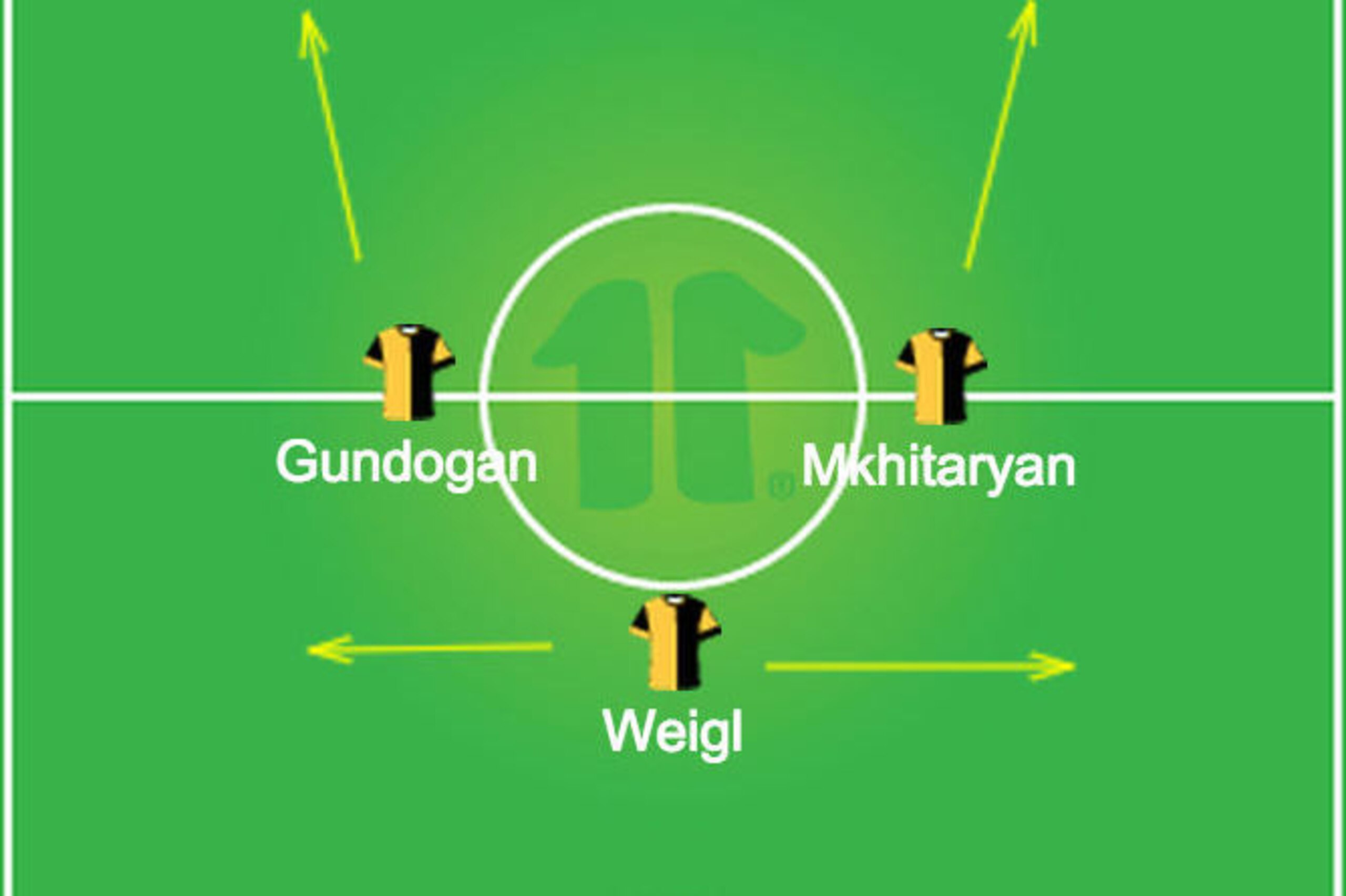
Throughout the summer pre-season games we've seen Dortmund shuffle between a 4-5-1 and a 4-1-4-1 formation, yet in each case we've seen Tuchel start the match with at least three players in midfield.
This has often taken the shape of either Weigl or Bender sitting as the defensive midfielder—a position that'll likely be Sahin's once he returns from injury—while Gundogan, Castro and Henrikh Mkhitaryan take turns playing as the two more offensive central midfielders. This looks likely to be exactly what we'll see from Dortmund when the new season begins.
Such a decision to dig up the centre of the park and start again also has consequences on how the attacking line will feature come the start of the league campaign.
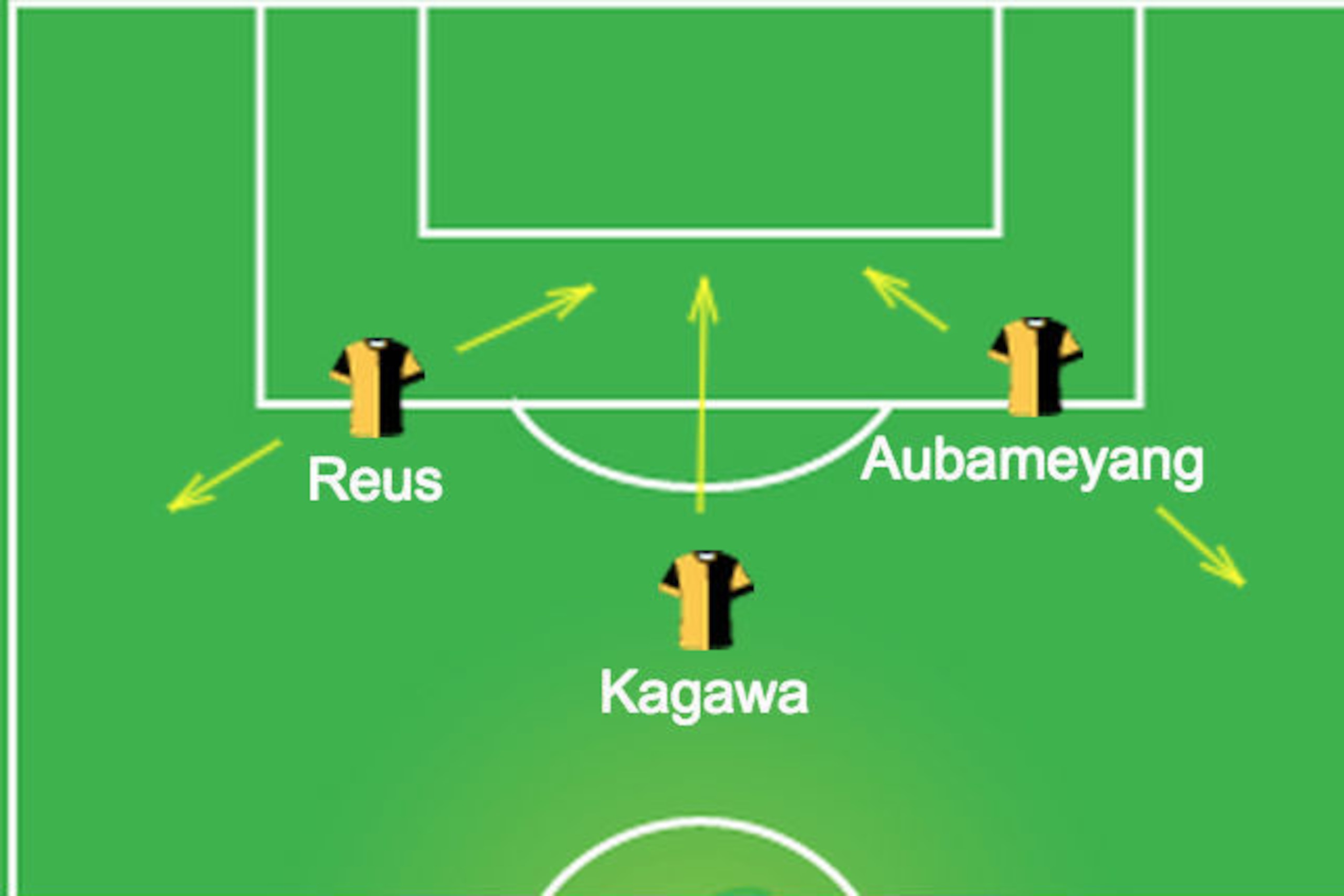
In the traditional 4-5-1 or 4-1-4-1, we tend to see two wide players play off the lone striker, yet in Dortmund's case, this summer has seen a wide variation of that old style of formation.
The key man to all this is, in fact, Shinji Kagawa. The Japanese international who rarely offered much use last season under Klopp has found a new lease of life under Tuchel. The new manager has chosen to play the No. 10 as a No. 10, and surprisingly Kagawa has begun to look like his old self.
As such, rather than play two wide players, Tuchel has at times opted to start Kagawa just behind two strikers in Marco Reus and Pierre-Emerick Aubameyang. There, all three players have truly thrived. Kagawa assists, and the two strikers happily score the goals. A setup that in turn allows Dortmund to play something similar to a 4-4-2 diamond or indeed an inverted 4-3-3.
Of course, in practice this formation is far more fluid than any tactics board could suggest. Reus and Aubameyang enjoy drifting out wide, Kagawa truly thrives at finding space in the box and Dortmund have Gundogan and either Mkhitaryan or Castro just behind to support the attackers.
All this may sound a little gung-ho, but that seems to be exactly how Tuchel is looking to play his Dortmund side. Like Klopp, the new manager is a keen believer in "gegenpressing"—the process of pressing the opposing team from the very first player—and with this new formation, it looks far more doable than in a more traditional 4-2-3-1 or 4-4-2.
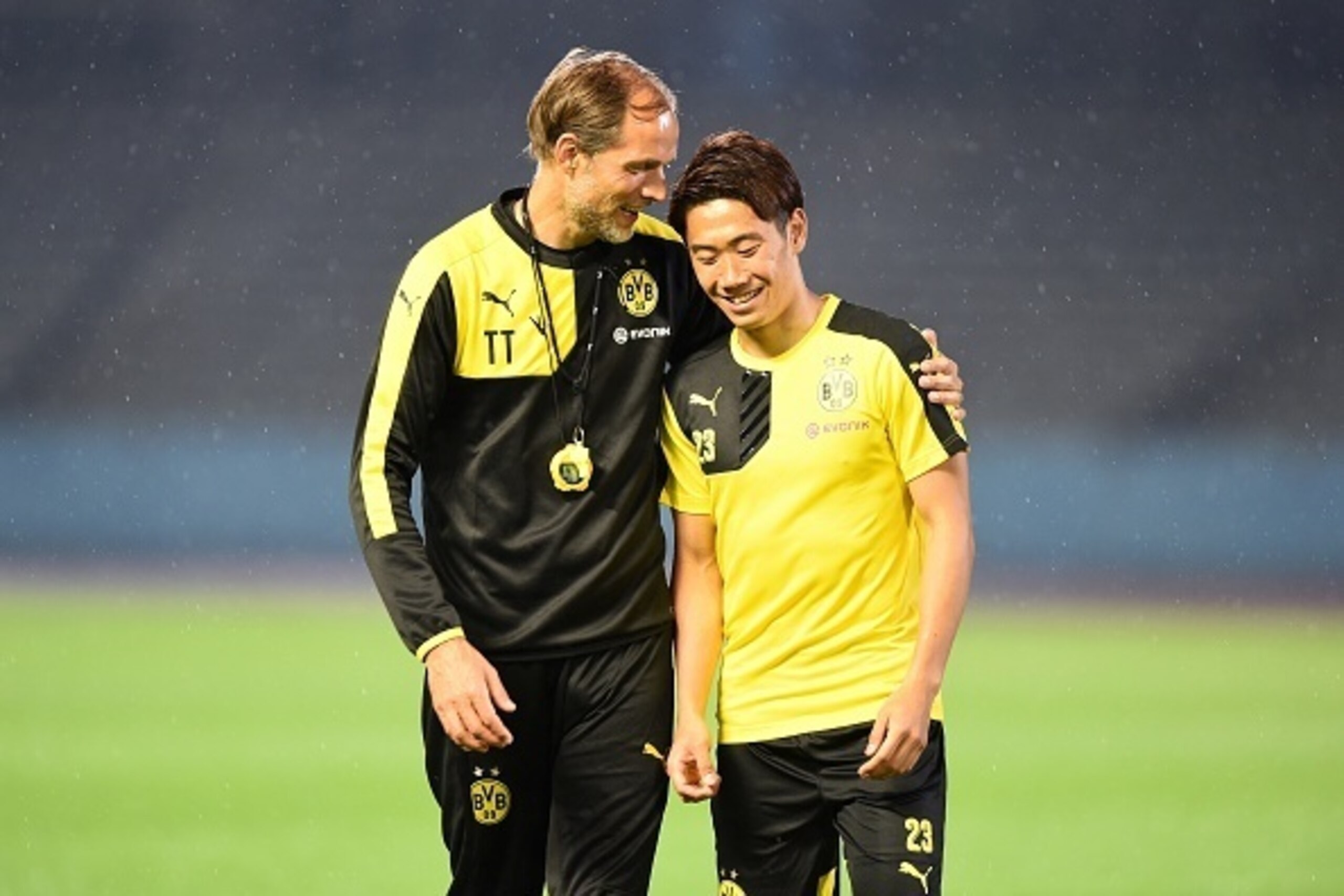
Of course, the 4-3-3 may change or vary from one game to the next. Kagawa may drop deeper, Reus may push out wide and Mkhitaryan may move out right to look more like a 4-3-3- with two wingers, but in essence it's all the same. The important part of it all is the manner in which the front five players are constantly closing down and almost swarming around their opponents' back line.
Tuchel is looking to take Dortmund back to basics with quick, attacking football built around a constant hunger to wrest the ball off the opposing side. He seems to think he has the players to do that, and with some luck it may take very little time at all for the former German champions to get back on their feet and back near the top of the Bundesliga table.
.jpg?w=2560 "49ers Giants Football")

.jpg?w=2560 "Ertz Returning to Eagles")
.jpg?w=2560 "Dak Addresses 'Dumb' Old Romo Tweet 🤣")
.jpg?w=2560 "WWE Raw Live Grades 🔠")

.jpg?w=2560 "🚨 Puka Out for MNF")