

Why 4-3-3 Should Be the Go-To Formation for Pochettino's Tottenham in 2015-16
Tottenham Hotspur begin their 2015-16 Premier League campaign with a trip to the scene of arguably their most humbling loss of last season.
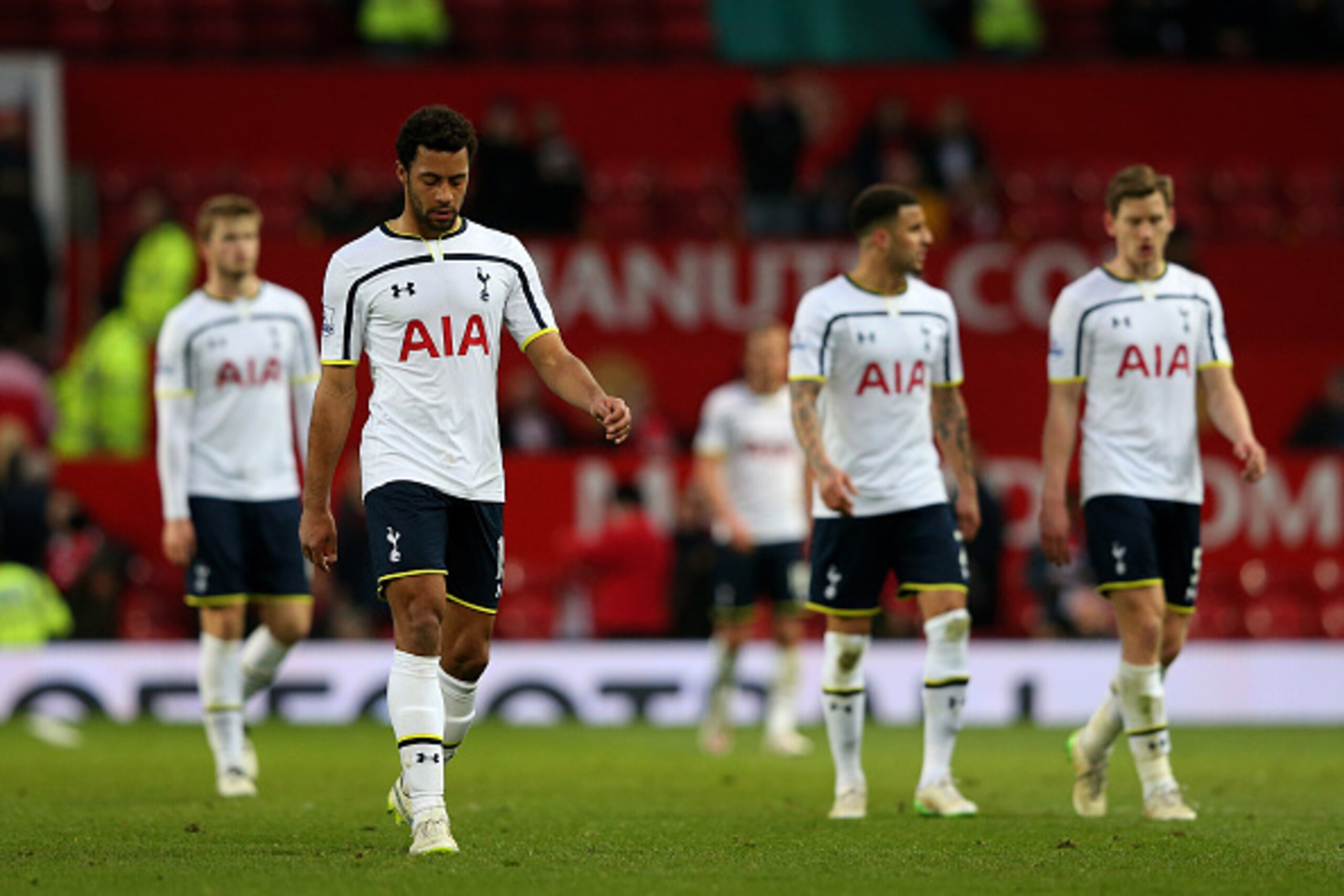
The 3-0 defeat at Old Trafford in March was a tantalizing hint for Manchester United fans of the potential of Louis van Gaal's expensively assembled side. For Mauricio Pochettino's young Tottenham team, it unequivocally highlighted the work that still needs to be done to establish them as top-tier contenders—both in terms of individual player development and the application of the Argentinian's aggressive, creative style of play.
Since it is a season opener rather than a springtime clash with more costly league table ramifications, the result of the August 8 meeting will not define Spurs. But in its indication of how Pochettino intends to set his team up this season, it will be an intriguing early barometer of what may or may not work.

The 4-2-3-1 formation Spurs mainly used in Pochettino's first year in charge worked well in a couple of ways.
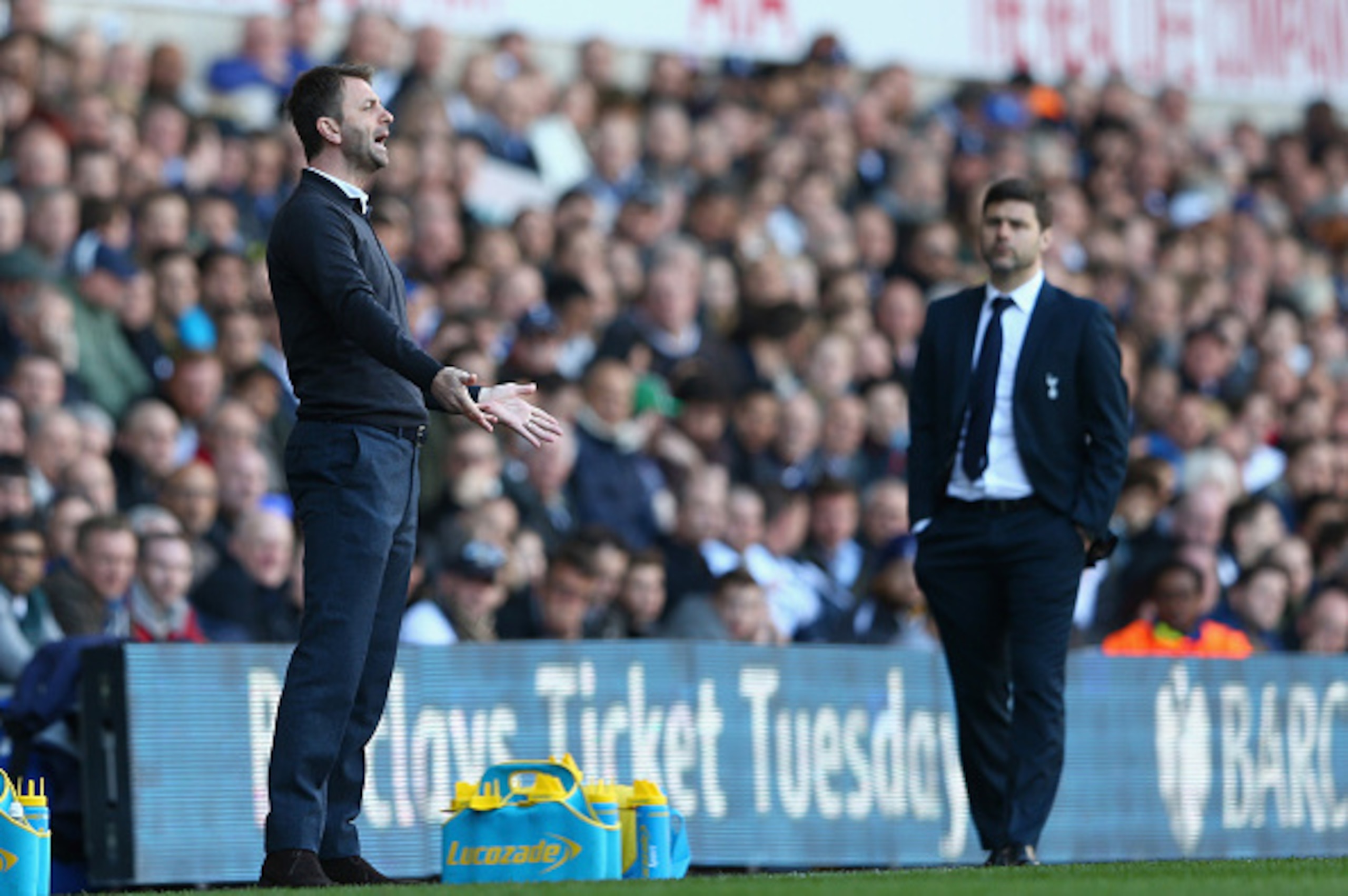
Previous boss Tim Sherwood's looser, less-defined structure helped his team more freely express itself after the staider last months of Andre Villas-Boas' tenure. Yet, when unable to impose themselves on the opposition, they could quickly descend into listlessness and chaos (a 4-0 loss at Liverpool and a 3-3 draw with West Bromwich Albion in spring 2014 highlighted the varying examples of this).

Under Pochettino, each player's position and responsibilities have become more clearly determined. The 4-2-3-1 does exactly what it says on the tin here: four at the back, the two-man midfield in front getting up and down the pitch, a more advanced three with greater attacking freedom and the lone man up top leading the charge.
The formation also rightly attempted to put emphasis on the involvement of that attacking-midfield trio. Notably, it refocused Spurs' 2013-14 player of the season Christian Eriksen in a central role—positionally more so than in his already considerable on-pitch influence—and tried to bring the best out of two other summer 2013 recruits, Nacer Chadli and Erik Lamela, after their mixed first years.
It did not always bring the best out of them (more on that later), but the fact is they were three of the team's most productive players. They scored 29 goals in all competitions and set up a further 18 between them, per ESPN FC.
If Pochettino decides to stick with 4-2-3-1, there is a good chance his team can enjoy as good a season, if not a better season, this time around.

The north Londoners' numerous young players, both promoted from the academy (Nabil Bentaleb, Harry Kane among them) and brought in (such as Eric Dier, as well as Eriksen and Lamela), will be better for the past year's experience. The team in general should have a greater understanding of the tenets of Pochettino's philosophy, too.
Moves in the transfer market have been made to address a leaky defence, whose problems were more to do with personnel than formation. There will also almost certainly be further new faces to strengthen competition on the attacking side of things.
All things considered, Spurs still have many of the elements of the athletic, skillful and combative team they were at their best in 2014-15. The aforementioned system would give their players the same scope in which to operate. Familiarity with it is also a mark in its favour.
However, there is no denying the predictability—and sometimes even an inflexibility—about the 4-2-3-1, which was somewhat culpable in Tottenham's worst showings.
The aforementioned Manchester United loss saw their two midfield rows often separated, with neither performing their functions with any success, nor having the ability to adapt to the situation at hand. Subsequently, the defence was left very exposed.
Elsewhere, particularly in home matches against opposition sides prepared to be patient waiting for their own attacking opportunities, the formation's patterns of play could easily be anticipated.
The central-midfield two would take the ball from the defence. If not forced backward, they would pass it onto one of the four more advanced players, who would invariably find little room to manoeuvre (and that was not a given either, with movement becoming imperceptible at times). In the worst cases, Spurs would be unable to score and would also run the risk of leaving those behind them exposed when they lost possession, since they played with a high attacking line.
The good, the bad and the in-between of Tottenham last season add up to why Pochettino should consider using 4-3-3 as his side's go-to formation moving forward.
The basic functions of the set-up remain similar enough that the key players would not suddenly be asked to do anything drastically different. Accordingly, new signings would still be coming into a largely settled system.
What changes is a trust in the players to take more of a lead performing their core assignments, as well as the scope for a greater flexibility that could lead to an avoidance of some of the issues that hurt Spurs last term.
Nothing dramatic would be changing in the defensive duties of the flat back four. Spurs' biggest headache keeping out goals was to do with a lack of focus and the alternating, sometimes coinciding problems of disorganisation and inconsistent selections that informed it.
What 4-3-3 would alter would be the extra onus on the full-backs to provide width—a more than manageable request for whoever Pochettino calls on here out of Ben Davies, Danny Rose, Kieran Trippier and Kyle Walker.
With a proper front three, the wide men—while not entirely removed from dropping deep or having to track back—would be prioritising pushing onto the opposition defence. Be it any two of Chadli, Lamela, Andros Townsend or perhaps most ideally a new, versatile forward (West Brom's Saido Berahino has again been linked with Spurs, per the Mirror's John Cross), the more advanced positioning for these nominal flanking forwards would also give the central striker (likely Harry Kane) closer support to work with.
It is an adventurous tactic, but one which fulfills the demands of hunting down the opposition in their own half while putting some of Spurs' most creative and dangerous players in positions to hurt them. The full-backs taking on the responsibility of stretching play from a deeper point is no hardship for players like Rose and Walker, who already love getting forward.

Pochettino going with such a full-on front three would place extra weight on the efforts of the midfield trio behind it. However, should the midfielders at the Argentinian's disposal grab it, it could be the making of them and the team.
The three that immediately spring to mind to occupy these places are Bentaleb, Ryan Mason and Eriksen.
It is not a stretch to envision the former two carrying on the central-midfield work they did last season. Covering the breadth of the pitch in front of their defence, shuttling out to the wings and holding fort centrally. They also brought the ball out of defence and joined attacks when suitable (whether they had previous involvement in them or not).
Eriksen slotting in with them does not mean him having to participate in more of the dirty work. Something akin to a Luka Modric spoiler role would suffice, hovering in proximity and extending his reading of the game to sneak in and nick the ball.
What a deeper position would primarily afford the playmaker is the kind of vantage point not available in the hubbub approaching the penalty box. He exploited it well when allowed to in the autumn wins over Southampton and Hull City last season, relishing being able to dictate the passage of play.

All three are intelligent, resourceful players. The chance to work out a balance between their differing styles on both sides of the ball would surely appeal. Between them they have the smarts to figure who needs to stay and who needs to go and the physical capabilities that can make their connections with both defence and attack count.
Indeed, a three-man midfield would be a way to incorporate their fellow midfielders Dele Alli, Tom Carroll and Mousa Dembele, too. These are players who could all be used to adjust the details of Spurs' speed, timing and thrust, all depending on who they are playing.
It comes back to flexibility and avoiding predictability, something not always easy to manage in a formation like 4-2-3-1 where things are more sectioned.
A 4-3-3 may just be the more natural fit for a Tottenham team who will hope to be more confident and expansive this season. A system in which Pochettino puts the trust in his players to deliver the core principles he and his coaching staff have been trying to make second nature to them. Yet one that, in the placement of personnel like Eriksen, can quickly be adjusted to that which they grew familiar on the way to fifth place last time out.
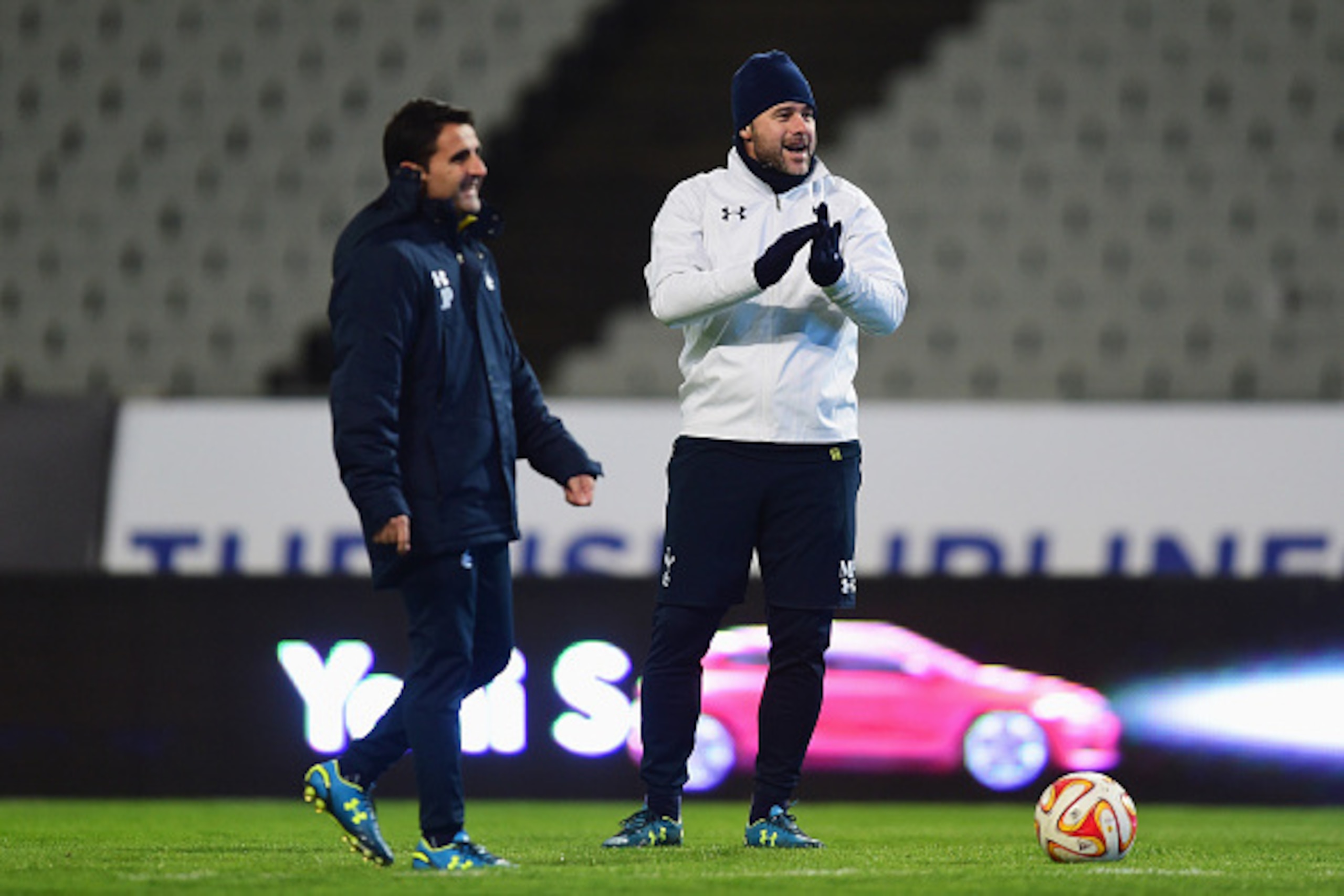
"The most important thing is to set out our principles, repeat them and improve them," assistant head coach Jesus Perez told Spurs' website as part of his fascinating, albeit brief insights into summer preparations. "Then, in the final days of pre-season, it will be time to get the final shape of the squad and the system of play."
We are getting increasingly closer to seeing what that final shape and system of play is going to look like.
Whatever Pochettino opts for, he will know the biggest factor in it all working will be whether or not his players have taken on board lessons learned from last season. He, Perez and the other coaches can only take them so far in 2015-16 if that step up has not been made.
.jpg?w=2560 "49ers Giants Football")

.jpg?w=2560 "Ertz Returning to Eagles")
.jpg?w=2560 "Dak Addresses 'Dumb' Old Romo Tweet 🤣")
.jpg?w=2560 "WWE Raw Live Grades 🔠")

.jpg?w=2560 "🚨 Puka Out for MNF")