Washington Redskins: Full Position Breakdown, Depth Chart Analysis at Tight End
On the surface, the Washington Redskins should boast a tight end rotation that's the envy of the rest of the NFL. But despite the presence of two roving playmakers in Jordan Reed and Niles Paul, along with big-bodied blocker Logan Paulsen, there are enough question marks to keep this position from being a clear strength heading into the new season.
Two issues stand out as the main causes for concern: injuries and the lack of a dominant blocker. Reed can't stay healthy, while Paulsen doesn't always make the most of his 6'5", 261-pound frame.
Those reasons are why ESPN 980 reporter Kevin Sheehan recently told B/R's Adam Lefkoe the stock is down for this position following the team's minicamps:
.jpg?w=2560 "Seahawks Chiefs Football")


But there's just too much talent on the depth chart for things to remain trending downward for long. One way head coach Jay Gruden and offensive coordinator Sean McVay can make the situation look a little rosier is to stop searching for a de facto No. 1 option.
It should be possible for both Paul and Reed to be major parts of the playbook and share reps as a pair of nightmare-inducing weapons defensive coordinators won't want to see on the field together.
In fact, Gruden and McVay should be working on more plays that put both pass-catchers in the same formation. Here's an example from yesteryear showing the kind of formula Washington should be trying to create with its talented tandem:
While we all reminisce about just how much we miss John Madden's doodles and breakdowns, consider how this formation would look for the Redskins. It would involve putting DeSean Jackson and Pierre Garcon together on one side of the field, while Reed and Paul line up in-line on the other side.
If that isn't an easy ticket to a big play, something's very, very wrong at quarterback.
More than just getting creative with their alignments, though, Gruden and McVay have to be clear about what they have at the position. That will involve debunking a few myths.
Debunking the Myths
One of the common misconceptions about Washington's tight ends is that Reed is the big-play specialist while the rest are merely complementary players who offer steady skills in support.
But the reality is quite different. For all his tremendous athletic gifts, Reed is actually the team's most dependable, possession-style outlet.
On the rare occasions he's been healthy, Reed has carved a niche as a clutch target on short-range and intermediate routes. It's been most obvious on third downs.
Football's money down is when Reed usually makes his range and flexibility count. He opens up the playbook for Washington and creates multiple mismatches in coverage.
This 3rd-and-6 play from Week 6's road loss to the Arizona Cardinals is a terrific example.
The play begins with Reed being sent in motion to eventually split out as a wide receiver. As he made his move, Arizona's hybrid, linebacker-style safety Deone Bucannon began to track him:

But Bucannon soon became uncertain about whether he should follow Reed or not. He began pointing at the tight end's movement and gesturing frantically to single-high safety Tony Jefferson:

The uncertainty continued as Reed took up his new alignment:
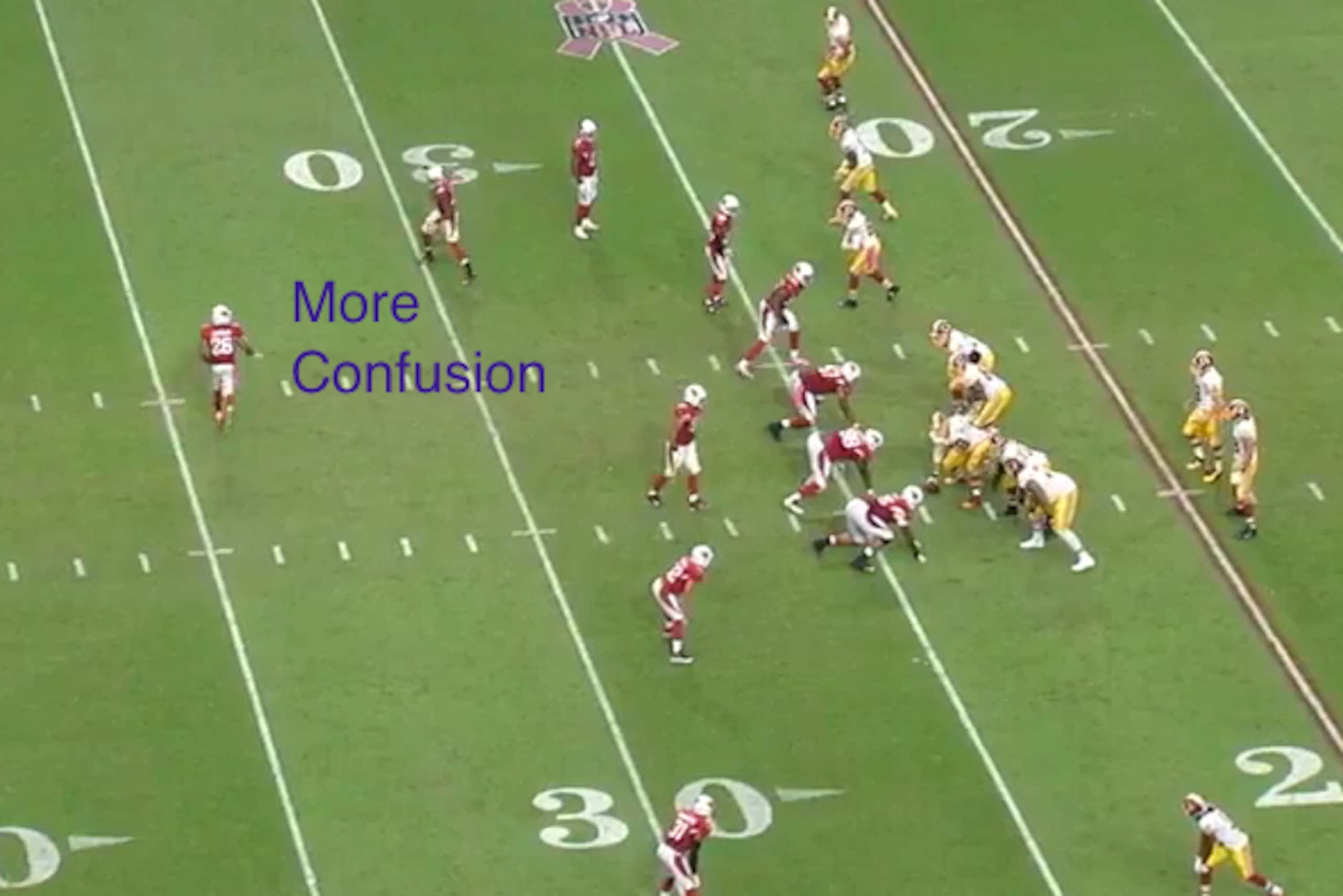
Once Bucannon decided he would go over and cover Reed, the Redskins knew they were facing man coverage. They planned to beat this scheme by having receiver Ryan Grant run across the face of Bucannon while Reed circled underneath:

This was essentially as close to a legal pick play as you can get. Grant never made contact with Bucannon—he simply got in his way.
In the process, he blocked his path to track Reed. Meanwhile, receiver Santana Moss ran his coverage to the inside. Reed then had a huge void to target between Grant's and Moss' routes:

Quarterback Kirk Cousins then had an uncovered receiver to aim for. Reed did a nice job plucking the ball on the run before turning upfield and gaining 10 yards to convert:
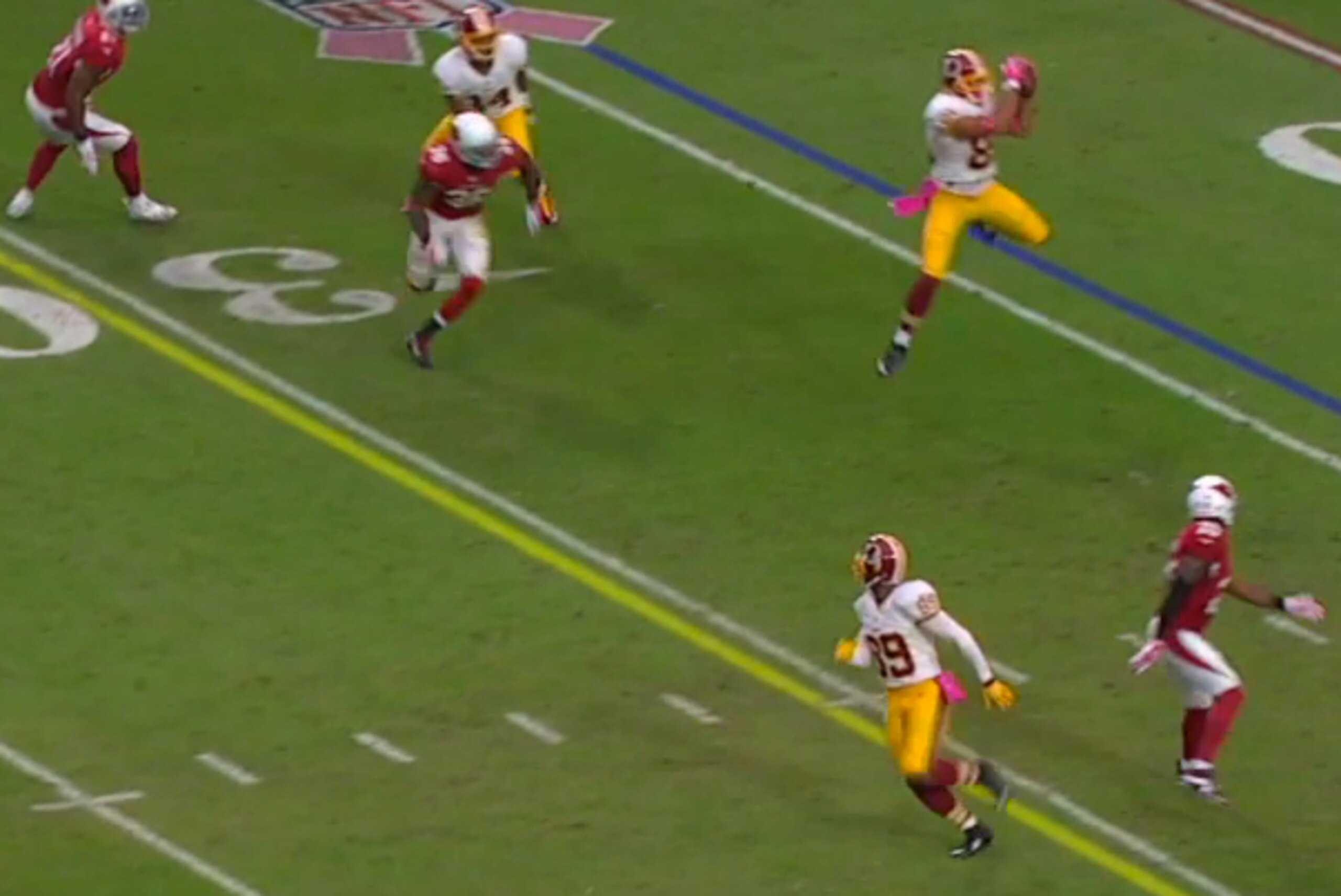
Here's another angle of the catch—one not only showing Reed's excellent hands and coordination, but also revealing how effective the soft pick had been in disrupting Arizona's coverage:
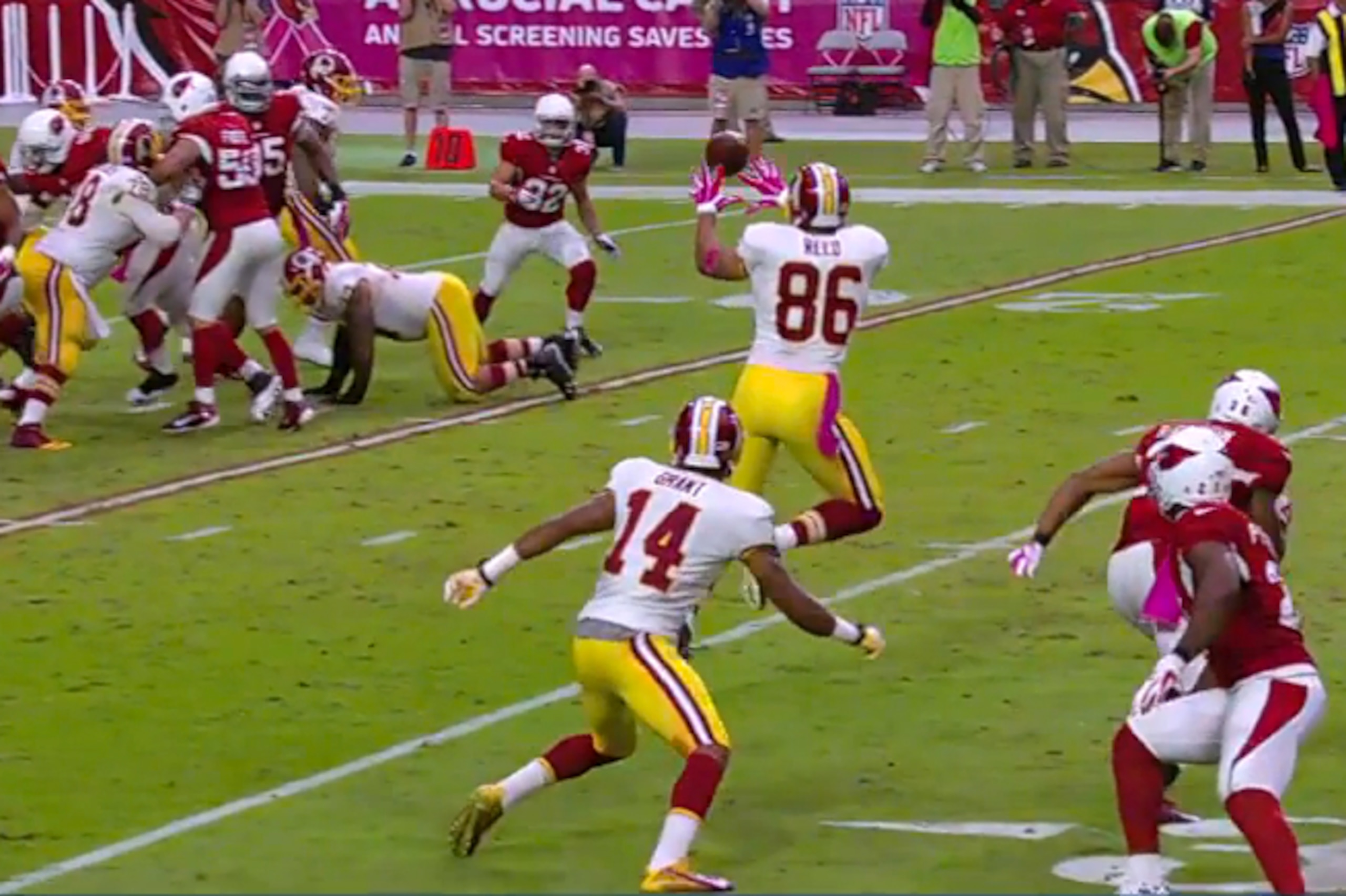
Of course, the coverage had already been disrupted just by moving Reed around. In fact, his movement and re-alignment had wrecked the Cards' entire defense.
Bucannon aligning at linebacker with a Cover 1 shell behind him was Arizona's favorite blitz look last season. Then-coordinator Todd Bowles loved to send heavy pressure in third-down situations.
But Bucannon was taken out of the play and isolated in coverage because of the way Reed can be flexed to different positions. Not only that, but his movement also gave Cousins a pre-snap cue revealing what coverage he would throw into. That made his read a lot easier, which is something that creates a quicker throw.
The beauty of Reed is how he puts defenses in a bind on third downs. Arizona got stuck in the mud by moving a safety over him.
But those who try to match up with a cornerback don't fare any better. That's something the Tennessee Titans found out on a 3rd-and-5 play in Week 7.
Reed once again split out wide, but this time, he was isolated as the lone receiver on his side of the formation. Tennessee's answer was to have cornerback Blidi Wreh-Wilson match up with the tight end:
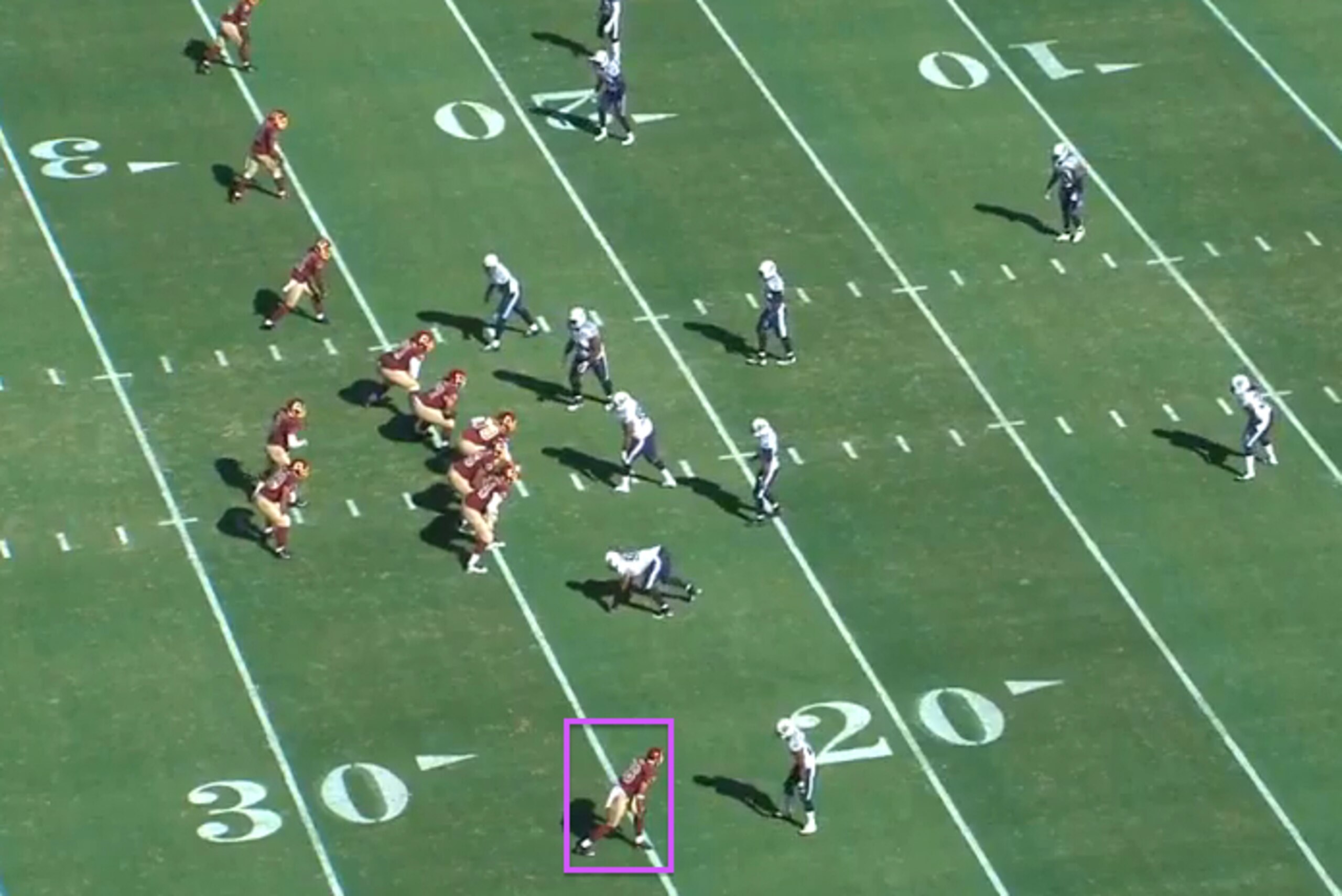
The aggressive young cover man tried to get physical with Reed. But the 6'1", 198-pound corner was no match for the 6'2", 237-pound Reed, who easily won the physical battle with a strong push-off that dismissed his coverage:
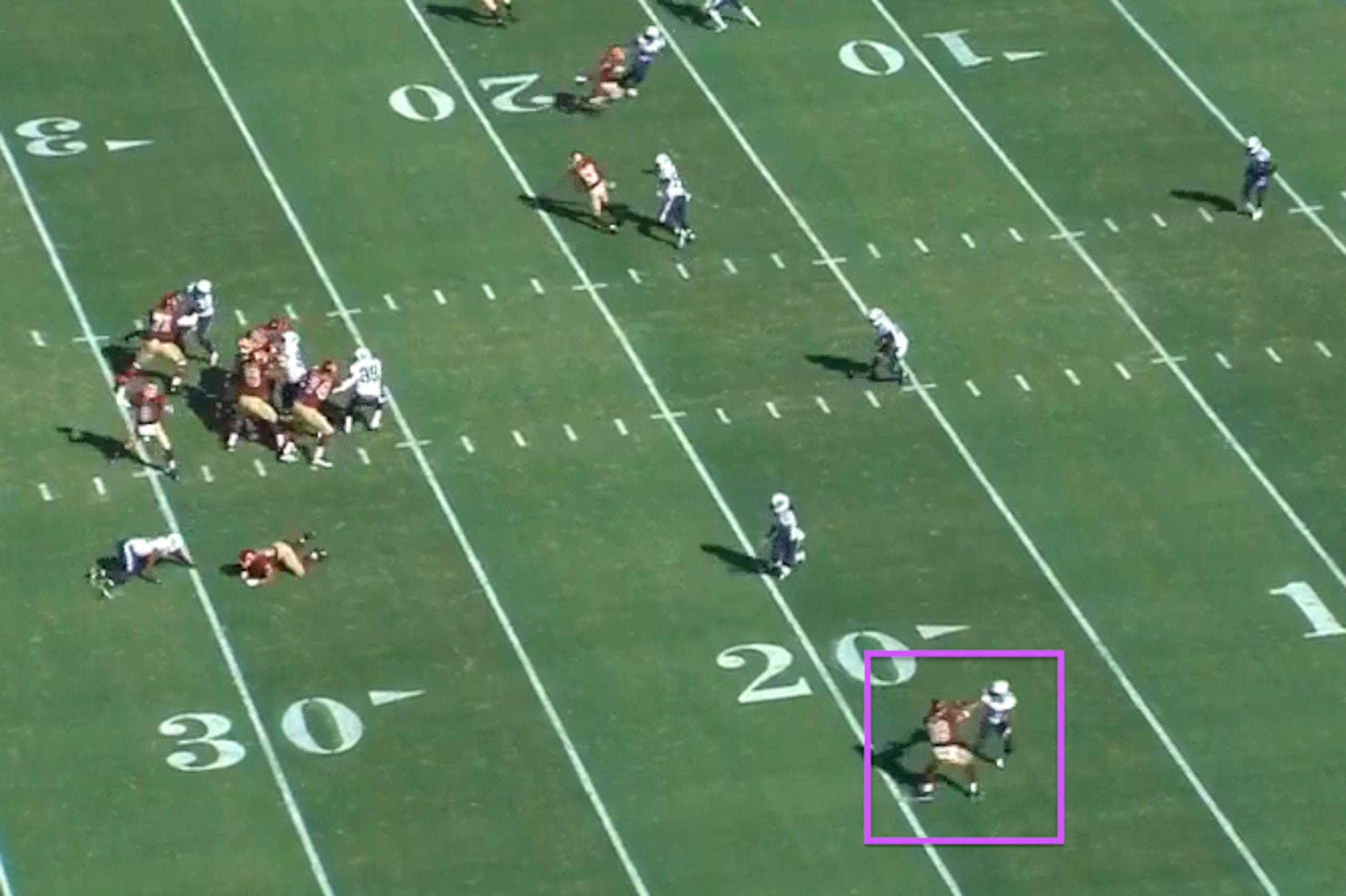
Reed then expertly positioned his body between defender and ball and offered Cousins a large target to hit. He snatched the pass high before the safety could get across to disrupt the throw. The result was seven yards and another third-down conversion:
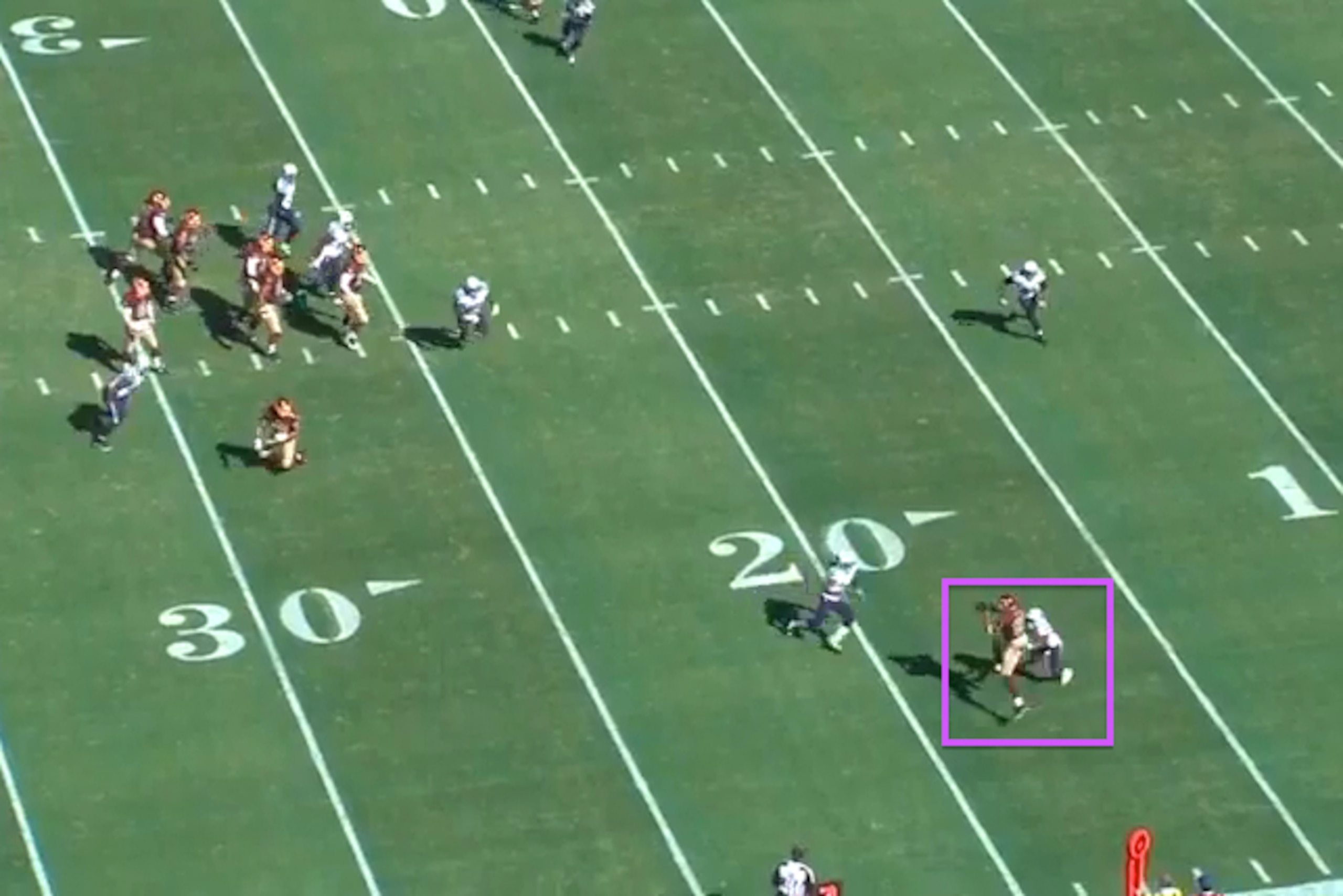
On both plays, Reed made life easier for his quarterback. He also put defenses into uncomfortable positions in coverage.
Each of those qualities is crucial for third-down work. Each can also be invaluable for a group of struggling quarterbacks like Washington's proposed trio under center.
But while Reed is the safe pair of hands every signal-caller needs, it's Paul who stretches the field. For a clearer indication of the difference, the former tallied 9.3 yards per catch in 2014, while the latter averaged 13 yards.
Paul's expertise as a deep threat shouldn't rate as a major shock. After all, he's a converted wide receiver boasting underrated vertical speed. Like Reed, he also has the ability to create mismatches that favor his offense.
Both of those qualities were on display during Week 1's road defeat to the Houston Texans. In the third quarter, Paul managed to produce a 48-yard catch-and-run against a stingy Texans defense.
He began the play flexed in the slot. Paul's target in coverage was downhill, attack-minded safety D.J. Swearinger:
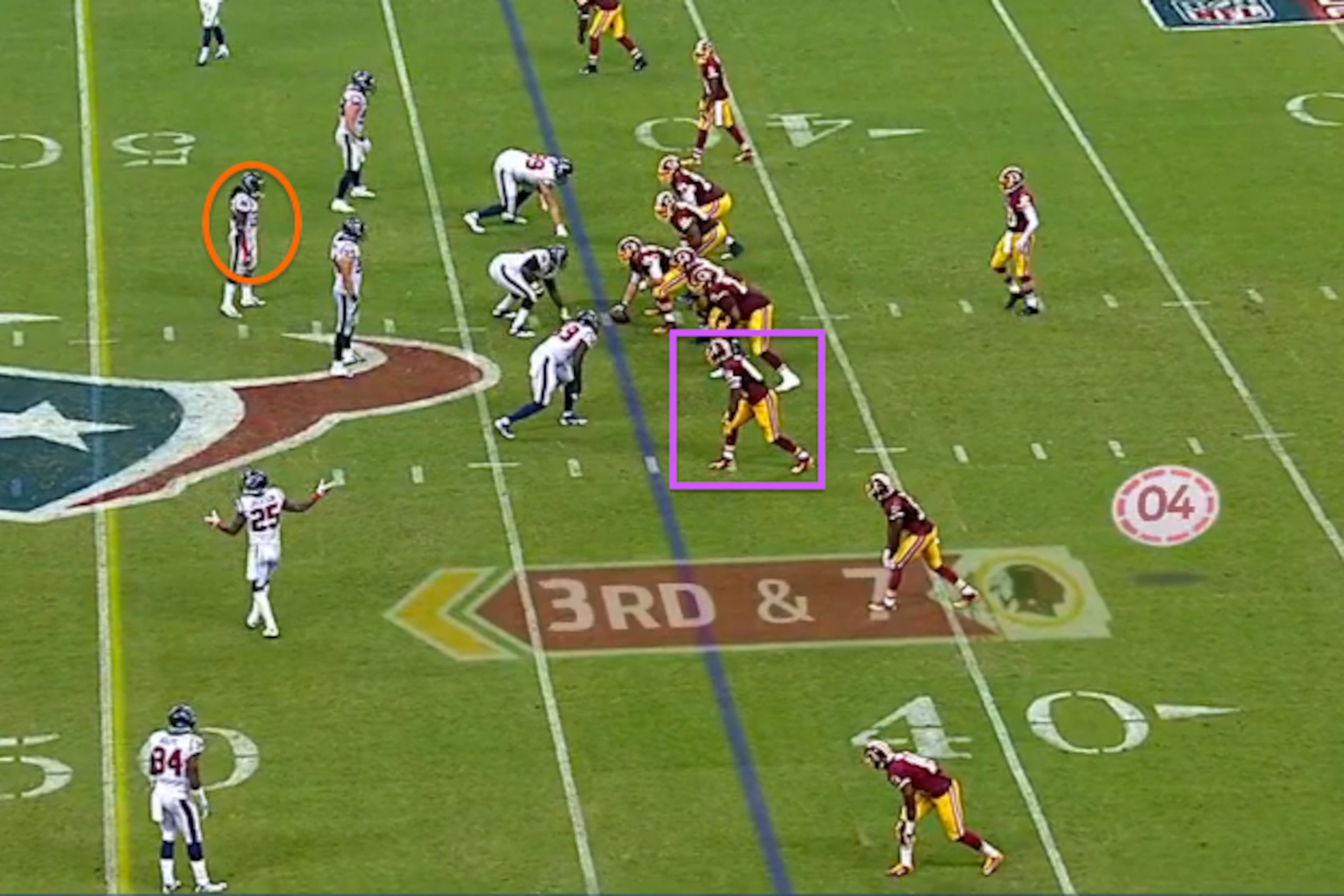
At the snap, Paul simply ran a post pattern designed to isolate Swearinger and stretch the inside seam vertically. The favorable matchup practically jumped off the screen. Quarterback Robert Griffin III certainly wasted no time looking Paul's way:

He hit the tight end in stride. Notice how Paul had arrived in the void behind the second level of the defense and in front of the deep coverage. That's the soft spot in any scheme:
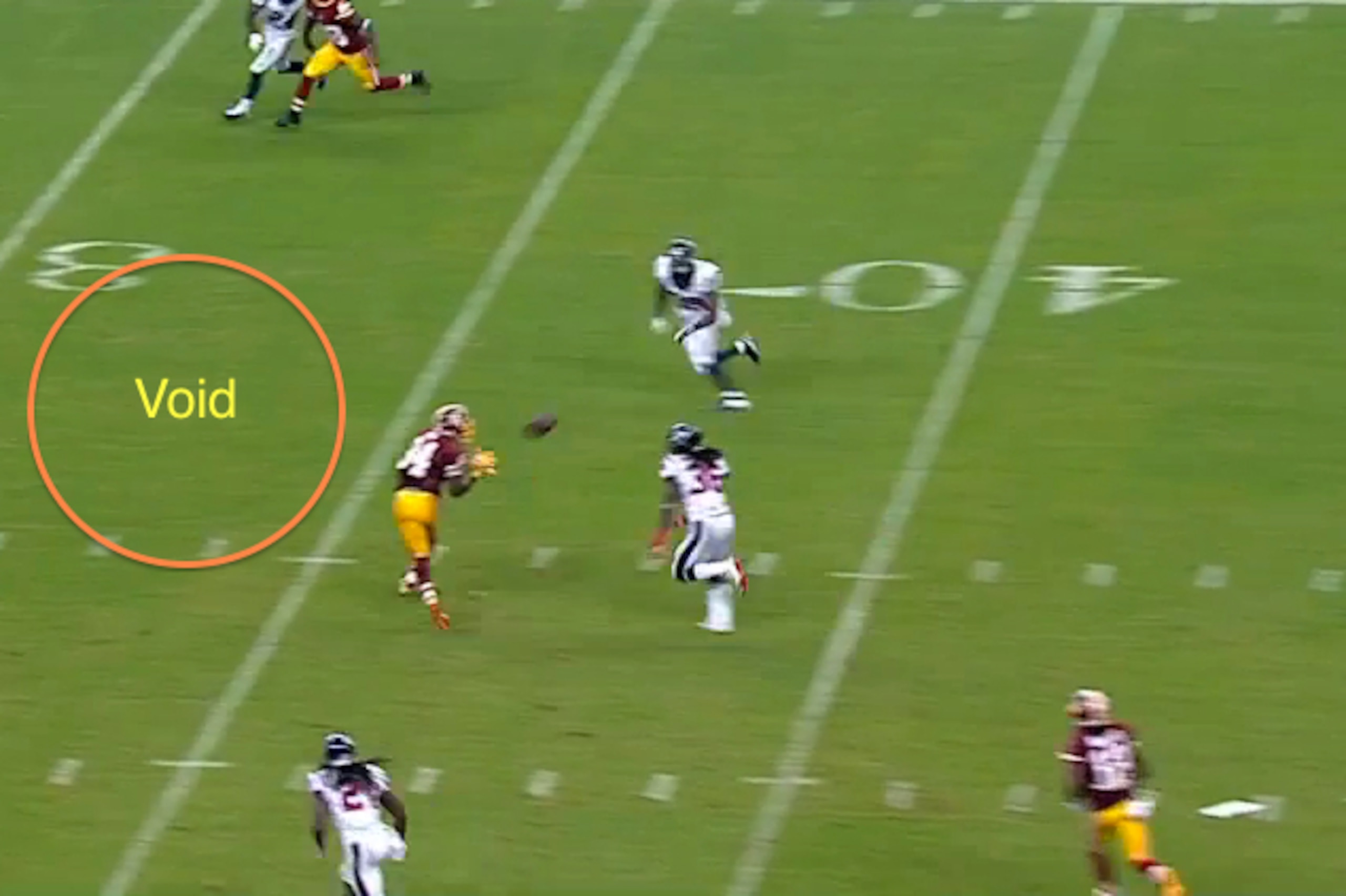
Sadly, this play was soon ruined by the tight end spilling the ball after Swearinger's last-ditch, lunging tackle knocked it loose. But the turnover aside, this play is an excellent example of how Paul can stretch coverage and create matchup problems.
Like Reed, Paul showed a defense the folly of matching a box safety up against a "move" tight end. But he's also displayed the ability to beat cornerbacks out in space.
Paul offered ample proof of that skill in Week 3 against NFC East rival the Philadelphia Eagles.
On a 3rd-and-short, the Redskins set up a big gain for Paul off play action. Let's focus on Paul's alignment and actions.
He began in an in-line stance next to the right tackle. The Eagles planned to blitz a safety from his side of the field:

Once the ball was snapped, Paul initially faked a block on Brandon Graham before sneaking behind the rush end and releasing into space. Then, Paul was matched up one-on-one with cornerback Bradley Fletcher:

He beat the initial press from Fletcher and began breaking toward the sideline:

It appeared as though Paul was running a quick out to the flat. At least, that's what Fletcher thought:
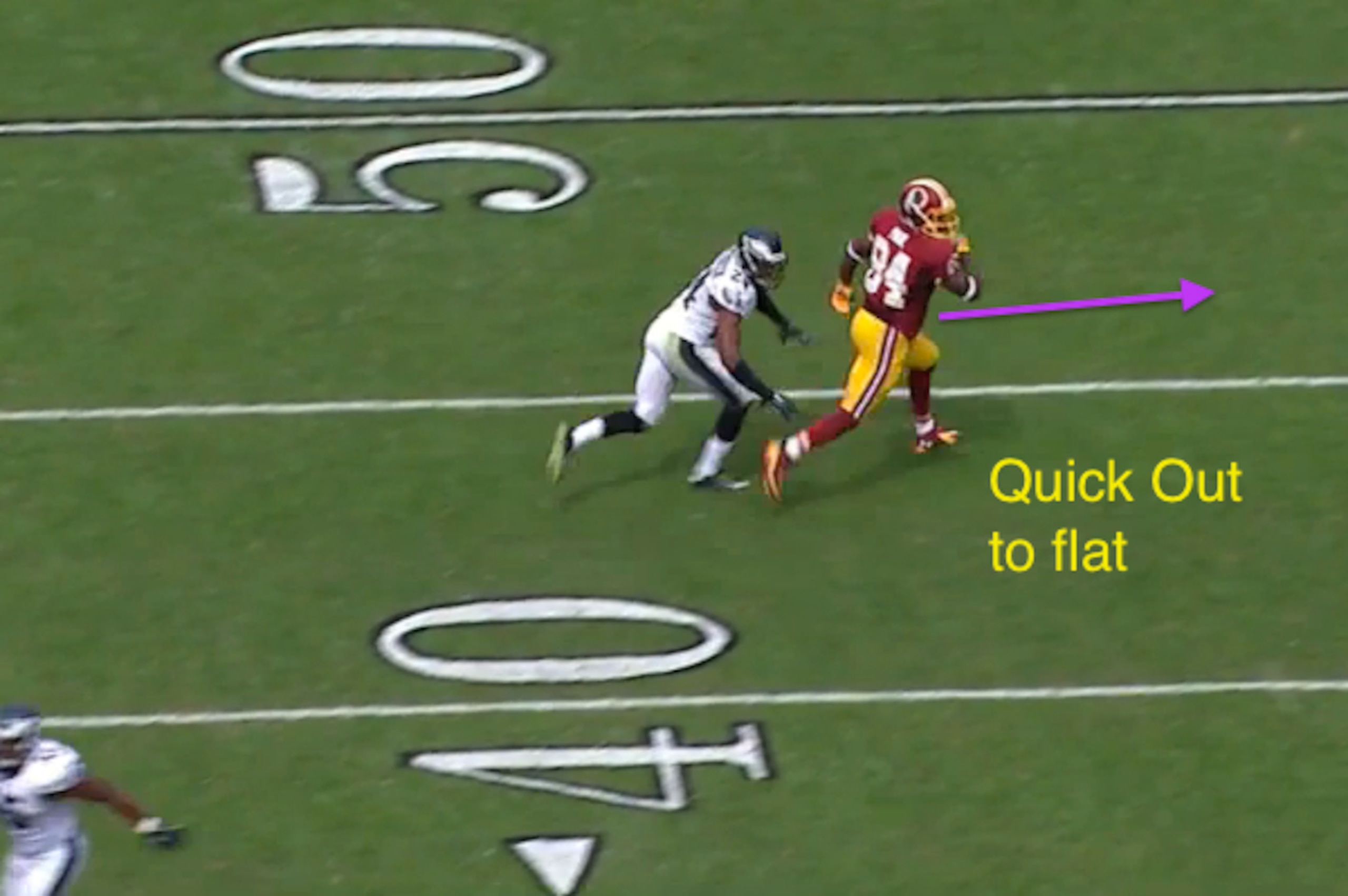
But with the cornerback now running laterally, Paul made a move back to the inside and began attacking vertically:
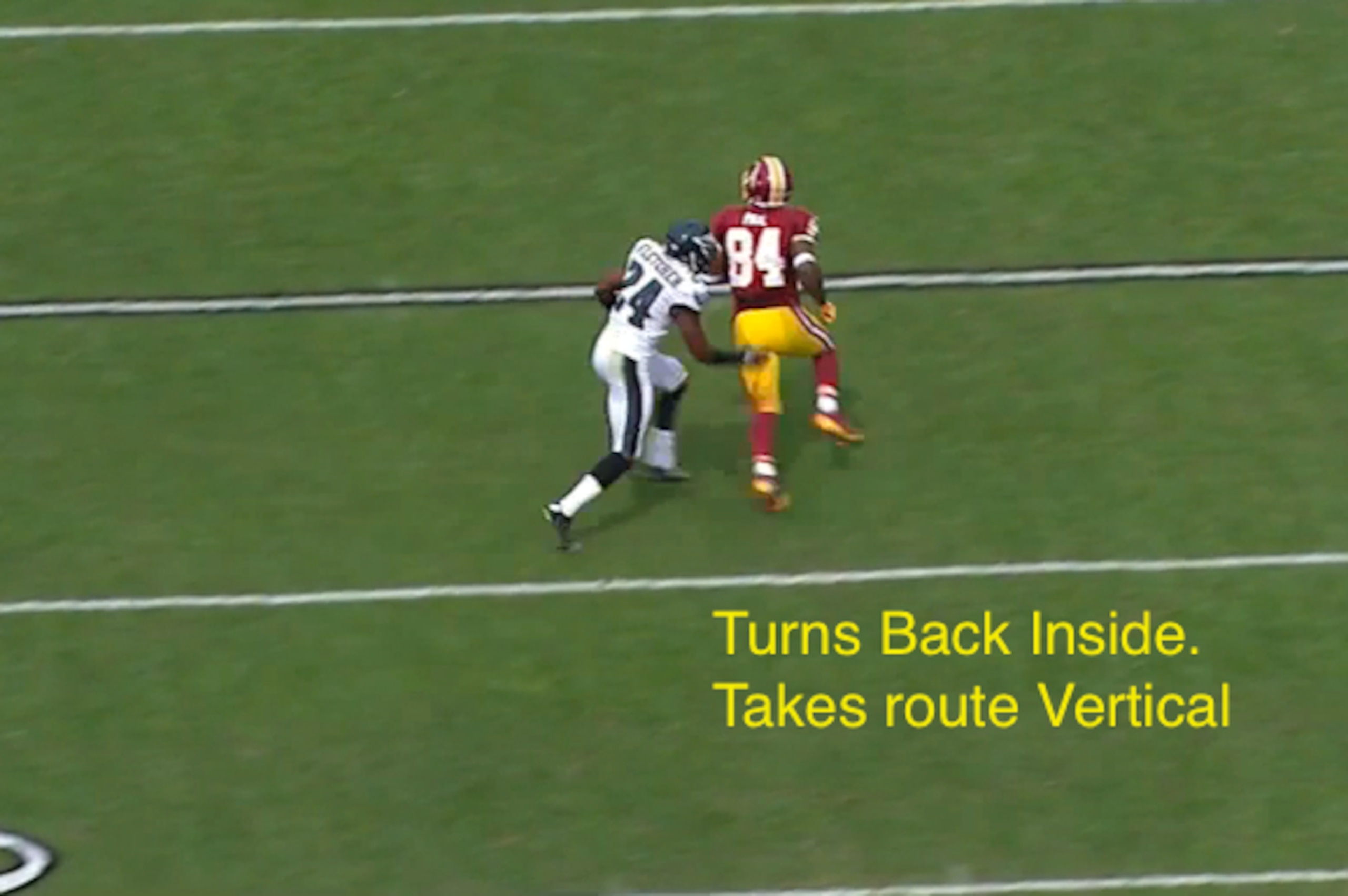
Having turned upfield, Paul used his vertical speed to gain separation and leave Fletcher trailing. He then began tracking the flight and trajectory of Cousins' deep throw:
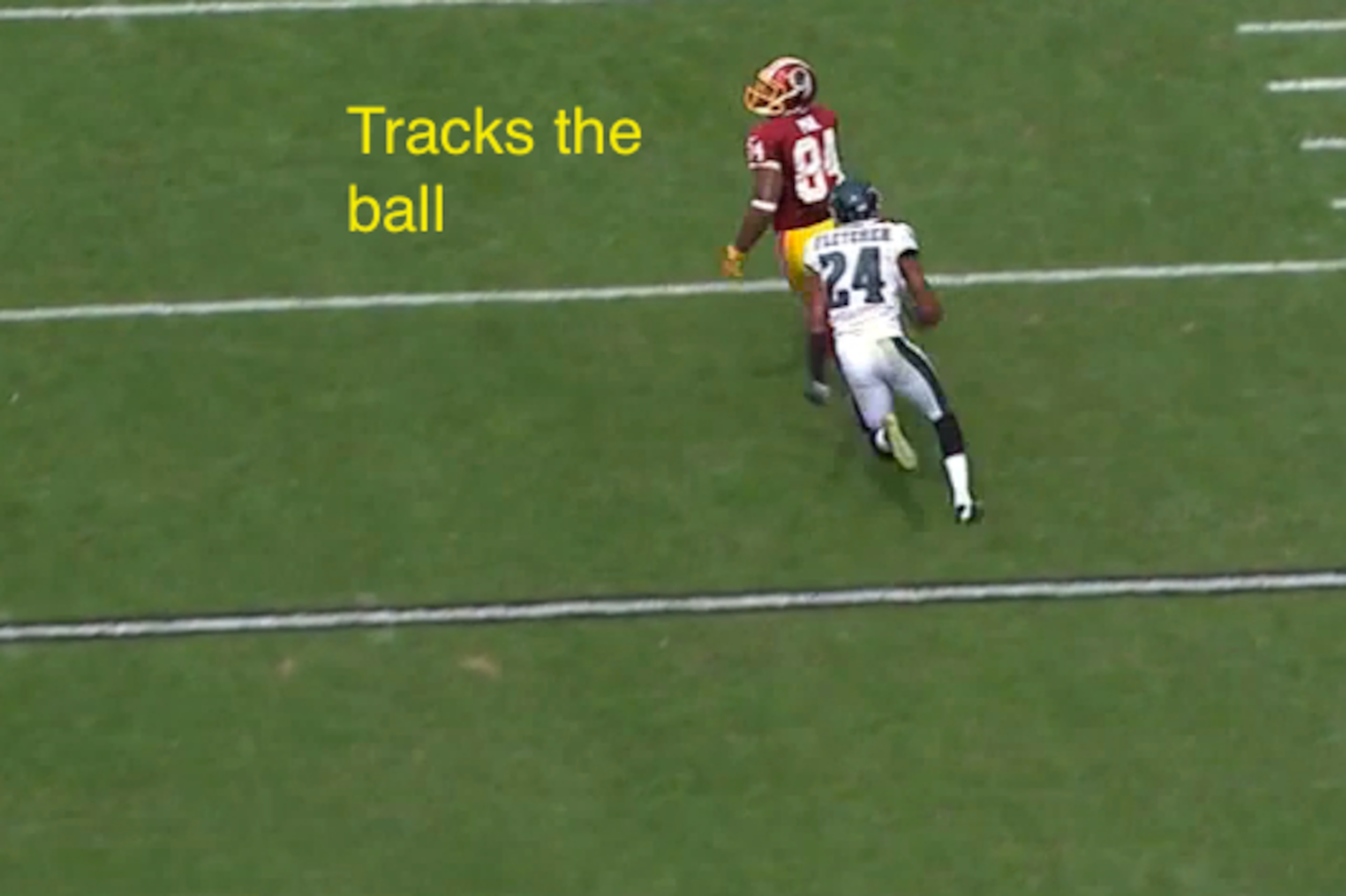
With the ball located, Paul made a nice catch to complete a 37-yard gain:
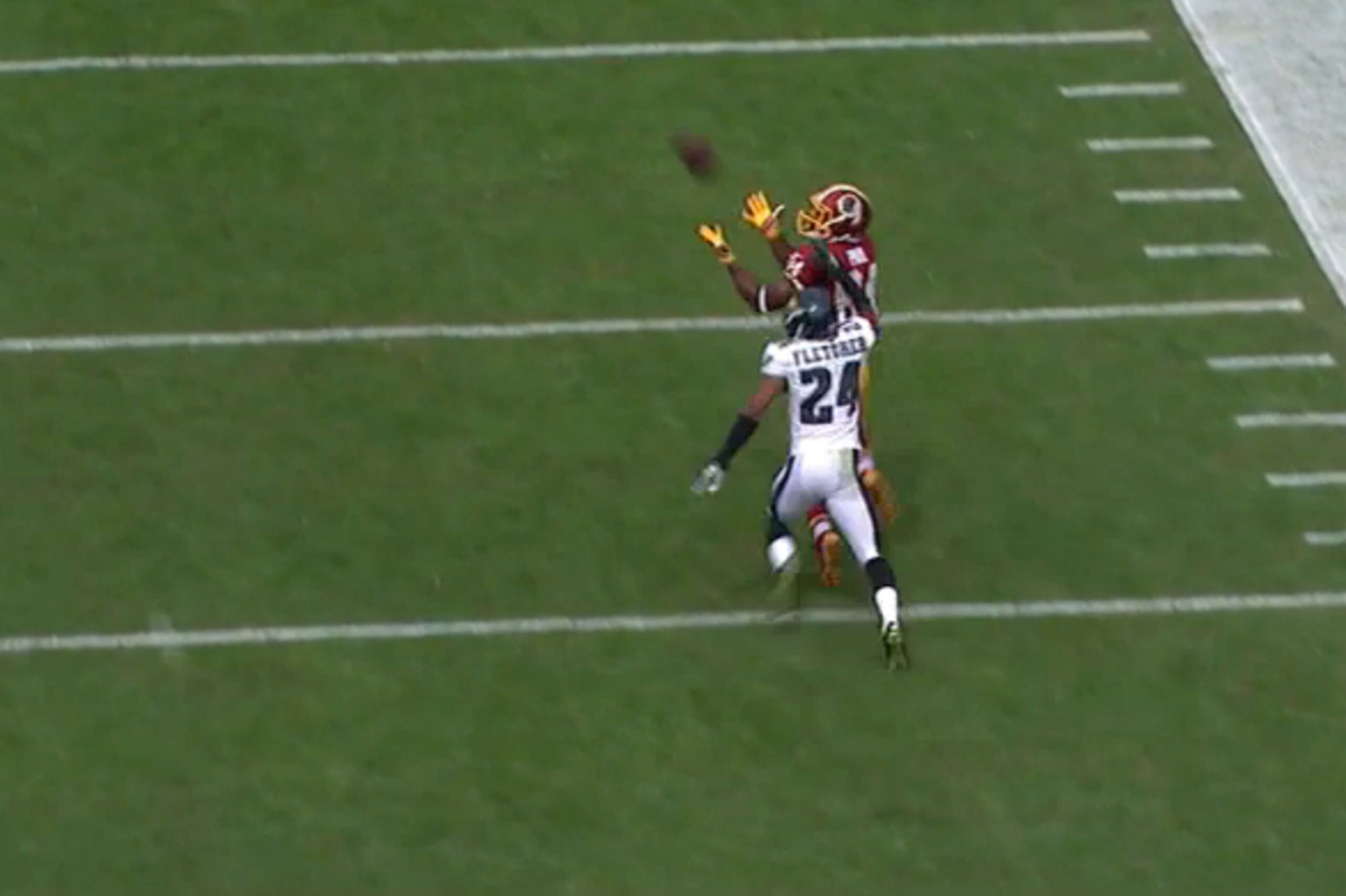
Using play action ensured that the box safety (circled) couldn't rotate across to help Fletcher with Paul's vertical release. Like most of the Eagles front seven, he was preoccupied with the threat of the run:
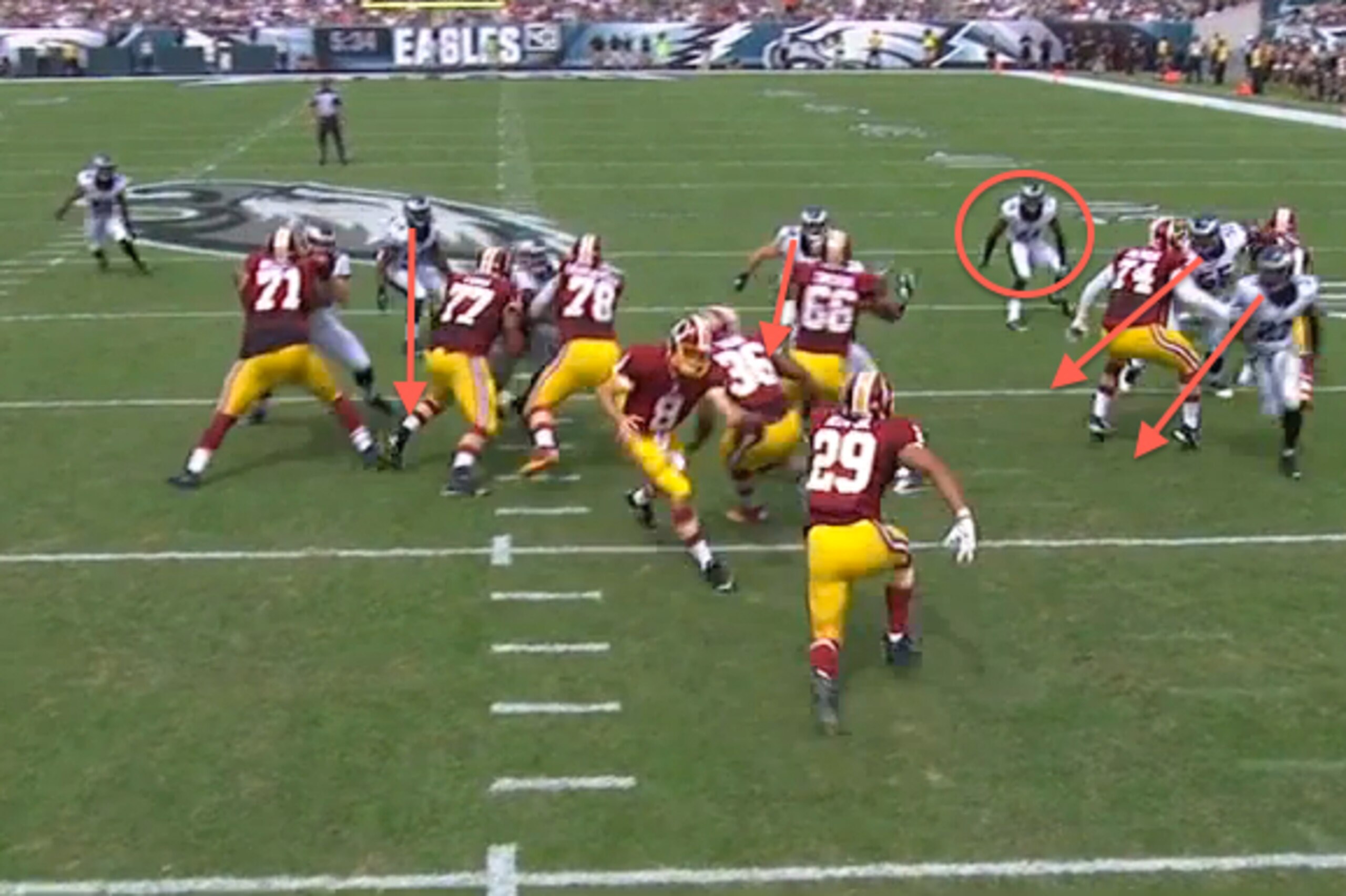
Just like Reed, Paul created matchup problems in coverage and gave his quarterbacks easy targets to aim for. The only difference was these targets were open downfield instead of underneath.
That's the level of variety Washington boasts at tight end. It's something Gruden and McVay should make greater use of by getting both players on the field together more often.
Better that than searching for a designated No. 1—a quest fraught with pitfalls.
The Reed Factor, and Who Will Block?
Nobody can dispute Reed as the most talented player at his position on Washington's roster. His tantalizing mix of quickness, leaping ability and excellent hands is why many (myself included) have touted him for big things.
B/R analyst Chris Simms is the latest to predict a breakout year for 2013's third-round pick:
You can't fault the logic, but you also can't ignore those pesky injuries. Reed has been laid low by concussion woes, hamstring troubles and now a knee problem, per NFL.com Media Insider Ian Rapoport:
It's close to impossible to trust a player who's missed 12 games and made just six starts in two years as your No. 1 option at any position.
Sadly, it's just as tough trusting any of the current tight ends to block. But that's something every member of the depth chart is going to have to learn this season.
New line coach Bill Callahan will be in charge of the running game, and he isn't shy about using tight ends as key blockers in his power-heavy schemes. For the Dallas Cowboys last season, that meant a lot of 260-pounders James Hanna and Gavin Escobar.

Only Paulsen can match that bulk in Washington. Yet he's too inconsistent setting the edge. Perhaps Paul can offer more.
He's bulked up this season—something that's caught Gruden's eye, according to ESPN reporter John Keim:
Paul now tips the scales at 252 pounds, per CSN Washington's Tarik El-Bashir. He noted how Paul hopes to become a better blocker but doesn't feel as though the extra weight has cost him his speed: "I may not be 230-pounds-fast like I was. But I'm still fast enough where I have an advantage."
If a bigger Paul can add blocking to his repertoire and still pose a threat downfield, he'll deserve to lead this depth chart. Until Reed proves he can stay healthy, third-down work should remain his purview.
Either way, Washington's passing game will benefit from greater use of both players. They combined for 89 catches, 972 yards and just a single touchdown in 2014.
All of those numbers need to go up in the new season. If they do, the Redskins will boast a lethal passing game, with quarterbacks benefiting from having easier reads and quicker throws to make.
All screen shots via CBS Sports, Fox Sports and NFL.com Game Pass.
All statistics and player information via NFL.com.