

Full Scouting Report for Atlanta Hawks' Top 2015 NBA Draft Targets
The Atlanta Hawks will be selecting 15th in the NBA draft for the second consecutive year.
Thanks to their trade of Joe Johnson in 2012, the Hawks got to swap their first-round pick with the Brooklyn Nets this summer. The exchange moves Atlanta's draft slot up a whopping 14 picks.
Who should the squad tab with that top selection June 25 at Barclays Center?
TOP NEWS

J-Dub, Wallace May Miss Entire Season
Melo's Quote on Confidence 😎
Celtics at Fault for JT-JB Beef? 🤔
Atlanta should look to go one of a couple of directions—either bolstering the wing depth or nabbing a big man with rebounding skills.
There are two wings and two post players projected as mid-first-round prospects who could fit well with the Hawks. So let's take a closer look at those four guys, evaluating each of their strengths and weaknesses, as well as how they would fit in Atlanta.
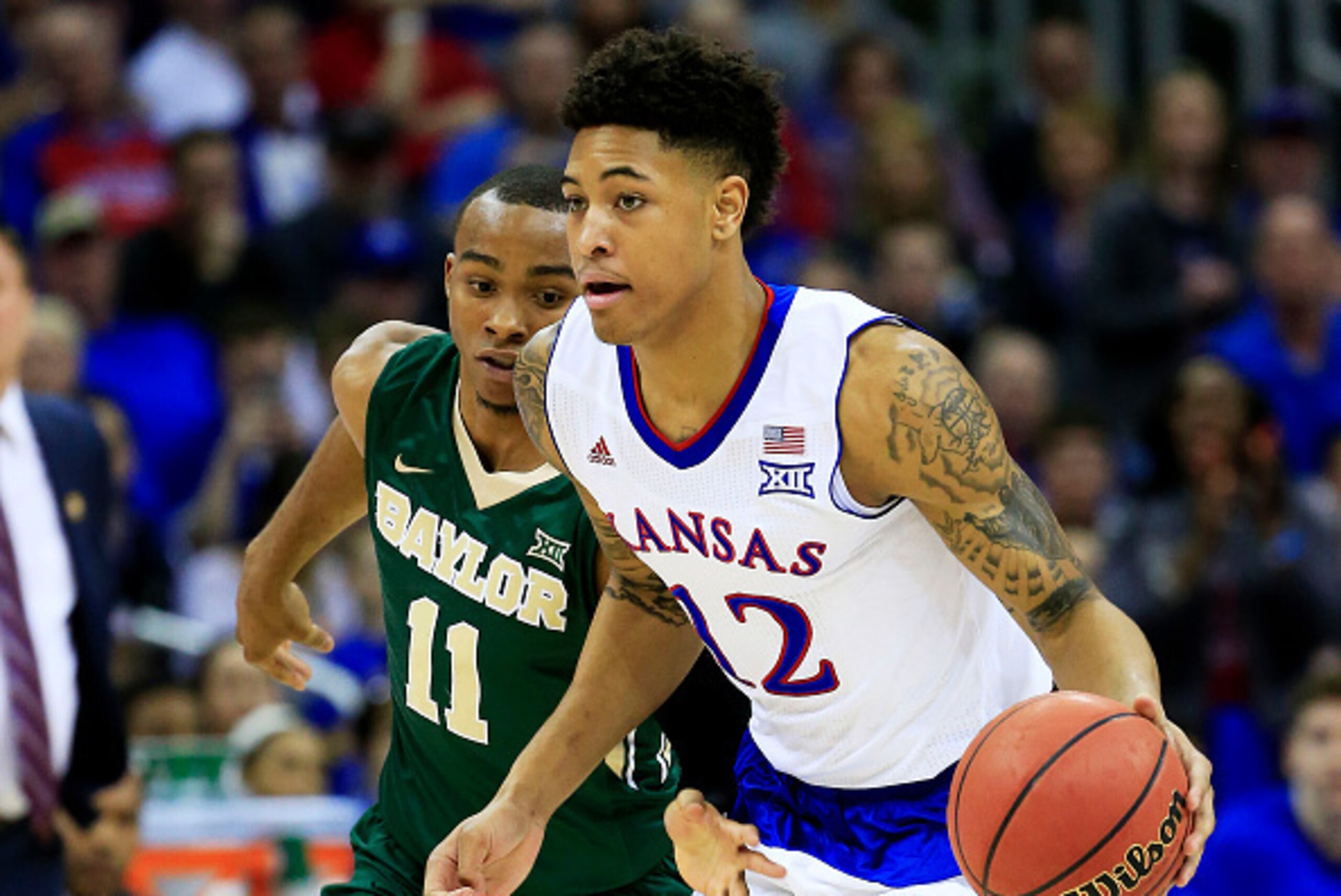
Kelly Oubre, SF (Kansas Freshman)
Strengths
Oubre is blessed with special physical tools.
His 6'5.75" height in shoes isn't great, but he totally makes up for it with a 7'2.25" wingspan. The left-hander carries a toned 203-pound frame and easily elevates it with effortless leaping ability.
Oubre's athleticism makes him valuable on defense and in transition. But he's also shown he can score in a half-court setting on occasion.
NBADraft.net's David Ray said the following about the Kansas freshman's ability to create his own shot: "He’s also shown some potential getting into the lane and hitting floaters, and a solid, but not striking, ball-handling foundation."
Oubre's southpaw three-point stroke is decent in spot-up situations. He converted 0.9 shots from downtown per game.
The 19-year-old prospect is also not lacking in confidence. According to Zac Keefer of the Indy Star, Oubre said, "I'm gonna be one of the greatest to ever play the game." He compared his game to Paul George, Kawhi Leonard, Jimmy Butler and James Harden, four All-Star-caliber players.
Weaknesses
Oubre is still raw offensively. He doesn't have a tight handle, struggles to shoot off the bounce and isn't adept at finishing around the rim when dunking isn't an option. These three attributes prevent him from being a go-to option at this stage, as does his poor passing ability (1.5 assists per 40 minutes at Kansas).
Oubre is inconsistent with his offensive aggressiveness and defensive effort. Especially earlier in his NBA career, he'll be given X-factor status as someone who can vastly help his team when he's on his game, but hurt it when he's not playing well.
How He Would Fit in Atlanta
The elephant in the room for the Hawks this summer is that they might not be able to bring back their full starting group from 2014-15. Free-agent forwards DeMarre Carroll and Paul Millsap are both headed toward big paydays, and retaining both may be a difficult task, as Grantland's Zach Lowe noted.
In any scenario, however, the star potential of Oubre could be a breath of fresh air in Atlanta's wing rotation.
The Hawks used four main players at the shooting guard and small forward positions last season: Kyle Korver, DeMarre Carroll, Kent Bazemore and Thabo Sefolosha. While all four do an excellent job fulfilling their roles, none are the type of players who can create their own shot. Also, Carroll may be gone, and Korver and Sefolosha will be returning from serious injuries.
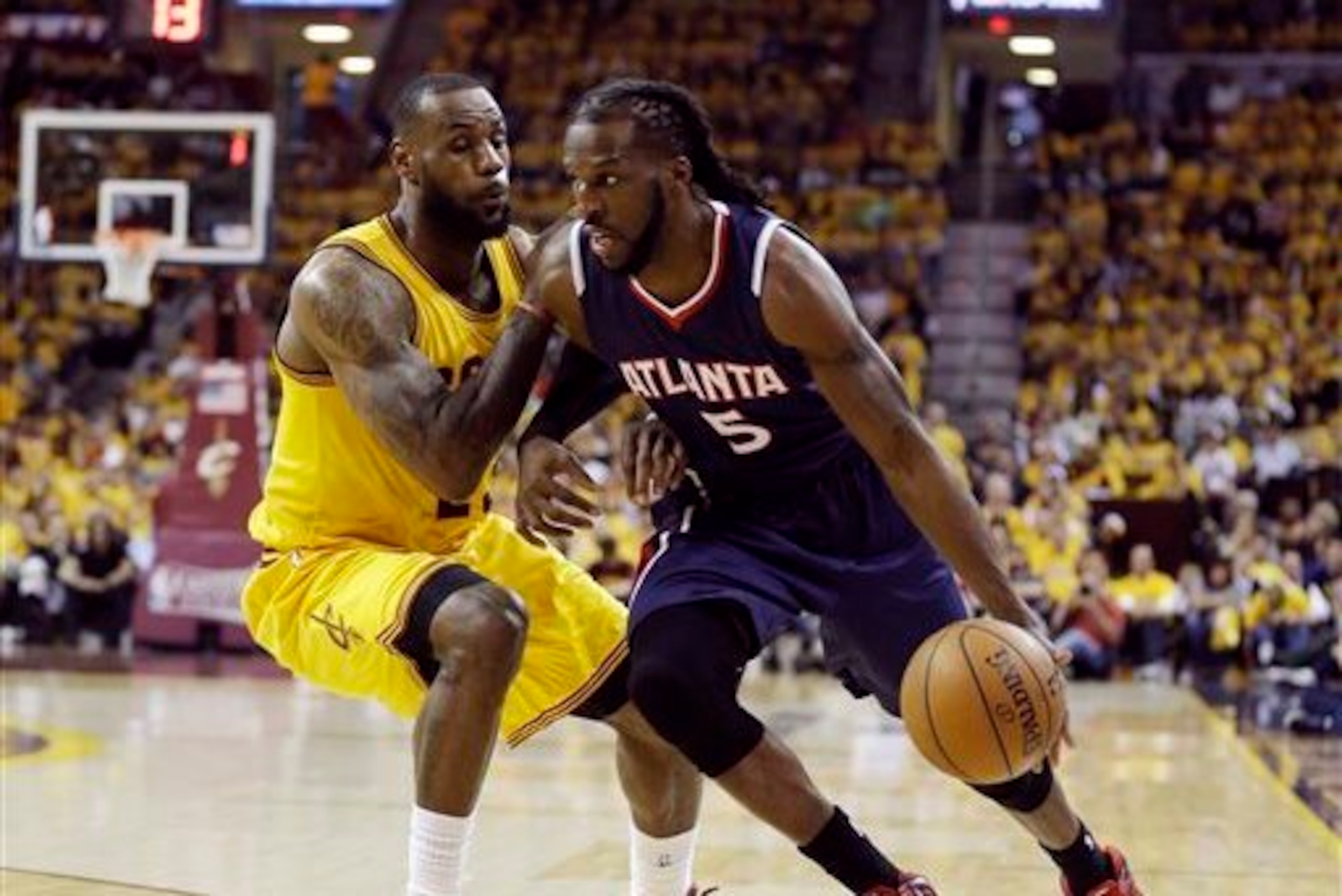
At just 19 years old, Oubre isn't ready to create his own offense at the NBA level yet. However, he has better physical tools than any player on Atlanta's roster and the drive to become great. With the right instruction, his three-point stroke could become deadly when coupled with solid slashing ability.
The Kansas product's role as a rookie would likely be around a 12-minute-per-game gig, but that number could jump as high as 18 or 20 if Carroll leaves and no suitable replacement is signed.
In any circumstance, the Hawks would bring Oubre along slowly.
Rondae Hollis-Jefferson, SF (Arizona Sophomore)

Strengths
Defense, and defense and more defense—that's what Hollis-Jefferson brings to the table.
According to the Los Angeles Times' Eric Pincus, the Arizona sophomore calls his play on that end of the floor his "calling card," and for good reason. NBADraft.net lists his NBA comparison as Bruce Bowen, a hardworking stopper who made eight All-Defensive teams and was a member of three championship-winning squads.
Hollis-Jefferson also has great length (7'2" wingspan), solid bulk (211 pounds with just 5.0 percent body fat) and can run and jump with the best of them (3.12-second three-quarter-court sprint and 38-inch max vertical).
Those attributes, along with a relentless motor, contribute to his defensive versatility and make him strong in transition. He has a keen sense of where and when to cut to open spaces in half-court offense, and he often draws shooting fouls as a result of those moves—Hollis-Jefferson attempted 7.5 free throws per 40 minutes as a sophomore.
Rebounding is a plus, too, as the Arizona product snared 6.8 boards during 28.7 minutes per game in 2014-15.
Weaknesses
Hollis-Jefferson is not effective with the ball in his hands for a long time, or when he receives possession on the perimeter. His ball-handling is suspect, and his three-point stroke is terrible—six made threes on 20.7 percent from that distance (his sophomore stats) is NOT acceptable for a wing.
DraftExpress' Josh Riddell said this about Hollis-Jefferson:
"He doesn't create well off the dribble in the half-court as he looks tentative at times catching the ball in an attacking position from the perimeter. When he has a head of steam in transition, he is capable of getting to the rim through a quick, straight-line drive, but he isn't always able to do so against a compact half-court defense. He can make plays off the dribble based on his athleticism alone at times, but struggles when challenged defensively. He isn't great utilizing his off-hand, and he doesn't have great ball-handling skills to get past his defender in tight spaces.
"
The 20-year-old's skills on the offensive end are rudimentary enough that most teams likely see his ceiling as "very good role player" and nothing more.
That may be the reason DraftExpress has him as its 13th-best prospect, but falling all the way down to No. 22 in its mock draft.
How He Would Fit in Atlanta
The Hawks adding Hollis-Jefferson works best if Carroll does not come back. Having him, Carroll and Sefolosha on the same roster would be a waste of resources, as all three small forwards could be elite defenders in 2015-16.
In the event the Junkyard Dog doesn't re-sign with Atlanta, Hollis-Jefferson would likely step in as Sefolosha's backup and possibly the second sub off the bench (with Dennis Schroder as the sixth man). The Arizona sophomore's physical tools are more NBA-ready than a lot of his fellow 2015 draft entrants, and he could average as many as six points and five rebounds in 20 minutes per game during his rookie year.

But Hollis-Jefferson needs to improve some more before he can join the Hawks' starting lineup.
He'd need to work long hours, both with Atlanta's assistants and individually to fix his jump shot, much like Carroll did before the 2013-14 season. He'd also need to know head coach Mike Budenholzer's offensive and defensive schemes inside and out.
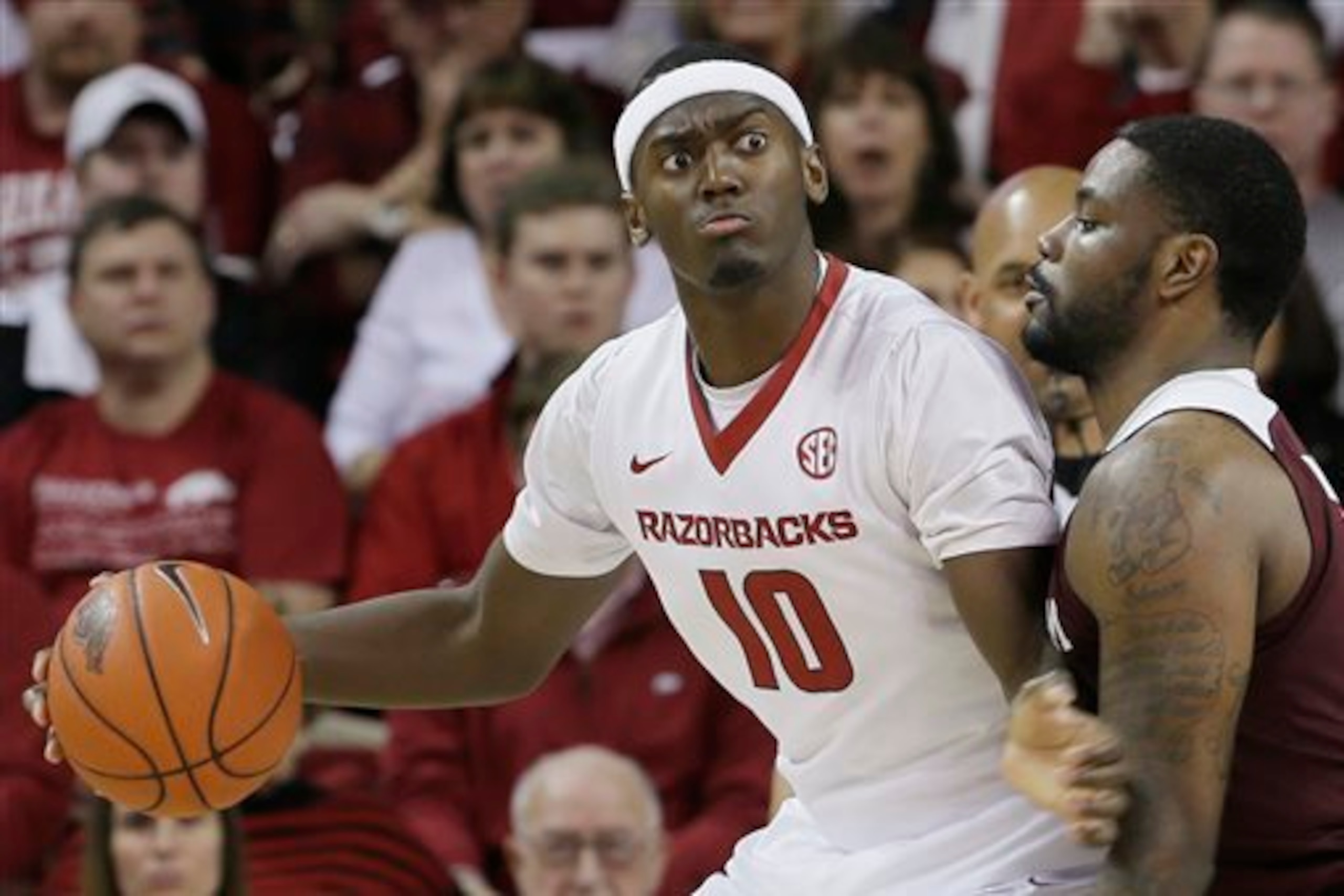
Bobby Portis, PF (Arkansas Sophomore)
Strengths
Portis is a highly versatile big man.
At 6'11" and 246 pounds, he uses his excellent motor to defend his position and help teammates on that end. He also scores inside with strong, decisive moves and quickly rises for jump shots when he gets space on the perimeter. Portis crashes the offensive glass well and isn't afraid of contact underneath on both ends of the floor.
Don't be surprised if you see Portis run the break, either. He can run the floor and handle the ball very effectively for a big man.
Unlike many other underclassmen prospects who have the words "raw" and "potential" scattered across their scouting reports, the 20-year-old Arkansas product was the 2014-15 Southeastern Conference Player of the Year and has a somewhat well-seasoned game. His 17.5 points, 8.9 rebounds and 1.4 blocks per game this season are proof of that.
Portis can be an immediate contributor on any NBA roster as a rookie.
Weaknesses
While Portis' motor underneath the basket is a definite positive, his post moves are still developing.
Big men are more athletic, stronger and smarter in the pros compared to the NCAA. The former Razorback can't expect to succeed just playing bully ball at the next level. If he wants anywhere close to the 17.5 points per game he averaged at Arkansas, he'll need to improve his footwork.
Also, defensive rebounding and explosiveness are issues for Portis.
Portis can box out all he wants, but if there's a high bounce, he'll often find himself on the losing end of the rebound battle. On offense, NBA big man will have an easier time containing the Arkansas sophomore if he can't learn to finish with dunks underneath the basket.
How He Would Fit in Atlanta
Atlanta's big-man situation is a little bit up in the air right now.
Paul Millsap, Pero Antic and Elton Brand are all free agents, and it's anybody's guess which (if any) of the three stay with the Hawks next season.
Let's say Atlanta keeps Millsap and not the other two. Brand wasn't much of a factor in the rotation this year, but Antic was the No. 1 center off the bench for most of 2014-15. So there would be some minutes available.

Mike Muscala proved his value in the postseason and should join the rotation in 2015-16. Walter Tavares, a 2014 second-round pick, may also join the team from Spain, a source said, via reporter David Pick. Mike Scott had several consecutive DNP-CDs during the playoffs.
And what about Portis? He would have a great shot at a rotation spot.
He's probably more NBA-ready than Tavares, so he could function as the No. 4 big man on the roster, after Al Horford, Millsap and Muscala. He possesses the shooting ability Budenholzer loves in his post players, and while his rebounding is merely decent, it would be better than what the Hawks had grown accustomed to this season from their bench bigs.
Bleacher Report's Jonathan Wasserman also has Portis going to Atlanta in his most recent mock draft, citing the lack of risk involved in the pick: "He's one of the safest options on the board due to his size, skill level and inside-out repertoire tailor-made for the power-forward position."
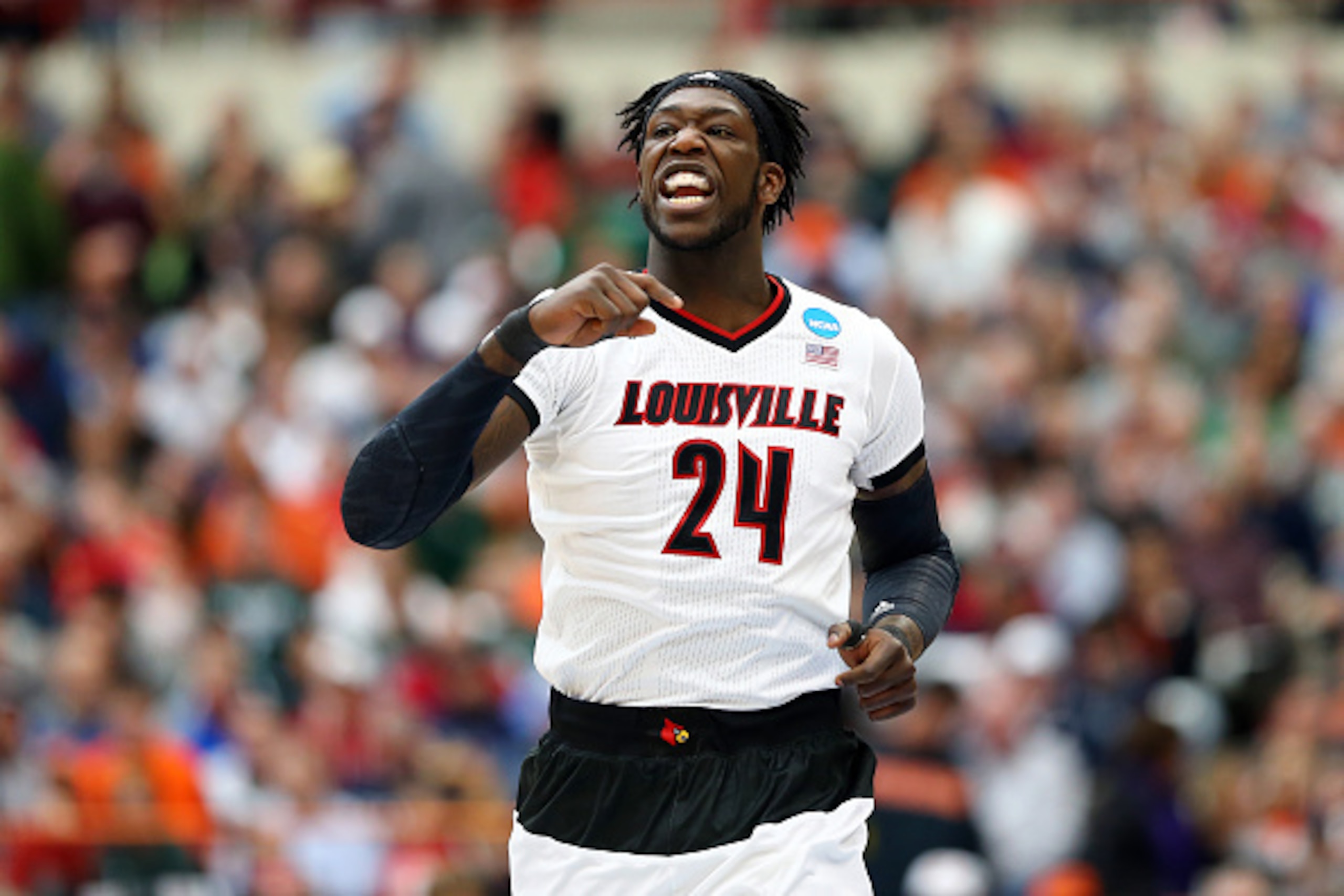
Montrezl Harrell, PF (Louisville Junior)
Strengths
Harrell has the energy of Portis, combined with amazing athleticism. He glides through the air with the grace and elevation of a player much lighter than his 253-pound frame.
Don't believe me? Just watch.
The Louisville junior is a strong weapon in transition and as the roll man after setting picks, but he's a solid rebounder and defender, too. His 6'8" height isn't a real issue because his standing reach is a fantastic 9'1". That measurement puts him on equal footing with Taj Gibson, Chris Bosh and Nene when they entered the league.
Weaknesses
Harrell's biggest weaknesses is that his scoring is extremely dependent on physical dominance.
His post footwork is not advanced, his mid-range shot is slightly below-average and his free-throw shooting (59.7 percent in 2014-15) is poor. However, all three of those attributes have improved significantly during his time at Louisville.
He's also struggled with decision-making and feel for the game. At some points, he looks more like an excellent athlete who just happens to play basketball, rather than a basketball player who just happens to be an excellent athlete.
Harrell's inside attempts can look awkward and come off the rim hard, so he'll need to work on touch as well.
How He Would Fit in Atlanta
First off, Harrell is projected lower than No. 15 by most media outlets. Wasserman has him at No. 23, DraftExpress has him at No. 24 and NBADraft.net has him at No. 17.
However, the Louisville product's skill set could be a nice change of pace in Atlanta.
Even though Harrell is just 6'8", his standing reach is taller of any listed Hawks player in DraftExpress' records. His jump shot and passing ability aren't where they need to be yet, but he could be an absolute menace on the boards and in transition.

Atlanta ranked No. 27 in rebound differential during the 2014-15 regular season. The squad ended its season getting out-rebounded by the Cleveland Cavaliers to the tune of nearly 13 boards per contest in the Eastern Conference Finals. Tristan Thompson, Timofey Mozgov and LeBron James were just too big and too athletic for the Hawks' frontcourt.
If Harrell were in the Hawks rotation this season, his motor and athleticism wouldn't have let either of those numbers fly.
We've already looked at one scenario with Portis as the fourth big man in the rotation, but Harrell could also occupy that role during his rookie year as a jolt of energy for the second unit.
All statistics and measurements are from DraftExpress, Basketball-Reference.com, NBA.com and ESPN.com (including ESPN's Hollinger Stats) and updated through June 15 unless otherwise indicated.

.jpg?w=2560 "Chiefs, Steelers Eye WR Trades")





.jpg?w=2560 "Raiders Sticking with Cousins")