Why 2015 Should Not Be a Make-or-Break Season for Browns' Coach Mike Pettine
The small sample size of Jimmy Haslam's ownership of the Cleveland Browns has led to one conclusion—this is not a patient man. Haslam has no desire to wait around for his head coach, his general manager or his quarterback to fine-tune their processes. Losers lose, and Haslam wants to be a winner. Thus, he canned former Browns head coach Rob Chudzinski and his first attempt at a front office after just one season.
Haslam's impatience is not something new to the Browns, though. Since returning to the NFL in 1999, the Browns have had eight head coaches. None of those fired have had winning records; the closest the Browns got to that was Butch Davis, head coach from 2001 to 2004, who won 25 games and lost 34. And even he was forced to resign prior to the end of the 2004 season.
TOP NEWS
Lane Johnson Retirement Post🦅

New NFL Power Rankings 📊
.jpg?w=2560 "Nolan Wells Lawsuit")
Terrell Owens Being Sued for Defamation
Picking the correct time to cut bait on a head coach is a tough one. On the one hand, losing a head coach means starting over in many ways, from scheme to personnel. Making a change for change's sake rarely pans out. But sticking with a coach over too many losing seasons can breed bad blood or can at least feel like a culture of losing is taking over a locker room.
| Chris Palmer | 1999-2000 | 5 | 27 | .156 |
| Butch Davis | 2001-2004 | 24 | 34 | .414 |
| Terry Robiskie | 2004 | 1 | 5 | .167 |
| Romeo Crennel | 2005-2008 | 24 | 40 | .375 |
| Eric Mangini | 2009-2010 | 10 | 22 | .313 |
| Pat Shurmur | 2011-2012 | 9 | 23 | .281 |
| Rob Chudzinski | 2013 | 4 | 12 | .250 |
| Mike Pettine | 2014-Present | 7 | 9 | .438 |
There is a benefit to retaining a head coach through his lean, early years—continuity. It's the one thing the Browns have lacked since 1999 and it is the biggest argument for Haslam practicing patience with his second head coach, Mike Pettine.
Pettine should not now, nor in December, be on the hot seat. It would not be fair to him or to the Browns—the organization, as an entity, as well as its players—to move on at any point in the next 12 months.
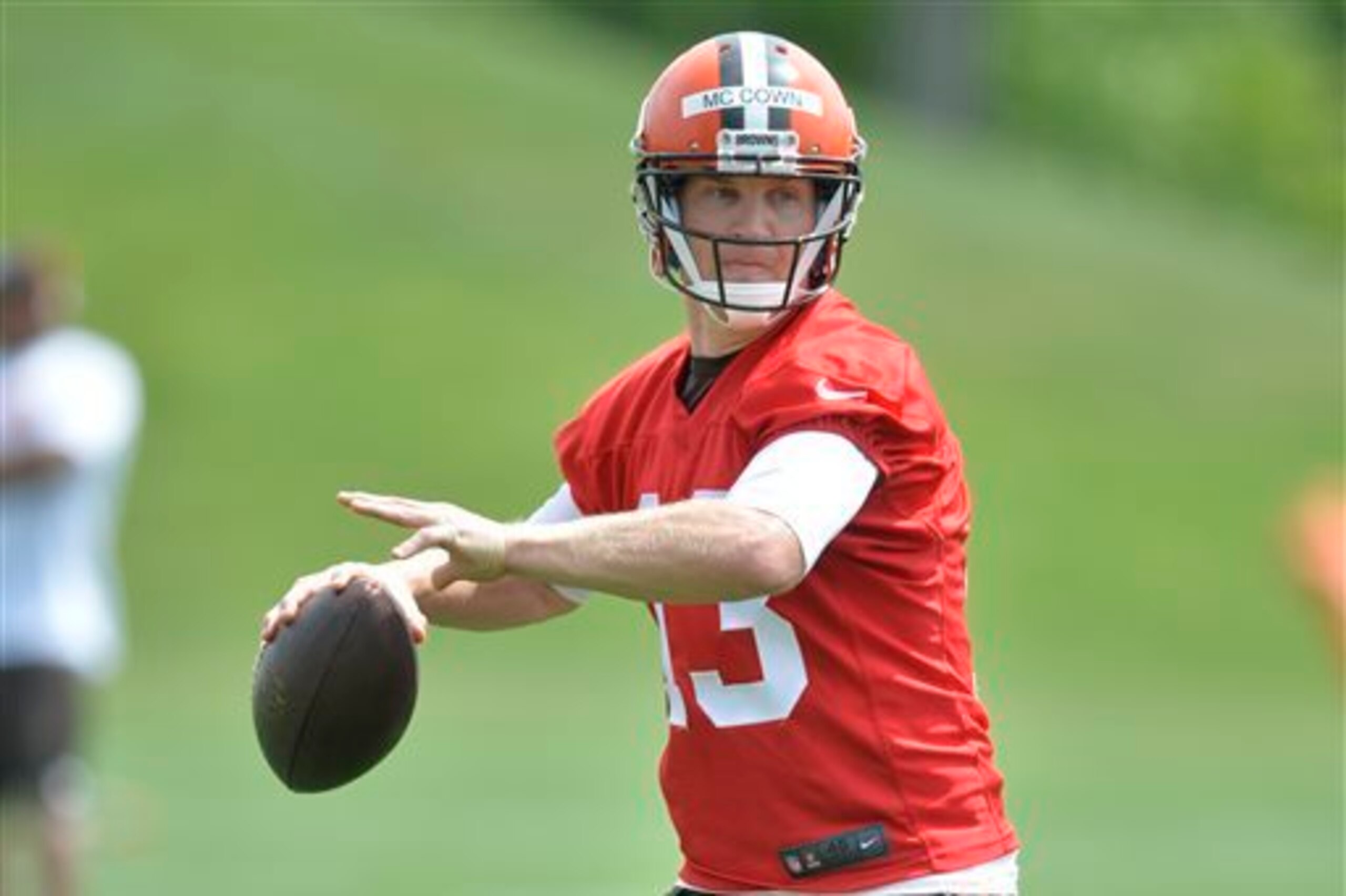
The coach, like his predecessors, inherited a team without a quarterback. Even if Josh McCown keeps hold of the starting job he has now, he isn't a long-term solution at the position. It's possible that Johnny Manziel or even Connor Shaw ultimately represent that solution, but as of now that is not the case. Whether Pettine is fired in January or in five years from now, the search for a franchise quarterback will have to continue with or without him.
This is Pettine's problem to solve, alongside his general manager Ray Farmer. But his job shouldn't hinge on the position. It's difficult in today's NFL to find a competent long-term quarterback no matter the team. It's to the point where, unless you're the Indianapolis Colts, it feels largely like trial and error. The Browns have certainly made many errors in their numerous trials at quarterback.
But no recent coach has been given more than three years to get it right. And as such, no recent Browns quarterback has had the chance to hold onto the job because his coach and the men who drafted him, traded for him or picked him up in free agency were out the door so quickly, replaced by another group of men with a completely different vision at the position.
But it's not just the quarterback situation—and Pettine's chances to get it right—that should keep his job safe for another year. Instead, it's what has already been built and what is still a work-in-progress that should dictate he spends at least 2016 as the Browns' head coach.
The Browns have a new offensive coordinator and new quarterbacks coach. McCown, should he remain the starter, is brand new to the organization. Two of the Browns' assumed starters at receiver, Brian Hartline and Dwayne Bowe, have been with the team for mere months as well. The same can be said for starting tight end Rob Housler. The Browns' top three running backs, Duke Johnson, Isaiah Crowell and Terrance West are young, with Crowell and West in their second seasons in the league and Johnson a rookie.
No successful NFL offense was built in its first year of existence, and for Haslam to expect that out of Pettine's team this year would be foolish. But it would be even more foolish for Haslam to move on from Pettine because an all-new offense struggles in Year 1. Otherwise, the cycle continues anew, the Browns start from square one again and the odds are low—based on historical precedent—that it will suddenly prove to be the correct decision.
Plus, even if the Browns offense gels quickly and successfully, the team has other struggles to correct on defense. These are more directly in Pettine's purview considering his background as a defensive coach. But managing to turn around a Cleveland run defense that has continuously struggled for over a decade no matter the coach and the players involved could prove to be as time intensive a process as building this new-look offense.
Another issue facing the Browns this year is their difficult schedule. Cleveland has the ninth-toughest schedule based on the 2014 win percentages of their 2015 opponents. Their schedule this year not only includes two meetings apiece with their AFC North rivals, all of whom reached the playoffs last season, but also road games against the Seattle Seahawks and Kansas City Chiefs, along with home games against the Arizona Cardinals and Denver Broncos.
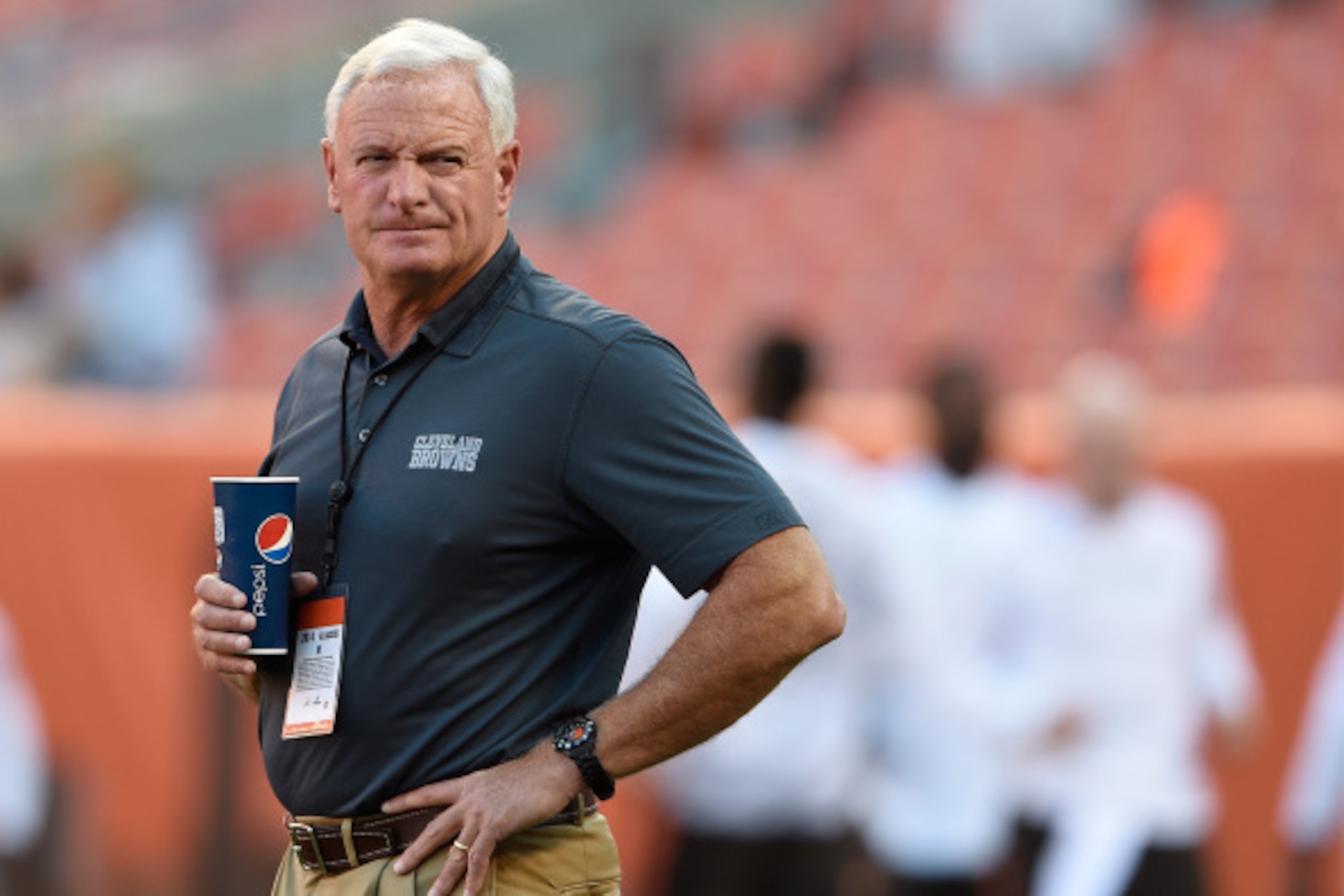
This is a tough schedule even for the Super Bowl champion New England Patriots. It's going to be even more difficult for a largely rebuilt Browns team. Seven wins, as they had in 2014, are nowhere near guaranteed this year. But five or six wins is not a failure. It's just one point in an ongoing process. But if Haslam sees that as irrefutable proof of irreversible regression, he may pull the trigger on the Pettine project.
The thing is, doing that would actually be irrefutable proof of irreversible regression. Haslam would just be doing the same thing he's done once and that the Browns have done numerous times since 1999, with each coaching change causing more harm than good. It's time to try something different.
A successful NFL team requires building a foundation, which is what Pettine began doing (alongside Farmer) last year, and one that continues to this day. Knocking down whatever structure comes from that foundation before it is completely built is what got the Browns into this mess to begin with.
That doesn't mean that Pettine needs seven seasons below .500 before he should get the axe. But it does mean that patience should be a newfound virtue for the Browns. Coaching continuity is important, especially when it does appear that Pettine and Farmer have a plan they are trying to execute.
This is going to be a difficult 2015 for the Browns and Pettine should not be punished for that. He needs to be given a real shot at succeeding, which means that no matter what happens in 2015, Pettine's job must stay safe.
.jpg?w=2560 "Chargers Bills Football")
.jpg?w=2560 "Bills Browns Camp Football")