


The Chicago Bulls and Tom Thibodeau have mercifully parted ways, and a handful of players on the roster will feel the fallout most.
A deteriorating relationship between coach and front office reached the point of no return, and Thursday's press release announcing Thibodeau's firing practically oozed acrimony. But if the consistent effort with which the Bulls played is any indication, it doesn't seem like the players ever turned on their coach.
They'll have a new coach next year all the same, and whoever it is will bring major changes.
A modernized offense, more rest and redefined roles will shake up the Windy City. They're bound to; if the Bulls organization wanted more of the same, it wouldn't have given Thibodeau his walking papers.
The impending changes will affect some more than others. Broadly, we should expect the team's offensive threats to see more playing time, while some of its defensive mainstays may fade into the background.
This will be a complicated transition which will affect everything from morale to minutes.
We don't yet know who'll replace Thibodeau, but here's how the deposed coach's absence will impact some of the team's key figures.
Derrick Rose
1 of 5This one cuts both ways.
Whoever takes over for Thibodeau will almost certainly install a more modern, creative offense. Based on the improved passing feel an older, less athletic Derrick Rose flashed last season (apparently, years of observation honed his court awareness), Chicago's point guard looks capable of running more sophisticated sets.
Grantland's Zach Lowe saw signs of that during Chicago's playoff run: "Rose says he’s a smarter player now, and he’s right. He has that angled bank shot down, and early-career Rose didn’t have these kinds of pick-and-roll reads in his bag."
That's good for Rose and the Bulls, and if the former MVP is healthy going forward, we might see his shooting accuracy improve (28 percent from long range this season) and his turnover woes diminish. Rose was asked to do too much in Thibodeau's stagnant system. With so little off-ball movement, plays often broke down into isolation sets or pick-and-rolls involving non-shooters like Joakim Noah.
In those situations, Rose had to attack set defenses with few quality bailout options.
That figures to change, if only because it would be difficult for the Bulls to feature less offensive innovation than they did under Thibs.
Rose has lost his greatest champion, though, and it's hard to guess how that will affect him.
Yes, Thibodeau pushed his point guard relentlessly, just like he did the rest of the roster. But Thibs doggedly defended Rose against a storm of criticism that lasted years. Through the long layoffs, shaky returns and disappointing spats of rusty play, Thibs supported Rose.
The Bulls will hope the on-court gains Rose makes under a new coach assuage the sting of losing his biggest backer.
Joakim Noah
2 of 5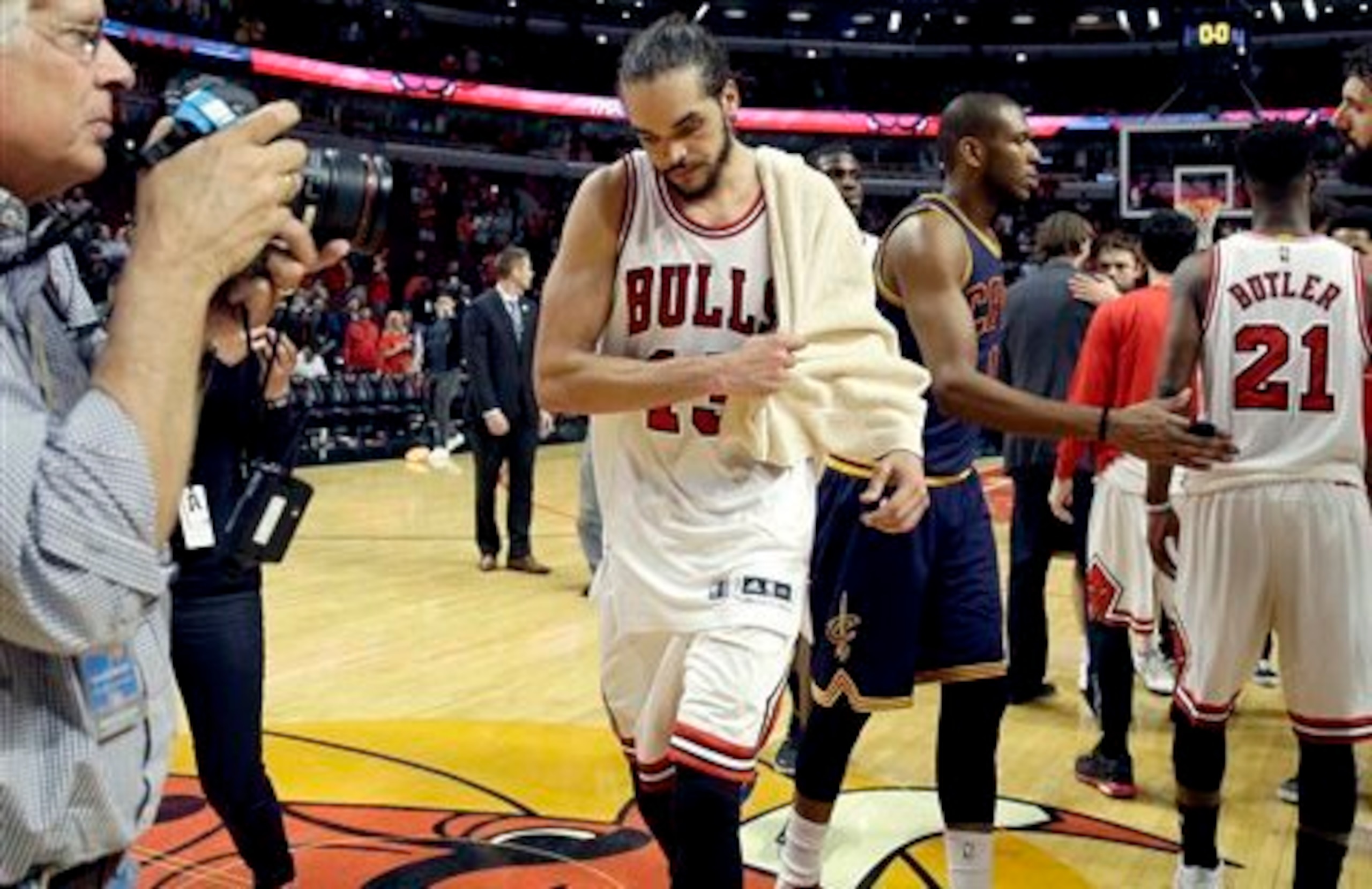
Joakim Noah's performance took a nosedive this season, particularly on offense, where he averaged career-lows in points per 36 minutes and field-goal percentage.
This, just a year after he won Defensive Player of the Year and finished fourth in MVP voting.
With one year and $13.9 million left on his contract, there's no certainty that Noah figures into Chicago's long-term plans now. While Thibodeau continued trotting out a banged-up Noah for more than 30 minutes per game because he trusted him to defend and rebound, the next head coach might not be so willing to ignore his massive offensive decline.
Especially because the most recent memory of Noah was his jarring playoff performance, in which his once-great hands turned to stone and he shot 40.8 percent from the field and 35 percent from the foul line.
There's still a chance the 30-year-old will get healthy, rediscover his offensive confidence and slot in as a valuable two-way starting center in the next regime. But if offense, spacing and flow are the franchise's new priorities, we could see his minutes reduced.
If Thibs were still around, Noah could have counted on big minutes and a big role until he couldn't walk anymore…and maybe even after that. Those two loved each other, albeit in a begrudging, complicated way, as Noah's comments at last year's Defensive Player of the Year award ceremony indicated, per Nick Friedell of ESPNChicago.com:
"I remember one day we were working out at the Berto Center and Thibs was putting me through a real grueling workout and I told him, "You know, Thibs? If we weren't winning games I would really, really hate you." And he said, "Trust me, Jo. I feel the same way about you."
"
Now, Noah's future is far less certain.
Kirk Hinrich
3 of 5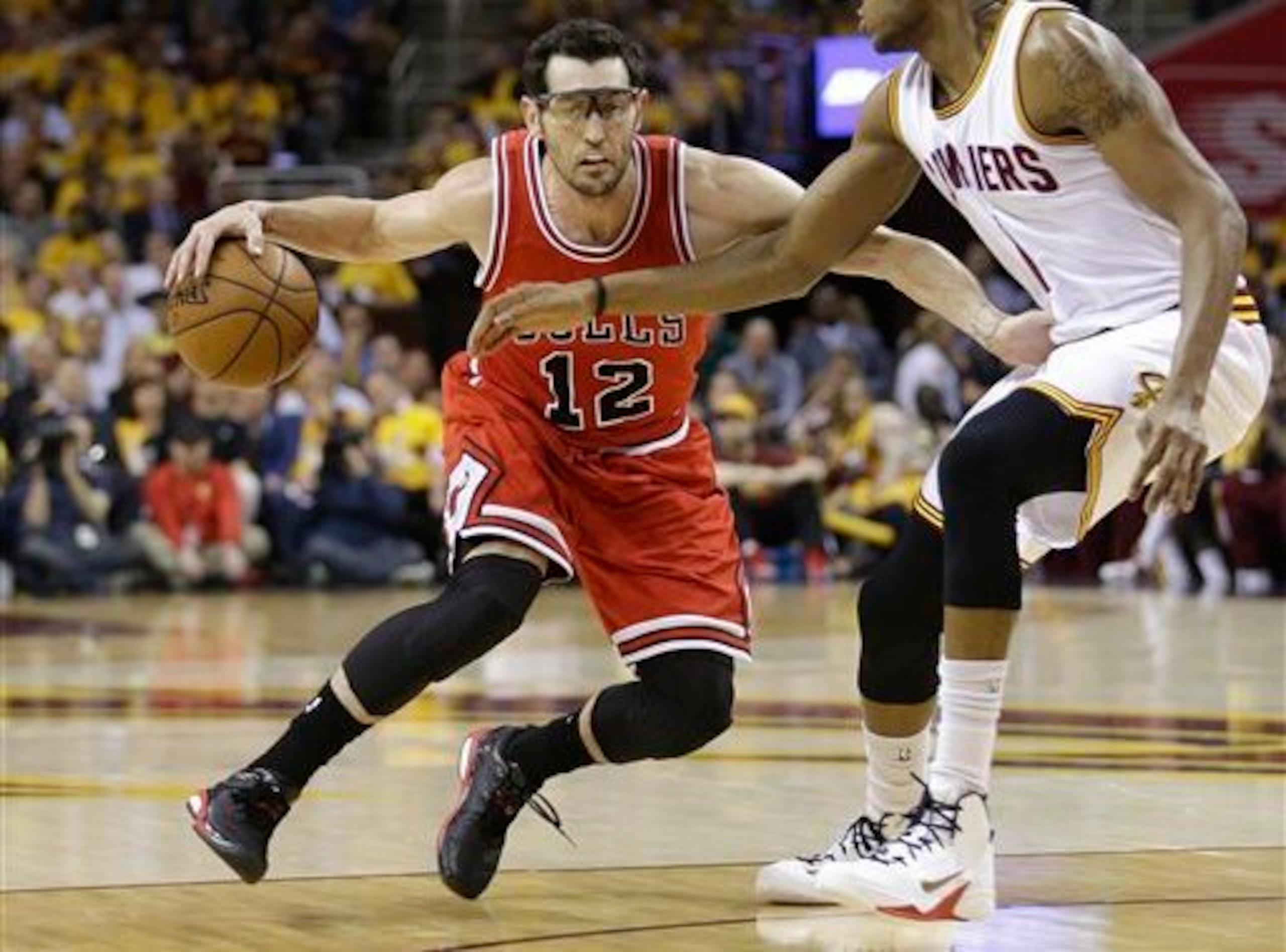
Kirk Hinrich is on the books for one more year and $3 million, but there's a good chance he'll collect that money from the bench next season.
SB Nation's Tom Ziller explained: "Thibodeau, like Vinny Del Negro before him, relies on Hinrich for major minutes despite the fact that Hinrich is one of the least productive players in the NBA. He's a crutch, in a way."
It's true: Hinrich logged 24.4 minutes per game this season despite shooting 37.3 percent from the field and posting an unbelievably low player efficiency rating of 6.8.
Six.
Point.
Eight.
Among players who logged at least 1,600 minutes last year, of which there were 171, only Utah Jazz rookie Dante Exum posted a lower efficiency rating.
Despite overwhelming statistical evidence that Hinrich had no business being on the court, Thibodeau used him liberally because the bespectacled point guard was a stringent follower of the coach's precise defensive rules.
With Thibodeau out, Hinrich's role figures to disappear.



Nikola Mirotic
4 of 5
Nikola Mirotic's role under Thibodeau was basically the inverse of Hinrich's.
Though the rookie forward offered ample offensive creativity, spacing and production, his defense was spotty. And so, of course, Thibodeau never gave Mirotic big minutes unless he absolutely had to. And even when injuries forced Thibs into playing Mirotic, he often used the Montenegrin at a suboptimal position, according to ESPN.com's Bradford Doolittle:
"He's averaged 25 minutes when at least one of Chicago's other primary bigs is out but just 15 when they are all together. And of those 15 full-contingent minutes, many of those see Mirotic playing small forward, where his impact is marginalized. According to 82games.com, Mirotic played the 3 for about one-fifth of his minutes during the season. His PER at 4 was 19.5; at 3 it was 15.2.
"
Mirotic has range that scares defenses, and he can put the ball on the floor to create shots for others. He was Rookie of the Month twice, and it became clear during the year that he performed better when given more minutes:
| Minutes | +/- | Net Rating |
| 10-19 | +3.7 | +4 |
| 20-29 | +8.0 | +8 |
| 30-39 | +8.6 | +17 |
| 40+ | +22.0 | +5 |
With fresh eyes, the next coach will see Mirotic's value and forgive the sometimes unimpressive defense.
You can probably toss Doug McDermott and Tony Snell in here, too.
The Creighton product's rookie year never really got off the ground, largely because the sharpshooting forward couldn't master the demanding learning curve required to earn time in Thibodeau's defense. Knee surgery also sidelined him for six weeks in December and January, which didn't help.
Snell, a versatile wing who brings athleticism and improving shooting, should also get a longer leash.
Every young player on Chicago's roster—especially the ones who offer more on offense than defense—should expect to get more looks as rotation options now.
Jimmy Butler
5 of 5
Thibodeau gets credit for helping Jimmy Butler develop into a borderline superstar. Butler embraced the toughness and accountability his coach demanded, and that no-excuses attitude forged one of the grittiest, hardest-working wings in the league.
But Thibs also wore Butler down, and there's a good chance a gentler touch will bring out an even higher level of play going forward.
Butler led the league with an average of 38.7 minutes per game in 2014-15, and his blossoming offensive game made those minutes more demanding than ever. His usage rate spiked to a career-high 21.6. In addition to checking the opponent's most dangerous threat, Butler spent last season shouldering his heaviest offensive load yet.
And in the playoffs, Thibs trotted Butler out for a whopping 42.2 minutes per game, which was actually a step back from the absurd 43.6 he averaged in the 2013-14 postseason.
The league is getting smarter about rest. The San Antonio Spurs have been cutting minutes and resting stars for years. The 67-win Golden State Warriors didn't have a single player log more than 33 minutes per game this year.
Thibodeau continued to go the other way, and he explained his reasoning to K.C. Johnson of the Chicago Tribune:
"The only way you can improve execution and timing is really through repetition. The only way you get repetition is you have to practice. … There's the school of thought that less minutes are better. There's also the school of thought that when you do less, you also become deconditioned.
"
The idea of more rest improving play applies to every player in the Chicago starting lineup, but Butler could benefit most from an occasional break.
Assuming the restricted free agent returns (which he almost certainly will), expect a less-is-more approach to bring out Butler's best season yet in 2015-16.
Stats courtesy of Basketball-Reference.com unless otherwise indicated.
Grant Hughes covers the NBA for Bleacher Report. Follow him on Twitter @gt_hughes.
.jpg?w=2560 "Raiders Could Start Mendoza")

.jpg?w=2560 "Rodgers Iced Out on Plane 💎")
.jpg?w=2560 "🚨 Week 8 AP Top 25 Poll")