

James Harden, Rockets Must Now Dig Themselves out of Yet Another Postseason Hole

Following a tightly contested 99-98 loss to the Golden State Warriors on Thursday night, the Houston Rockets are once again left to dig themselves out of another seemingly inescapable hole.
A hole that almost wasn't.



Trailing by one inside 10 seconds to play, James Harden rebounded Harrison Barnes' botched layup and dribbled up the floor with a chance to win the game. Rockets coach Kevin McHale did not use Houston's final timeout, electing instead to let his best player, the MVP runner-up, work his magic.
But Harden failed.
He drove left on Stephen Curry, then cut back to his right. Harden then fired a pass to Dwight Howard as he reached the three-point line—the same Dwight Howard who has made just five treys for his career, none of which have come in the postseason.
Howard deferred back to Harden, who tried dribbling through Klay Thompson and Curry only to fumble the ball as time expired without even getting a shot up.
Naturally, Harden wasn't happy. He stormed off the court, clearly angry with himself and, apparently, the idea of curtains in a basketball arena:
That final sequence was just as surprising as it was detrimental. As Trevor Ariza alluded to afterward, per the Houston Chronicle's Jenny Dial Creech, the Rockets didn't call timeout for a reason:
Just like that, a spirited comeback and possible 1-1 series tie became an inexcusable last-second blunder and 2-0 deficit.
Calling this a "hole" doesn't even do the gravity of the situation justice. We might as well call it a 2-0 grave.
NBA teams that fall into 2-0 traps in best-of-seven series stage a successful comeback less than 10 percent of the time, according to WhoWins.com. Though the Rockets franchise has fared better than that in past years, the outlook is still bleak, per ESPN Stats & Information:
Writing the Rockets' Western Conference Finals obituary would be easy. But it would also ignore what they did in the second around against the Los Angeles Clippers.
Down 3-1, facing three consecutive win-or-go-home contests under the most ideal circumstances, the Rockets did the improbable, rattled off three straight victories and ended up here, in the Western Conference Finals.
But this is a different fight against a different opponent. The Warriors are not the Clippers. They're deeper, more balanced and one of just 10 squads to win 67 regular-season tilts.
The Rockets have to beat that team, that juggernaut, four times in the next five tries to advance. The Warriors haven't lost four of five all season.
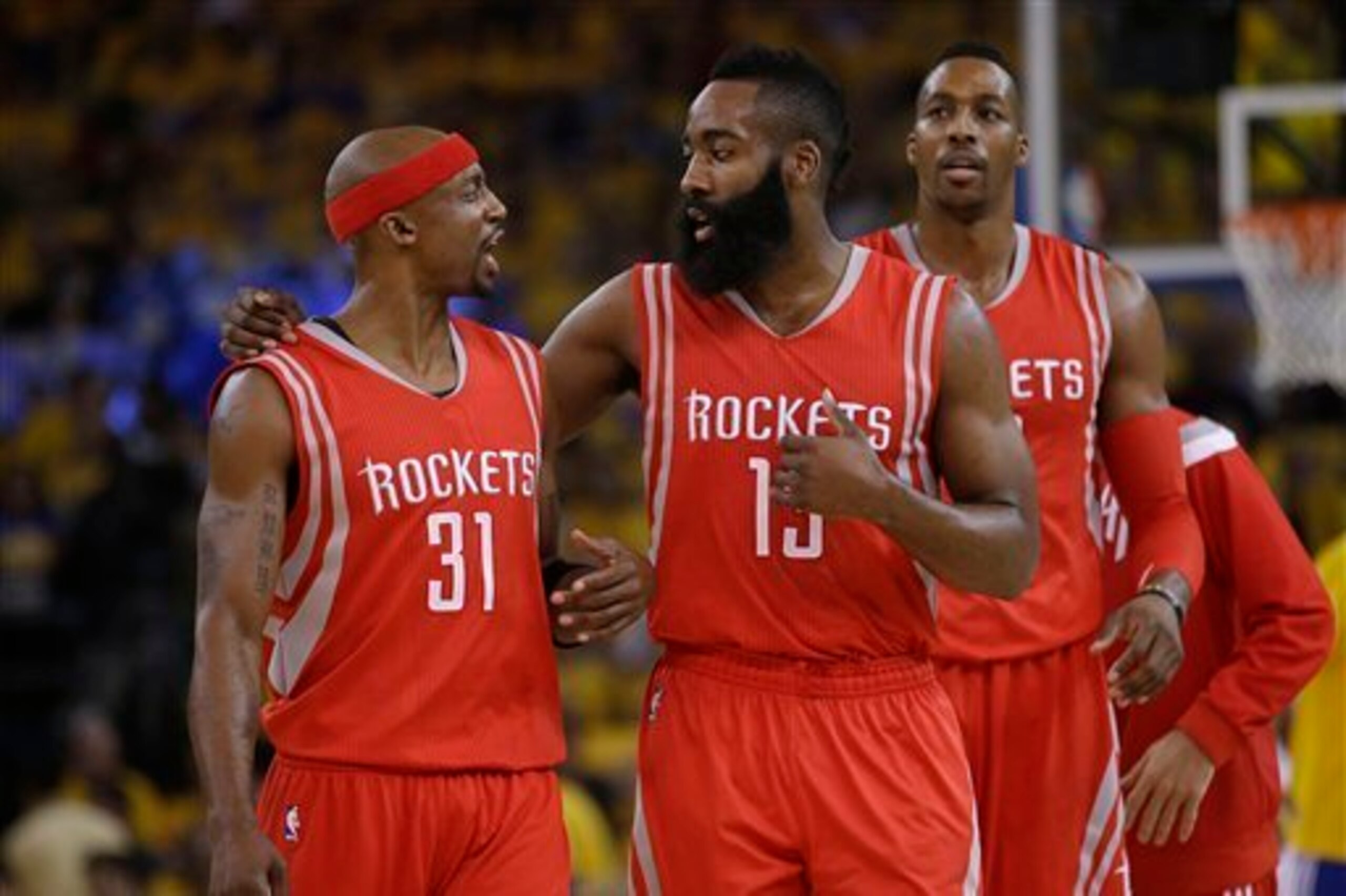
Unsettling still, it's not like the Rockets have been thoroughly outclassed in this series. They've lost both games by a combined five points. They even held a 16-point lead in Game 1, only to see it evaporate before halftime.
Game 2 was arguably better for the Rockets from a team standpoint. Howard tallied 19 points and 17 rebounds not three days after injuring his left knee and disappearing for almost all of Game 1. He played above the rim on offense, fought for position without favoring that left knee and ran the floor with relative ease for most of the night.
Terrence Jones redeemed his 2-of-10 showing on Tuesday by pumping in 12 points on 6-of-12 shooting to go along with one steal and three blocks.
And then there's Harden himself, the unequivocal hero up until the last play. He flirted with yet another triple-double, exploding for 38 points, 10 rebounds and nine assists, single-handedly willing the Rockets out of a 17-point deficit.
When he plays like that, late-game blunders shouldn't matter, because the Rockets shouldn't even be in a position for them to happen, as The Pull Up Podcast's Josh Eberley and ESPN.com's Tom Haberstroh note:
Indeed, there is plenty of blame to go around—starting with Houston's early-game woes, per Grantland's Zach Lowe:
Houston allowed Golden State to shoot 64.5 percent, including 6-of-12 from downtown, through the first 18 minutes of action. It didn't even try defending in transition and, yet again, had no answer for Curry on the outside.
It's difficult, then, to imagine the Rockets rebounding from a loss like this, in a way that rivals their comeback against the Clippers, mostly because those who helped them rebound last time are also part of the problem.
Josh Smith went from saving Houston's season in Game 6 against Los Angeles, to shooting 6-of-17 in Game 1, to misfiring away at will in Game 2. Salt City Hoops' Ben Dowsett puts his effort in proper context:
Incapable of keeping pace with anyone in Golden State's backcourt on defense and working off a 2-of-9 disaster in Game 1, Jason Terry was once again a non-factor in Game 2.
After scoring 20 points on a blistering 7-of-10 shooting in Game 1, Ariza went just 3-of-8 from the field.
Corey Brewer has made four shots through two games.
And there's the common denominator.
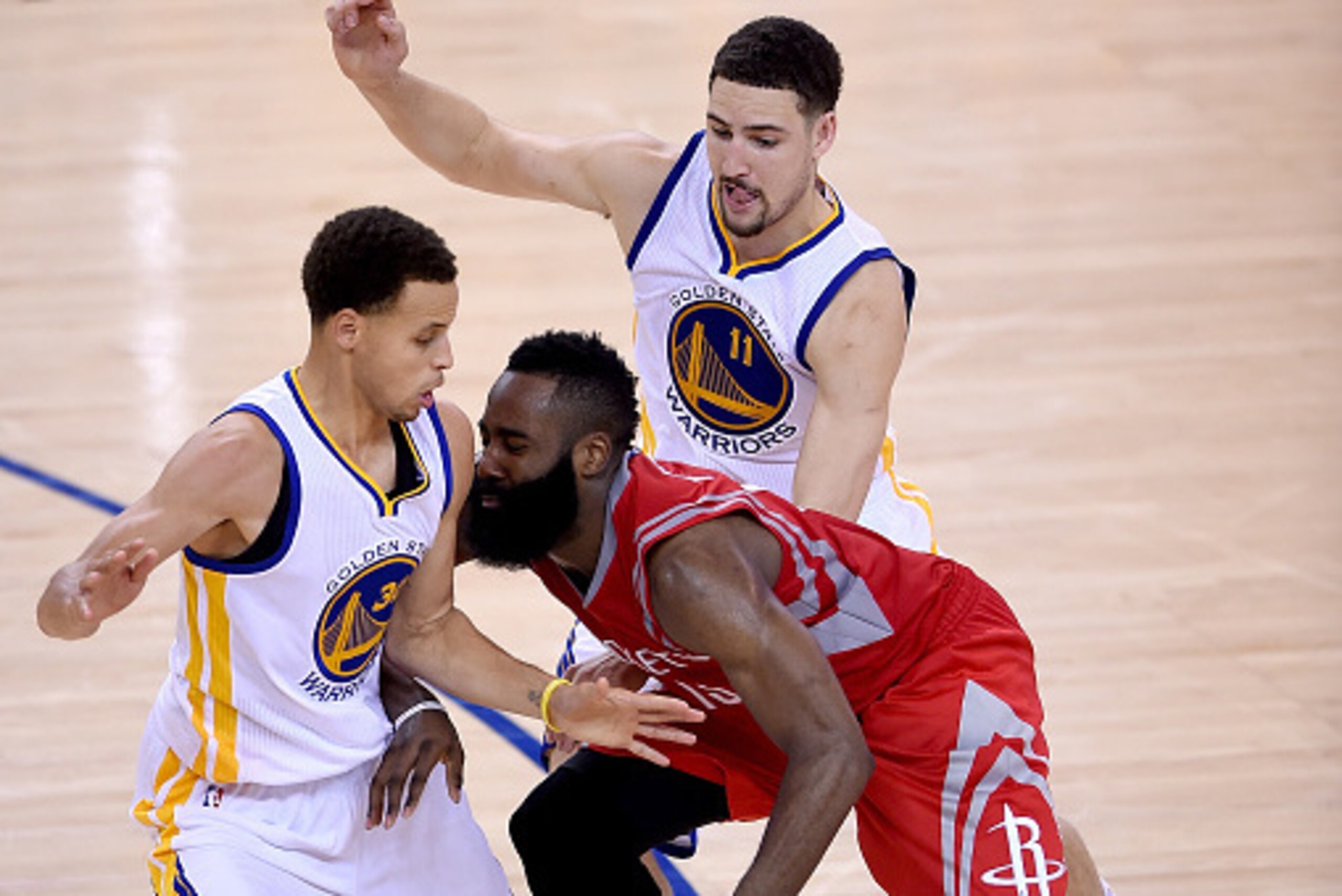
It took everyone to push the Rockets past the Clippers. More than just Harden and Howard and one other role player contributed in spectacular fashion on any given night. They need that again, only more so.
"We're not going to go anywhere," McHale said, per the Associated Press (via ESPN.com). "We're just going to keep standing here and swinging."
Provided it's everyone who comes out swinging in Games 3 and 4 and beyond (if necessary), the Rockets will have a shot.
Then again, they just went up against the NBA's best team and almost won. Twice.
There's a chance that, even if Harden gets more help, the Rockets have already unloaded their best shot, and it just wasn't good enough.
Stats courtesy of Basketball-Reference.com and NBA.com unless otherwise cited.
Dan Favale covers the NBA for Bleacher Report. Follow him on Twitter: @danfavale.

.jpg?w=2560 "Raiders Could Start Mendoza")

.jpg?w=2560 "Rodgers Iced Out on Plane 💎")
.jpg?w=2560 "🚨 Week 8 AP Top 25 Poll")
.jpg?w=2560 "Packers Safety Slams Refs 🤬")

.jpg?w=2560 "Fantasy Waiver Wire Stars 🤩")