Ranking the San Antonio Spurs' Biggest Needs in the 2015 NBA Draft
After the San Antonio Spurs' early exit from the 2015 NBA playoffs, speculation swelled regarding a potential roster reshuffle, stemming from ESPN's Marc Stein's remark regarding Tiago Splitter's murky future with the team. With 39-year-old Tim Duncan and 37-year-old Manu Ginobili both having finished the final year of their respective contracts—and the latter's ongoing health issues making his return uncertain—it appeared as though the post-Big Three era was set to begin.
Yet, with Duncan and Ginobili reportedly set to return—per Bleacher Report's Ric Bucher—the idea that the Spurs are in for an identity metamorphosis seems like a long shot. It's this very roster—add and subtract a few marginal pieces—that has continuously won 50 games and seen two Finals and one title over the past three years.
TOP NEWS

Embiid Out vs. Pistons
Luka 50 Piece in Win 🔥

Power Ranking Every NBA Team's Starting Lineup 🔢
That isn't to say that the team isn't without weakness, though. The Spurs' early exit indicates tweaks are needed, and the eventual retirements of Duncan and Ginobili suggest that the Spurs' rebuilding efforts must continue, even if the team remains quiet during free agency.
That makes the upcoming draft—where the Spurs' will pick 26th—extremely important, as it allows San Antonio to address both its current and predicted weaknesses without blowing up the core in what could be the Big Three's final hurrah.
With a deep pool of talent, the 2015 NBA draft offers the Spurs front office a great chance to confront the following deficiencies.
3. Perimeter Defense
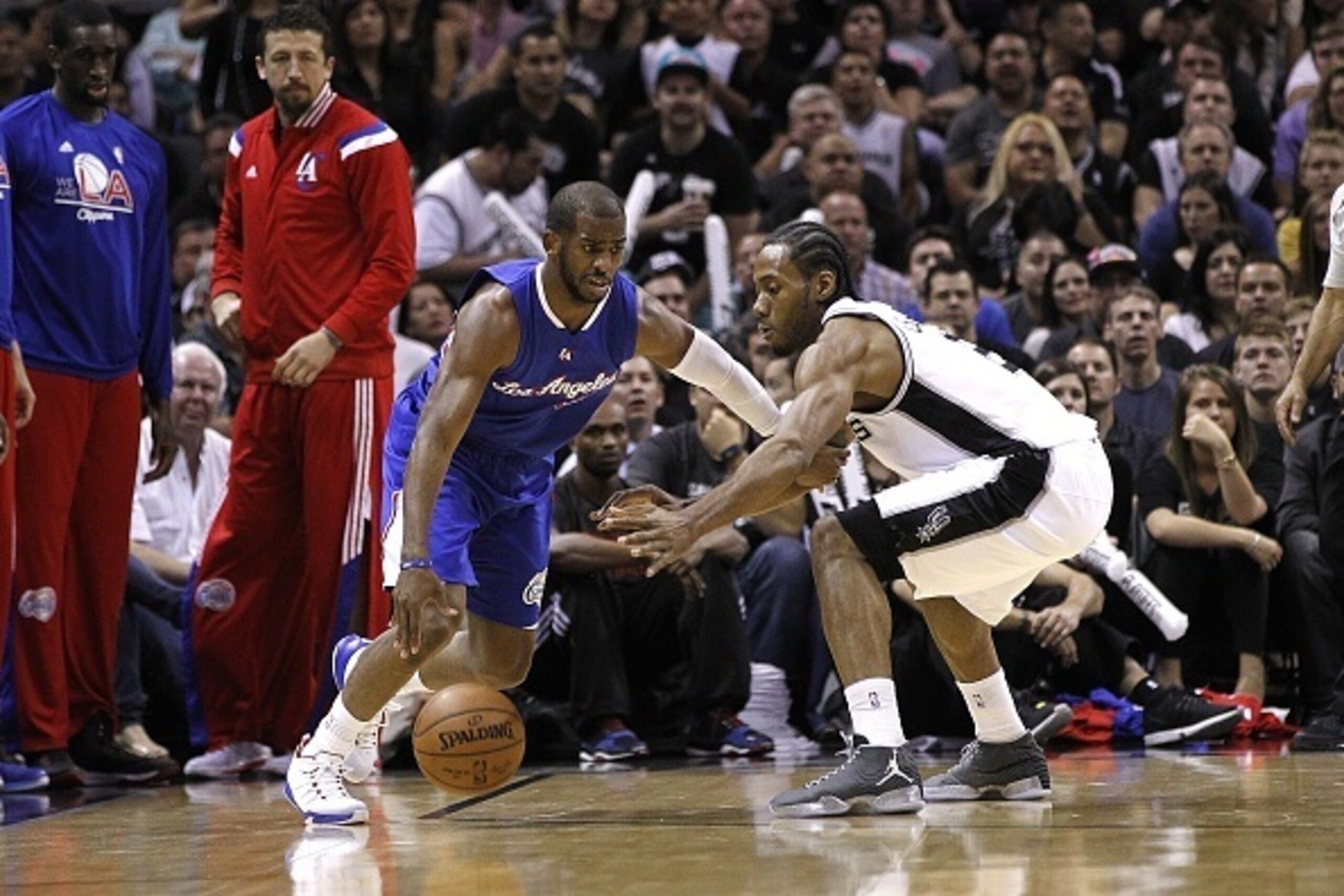
As Kawhi Leonard continues on his path to superstardom, the team is turning to him as a leader more than ever. In many ways, that's a good thing. Leonard's ability to handle the pressure makes it obvious that he's ready to lead a franchise.
However, it's also leading to an overreliance on Leonard's abilities—especially on the defensive end. It's a problem many teams have with their superstars, and one that San Antonio's balanced cast has generally helped it avoid.
But 2014-15 was a different story. Leonard's fantastic defensive campaign led to a Defensive Player of the Year Award—a great sign for the franchise given Leonard's age of 23.
However, the season also saw stretches like the one in December—featuring a host of injuries, including one to Leonard—that exposed the team's weaknesses.
Without Leonard, perimeter defense stalled, as noted by Jeff McDonald of the San Antonio Express-News:
"Heading into Saturday’s game against resurgent Washington at the AT&T Center, the Spurs’ defense is allowing 10.4 points more per 100 possessions this season when Leonard is off the floor compared to when he is on it.
During the past two seasons, the Spurs are 13-15 in games Leonard does not play. It is a sobering mark considering there remains no firm timetable for his return.
“If he’s not the best (defensive) small forward in the league, I don’t know who’s better,” New Orleans coach Monty Williams said. “It’s an amazing (Spurs) system, but when you take someone like Kawhi out of it, I’m sure they’ve had to change up their system a bit.”
"
Superstar swingmen enjoyed huge games as Danny Green—a great defender in his own right—had his hands full trying to lock down the perimeter.
A similar problem emerged last year during stretches when either Leonard or Green were injured and peaked when both were sidelined midseason.
With Green's future in San Antonio unclear, given his free agent status, it wouldn't be a bad move to invest in defensive help along the perimeter. Even if Green stays, another stopper would help ease the Spurs' reliance on their current defensive leaders.
Virginia's Justin Anderson and Arizona's Rondae Hollis-Jefferson fit the bill and should be targets for the team in this upcoming draft.
Even if those names find themselves off the board, San Antonio should strongly consider a defensive-oriented player to avoid any problems going forward.
2. Go-To Scoring
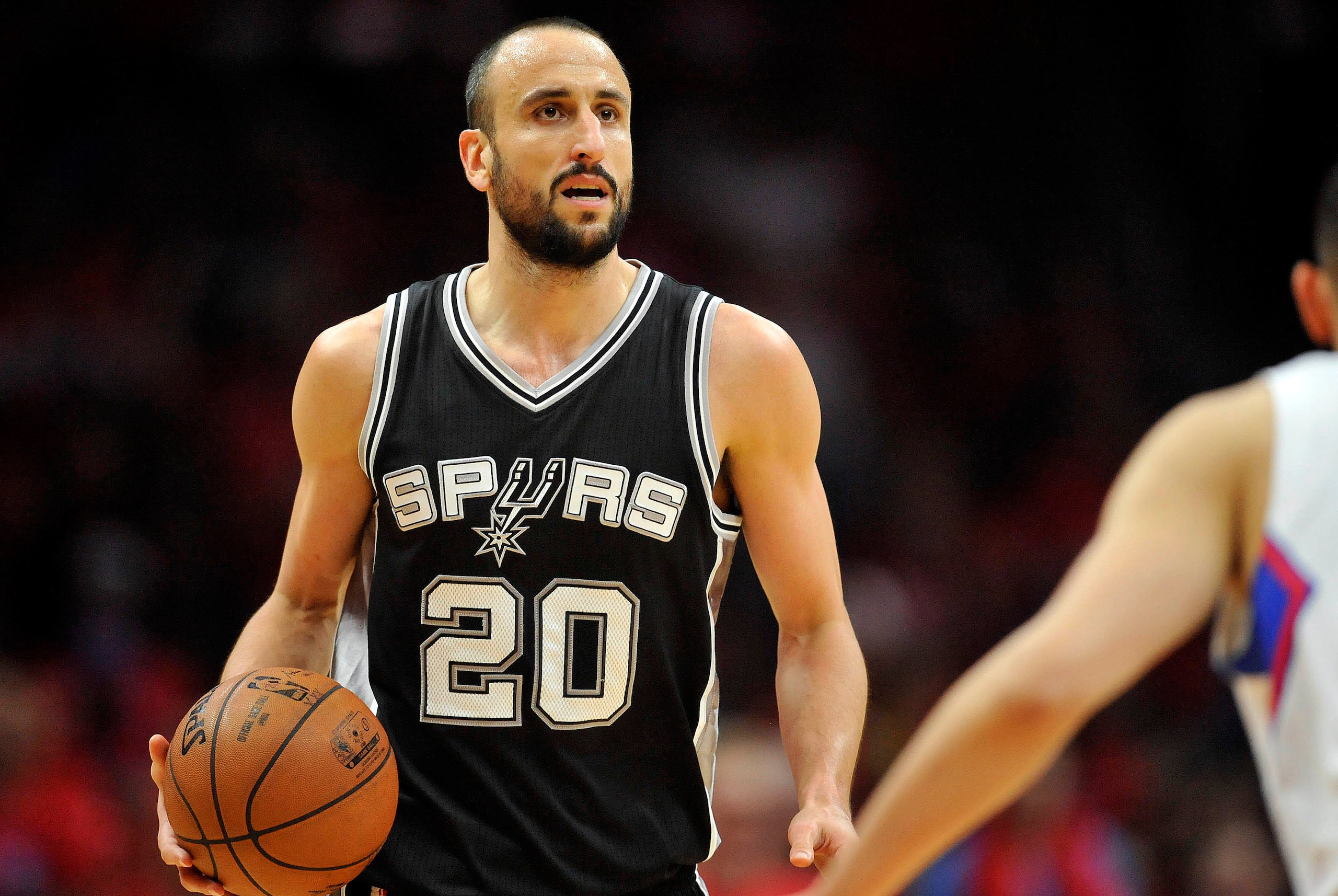
More often than not, the Spurs offense looks smooth. The result of a deep cast of smart passers and an atmosphere that promotes selfless play, the team's top-tier ball movement has made it a nightmare on the offensive end of the floor.
However, the reliance on passing has its downsides—one of which is the fact that the Spurs' limited number of shot creators is often masked and therefore not pinpointed as an actual problem.
However, in the Spurs' first-round series against the Los Angeles Clippers, it was easy to spot the lack of go-to scorers.
Averaging 20.3 points and 7.8 rebounds, Leonard exploded, having officially taken the next big step in his career. He'll be the franchise's leading man for years to come and has the ability to front both the defense and offense.
Beyond him, though, the team's go-to scorers stop at veterans Tony Parker and Manu Ginobili, and backup point guard Cory Joseph.
Unsurprisingly, those four are also the only regular rotation players whose unassisted field-goal percentage tops 40 percent, per the NBA's media site.
Patty Mills and Danny Green are both great scorers, but they are far more lethal as catch-and-shoot options along the perimeter. The former has his moments, but he certainly has room to grow as a shot creator.
With Parker on an apparent decline, Ginobili on his last legs and Joseph potentially on his way out, as Bleacher Report's David Kenyon suggests, the need for another go-to player is growing.
The draft features a number of point guards who could replace Joseph, including Utah's Delon Wright, whose size—6'5''—would allow him to play alongside Mills.
Tournament hero R.J. Hunter from Georgia State offers a nice mix of pure scoring ability and high basketball IQ that would make him a good fit in San Antonio if the franchise pursues a swingman, rather than a ball-handler.
Either way, drafting and investing in another shot creator would serve the team well, with that weakness already prevalent and growing more noticeable each season.
1. Interior Help
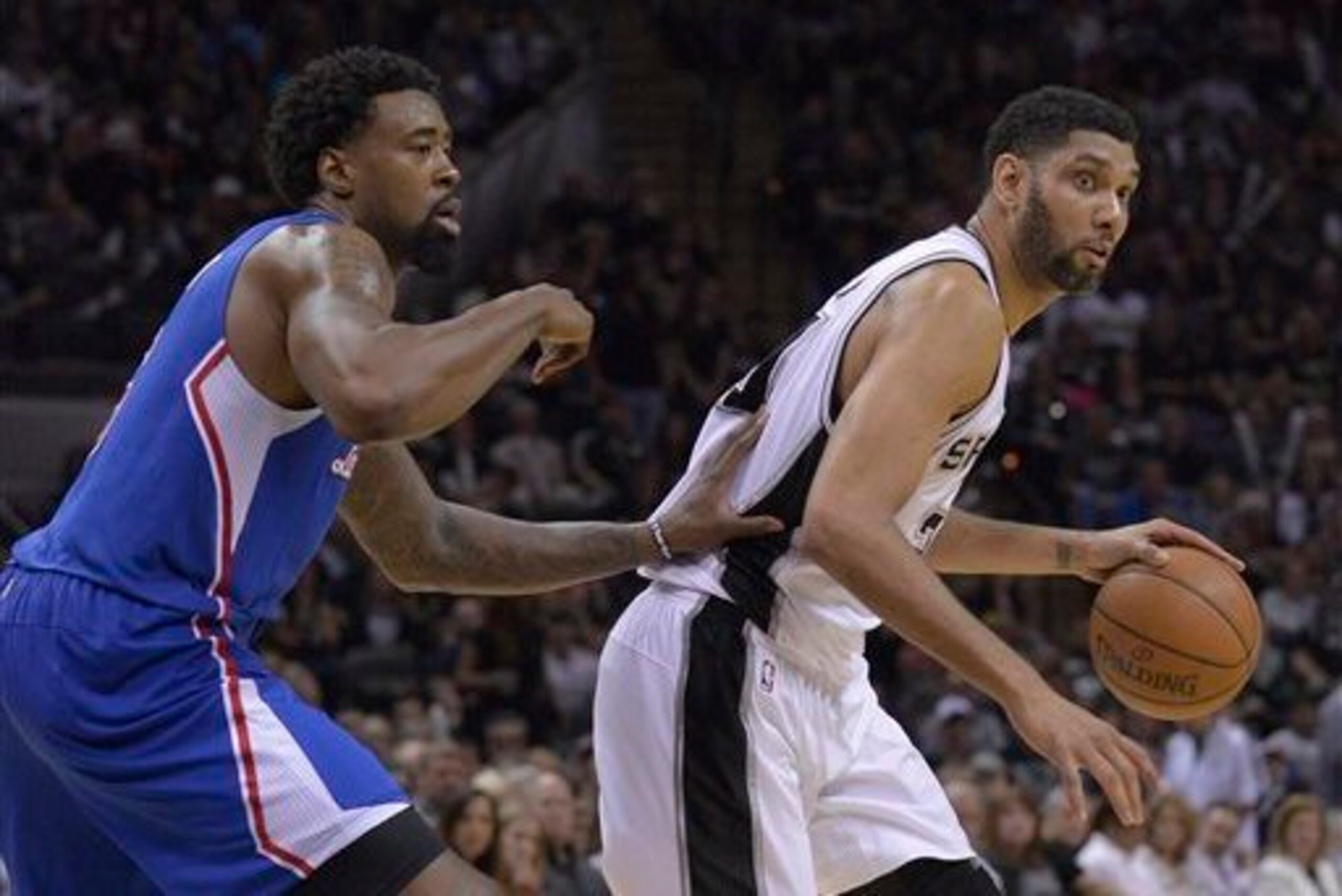
Perhaps the most persistent problem over the past few years, the Spurs interior lacks depth.
While 39-year-old Tim Duncan is busy confounding the league, the team's collection of post players has underperformed.
Tiago Splitter was on and off this season. While he's still a solid building block for the future, he's not on his way to superstardom by any means.
Boris Diaw also had an up-and-down season. Though he's known to channel his inner Hakeem Olajuwon every once in a while, he spends far more time along the perimeter and creating for others than he does with his back to the basket.
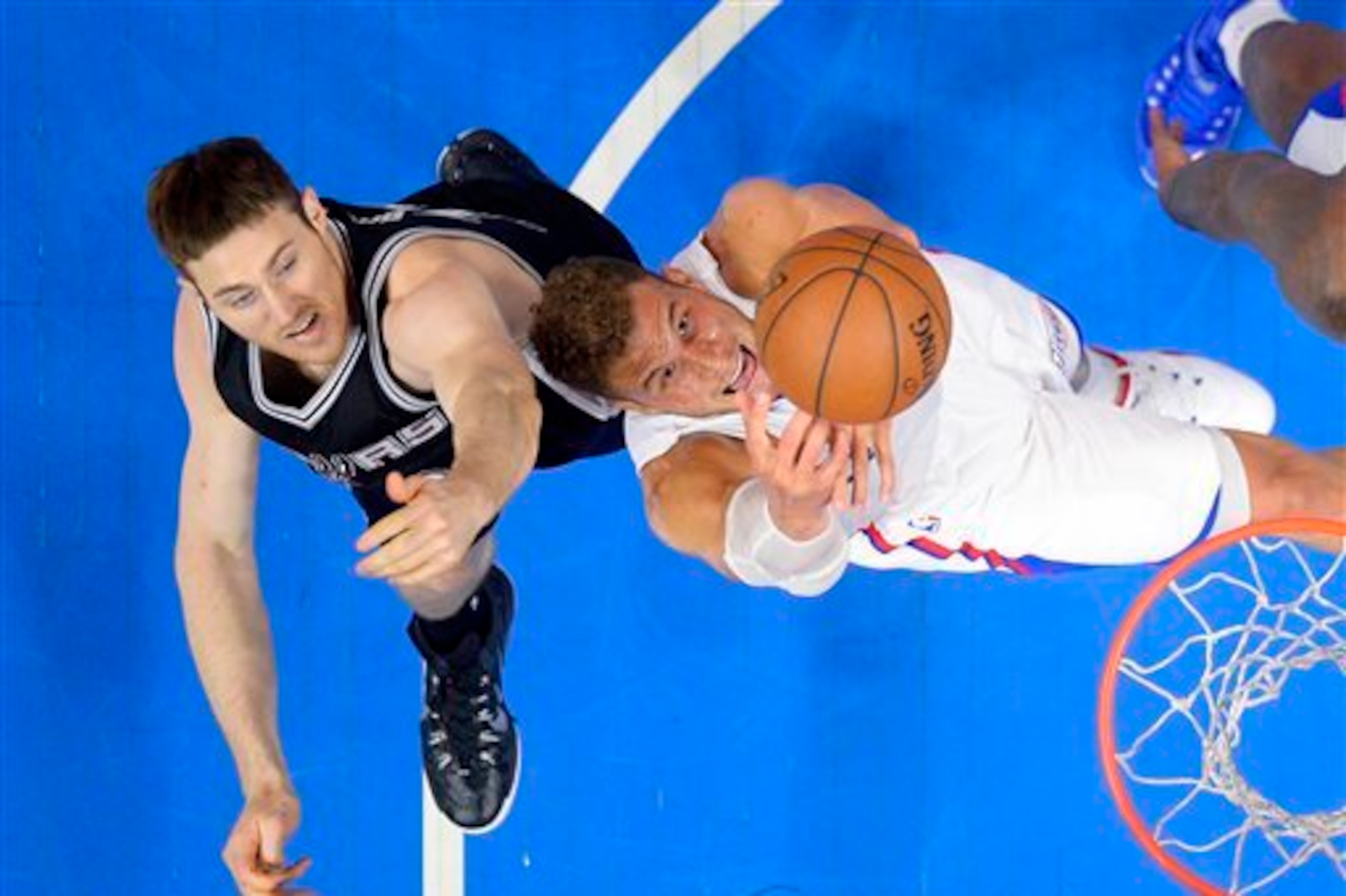
Aron Baynes made strides this past season but remains raw. He's a solid option off the bench, but with Duncan's age concerns and Splitter's injury history, Baynes needs help.
As Pounding the Rock's Kyle Carpenter noted:
"After watching Boris Diaw average nearly 30 minutes-a-game against the Clippers this seems obvious. Diaw is sensational up to about 24 minutes per game posting a +17 and +13 box score plus/minus in Games 3 and 5. The other five games (where he averaged over 30 mpg) he had a combined -38. He absorbed nearly all of the second big minutes (Tim Duncan averaged a ridiculous 35.5 mpg!) with Baynes rendered ineffective by Blake Griffin's athleticism and Splitter battling injury.
"
UNLV's Christian Wood—a skinny, but athletic defender—pops up consistently as a potential target. Robert Upshaw, formerly of Washington, has been featured around San Antonio's pick in mock drafts. He provides similar rim protection to a team that can overlook any character questions; Upshaw was dismissed from both Washington and Fresno State for violating team rules.
Though adding to their big man depth should also be a priority in free agency, the front office should strongly consider it in the draft if the right candidate emerges.

.jpg?w=2560 "Rodgers Iced Out on Plane 💎")
.jpg?w=2560 "Raiders Could Start Mendoza")
.jpg?w=2560 "🚨 Week 8 AP Top 25 Poll")
.jpg?w=2560 "Mahomes Told Teammate to Leave Meeting")
.jpg?w=2560 "Lamar Being Out Shocked Ravens")

.jpg?w=2560 "Packers Safety Slams Refs 🤬")