


We're about to revisit a question about the Boston Red Sox that seemed to come with an easy answer a couple weeks ago. It was something along the lines of, "YES! YES, YES AND YES AGAIN!"
But now? Things have changed to a point where we can have an actual discussion.
Here's the question at hand: Do the Red Sox need to sacrifice some pieces from their stacked farm system for the sake of upgrading their starting rotation?
TOP NEWS

Brewers Closer Blasts Tropicana Field Roof

Latest MLB Trade Rumors 👂

Best Fits for Cubs' Star FAs 🧩
You don't need to go back very far to find the time when the all-caps answer seemed warranted. On the heels of a month of April in which Boston's starting rotation posted a 5.75 ERA, the Red Sox fired pitching coach Juan Nieves. In the two games immediately after that, Red Sox starters were tagged for 10 earned runs by the Toronto Blue Jays. At that point, Boston's starters seemed truly doomed.
With that being the case, the only hope seemed to involve the Red Sox dipping their hand into a farm system that Baseball America had ranked No. 2 in MLB coming in the year, and going hard after at least one upgrade on the trade market. Namely, Philadelphia Phillies left-hander/walking trade rumor Cole Hamels. To New Englander eyes, never had he looked more appetizing.
But suddenly, things aren't so bad anymore. And as a result, whether the Red Sox really need to sacrifice their farm system to bolster their rotation has become a good question.
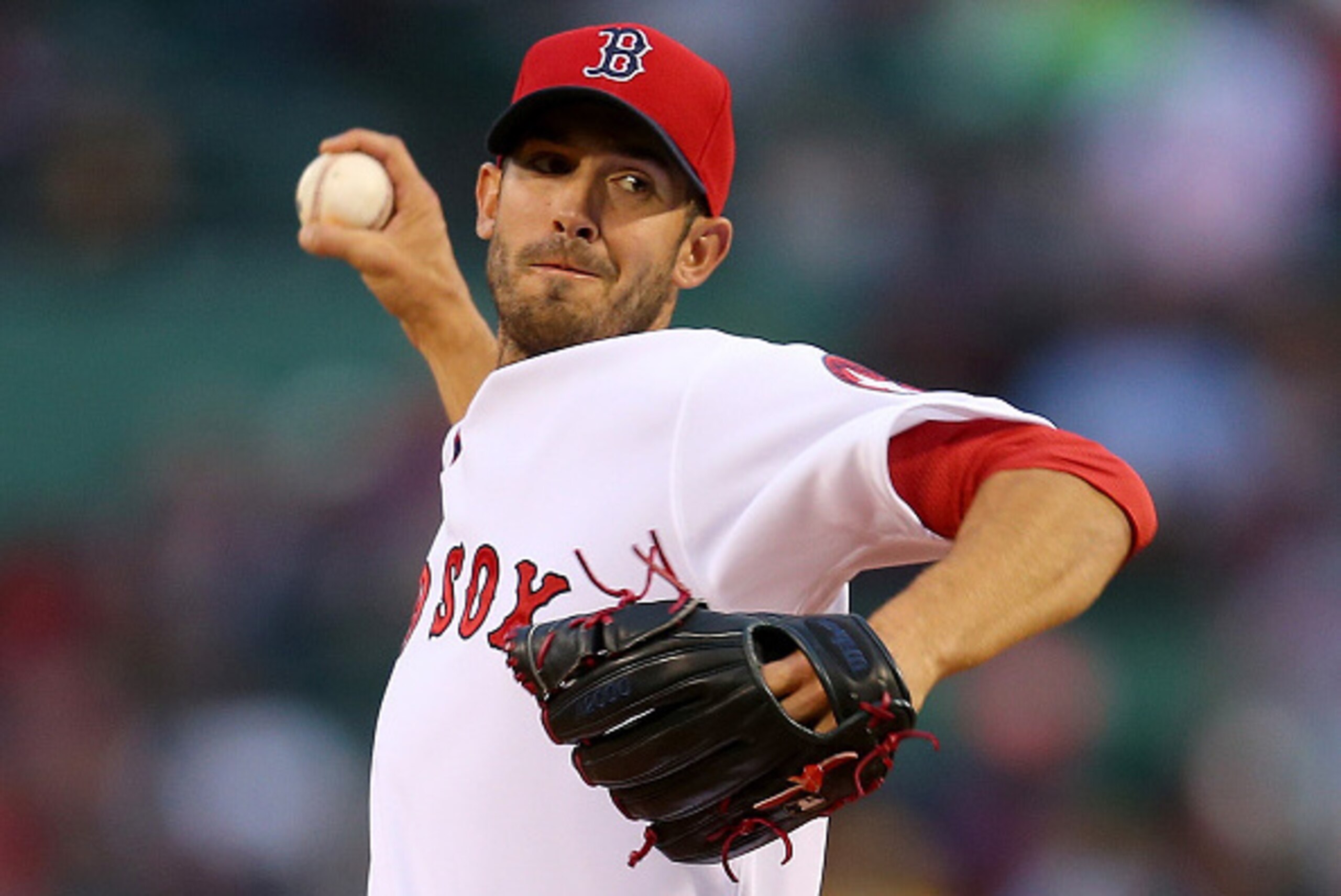
Right when things seemed bleakest, Red Sox general manager Ben Cherington did what any good GM does. He urged patience.
“We knew we needed good pitching coming into the year to win games, and we still know that,” Cherington told Scott Lauber of the Boston Herald before a 9-2 loss in Oakland on May 12. “I believe we’ll pitch better, and I believe we have a lot of the solutions here already.”
At the time, that was bold talk. But now, it sounds like wise talk.
All of a sudden, Boston's starting rotation is coming around. Starting with a solid effort (6.1 innings, three earned runs) by Clay Buchholz on May 10, Red Sox starters went into Thursday's game against the Texas Rangers with a 3.29 ERA over 60.1 innings their last 10 games.
And apart from one bad start by Justin Masterson and a mediocre fill-in start by Steven Wright, it's been a collectively strong effort:
| Clay Buchholz | 2 | 14.1 | 10 | 4 | 4 | 3 | 14 | 1 | 2.51 |
| Rick Porcello | 2 | 11.2 | 14 | 5 | 5 | 3 | 9 | 2 | 3.86 |
| Wade Miley | 2 | 13.2 | 12 | 2 | 2 | 5 | 8 | 0 | 1.32 |
| Joe Kelly | 2 | 13.1 | 12 | 3 | 3 | 4 | 9 | 1 | 2.03 |
Obviously, the small-sample-size caveat applies. But the thing about this particular small sample size is that it might be for real.
Though it didn't look like it, there was a case to be made that Boston's starting rotation was just plain unlucky early on this season. Anthony Castrovince of MLB.com did just that, highlighting how Boston's rotation was badly underperforming its peripherals. That can be a sign that a turnaround is imminent.
That alone helps add legitimacy to what's happened recently, but we can dive even deeper to find even more legitimacy.
We'll talk about what the numbers mean in a second, but first check out how Boston's rotation has performed over the last 14 days (sadly, FanGraphs doesn't have a "Last 12 Days" option) compared to its full-season performance:
| Full Season | 20.0 | 8.3 | 20.1 | .309 | 5.05 |
| Last 14 Days | 18.3 | 8.2 | 20.8 | .284 | 4.00 |
In the last two weeks, the Red Sox have seen only a modest drop in strikeout rate (K%) while limiting walks (BB%) and collecting soft contact (Soft%) at about their usual rate. Despite that, they've benefited from huge drops in BABIP and ERA.
To go back to what Castrovince had to say, the Red Sox were seemingly owed some good luck. What they've done in recent days is what collecting on good luck looks like.
And now, Boston's starting rotation doesn't look so bad from a big-picture perspective. We can also zoom in even closer and observe...
- Clay Buchholz: He has a place among baseball's most frustrating pitchers, so it's easy to forget that he actually has a career 3.97 ERA. He's not great, but he's capable of at least being good.
- Rick Porcello: He underachieved for years before finally breaking through with a 3.43 ERA in 2014, and that's generally the pitcher he's looked like this year apart from a single disaster start.
- Wade Miley: He most certainly peaked in his rookie season in 2012, but on the whole he's been pretty much a league-average pitcher (see ERA+ and FIP-) in his career.
- Joe Kelly: He'll likely never be as good as the 2.69 ERA he authored in 2013, but his rising fastball velocity and strikeout rate can vouch that his lively arm is only getting livelier.
Granted, none of this is to suggest that Boston's rotation should now be confused with that of the Washington Nationals. But it's because of stuff like what's above that Boston's rotation was always projected to at least be solid. Sure enough, that's what it's become.
And eventually, solid should be good enough.
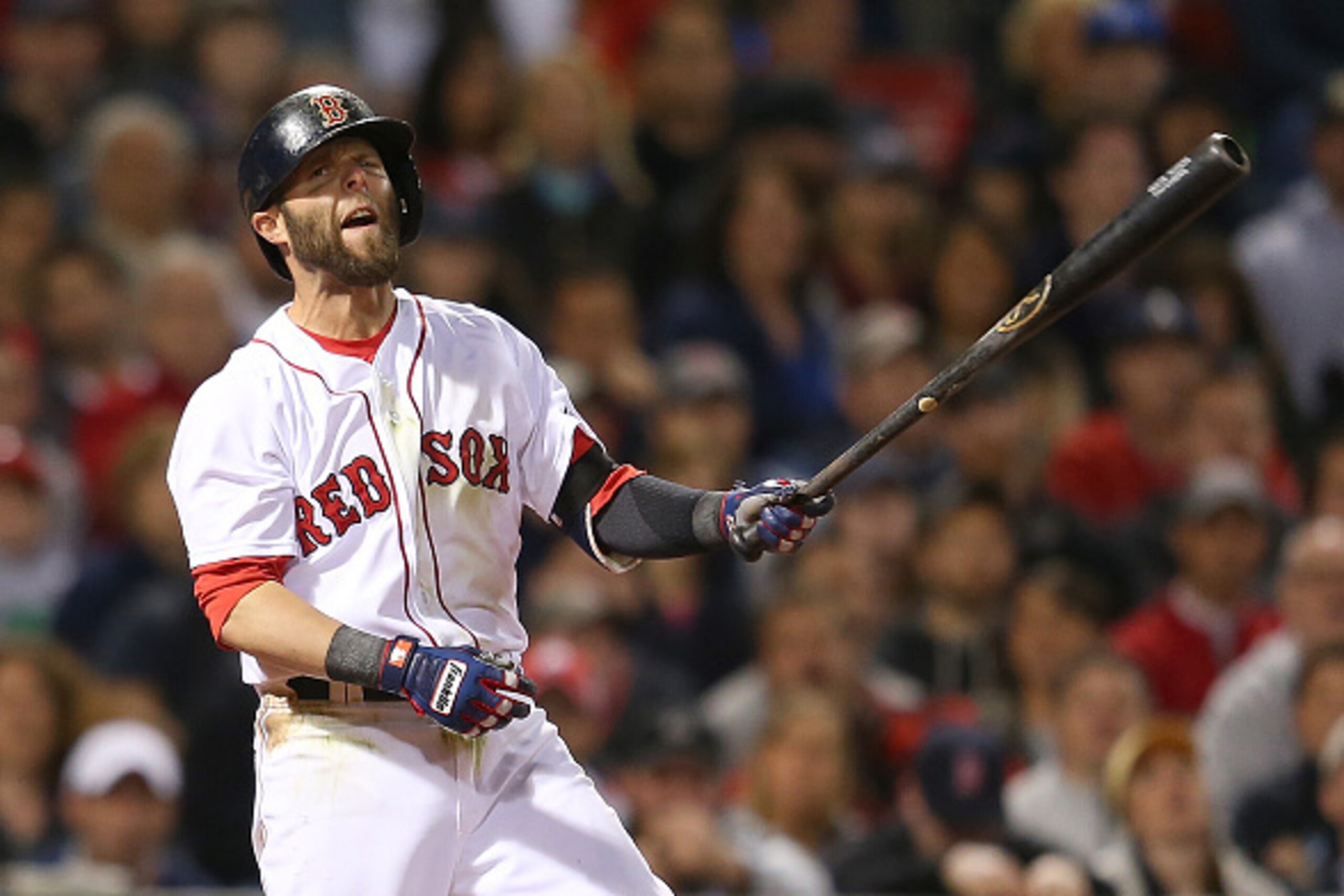
The reason it hasn't been lately is because the Red Sox's offense has completely disappeared. But that looks like the reverse of what's happened with Boston's starting rotation. Whereas it's been collecting on overdue good luck, the Red Sox's offense has been hitting into way too much bad luck.
As Alex Speier pointed out at the Boston Globe, the Red Sox offense entered Thursday with the lowest BABIP in the majors at .259. That's an impossibly low figure even without context, and it looks even more baffling with context. According to Baseball Savant, that low BABIP exists despite the fact the Red Sox have made harder contact on average than all but two other teams.
To quote Red Sox skipper John Farrell, via Tim Britton of the Providence Journal: "We're getting a number of good at-bats, but the ball's not falling right now. You can't steer it after you hit it."
In all likelihood, Boston's offense will start finding good luck in much the same way that its starting pitching has found good luck. When that happens, the Red Sox will find themselves getting more than enough offense and just enough pitching most nights.
Assuming things do indeed come to this, the Red Sox won't necessarily need an ace pitcher so much as they'll need a pitcher, period.
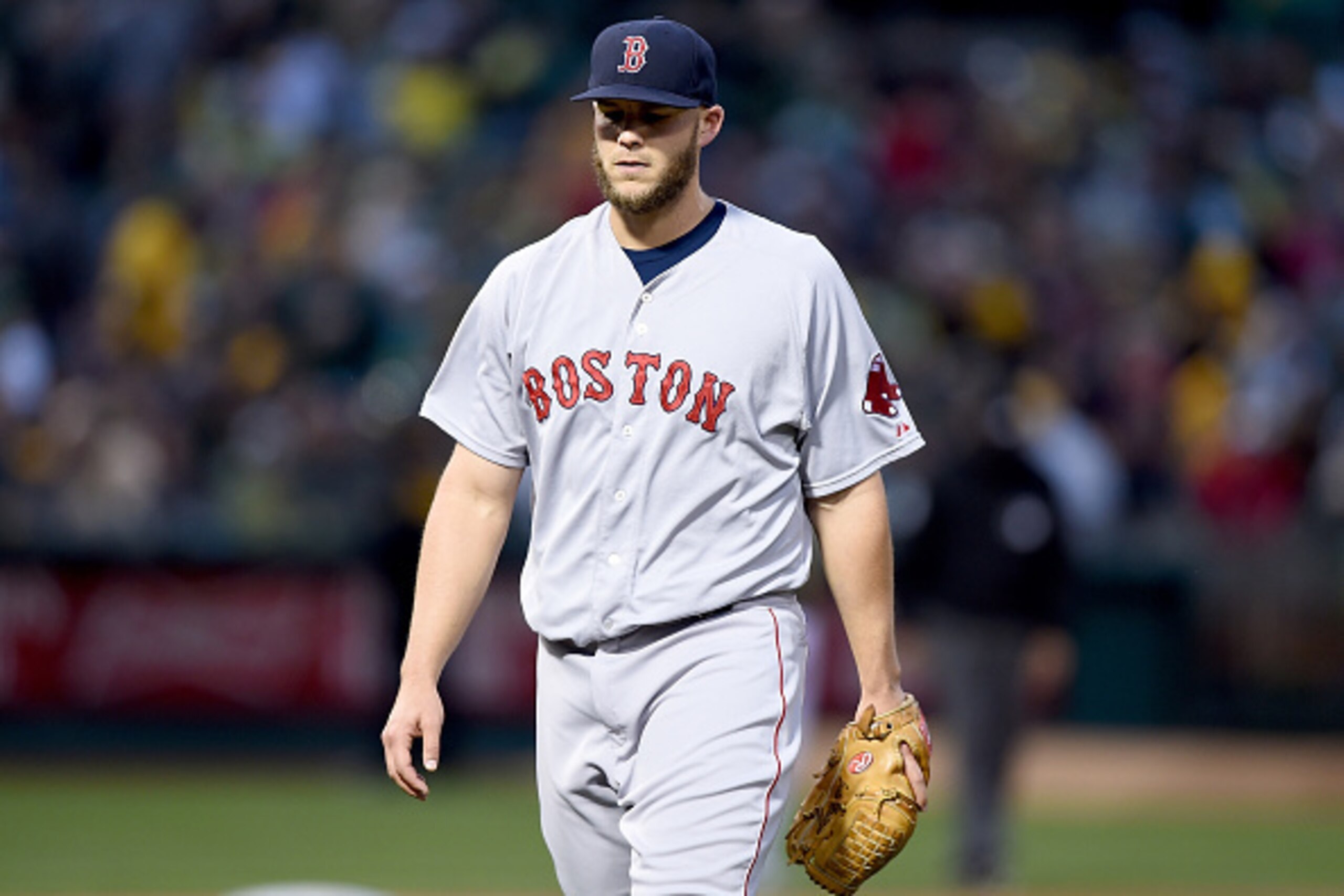
It's either that or trust that Masterson can handle the job when he comes off the disabled list, but that's a long shot. The Red Sox indicated that they trusted Masterson about as far as they could throw him when they put him on the DL in the first place, and that's a good call. He has a strong track record, but he's recovered neither from the velocity nor the command problems that plagued him in 2014.
Rather than on Masterson, the Red Sox darn well should have their eyes on the trade market for upgrades. And if it turns out that they can get somebody like Hamels or Cincinnati Reds ace right-hander Johnny Cueto at a reasonable price, they shouldn't need to think twice. They'd be fools not to.
It's far more likely, however, that the Red Sox will have to consider other options if they want to made a deal for a starter without gutting their farm system. And, at long last, this leads us to a thought that must put a smile on Cherington's face:
There figures to be a lot of affordable pitching on the market this summer.
The best way to find affordable starting pitching is to target free-agents-to-be, as three months of pitching just isn't worth that much. The way things are shaping up now, that list of options could include Scott Kazmir, Mike Leake, Yovani Gallardo, Kyle Lohse, Jeff Samardzija, Ian Kennedy, Dan Haren and Bartolo Colon. Any of them would be in Boston's price range, and any of them could help.
And though there probably won't be as many controllable options to choose from, there could be some. The Milwaukee Brewers could make Matt Garza available alongside Lohse, and the San Diego Padres could conceivably dangle Tyson Ross and Andrew Cashner alongside Kennedy.
So where it once looked like it was obvious that gutting their farm system was the only way the Red Sox were going to save their starting rotation, now there's a two-fold answer for why that's not necessarily the case anymore. Their rotation isn't such a problem after all, and there should be enough affordable options on the market for them to avoid gutting their farm system even if they do make a move.
In so many words: Don't worry, they've got this.
Note: Stats courtesy of Baseball-Reference.com unless otherwise noted/linked.
If you want to talk baseball, hit me up on Twitter.


.jpg?w=2560 "Raiders Could Start Mendoza")


.jpg?w=2560 "Rodgers Iced Out on Plane 💎")

.jpg?w=2560 "🚨 Week 8 AP Top 25 Poll")
.jpg?w=2560 "Packers Safety Slams Refs 🤬")
