Make room, NBA stars. There are more of you coming.
Every season brings with it new stars—young players who prove their mettle and transition into fully fledged stardom or at least take a dip in the stars-only pool. Next season won't be an exception.
When looking for these stars-in-waiting, we're not talking about the household names or borderline household names. Bradley Beal, Draymond Green and Rudy Gobert, among others, are already stars or clearly on their way to becoming stars.
This space is for those who aren't that far along. They can be no more than three seasons deep into their NBA careers, must have some statistical accomplishments to their name and, subjectively, be approaching a breakout campaign.
Team situations also matter. There has to be room for another star on the roster, a gaping void or conspicuous need for at least one more prominent player.
Harrison Barnes, for instance, plays alongside no fewer than three stars (Stephen Curry, Klay Thompson and Green). While undeniably talented, players like him don't qualify, because their foray into stardom is impeded by a glass ceiling.
So, with that in mind, whip out those foresight-fostering goggles y'all clearly have handy. It's time to peer into the future.
Giannis Antetokounmpo, Milwaukee Bucks
1 of 7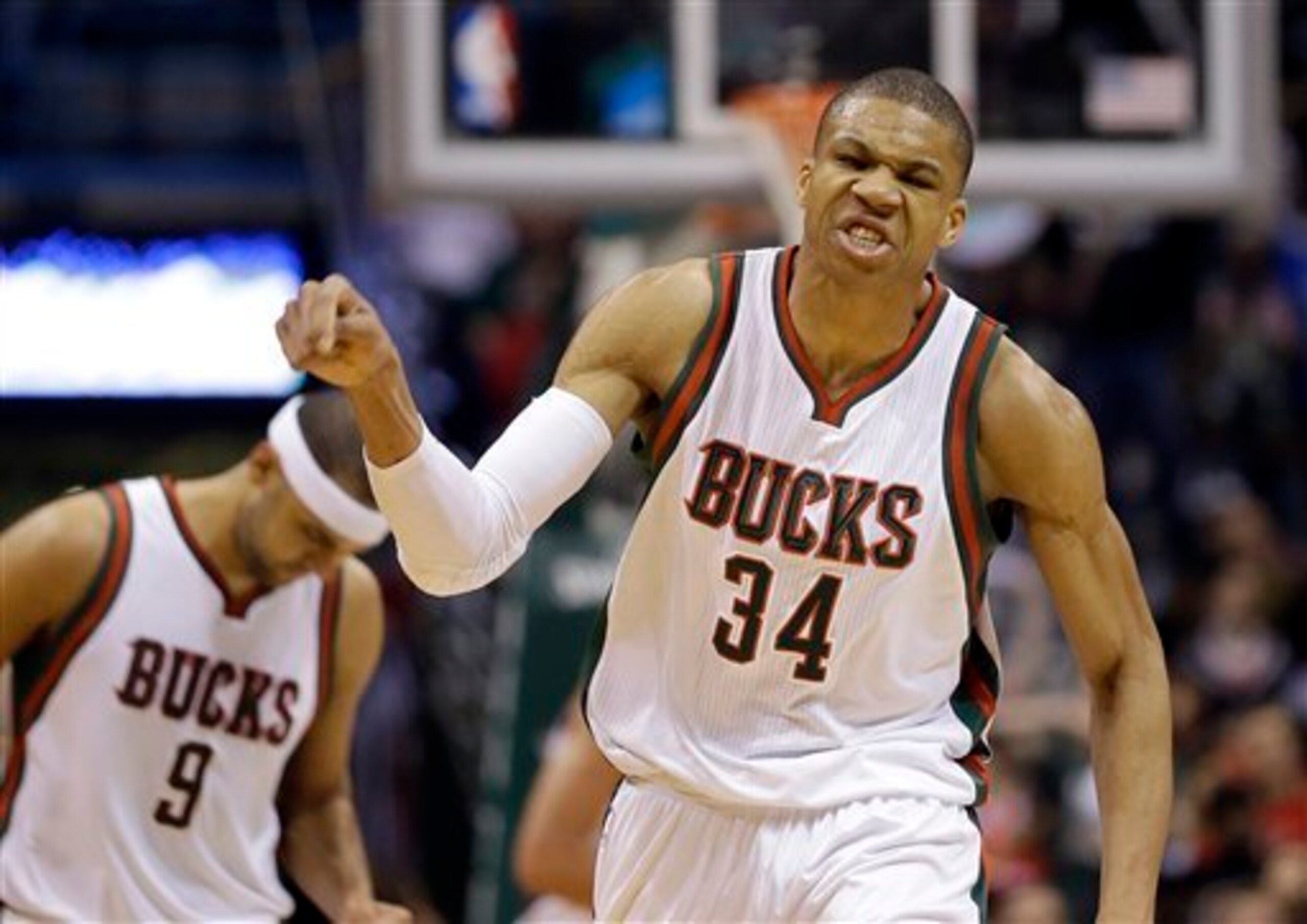
Giannis Antetokounmpo could fall into the Bradley Beal/Rudy Gobert/Mike MuscalaDraymond Green categories of "Totally almost" and "Basically already" stars. Alas, the 20-year-old is not quite there—which, for our conversational purposes, is a good thing.
Khris Middleton and, prior to being traded, Brandon Knight each played a part in lowering Antetokounmpo's on-court profile. He was the Milwaukee Bucks' third-best player for much of 2014-15, a standing he's bound to improve upon next season, even after factoring in the return of Jabari Parker.
Very few players can defend all five positions. You can actually count them on one hand. Antetokounmpo figures to join that exclusive gaggle for real in 2015-16.
His height (6'11" on his knees) allows him to pester burlier forwards and centers, while his length and quickness enable him to defend swingmen and guards. He uses his long limbs to propel himself around the hardest-set screens, and his fondness for calculated gambles in traffic make him a steal-and-transition dunk waiting to happen.
Oh, and his 2.8 percent block rate from this past season is the highest of any sophomore guard in NBA history.
Limited offensive range is the lone fault holding Antetokounmpo back. Though he can reach the rim at will, slicing through traffic as if he's mastered the art of teleportation, only 5.6 percent of his total attempts came from beyond the arc. And he shot just 34.8 percent outside 10 feet and a mere 33.2 percent beyond 16.
Modern-day wings—be they stretch forwards, small forwards or shooting guards—must have some semblance of an outside touch. And assuming Antetokounmpo works one into his repertoire next season, he'll be close to the entire package.
Just like a rising star should be.
John Henson, Milwaukee Bucks
2 of 7
Another Bucks player? It's almost like Milwaukee has a bright future or something.
John Henson has long been a per-36-minute beast—a high-volume shot-blocker and rebounder whose short bursts of statistical dominance begged for more playing time. And during Milwaukee's six-game playoff jaunt, Henson nabbed that additional playing time.
Head coach Jason Kidd unleashed the 24-year-old, insofar as "unleashed" refers to actually using him. Henson averaged 25.5 minutes of burn per game and, for the most part, didn't disappoint.
He continued to post a double-double per 36 minutes and held Chicago Bulls players to 41.4 percent shooting inside six feet of the hoop, nearly 15 percentage points worse than they were shooting against everyone else. His 17.3 postseason player efficiency rating was also a team best.
"I think I'm just being active," Henson said in the first round, per the Journal Sentinel's Charles Gardner. "Energy, effort and everything else is coming. I'm staying under the defense and finishing when I can, and trying to make the right play."
Six games' worth of almost unrestricted energy will now get Henson the chance he deserved both this season and last.
In the wake of Larry Sanders' departure and Zaza Pachulia's diminished role, the Bucks have a hole in the middle. They're a long team that values positionless talent, and Henson projects as the primary interior presence around which Giannis Antetokounmpo, Khris Middleton, Jabari Parker, et al. will orbit.
And, in his case, a more consistently prominent role will equate to star-level ascension.
Terrence Jones, Houston Rockets
3 of 7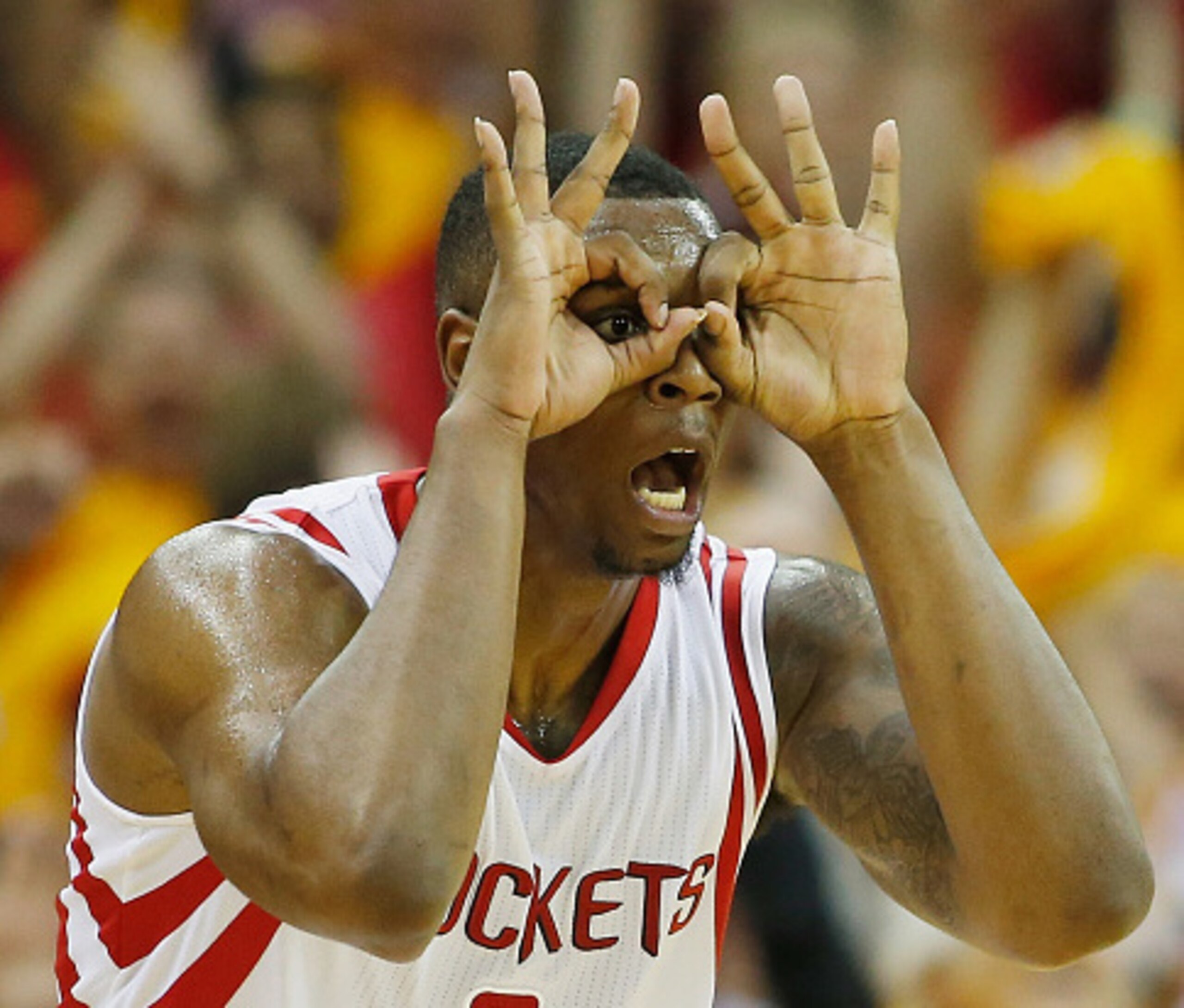
If not for a variety of injuries holding him to 33 regular-season tilts, Terrence Jones would be a veteran of this list. Now, he'll have to settle for carrying his stock to Brinkofstardomville in 2015-16.
Something of a fringe stretch forward while at Kentucky, Jones is fast becoming the floor-spacing 4 that Houston doesn't otherwise employ. He drained a cool 35.1 percent of his deep balls during the regular season and was even better in catch-and-shoot situations, finding nylon 41.4 percent of the time.
Jones also has the size and girth to spell Dwight Howard at center. More than 40 percent of his minutes came at the 5 spot, and opponents shot 9.7 points below their season average against him within six feet of the rim—the significance of which cannot be overstated.
Zero-in, five-out lineups will invariably be all the rage. The Golden State Warriors and Atlanta Hawks, the NBA's two best regular-season teams, deploy them frequently. That Jones can hold his own defensively at center gives the Houston Rockets a foot in the door to super-contemporary basketball.
Skeptics needn't harp on the 23-year-old's abysmal postseason campaign. Sure, he's losing minutes to Josh Smith and clanging shots off every part of the rim. But the Rockets aren't running their offense properly, deviating from the drive-and-kicks and James Harden-initiated pick-and-rolls that carried them through Round 1.
Nothing about Jones' playoff performance, then, takes away from the big picture, a portrait that coach Kevin McHale painted ahead of the second round, per the Houston Chronicle's Jenny Dial Creech: "TJ had a tough year with injuries and missed a lot of games. He has been great though, he has grown and it’s huge for this team.”
Insanely huge.
Light on financial flexibility this coming summer—especially if they wish to retain Patrick Beverley and Smith—the Rockets won't have the funds to grab another star until 2016. So it's a good thing they have one in waiting, someone who does a little bit of everything and can coexist with their incumbent two superhumans.



Meyers Leonard, Portland Trail Blazers
4 of 7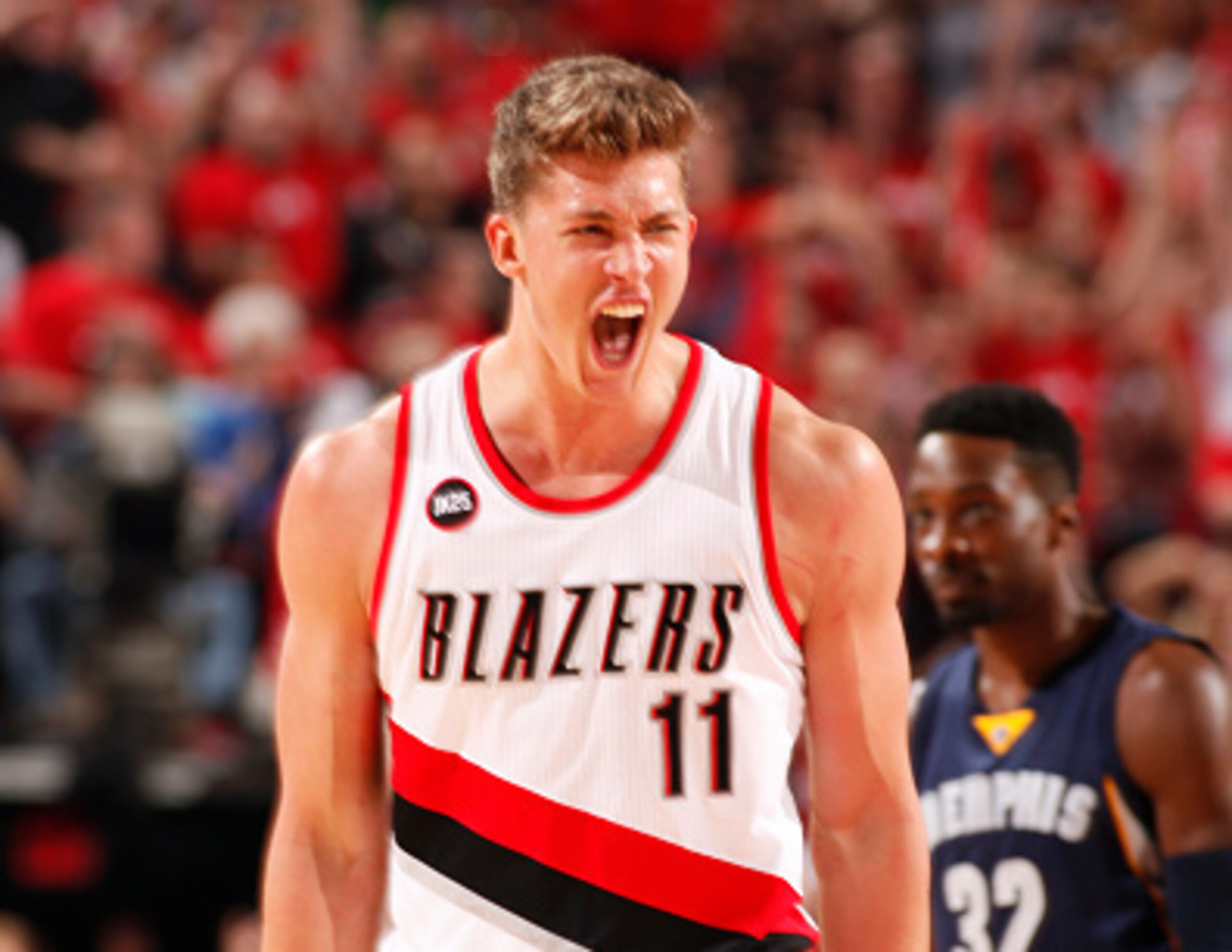
Meyers Leonard didn't play around this season. He recorded a 50/40/90 shooting slash in limited playing time ahead of the playoffs and then proceeded to turn Portland's first-round collapse into his own personal coming-out parade.
Through five postseason contests, Leonard served as the ultimate X-factor, banging in a godly 76.9 percent of his treys (10-of-13), grabbing some rebounds and turning a largely dormant Blazers offense into a statistical force.
Cue the caveats. From ESPN.com's Kevin Pelton:
"Because he developed into a perimeter threat so quickly -- he didn't make a single 3-pointer last season and had just three during his rookie campaign -- Leonard benefited from not appearing on opponents' scouting reports much of the season. Add the difficulty for traditional big men defending on the perimeter and his talented teammates, like LaMarcus Aldridge and Damian Lillard, and Leonard got a lot of open looks. A lot.
"
Tons, actually.
Nearly 67 percent of Leonard's regular-season field-goal attempts were open looks. The same holds true for the playoffs. And that's OK.
Even if Aldridge leaves, Lillard's dribble penetration isn't going anywhere. Nor will C.J. McCollum's propensity for mimicking Lillard.
The scouting reports factor isn't even a little concerning. Leonard will improve like most 23-year-olds. He didn't have a three-point shot in his everyday arsenal during 2012-13 or 2013-14. He wielded one in 2014-15. That speaks to his ability to adapt.
Bigs like him are the NBA's future. Most 7-footers will one day shoot threes rather than bang down low. Leonard, in that sense, is ahead of the game. He may not be the modern-day, in-prime Arvydas Sabonis now, but that isn't to say he won't ever be.
Next season should offer Leonard more playing time and a larger role within Portland's offensive attack. And that, in turn, should allow him to shine as the floor-spacing, deep-ball-sinking, star-in-the-making tower he already resembles.
Shabazz Muhammad, Minnesota Timberwolves
5 of 7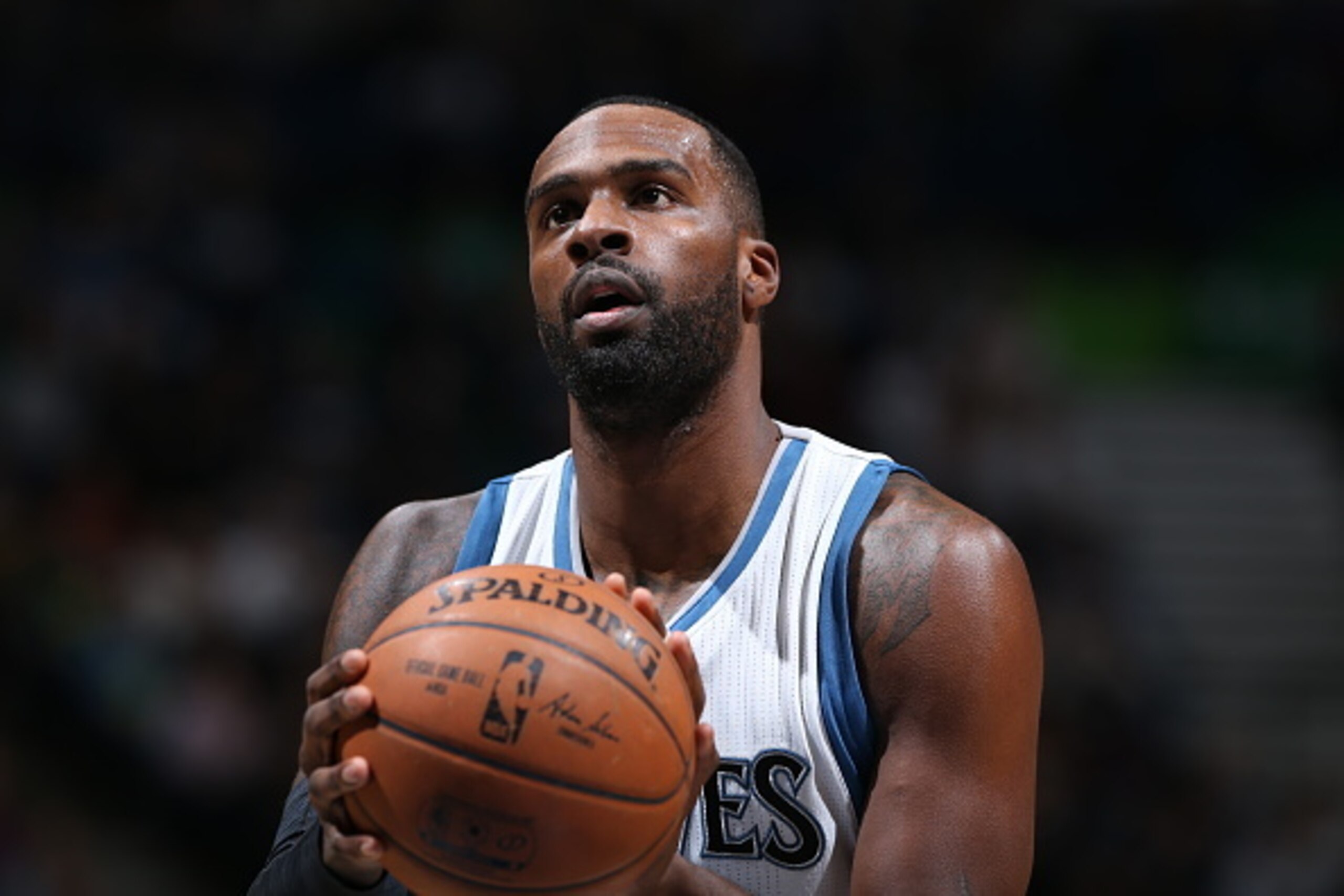
Andrew Wiggins is the lone clear-cut future star on the Minnesota Timberwolves. They have a bunch of odds and ends, from veterans (Kevin Martin, Nikola Pekovic) and promising prospects (Zach LaVine, Gorgui Dieng), to good-when-healthy talent (Ricky Rubio) and last-leg locker room voices (Kevin Garnett).
What they don't have—not even in Rubio—is an obvious No. 2. Actually, never mind. Shabazz Muhammad will be that No. 2.
A ruptured ligament in his left hand limited the 22-year-old to 38 games this past season, the smallest of sample sizes. But he still recovered from a weak rookie campaign in which he failed to crack the rotation, providing instant offense and rebounding to go along with sweet, efficient shooting.
No other player in the league who averaged under 23 minutes cleared 13 points per game. Muhammad also pinned himself to some esteemed company with his per-minute totals.
Eight sophomores over the past decade have maintained averages of at least 21 points per 36 minutes while logging 800 or more total ticks: Carmelo Anthony, DeMarcus Cousins, Anthony Davis, Kyrie Irving, LeBron James, Dwyane Wade, Kevin Durant and...Muhammad.
Rumor has it those other seven turned out just fine. And as part of a Timberwolves team now invested in developing its stable of unestablished talent, Muhammad should too.
There are touches to be had in Minnesota, and Muhammad, a superstar rebounder and good enough defender for his position, will benefit from a relatively unclear pecking order. It helps that he can capitalize on off-ball opportunities—he nailed 39.2 percent of his standalone treys—making him a sound complement to Rubio and Wiggins.
Muhammad may inevitably need more time than most others on this list, given the uneven rotation that'll carry into next season should Minnesota fail to make wholesale changes. But the highly held top-prospect-turned-late-lottery pick from 2013 is now squarely on his way to becoming an eminently regarded NBA player.
Otto Porter, Washington Wizards
6 of 7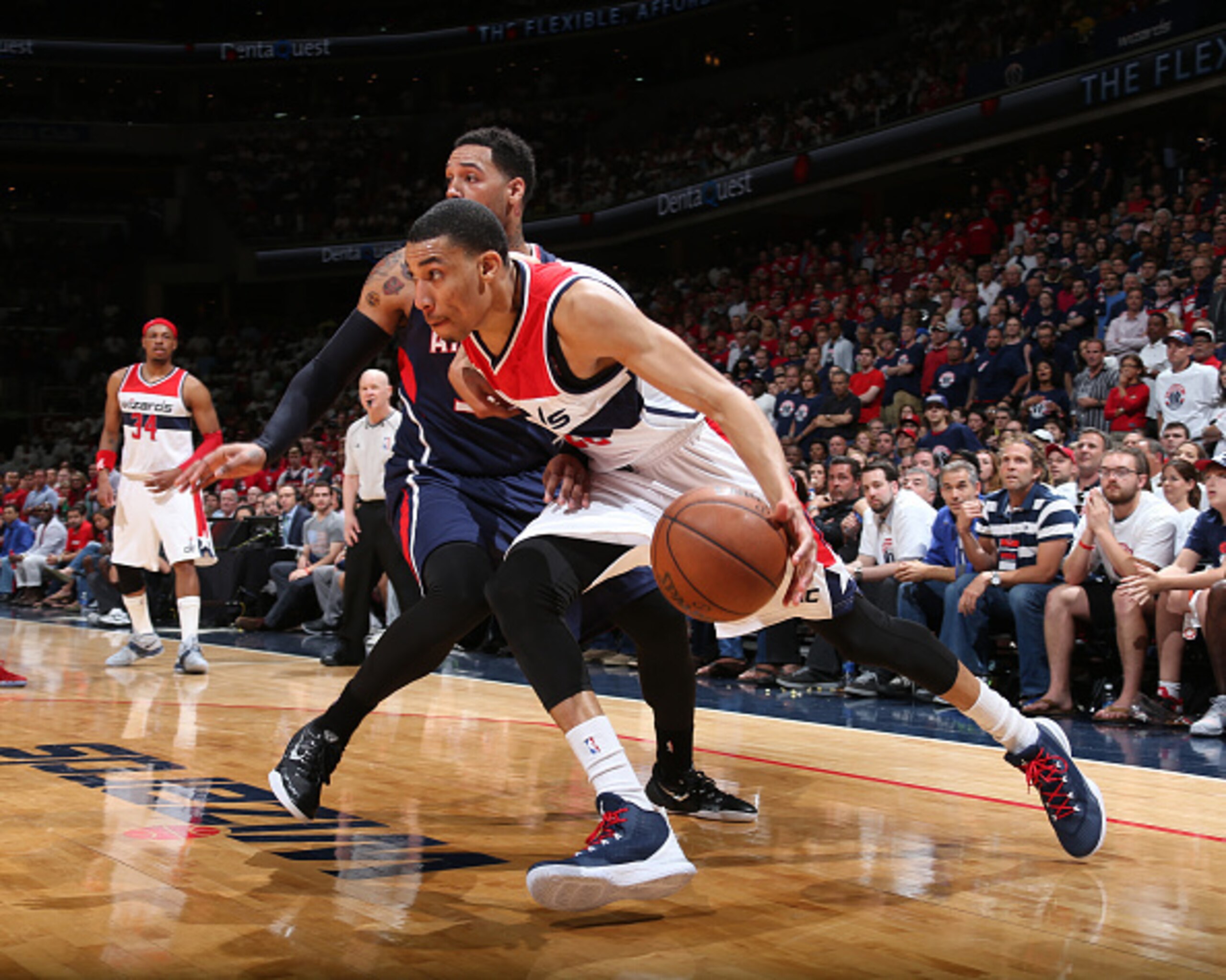
Just like that, the Washington Wizards look like a worthy future home for Kevin Durant.
It's not just John Wall they'll be selling Durant on next summer, when he reaches free agency and the salary cap explodes. It's not even just Bradley Beal and Wall. Otto Porter will be a draw on his own.
Porter has come up big in the playoffs after an injury-plagued rookie season and rocky sophomore campaign. This happened in large part because head coach Randy Wittman has put the 6'9" 21-year-old where he belongs: at power forward, often among the starters, even though he comes off the bench.
Nearly half of Porter's minutes have come at the 4 spot during the postseason, and he's responded by being lights out from downtown and rebounding in volume while defending with the aggression of someone who didn't make a name for himself as Vine's resident defensive lunkhead.
Grantland's Zach Lowe offers more insight on the recently wondrous play of Mr. Porter:
"Porter’s improvement has come within a tiny sample size, but the way he’s doing this bodes well. He has looked like the perfect role player for a modern offense. He’s a Choose Your Own Adventure threat spotting up around Wall pick-and-rolls. The Raptors and Hawks have ignored him to clog the lane, and Porter has punished both of them by draining 3s of all varieties — corner 3s, contested 3s from above the arc, and wide-open jobs.
"
Opponents are shooting just over 37 percent against Porter in the postseason, including under 30 percent from long range. He gives the Wizards a third option in transition and is making defenses pay for slinking off him to cover Beal's dribble drives and Marcin Gortat-Wall pick-and-rolls.
Around 38 percent of his looks are coming as spot-up three-pointers, of which he's drilling a twine-tearing 40 percent. His touches will be forever limited beside Beal and Wall, and even more so if the Wizards make a free-agent splash in the coming years. But Porter doesn't need the ball in his hands to make an impact or, for that matter, star-stamped leap.
All he needs is a more consistent role and the playing time it promises. And if the playoffs are any indication, Wittman's Wizards are leaving the Cretaceous period for 2015, guaranteeing Porter a spot in the starting lineup next season.
Seldom does a team enter an offseason with both three stars and cap space. Yet, if all goes according to plan, the Wizards will do just that in 2016.
Dennis Schroder, Atlanta Hawks
7 of 7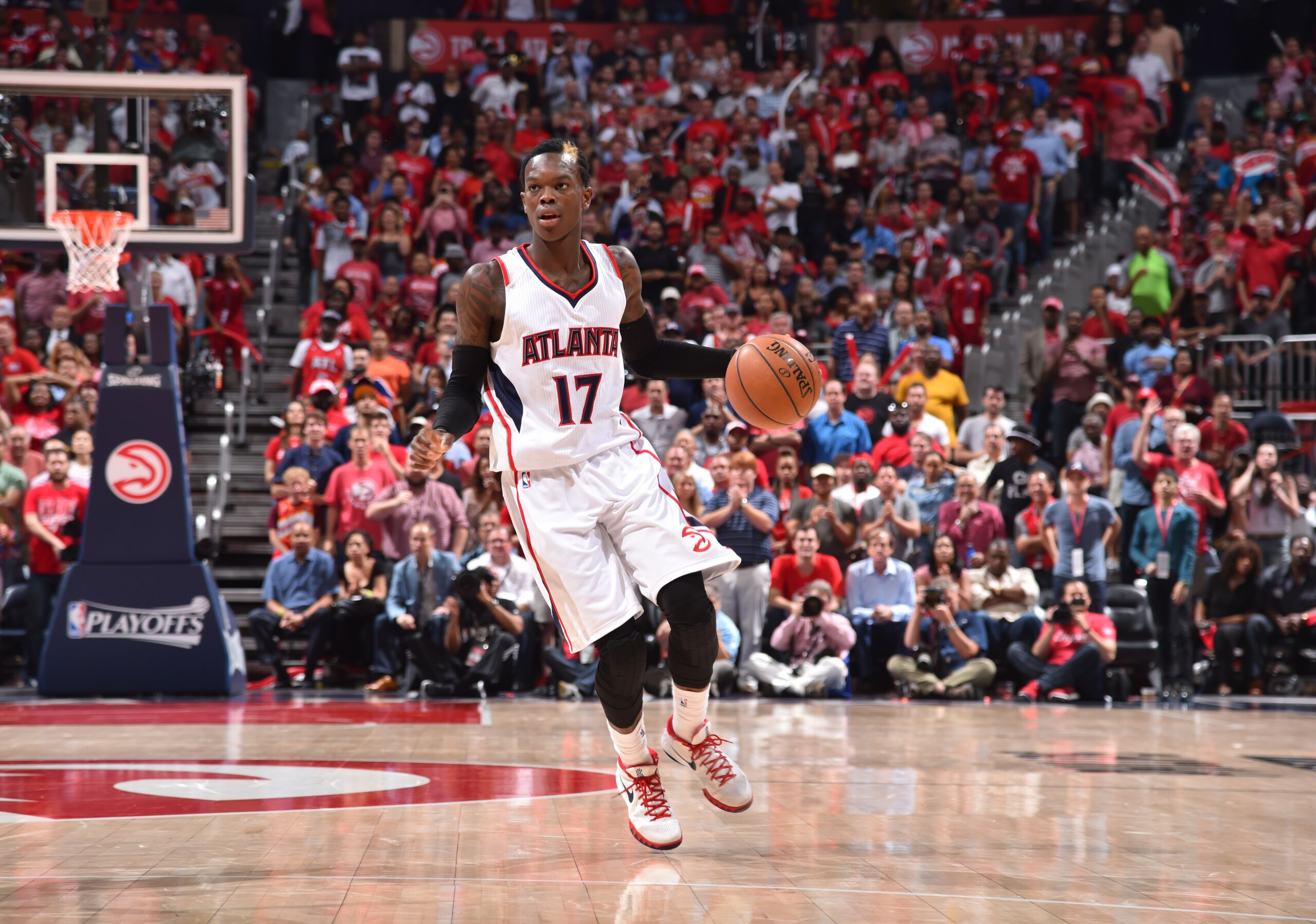
Dennis Schroder is the closest thing to a preexisting household name in this space. And he's not really even a household name.
He's just starting to play like one.
Schroder's infantile rise dates back to the regular season, when Hawks coach Mike Budenholzer started pulling him off the bench before anyone else. He saw the value of an incisive point guard who could snake in and out of the paint and enact pick-and-rolls in high volume.
The 21-year-old rewarded Budenholzer and the Hawks for the increased exposure with a more reliable three-point stroke (35.1 percent overall) and a historically significant campaign. Yes, historically significant.
Here's the list of NBA players, age 21 or younger, to sustain per-36 minute averages of at least 18 points, 3.5 rebounds, 7.5 assists and one steal for an entire season:
- Magic Johnson (1980-81)
- Dennis Schroder (2014-15)
You just read that.
By no means does Schroder project as the next Magic Johnson. But that statistical anecdote cannot be cast aside. Not when Schroder logged almost 150 more minutes in 2014-15 than Johnson did in 1980-81.
Not when Schroder has already become a floor fixture on the best Hawks team in franchise history.
And most certainly not when he's taken the Rajon Rondo comparisons once deemed crowning compliments and turned them into something that bears more resemblance to his basement.
Stats courtesy of Basketball-Reference.com and NBA.com unless otherwise cited.
Dan Favale covers the NBA for Bleacher Report. Follow him on Twitter: @danfavale.

.jpg?w=2560 "Raiders Could Start Mendoza")

.jpg?w=2560 "Rodgers Iced Out on Plane 💎")
.jpg?w=2560 "Packers Safety Slams Refs 🤬")
.jpg?w=2560 "🚨 Week 8 AP Top 25 Poll")