Atlanta Hawks' Success Is About So Much More Than Their Offense
The Atlanta Hawks scored 106 points Monday in Game 4 of the Eastern Conference semifinal against the Washington Wizards, tying the series at 2-2. In the win, Atlanta got into the paint, passed the ball well and hit their shots, looking much like the team that went 60-22 in the regular season.
But the 101 points they allowed to the John Wall-less Wizards didn't look quite like the Hawks of midseason.
All through the postseason, people have focused on Atlanta's shooting inaccuracies as the chief reason for the team's playoff struggles. As Bleacher Report's Alec Nathan opined before Game 4, "Yes, Washington's defense has done a commendable job, but the Hawks' futility boils down to an inability to hit open shots."



Nathan is right, but the Hawks' defense needs to be better, too. It struggled to contain Brook Lopez and the Brooklyn Nets' bench guards in the first round, and now the Wizards' perimeter players are torching it from deep in Round 2. These things shouldn't be happening, because the Hawks were seventh in regular-season defensive efficiency.
Atlanta proved throughout the year that playing good defense can lead to wins even when the shooting bounces don't go their way. It's for this reason that the Hawks needs to focus its attention on locking down Wizards' offense, especially since Washington is without superstar point guard John Wall.
Let's look at what Atlanta did in the regular season defensively, then prescribe some concrete steps for the Hawks to take to get back to where they were a few months ago on that end of the floor.
How Did the Hawks Play Defense in the Regular Season?
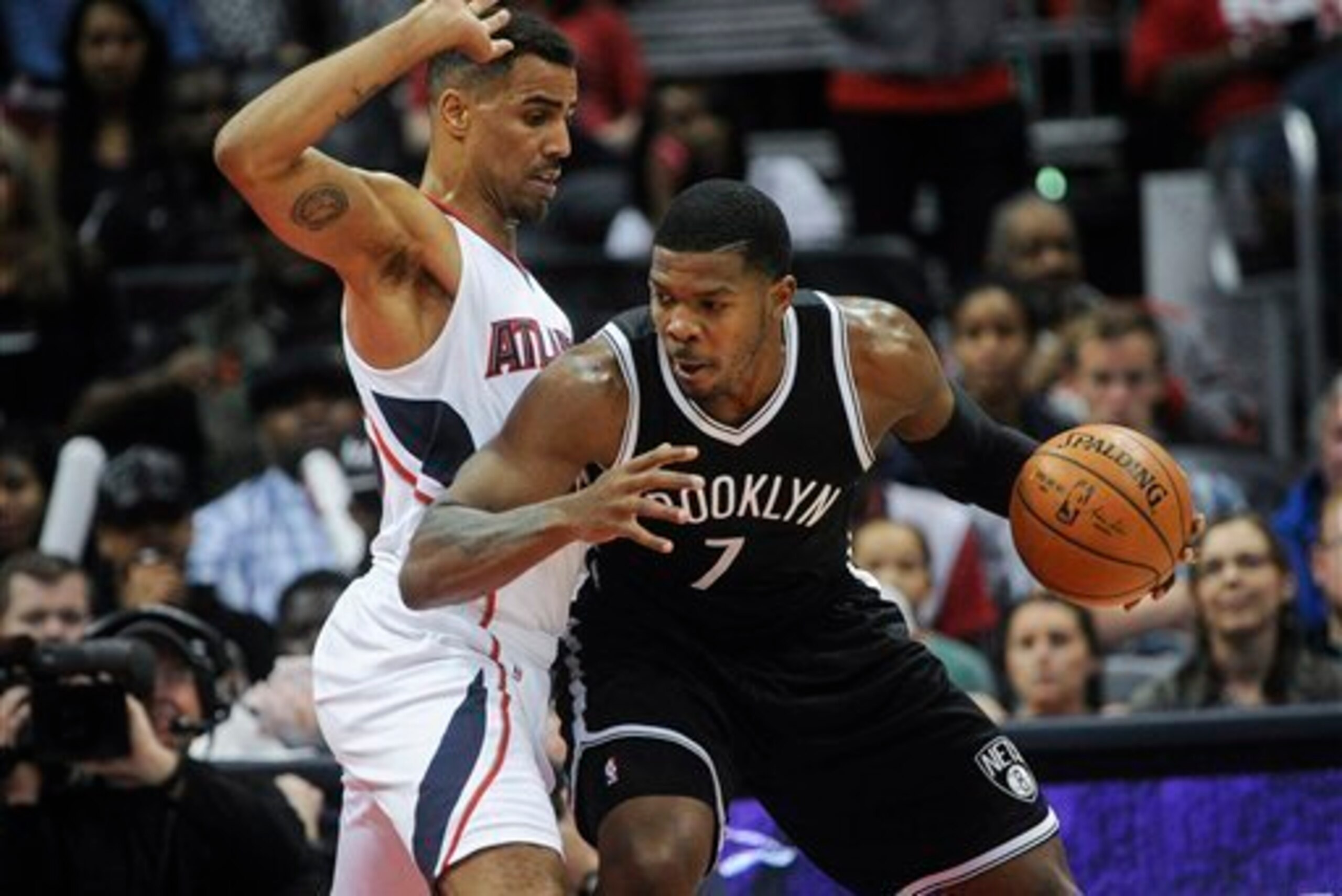
Atlanta did an excellent job preventing points before the playoffs started.
In addition to their No. 7 ranking in defensive efficiency, the Hawks allowed just a 43.9 percent success rate from the field. They barely fouled, as their opponents mustered just 20.1 free-throw attempts per game, the third-lowest mark in the league.
The squad did it without an All-Defensive Team-type player, too, although DeMarre Carroll and Thabo Sefolosha are certainly very good on that end. Just like the team's balanced offensive attack, Atlanta succeeded on defense because all five players on the floor worked well together.
The Hawks' defense was so in sync that it sometimes looked like a puppeteer was orchestrating it. Every player was on a string, sliding to the perfect spot to cover up passing lanes and trap ball-handlers at the perfect time.
SB Nation's Mike Prada eloquently expanded on this theme to explain Atlanta's defensive strategy:
"[The Hawks] know most teams have primary threats and less developed secondary options, so they tilt their coverages to force teams to do what they don't want to do. It's common to see Korver venture way off his man to zone against a star player trying to isolate or run a pick and roll. Great players usually find ways to beat this kind of coverage, but the Hawks confuse them because all five players rotate like they're tied together.
"
Atlanta could win even when its long-range shots weren't falling, too. In games where the Hawks shot below their regular-season three-point average of 38.0 percent, they still went 28-14. Atlanta shot a combined 29.3 percent from downtown in those 42 contests yet displayed the quality of a 55-win team. The Hawks could afford bad shooting nights because it allowed just 97.3 points in those games in which they shot poorly from downtown.
What's Going Wrong in the Playoffs?
On the surface, the Hawks' defense hasn't been bad in the postseason. Their defensive efficiency is slightly better than it was in the regular season (100.6, sixth among playoff teams), and they've allowed more than 100 points in just four of their 10 playoff games.
But you have to consider which teams they're playing.
The Nets and Wizards ranked Nos. 18 and 19 in offensive efficiency, respectively, in the regular season. The Hawks have been fortunate to play two below-average offensive teams, something none of the other remaining playoff squads have been able to do.
Even worse, the Wizards are without Wall, their best player and offensive leader. Atlanta should be clamping down on Washington, but instead they're letting the Wizards have their way.
The main issue is three-point shooting. Atlanta's opponents through two rounds are nailing 38.4 percent of their looks from behind the arc in the playoffs, which makes for the worst percentage of all remaining teams. Specifically, the Hawks have not made it a priority to shut down a Washington three-point attack that has been on fire in the playoffs.
When the Wizards are feeling it from three, the whole court opens up for them. The big men have more room to operate, and the guards have clearer driving lanes.
There are three areas that the Hawks can work on to improve their defense: more hedging on pick-and-rolls, better effort from their point guards and eliminating unnecessary help on penetration.
More Hedging From Big Men On Pick-and-Rolls
Part of the reason Washington is making so many threes is because the Hawks big men are not hedging enough on ball screens.
Watch the two consecutive plays starting at the 0:59 and 1:07 marks of the video below. Bradley Beal gets free for two threes because Pero Antic and Mike Muscala, respectively, hang back to stick with the roll man instead of showing hard to cover for their screened teammate.
With how the Wizards are shooting from downtown, particularly Beal, Paul Pierce and Otto Porter, the Hawks will need more help from the bigs to prevent open shots from deep.
Teague and Schroder Need to Give Better Defensive Effort
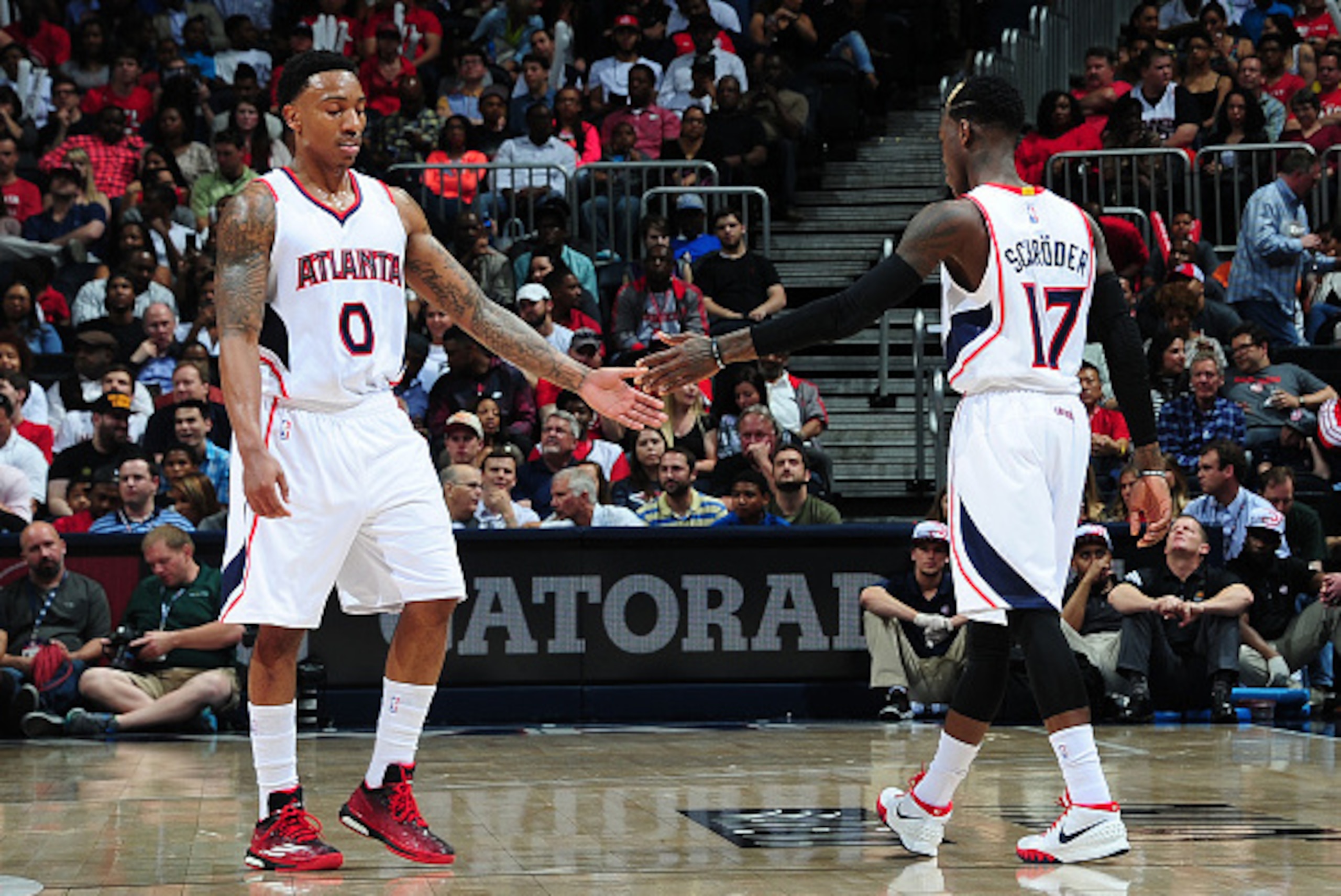
Kudos to Jeff Teague for a bounce-back offensive performance in Game 4, as he scored 26 points and dished out eight assists after struggling to find his rhythm in the first three contests. Dennis Schroder, meanwhile, has been an offensive force all series, averaging 12.5 points and 5.3 assists per game off the bench.
However, what they're providing on offense is being overshadowed by their lackluster defensive effort.
Without Wall, the Hawks should be dominating the point guard matchup, but they aren't. Ramon Sessions has filled in well for the All-Star with decent numbers, and Will Bynum has been a bench spark with 19 points on 13 shots in Games 3 and 4 combined.
A lot of what the Wizards point guards are doing isn't necessarily showing up in the box score, either—they're getting past Teague and Schroder on the perimeter and bending the Hawks' defense, facilitating ball movement for open looks.
Teague and Schroder need to be alert both on and off the ball every possession to ensure their offensive contributions don't go to waste.
Staying Home on Shooters
Without Wall, the Wizards' ability to slash and finish at the rim leaves much to be desired. Beal is a solid penetrator but is nowhere near as good as his backcourt mate. None of Washington's other perimeter players are particularly lethal around the rim. Many of the Wizards' guards' drives are made merely to create looks for teammates, not necessarily to score.
Despite this fact, the Hawks still refuse to stay home on shooters when Wizards guards drive the lane, possibly because they prepared their original game plan before the series with Wall in mind.
Take the play starting at the 10-second mark below, for example:
Carroll gets caught drifting toward the ball as Beal starts to move toward the basket, even though there was enough help on the drive anyway. Beal makes a great skip pass to Pierce, who is wide-open since Nene screened off Carroll, who wasn't guarding Pierce closely enough.
For the most part, the Hawks should try to force tough finishes from the Wizards' guards in the paint as opposed to wide-open three-point shots from the likes of Pierce and Beal.
Conclusion
Hawks head coach Mike Budenholzer realizes both ends of the court are important for the Hawks, as he shared in a postgame interview following Game 4, courtesy of CBS Sports:
"I think the mentality of our group, coming out to start the game and working to maintain both ends of the court [helped], and [realizing] how important us being aggressive on defense, us being aggressive on offense [is]. We’ve got to do that for the full 48 minutes, and tonight we got closer to that. We need to work on taking that forward.
"
Great offense comes and goes, but great defense never takes a night off. If the Hawks take this to heart, they'll have a great shot at advancing to the Eastern Conference Finals.
All statistics are from Basketball-Reference.com, NBA.com/stats and ESPN.com (including ESPN's Hollinger Stats) and updated through May 12 unless otherwise indicated.

.jpg?w=2560 "Raiders Could Start Mendoza")

.jpg?w=2560 "Rodgers Iced Out on Plane 💎")
.jpg?w=2560 "Packers Safety Slams Refs 🤬")
.jpg?w=2560 "🚨 Week 8 AP Top 25 Poll")