It's only taken two games per team for the conference semifinals of the 2015 NBA playoffs to obliterate the first round, at least as far as drama and intrigue are concerned. Gone are the weaker links from the Association's Big Dance, leaving only the heavy hitters (minus the eliminated San Antonio Spurs, of course) to tangle for the title from here on out.
But behind that wall of dust that stands between the sweeps and five-gamers of last week and the 1-1 series of this one are a slew of former regulars on this list. Tim Duncan and Kawhi Leonard are no longer in consideration at their respective positions. The same goes for Brook Lopez at center and may hold true for John Wall at point guard if his wrist injury turns out to be season-ending.
For those still in action, the pressure to perform is greater than ever. Some will crumble under that weight. Others will use it to fuel their fires and rise to another level.
As always, the goal here is to celebrate that latter group by pegging the top three players per position, based on statistical contributions and overall impact on team performance.
Point Guards
1 of 5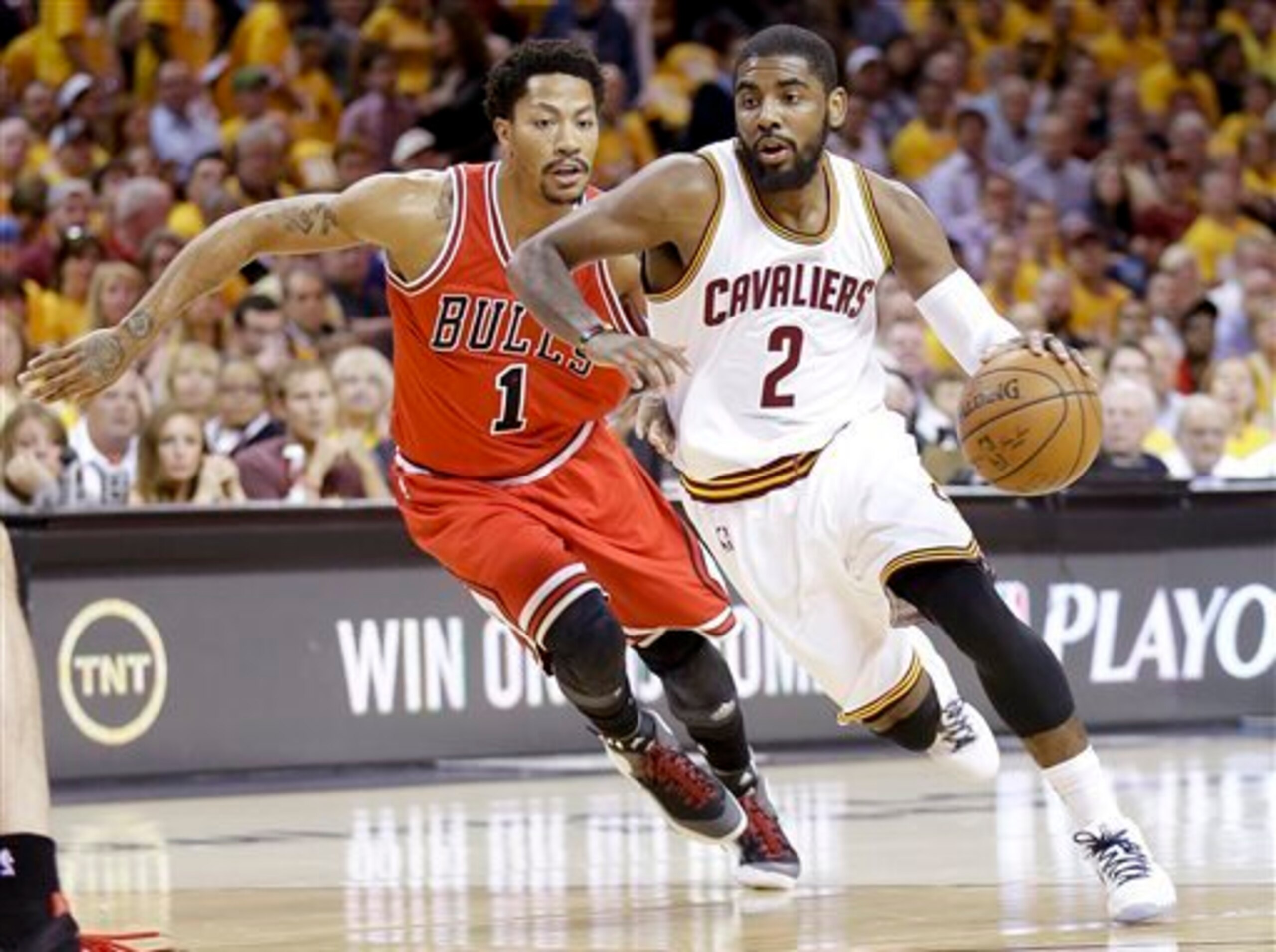
3. Chris Paul, Los Angeles Clippers
Per-Game Stats: 22.7 PTS, 51.3 FG%, 42.9 3PT%, 4.6 REB, 7.9 AST, 2.3 TO, 39.3 MIN
Paul would be higher on this list (and John Wall would probably still be on this list) if not for injury. Paul's one-legged, hamstrung virtuoso in Game 7 against the San Antonio Spurs (27 points, six assists, one jaw-dropping game-winner) was enough to keep him in this running, despite his absence from Games 1 and 2 of L.A.'s second-round series against the Houston Rockets.
"It was unbelievable," Blake Griffin said afterward. "To be injured like that, when he came back, I was like, man—I asked him, 'What can you do? Can you do anything?' He's like, 'We'll see.'"
Likewise, we'll see if Paul can suit up for the Clippers on Friday. According to The Orange County Register's Dan Woike, Paul's status remains up in the air. That could prove problematic for L.A., which managed to storm past the slovenly Rockets in Game 1 but seemed to run out of steam in the second half of a Game 2 loss.
2. Kyrie Irving, Cleveland Cavaliers
Per-Game Stats: 24 PTS, 44.6 FG%, 42.4 3PT%, 3.7 REB, 4.3 AST, 1.7 TO, 40.2 MIN
While Paul and Wall are on the mend, let's take a moment to appreciate what Irving has done in his first postseason. Irving was brilliant against Boston, torching the C's for 23.3 points and knocking down 48 percent of his threes during the Cavs' four-game sweep.
Against Chicago and without aid from Kevin Love and J.R. Smith, Irving has taken the lethality of his game to another level. He kept Cleveland within striking distance of the Bulls in Game 1, though his 30 points and six assists weren't quite enough to put the Cavs over the hump. Come Game 2, Irving was even more aggressive, racking up 21 points on just nine field-goal attempts—thanks to his 12 forays to the free-throw line.
This, after going 9-of-9 from the stripe in Game 1.
So far, Irving has done his part to keep the Cavs in gear absent 40 percent of their starting lineup. As Bulls coach Tom Thibodeau put it, via ESPN's Nick Friedell, "If you have LeBron James and Kyrie Irving, you're not shorthanded."
1. Stephen Curry, Golden State Warriors
Per-Game Stats: 29.3 PTS, 43.9 FG%, 38.8 3PT%, 4.7 REB, 7.0 AST, 3.8 TO, 39.6 MIN
Curry still leads all active playoff participants in scoring but has tailed off considerably since the start of the second round. Through two games, the Memphis Grizzlies have hounded Curry into 40.5 percent shooting from the field, 31.6 percent from three and 3.5 turnovers.
Curry's struggles against the Grizzlies' grinding defense don't take anything away from his MVP triumph, but they do make a couple of things clear: That award is strictly a regular-season accolade, and if he's to rack up more hardware with the Warriors this spring, he'll have to catch fire again at some point.
Shooting Guards
2 of 5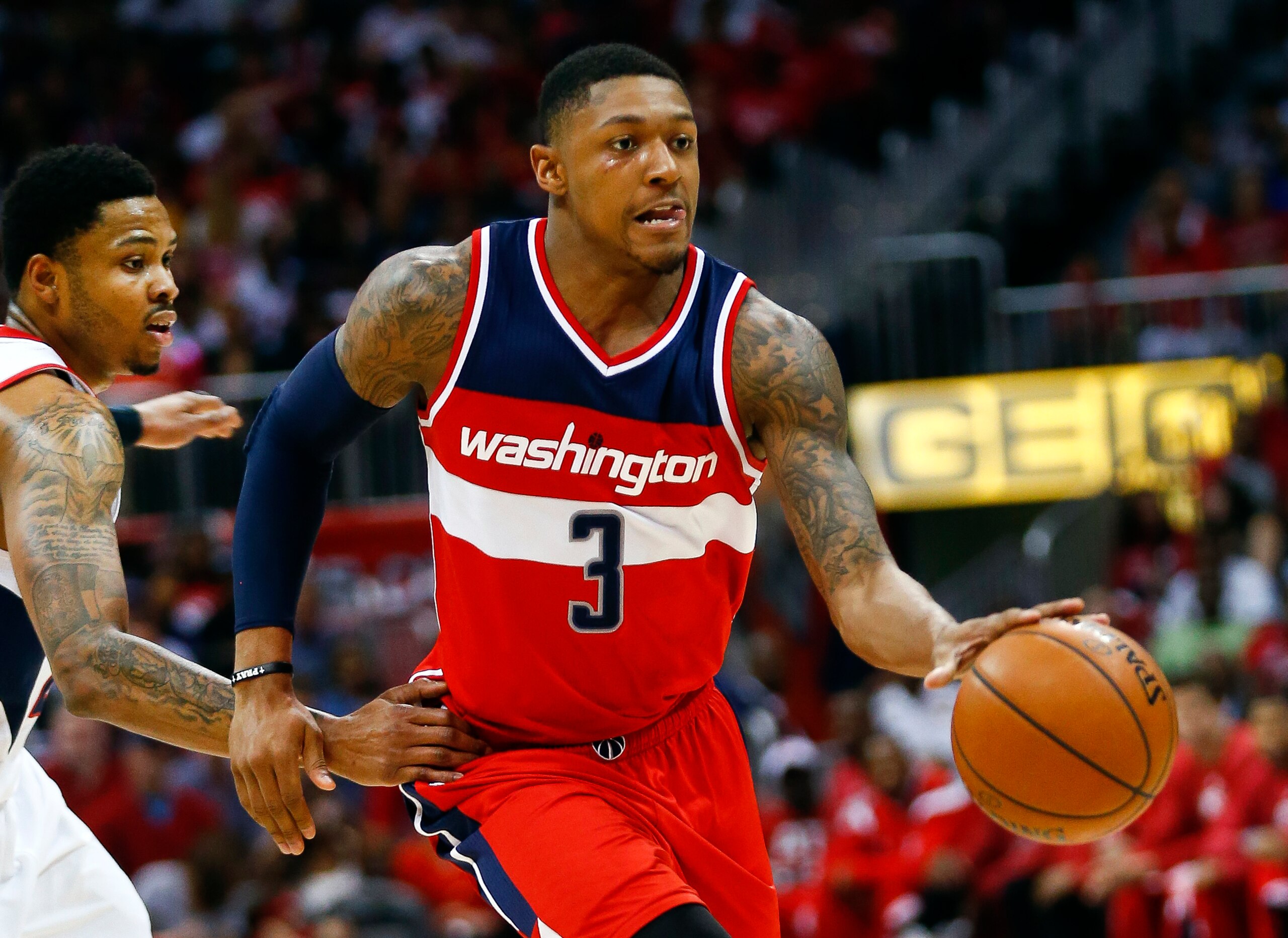
3. Bradley Beal, Washington Wizards
Per-Game Stats: 21.8 PTS, 38.3 FG%, 37.1 3PT%, 5.5 REB, 4.0 AST, 6.3 FTA, 41.7 MIN
For the Wizards, John Wall's hand and wrist injuries are, as coach Randy Wittman put it, via The Washington Post's Jorge Castillo, "disheartening." For Beal, though, they could be revealing. Without Wall, the onus will fall on Beal's shoulders to pick up some of the slack left behind by his All-Star backcourt mate.
In Game 2 against the Atlanta Hawks, Beal chipped in seven assists and three steals to go along with his 20 points. But absent Wall's magnetism, Beal couldn't quite find the same driving lanes, resulting in a steep drop in trips to the charity stripe (10 in Game 1, three in Game 2).
The Wizards will need every bit of what Beal has to give if they're to hold their own opposite the East's top seed from here on out. According to ESPN Stats & Info, Washington has won just 10 of the 50 games it's played sans Wall since landing him with the No. 1 pick in 2010.
2. Jimmy Butler, Chicago Bulls
Per-Game Stats: 23.4 PTS, 45.9 FG%, 38 3PT%, 5.0 REB, 3.8 AST, 7.0 FTA, 41.5 MIN
Butler, the NBA's newly christened Most Improved Player, has tailed off a bit following a sizzling start to the postseason. Over his last four games, Butler has averaged 18.5 points on 36.9 percent shooting—after racking up 28.3 points on 54.3 percent shooting through the first four.
Drawing LeBron James as his defensive mark hasn't made things any easier for Butler, though he's done well to make James' on-court life difficult. According to NBA.com, James has shot just 44 percent from the field, without a single three-point make, when Butler's been on the floor—which has been the case more than 97 percent of the time James has.
1. James Harden, Houston Rockets
Per-Game Stats: 24.8 PTS, 47.6 FG%, 40.5 3PT%, 5.5 REB, 3.8 AST, 7.2 FTA, 42.2 MIN
The Harden Houston fans know and love—and some basketball fans love to hate—showed up big time down the stretch of Game 2 against the Los Angeles Clippers. Harden racked up 16 of his 32 points and six of his 15 free-throw attempts in the fourth quarter to help Houston secure a 115-109 win.
"I knew my team was battling extremely hard, and basically it was up to me to go out there and push us forward," Harden said afterward, via USA Today.
Harden's always had to work harder against the Clippers than he has opposite most opponents. For his career, Harden has averaged a relatively meager 14.8 points on 35.3 percent shooting (25.6 percent from three) with 5.6 free-throw attempts when facing one of his hometown's teams.
The more Harden can do to break free from that weighty past, the better his chances of leading the Rockets to their first conference finals since 1997.
Small Forwards
3 of 5
3. Paul Pierce, Washington Wizards
Per-Game Stats: 16 PTS, 53.4 FG%, 53.7 3PT%, 3.5 REB, 0.8 AST, 0.5 STL, 0.5 BLK, 1.2 TO, 30 MIN
The longstanding friendship between Paul Pierce and the three-ball continues to flourish in these playoffs. Pierce drained 5-of-8 from downtown in Game 2 against the Hawks to help keep the Wizards within striking distance on the road while operating in the absence of John Wall.
With Wall potentially out of commission for the foreseeable future, Washington will need all the shooting it can muster to spread the floor for Bradley Beal and Marcin Gortat—not to mention put points on the board. It's a good thing for the Wizards, then, that Pierce has stepped up as the third-most prolific three-point shooter of the playoffs, behind only Kyle Korver and Stephen Curry.
2. DeMarre Carroll, Atlanta Hawks
Per-Game Stats: 18.9 PTS, 55.6 FG%, 46.5 3PT%, 6.5 REB, 2.6 AST, 0.8 STL, 0.1 BLK, 1.1 TO, 35.9 MIN
Carroll qualifies as the biggest (positive) surprise of the playoffs so far. The former NBA D-Leaguer-turned-thrift shop pickup has scored 20 or more points in six straight postseason games—the longest such streak any Hawks player has put together since Dominique Wilkins.
This, after topping the 20-point mark just seven times in 70 regular-season games.
Carroll, though, hasn't caught himself off guard with his recent success. "I always felt I could play this way if given the chance," he told NBA.com's Shaun Powell. "All I ever wanted was to prove myself and show that I can help my team on both ends. I have that chance now."
Which, win or lose, should give Carroll an opportunity to make some major scratch as a free agent this summer.
1. LeBron James, Cleveland Cavaliers
Per-Game Stats: 26.7 PTS, 45.4 FG%, 16 3PT%, 9.8 REB, 6.7 AST, 2.3 STL, 1.3 BLK, 4.5 TO, 41.4 MIN
James may not be the same freight train that he was so consistently in Miami and during his first stint in Cleveland, but the four-time MVP can still get his game cranked into that unassailable gear when he needs to.
And when he does...watch out.
James looked much more like the LeBron of old in Game 2 against the Bulls—and not just because he was back to sporting a headband. He set the tone for the Cavs, scoring 14 of his 33 points during an opening frame that saw Cleveland lead by as many as 22 points.
"Sometimes the game presents different challenges," James said after the 106-91 Cleveland win, via Northeast Ohio Media Group's Cameron Moon. "My teammates wanted me to be ultra-aggressive from start to finish. I tried to respond the best way I know how."
By being the best basketball player on Earth, that is.


Power Forwards
4 of 5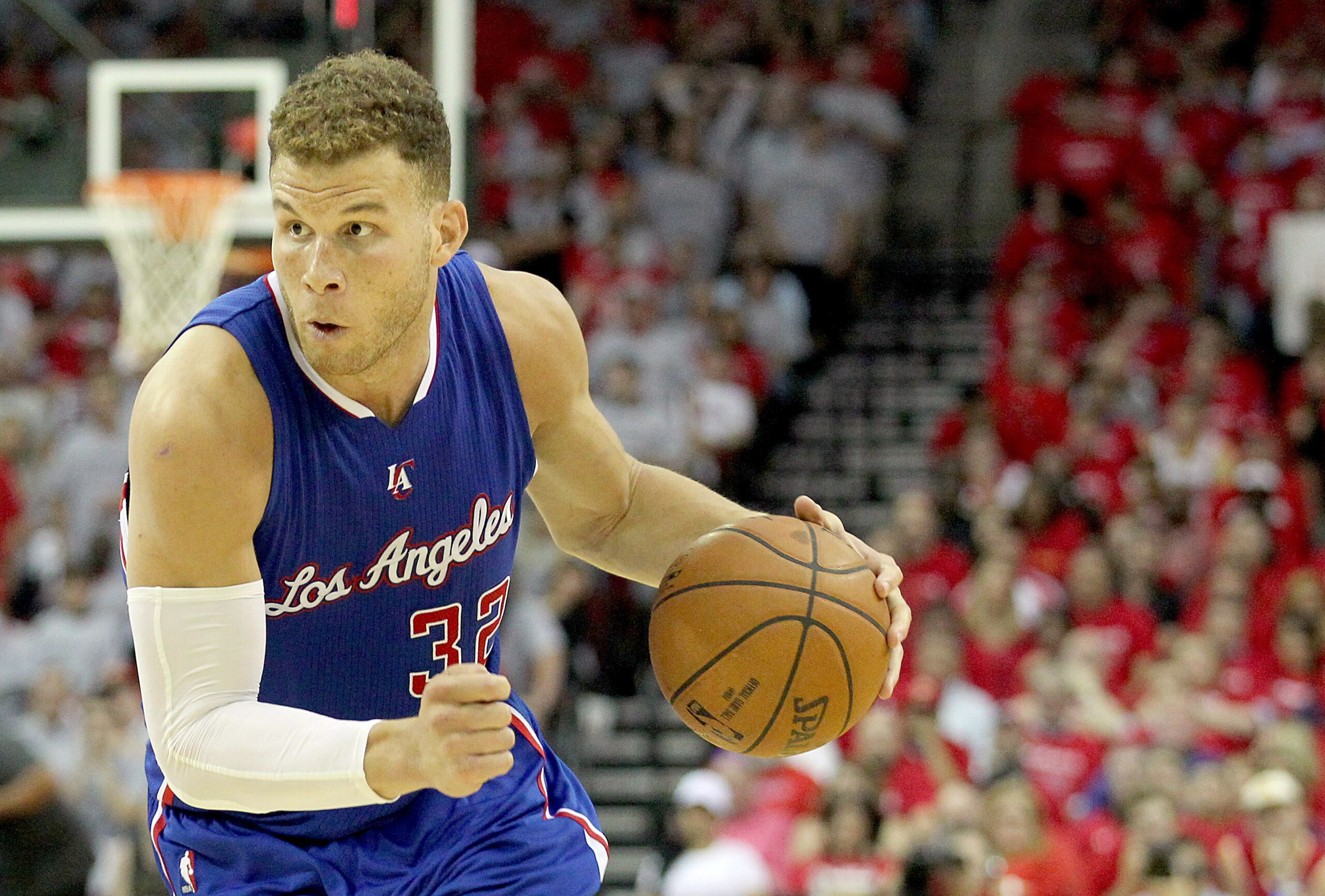
3. Paul Millsap, Atlanta Hawks
Per-Game Stats: 15.9 PTS, 42.5 FG%, 10.1 REB, 4.1 AST, 2.4 STL, 1.1 BLK, 1.6 TO, 37.2 MIN
If Millsap's shoulder is bothering him, he's certainly not shooting like it is. The two-time All-Star has knocked down 42.9 percent of his triples in this year's playoffs.
The rest of Millsap's stat-sheet stuffing hasn't slowed, either. He's turned in back-to-back double-doubles against the Washington Wizards' massive front line to go along with 13 assists, six steals and two blocks during the Hawks' split in Atlanta to start the second round.
2. Draymond Green, Golden State Warriors
Per-Game Stats: 15.5 PTS, 44.3 FG%, 11.3 REB, 4.8 AST, 2.3 STL, 0.8 BLK, 2.7 TO, 38.6 MIN
With his wide array of skills, Green can always find a way to impact a game when one facet or another isn't working for him. For his opponents, this is probably on par with playing Whack-a-Mole but with one mole seemingly popping up from multiple holes at once.
That's been the case for Green so far against Memphis. In Game 1, he did much of his damage from the perimeter, nailing 4-of-8 from three and dishing three assists. In Game 2, Green missed all three of his long-ball tries but made up for it with 10 free-throw attempts and a game-high 12 rebounds.
The Warriors, though, dropped Game 2 after taking Game 1 with ease. This isn't to say that Golden State is that much better when Green operates outside the paint; Mike Conley's return had everything to do with the Grizzlies stealing home-court advantage.
But the Warriors are definitely deadlier when Green's going bonkers from deep. And if Stephen Curry and Klay Thompson can't find daylight to shoot against the likes of Conley and Tony Allen, Golden State will need Green to stretch the floor more regularly.
1. Blake Griffin, Los Angeles Clippers
Per-Game Stats: 25.4 PTS, 48 FG%, 13.4 REB, 7.7 AST, 1.3 STL, 1.2 BLK, 3.0 TO, 41 MIN
When it comes to power forwards in this year's playoffs, there's Griffin, and then there's everybody else. He racked up triple-doubles in Game 7 against the San Antonio Spurs and Game 1 in Houston, becoming the first player to do so in back-to-back postseason games since Jason Kidd in 2002.
But even Griffin can only do so much on his own, especially when the opposition goes out of its way to take him out of a game. That's what the Rockets did during the second half of Game 2—having Dwight Howard and Trevor Ariza crowd Griffin from multiple angles—after the All-Star forward piled up 26 points during the first two frames.
"We had to change things up on Blake Griffin," Rockets coach Kevin McHale said, via Sports Illustrated's Rob Mahoney. "He was backing us down and making shots. We were, again, too passive, just letting him get away with that. We were trying to trap him, but hell, we couldn’t get there in time. He was spinning, coming from the free-throw line on down."
The fact that Griffin can command such strong defensive attention shows just how much of a force he's been for the Clippers and how much they'll need out of him in Game 3 if Chris Paul's hamstring is still too tender.
Centers
5 of 5
3. Pau Gasol, Chicago Bulls
Per-Game Stats: 16.3 PTS, 50 FG%, 10.6 REB, 3.3 AST, 2.3 BLK, 2.1 PF, 33.9 MIN
Gasol's listed as a power forward for the Bulls, but anybody who's watched him over the years knows that he and his game make more sense at center. If not for Joakim Noah's presence, Gasol would almost certainly get the benefit of that doubt.
In any case, his pick-and-roll partnership with Derrick Rose has become paramount to Chicago's offense. In Game 1, Rose helped create jumper after jumper for Gasol, with the big man knocking down eight of nine uncontested looks. Game 2, though, was a different story; Gasol garnered just three clean looks and made one of them.
Rose discussed Gasol's importance before Game 2, via the Chicago Tribune's K.C. Johnson:
"He's huge for our group and for our bigs. We have bigs who aren't as experienced as he is. He makes their job a little bit easier because he's always talking to them and telling them where to be on the court. He eases their mind a bit when he's out there because he's a load, he's always talking and he's a helluva player. Just his communication in the locker room is huge for us.
"
2. Dwight Howard, Houston Rockets
Per-Game Stats: 18.4 PTS, 62 FG%, 13.6 REB, 1.4 AST, 3.4 BLK, 3.9 PF, 34 MIN
Howard has had a hand in pretty much every meaningful aspect of the second round for the Rockets—for better or worse.
He's been his usual monstrous self in the middle on both ends. He finished 8-of-11 from the field in a Game 2 win over the Clippers and, on the whole, has held opponents to 44.4 percent shooting at the rim on the other end, per NBA.com. Howard's defensive prowess came into even sharper focus on Wednesday, when he played a pivotal part in holding Blake Griffin to just eight second-half points.
And, of course, there was the usual spate of hacking to make a mockery of both Howard's free-throw prowess (8-of-21 from the line) and the game of basketball itself.
1. Marc Gasol, Memphis Grizzlies
Per-Game Stats: 19.7 PTS, 43.4 FG%, 8.7 REB, 4.4 AST, 1.7 BLK, 2.9 PF, 37.3 MIN
Mike Conley's timely return and Zach Randolph's 20-point night made Gasol's job that much easier during the Grizzlies' seven-point win in Game 2 over the Warriors. Gasol was still plenty productive (15 points, six boards, three assists, two steals in 31 minutes) but didn't have to carry the same load on both ends of the floor that he did while Conley was away.
Instead, Gasol was able to focus on clogging up the middle of the floor and forcing Golden State to rely more than ever on its fleet of flustered shooters.
The result? Gasol's Grizzlies held the Warriors' top-notch offense to just 90 points while handing Golden State just its third home loss of the season.
Josh Martin covers the NBA for Bleacher Report. Follow him on Twitter.

.jpg?w=2560 "Rodgers Iced Out on Plane 💎")
.jpg?w=2560 "Raiders Could Start Mendoza")
.jpg?w=2560 "🚨 Week 8 AP Top 25 Poll")
.jpg?w=2560 "Mahomes Told Teammate to Leave Meeting")
.jpg?w=2560 "Lamar Being Out Shocked Ravens")

.jpg?w=2560 "Packers Safety Slams Refs 🤬")