What Chris Paul's (Probable) Return Means for L.A. Clippers' Playoff Push
The Los Angeles Clippers are in about as good a position as they could have hoped.
After playing the first two games of the second-round without Chris Paul, the Clippers find themselves tied at one game apiece with the Houston Rockets after Wednesday evening's 115-109 Game 2 loss. Now, they head home having taken back home-court advantage. But still, L.A. could really use the return of its point guard, who is listed as a game-time decision for Friday's Game 3.
A Game 1 blowout win started L.A. off; they followed it up by playing the Rockets close a couple of nights later. And they did all of it without Paul, possibly their best player—unless Blake Griffin, who is averaging 25.4 points, 13.4 rebounds and 7.7 assists per game during the playoffs, has anything to say about it.



The Clips have slowed down James Harden for six of eight quarters. They've played admirable defense at times, taking advantage of sporadically sloppy Houston play. Most importantly, without the help of their floor leader, they've hopped onto the back of Griffin and let him carry them to the finish line.
Still, L.A. lost Game 2, and this series remains anyone's for the taking, even if public perception has shifted toward Clipper favoritism. But as much as the Red, Blue and White longs for its points guard to return, we still don't know when that's going to happen.
Chris Erskine at the Los Angeles Times recently helped put the possible long-term effects of any hamstring injury in perspective:
"Chris Paul seems made of yacht metal, but a bad hamstring had even him on the rocks over the weekend. Somehow, the Clippers' superstar managed to beat the Spurs on one leg Saturday night.
Yet the very mildest injuries take from one to two weeks to recover from, making Paul's injured left "hammy" a major question mark in the Clippers' playoff prospects. Stubborn beyond belief, hamstrings can seem healed; then they're not.
"
Erskine also noted that Paul may not even be the Chris Paul we know and love by the time he returns to the court:
"According to experts, it's not merely a matter of flexibility, but also strength. The front thigh muscle might be significantly stronger than the hamstring, too demanding for its counterweight in the back.
An athlete's right leg might be stronger than the left, prompting overwork on one side.
"
If there's one thing the split in Houston taught us, it's that the Clippers might not need CP3 if Griffin continues to dominate this series. Might, I said might.
And it's not just because of the increased level of play from Griffin. It's also because we possibly won't see Harden go off in enough games to take over the series.

Harden won't struggle forever, as he showed Wednesday night, but the Clippers historically do a wonderful job of defending the MVP runner-up. They are as effective as anyone in taking away his left hand. They intelligently trap when he dribbles around screens, get the ball out of his possession quickly and, most impressively, don't fall for his foul-bait as much as the average defense.
Harden has shot just 36 percent from the field and 24 percent from three against the Doc Rivers-era Clippers. But when he's hitting pull-up threes, as he was in the second half of Game 2, what are J.J. Redick and Matt Barnes, the guys who are capable of giving Harden a tough time, supposed to do?
That's just one of the best players of the world playing like one of the best players in the world—one of the tip-your-cap performances. But over the last two years, they've been the exception against the Clips. That brings us back to the Griffin-Paul conundrum, because unlike Harden, CP probably doesn't have to be superhuman if and when he returns.
Even a less-than-100-percent Paul could be a solution for the two main problems the Clippers had in Game 2.
1. Griffin's Exhaustion During the Second Half
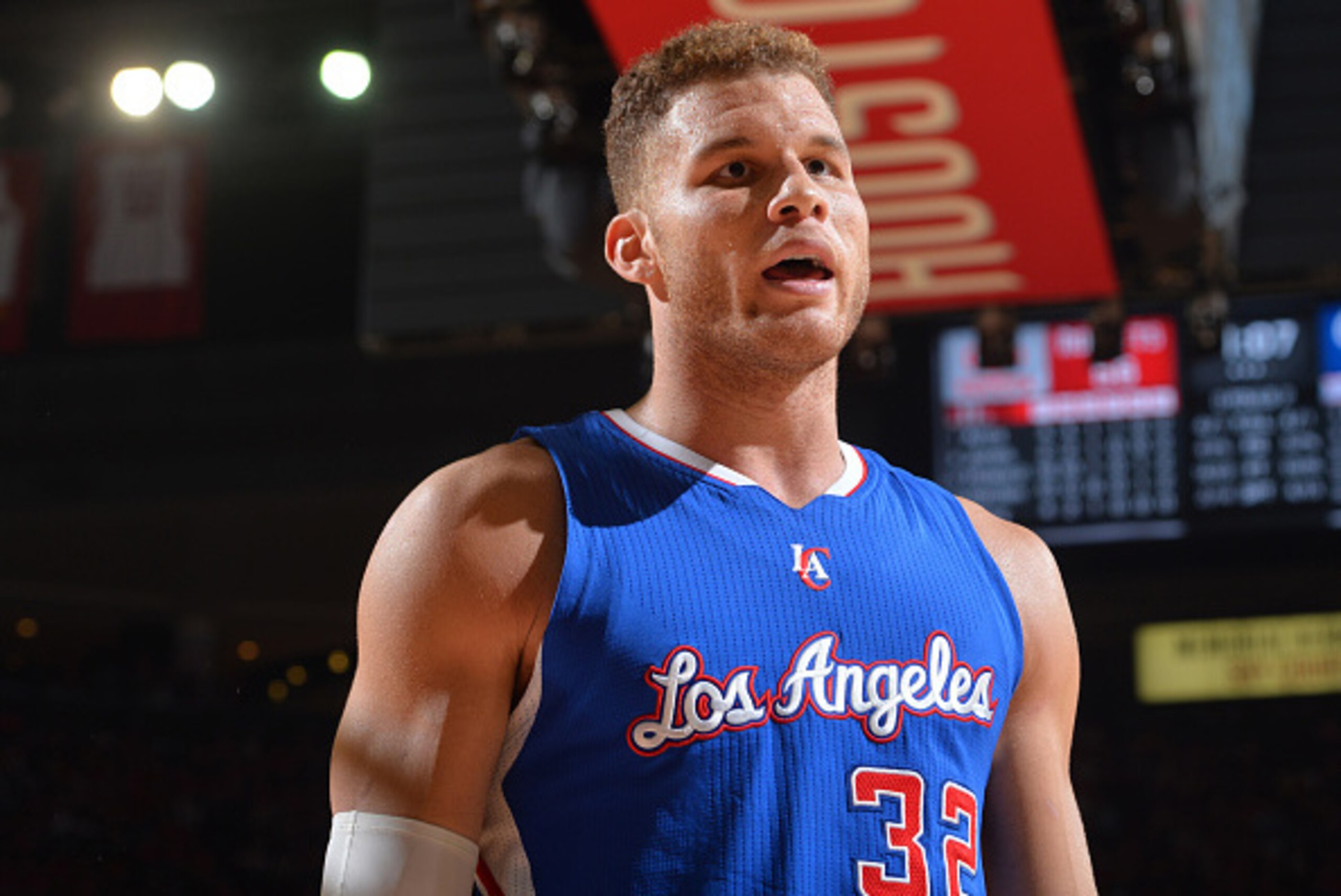
Blake has played 41 minutes before, and Rivers actually did a nice job finding rest for him during the first couple of quarters, sitting him from about the three-minute mark in the first period until the nine-minute mark in the second. But he looked like a different player in the third and fourth quarters.
It's not Griffin's fault. Now, he has to do everything, and he has to do it every play. Once Paul comes back, we might not see the best player in this series (and—no discredit to Harden—with the way Griffin is playing now, he is the best player in this series) get winded so soon.
2. Stagnant Ball Movement

Rockets head coach Kevin McHale took some heat for electing not to double-team Griffin during the power forward's ridiculous 26-point Game 2 first half and beyond, but all that decision showed was McHale's respect for Blake's facilitating skills.
Griffin might actually be more dangerous as a passer than a scorer. Once he starts moving the ball around, the team echoes those behaviors. And that's how you end up with swings around the perimeter, open catch-and-shoot threes and cutters aplenty going to the rim.
Thirteen assists for Griffin in Game 1 clearly wore on the collective mind of the Rockets. That wasn't going to happen again. So, Houston figured, "Let's let Blake get his and make sure no one else can do the same," presumably also factoring in that putting Griffin in a position to fight for his own points tires him out quickest.
Paul can remedy all of this.
CP's intellect in knowing when to distribute—not just how to do it—is part of what makes him such a special floor leader. He has the John Stockton gene, the one that tells him, "Matt Barnes hasn't gotten a shot in a little while. Let's get him involved before he starts to zone out."
Griffin has barely played perimeter isolation basketball during the postseason—finding loads of production on the break, in the post and in the pick-and-roll—but he's been forced to do it more often with Paul out of the lineup. If When the best point guard of his generation returns, he, along with the rest of the team, can get back to normal.
And considering the success the Clippers have found against Houston over the past few years, "normal" is all they want.
Follow Fred Katz on Twitter at @FredKatz.
Unless otherwise noted, all statistics are current as of May 7 and are courtesy of Basketball-Reference.com and NBA.com.

.jpg?w=2560 "Raiders Could Start Mendoza")

.jpg?w=2560 "Rodgers Iced Out on Plane 💎")
.jpg?w=2560 "Packers Safety Slams Refs 🤬")
.jpg?w=2560 "🚨 Week 8 AP Top 25 Poll")