

Breaking Down How the Los Angeles Clippers Can Slow James Harden
For seven out of eight quarters in the second-round playoff series between the Los Angeles Clippers and Houston Rockets (tied 1-1), James Harden has not quite been himself.
While some of that can be attributed to shots simply rimming out, the Clippers deserve much of the credit.
Nothing Los Angeles has done is particularly different from its normal defensive coverages. Head coach Doc Rivers likes to have his big men jump out high on pick-and-rolls and square up to the ball in what amounts to a momentary double-team.




Containing the ball-handler and limiting his penetration is clearly of paramount importance to the Clippers. They want Harden to throw pocket passes to rolling bigs or launch long, cross-court bombs to seemingly open shooters.
Los Angeles is athletic enough to fly around the perimeter in rotations and scramble back into place. Their two primary bigs—DeAndre Jordan and Blake Griffin—are athletic enough to contain the ball while maintaining active hands to prevent easy lobs or dump-off passes to rollers.
This type of suffocating, high-pressure defense matches up perfectly with Houston's personnel. The Rockets boil down to a one-man show with Harden's isolations and pick-and-rolls generating opportunities for everyone else.
Howard's easy lobs at the rim do not occur without multiple opposing defenders leaving him to stop Harden. Three-point shots for other Rockets wings vanish without the defense loading to Harden's side of the floor.
It's all built around The Beard.
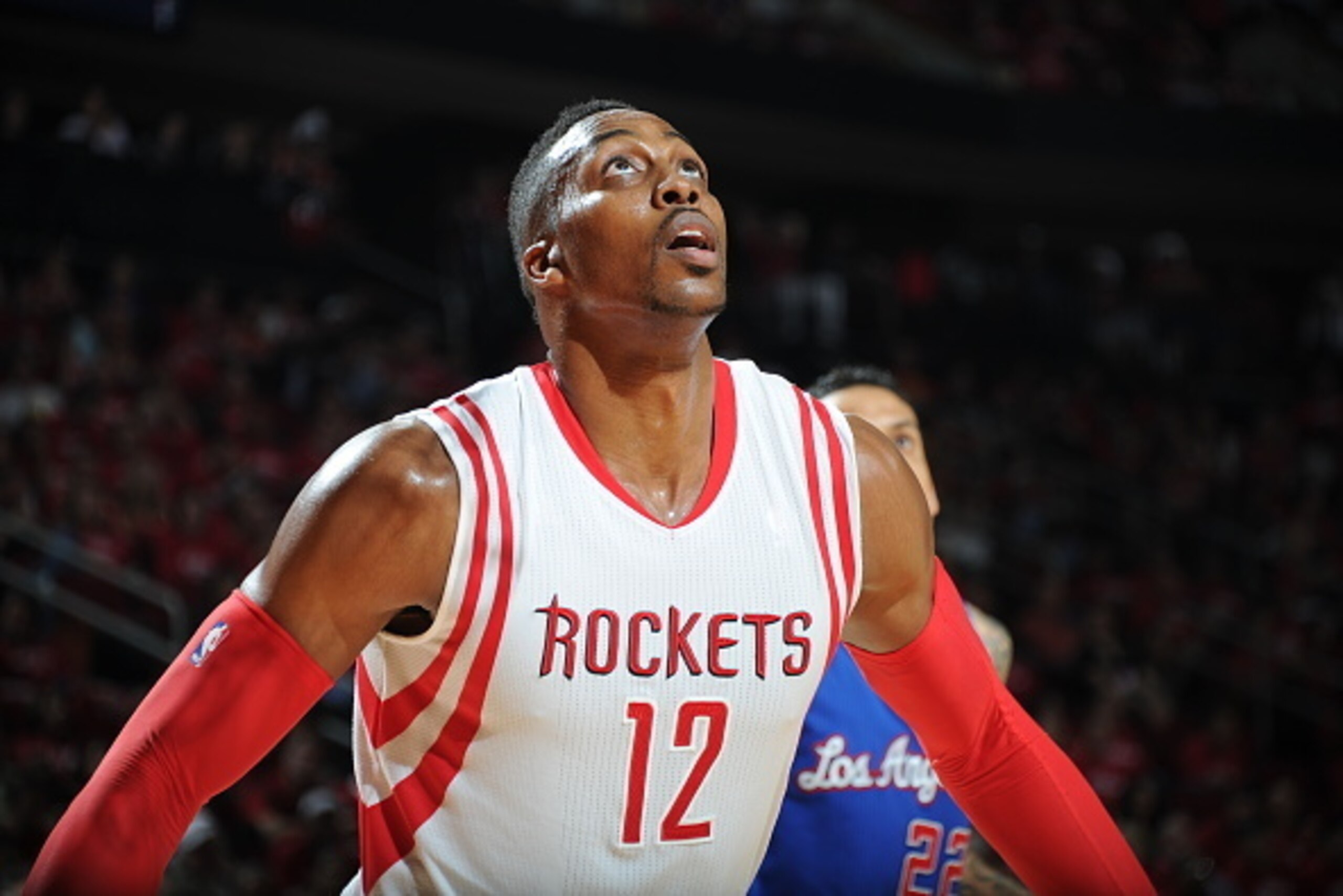
That's why Los Angeles was happy to surrender 16 points to Dwight Howard in the first half of Game 2. Although his rather efficient 7-of-9 from the field seemed to point toward a deficiency in the Clippers' defense, it came with a rather significant benefit: Houston shot 2-of-14 from three-point range due to limited open catch-and-shoot opportunities, and Harden only attempted eight field goals to go along with five turnovers.
Los Angeles, not surprisingly, took a 65-56 lead into halftime. The Clippers will take that formula every time.
Every defense naturally concedes one of three aspects of pick-and-roll field goal attempts: baskets for the ball-handler, finishes for rolling bigs or three-point shots for wings on kick-outs. In Los Angeles, Rivers accurately calculates that swallowing up a ball-handler's space limits both his scoring and vision to the weak side.
The weak point arrives in that short and immediate pocket pass, and the Clippers have been gambling this way all year. According to Synergy Sports (subscription required), rolling bigs shot 54 percent on pick-and-rolls against them during the regular season. That placed them dead last in the league by more than one percentage point.
But the Clippers aren't just playing the numbers game with points per possession on the three-point line versus inside the arc: They're betting that you can't complete that pocket pass consistently enough in the first place.
And they're right. According to Synergy, they gave up the sixth-fewest field goal attempts to rollers during the regular season. In short, the area of defense that hurt them most was also the least exploited. Meanwhile, pick-and-roll ball-handlers turned it over on 22.3 percent of their possessions, good for the third-highest rate in the league. The ball pressure did its job.
Although Harden's passing acumen matches up with anyone in the league, the Clippers have proved that continuing to thread the needle within tight quarters is a dangerous game to play.
Sometimes the offensive reward is huge.
Other times, it's a turnover that springs a Clippers transition basket.
If Los Angeles gives up a few dunks to Howard, so be it. The cost-benefit is worth it.
And in this series, Harden is clearly the most dangerous player on the floor. All season, Los Angeles has thrown the kitchen sink at its opponent's best perimeter player. In the first round, Tony Parker of the San Antonio Spurs struggled because he could not handle the constant barrage.
Harden is a far superior scorer and distributor to Parker, but even he cannot beat double-teams all game long. There have been and will continue to be times when he magically splits two men in a ball screen or weaves his way through dense traffic. That's what makes him one of the best offensive players in the game.
But for someone who has free reign on the offensive end, Harden is a naturally unselfish player. Throughout the season and particularly during this series, Harden has moved the ball to open teammates when Los Angeles blitzes him out high.
Rivers and the Clippers want the rest of the Rockets to beat them—everyone except Harden.
They want Harden to throw out of the pick-and-roll and run a wing shooter off the three-point line and force him to make a play off the bounce. Harden's teammates aren't nearly the caliber of finishers or passers, and more often than not they're unable to capitalize.
That's what happens here when Griffin and Redick harass Harden on a pick-and-roll. Harden throws a cleverly timed and early pocket pass to Josh Smith at the free-throw line, leaving him wide open to attack the rim.
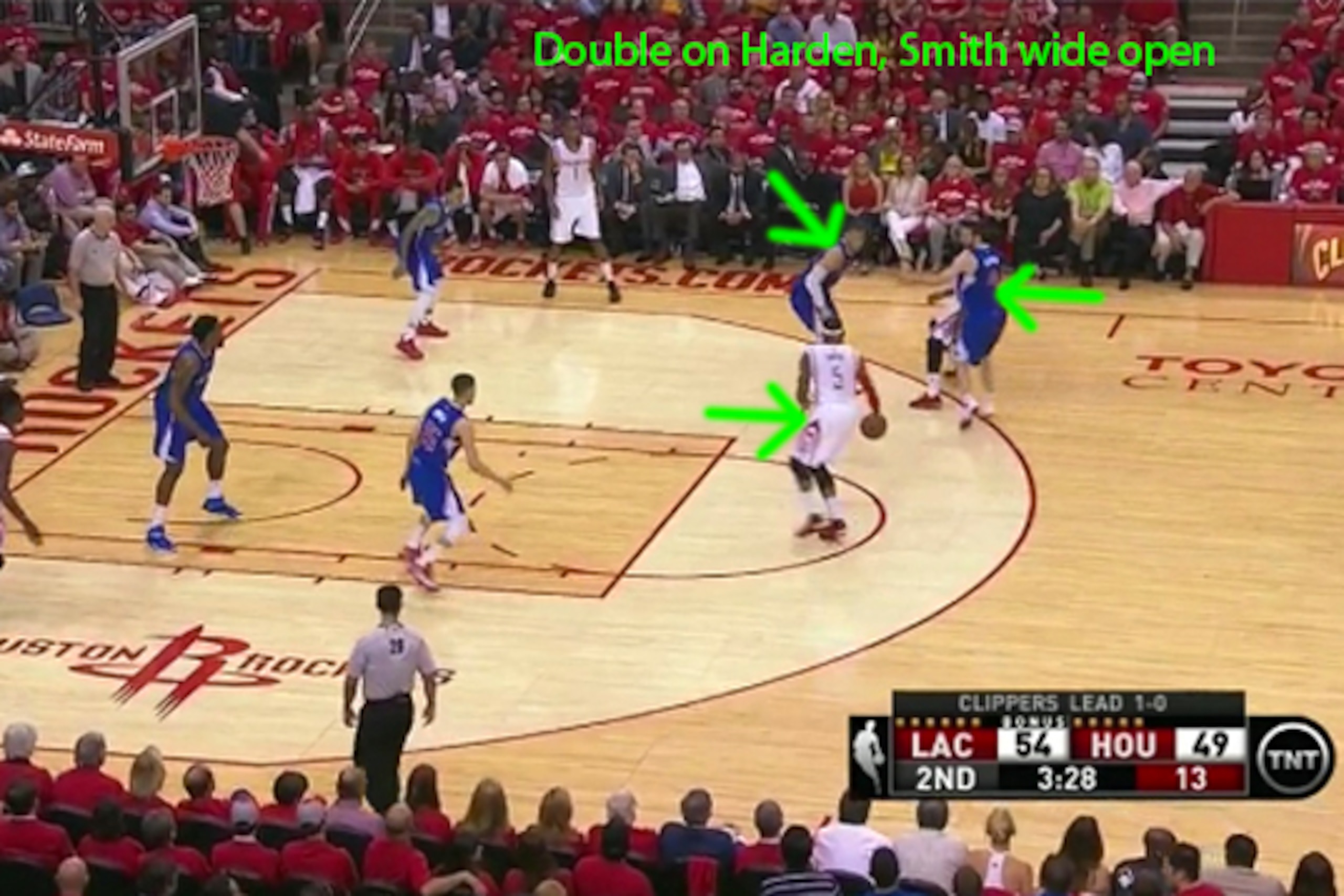
With so much room to operate, he hesitates before ball-faking and eventually finding Trevor Ariza in the corner for an open three-pointer. Because Matt Barnes does a nice job closing out to prevent a catch-and-shoot, Ariza tries to attacking his scrambling defender.
Ariza is a solid player who can knock down a shot and attack the rim at times, but he's not one to penetrate on a consistent basis. Even with the assist of Barnes' momentum taking him the wrong way, he cannot get to the rim. Instead, he pulls the ball out and kicks it to Harden, who is forced to launch a long shot due to the shot clock.
If Houston does fire three-pointers, the speed of Los Angeles' rotations means that most of them are contested. Over the span of a playoff series, Rivers trusts that Houston cannot knock down enough shots as long as Los Angeles always carries a hand.
That's why he will continue to post high assist totals in this series—he has 19 so far, including 12 in Game 1. But don't expect the turnovers—16 through two games—to dip anytime soon.
All of this, however, begs one question: How did Harden get loose in the fourth quarter of Game 2 for 16 points? The Clippers' game plan did not change.
It was Houston's that did. Instead of initiating everything with a ball-screen, Harden began to wave away the bigs and isolate.
Isolation basketball leads to selfish play and inefficient offense 98 percent of the time. It freezes out teammates, breeds ill will within the group and usually affects effort on the defensive end.
Harden is part of that other two percent. Not only is he highly efficient—Harden's isolations during the regular season generated 1.012 points per possession, according to Synergy—he's a dynamic passer as well, creating 1.026 points per possession when he dishes it after attacking one-on-one.
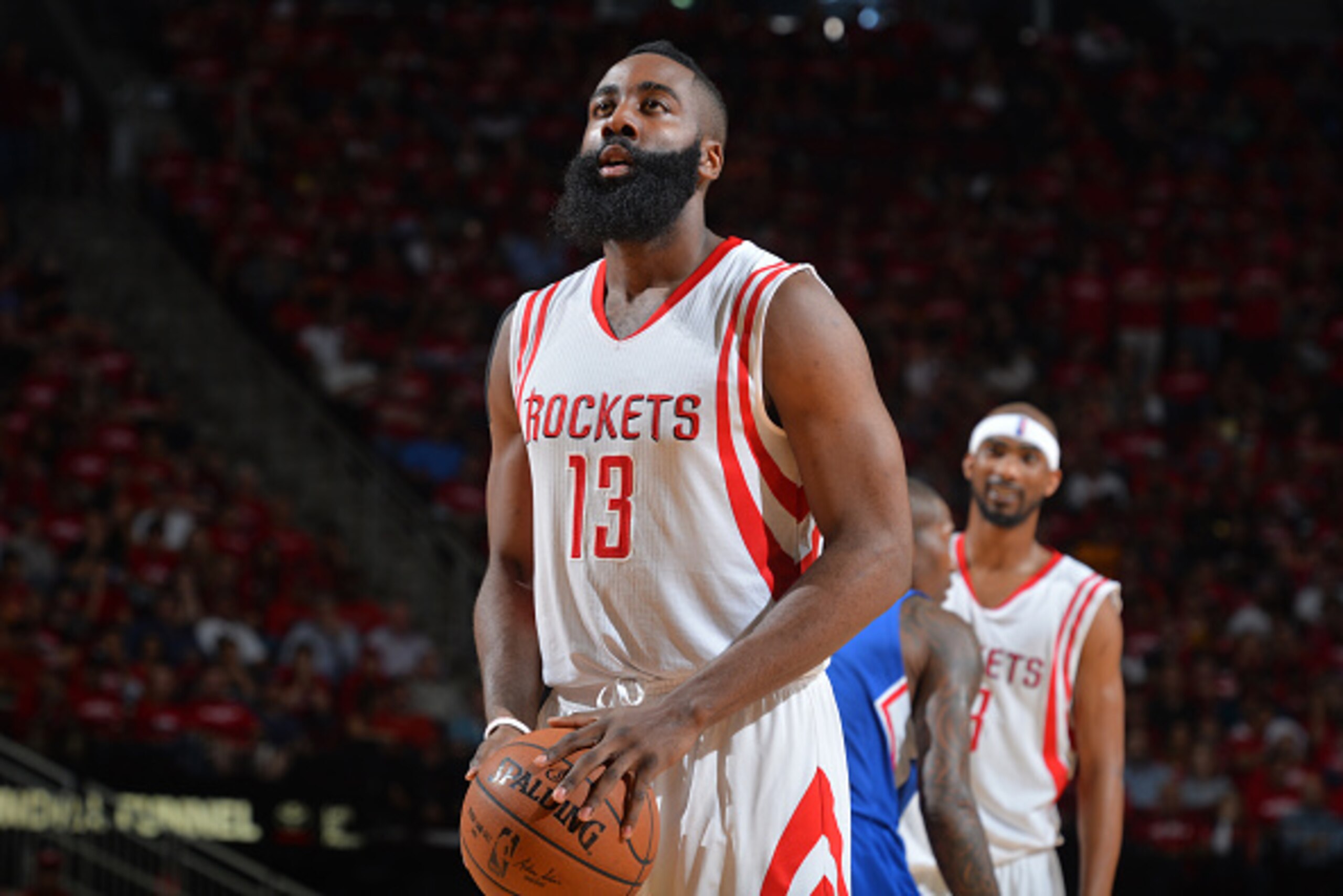
This is the formula Houston stuck to in the fourth quarter: Give Harden the ball and get out of the way. The result was 5-of-10 from the field (including shots for other Houston players off Harden isolations, via Synergy Sports) and two trips to the free-throw line.
"He was aggressive, really aggressive," Jamal Crawford said of Harden, via Calvin Watkins of ESPN.com. "Everything basically went through him, whether it was getting to the basket, shooting a three-ball—he shot 15 free throws, so he was really aggressive."
For most of the first two games of this series, J.J. Redick has guarded Harden. Although Barnes is the Clippers' best perimeter defender, Redick's relentless work ethic makes him more suited to battle through constant ball screens and hound Harden's space.
Once Harden began to size up defenders one-on-one in Game 2, the job shifted primarily to Barnes. But even Barnes can't stay with Harden. In fact, no Los Angeles perimeter player stands much of a chance one-on-one against him. As long as he's not settling for threes, Harden can get to the basket against the Clippers whenever he wants.
What makes isolation so difficult to guard is that it puts the defense at a numbers disadvantage. Pick-and-roll can create the same type of havoc, but it's organized chaos: The defense knows its rotations and is trying to force the ball to a particular area of the floor.
When an offensive player simply blows by a defensive player in a one-on-one showdown, everything is thrown out of whack. The offense grabs control of the sequence, and the defense must choose between poor options.
When Harden is playing five-on-four after beating his defender, the Clippers are guaranteed to give up an easy shot.
On the play below from late in the fourth quarter of Game 2, Harden goes to work against Austin Rivers after an offensive rebound. Once Harden beats him going left, no Clipper steps up to help. The perimeter players are worried about giving up open threes, and Griffin is caught on the wrong side of the paint.
As tempting it is to hand the ball to Harden on every possession, Houston cannot win in the long-term this way. It's a tiring way to play basketball, and efficiency levels will almost certainly drop.
The key for the rest of the series will be whether Houston's other players can punish the Clippers for daring them to win the game. If they're knocking down threes and becoming secondary playmakers, Los Angeles doesn't stand much of a chance on the defensive end.
But if they continue to brick shots, they're looking at a quick playoff exit.
This is why Houston has always seemed like a tenuous No. 2 seed. Howard and Harden are great, but most championship teams have that third creator to bend the defense even more.
The Clippers do not think one will emerge this series, and it's more than likely that they will be proven right.

.jpg?w=2560 "Raiders Could Start Mendoza")

.jpg?w=2560 "Rodgers Iced Out on Plane 💎")
.jpg?w=2560 "🚨 Week 8 AP Top 25 Poll")
.jpg?w=2560 "Packers Safety Slams Refs 🤬")
