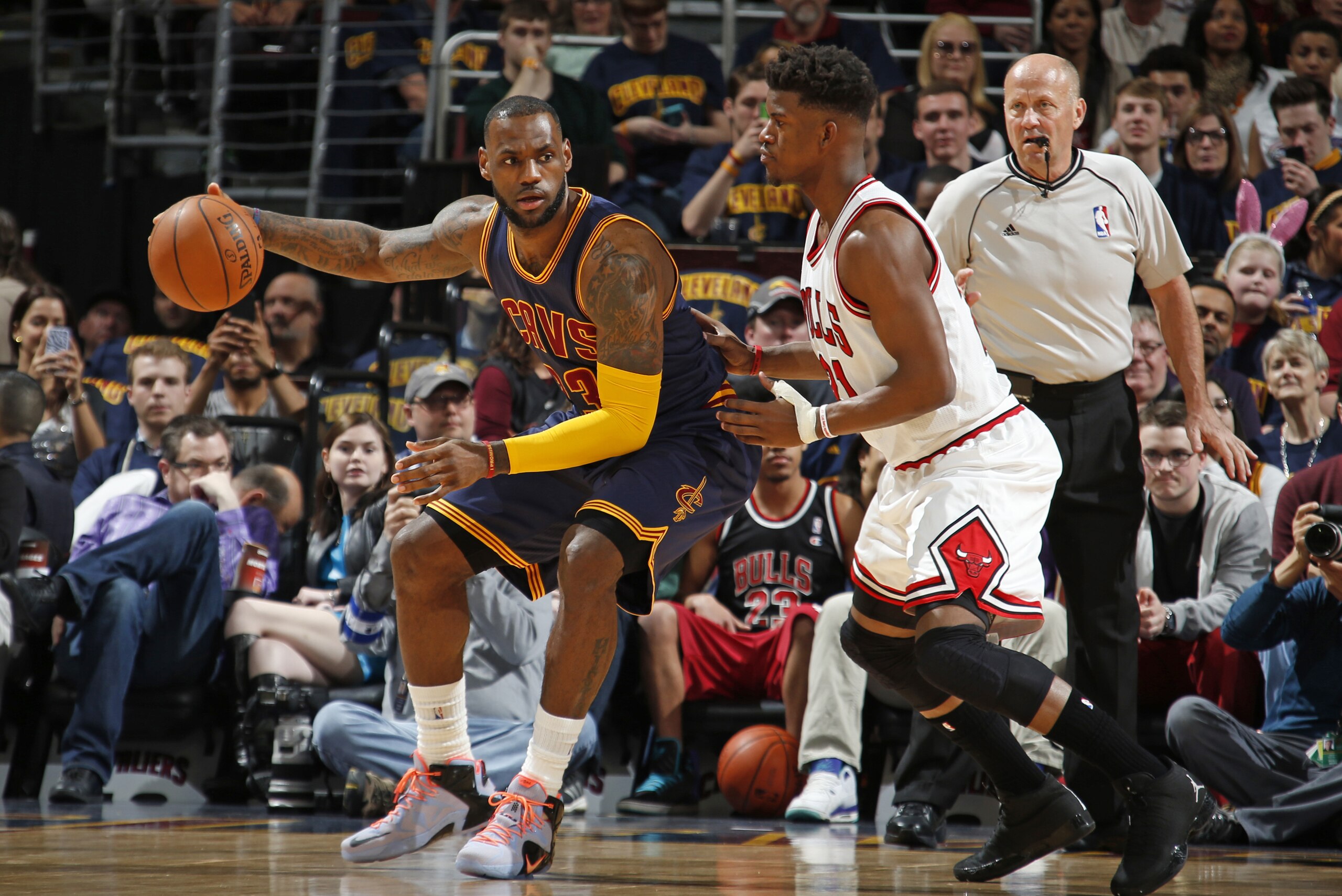


The Cleveland Cavaliers are gearing up for the second round amid swirling uncertainty.
For starters, the Cavs' opponents have yet to be decided. The Chicago Bulls are up 3-2 on the Milwaukee Bucks after beginning the series 3-0. One can only assume it will be Chicago that advances, given the previous success of squads that have opened up with three straight wins. If, or when, that happens, the Cavs need to be ready.
Of course, Cleveland's other dilemma lies in its personnel. Kevin Love is expected to miss the remainder of the postseason with a torn labrum, according to Chris Haynes of Northeast Ohio Media Group, while ESPN reported J.R. Smith will sit the next two games after smacking Boston Celtics forward Jae Crowder.
TOP NEWS

Brown with an all-time summary of relationship with Tatum
Jokic says booing fans not welcome in Denver
Worst NBA Predictions 🫣
The Cavaliers won't feel sorry for themselves, of course. They can't use the injury excuse, especially not against a Bulls team that's been as unlucky as any throughout the past few years.
Preparing for a tough Bulls team without two starters will be difficult but necessary for a Cleveland franchise with championship aspirations.
Rotation Adjustments
The Cavaliers need to prepare for life without Love, at least for the next several weeks.
This means finding a new starting power forward who can help make up for what Love brought to the table. Unfortunately, Love is such a unique talent, with his rebounding and outside shooting, that no one player can replace his skill set.
Cleveland has options, however.
If coach David Blatt opts for his next-best big man, Tristan Thompson will start. He was Blatt's go-to guy during the seven games Love missed in the regular season. Cleveland was just 3-4 during contests that Love did not participate in.
Thompson is also the best bet to help fill Love's rebounding void. His 8.0 boards per night were second on the team to Love's 9.7.
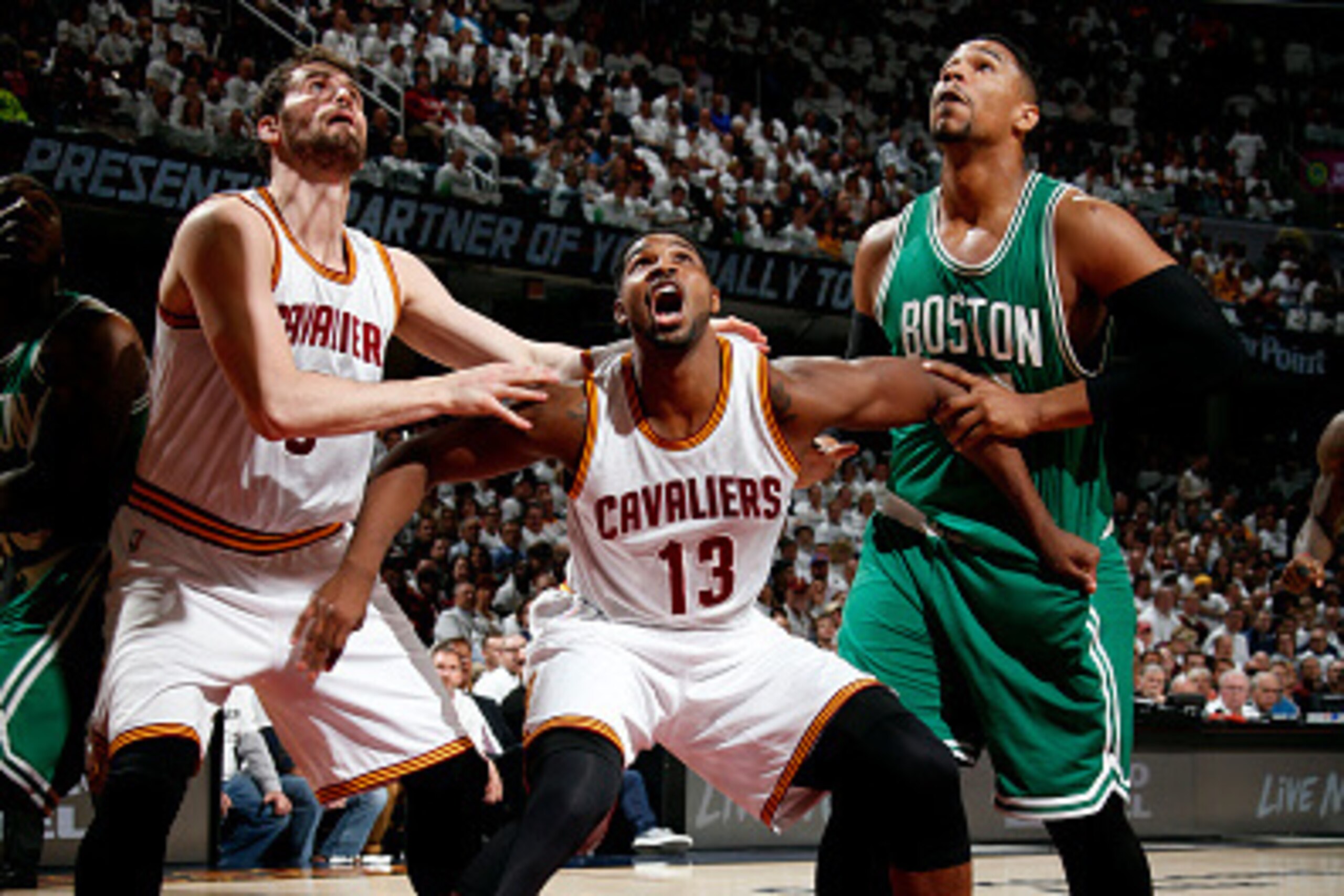
Unfortunately, this means spacing becomes a major issue on offense. A huge part of Love's game was spreading the floor and serving as a kick-out option when LeBron James and Kyrie Irving would drive to the basket. Love shot 392 three-pointers this season, or 392 more than Thompson. Just 34 percent of Thompson's total shots came from outside three feet of the basket.
If Blatt decides the Cavs need an offensive kick, he could opt for James Jones at power forward. Blatt regularly used Jones as a poor man's stretch 4 this season, given his career success from three-point range. Unfortunately, Jones struggled in the first round, connecting on a team-low 18.2 percent of his three-pointers.
Starting Jones at the 4 would also likely mean a matchup against Bulls big man Pau Gasol. Jones would be sacrificing approximately four inches and 20 pounds, something the Cavaliers should try to avoid.
There's also the question of whom to start at shooting guard for the first two contests.

Blatt could plug in another shooter for Smith with the seldom-used Mike Miller or go defensive by using Iman Shumpert, who was fantastic when guarding the Celtics perimeter players.
Chicago features one of the best backcourts in the NBA, with Derrick Rose and Jimmy Butler. As much as Blatt may want to make up for Smith's 12.7 points on 39 percent shooting from deep, defense may be more important.
While finding a temporary solution at shooting guard for Smith will be easy, Love's departure creates a large hole that can be filled by only one candidate.
Small Ball May Be Best
The best all-around option to replace Love at power forward may be James himself.
Of course, this means the Cavaliers would have to go small, something they've only dabbled with this season.
James spent 27 percent of his court time at power forward this year, down from his 82 percent for the Miami Heat in 2013-14. An abdominal injury to Heat forward Chris Bosh in the 2012 playoffs created a smaller, positionless Miami team. James may prefer to play on the wing, but the Heat won two championships with their new small-ball lineup.
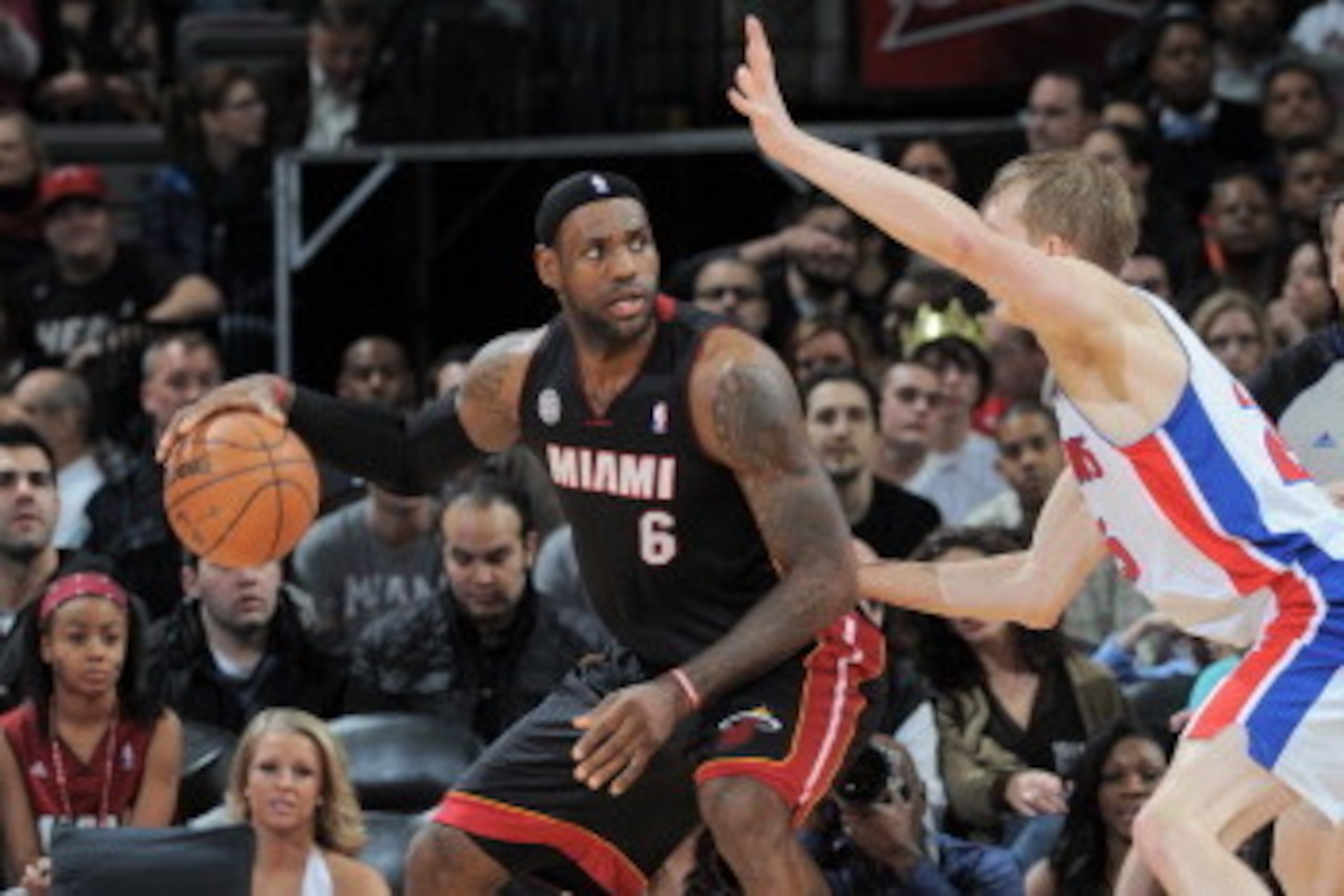
The Cavaliers must now adopt the same style of play that Miami was forced into, as Bleacher Report's Ethan Skolnick points out:
"Certainly, the Cavaliers preferred not to need to repeat the Heat's resourcefulness; James, in particular, doesn't like to play the 4-spot and made that plainly known during his time with Miami, even as the Heat's numbers were devastatingly dominant with him in that role.
"
Putting James at the 4 makes the most sense. He's versatile enough on defense to cover most bigs, and he can spread the floor on offense as well. Jones and Thompson can help on only one end of the court, while James covers both.
When Smith is reinstated, the Cavaliers have enough talented wings to get by—with him, Shumpert, Shawn Marion, Jones and Miller.
Marion should ultimately be named the starting small forward when James moves to the 4. He started at shooting guard prior to the trade for Smith, and is versatile enough on defense to switch assignments with James if needed.
James may not like it, but a return to his power-forward-based Miami days is exactly what Cleveland needs.
On Offense
Love and Smith contributed 29.1 points a night between them, offense that won't easily be recreated.
"It's unfortunate," James told Chris Haynes of the Northeast Ohio Media Group in regard to Love's injury. "I mean—obviously he's a big piece to our team. He brings so much to our team offensively and defensively. It's a big blow for us, and we've got to have guys step up."
The Cavaliers scored 7.4 more points per 100 possessions with Love on the court in the regular season, a number that rose to 15.9 in the Celtics series. Cleveland also registered higher marks in shooting, rebounding, passing and steals when Love was on the court.
Cleveland can help make up for Love's absence by using James as its new stretch 4, placing shooters on the wing and letting Irving create. The Cavs can also space Timofey Mozgov out on occasion. While not a three-point shooter, Mozgov did connect on 45.2 percent of his 16-plus-foot jumpers, a higher mark than that of even James (37.7). If sharing the floor with Thompson, Cleveland will need to pull Mozgov out of the paint and let the former stay home down low.
This spacing will be crucial against the Bulls, which will possess a large size advantage with Love out.
Joakim Noah, Gasol and Taj Gibson are all strong defenders and have enough size to make opponents think twice about driving the lane. The Bulls have allowed Milwaukee to shoot 46.1 percent from within five feet in their series, the stingiest mark of any playoff team.
Instead, Chicago's weakness lies on the perimeter.
The Bucks are converting at a 40 percent clip from 20 to 24 feet away, the third-highest rate in the postseason. Cleveland has to take advantage of its shooters (Smith, Jones, Irving and Matthew Dellavedova) and not just rely on trips to the paint.
The Cavaliers knocked down a measly 32 percent of their three-pointers against the Celtics, a number that must improve if they hope to advance.
On Defense
Cleveland did a fine defensive job against the Celtics, holding them to 94.8 points a contest.
Chicago will prove to be a greater test, however.
The Bulls are paced by their own Big Three on offense, consisting of Rose (17.7 points per game), Gasol (18.5) and Butler (20.0). Fortunately for Cleveland, it has the defensive matchups to counter.
Statistically, and by the eye test, the Cavaliers rely on James, Shumpert and Mozgov on D. That group finished with the top three defensive ratings for Cleveland in the regular season, paced by Shumpert's 99.2 mark. Blatt will need to increase the workload of each if the Cavs hope to stop Chicago's offensive attack.
Mozgov averaged 24.5 minutes a game against the Celtics, a number that should increase significantly with Love out. During his sparse court time, Mozgov was fantastic. He blocked three shots per game and held opponents to nearly 17 percent below their regular field-goal percentages from less than six feet away.
With so many talented bigs, Mozgov will have his hands full against Chicago and must prove that he's capable of playing 30 to 35 minutes a night.
Shumpert also serves a key role here, especially if he ends up in the starting lineup. He can play both shooting guard and small forward and would make sense as a defender at the 3 if James does indeed slide down to the 4.
His primary assignment should be Rose, who's appeared explosive in his latest return from knee surgery. Shumpert's best bet would be to sag off Rose at the three-point line, forcing him to shoot from deep rather than driving the lane. Rose converted just 28 percent of his attempts from three in the regular season, ranking 10th on the Bulls.
Cleveland also needs Thompson to help control the defensive boards, an area of strength for Love. The Cavaliers held Boston to 40.8 rebounds a game, the second-best mark of any playoff team.
The Bulls were going to be a tough team to beat, even with a healthy Love and active Smith.
Now, the Cavaliers will get their first true postseason test.
There will be no sweeping Chicago, no 20-point leads to comfortably sit on and no time to wind down. The Bulls, when they finally defeat the Bucks, will be a far greater challenge than Boston ever was.
The Cavs may be short-handed, but they will have to make do with the roster at hand.
Moving James to power forward and playing a small-ball lineup now becomes Cleveland's best chance at beating the Bulls and keeping its ever-shrinking title hopes alive.
Greg Swartz has covered the Cleveland Cavaliers and NBA for Bleacher Report since 2010. All stats provided by Basketball-Reference.com unless otherwise noted.

.jpg?w=2560 "Mahomes Told Teammate to Leave Meeting")
.jpg?w=2560 "5 Teams Eyeing Jonathan Taylor")



.jpg?w=2560 "NFL investigating Eagles")
.jpg?w=2560 "Jonathan Taylor Landing Spots 📍")