

Rajon Rondo, Dallas Mavericks Must Learn from Mistakes Leading to Bitter Divorce
This is a teachable moment for Rajon Rondo and the Dallas Mavericks.
Not five months into their time together, the two sides are already streaking toward a bitter divorce. This is neither speculation nor hot take-y. It's a fact.
Rondo was pulled barely 30 seconds into the second half of the Mavericks' 111-99 loss in Game 2 of their first-round playoff series against the Houston Rockets on Tuesday. He did not return and is now likely out for good, according to ESPN.com's Marc Stein:
TOP NEWS

Pic of LeBron's Helicopter Commute 🚁

Surprise Dubs Trade Idea 💡

Duren Calls Out 'False' Rumors
The Mavericks' reasoning diverges from conventional wisdom. Rondo committed two thoughtless fouls during his half-minute or so on the floor in the third quarter and ignored reporters on his way out of Toyota Center afterward.
All signs point to something else: an irreparable relationship between player and team that will reach its merciful conclusion this summer, once Rondo reaches free agency. And if those signs don't sway you in that direction, Mavericks coach Rick Carlisle should, per ESPN Dallas' Tim MacMahon:
Deemed a questionable fit for one another from their relationship's inception, Rondo and the Mavericks are clearly better off without each other. But this is not a failure that can be chalked up to good intentions gone awry or merely a gamble that didn't pan out.
Above all else, it's a mistake from which everyone involved must learn.
Dallas' Costly Gamble
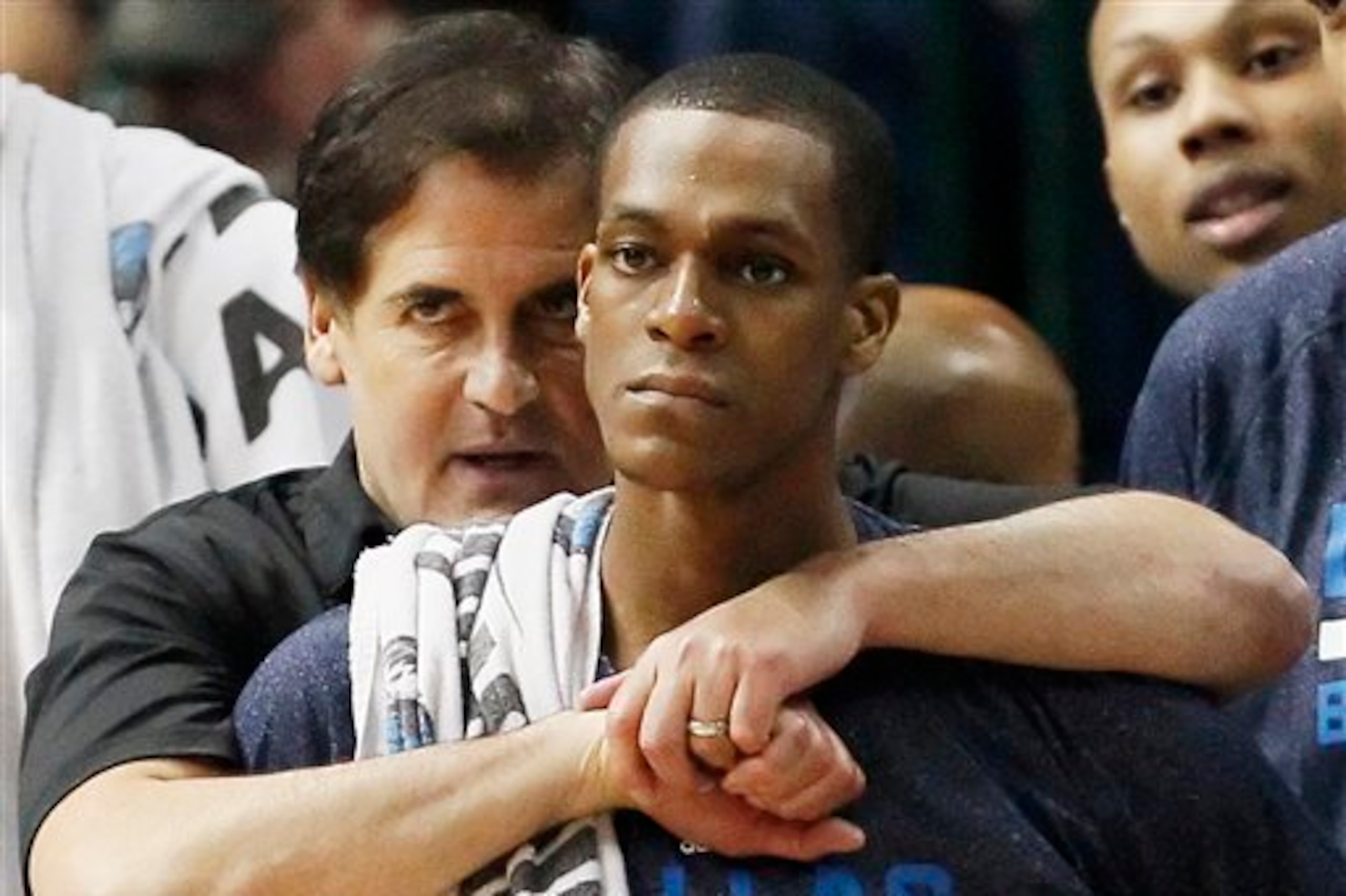
It didn't have to be this way for the Mavericks.
That's unsettling to admit, and hindsight is futile, but it's true. Their acquisition of Rondo was not borne from necessity or a position of desperation. They rolled the dice on his starry-eyed reputation, on the hope that talent trumped risk and superseded preexisting chemistry.
At the time of the trade (Dec. 18), the Mavericks were 19-8, owners of the Western Conference's sixth-best record and the league's most potent offense. Though their standing didn't necessarily reflect immense success, they were in the thick of the West's championship cloud, just one game outside of the top-four clique.
A major shakeup was only necessary insofar as it addressed Dallas' two biggest needs: defense and the wherewithal to contend with the very powerhouses they were chasing.
Trading for Rondo remedied those issues in theory. His quick hands and feet and ability to make sharp lateral movements would bolster the Mavericks' 20th-place defense and help them improve upon their 1-5 record against would-be West playoff outfits.
Theoretical reasoning didn't prevail in practice. The Mavericks regressed from then on, their offense worse for wear, their championship hopes dashed:
| Pre-Rondo | 70.4 | 16.7 | 113.6 | 1 | 105.1 | 20 | 8.5 | 2 |
| Post-Rondo | 56.4 | 40.0 | 104.1 | 13 | 103 | 17 | 1.0 | 15 |
Any overall defensive improvement was minimal and didn't even come close to offsetting the offense's devolution. Worse still, Rondo was a minus when on a floor. And through his 37 minutes of playoff action, Dallas is being outscored by 34.3 points per 100 possessions.
What the Mavericks did, then, is trade their way out of title contention. They sacrificed chemistry for something they thought could be better, and they were wrong.
Jameer Nelson and Brandan Wright—two of the players Dallas traded—fit the on- and off-court culture. Wright provided shot-blocking and devastating pick-and-roll finishes, while Nelson helped pilot an otherworldly offense. And unlike Rondo, he could be stashed off the ball, allowing Dirk Nowitzki, Monta Ellis and Chandler Parsons ample opportunities to dominate the ball.
Wright and Nelson would finish the regular season with Dallas' two highest net ratings.
They left the team in December.
In exchange for those two—as well as Jae Crowder and two draft picks—the Mavericks received a headache. Not only did Rondo fail to solidify their place among the West's best, but he also clashed with Carlisle, earning a one-game suspension in late February after a war of words with the head coach.
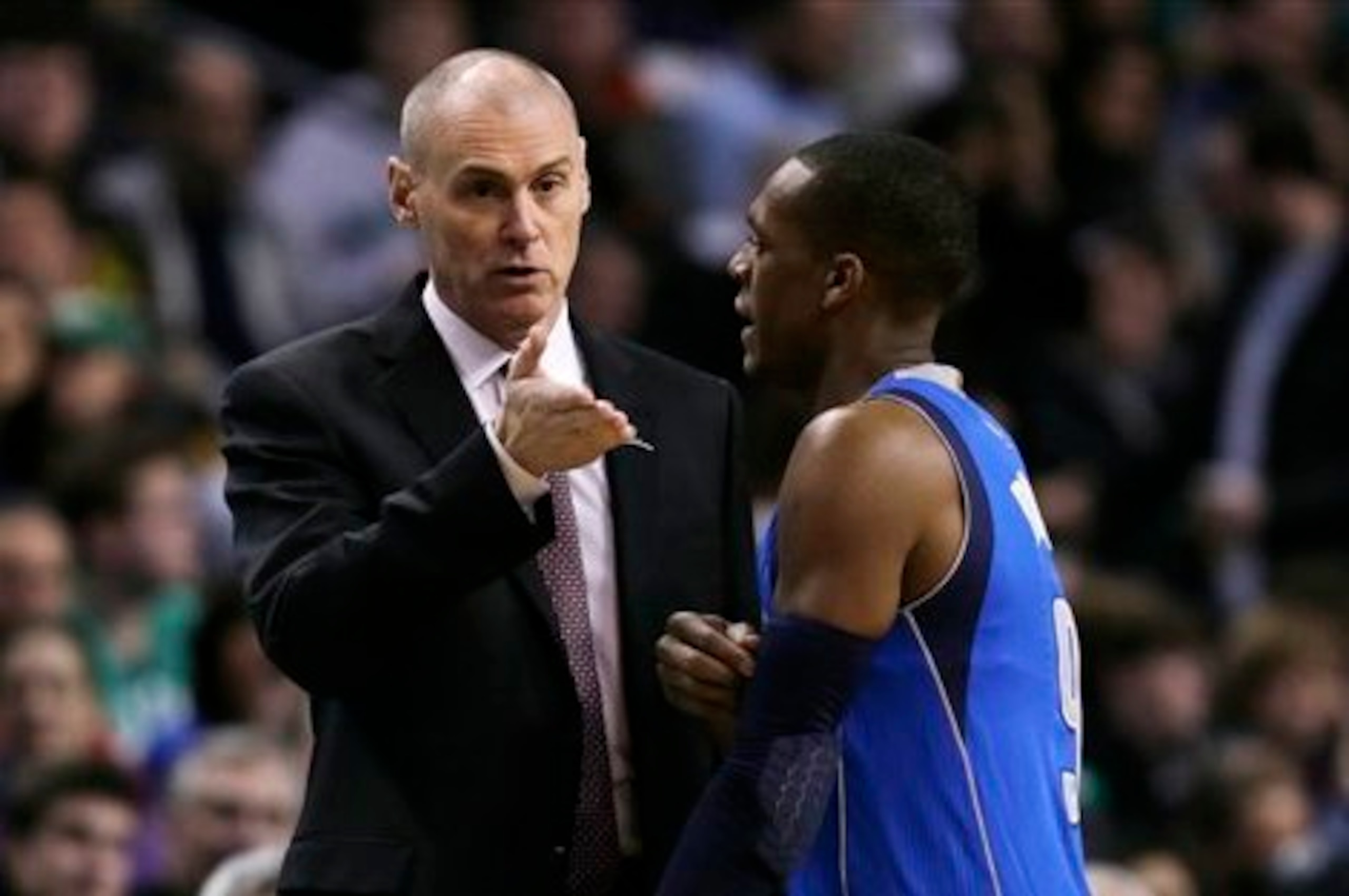
No part of Rondo's time in Dallas has been successful. From stylistic and cultural standpoints, he just doesn't fit. And Carlisle has known it.
"It's very difficult to just start playing fast in the middle of the year," he said, per MacMahon. "Guys aren't conditioned for it physically or mentally. He's come to a situation where it's a very different style."
That different style always sort of implied Rondo was a future investment. The Mavericks weren't necessarily looking at this season; they were looking at the big picture, banking on eventually finding a way to make that work, perhaps over the offseason, after he re-signed.
They'll never get that chance now. Rondo is as good as gone, because that's what makes sense. And now, as the Mavericks find themselves on the brink of another first-round exit, they're left to wonder what could have been had they done the smart thing and left their team, their championship contender, alone.
Rondo's Should-Be Wake-Up Call
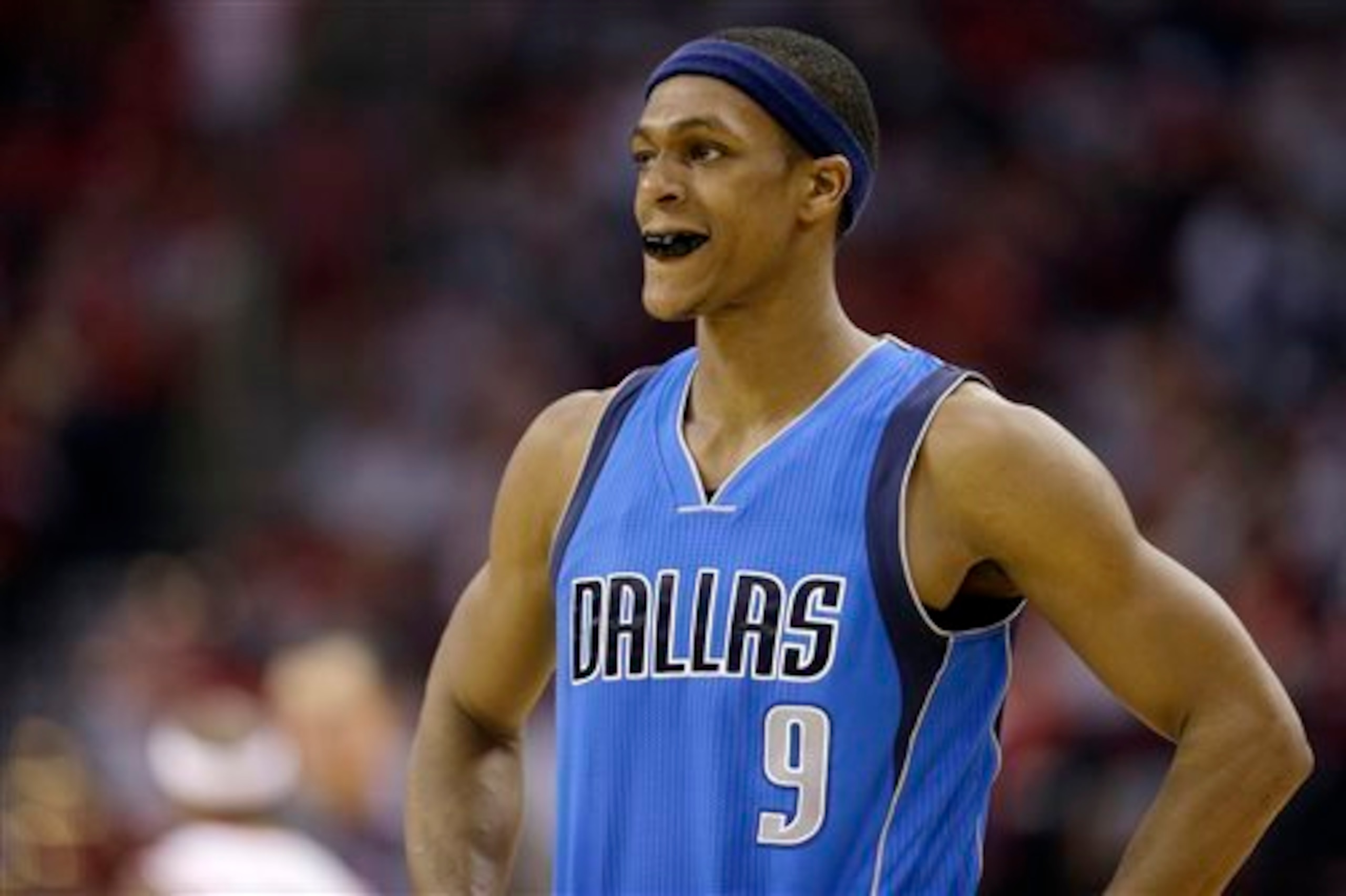
It isn't 2011 anymore.
If Rondo takes only one thing away from all of this, it should be that. He is no longer in the conversation for best point guard. He is three years removed from his last All-Star appearance.
He is a superstar only by reputation, not craft.
Parting ways with the Mavericks under such controversial circumstances is the last thing he needs. This is something any free-agent suitors are going to consider, which could damage his already-ebbing market value.
The NBA is teeming with talented point guards, many of whom can play on and off the ball. Rondo is a rock-dominating floor general with a jump shot that's been classified as "developing" for nearly a decade. His 31.4 percent clip from downtown this season is a career high, and he put in just 34.9 percent of his catch-and-shoot opportunities.
Never known as a consistent free-throw shooter, Rondo has only declined at the charity stripe in recent years as well. As Basketball Insiders' Tommy Beer points out:
Injuries have no doubt played a role in Rondo's demise. He cracked the 55-contest mark this season for the first time since 2010-11. It's difficult for anyone to remain at the top of their game while shimmying in and out of the lineup for years at a time. And so, Rondo's play, his raw, physical skills, have suffered.
"He can’t move the same, break down defenses or set up his teammates in a manner that he once did surrounded by future Hall of Famers Paul Pierce, Kevin Garnett and Ray Allen," writes The Washington Post's Michael Lee. "That bull-headed defiance allowed Rondo to have a few magical moments but they were rare after he tore his anterior cruciate ligament in January 2013, and practically non-existent in Dallas."
"The old Rondo has simply gone missing," he adds, "and isn’t ever coming back."
With his falling star already under a microscope, Rondo would have done well to behave more appropriately in Dallas. Locker room disruptions are often tolerated when a superstar is the cause. But, again, Rondo is no longer a superstar.
And yet, he's still difficult to coach.
While with the Boston Celtics, Rondo butted heads with Doc Rivers. Celtics owner Wyc Grousbeck referred to him as "stubborn" this past offseason. He even clashed with Tubby Smith, his head coach at Kentucky.
Now there's his brief stint with the Mavericks, a tenure that, if nothing else, proves Rondo hasn't changed. Paul Flannery of SB Nation described the point guard's character thusly in 2013:
"Rondo is not a follower, which the previous era demanded. He's intelligent, quirky, competitive as hell and yes, difficult in the way that most intelligent people are difficult for the rest of the world to deal with on a regular basis. If this situation doesn't appeal to him, then there's a real question of what, exactly, would satisfy his professional needs.
"
The question of what—or whom—Rondo needs remains relevant to this day. His foray into free agency should quell some of that curiosity. He'll have the chance to pick his team and can vet his options accordingly.
League sources told Yahoo Sports' Adrian Wojnarowski that Rondo planned on signing with the Los Angeles Lakers at season's end before being traded to the Mavericks. Kobe Bryant is viewed as his competitive equal, so that's an option he can—and probably will—revisit this summer.
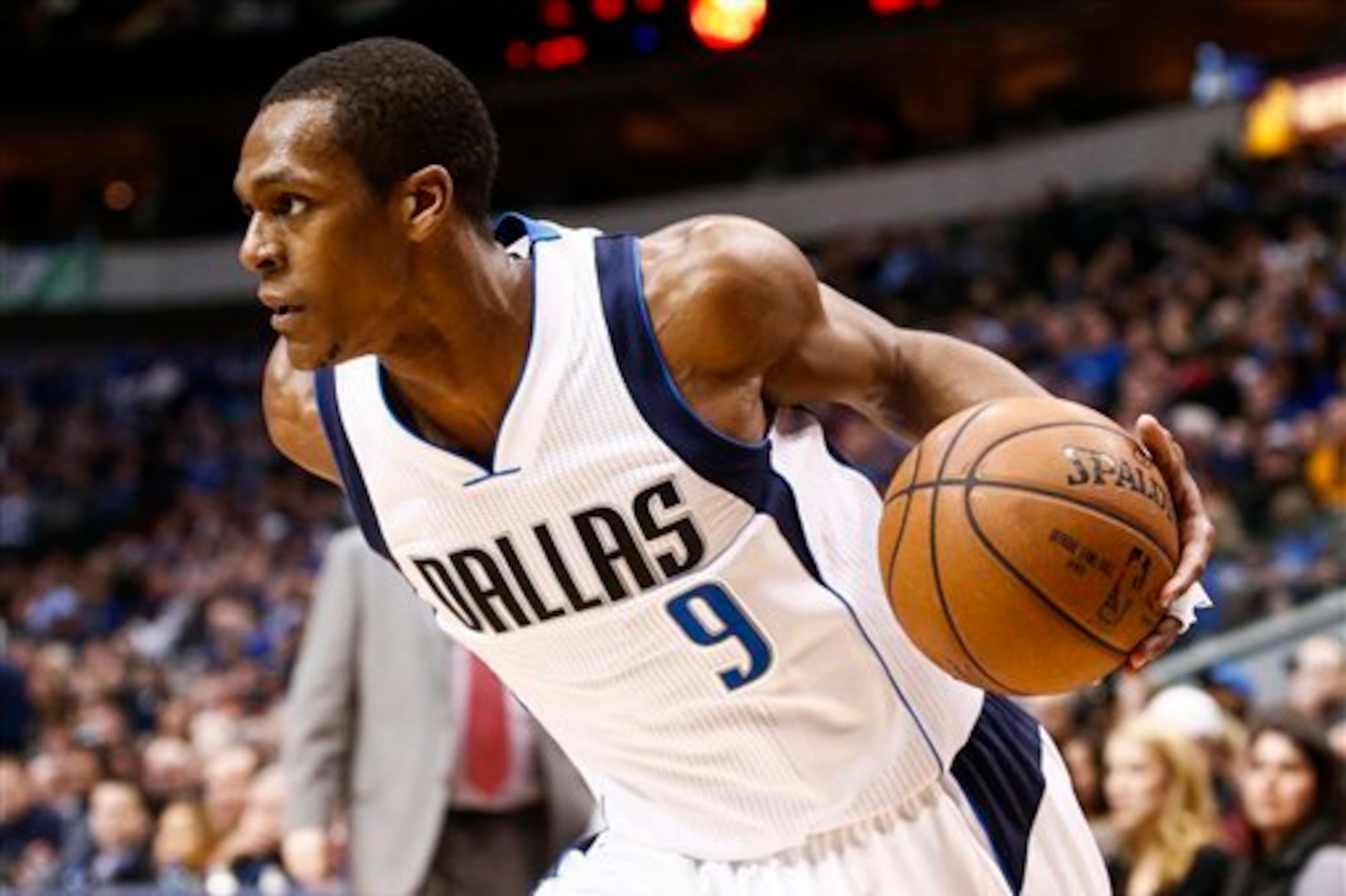
On the heels of this Dallas fiasco, though, Rondo won't enter free agency merely looking for an opportunity to regain his superstar status on the court. That will be part of it, but his immediate future is now much bigger than stats.
Instead of scouring the open market for a max contract that won't be there, Rondo must now find a team, a situation, where he can reinvent his image and play style once and for all, salvaging a reputation that, at this time, is nothing more than the source of his undoing.
Unless otherwise cited, all stats courtesy of Basketball-Reference and NBA.com.


.jpg?w=2560 "NFL investigating 2 referees for separate viral exchanges")

.jpg?w=2560 "OBJ Calls Out Giants 😳")

.jpg?w=2560 "Ward Nearly Walks Out of Presser 😳")

.jpg?w=2560 "Buzz: Tyreek Eyeing November Return")