

DeAndre Jordan Proving How Critical He Is to LA Clippers' Contender Status
DeAndre Jordan is what makes the Los Angeles Clippers' engine rev.
If the Clippers defense is an '02 Scion tC, Jordan is the gasoline. It may not be the most glorious ride you've ever had, and the construction of the car is inconceivably illogical (seriously, what person who attended a single high school physics class thinks a square car makes aerodynamic sense?), but as long as everything is working, it'll get you from point A to point B.
The problems come when you run out of gas.


The Clips can't afford for him to get into foul trouble or play poorly. And it's not just because of D.J. or scheme or because the team fell in overtime during Game 2, when Tim Duncan went bonkers on him, evening the Clippers' first-round series with the San Antonio Spurs at one game a piece. It's because of roster construction.
The Clippers actually allowed negligibly more points per possession when Jordan was on the floor this year, a surprising stat to those who boast about his defensive talents. But that evaluates D.J.'s full season, not necessarily who he is right now.
In each of the past two years, the center's game has made an apparent jump right around the All-Star break. This season, we really started to see it Feb. 9 when Jordan dominated the Dallas Mavericks offense en route to a 22-point, 27-rebound evening. He's been a different player since, both by conventional and slightly more analytical measures.
He's communicating better. He's not finding himself out of position nearly as often. And since that Feb. 9 date, the Clippers defense is almost three points per 100 possessions better with Jordan playing. Now, that sounds more like it.
Part of the reason we shouldn't be surprised by that difference: When he doesn't perform, there's no viable understudy.

Spencer Hawes came to the Clippers as a B student. He could hit threes, get involved in the pick-and-pop, play next to Jordan or Blake Griffin, space the floor and make some funky passes for a 7-footer. His defensive liabilities weren't that big of a deal if he was going to provide so much else for a team desperately in need of a third big man.
But he's not a B student anymore. He's one of those kids who impressed teachers at his small-town high school but showed up at college, got lost on campus going to his first-day, morning class and has been generally out of his element since.
He's doing his homework. He's meeting with teachers during free periods. But he's still a 1.8 student, and now, when it really, truly counts, he's on academic probation and isn't even allowed to go to his fraternity formal.
Because of Hawes' inexistence and every other bench player's actual existence (save for Jamal Crawford), the Clippers had to roll with an eight-man rotation in their Game 2 matchup against the Spurs. Only six guys—the starters and Crawford—played more than 11 minutes. Jordan ran for 44 in the Clips' overtime loss, an undesirable followup to a 38-minute showing in a Game 1 victory.
The theme of this series is obvious: If the Clippers don't drain the juice out of their starters, they have a shot. If they do, San Antonio will have something to celebrate about in May yet again. The Clips, maybe Jordan excluded, already started to appear fatigued down the stretch of that heartbreaking Game 2 defeat. Who knows what happens in Game 3, 4, 5, 6* or 7*?
*Bound by moral obligation to write: If necessary
Jordan, though, has to take some of the blame for the Clips' troubles in Game 2.
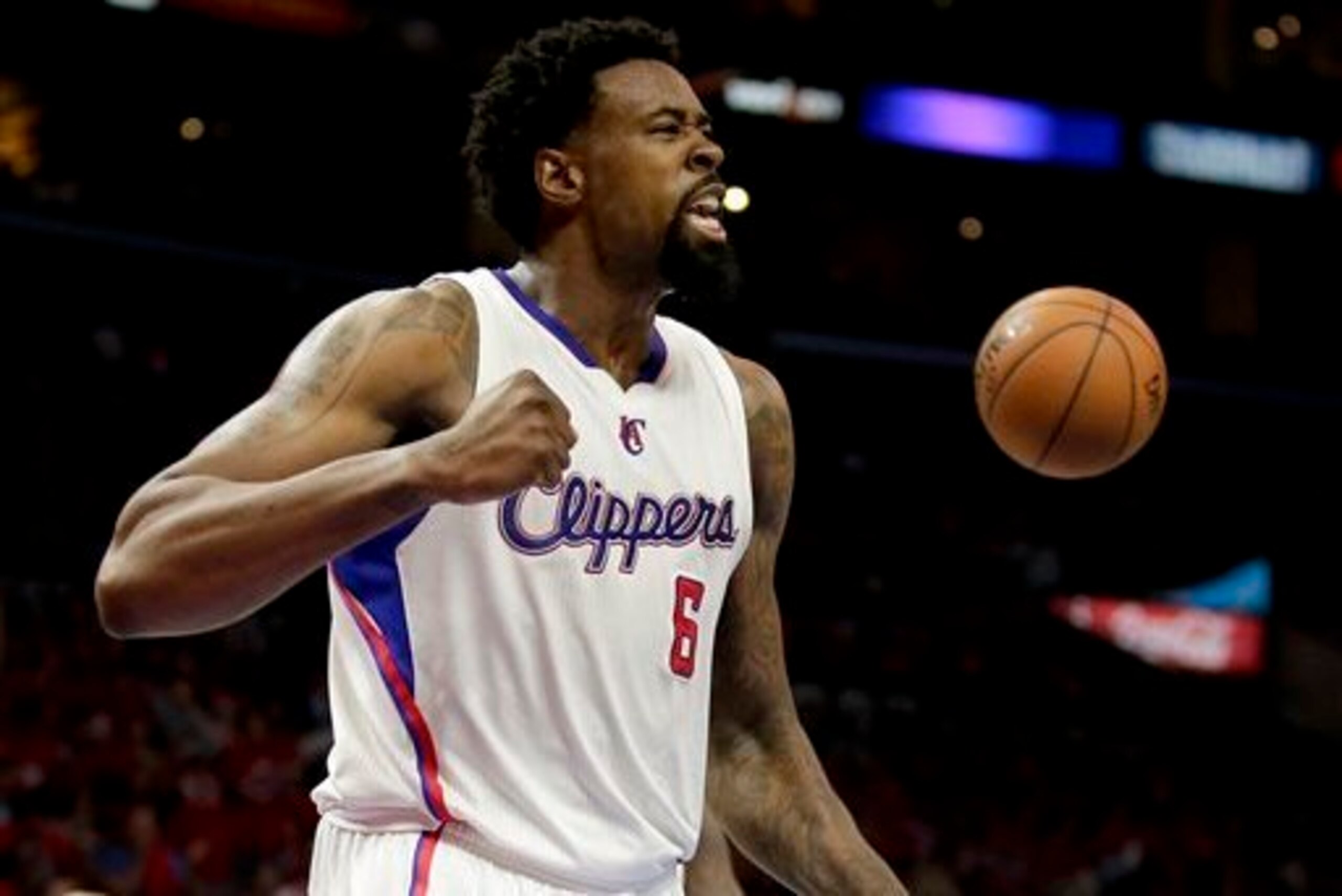
When D.J. dominated Game 1, he was living around the painted area. Jordan is a different defender when teams force him away from the rim. His No. 1 asset: preventing anyone from getting to the iron comfortably. But he differed in Game 2.
The Clippers were a little more aggressive in their pick-and-roll coverage as Game 2 continued, a classic playoff adjustment to another actual adjustment. The Spurs struggled against ball screens in Game 1, partly because of Jordan's stingy D, and countered that by quickly finding options on the weak side in the following contest.
By the fourth quarter, Jordan was hedging hard on Tony Parker's pick-and-rolls, though not on everyone's (someone such as Marco Belinelli elicited far less aggressive strategics on ball screens). And his recovery wasn't nearly as quick as the Clippers would've liked.
The Spurs (especially Danny Green) showed some Jordan intimidation effects during Game 2. Instead of getting to the rim, they were syphoning the Scion's fuel with an inordinate number of floaters.
San Antonio shot 32 times inside the paint but outside the restricted area in Game 2, compared to just 16 times in the previous matchup, and made a superb 50 percent of those attempts. In that process, it cut its number of attempts inside the restricted area by nine. (Those numbers were probably inflated a bit by Tim Duncan's tremendous Wednesday night display, as well.)

Jordan was likely affecting shot selection, but he wasn't necessarily changing form as much as he was in Game 1.
It's the D.J. effect. All the D.J. effect.
Jordan's game was funky from the beginning of Game 2. San Antonio was going to Duncan, Jordan's assignment, early and often. And the best power forward of all time proceeded to carve Jordan up with post move after post move.
The latter is a legitimate issue for the Clippers. As much as Jordan has garnered a reputation as a defender over the past couple of years (and Doc Rivers can start that investigation now that he officially finished third, not first, in Defensive Player of the Year voting behind Kawhi Leonard and Draymond Green, respectively), he has always struggled as a post defender. And when he has to guard Duncan in the post all game, it prevents him from helping off the ball freely.
Jordan started the game overplaying Duncan's left hand. But Timmy never goes left in the post. Even when he spins over his right shoulder, the go-to move is a Pop-a-Shot-esque righty fling toward the hoop. I'll let ESPN's Amin Elhassan take it from here:
This isn't to take anything away from Duncan. He was exceptional Wednesday night and sank some seemingly impossible shots. Actually, not seemingly impossible. They were legitimately impossible. Yet, he made them anyway. But he also got some decent looks because of the way Jordan defended him.
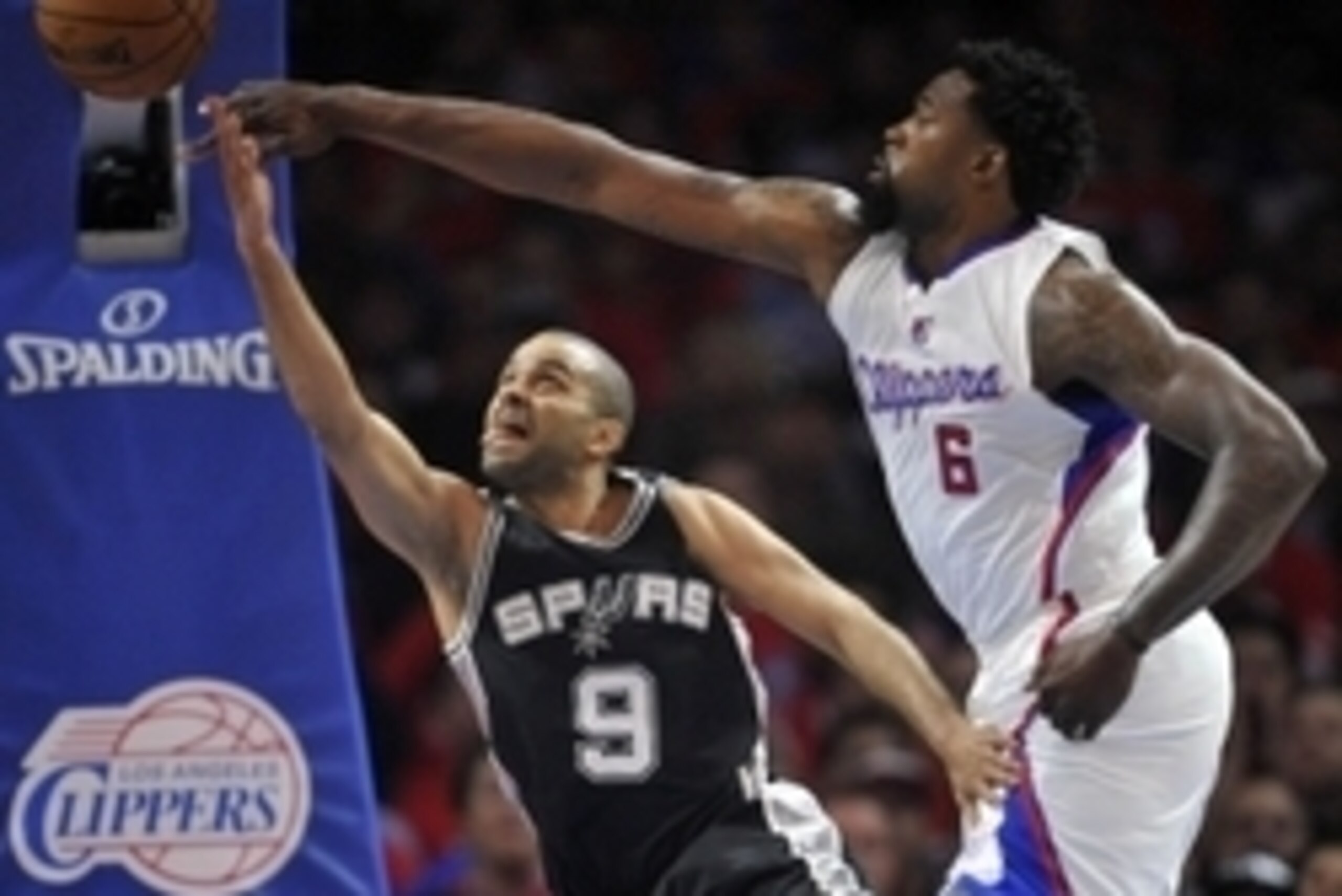
It's not that Jordan played badly in Game 2. Heck, he did finish with 20 points and 15 boards. But our standards have become reasonably high for someone who is one of only three above-average Clippers defenders, along with Matt Barnes and Chris Paul. And no one can impact a defense more than an active big man, especially on the Clippers, who don't have anyone else to fill D.J.'s size 18 shoes.
If L.A. is going to send its starters into enervation—and it may not have much of a choice—then Jordan, the man who owns the NBA's longest consecutive games streak and who never appears lethargic or banged up, has to be the one to anchor them.
Griffin and Paul expend their energy on offense. For Griffin, especially, defensive presence might be lacking. (Paul is, of course, possibly the best point guard defender in the league.) But Jordan has to play like he did in Game 1—as do Griffin and Paul—for the Clippers just to get by the Spurs.
It's the only way to keep penetrators out of the paint. It's the only way for the team to contain a top-of-the-line San Antonio offense. It's the only way to diffuse Duncan. It's the only way for the Clippers to move on to Round 2.
Follow Fred Katz on Twitter at @FredKatz.
All quotes obtained firsthand. Unless otherwise noted, all statistics are current as of April 23 and are courtesy of Basketball-Reference.com andNBA.com.




.jpg?w=2560 "Love's Body Already 'Tired'")
.jpg?w=2560 "Tyreek Deal May Come Soon")

.jpg?w=2560 "Ward Nearly Walks Out of Presser ▶️")