Biggest Adjustments Los Angeles Clippers Must Make in Game 2 Versus Spurs
On Sunday night, the Los Angeles Clippers came out and punched the San Antonio Spurs in the mouth, winning 107-92 in Game 1 of their Western Conference Quarterfinal matchup. Next, the Clippers must be prepared to counter the Spurs' adjustments and implement their own as well.
The Clippers offense was dominant all game, continually shredding the Spurs' second-ranked defense.
Power forward Blake Griffin was and will continue to be a matchup nightmare for the Spurs' defenders. He was able to take Tiago Splitter, Aron Baynes and Boris Diaw off the dribble and had no problems operating from the elbow or on the block.
TOP NEWS

Brown with an all-time summary of relationship with Tatum
Jokic says booing fans not welcome in Denver
Worst NBA Predictions 🫣
The Spurs will struggle to defend Griffin with a single man. The Clippers knew this and were able to isolate Griffin on Diaw and Baynes all night, forcing the Spurs to stick to their coverage or adjust and double Griffin.
Meanwhile, point guard Chris Paul was masterful in scoring 32 points, dishing out six assists and grabbing seven rebounds. He scored 25 points in the second half, and his hot shooting closed the door on any hope the Spurs had of mounting a comeback.
However, Spurs head coach Gregg Popovich said the Clippers defense was the key, according to the Los Angeles Times' Ben Bolch.
"The game was their defense was better than our offense," Popovich said. "Their aggressiveness, their athleticism, their physicality really hurt us offensively."
Overall, the defense was active and the league's top-rated offense gave the Spurs defense fits. Still, there are adjustments that must be made defensively, on the glass and on offense if the Clippers want to take the first two games of the series.
Rebounding
Consistently an area of concern, the Clippers must do a better job on the glass in Game 2. Although the Spurs only out-rebounded them by three, they dominated the offensive glass by pulling down 17 boards to the home team's six.
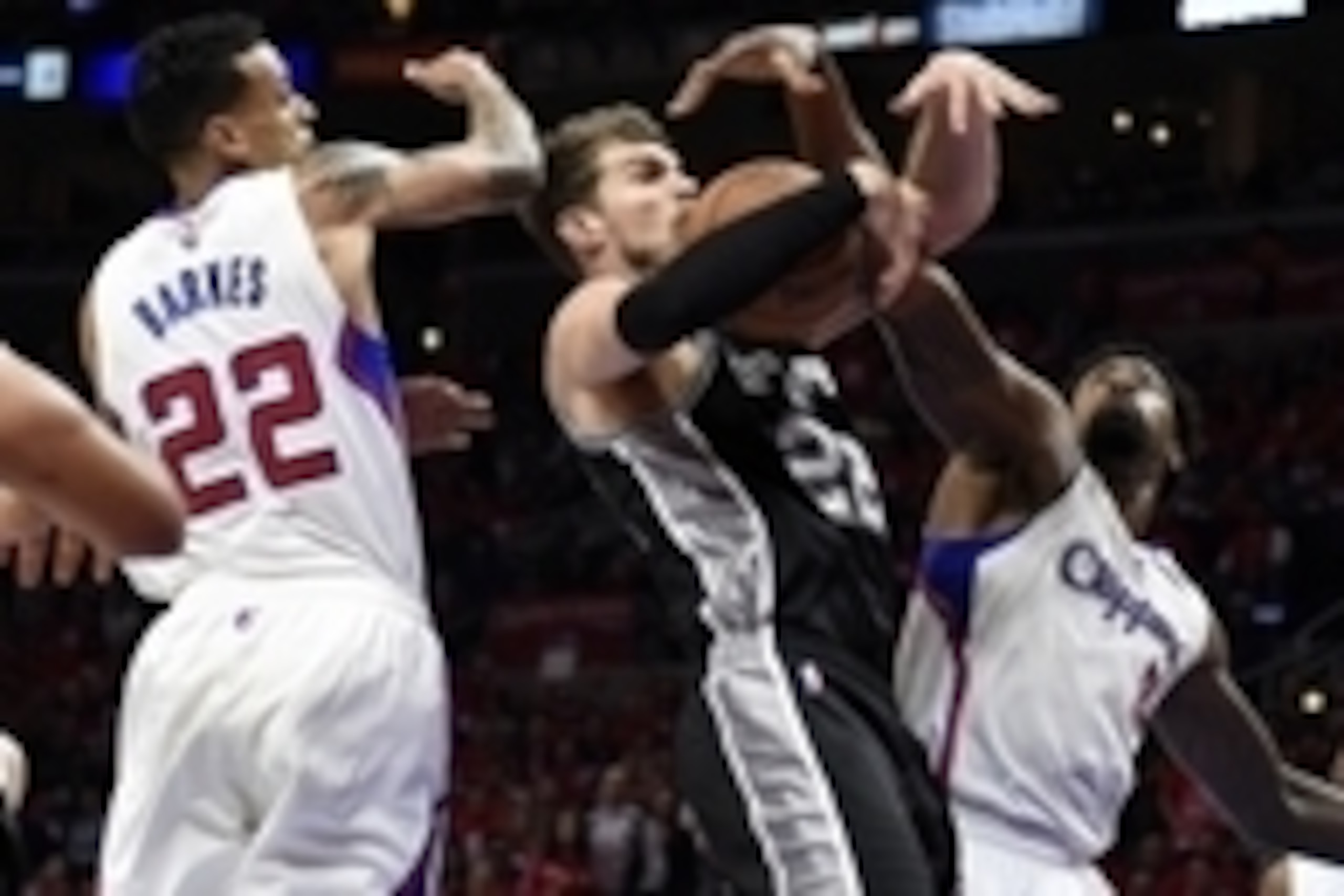
The Clippers did a good job of limiting teams from pulling down offensive rebounds during the regular season, allowing the ninth-lowest offensive rebound total.
The Spurs' bigs were active on Sunday, contesting rebounds and simply putting forth more effort to create extra possessions. Power forward Tim Duncan led the charge with four offensive rebounds, but Splitter had three in 10 minutes. Those two combined collected more offensive rebounds than the entire Clippers roster.
Fortunately, those extra possessions did not come back to haunt the Clippers.
Attention to detail is vital in preventing offensive rebounds. Players need to find a man and box him out as soon as a shot goes up.
Considering how athletic center DeAndre Jordan and Griffin are, sometimes they rely on their leaping ability instead of fundamentally rebounding the ball.
Surely, the Spurs will make the Clippers pay again if they are able to collect offensive rebounds at that rate.
Defensive Rotations
The defensive rotations were crisp and quick for most of the night in Game 1. However, there were several breakdowns when Spurs point guard Tony Parker or shooting guard Manu Ginobili was able to attack and get into the lane.
This is when San Antonio is most dangerous.
The Spurs are able to penetrate, kick the ball out to the perimeter and swing it side to side extremely quickly. This usually creates open shots on the perimeter—because the defense is scrambling—which is exactly what happened in the first game of the series.
Fortunately, shooting guard Danny Green and Diaw were the primary benefactors of these open looks and shot a combined 1-of-12 from three.
As a team, the Spurs only made 10-of-33 shots from deep, which was a major reason why the Clippers were able to pull away.
Jordan is going to have to stay out of foul trouble moving forward because he serves as the fulcrum of the team's defense. Without him in the middle, head coach Doc Rivers would be forced to play power forwards Glen Davis and Spencer Hawes extended minutes next to Griffin, which would be a nightmare scenario.
The Bench
In typical 2014-15 Clippers fashion, the bench squandered a 12-point lead early in the second quarter, allowing the Spurs to go on a 10-0 run.
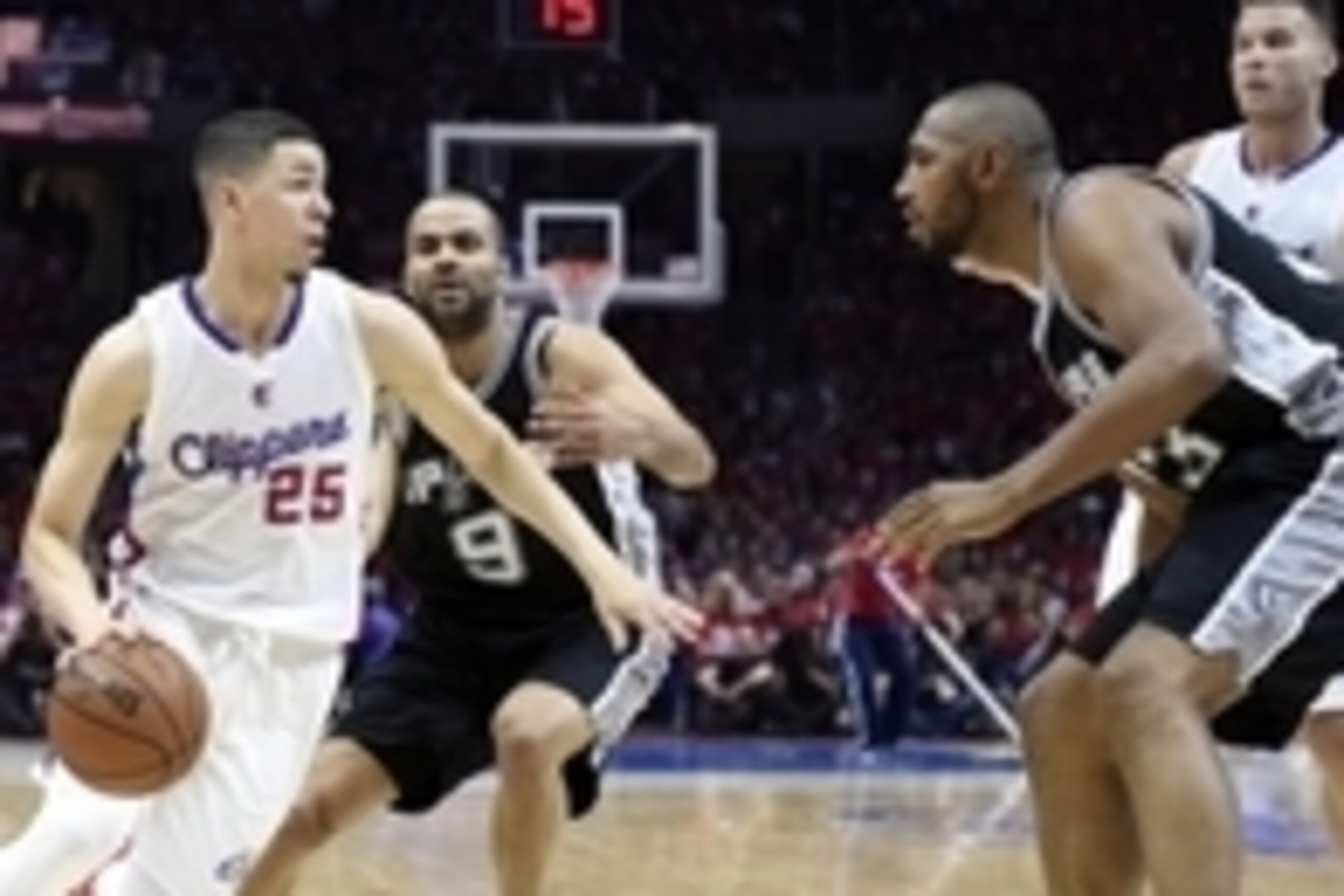
Rivers was forced to deploy a lineup with Austin Rivers at point guard, Davis at power forward and Hawes at center during this stretch.
Jordan picked up two fouls in the first quarter, Paul was forced to sit with three of his own and Griffin was resting. Rivers immediately called a timeout after the 10-point surge and inserted Jordan back into the game for Hawes.
Rivers commented on his playoff rotation philosophy to ESPNLosAngeles.com's Arash Markazi:
"I don’t look at the playoffs as you have a second unit. You’re going to put individual players in and when they play well, they stay in, and when they don’t, they come out. But that’s the same thing as the starters. I think everyone had a short leash on everyone. If a starter’s not playing well, he comes out.
"
Hopefully, Rivers adheres to his own advice. He used his regular-season second unit to start the second quarter, which led to the Spurs run.
He is going to have to keep one of Paul, Jordan or Griffin on the floor at all times in this series. The bench is far too weak to keep up with the Spurs without one of them on the floor.
Additionally, Popovich's rotations will force Rivers' hand. He has the depth and talent to pull Parker and Duncan before the end of the first and third quarters and then bring them back early in the second and fourth.
Finally, shooting guard Jamal Crawford is going to have be productive off the bench to help pace the scoring when Paul or Griffin is resting.
Crawford shot 7-of-10 from the floor in Game 1, hitting a trio of threes en route to a 17-point performance.
Despite missing 17 of the final 21 games of the regular season, Crawford showed no rust. Crawford was diagnosed with a right calf contusion during the team's March 2 game against the Minnesota Timberwolves.
He was great during the regular season and NBA.com indicates he finished third in the Sixth Man of the Year voting. If he can contribute his 15.8 points per game, the Clippers may be able to survive with a short rotation.
The Clippers played extremely well in Game 1 and will have a difficult time replicating everything that was successful during Game 2.
With that said, there is room for improvement, starting with running the Spurs off the three-point line and limiting offensive rebounds.
Offensively, Griffin is a difficult cover for any of the Spurs bigs. If starting shooting guard J.J. Redick can find his stroke from the perimeter—he only made two of his six three-point attempts on Sunday—the offense should be able to produce enough points to put pressure on the Spurs offense.
Finally, if the Clippers can continue to dictate the pace and score in transition (23 fast-break points in Game 1), they should be able to focus more energy into their defense and rotations.
When the team defends with energy, it is extremely difficult to beat.
All statistics are from Basketball-Reference.com unless otherwise indicated.
For more Clippers coverage, follow @JeffNisiusNBA.

.jpg?w=2560 "Mahomes Told Teammate to Leave Meeting")
.jpg?w=2560 "5 Teams Eyeing Jonathan Taylor")
.jpg?w=2560 "NFL investigating Eagles")
.jpg?w=2560 "Jonathan Taylor Landing Spots 📍")