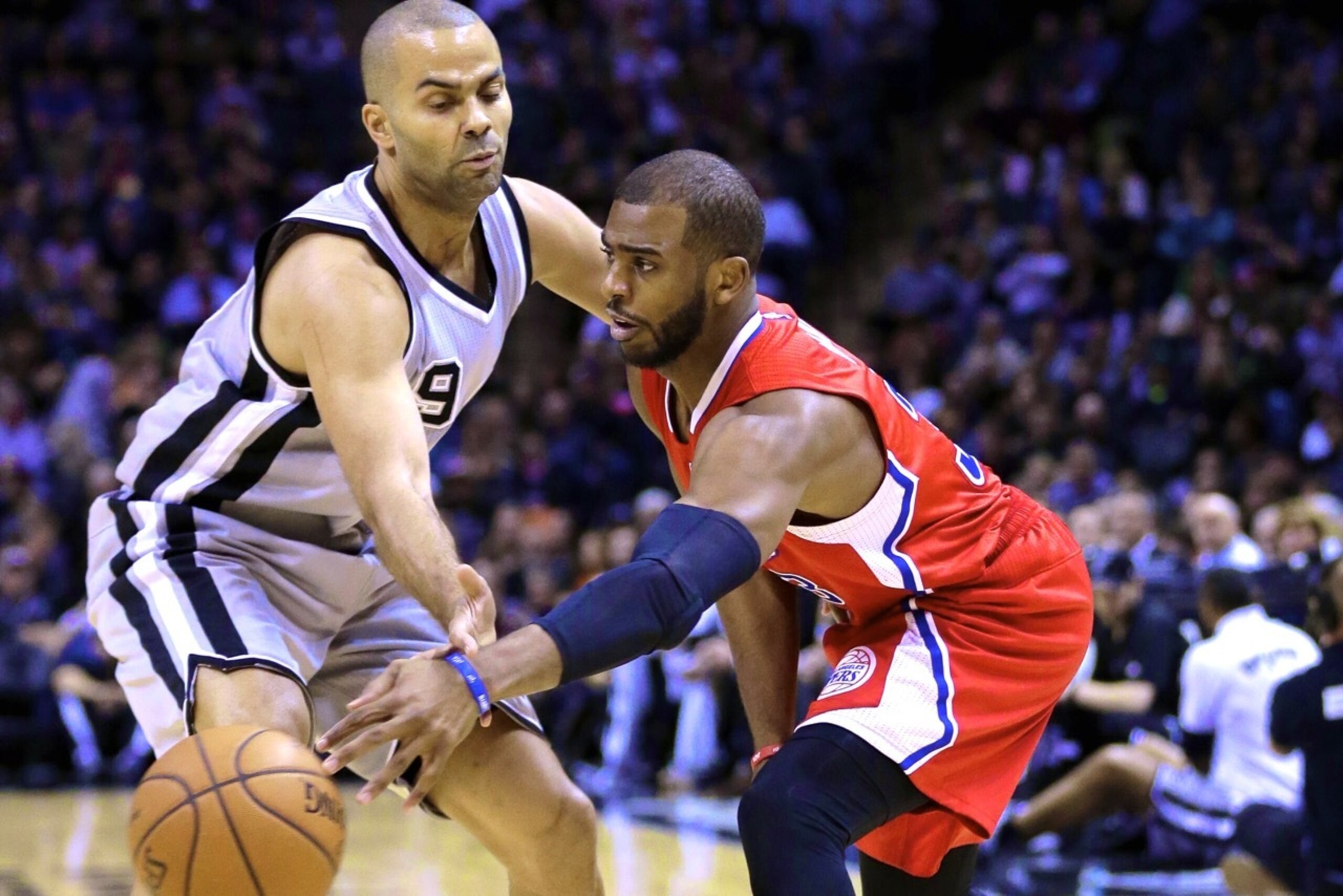

Tony Parker Must Outshine CP3 for Spurs to Take First Round
Chris Paul had an MVP-caliber season. Tony Parker did not.
So it's only fitting that Paul came out swinging in Game 1 against the San Antonio Spurs, posting 32 points, seven rebounds and six assists in a 107-92 victory for his Los Angeles Clippers. Parker mustered a modest 10 points and one assist.
It didn't help that Parker rolled his ankle and bruised his thigh in the first half, but excuses won't help turn this series around.
TOP NEWS

Brown with an all-time summary of relationship with Tatum

Heat, Giannis were down by 20+ in each of their 3 losses
Worst NBA Predictions 🫣
"I'm OK," he told reporters after the game. "I twisted my ankle at the beginning of the game. Obviously you don’t want to start a playoff series like that."
Then Parker remembered what head coach Gregg Popovich would want him to say.
"It'll be sore tomorrow. But hey, nobody cares," Parker added, per ESPN.com's Michael C. Wright. "Wednesday, we have to come and play. That definitely helps [the Spurs didn't practice again until Tuesday] because it will be sore tomorrow. Hopefully by Wednesday, hopefully, I'll be fine."
To do that, Parker must channel a far more aggressive iteration of himself, something akin to this month's 27-point outing against the Houston Rockets.
That performance came on the heels of four straight contests in which he scored in single figures. San Antonio won those games, but the question remains whether Parker can still carry the scoring load more often than not. It was swingman Kawhi Leonard who took on that burden for much of the season, but L.A. has already shown a willingness to double-team the reigning NBA Finals MVP.
Comparatively, Parker was left with far more freedom to roam in Game 1, and with that freedom comes responsibility. The Spurs' floor general is the starting point for any discussion about turning things around in Game 2 and beyond.
As Fox Sports' Matt Zemek put it this week:
"In future seasons, yes, the Spurs will become Kawhi Leonard’s team. In Game 2 and for the rest of these playoffs, though, Tony Parker has to knock down those 16-foot pull-ups and eight-foot floaters. He has to assert himself at the offensive end of the floor and do the things that have carried San Antonio into the month of June.
"
The Precedent
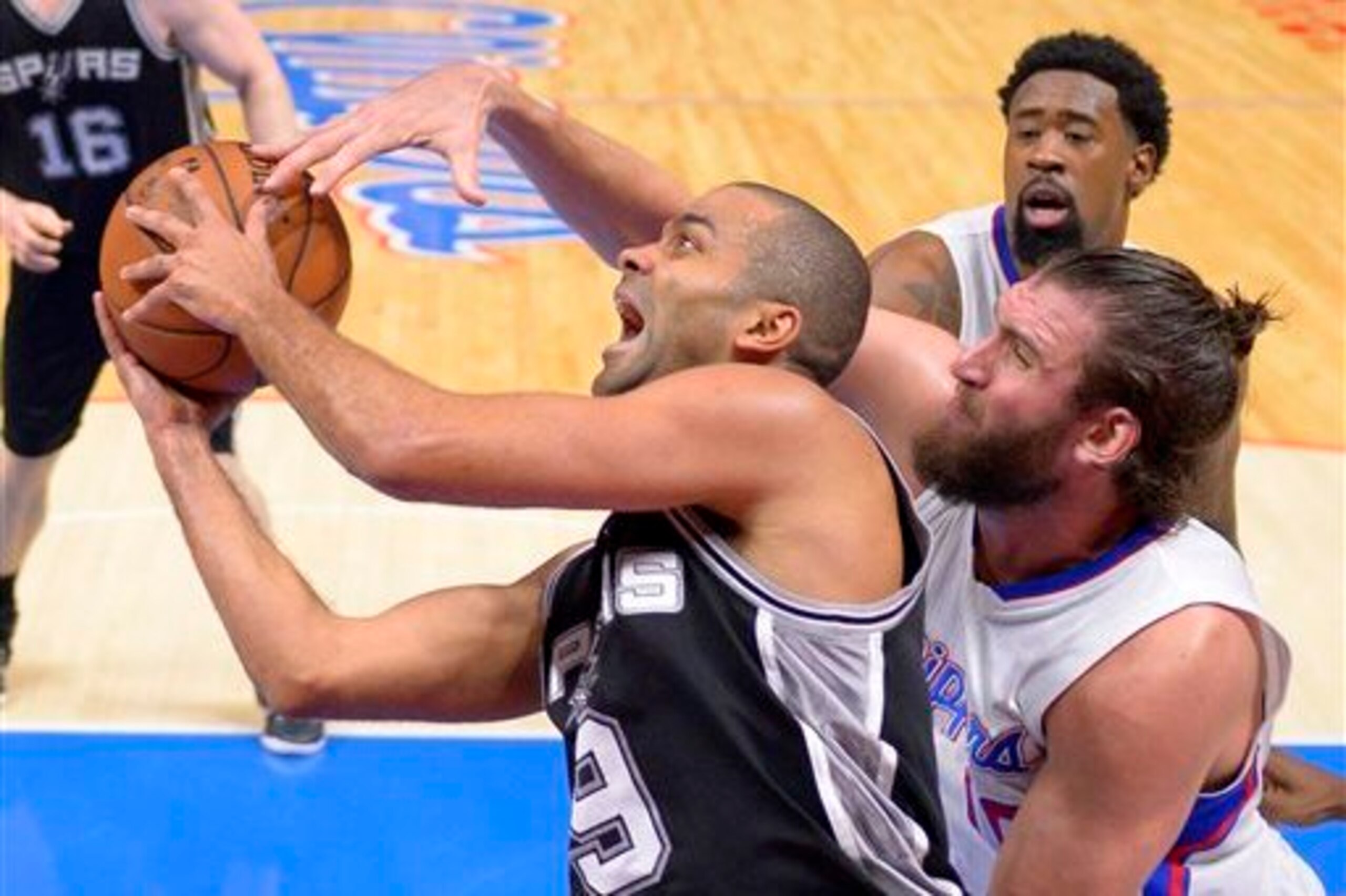
Parker has played well against Paul's Clippers before. When San Antonio swept L.A. in 2012, he shrugged off a dismal Game 1 to score 45 combined points in Games 2 and 3. Parker went on to play a decisive role in that series and averaged 21.5 points per game in the conference finals that followed against the victorious Oklahoma City Thunder.
A lot can change in three years, but one suspects Parker can still cause the Clippers some trouble. He's still a formidable penetrator who has the ability to finish with a variety of floaters and crafty layups in the painted area. And it would be hard to argue that his mid-range game has aged in any dramatic fashion.
Even amid his reduced effectiveness this season, Parker was better than average against L.A. In four meetings with the club, he averaged 16.3 points and 7.5 assists per contest—both well above his season averages.
Those split averages suggest something of a feast-or-famine dynamic. In two of the games, Parker made just five of 23 combined field-goal attempts. In the other two games, he scored 47 combined points. Perhaps that gives us some clue of what to expect for the remainder of San Antonio's opening-round series—a bipolar efficacy that's unlikely to reassure Spurs fans.
The more troubling reality is that, as good as Parker was against L.A., Paul was even better.
| Min | Pts | FG% | Ast | Reb | Stl | |
| Tony Parker | 33.3 | 16.3 | .414 | 7.5 | 2.8 | 1.3 |
| Chris Paul | 35.8 | 19.8 | .516 | 10.0 | 5.5 | 1.3 |
Still, we've seen Parker light up Paul and Co. before. It could happen again.
The Problem
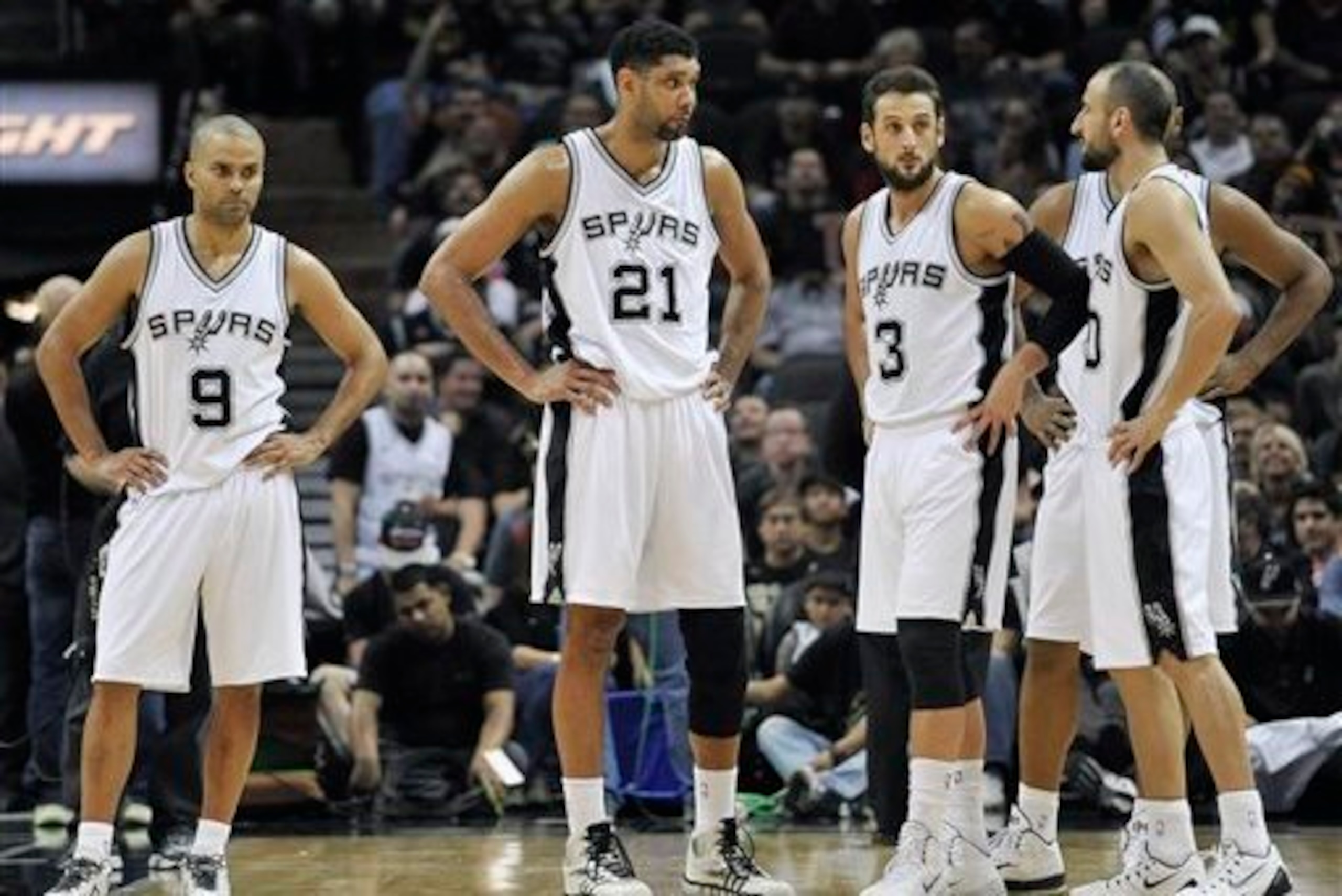
Solid as he's been, numbers suggest Parker has lost a step. He might not disagree.
"It happens to everyone," Parker said in March, per ESPN.com's Tim Struby. "I'm just not as fast as I was at 20."
In 68 2014-15 appearances, the 32-year-old averaged just 14.4 points and 4.9 assists per game—his lowest marks since his 2001-02 rookie season. And a closer look suggests limited explosiveness and interior savvy may have had something to do with it.
| Season | Min | Pts | FG% | Ast |
| '10-11 | 32.4 | 17.5 | .519 | 6.6 |
| '11-12 | 32.1 | 18.3 | .480 | 7.7 |
| '12-13 | 32.9 | 20.3 | .522 | 7.6 |
| '13-14 | 29.4 | 16.7 | .499 | 5.7 |
| '14-15 | 28.7 | 14.4 | .486 | 4.9 |
Struby notes, "Over the past two campaigns, his drives to the hoop have dropped almost 10 percent. This year he's averaging only 6.1 points in the paint, his lowest since '01-02. A balky hamstring has been partially responsible, but not completely."
No, not completely. Something else is awry, be it the product of age or approach. Parker may have even seen it coming. He's been in touch with friend Thierry Henry, a French soccer player with two decades of experience at an elite level.
"We talked about not being the fastest guy in the field anymore," Parker added. "You have to accept what you can and can't do. Understand it. Reinvent yourself."
Now would be a pretty good time for said reinvention to take effect. Parker remains the most accomplished playmaker on San Antonio's roster, a guy who can make things happen for himself or others off the dribble. Much as Leonard's improved, Parker remains a far superior creator—especially when called upon to make the right pass.
If he's not right—for whatever reason—the Spurs have little chance against Los Angeles. San Antonio needs optimal ball movement for the sake of its typically accurate three-point shooters. Theoretically, Parker should be breaking defenders down and creating looks for his arsenal of long-range shooters. A lone Game 1 assist suggests that simply isn't happening.
The Prognosis
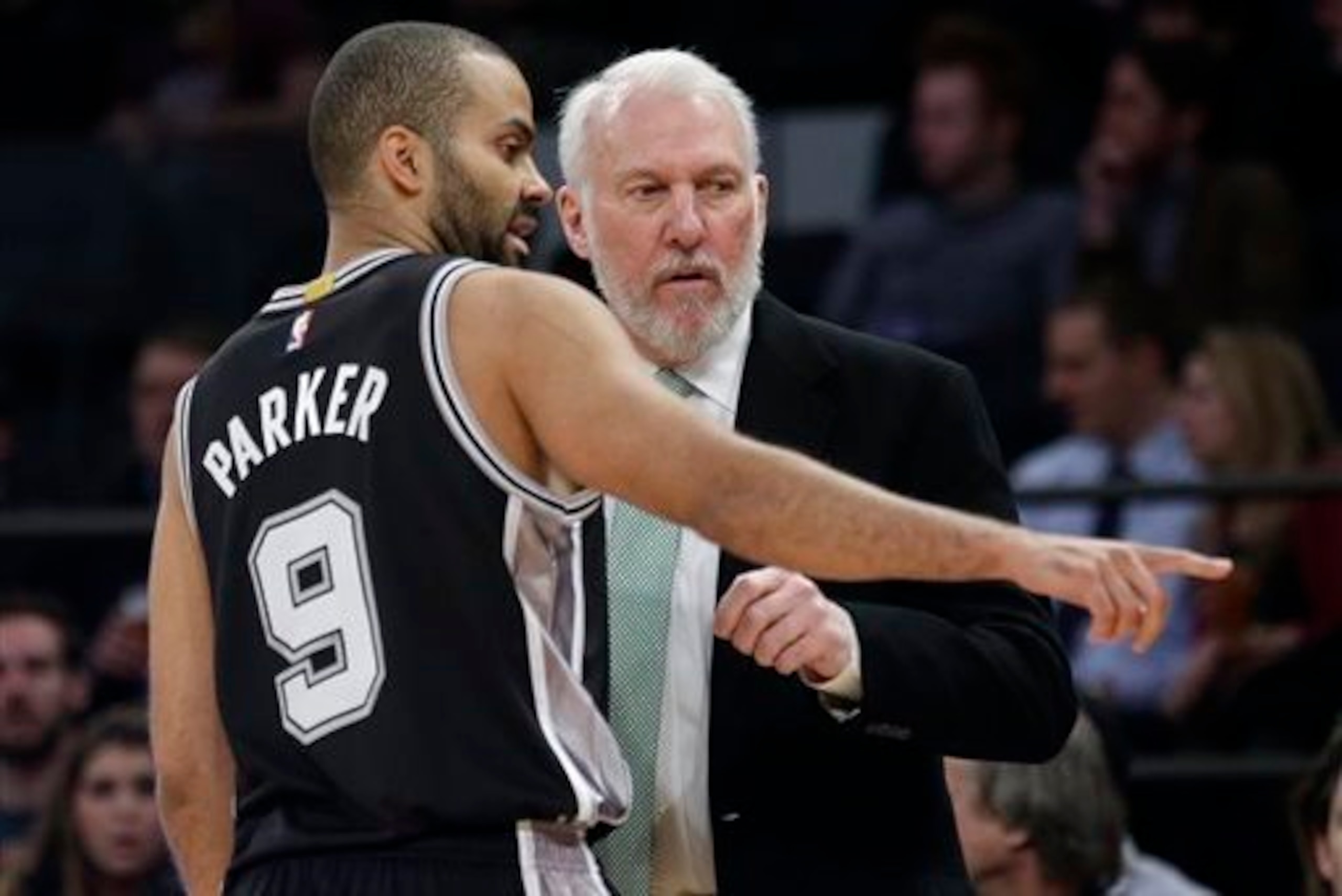
The onus is on Parker offensively. Containing Paul—to whatever extent it's possible—will be left primarily to stoppers Danny Green and Leonard. Parker's job, however, is simple: initiate offense. That's been his calling card, the reason he still owns a starting job over Cory Joseph and his superior defense.
It might even be enough for Parker to simply set a tone early on in Game 2. Though Parker's defense won't disrupt Paul significantly, Parker can make him work harder on the other end of the floor. Anything that slows down CP3 is a small but necessary victory.
Parker would also create more looks for others by forcing the defense to take him seriously. It's really not about Parker's final stat line—it's about what he does in that first quarter and first half. He has to make a dint and command some defensive attention. The rest will follow.
Part of Parker's reinvention also entails an increased willingness to settle for outside shots. That may sound like a second-best outcome, but it may be how Parker scores the lion's share of his points going forward. Perhaps we just need to get used to that. And maybe Parker needs to get used to it, too.
He's long had that nifty ability to create a 17- or 18-foot jumper off the dribble. It might not be the highest-percentage shot in San Antonio's playbook, but it certainly ranks ahead of forcing layups while DeAndre Jordan is lurking in the background.
There's also some mystery as to what's become of Parker's patented floater in the lane. Long a staple of his attack, it's been used far more selectively this season. The high-arcing push-shot seems like a natural antidote for Jordan's long reach, but it wasn't a prominent part of Parker's attack in Game 1.
Put simply, some vintage Parker needs to be in order sooner rather than later. If throwback performances aren't in the offing, a more assertive reinvention might do the job. Either way, the 14-year veteran won't be adding to his postseason resume without significant improvement over his Game 1 effort.




.jpg?w=2560 "Mahomes Asked OT to Leave Meeting")
.jpg?w=2560 "Jonathan Taylor Landing Spots 📍")

.jpg?w=2560 "5 Teams Eyeing Jonathan Taylor")
