

9 2015 NFL Draft Picks Who Could Be Week 1 Starters for Minnesota Vikings
For the Minnesota Vikings and many other teams, the NFL draft is about securing long-term resources and developmental talent. But long-term prospects don't have to come at the expense of an immediate impact, and the Vikings could end up selecting some Week 1 starters.
Those players will often be picked in the first three rounds, though not always. The Vikings could grab players in later rounds who could end up starting on opening day, like Mike Harris (an undrafted free agent) did for offensive coordinator Norv Turner in 2012 while he was head coach of the San Diego Chargers.
Those cases are generally few and far between, however, even with head coach Mike Zimmer's reputation for fast promotion of late-round players.
The idea of a "pro-ready" player is an appealing, if false one—many "pro-ready" players do poorly in their first season in comparison to "projects"—but for the most part we'll take a look at players at positions of need (or uncertainty) who could win the camp battle and contribute right away.
Not every position of need is represented; the safety class is notoriously weak, for example. Beyond that, not every player who can contribute right away at a position of need is profiled either—a strong receiver class would make that impossible.
We'll also go beyond the first round into some Day 2 possibilities that could intrigue the Vikings.
We can never know what is going to happen in the draft or which players will be ready to contribute immediately, but that shouldn't stop us from guessing.
Amari Cooper, WR, Alabama
1 of 9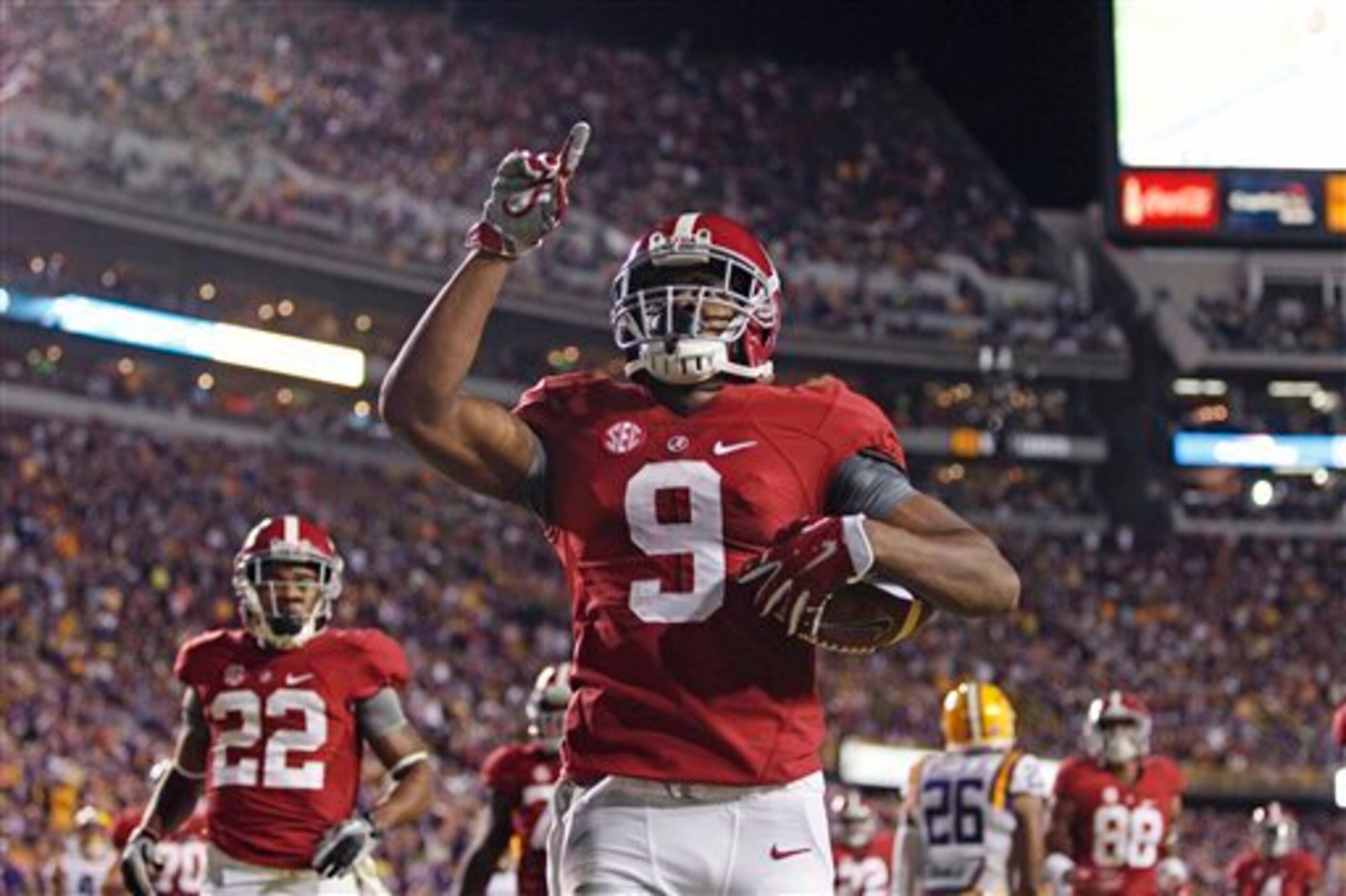
Including Amari Cooper here instead of DeVante Parker or Kevin White isn't an argument that the other two can't contribute right away. But Cooper's transition should be smoother for a number of reasons.
The idea that a raw receiver can't contribute early on has been fairly well-debunked. There are veterans in the league who don't have the full gamut of skills at their positions starting, just as there are rookie receivers who are missing big parts of their games who weren't just starters, but impact ones.
White and Parker could find themselves playing big like Kelvin Benjamin did for the Carolina Panthers, despite the improvements they need to make in their route running. But Amari Cooper isn't just the most refined technician in the draft at his position but may be the most "pro-ready" player at any position this year.
His underrated speed and quickness are fantastic weapons that any team will want to use, and in Alabama's pro-style offense he ran every route on the tree, and well. In fact, according to Matt Harmon at Football Guys, Amari Cooper's success on "nine" routes, which streak deep downfield, isn't just above-average; it's fantastic.
Billed as a receiver in the mold of Greg Jennings or Michael Crabtree, Cooper's ability to get open against any defense on any route makes him a much more diverse receiver than many fans give him credit for being. Like DeSean Jackson and Mike Wallace, his speed makes up for any size concerns—and he's taller than either of them, anyway.
He's intelligent, adaptable and an incredible route-runner, so it would be a surprise if Cooper didn't find a starting job with any team that drafts him.
Eric Kendricks, LB, UCLA
2 of 9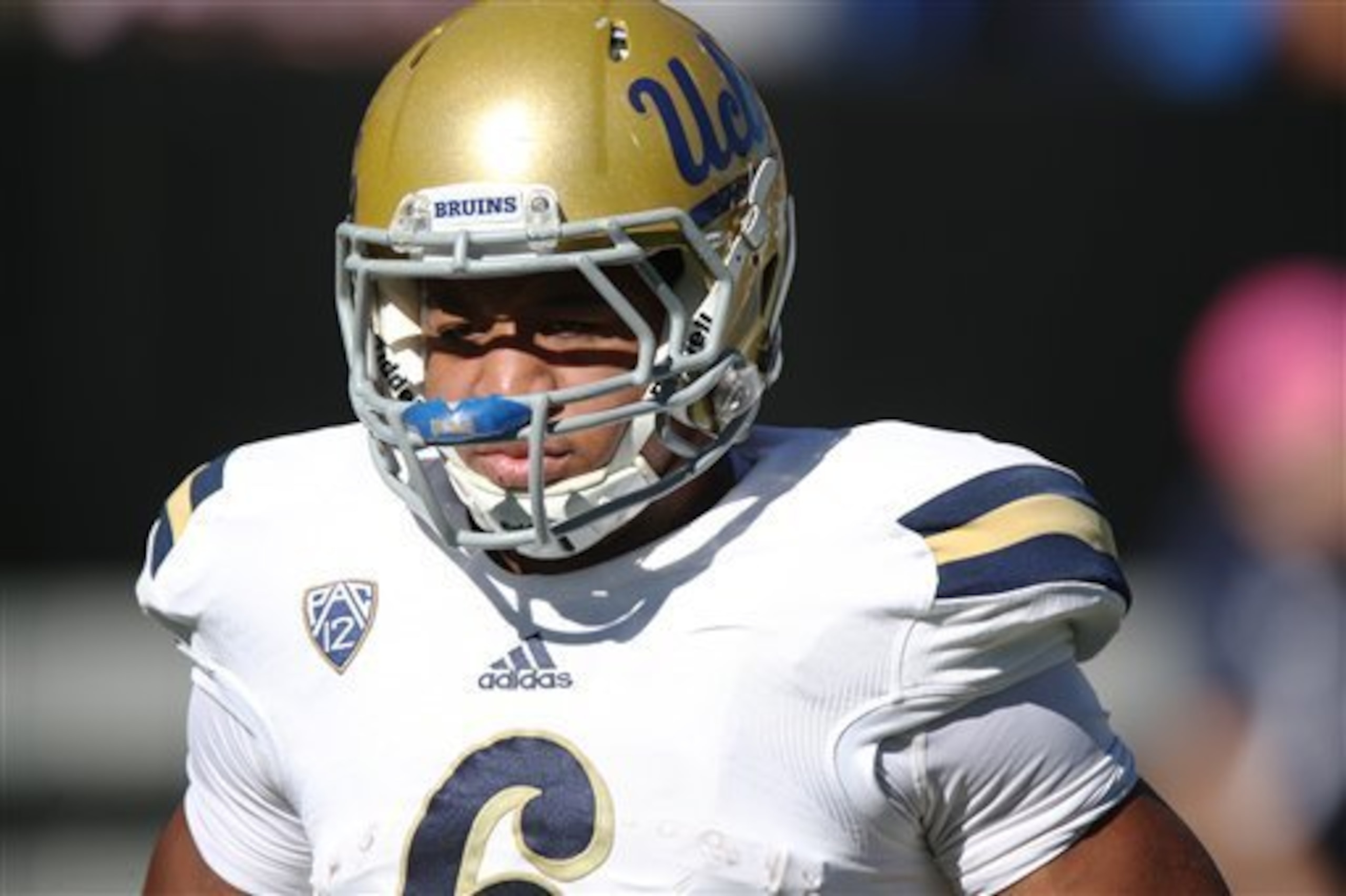
Eric Kendricks is likely to be the most instinctive linebacker to be found early in the draft—though if Paul Dawson finds himself climbing after bad workouts, he could have an argument.
Regardless of who deserves the ultimate title, Kendricks has scheme diversity and positional intelligence that should put him in any early conversation for a camp battle at linebacker, especially with the Vikings. Though Minnesota has athletic and intelligent linebackers, they haven't proven themselves with extended play, and Kendricks could win the position outright early on.
The UCLA product and former teammate of Anthony Barr played in various off-ball linebacker roles for the Bruins, including as an inside linebacker on 4-2 and 3-4 sets as well as the stack linebacker (the linebacker playing on top of the 3-technique) in 4-3 and 4-2 sets.
His experience, adaptability and intelligence should help him win the job, but it should also be noted that he may be the best A-gap blitzer in the class, something important in a Mike Zimmer scheme, as the threat of a double-A gap blitz is a staple of Minnesota's third-down pressure package.
Kendricks will need to work on his footwork and hand placement when taking on blocks but can immediately start at the "Will" linebacker position opposite Anthony Barr. His fluidity and exceptional coverage skills will allow him to upgrade the defense immediately.
Brandon Scherff, OL Iowa
3 of 9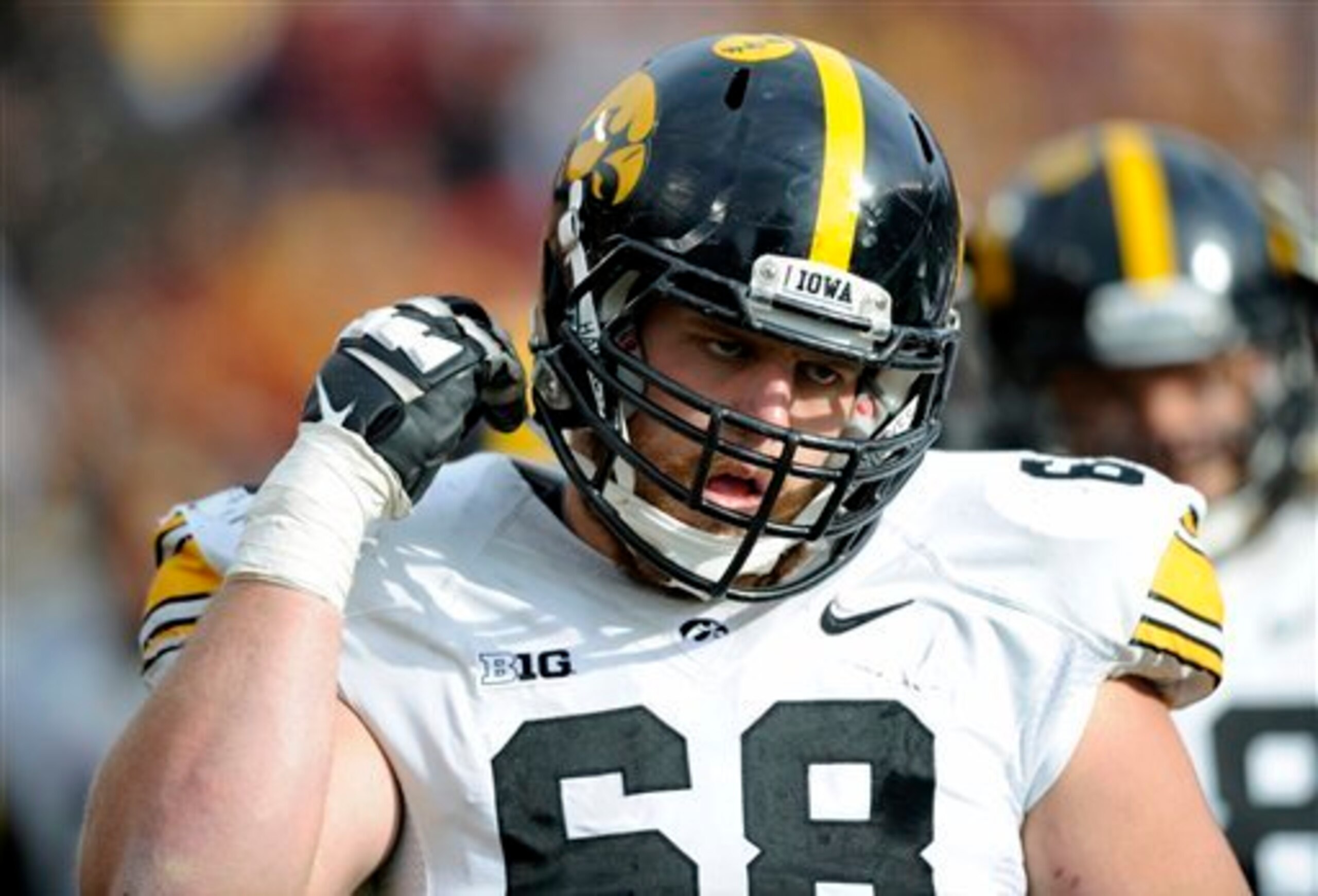
Scherff is unlikely to be a pick for the Vikings because he would have to play guard—a position they haven't drafted before the fifth round since general manager Rick Spielman joined the organization—but that doesn't ignore the fact that he could start right away.
Again, the Vikings probably think they are set at guard, at least for this year, but the beauty of a selection like Scherff is that he could play guard for a year before kicking out to tackle if Matt Kalil continues his poor play.
Scherff doesn't need much seasoning to play guard, even though most position converts generally take more time to learn their positions. The offensive line is a bit different, if only because the techniques are not as different as they are between safety and cornerback, for example.
He won't need to spend time adding strength or learning technique, as he is not just the strongest offensive lineman in the draft but one of the most technically proficient as well. He may have a tendency to be too robotic or overthink things, but those aren't the results of poor seasoning so much as his taking well to his drills and film work.
Either way, his football awareness and knowledge of the position should give him an early lead in any competition, and his technical proficiency is stellar.
.jpg?w=2560 "Titans Colts Football")
.jpg?w=2560 "Chiefs Giants Football")
.jpg?w=2560 "Eagles Jaguars Football")
Marcus Peters, CB Washington
4 of 9
There aren't many cornerbacks in this class who are both sound and physically talented enough to start from Week 1 and make a big (positive) impact. Trae Waynes will have to prove he can contribute outside his scheme, while both Jalen Collins and Byron Jones will have to improve their footwork.
That doesn't mean they won't win the camp jobs for their respective teams, but it does make them less likely than a player like Marcus Peters.
There are reasons to like the alternatives at cornerback, but the safest bet to win a camp battle may be the riskiest pick in the draft at defensive back.
Kicked off his team at Washington after a series of incidents following Steve Sarkisian's departure for USC, Peters' ability to get along with a new coaching staff in the NFL will be the biggest key to earning a starting job.
Fluid and faster than his combine 40 time of 4.53 seconds, Peters is quick to process route combinations and fantastic at timing the ball as it flies in. He stays with receivers across the field, making up for his minor acceleration issues with efficient footwork and intuition.
His burst and physicality are the kind of things the Vikings like in a defensive back, and his scheme versatility will allow him to play in the complex pattern-matching scheme Minnesota employs.
Questionable character doesn't mean questionable football intelligence, even if he didn't make the best decisions off the field.
Laken Tomlinson, G Duke
5 of 9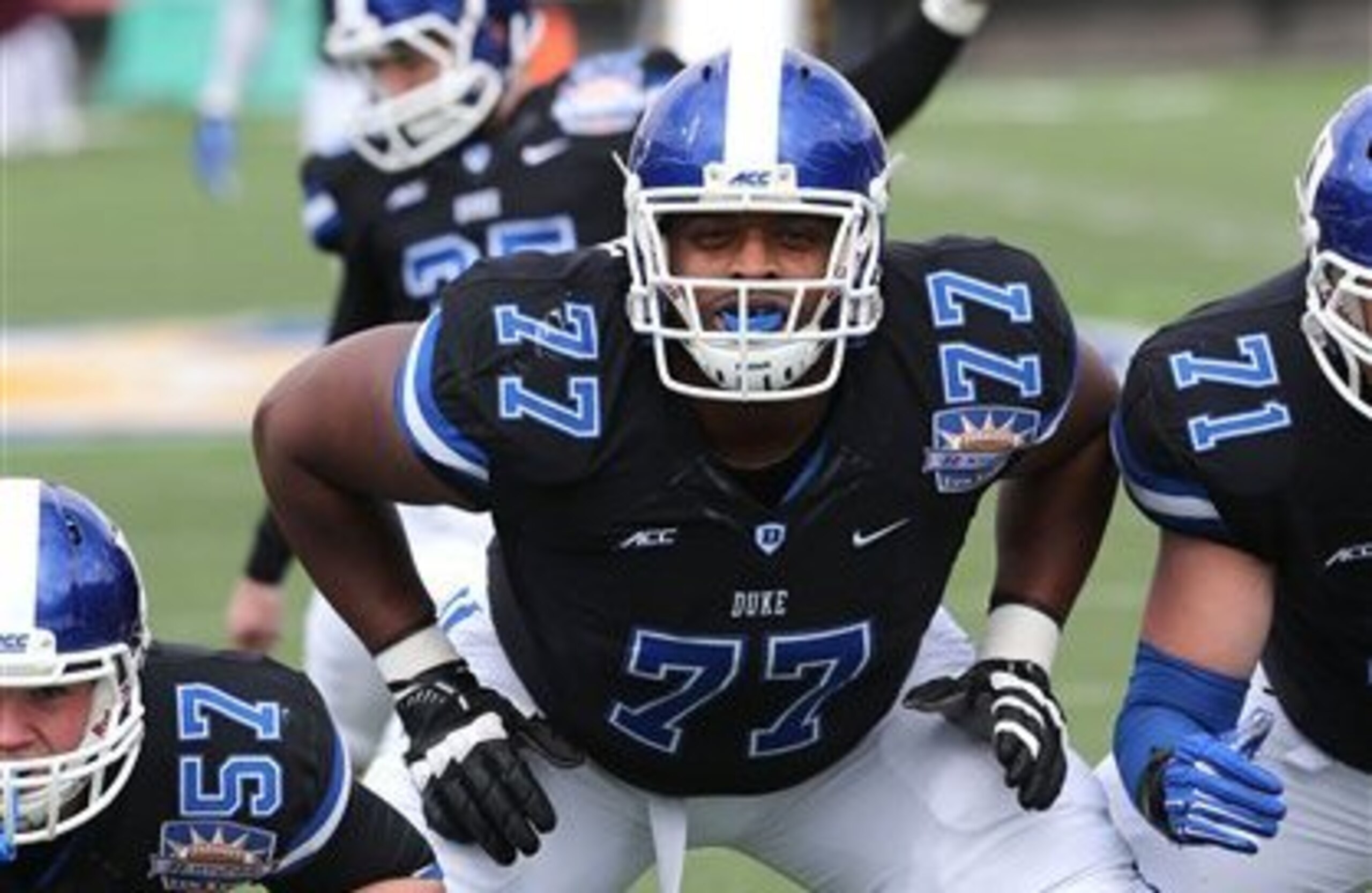
Perhaps the best pure guard in the draft, Laken Tomlinson comes out of the box ready to play.
Tomlinson is the only guard out Pro Football Focus graded in the FBS to make the top 10 in both run-blocking and pass-blocking efficiency, ranking first overall as a pass-blocker.
Without allowing a single player to knock down the quarterback, Tomlinson may be the best pass-protector at any position along the offensive line in this year's draft, and the Vikings could use that kind of upgrade on their roster.
Responsive and instinctive, Tomlinson has fantastic awareness and technique to complement his power. Perhaps not as versatile as many other, more athletic guards, Tomlinson still has the ability to make do in any scheme and block with the best of them.
Likely first-round pick Danny Shelton struggled against the Duke guard at the Senior Bowl. The knocks on Tomlinson for his speed and agility miss the fact that he recovers extremely well and can beat up quicker tackles in the phone booth.
He gets up to the second level well and knows how to set his aiming point for linebackers when asked to block off the line of scrimmage, and his speed is adequate enough for him to engage.
Still, the all-ACC first team guard can start immediately, even if he doesn't have the versatility of a more athletic but perhaps longer-development player like Ereck Flowers.
Devin Smith, WR Ohio State
6 of 9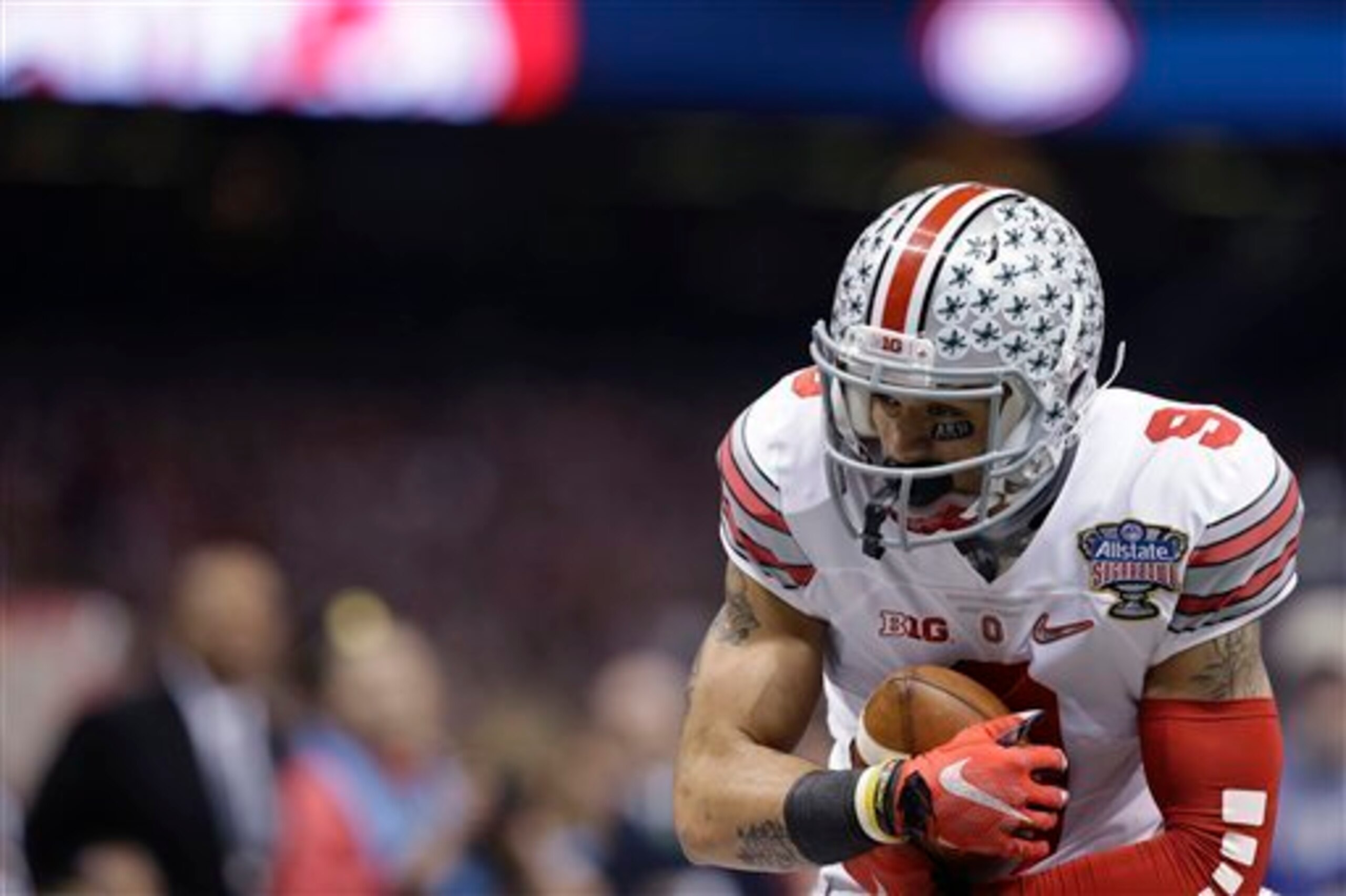
Perhaps one of the most misunderstood players in the draft, Devin Smith is more than just a deep threat; he's a multidimensional player capable of running and winning every route.
A gaudy yards-per-catch number and a highlight reel consisting of deep route after deep route make fans think of deep threats who provide value to an offense—but only in one realm.
I an offense that was effective but hid his true value, Smith showed stop-start capability and high-level agility that made him a threat on comeback and late-breaking routes.
Though not as deceptive or intuitively capable as some of the other receivers when it comes to finding holes in zone coverage or finding small advantages against man coverage, Smith still gets open often against great competition on a number of routes.
It's true he didn't run a full route tree at Ohio State—the offense didn't much call for it—but the routes he did run were excellent. He also ran some non-traditional routes like whip and spot routes. In those situations, he did well, too.
He needs better hands and more strength but does a good job finding ways around physical coverage, even if it is something just as simple as presenting a smaller target to hit.
Even if he's a one-note receiver, it's a really good note. He can step in and win with it right away if need be.
Daryl Williams, OL Oklahoma
7 of 9
If getting onto the field was about work ethic and hardheadedness, Daryl Williams should have no problem.
That isn't the only requirement, but luckily for Williams, he has more than just a go-getter attitude—he has football awareness and does a good job reacting to exotic defensive setups.
He also has excellent play strength and a good punch. His athleticism likely won't allow him to continue playing tackle when he moves up to the next level, but his first step is strong enough to play in most NFL schemes as a guard.
Tough and strong, Williams drives well, and though he has had issues with quick players, he should be alright in a more confined space.
It's a myth that playing guard in the NFL is like "easy tackle," and there are quick defensive tackles that require agility from offensive linemen, but Williams can win those battles in confined spaces with his hand speed and punch.
In the run game, he'll be excellent to watch, and as a pass-defender, he'll play quick enough to protect Teddy Bridgewater better than the departing Charlie Johnson.
Tony Lippett, WR Michigan State
8 of 9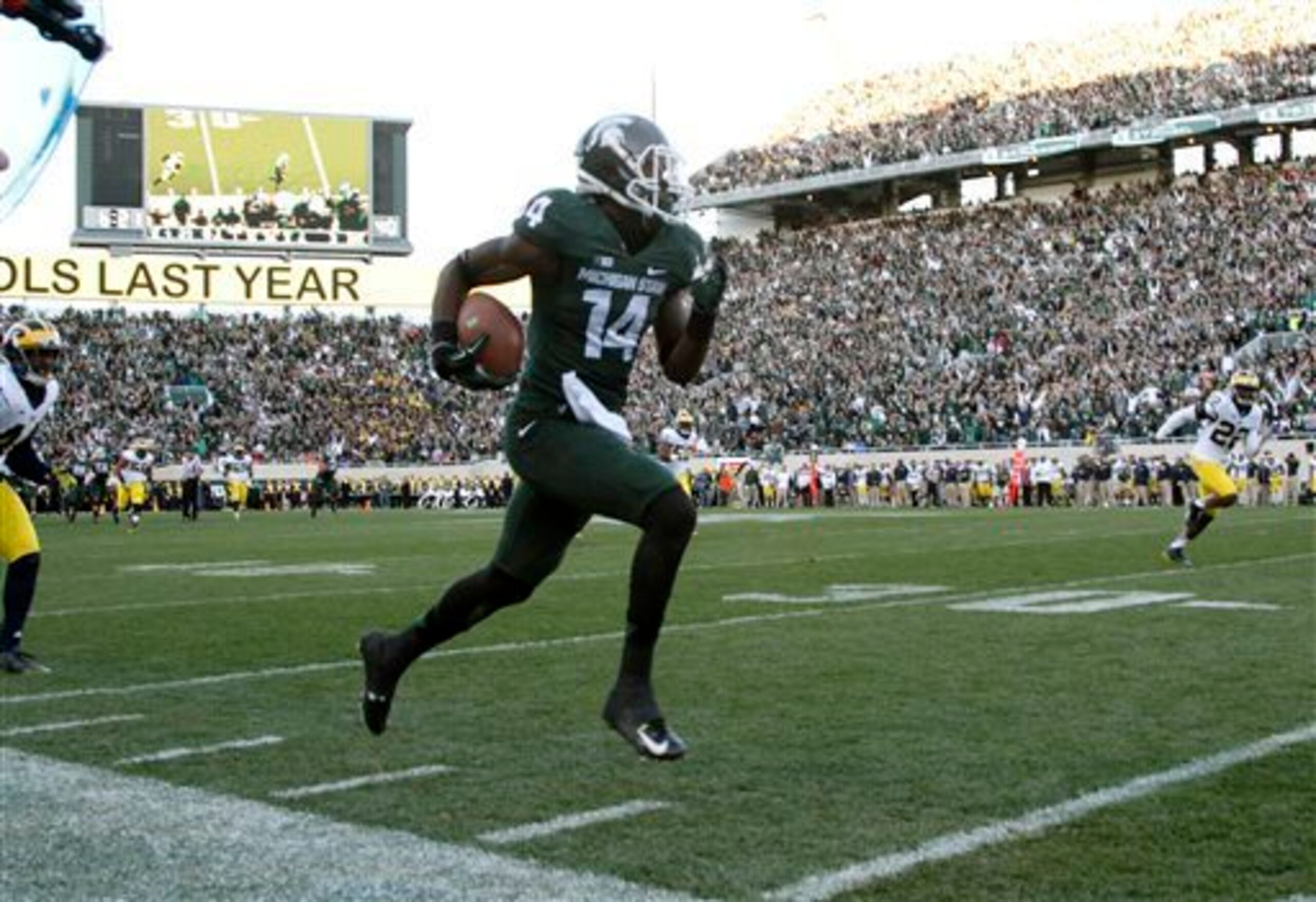
An unusual route-runner, Tony Lippett's NFL success may rely on teams' allowing him to play how he plays.
It's often difficult to tell why the Michigan State receiver consistently finds himself open against high-level competition, but he's there waiting for the ball on the vast majority of plays.
Compared to Stevie Johnson by Pro Football Focus analyst Sam Monson, Lippett will sometimes disrupt the timing of the play in order to pop open, even if it is a little late in the progression.
Though Lippett isn't a phenomenal athlete, it is telling that he was athletic enough to start on both sides of the ball for the Spartans. Beyond that, it showcases his excellent football intelligence and the ability to pick up schematic responsibilities at the drop of a hat.
He has a great feel for defenses and the individual weaknesses of other defenders and could be the kind of possession receiver who creates space in the most unconventional ways.
His ability to do that would allow him to get onto the field immediately despite an intriguing receiver corps. It isn't easy to consistently get open, but Lippett makes it effortless.
Devoting full time to one position will only make him better.
Josh Shaw, DB USC
9 of 9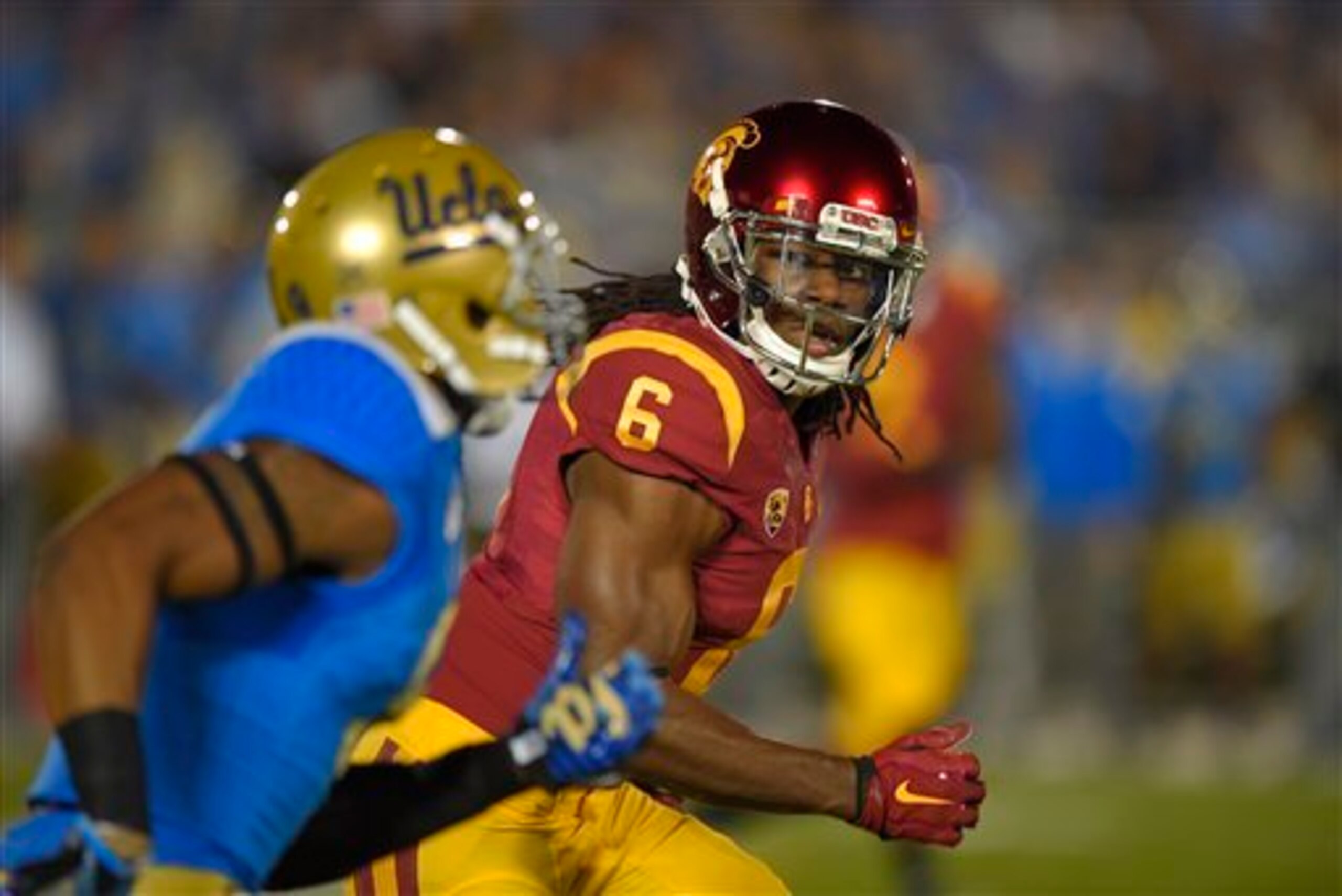
A bizarre incident overshadows Josh Shaw's candidacy for any NFL team, but on the field he's a very good player who may be the kind of athlete drafted relatively late who sees snaps early in his career.
Again, the general rule for players switching positions is that they'll take time before seeing the field. In Shaw's case, his experience playing safety will be valuable.
He needs to tackle better and more physically to be an impact starter in the NFL, but he's better at it than Robert Blanton and already has the discipline (again, on the field) and smarts to play his role in the run defense as well as adapt to changing coverage schemes.
Shaw doesn't have enough quickness to reliably play cornerback but does have the speed to play with range as a free safety and picks up new techniques extremely quickly.
Already playing with solid defensive back fundamentals, he can recognize route combinations quickly and knows how to pick up players in transition from zone to zone. He's clever enough to learn new schemes right away and play immediately.
.jpg?w=2560 "Colts Football")
.jpg?w=2560)





