There’s one player who will likely be available for the Oakland Raiders at No. 4 overall in the 2015 NFL draft and should be selected without hesitation, and his name isn’t Leonard Williams.
NFL analysts and fans often fall too deeply in love with overused adages and trends to realize why certain winning formulas work and others don’t.
Trending techniques and strategies are often replayed in highlights and repeated through hot-topic discussions, but are exceptions to these trends ineffective?
TOP NEWS
.jpg?w=2560 "Titans Colts Football")
5 Teams Eyeing Jonathan Taylor
.jpg?w=2560 "Chiefs Giants Football")
Mahomes Told Teammate to Leave Meeting
.jpg?w=2560 "Colts Football")
Jonathan Taylor Landing Spots 📍
Mel Kiper Jr.’s latest mock draft on ESPN.com has USC defensive end Williams headed to the Jacksonville Jaguars at third overall.
By debunking a few myths, let’s break down why Raiders fans shouldn’t sob themselves to sleep if Williams is selected before the Raiders hit the clock and why general manager Reggie McKenzie should select Alabama wideout Amari Cooper with the fourth overall pick.
Myth No. 1: Defense Always a Priority Over Offense (Unless It’s a QB)

When building a franchise contender from the pits of mediocrity, analysts point to the Seattle Seahawks and Pittsburgh Steelers as billboard advertisements for defensive prowess overall.
However, when you look at how both teams were designed during their Super Bowl runs, it’s clear an equally dynamic rushing attack significantly factored into their success.
Pro Bowl running back Marshawn Lynch has contributed to at least half of the Seahawks' physical play style. This isn’t to diminish the Legion of Boom, but the defense is aided by steady ball control utilizing ground attacks from Lynch and a mobile Russell Wilson.
The Raiders aren’t designed to preserve the defense and sustain offensive drives like the Seahawks. Trent Richardson could be the type of player Lynch is to Seattle, but Derek Carr isn’t a running QB who can compensate for the lack of a No. 1 WR, as Wilson so often does for Seattle’s offense.
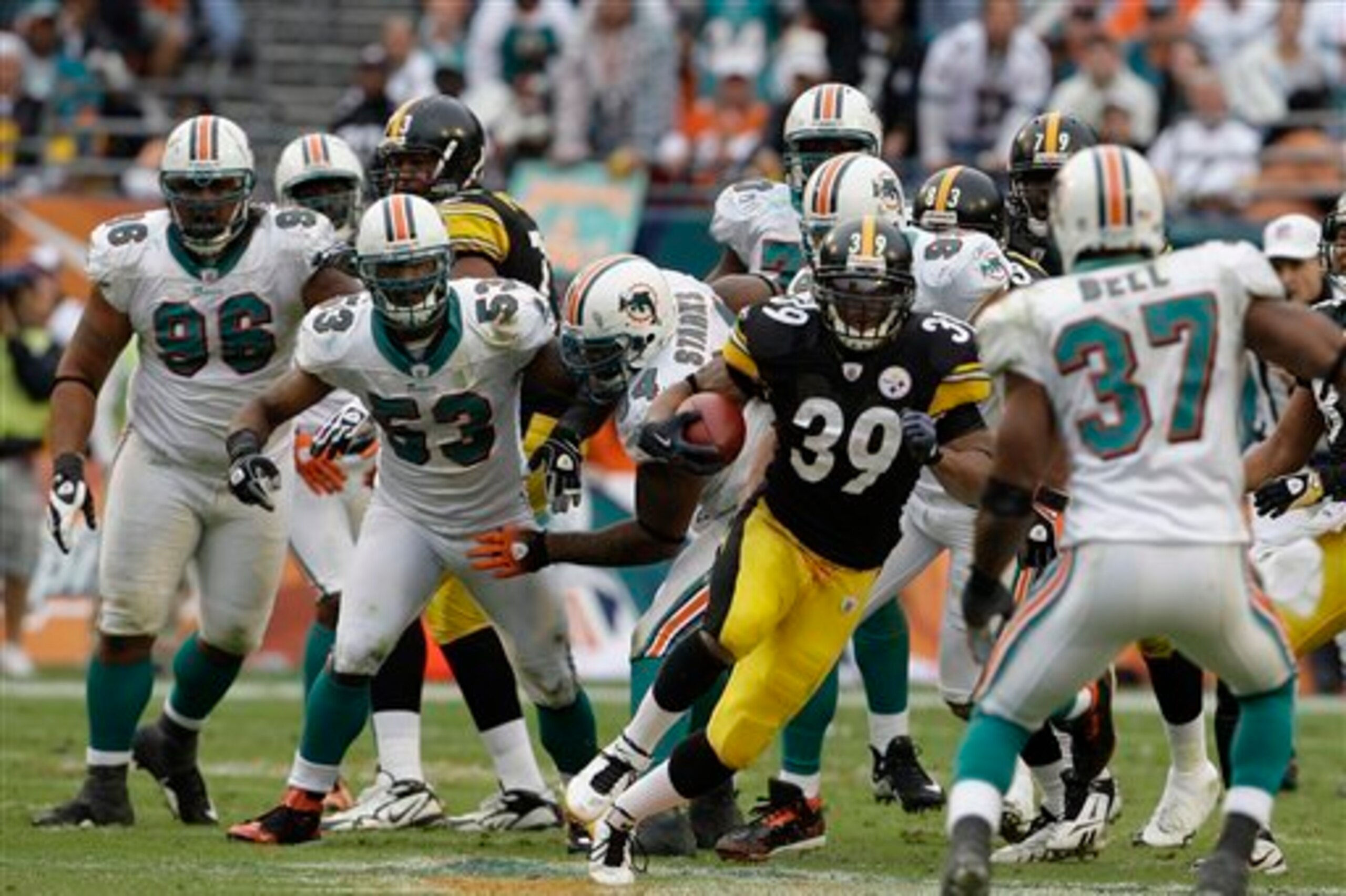
The Steelers implemented a similar ground-and-pound attack for decades—a style of play that helped a young Ben Roethlisberger achieve early Super Bowl success in his second year.
The Steelers armed Roethlisberger with a dynamic running back tandem able to shoulder the load on offense. Jerome Bettis ran goal-line and short-yardage downs effectively (nine touchdowns), whereas Willie Parker was the elusive RB able to break off a long run down the field at any given time.
Yes, the Steelers defense was prominent, but the offense limited possessions for the opponent, preserved the defense and ran the ball effectively when needed.
The Raiders' current RBs haven't shown they're capable of emulating this formula for success.
McKenzie has to further develop Carr and supply him with a go-to option alongside Rod Streater and veterans Michael Crabtree and James Jones in order to score points.
There’s only so much a defense can do when the offense can’t extend a drive beyond three-and-out. The Raiders are unsure about their RBs at this point, which makes locking up a prominent target for Carr more important for the immediate future.
Myth No. 2: Drafting a Wide Receiver in the Top 5 Isn’t Smart

This adage ties into the previous myth overemphasizing defense. Why wouldn’t you draft a WR if he is indeed the most complete player on the board?
Many analysts discuss the faults of drafting based on need in favor of taking the best player available.
Based on that premise, I’d comfortably view Cooper as a more polished prospect at his position than Florida's Dante Fowler at his position.
Fowler enters the draft listed as an outside linebacker, a position the Raiders that isn't a pressing need with Khalil Mack and Sio Moore on the roster. He’s appealing to Oakland because of his potential to play on the defensive line as a 4-3 defensive end, offering one solid year on the defensive line at Florida.
Why take a chance on placing Fowler in a position where he has only one year of success over a prospect who has consistent production at his position over three years?
In reality, Fowler wouldn't fit the Raiders schematically if he cannot play as a 4-3 DE effectively. We already know what Cooper can do at WR.

When it comes to instant WR success, former top-five picks Calvin Johnson and Larry Fitzgerald are viewed as stat monsters with minimal impact on the early rejuvenation of the Detroit Lions and Arizona Cardinals franchises within the last decade.
Granted, it must be noted that a WR needs a solid QB to reach his full potential.
In 2011, Johnson’s true value became evident. Matthew Stafford was able to play a full 16-game season with his No. 1 option. The tandem led the team to its first playoff appearance in 11 seasons with the 23rd-ranked defense.
At the age of 37, Kurt Warner led a prolific passing attack featuring Fitzgerald en route to a Super Bowl appearance in 2008. That year, Fitzgerald posted career highs in receiving yards (1,437) and yards per catch (14.9). He led all Cardinals receivers in receptions, yards and touchdowns.
Fitzgerald was no longer catching passes from below-average QBs Josh McCown and Matt Leinart. The Cardinals were Super Bowl contenders with the 28th-ranked defense.
Did Arizona or Detroit need a stifling defense to pull itself out of the rubble? No.
A quick look at recent teams that drafted a WR with a top-five pick:
| Year | Player | Team | Overall Pick | Career Stats |
| 2004 | Larry Fitzgerald | Arizona Cardinals | 3rd | 12,151 YDS /89 TDS |
| 2007 | Calvin Johnson | Detroit Lions | 2nd | 10,405 YDS /74 TDS |
| 2011 | A.J. Green | Cincinnati Bengals | 4th | 4,874 YDS /35 TDs |
| 2014 | Sammy Watkins | Buffalo Bills | 4th | 982 YDS /6 TDs |
Any regrets here? I don’t think so.
Myth No. 3: Cooper Doesn't Have No. 1 Receiver Attributes

The most egregious mistake leading up to the draft is holding Cooper’s physical attributes against him.
Cooper has been labeled a smaller wide receiver when in fact he’s the same height and weight (6'1", 211 lbs) as Sammy Watkins. Does anyone view Watkins as a small receiver? Probably not.
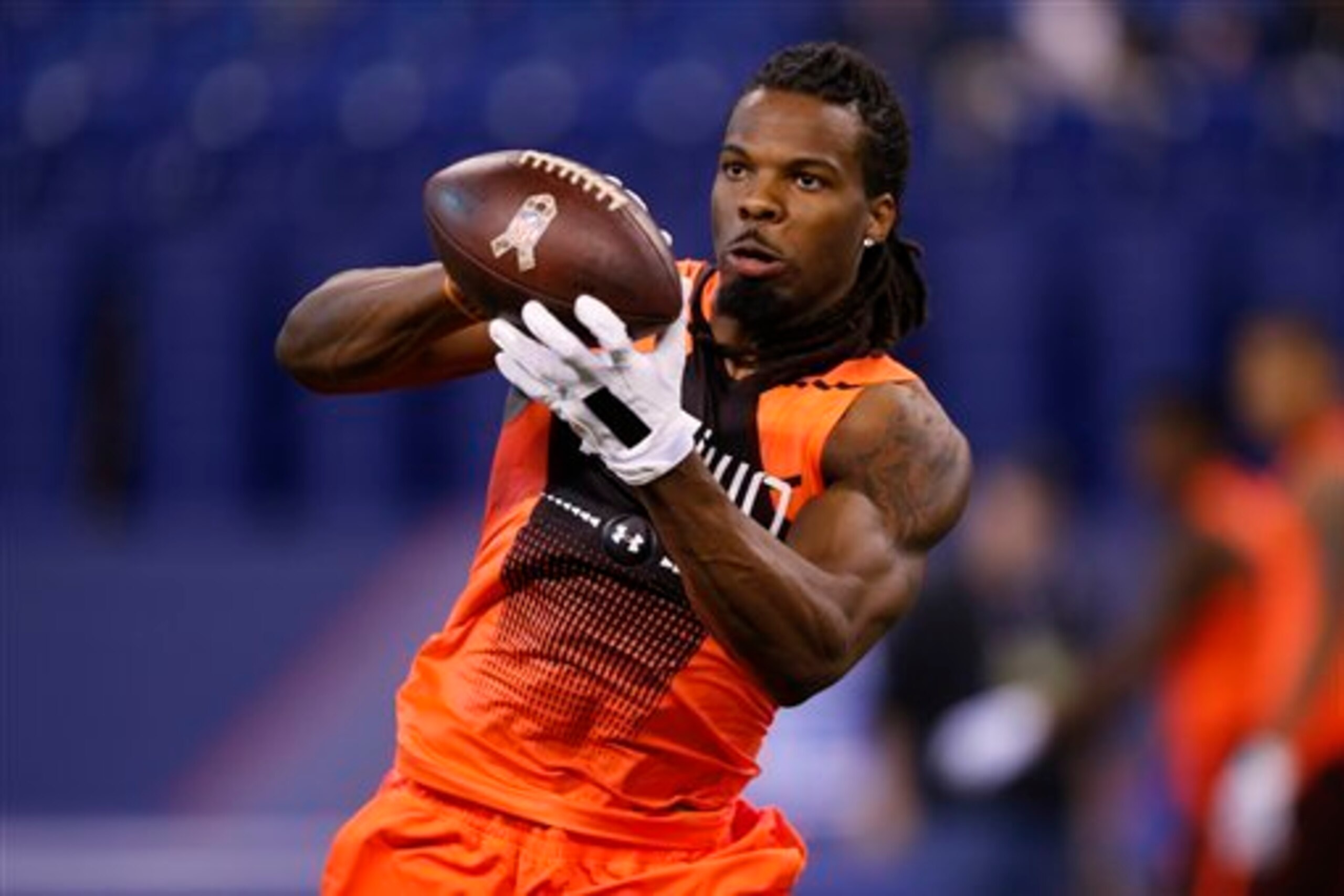
But when you compare Cooper to a physically gifted talent like Kevin White (6'3", 215 lbs), the emphasis on size and speed is inflated over actual wide receiver skills.
Wide receiver skills consist of route running, field awareness and hand-eye coordination. Measuring those attributes are an effective way of evaluating college WRs.
White won’t be able to dominate based on size and speed alone. He’ll have to refine his wide receiver skills to be effective. When drafting a WR in the top five, GMs should be seeking the most polished player—not the player with the most potential.
General managers should draft high based on proven production and seek potential in the later rounds.
Prospects in the fifth, sixth and seventh rounds have potential, but very few rookies have the resume and refined skills to contribute immediately. Cooper falls into the latter category.
Sports Illustrated's Doug Farrar puts the Cooper vs. White comparison in perspective when separating potential and actual production:
"That said, White has some things to work on. He didn't run a full route tree in college, and although he's dealt with his issues with dropped passes, they may resurface when he's facing more practiced, physical and aggressive defenders at the NFL level. The team that takes White will be banking to a certain degree on what he can possibly do over what he's shown he can do, even for a player who caught 109 passes for 1,447 yards and 10 touchdowns in 2014.
...
Cooper, on the other hand, shows the traits common among receivers who succeed as high-volume targets in the NFL immediately. There's no question about the level of competition he's faced and very little concern about his refinement as a player. Cooper has an advanced array of routes in his arsenal, he sets up cornerbacks very well, and he gets a lot of the little things it takes some receivers years to master: how to lean in and out of a route to get separation, how to time a route to an anticipation throw, when to cut back in after running vertically to gain a coverage gap and make himself an open target.
"
NFL.com draft analyst Lance Zierlein compares Cooper to Marvin Harrison. He compares White to Houston Texans WR DeAndre Hopkins.

Pay close attention to Cooper's game against Florida in the video below. The Gators were the 11th-ranked defense across the nation, allowing 19.5 points per game.
He starts off running intermediate routes, showing he's not afraid to catch passes over the middle or exploit matchups on the inside.
As the game progresses, he shows functional quickness when accelerating to the outside to catch passes over the top. His routes are crisp and he shows great awareness in catching passes along the sidelines and in tight spaces.
His skill set isn't flashy. He's not a burner or a jump-ball receiver, but he creates separation and will use his hands to get himself in position to make a play.
The Raiders cannot make the mistake of ignoring the early critical stages of QB progression. A dominant defense cannot be effective without an offense able to take advantage of extra scoring opportunities.
Entertaining the thought of trading the No. 4 pick or taking Fowler instead of providing a viable weapon for Carr would be a huge mistake.
Should the Oakland Raiders draft Amari Cooper? Tweet your thoughts to Maurice’s Twitter. He’d like to hear your Leonard Williams/Amari Cooper/Kevin White/Dante Fowler arguments for the Raiders' No. 4 pick.
Unless otherwise noted, statistics provided by Pro-Football-Reference.com.
.jpg?w=2560 "Eagles Jaguars Football")
.jpg?w=2560)