


History says that elite point guards aren't required to capture an NBA title.
But rules can change over time, and this one feels close to its expiration. One quick scan of the league's playoff landscape highlights the position's importance in today's game.
A four-time All-Star and two-time assists leader didn't even crack the top 10. A former MVP did, but just barely.
While there are a few exceptions, nearly every good-to-great team has a good-to-great floor general at the helm. The numbers say that's hardly a coincidence. Five of the top 11 leaders in both win shares and ESPN.com's wins above replacement are point guards.
The position's star power in this postseason field is overwhelming. Breaking down this group is an exhaustive task that requires scanning the stat sheets, pouring over playoff resumes and using the eye test to help fill in the blanks.
But we've done the leg work to build a worst-to-first ranking of the starting point man on all 16 playoff participants.
16. Jason Terry, Houston Rockets
1 of 16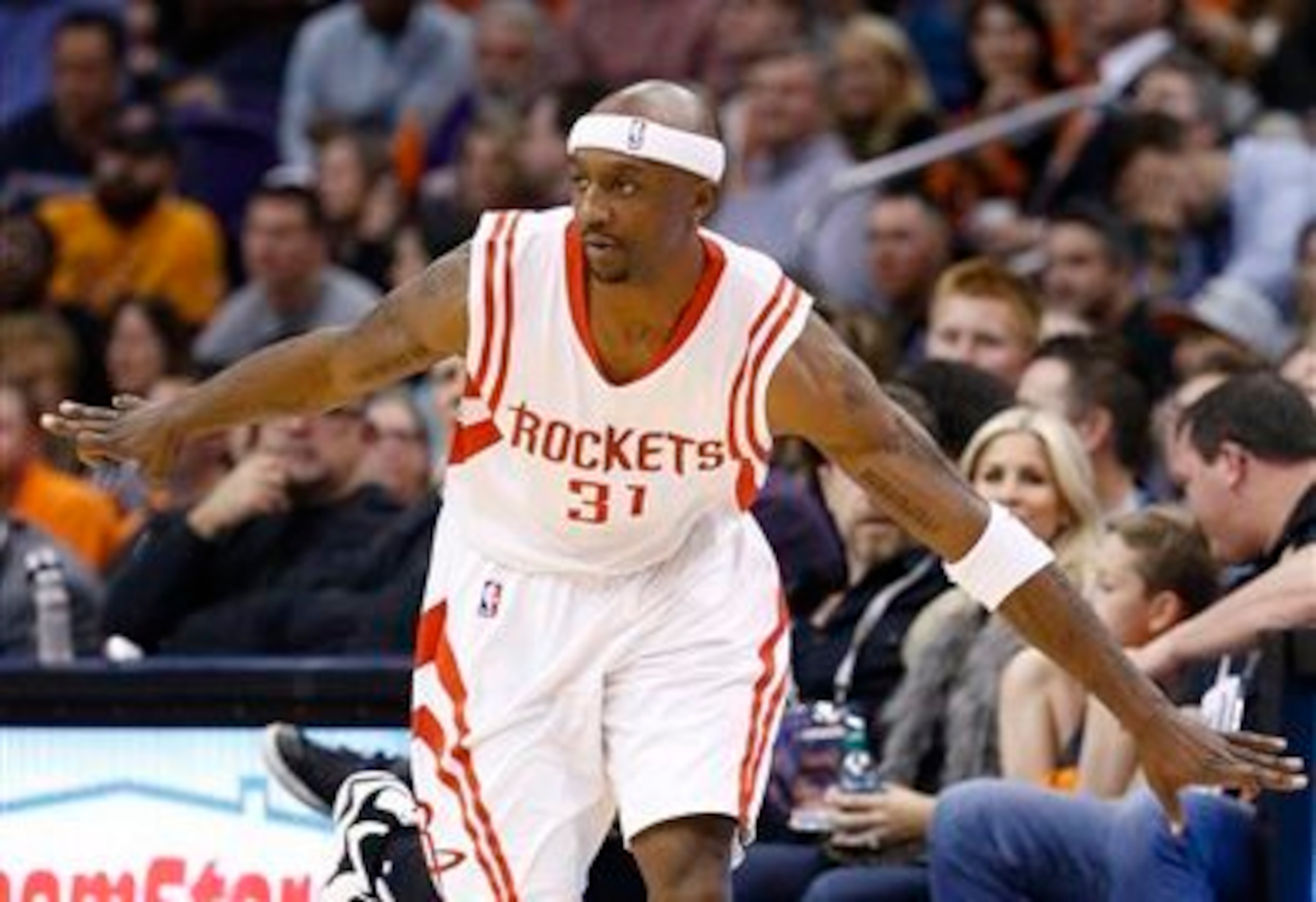
Father Time hasn't grounded The Jet, Jason Terry, quite yet, but the 37-year-old is clearly on the bottom of this list. He's more of a combo guard than a true point, and he's starting in relief of the injured Patrick Beverley (left wrist surgery).
Like his predecessor, Terry's offensive responsibilities are minimal. He's out there to space the floor for James Harden and Dwight Howard, and occasionally, the Houston Rockets need Terry to chip in as a secondary playmaker.
But there's a dramatic drop from Beverley to Terry at the defensive end.
The former is a pest, pressuring ball-handlers the full length of the court and staying glued to their hip throughout the contest. The latter has to leave himself a buffer zone, as he no longer has the lateral quickness to keep pace with the track stars running point in today's game.
If there's a saving grace for the Rockets, it's that their title hopes were never going to be pinned to the point guard position. And with lanky, athletic wings like Corey Brewer and Trevor Ariza, they might be able to hide Terry in the right matchups.
But as one the few true liabilities on this list, Terry sets the basement for this postseason's batch of lead guards.
15. Marcus Smart, Boston Celtics
2 of 16
Who saw Marcus Smart—or any Boston Celtics, for that matter—holding a spot on this list?
Smart's first career NBA start came on Dec. 21, just days after the Shamrocks sent former franchise face Rajon Rondo to the Dallas Mavericks. By the time Boston moved leading scorer Jeff Green to the Memphis Grizzlies in mid-January, Smart was back filling a reserve role.
But the sixth overall pick in last summer's draft has held a starting gig since early February, and the Celtics have had little reason to consider a change. Their surprise sprint to the second season coincided with the rook's promotion.
All of that said, the feel-good story is over. The Celtics have to be measured against their postseason combatants, and that same grading scale must be used on Smart—hence the second-from-the-bottom ranking.
He's a hard-nosed defender and a developing jack-of-all-trades. Smart is still honing his offensive crafts, and he's now being stacked up against guys who have already mastered several. Relative to his playoff peers, his shooting woes (36.7 percent from the field) and uninspiring distributing numbers (3.1 assists per game) are both areas of major concern.
Smart deserves credit for getting himself and his team into this group. But the playoff lessons he'll learn over the coming weeks—when Isaiah Thomas isn't chewing into his playing time—will make it clear why he couldn't rank any higher than this.
14. Michael Carter-Williams, Milwaukee Bucks
3 of 16
Apologies for spinning this broken record, but reigning Rookie of the Year Michael Carter-Williams has some pretty severe shooting problems.
He struggled from all over the floor during his debut campaign and has declined in each category since. He lost ground from the field (39.6, down from 40.5), from three (23.5, 26.4) and from the foul line (69.4, 70.3).
That not only limits his production but also negatively impacts the guys around him. The Milwaukee Bucks didn't have floor spacing to spare when they swapped Brandon Knight for MCW in a three-team deadline deal, and those issues have only become more severe.
The Bucks posted the fifth-worst offensive rating after the All-Star break, down considerably from the 17th ranking they held going into intermission. Carter-Williams doesn't carry all the blame for this decline, but the parallels between his arrival and this offense's collapse are impossible to miss.
However, he has shown some signs of life in recent weeks. He's taking better shots with the Bucks (more time in the paint, less beyond the arc), and it's starting to pay off. He's also hitting the playoffs on a high note, averaging 16.9 points on 50.9 percent shooting, 6.0 assists and 5.3 rebounds in April.
His lanky frame is a welcome addition to Milwaukee's surprisingly stingy defense, and he's versatile enough to impact games in other areas than scoring. But there are plenty of well-rounded guys in front of him that don't share his shooting demons.


13. Deron Williams, Brooklyn Nets
4 of 16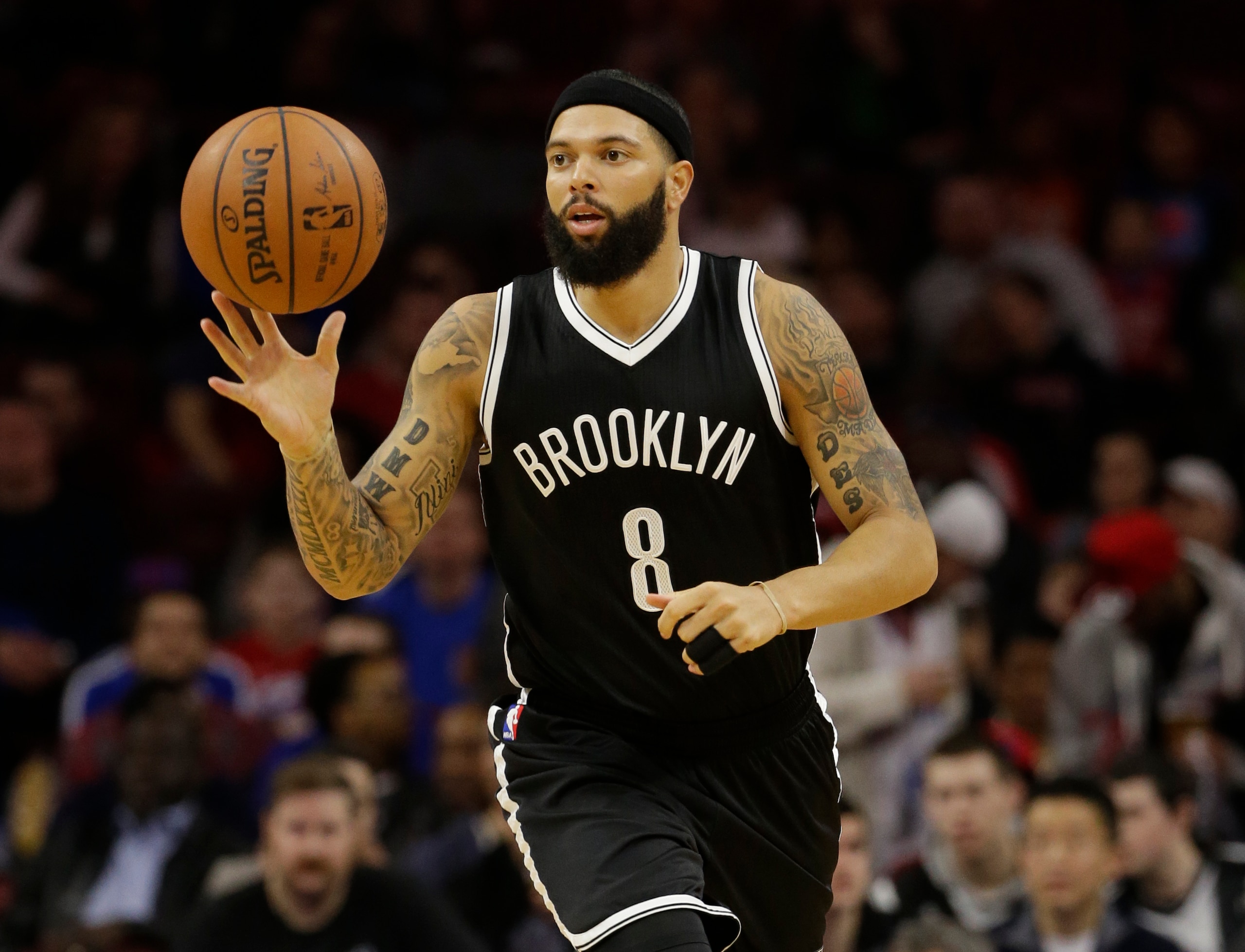
It should be jarring to see three-time All-Star Deron Williams sitting so low on this list. But his days of competing with Chris Paul for the NBA's "point god" title were long ago banished to the history books.
Williams barely resembles his former self. This season, he posted a personal worst 38.7 field-goal percentage. His scoring average dropped lower than it's been since his rookie year of 2005-06 (13.0 points per game).
Only 30 years old, his best days shouldn't be this far behind him. But former Brooklyn Nets teammate Paul Pierce offered his take on Williams' rapid fall from grace.
"Before I got there, I looked at Deron as an MVP candidate,'' Pierce told ESPN's Jackie MacMullan. "But I felt once we got there, that's not what he wanted to be. He just didn't want that."
Williams' constant battles with his balky ankles surely didn't help either. He missed at least 14 games in four of the last five seasons. Even when he's played, he hasn't been very effective, and he had to fight to get his starting job back after a midseason demotion to the second team.
With all of the above in mind, this ranking might actually seem a little high.
But Williams still boasted one of the league's better assist-to-turnover ratios (2.91-to-1, ninth out of 84 qualified players), and he shot above his career averages from three (36.7, up from 35.8) and at the charity stripe (83.4, 81.9). The Nets were also 6.8 points per 100 possessions better when he played, so he had a hand in the little success Brooklyn enjoyed.
12. Jrue Holiday, New Orleans Pelicans
5 of 16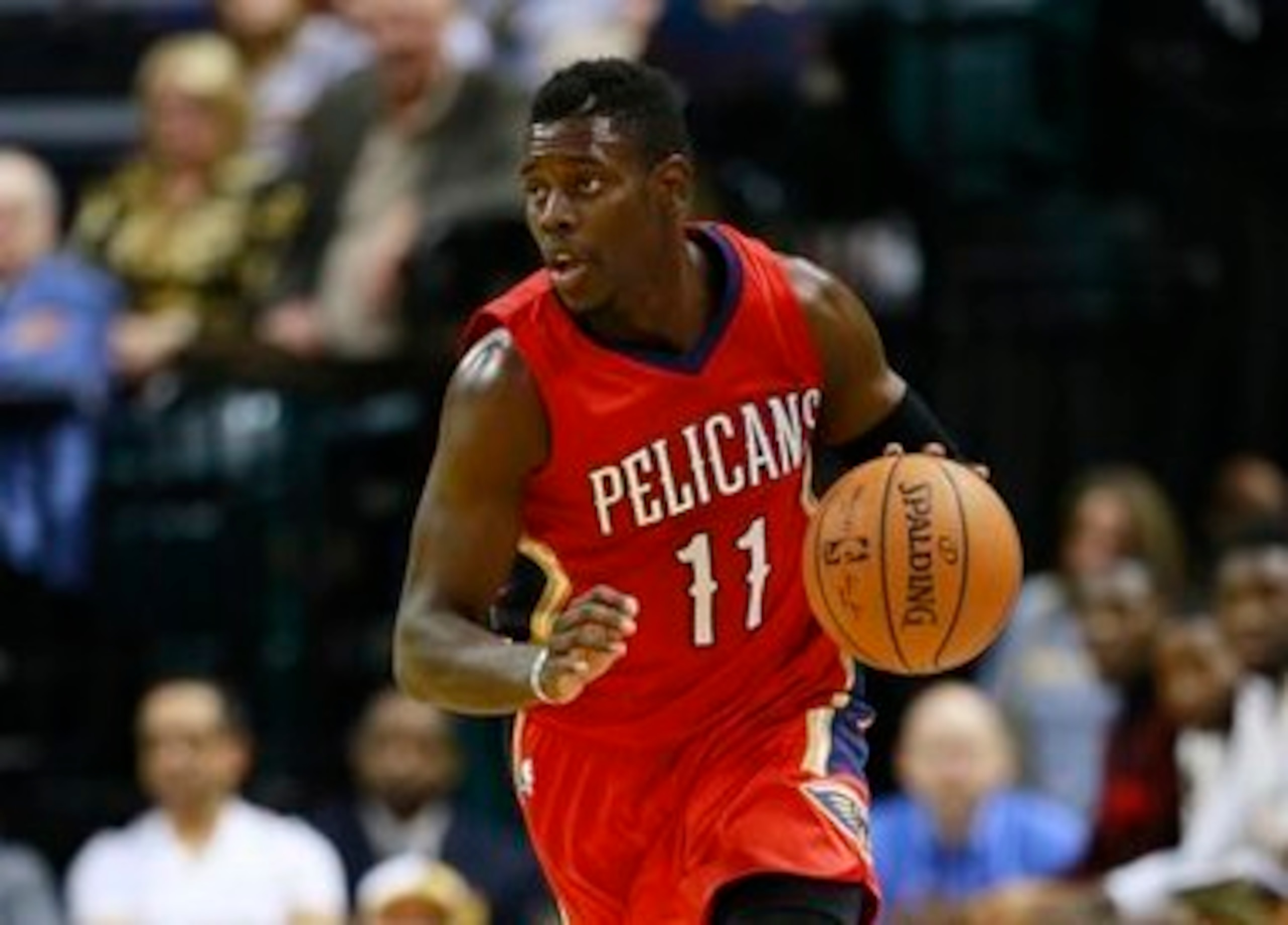
Jrue Holiday might be the right point guard to bring out the best in soaring superstar Anthony Davis. Or the former All-Star could be holding the New Orleans Pelicans back, since they parted with two lottery picks—Nerlens Noel and Elfrid Payton—to grab Holiday from the Philadelphia 76ers in 2013.
His body has prevented any judgments from being made. He's played just 74 games in his two seasons with the Pellies.
He enters postseason play surrounded by a slew of question marks.
He recently returned from a nearly three-month absence with a lower leg injury, and he only had three outings to find his form. He shot well from the field after coming back (48.0 percent), but the sample size is far too small to produce any reliable conclusions—especially since he logged fewer than 19 minutes a night.
When his body allows it, he can be a disruptive presence on the defensive end. While he's neither a great scorer nor setup man, he's solid in both roles. His career 37.6 three-point percentage keeps defenders honest on the perimeter, and he has the strength and quickness to create scoring chances off the dribble.
As far as we can tell, Holiday looks like a good fit as a supportive player for Davis. But if the Pelicans need Holiday to play a bigger role than that, there isn't a ton of evidence suggesting that he could effectively carry a heavier load.
11. Rajon Rondo, Dallas Mavericks
6 of 16
Rajon Rondo has consistently performed when the stakes are at their highest. A mere mention of "Playoff Rondo" will have hoop heads reliving his many moments of brilliance under the brightest of lights.
For his career, he's posted better numbers in the playoffs than his regular-season averages. In his last postseason run, he tallied 17.3 points, 11.9 assists, 6.7 rebounds and 2.4 steals during Boston's trip to the 2012 Eastern Conference Finals.
But three years have passed since. During that time away, Rondo has suffered a torn ACL and switched locales from Boston to Dallas. His marks with the Mavericks range from pedestrian (9.3 points, 6.5 assists) to putrid (45.2 free-throw percentage).
Even more troubling is the way Dallas has performed since bringing him on board. The Mavs had a .704 winning percentage prior to Rondo's Dec. 20 debut. They have a 31-24 record since (.564). With Rondo on the team, they've been 4.0 points per 100 possessions better when he isn't playing.
He hasn't looked anything like the All-Star of his past and certainly not the one fans have seen dominate the second season. Is it still possible for him to flip the switch and don Playoff Rondo's cape? Even he isn't sure about that.
"I don't know," he told ESPNDallas.com's Tim MacMahon. "I haven't been there in a long time."
Judging by what we've seen lately—and not what we remember from years back—we'd advise Mavs fans to temper their expectations for Rondo's playoff return.
10. Derrick Rose, Chicago Bulls
7 of 16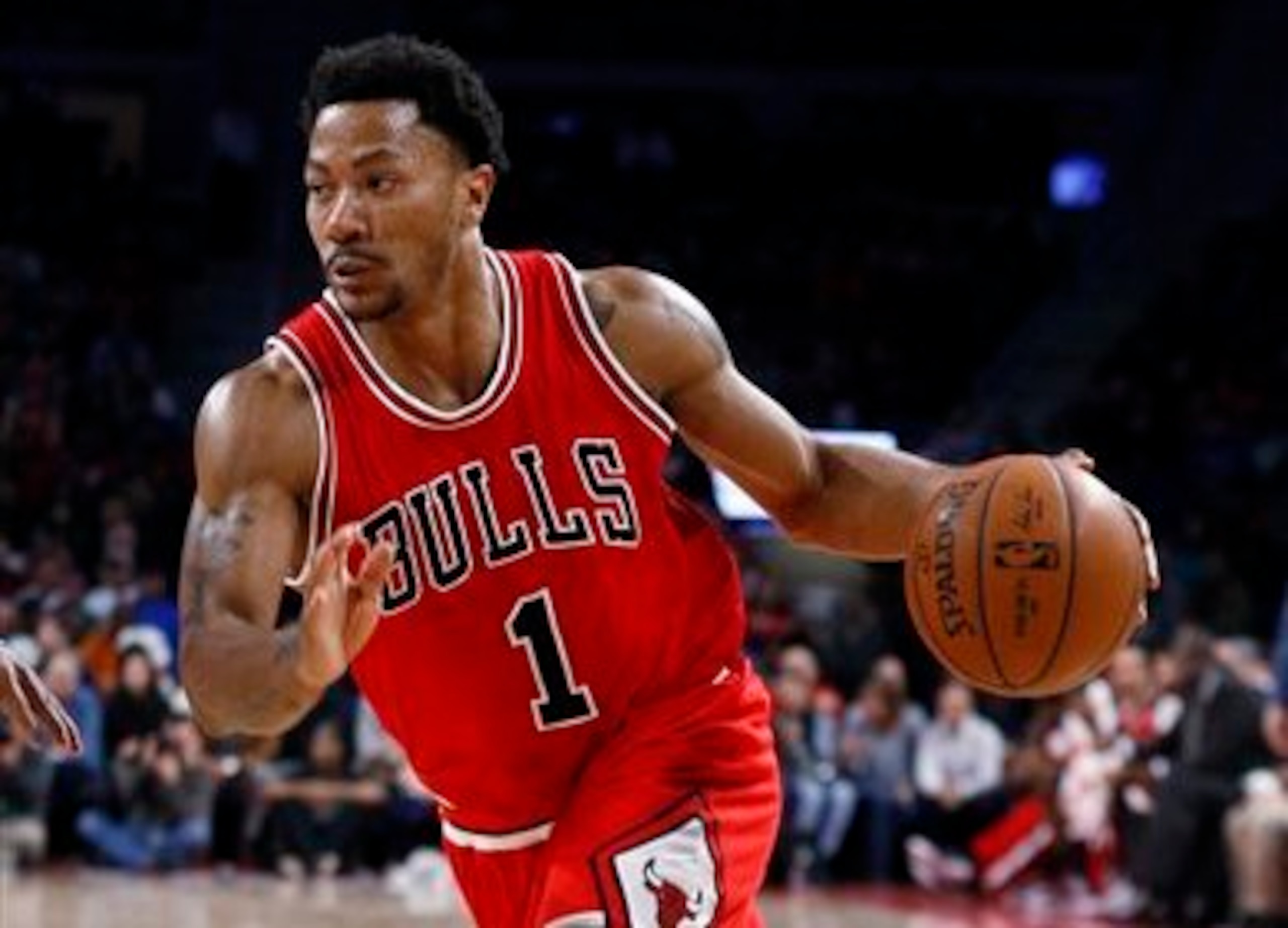
How healthy is Derrick Rose? If you have that answer, maybe you can share some Powerball numbers with us and solve this unfinished Rubik's Cube that's been sitting on our desk for months too.
Over the last three seasons, the former MVP has lost 185 of a possible 246 games to a trio of knee surgeries. It's good to see him back, but he enters the postseason all of five shaky outings into the third installment of his return.
Even before his most recent torn meniscus, he had provided more questions than answers.
In between the occasional flashes of athletic brilliance, he'd suffer through maddening stretches of settling. His 40.5 field-goal percentage—the second-worst of his career—paid the price for his sputtering aggressiveness. A career 30.4 percent three-point shooter, he's launched 6.4 long-range looks per 36 minutes (more than double his 3.0 career average).
When he looks to attack, he's still a nightmare for opposing defenses.
"He's got the power, quickness, speed—it's very unusual," Bulls coach Tom Thibodeau said, per ESPN Chicago's Nick Friedell. "I don't know if anyone else is like him in the league. So what that does for your offense is it gets you easy scoring opportunities."
If Rose is right, the Bulls have championship potential. But he hasn't looked that way consistently since tearing an ACL in April 2012. Until he enjoys a prolonged run of good health, there's no way to justify a higher ranking than this.
9. Jeff Teague, Atlanta Hawks
8 of 16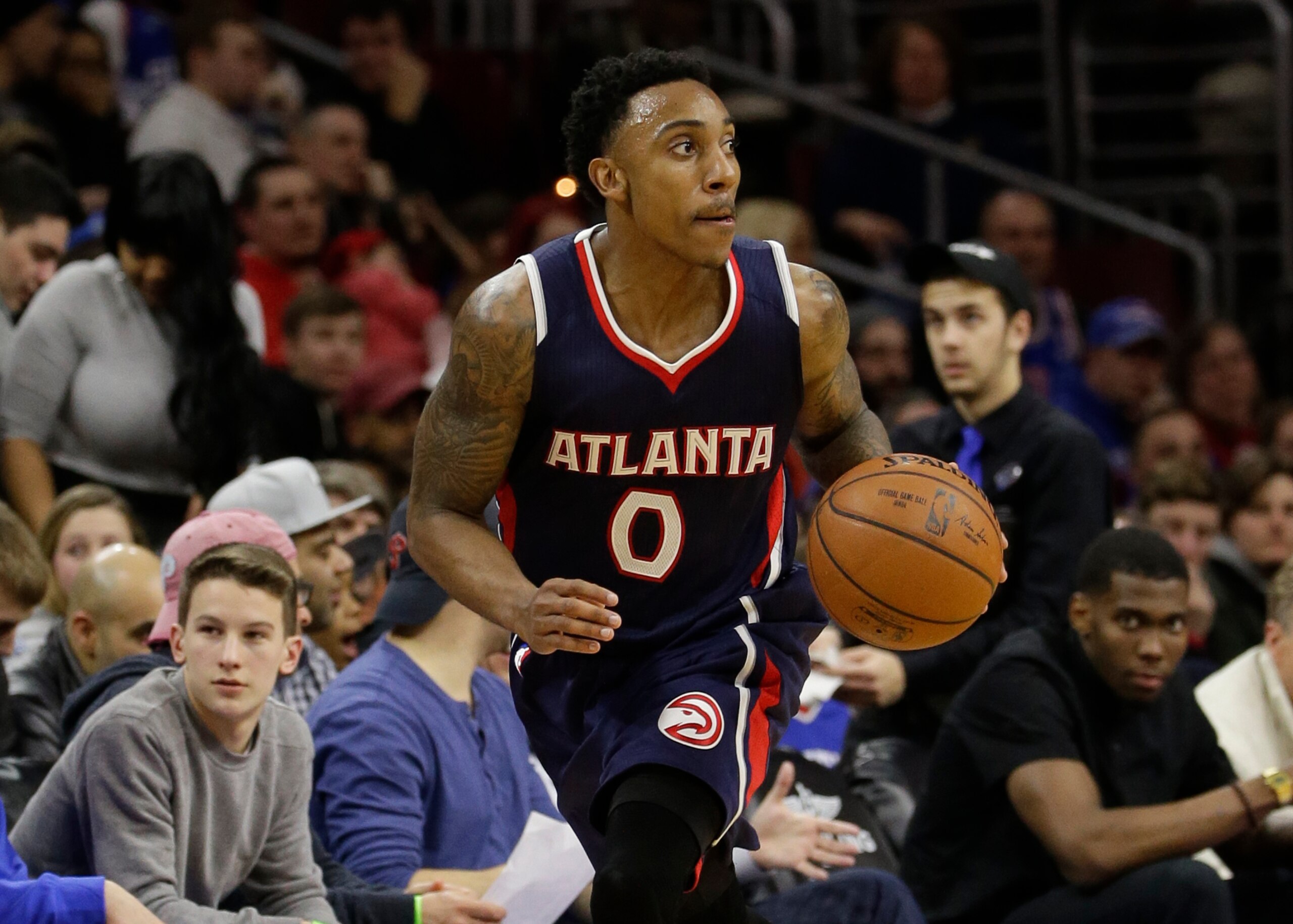
The proverbial head of the snake for the San Antonio Spurs East Atlanta Hawks, Jeff Teague is responsible for initiating the aesthetically pleasing process that routinely turns good shots into great ones.
Quick as a dart and deceptively strong, his dribble penetrations set everything in motion. If he can create a clean look, he'll take it. If not, he has the smarts, skill and selflessness to share the ball until one of his teammates does.
Atlanta is team-first to the extreme and built in a way that seemingly devalues the importance of individuals. But the numbers speak to the point guard's significance. His floor presence has meant the difference of 7.1 points per 100 possessions.
His teammates see the same thing.
"He sets the tone for us," Hawks forward Paul Millsap said, per Fox Sports' Cory McCartney. "When he comes out aggressive, everybody comes out aggressive."
Teague is solid in just about every area. Among qualified point guards, he ranks inside the top 12 in points (15.9, 12th), assists (7.0, seventh), steals (1.71, sixth) and wins above replacement (6.19, 11th). His biggest "knock" is probably a three-point shot that grades out closer to average than good (34.3 percent).
But being steady isn't enough to separate himself from a group with so many special players.
8. Kyrie Irving, Cleveland Cavaliers
9 of 16
Don't let his stat sheet fool you. Kyrie Irving is not a No. 1 option anymore.
He's just about as lethal as any second scorer you'll find.
With LeBron James back with the Cleveland Cavaliers, fans expected to see a different Uncle Drew. And the former No. 1 pick responded with career highs in three-point percentage (41.5), true shooting percentage (58.3) and player efficiency rating (21.5). He's still scoring like he did before James' return, but he's cut his giveaways to a personal-low 2.5 per game.
Irving still has his weaknesses.
He can get a little sticky with the ball, though that isn't as concerning with James around to run the offense. And Irving ranks just 32nd among point guards in defensive real plus/minus, but that's 31 spots up from where he was last season (63rd).
"He's just grown every single day," James said, per Fred Kerber of the New York Post. "Each month has been a learning experience for him. He's got more serious, understanding what this moment can be for himself, for us as a team and like I said he's the head of the snake for us being the point guard, being the catalyst, starting it all defensively."
Irving entered this season as a two-time All-Star, and he's been building on that foundation ever since. If not for those lingering issues and that non-existent playoff resume, he'd command even more respect here.
7. Tony Parker, San Antonio Spurs
10 of 16
The stat sheet says this is higher than Tony Parker should rank. But if you're using numbers alone to measure the impact of any San Antonio Spurs, you're doing it wrong.
Parker's production deceptively looks pedestrian: 14.4 points and 4.9 assists. But he's only playing 28.7 minutes per game, almost eight fewer than Irving.
Stretch Parker's numbers out on a per-36-minute scale, and he's going for 18.0 points and 6.2 assists. He's also shooting better than 48 percent from the field and 42 percent from three. For context, there's only one player in the entire league clearing 17 points, six assists and both of those shooting percentages: Stephen Curry.
And remember, Parker spent a majority of this season battling a lingering hamstring problem. In March, he told Yahoo Sports' Marc J. Spears that he had "not been the same" since coming back and was still feeling its effects.
This hasn't been one of Parker's best seasons, yet it still compares favorably to some of the NBA's elites. If that alone wasn't reason enough to trust him, he also owns a playoff resume unlike any other you'll find on this list.
6. Damian Lillard, Portland Trail Blazers
11 of 16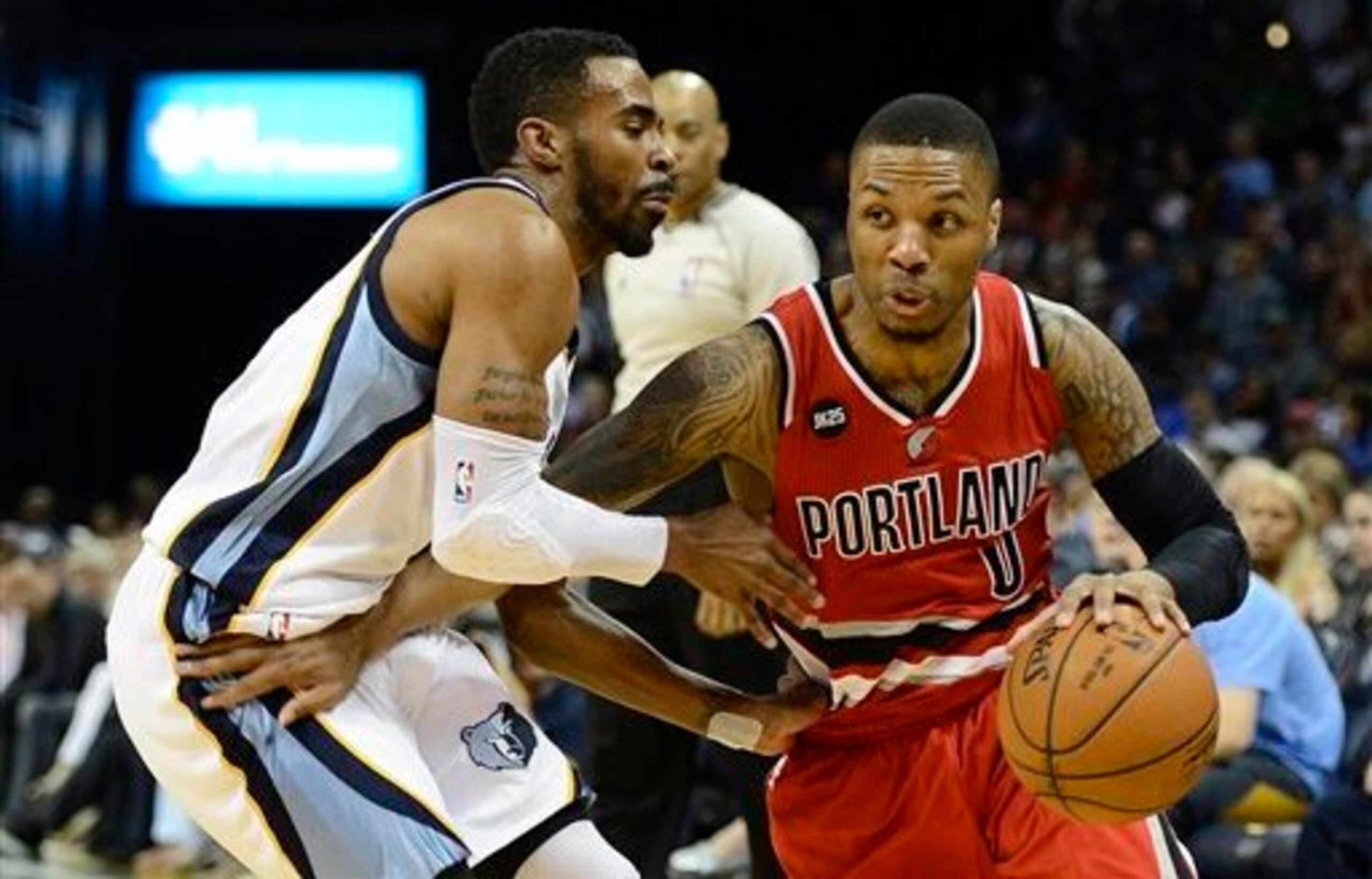
Welcome to the hairsplitting portion of the program.
You could craft a pretty compelling argument that Damian Lillard—a two-time All-Star and this season's 13th-best scorer—deserves a better ranking than this. But the margin for error is wafer-thin this close to the top, and he has just enough things working against him to keep him from climbing higher.
But let's focus first on the positives he brings inside the lines.
He can put up points from practically anywhere. He has the sixth-most triples in the league and the second-most points on drives. James Harden is the only other player with top-10 rankings in both categories.
If defenses sleep on Lillard for a second, it'll cost them. He makes creating his own shots look painfully easy, and he's just as comfortable finding them for his teammates.
But the one real knock on him is a big one.
"For all the offensive gifts Lillard bears, his inability to lock up opposing point guards remains a blemish on his otherwise pristine resume," wrote Bleacher Report's Alec Nathan.
Considering the quality of floor generals potentially awaiting the Portland Trail Blazers in the Western Conference playoff bracket, Lillard's defensive deficiencies are impossible to overlook.
5. Kyle Lowry, Toronto Raptors
12 of 16
If the Toronto Raptors have even a puncher's chance of surviving and advancing in the postseason, Kyle Lowry will be the one providing their knockout power.
"The All-Star point guard is the team's linchpin: insert him into the lineup and the team hums along, disconnect him and watch the team sputter," wrote Josh Planos of The Washington Post.
Lowry is Toronto's do-it-all leader.
He paces the team in both assists and steals. His scoring average trails only DeMar DeRozan's. The bulldog-tough 6'0" point guard even leads all of the Raptors' perimeter players in rebounding.
But it's hard to tell just how healthy Lowry is. He hasn't looked the same since returning from a seven-game absence to address a nagging back problem, averaging 16.0 points on 34.4 percent shooting during his four games back.
The Raptors can't afford to have their floor general at less than 100 percent. Even his health might not be enough to overcome this team's defensive struggles.
But when he's right, there aren't many in the business quite like him. He's one of only four point guards with a real plus/minus rating north of plus-one on both sides of the ball.
4. Mike Conley, Memphis Grizzlies
13 of 16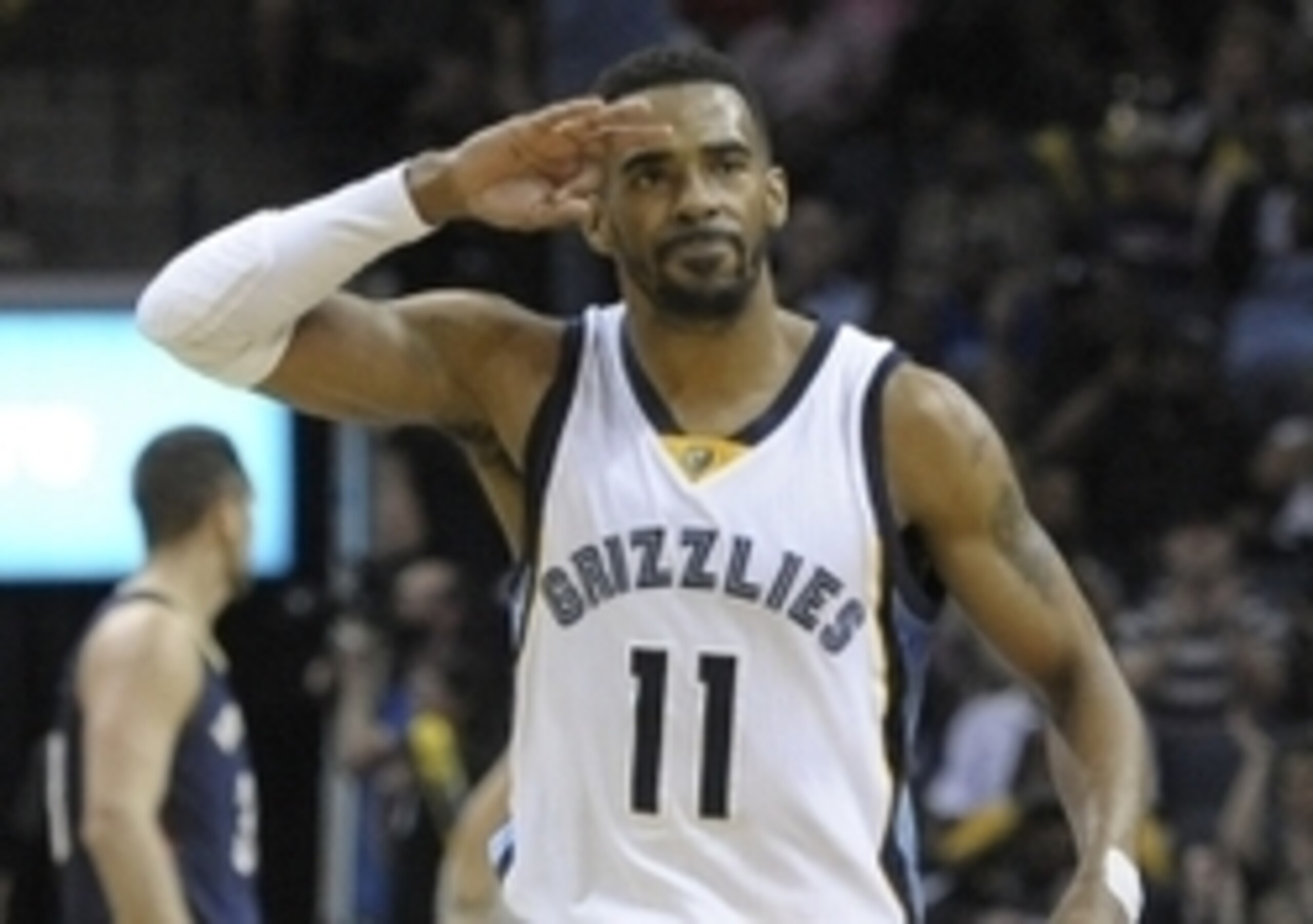
Congratulations, Mike Conley. Your days of contending for the league's most underrated player label are officially over.
His statistics are always among the NBA's hardest to read. With the Memphis Grizzlies running so much of their offense through twin towers Marc Gasol and Zach Randolph, Conley's numbers rarely move the needle like some of his point guard peers.
And he doesn't play the same loud, explosive game that sends so many of his contemporaries spinning through the highlight reels. When he's rarely being seen or heard, fans can easily forget just how skilled he is.
But those who watch him every day don't make the same mistake.
"When you look at Mike Conley, he's just as important to the success of the Memphis Grizzlies as Zach Randolph or Marc Gasol," former Grizzlies assistant coach Johnny Davis told Grantland's Jonathan Abrams. "If he goes out, you're talking about a different team. He has evolved into one of the better point guards in the NBA."
Picking apart Conley's game is an exercise in futility. There just aren't any real weaknesses to find. He can grab the reins as a primary scorer, pour in points as a secondary option, set the table as a distributor and lock up opposing point guards of any size or style at the opposite end.
Here's perhaps the best way to capture his importance: The health of his sprained foot could be the single biggest factor in Memphis' level of postseason success.
3. John Wall, Washington Wizards
14 of 16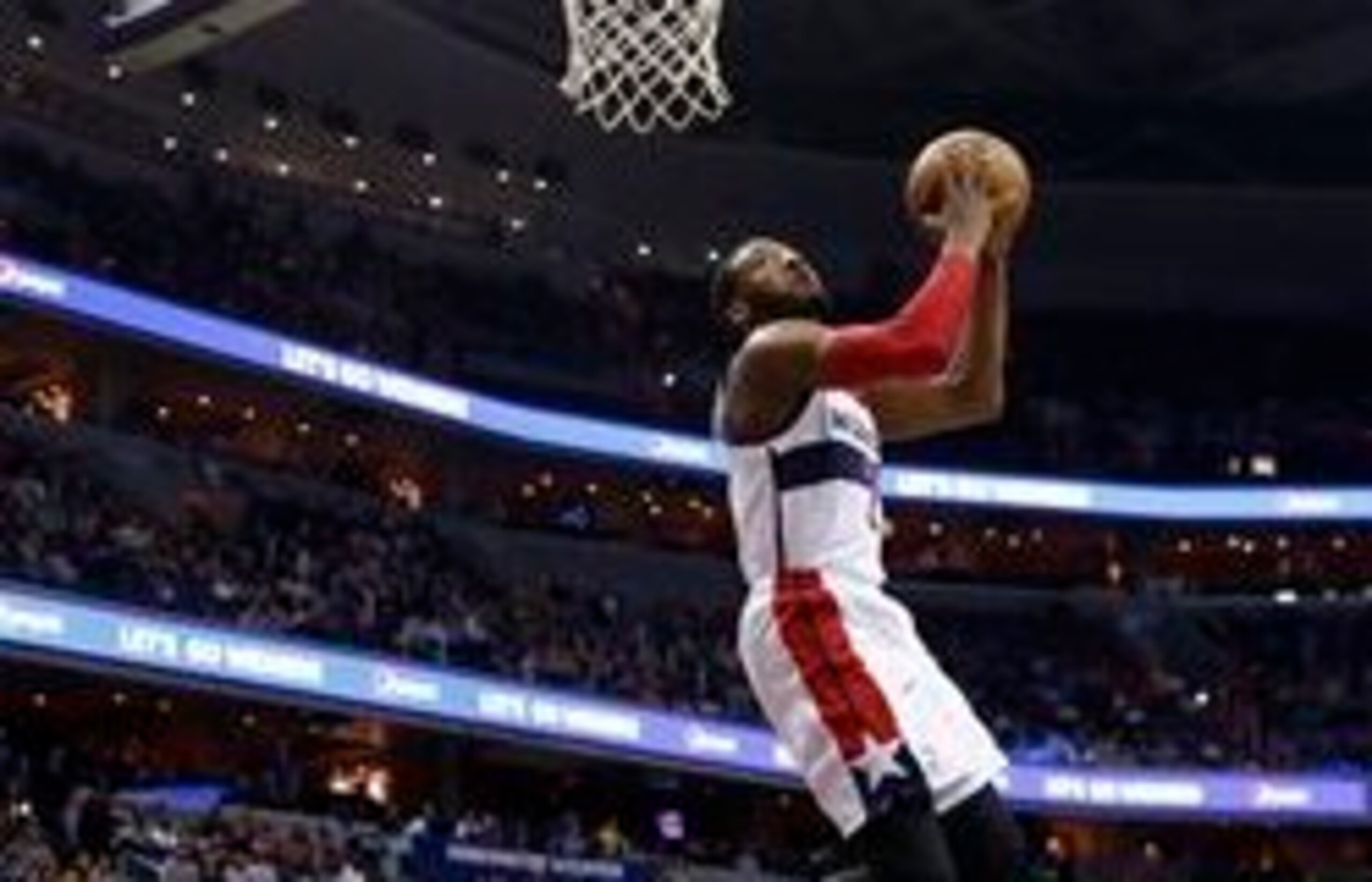
Last season, John Wall forced his way into the elite ranks of NBA point guards. He made his debut appearances in both the All-Star Game and the postseason.
This year, he somehow found a way to up the ante.
He made his first All-Star start, posted a personal best in assists per game (10.0) and converted a career-high 44.5 percent of his field-goal attempts. Oh, and he powered the Washington Wizards to another playoff berth with two more wins than they had last season.
Absurdly athletic, he's managed to keep defenses honest without a consistent three-point shot. He covers all angles of the stat sheet like few others can. He had 11 games with at least 20 points, 10 assists and five rebounds. Chris Paul and Russell Westbrook were the only other players to post those numbers at least 10 times.
At the defensive end, Wall might shine even brighter. The Wizards allowed 6.7 fewer points per 100 possessions simply by having him on the floor. His 1.95 defensive real plus/minus tops all playoff-bound point guards.
His physical gifts obviously contribute to that dominance, but they'd be wasted without the right energy level. Wall has found that drive this season and with it the key to his continued climb up the point guard ladder.
2. Chris Paul, Los Angeles Clippers
15 of 16
Make no mistake, Chris Paul didn't give away his point guard throne.
The seven-time All-Star just completed one of the finest seasons of his already legendary career. If that statement comes off as the slightest bit hyperbolic, his production proves it's far from it.
This is his fourth campaign with at least 19 points and 10 assists per game. To appreciate the significance of that, realize that Deron Williams is the only other player to have tallied those numbers over a full campaign since 1992-93. And D-Will only hit those marks twice.
But Paul's basketball brilliance goes well beyond that.
This is the best shooting year he's ever had at the foul line (90 percent) and second-best from beyond the arc (39.8). His 48.5 field-goal percentage—which ranks seventh out of this season's 23 players averaging 19-plus points—is the highest it's been since 2009-10.
The Los Angeles Clippers were at their best when Paul played (plus-12.2 points per 100 possessions) and their worst when he didn't (minus-7.6 points per 100 possessions). And he gave them everything he had, playing all 82 games for the first time in his career.
He probably had a better year than most realized, if only because people have come to expect him to dominate on a nightly basis.
"He's been consistently great since he has entered the league, which perhaps dulls some of his luster for some people," wrote Melissa Rohlin of the Los Angeles Times. "He's not the streaking, shiny thing; he's the unbreakable cog."
But he's not the best point guard in this field. And that has less to do with him than it does the top player on our list.
1. Stephen Curry, Golden State Warriors
16 of 16
If you've been paying close attention, you had to know this was coming. Stephen Curry was our MVP pick after all.
No one presents more problems to an opposing defense than the Golden State Warriors sharpshooting floor general.
His three-point cannon packs unprecedented levels of volume and efficiency. Not only did he shatter his own mark for made threes in a single season (286), he did it while connecting on 44.3 percent of his perimeter shots.
But there's so much more to this ranking than historically proficient sniping.
Curry, who logged just 32.7 minutes a night, ranked eighth overall in scoring at 23.8 points per game. Among the 19 players who averaged 20-plus points, only Russell Westbrook dropped more dimes than Curry (7.7). And Curry crushed the Oklahoma City Thunder star in every shooting category while averaging nearly 1.5 fewer turnovers (3.1 to 4.4).
Curry's court presence netted the Dubs an extra 17.1 points per 100 possessions. Regularly dismantling defenses had plenty to do with that, but so did his growth at the opposite end.
"He has become a much smarter defender," Draymond Green told USA Today's Sam Amick. "... He comes up with steals, and they're not just playing-the-passing-lane steals. It's getting a deflection, it's taking the big, it's all those things. He's just been phenomenal, man."
Curry played the featured role in Golden State's rise to a league-best and franchise-record 67 wins. As deep as this talent pool is, this Splash Brother was an easy choice for No. 1.
Unless otherwise noted, statistics used courtesy of Basketball-Reference.com and NBA.com.

.jpg?w=2560 "Mahomes Told Teammate to Leave Meeting")
.jpg?w=2560 "5 Teams Eyeing Jonathan Taylor")



.jpg?w=2560 "NFL investigating Eagles")
.jpg?w=2560 "Jonathan Taylor Landing Spots 📍")