

Dwight Howard in Strange Role as Houston Rockets' Playoffs X-Factor
Dwight Howard is back from injury (bone marrow aspirate injection), but he’s not returning to the same role he had before he went out. Now he’s adjusting his game to accommodate the team, making him one of the most unique X-factors in this year’s postseason.
His role has changed because the Rockets have evolved. James Harden went from superstar to potential MVP; Terrence Jones is finally healthy and becoming a star in his own right. And general manager Daryl Morey made trades that added depth. The Rockets grew and adapted, going 26-14 in games Howard missed this season.
TOP NEWS

Brown with an all-time summary of relationship with Tatum

Heat, Giannis were down by 20+ in each of their 3 losses
Worst NBA Predictions 🫣
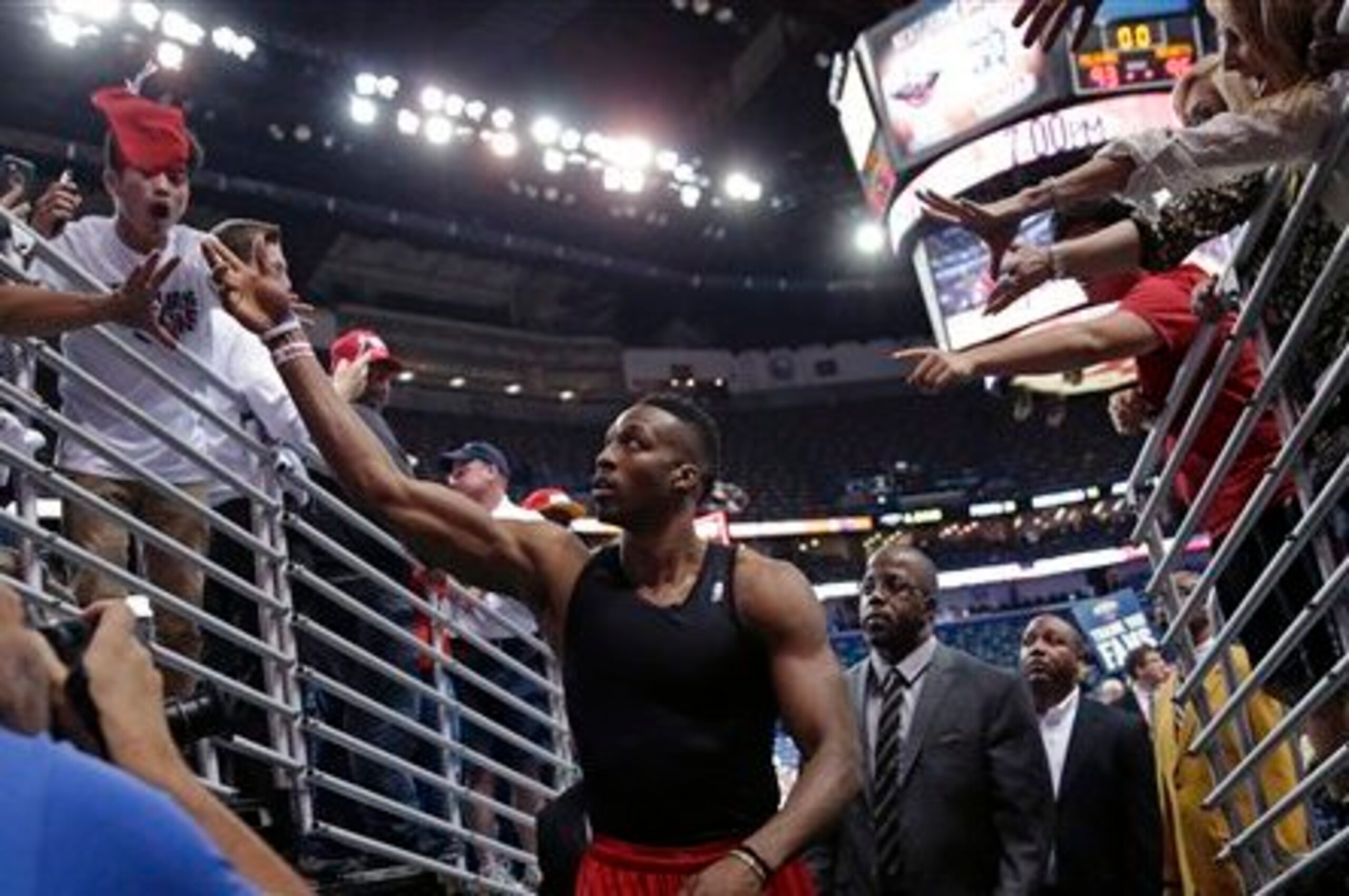
Howard knows this. He told Jonathan Feigen of the Houston Chronicle after his first game back, "I didn't want to get in the way of anything. I know how they've been playing. My thing is just setting good screens, making sure I get into the right spots. I know the offense will come. I just wanted to get my wind back."
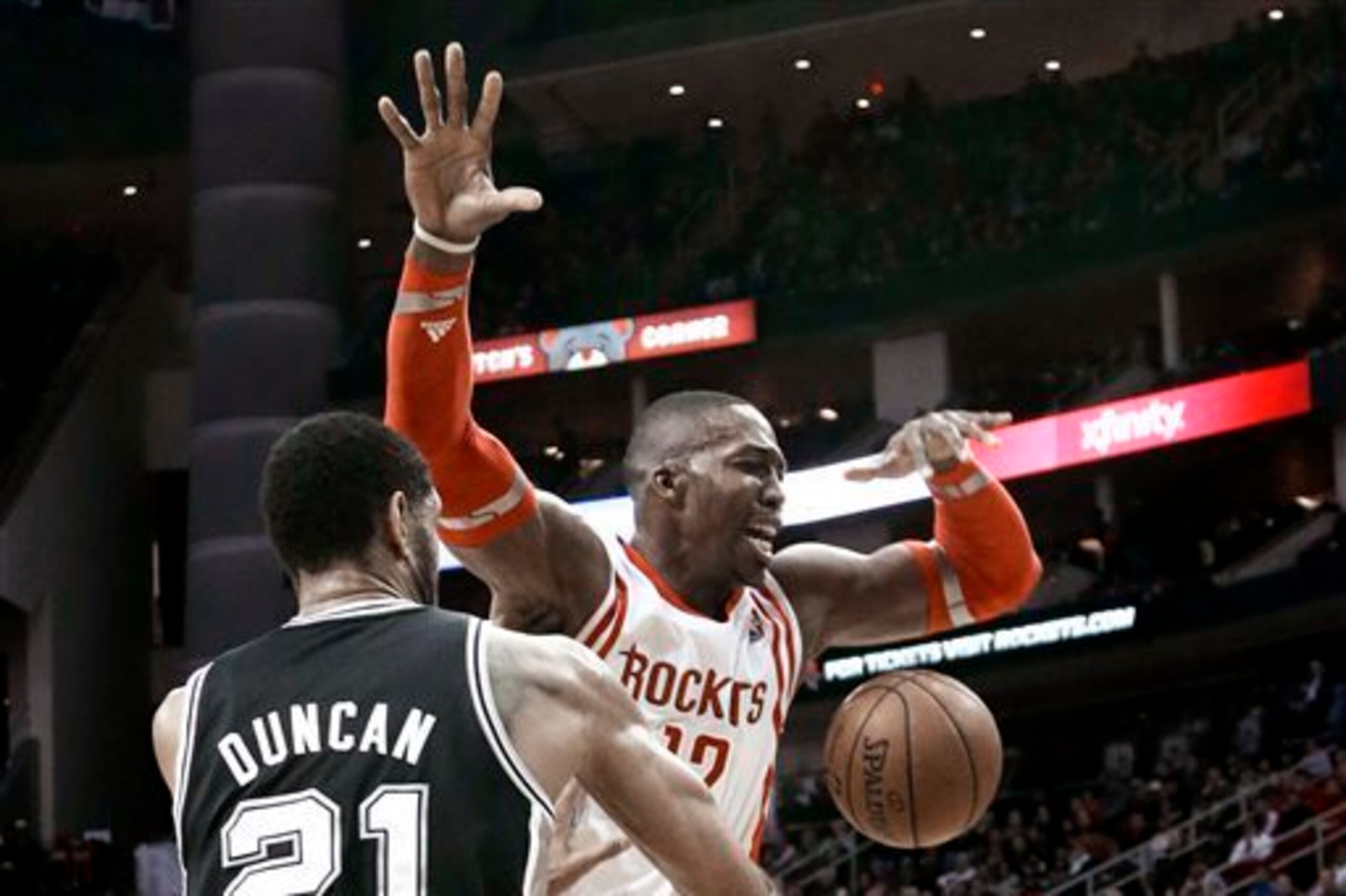
He told Feigen, before the Rockets' 110-98 loss to the San Antonio Spurs Wednesday, that he wants to play 20 years and that he was taking inspiration from Spurs legend Tim Duncan in that regard: "That’s always been my goal—to play 20 years in the league so I think it can be done. It would be great. Tim [Duncan] is still playing great basketball. He has migrated to different spots on the floor instead of just the post."
Duncan is the ideal role model. He not only took care of his body, he constantly morphed his game to adjust to changing team dynamics. When Tony Parker and Manu Ginobili emerged, he adapted to them. Now that Kawhi Leonard is blossoming, he's adjusting to him.
Most importantly, he hasn't always needed to be "the man," but he's had that in him when necessary.
That’s always been an undervalued aspect of the Spurs’ sustained success. If Howard wants the same result, he needs to follow the same steps. And that’s what he seems intent on doing.
Howard is content to let Harden shine as the star of the team. Whatever conflicts existed between him and Kobe Bryant with the Lakers don’t seem to be an issue in Houston. He seems happier, content to take on the title of role-player-in-chief.
That’s important, because it’s Harden’s ascendancy, that, more than anything, changes the Howard dynamic for the Rockets. Once equals, Harden is now the alpha dog, and that’s arguably a better situation for the team. Howard’s free-throw shooting (57.3 percent for his career) has always been an issue.
The four-out offenses used by the Orlando Magic with Howard as the man in the middle worked great in theory, but there was always a weakness to the plan: It needed to be changed during crunch time, lest opponents employ “Hack-a-Howard” defenses.
With Harden as the keystone to the Rockets' scoring, Howard can work in a subsidiary role, taking some of the pressure off the star guard while not having the offense rely on him. In fact, Howard’s presence as a secondary scorer enhances Harden’s production.
Per the media version of NBA.com/Stats, since Howard’s return March 25, Harden’s true shooting percentage when the two stars are on the court together is 81.7. On the season, it’s 65.0 percent. Without Howard, it’s 59.1. It’s clear that Howard’s presence makes Harden more efficient.
With the center in, the Rockets have more than one player who requires extra defensive attention. Bigs anchored to Howard have less latitude to help their perimeter defenders. That little bit that's taken off Harden makes him that much more dangerous.
Also, since his return, the Rockets’ defensive rating with Howard on the court is a miserly 98.0. Their net rating is plus-8.4. And opponents have only outscored them with Howard on the floor once (minus-12 at the Dallas Mavericks on April 2) in the six games since his return. On the season, Houston is giving up 97.4 points per 100 possessions. Its net rating is plus-7.1.
The Rockets are a better team with the best version of Howard playing, and that’s what they’ve been getting since his return. Feigen wrote about Howard’s first game back vs. New Orleans:
"Howard – who had four points and seven rebounds in the Rockets’ 95-93 win over the Pelicans – looked so spry before the game that he was practically jumping out of his skin. He came out for warmups early. Before tip, he was bouncing around the court, banging into Josh Smith, throwing down dunks. During the national anthem, he rocked back and forth like a fighter in the ring.
"
Since he’s been back, Howard has unquestionably improved. A glance at his per-36-minute splits reveals just how much:
In sum, since his return, Howard has made Harden better; he's made the defense better; and he just plain is better. However, the quality is there, but not the quantity.
He’s been playing just 19.6 minutes, but those should increase soon. He’s gone over 20 in each of the last two games—22:55 against the Oklahoma City Thunder on April 5 and 21:41 against the Spurs on April 8. And with Donatas Motiejunas (lower back) out for the season, they'll need him to fill those minutes.
He may have even played more against the Spurs if the contest weren’t so lopsided. Prior to the game, coach Kevin McHale told Feigen: "As of right now, we’re going to try to (play Howard) 24, 25, maybe 26 (minutes). It depends how he feels after today. He worked out a little bit (Monday). With Dwight it’s basically how he feels tomorrow more than anything else."
Howard may be a little rusty, but that’s changing. More importantly, he’s as fresh and spry going into a postseason as he’s been since he was playing his best years in Orlando. He has an attitude of wanting to adapt to what Houston is doing. And he’s been effective.
As the minutes go up, if he can sustain his level of play, Howard may very well be the top second-best player in the league—outside of Oklahoma City, anyway. The only thing left to determine is whether he can stay healthy when his playing time increases and retain a high level of play.
If he can, the Rockets may be in for a deep postseason run.




.jpg?w=2560 "Mahomes Asked OT to Leave Meeting")
.jpg?w=2560 "Jonathan Taylor Landing Spots 📍")

.jpg?w=2560 "Five Teams Eyeing Taylor")
