

Reassessing Browns' Offseason Plan and Breaking Down What's Left to Address
Every NFL team approaches the offseason with a plan. Now, not every plan will be executed as planned or come to complete fruition, but there are plans in place and goals to achieve in order to build a cohesive and successful football team for the upcoming season.
For the Cleveland Browns, this process was even more crucial, given their seven-win finish in 2014, tumult at the quarterback position and the anticipation that many of their in-house free agents would not return.
Let's take a look at the Browns' offseason plan, see how much they have accomplished, what is left to achieve and what it means for their draft strategy moving forward.
The Offseason Plan
1 of 4
The Browns' offseason plan attempted to mirror what other successful NFL teams do this time of year—be minimal players in free agency while preparing to build the roster through the draft. It's something that both Browns owner Jimmy Haslam as well as general manager Ray Farmer stressed before the league year began in March.
Haslam said point-blank in February, "I think you’ll see us playing less in free agency." He added, "We plan to build through the draft, so getting the draft right is so important."
Farmer said a week later at the scouting combine that free agency is "really about being judicious and making smart decisions. That's the one thing we've tried to articulate to [Haslam] and the rest of our staff. It doesn't mean we're not going to go. It doesn't mean we’re not going to play. It doesn't mean we're not going to allocate cap dollars in that regard," but rather, "[i]t's really more focused on being smart with who you add, when you add, and how you add."
Though the Browns had myriad roster needs to address, that clearly didn't mean free agency was going to be the source of all of their relief. And that included re-signing their own free agents, like nose tackle Ahtyba Rubin, linebacker Jabaal Sheard and tight end Jordan Cameron. None were expected back in Cleveland, and the Browns—for the most part—didn't do much work to retain any of them.
Another major offseason priority for the Browns was the quarterback situation. Head coach Mike Pettine ended the season displeased with what he saw out of rookie Johnny Manziel and didn't seem convinced that Brian Hoyer would return. He, along with Farmer and Haslam, vowed to "leave no stone unturned" in their search for a starter for 2015 and beyond.
Building through the draft is clearly still the Browns' top offseason priority this year. That did not preclude them from making a few key agency moves, though. In fact, what ended up happening was closer to Farmer's predictions than Haslam's bold statement about not making significant roster additions via free agency.
What They Did
2 of 4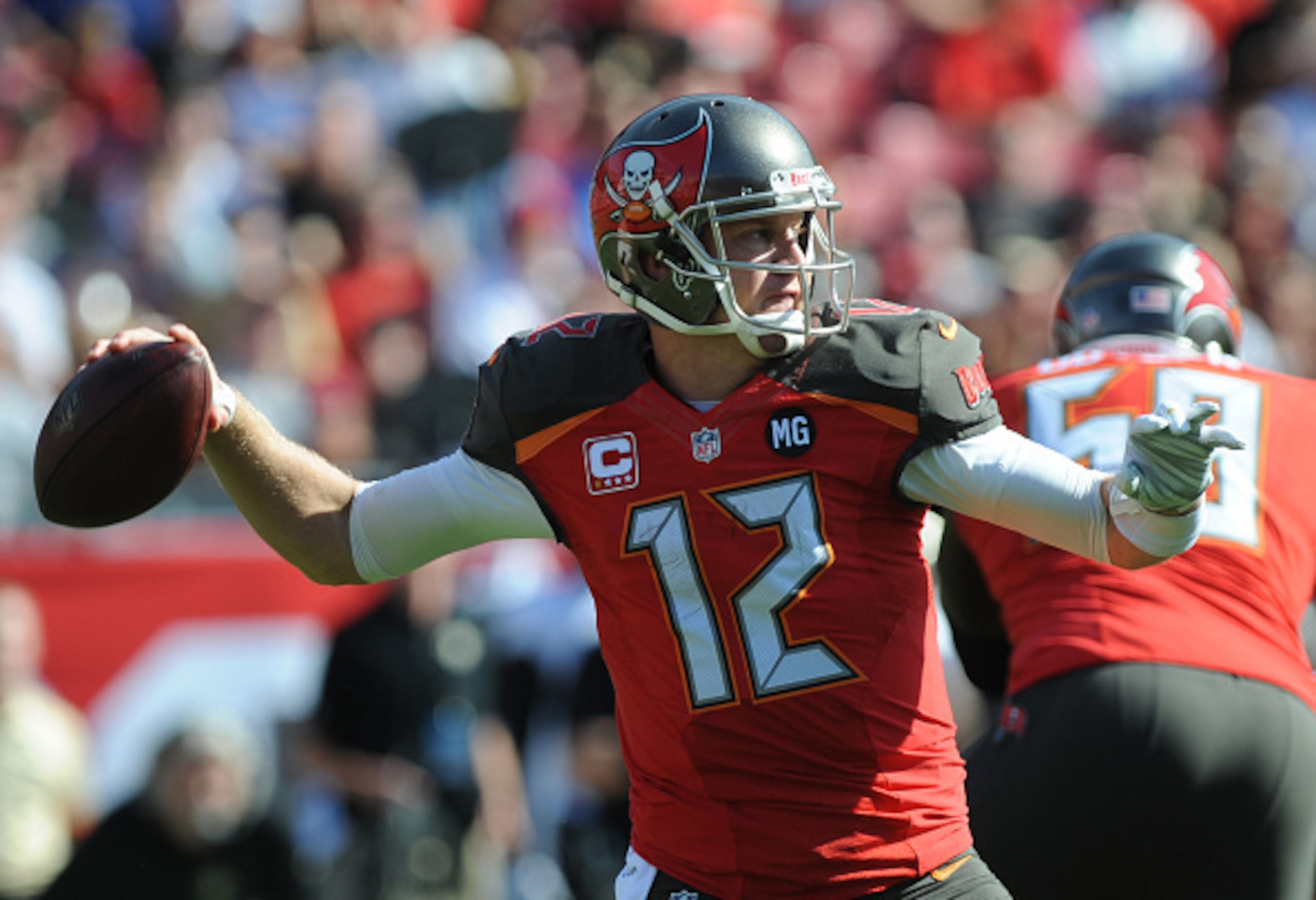
The Browns were conservative in free agency only where the money is concerned. They did not splash out for an expensive veteran, or two, or three, but rather added experienced players at every position they were weak in at affordable prices. The aim was not to complete the roster, which will happen via the draft, but to round it out.
That began at the quarterback position, with Josh McCown coming aboard in late February on a three-year, $14 million deal that includes $6.25 million in guaranteed money. McCown is expected to compete with Johnny Manziel for the starting job, barring any other high-profile quarterback additions, and, whether he wins it or not, also serve as a mentor for Manziel and fellow second-year passer Connor Shaw.
The Browns also brought in a pair of veteran receivers to boost the experience level of their young receiving corps, signing Dwayne Bowe and Brian Hartline to two-year deals. They also maintained the integrity of their special teams, re-signing punter Spencer Lanning, returner Shaun Draughn and top tackler Marlon Boore.
They also brought back utility offensive lineman Ryan Seymour, who spent time at center filling in for the injured Alex Mack in 2014, gave defensive lineman John Hughes a four-year contract extension and brought in quarterback Thaddeus Lewis to serve as a camp arm.
Among the restricted-free-agent tenders handed out, the most important is the second-round tender given to safety Tashaun Gipson. Interested teams have until April 24 to give Gipson a deal that the Browns have until April 29 to match; if they don't, the Browns will receive a second-round 2015 draft pick in compensation.
The Browns did make two key signings in free agency. They signed cornerback Tramon Williams, who had spent his career with the Green Bay Packers, including the last three years as a starter. He'll be an instant replacement for Buster Skrine, who joined the New York Jets, as the Browns' trio of young cornerbacks—Justin Gilbert, Pierre Desir and K'Waun Williams—further master the nuances of the position.
The other was tight end Rob Housler, who was signed on Thursday, according to the team's website. Housler is a receiving tight end in the mold of Jordan Cameron, who joined the Miami Dolphins in free agency. In four years with the Arizona Cardinals, Housler totaled 105 receptions on 168 targets, for 1,133 yards and one score. A vertical threat, he can stretch the field, while fellow tight ends Gary Barnidge and Jim Dray can handle blocking duties. He should also be a greater red-zone threat in Cleveland than he was in Arizona.
In total, the Browns did manage to address clear roster needs via free agency. They just did so in the patient, measured way that Farmer had envisioned months prior. That doesn't mean their issues are solved or that the draft has less importance now to the team than it did in February, but it does mean that the Browns have, so far, stuck with their plan.
What's Left to Do
3 of 4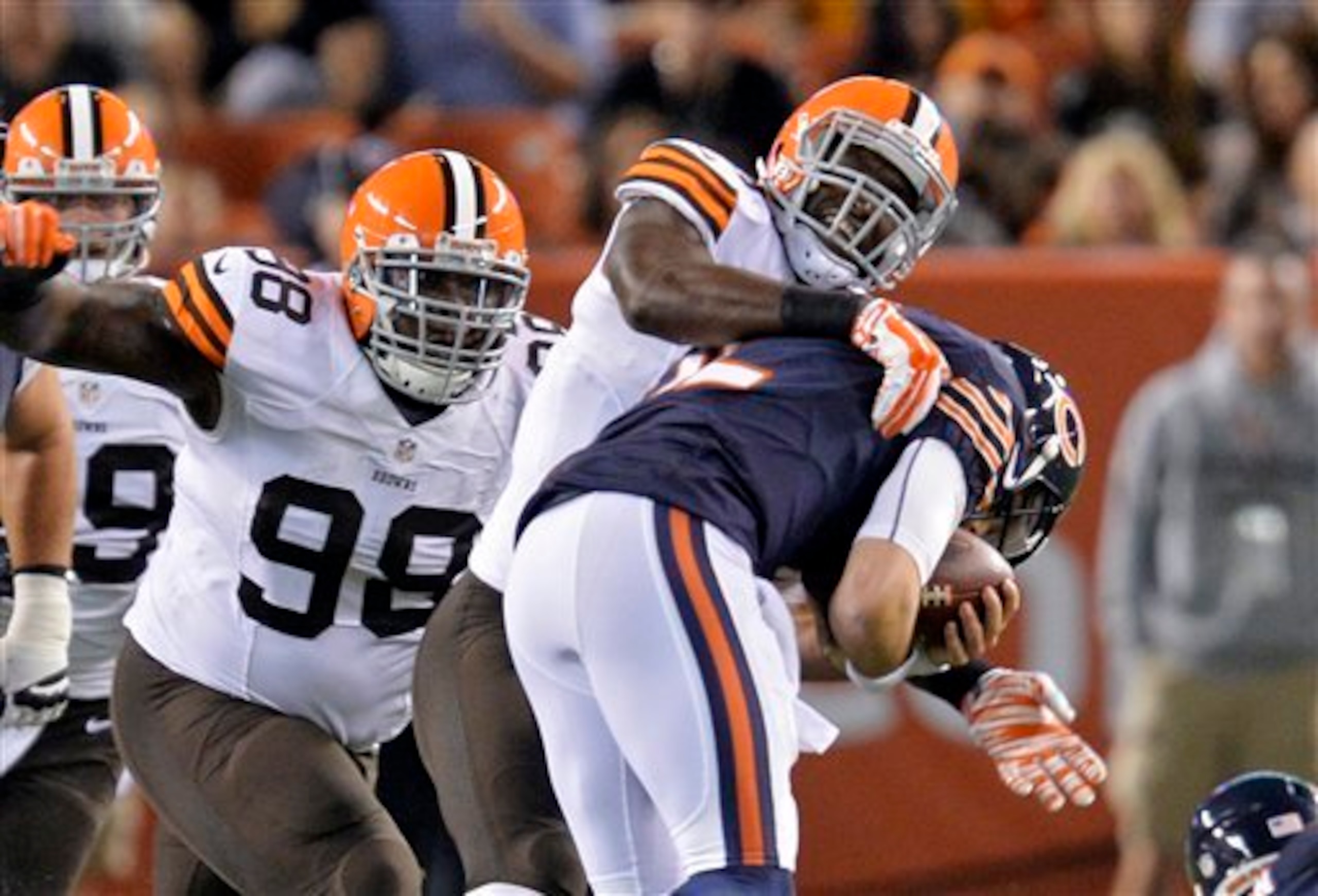
Even though the Browns addressed practically every position at which they are weak via free-agent additions, that doesn't mean that every player added will be a full-time contributor or the centerpiece at his position.
For example, wide receivers Dwayne Bowe and Brian Hartline both likely factor in heavily for the Browns' offensive plans in 2015 and perhaps even in 2016, but neither is destined for a long-term career in Cleveland. Younger wideouts, potentially even one taken in the first round, are the future of the position for the Browns.
Another tight end could also be in the cards. Though well-rounded at the position, on paper, with the addition of Rob Housler, his history of little, nagging injuries could at least influence the Browns to put more depth behind him.
The Browns' biggest priorities on defense are ones they also still need to address—stopping the run and adding pass-rushing talent. The Browns ranked last in the league in average rushing yards per game allowed in 2014, and it's been a problem plaguing the defense for a decade. While getting Phil Taylor back healthy—and at his natural nose tackle position—will help, there's no doubt that the Browns would like more dedicated run-stoppers as part of their defensive line rotation.
The same can be said for the pass rush, especially with Jabaal Sheard leaving in free agency. Though the Browns were unable to get one of free agency's higher-profile (and higher-priced) edge-rushers, the deep draft class at the position should bear fruit this year.
.jpg?w=2560 "Chiefs Giants Football")
.jpg?w=2560 "Colts Football")
.jpg?w=2560 "Titans Colts Football")
The Draft Plan
4 of 4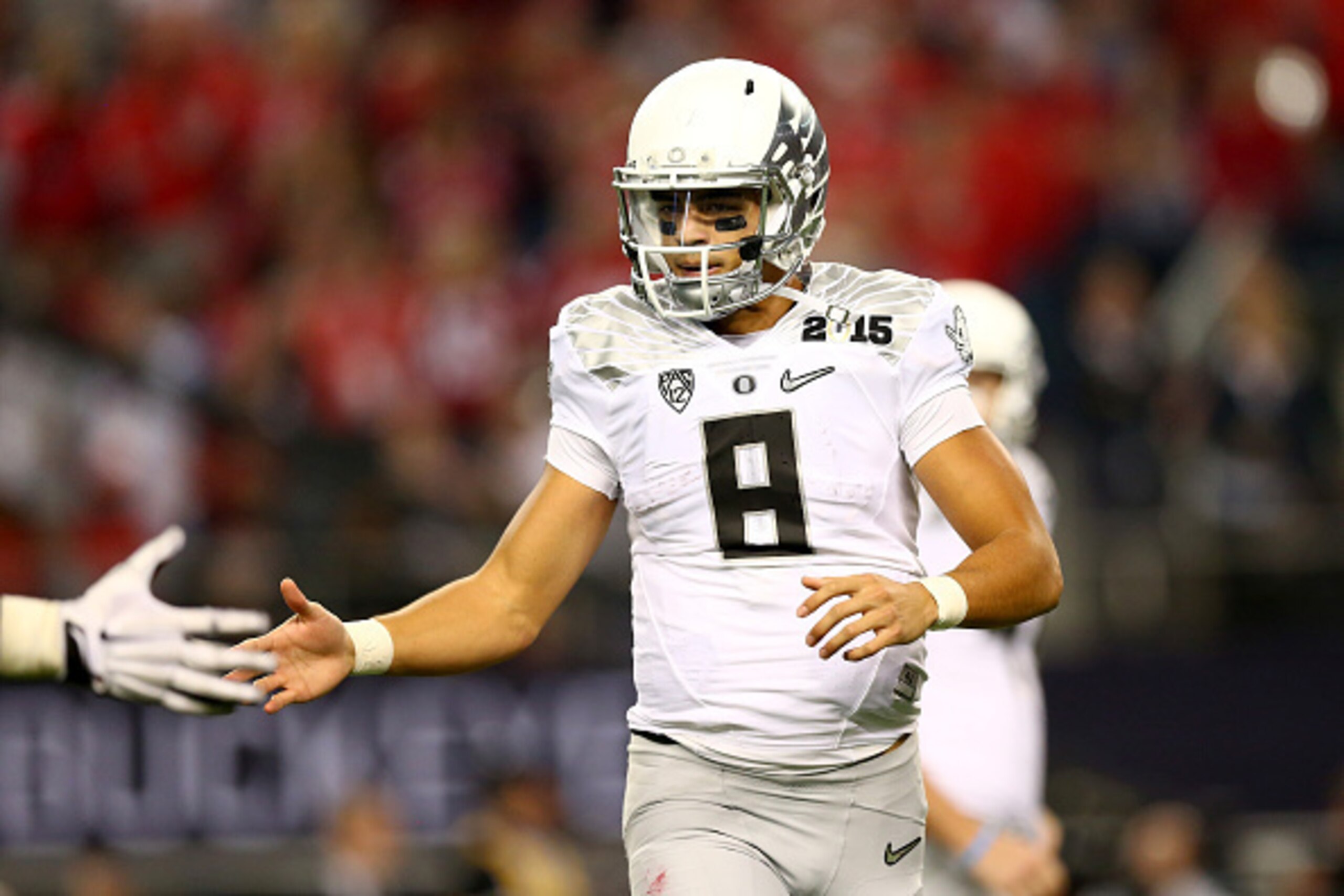
The Browns have 10 picks yet again in the NFL draft, including two in the first round for the third time in four years. How they handle this draft, and particularly the early rounds, will have a great deal of influence on their win-loss record not only this year but in the future. Years of wasted drafts have been one of the Browns' biggest disappointments, and that cannot repeat itself this month.
There are many directions the Browns can go this year. Offensive line is in play, either in Round 1 or later on, depending on how satisfied they are with the play of incumbent right tackle Mitchell Schwartz or how high they are on the potential of Michael Bowie, whom the Browns poached from the Seattle Seahawks.
Defensive line is a top-heavy position, particularly at tackle. The talent level among the first-round graded prospects is such that one—such as Washington's Danny Shelton or Florida State's Eddie Goldman—could be in play at either 12th or 19th overall.
Last year, the draft class was impressively deep at wide receiver. Despite this, the Browns didn't select a single one. They would be wise to not ignore wideout this year—in fact, receiver should be one of the positions they give significant consideration to in Round 1.
Tight end is no longer as pressing a need with the signing of Rob Housler, but that does not mean they won't take a closer look at the position in Round 3 or 4. They could still also opt for the draft's best pass-catching tight end, Maxx Williams, in Round 1 if they are convinced of his long-term value.
And finally, there's the quarterback position. Though the Browns have four passers on the roster right now—Johnny Manziel, Josh McCown, Connor Shaw and Thaddeus Lewis—there are multiple reports, as compiled by Pro Football Talk's Mike Florio, that the team is willing to package its two Round 1 picks for Oregon quarterback Marcus Mariota.
This is, of course, the time of the year for subterfuge, especially when it comes to anonymous reports about what a team plans on or wants to do with its draft picks. It wouldn't be a shock if the Browns did try to move up for Mariota, given general manager Ray Farmer's alleged longstanding interest in the Oregon passer.
This is a rumor that, given the time of year, should be taken with a grain of salt—but a tangible grain, if only because the Browns actually have the draft ammunition to move up for Mariota if they truly wanted to.
Ultimately, between the Browns' free-agency additions and what they are poised to do in the draft, they seem to be in a good position to make their offseason vision a reality. As long as the draft proves successful, this may just be one of their most productive offseasons in a long time.
.jpg?w=2560)
.jpg?w=2560 "Cardinals Giants Football")






