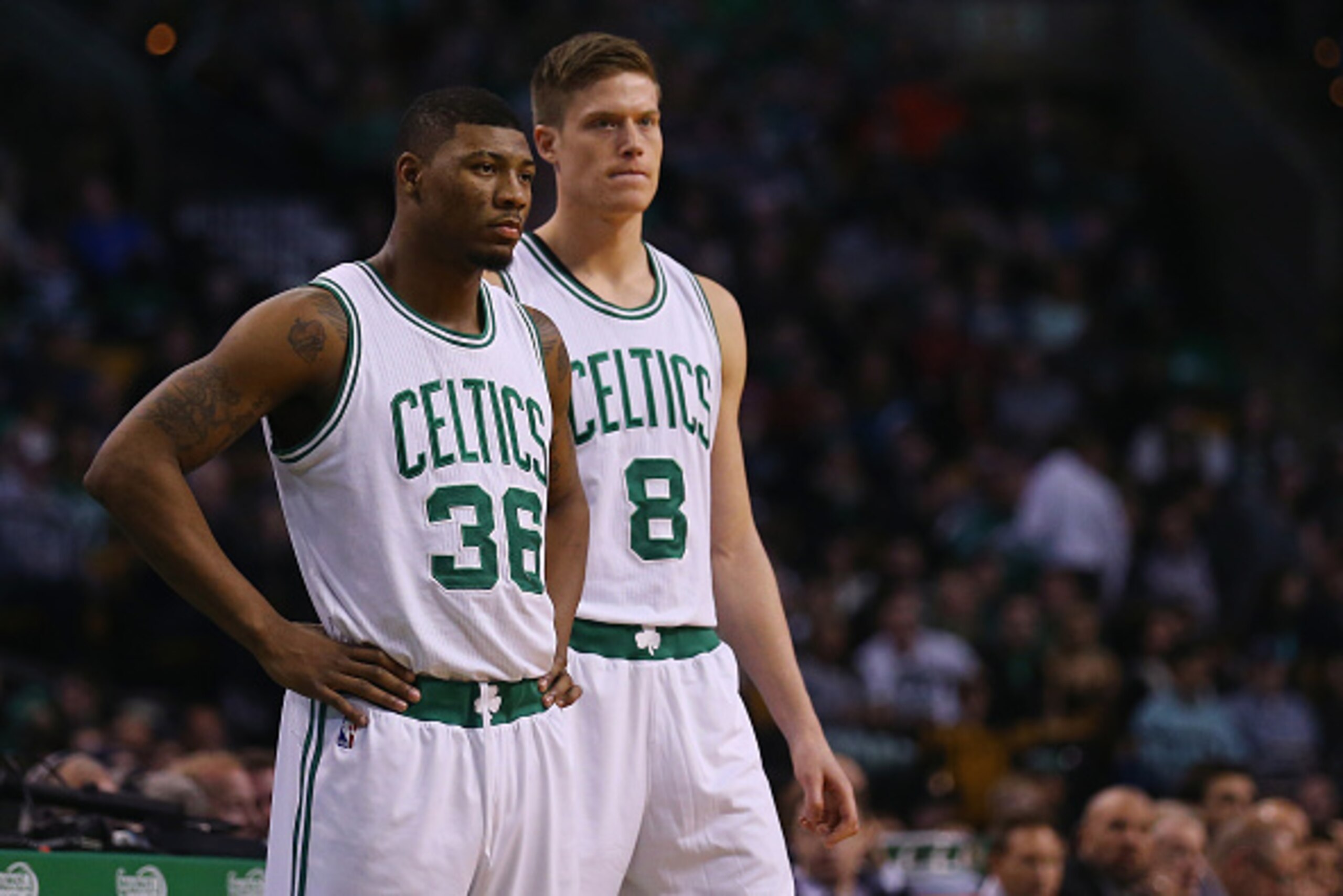

The 5-Step Plan for Boston Celtics to Return to the Playoffs Next Season
Whether the Boston Celtics wind up making the 2014-15 playoffs or not, even the most diehard fans know this postseason run will flame out in the first round.
Next season, though, an older and more experienced roster could potentially make more noise, especially if Brad Stevens continues to improve as an NBA coach.
The Eastern Conference will inevitably be better, albeit not at the level of the Western Conference just yet, so it will take more than just running it back to ensure a postseason berth.
However, the path to improvement is clear in some regards.
After all, this is still a 35-42 team that would have been eliminated from the playoffs months ago in the West.
While everyone is wrapped up in the race for the No. 8 spot, let’s take a glimpse into the future and look at how the Celtics can build on this surprise run to become a longstanding playoff threat once more.
Step 1: Add an Immediate Contributor Through the Draft
1 of 5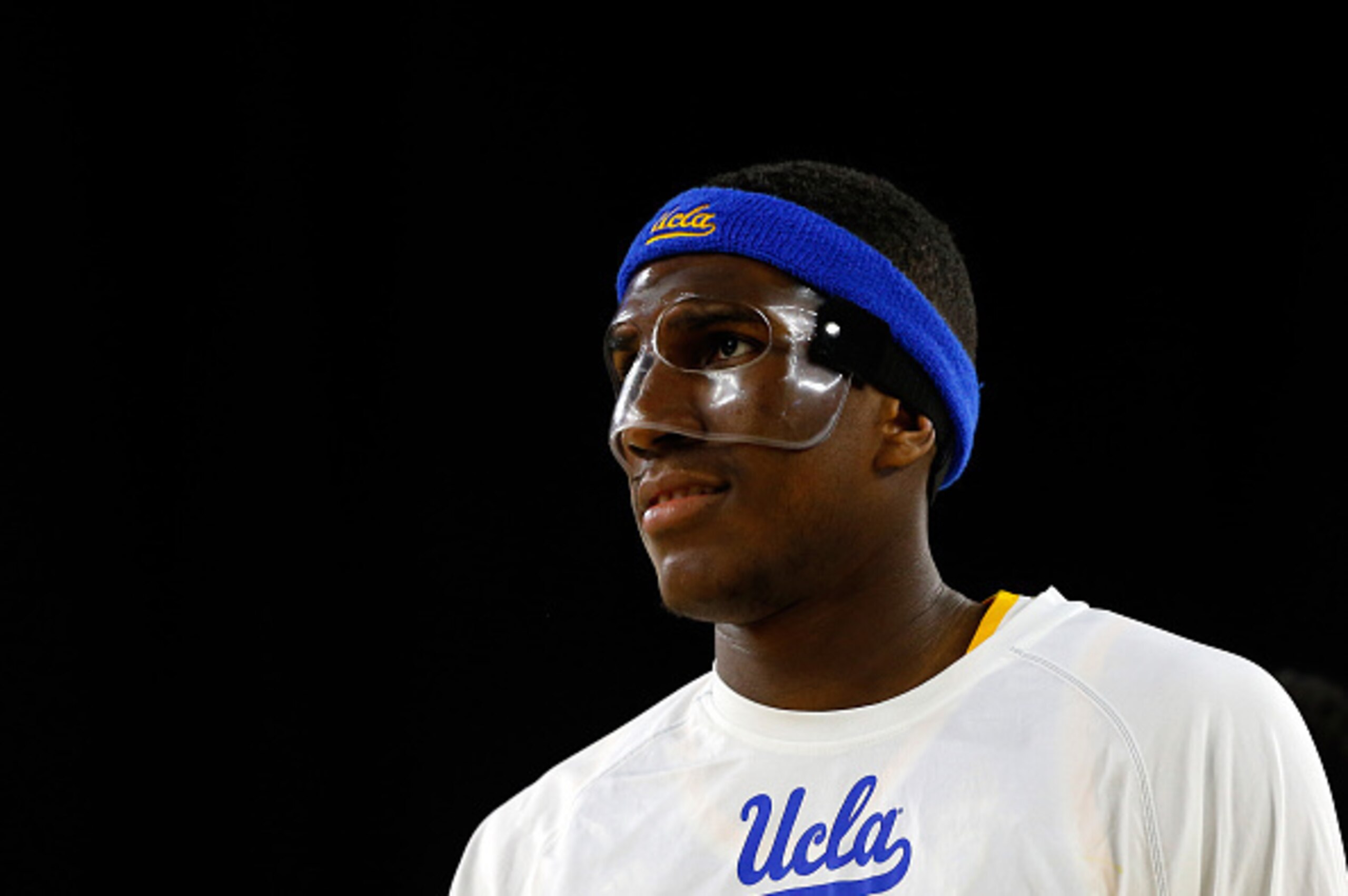
The Celtics aren’t going to have a high-enough pick to likely grab a superstar, but they can still boost their playoff hopes by snagging a player ready to contribute as a rookie.
For as much potential as James Young has shown, he lost his rotation spot when Boston became competitive and has only appeared in 30 games this season.
The C’s have two glaring holes, one at center and one at small forward, which they could still address even if they are picking at No. 15 or No. 16.
One option at center is Texas’ Myles Turner, who recently declared for the draft. Turner averaged 10.1 points, 6.5 rebounds and 2.6 blocks while shooting 45.5 percent from the field in his only season as a Longhorn.
Turner needs to gain some weight, but he’s a skilled jump-shooter with a decently polished offensive game. His hook shot is solid, although he could obviously improve as a post player.
While his man-to-man defense is a work in progress, Turner is a strong weak-side shot-blocker and a capable help defender.
At the 3, UCLA’s Kevon Looney is an option who could play some consistent minutes off the bench.
Looney posted 15 double-doubles this season and averaged 11.6 points, 9.2 boards and 1.4 assists while hitting 47 percent from the floor and 41.5 percent from deep.
He’s a little bit of a combo forward, which can be scary, but he’s a terrific athlete, a great rebounder for his position and a skilled shooter.
Other options include Notre Dame’s Jerian Grant and Louisville’s Montrezl Harrell, both of whom were big-time collegiate players with experience that could play well in a limited role on an NBA bench.
The team could always go in the opposite direction and draft a project player with a high ceiling, but the quickest way to improve is obviously to take someone who is ready for the league.
Step 2: Retain Jae Crowder
2 of 5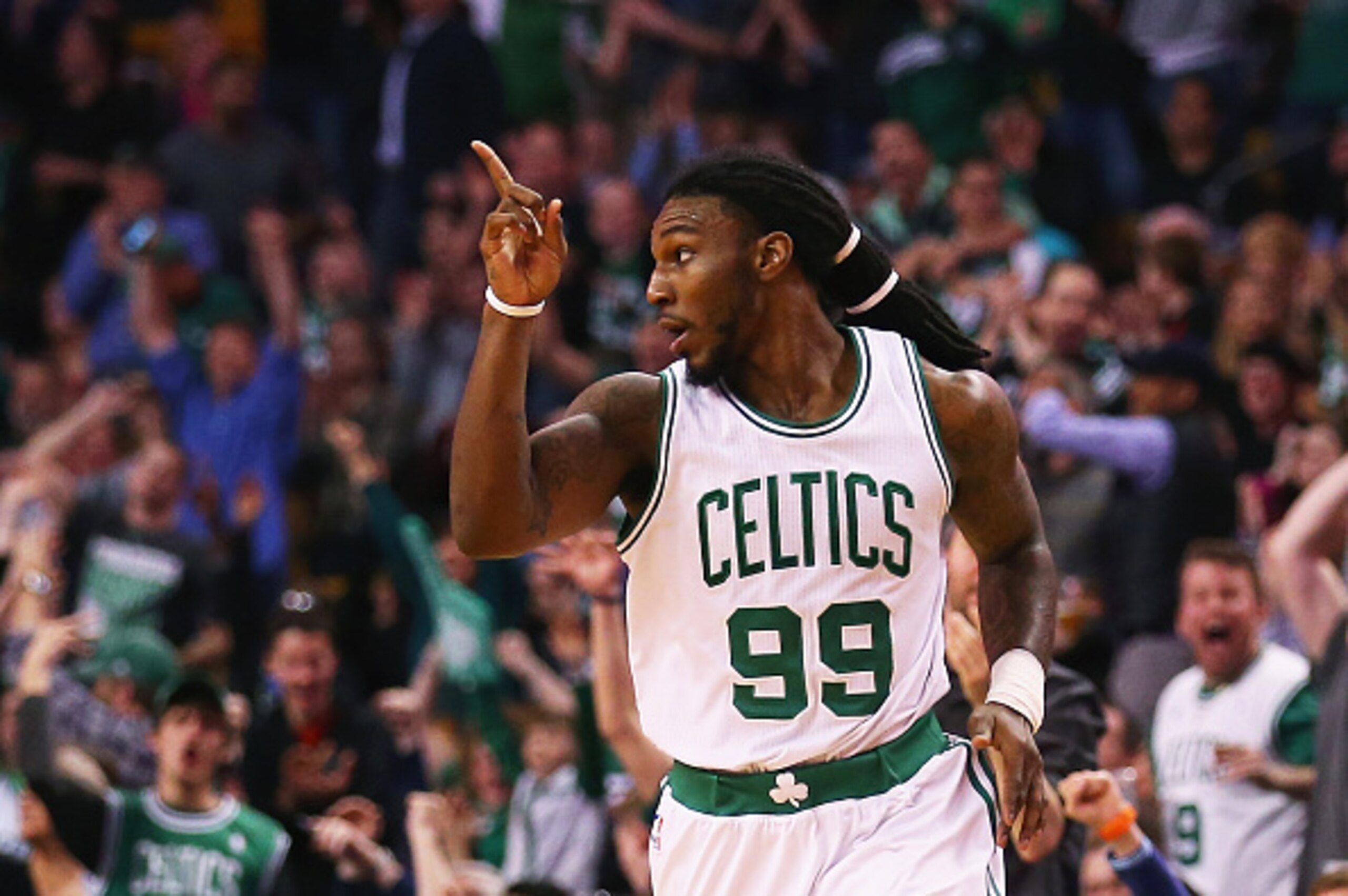
Jae Crowder never had much opportunity to play off the Dallas Mavericks’ bench, but he has quietly excelled as a two-way piece in green.
Since joining the Celts, Crowder is averaging a tidy 9.4 points, 4.6 boards and 1.4 assists while shooting 42 percent from the floor and 29.4 percent from beyond the arc.
He has shuffled between the 2 and 3 positions, even playing a little 4 in smaller lineups, and has defended hard at each position.
He’s particularly solid at small forward, where he holds opponents to a 13.0 PER, despite often matching up with one of the opposing team’s best scorers, per 82games.
In fact, the team is simply better on both ends with Crowder on the court.
82games also notes Crowder has posted a plus-3.6 net rating in his time as a Celtic, with the team giving up 2.9 fewer points when he plays.
While he could stand to improve from deep, Crowder is a smart passer and cutter who manages to find space for himself offensively without ever forcing the issue.
He also simply plays hard on every possession, as ESPN Boston’s Chris Forsberg writes.
“Crowder has subsisted largely on energy and hustle, giving the team a boost with pure grit on both ends of the floor. That's helped him thrive in small-ball as well.”
The problem is that Crowder has played so well his next contract might not come cheap. He’s a restricted free agent this offseason, and while the C’s can match any offer, they might be seeing more competition than they expected.
Crowder may never be a high-end starter in this league, but he provides great depth at a serious position of weakness for Boston, and one they might have trouble making marked upgrades at this summer.
Obviously, if a team throws a ludicrous offer his way, the Celts would have to consider letting Crowder walk, but they should do everything in their power to retain the 24-year-old swingman for the future.
Step 3: Spend Wisely in Free Agency
3 of 5
Boston has roughly $20 million to spend this summer, but just because they have the ability to do so doesn’t mean the front office needs to splurge.
One of the worst things a franchise can do is read too much into a single season, and while aggressively pursuing a bunch of mediocre talent could juice the win total somewhat, it's important to spend smartly.
The C’s not only have positional needs at the 3 and the 5, but a serious dearth of outside shooters.
There are pieces out there they could address that need with, specifically sharpshooters like Danny Green, Khris Middleton and even Wesley Matthews if Boston feels like taking a bit of a gamble.
If the team wants to be a bit more frugal, it could target specialists like Kyle Singler, Mirza Teletovic or Gary Neal to fill the role of three-point gunner off the bench.
Boston is an enviable position right now; it has a slew of productive assets on rookie deals and has managed to get rid of most of its hefty contracts, save for Gerald Wallace’s atrocity.
The Celtics have a tough decision coming over whether to re-sign Brandon Bass, who has played well but doesn’t exactly fit the long-term picture, or Jonas Jerebko, a solid role player in limited minutes. But they ultimately don’t need to worry about losing key pieces.
This team has thrived in large part due to chemistry and unselfishness, two things that could be jeopardized by the pursuit of a talented but self-involved player who would look too often for their own shots.
Stevens’ system has the potential to work like the San Antonio Spurs’ or Atlanta Hawks, but only if the team commits to acquiring players that fit that system, even if they are not the starriest names out there.


Step 4: Be Opportunistic on the Trade Market
4 of 5
The James Harden deal is the first thing that comes to mind when most people think of a mediocre team flipping assets to become a contender, but there are other ways Boston could capitalize on the trade market.
The Celtics have a treasure chest of assets that makes them intriguing not only as a direct trade partner, but also as a facilitator of more complicated deals.
That’s how Boston wound up with Tyler Zeller and Marcus Thornton, a move that ultimately helped it nab standout sixth man Isaiah Thomas.
That kind of opportunism will serve the team well this summer, even if a busy 2015 trade deadline means the offseason might be a little more quiet than usual.
Teams like the Denver Nuggets, Phoenix Suns and potentially even the Toronto Raptors could all be looking to unload players and gain flexibility, allowing the C’s to swoop on talent at a discount.
Grabbing a piece like Kenneth Faried or Terrence Ross, even if Ainge has no intention of keeping them, very much fits with Boston’s mindset of preserving future options, and it could also improve the team in the short term.
Additionally, we’ve seen time and time again that a star player’s situation can sour quickly, and Boston could put together as attractive of a package as any franchise making a play for an elite talent.
Someone like DeMarcus Cousins has had his name floated in trade rumors in the past, and if he voices displeasure with the situation in Sacramento he could wind up being available for a godfather offer.
Boston has never been a city with a rich history of free-agent signings, but shrewd moves on the trade market could make it a contender sooner rather than later.
Step 5: Solve the Frontcourt Overlap
5 of 5
Letting Bass walk would help with this, but the Celtics have some clear issues to resolve in their frontcourt before they become a quality team.
Kelly Olynyk and the suddenly healthy Jared Sullinger have some offensive overlap as stretch big men with average back-to-the-basket games, and neither will become more than a mediocre defender in this league.
Sully is a far superior rebounder, but Olynyk has a terrific handle for a big man and excellent passing instincts.
Zeller has been solid all season and plays his role well, but there’s a reason he is only logging 21.2 minutes per game. He isn’t a shot-blocking threat and doesn’t make the kind of defensive impact Boston needs from its starting center.
He is highly skilled and runs the floor beautifully, but is best used as a backup big man coming in and helping keep the offense functioning.
All three players have yet to reach their ceilings, but they all have clear glaring weaknesses, which is why they have split minutes pretty much evenly all season.
The situation could become even murkier should the C’s retain Jerebko or Bass, both of whom are distinct possibilities.
The Celtics need to find a more stable solution to this issue if they want to become a real threat in 2015-16, and that will likely come either by exploring the trade market or using Sully and Olynyk in different ways.
Sullinger really is not a skilled shooter (28.6 percent from three), and while he is unafraid to take them, his best asset continues to be his ability to mix it up down low and finish around the rim.
He’s a terrific offensive rebounder whose intensity on the glass would be able to open up more looks for Olynyk, the more consistent outside shooter (34.1 percent from deep).
Boston’s frontcourt players are useful, but their skill sets overlap and the C’s need to find a way to rectify that if they want to make the postseason next year.




.jpg?w=2560 "Mahomes Asked OT to Leave Meeting")
.jpg?w=2560 "Jonathan Taylor Landing Spots 📍")

.jpg?w=2560 "5 Teams Eyeing Jonathan Taylor")
