
NBA Awards Odds 2014-15: Predicting the Favorites for NBA's Prized Hardware
Tax Day is stressful for most Americans, but it will be doubly so this year for those media members with NBA awards ballots to cast. Once their sums have been sent away to Uncle Sam, voters will have to get down to the nitty-gritty of sussing out their top five MVP candidates and their top threes in six other categories in time for the April 16 deadline.
The fact that there are so many worthy candidates for just about all of the awards figures to make the task of narrowing the field for each one difficult and coming up with a final order flat-out agonizing.
Predicting who will come away with each piece of hardware is another story entirely. Each voter brings his or her own biases and experiences to the table, and with so many worthy candidates for every award, there could be a different choice for every taste.
Still, that doesn't mean we can't, shouldn't or won't take a stab at picking winners and runners-up.
There may not be much at stake beyond pride and personal accuracy to the following selections for MVP, Coach of the Year, Defensive Player of the Year, Rookie of the Year, Sixth Man of the Year, Most Improved Player and Executive of the Year. But you can be sure that no shortage of blood, sweat, tears and whatever other measure of hard work you prefer went into sorting out the recipients of this season's most coveted individual honors.
Executive of the Year: David Griffin, Cleveland Cavaliers
1 of 7
Odds: 5-1
The 2014-15 Executive of the Year race is as loaded with quality candidates as it is caveats.
If not for his racially insensitive remarks regarding Luol Deng and the subsequent, indefinite leave of absence he's taken, Danny Ferry would've garnered serious consideration for this award (and then some) for the work he's done over the years to turn the Atlanta Hawks into an Eastern Conference contender.
Bob Myers will be remembered more for the move he didn't make (trading Klay Thompson and David Lee for Kevin Love and Kevin Martin) than for the one in which he had a hand (firing Mark Jackson and hiring Steve Kerr). Daryl Morey deserves some dap for the work he's done to strengthen the Houston Rockets' supporting cast, albeit after striking out on several fronts in free agency.
David Griffin did a marvelous job filling out the Cleveland Cavaliers' roster during the campaign, but it's difficult to parse his responsibility for the team's turnaround from LeBron James'.
Griffin didn't lure James back to the Cavaliers so much as James decided he was coming home, Skylar Grey style. Griffin consummated the trade that brought Love from Minnesota, but it was James who initiated and likely played a part in the proceedings.
Even if you take those moves out of the picture, though, Griffin has still done enough to distinguish himself from this year's fraught field. He did a fantastic job filling out Cleveland's incomplete midseason, snagging J.R. Smith and Iman Shumpert from the New York Knicks and Timofey Mozgov from the Denver Nuggets in a series of deals that reflected Griffin's multistep thinking, as ESPN's Brian Windhorst detailed:
"The Cavs' front office, led by general manager David Griffin, has been aggressive in creating assets and spending money to build a team around LeBron James. The trail of maneuvers and contractual timing that enabled the Mozgov move was costly but quite creative.
"
Not to mention effective: Since Mozgov, Smith and Shumpert were installed in the rotation and James returned from his two-week sabbatical to join them, the Cavs have gone an East-best 29-8. Moreover, Cleveland's starting lineup with Mozgov and Smith has outscored the opposition by an outstanding 20.1 points per 100 possessions over 441 minutes together, per NBA.com.
James can take only so much credit for that.
Runner-Up: Bob Myers, Golden State Warriors (15-2)
As mentioned above, Myers' case is predicated more on his positive use of negative space, per se. His front office chose continuity and Klay Thompson's budding potential over sheer star power with Kevin Love. It also risked mutiny by deposing Mark Jackson and installing Steve Kerr as his replacement.
On both counts, Myers and Company have been vindicated, as much by Thompson's emergence into an All-Star as by Golden State's first 60-win season in the history of a franchise that dates back to 1946.
Most Improved Player: Jimmy Butler, Chicago Bulls
2 of 7
Odds: 7-2
The recent history of the Most Improved Player award has been dominated by those who made the leap as All-Stars (Danny Granger, Kevin Love), All-NBA performers (Goran Dragic) or both (Paul George) the year that they won.
Jimmy Butler has already claimed the former and may well add the latter at season's end, assuming he carves out a spot among the six available to a host of top-notch guards.
Those accolades aside, Butler's growth from role player to bona fide star has been as startling to behold as it's been critical to the Chicago Bulls' success this season. With Derrick Rose once again missing significant time (and struggling for consistency when healthy), the Bulls have turned to Butler to shoulder the bulk of the team's perimeter load.
To that end, Butler has delivered—and then some. He's posted career highs in points (20.2), rebounds (5.9), assists (3.2), free-throw attempts (7.2) and usage rate (21.8 percent) while cutting down his miscues (7.7 percent turnover rate) and playing more minutes per game (38.7) than any of his peers.
This, on top of the same level of play on the other end of the floor that made Butler an All-Defensive Second Team selection last season.
But as impressive as Butler's development has been and as much as he's earned serious consideration for MIP honors, the award itself can only capture a sliver of the massive leap in circumstances that Butler has made in his life.
As Sports Illustrated's Ben Golliver wrote, "He has risen from a homeless, withdrawn teenager in Tomball, Texas, to a confident Eastern Conference All-Star, and another chapter of his remarkable story is coming in July, when he is likely to sign a max contract."
Runner-Up: Draymond Green, Golden State Warriors (10-1)
Like Butler, Green has become an invaluable cog for his club on both ends of the floor this season.
If not for David Lee's early-season hamstring injury, Green might not have sniffed a starting spot in Golden State. But Lee did get hurt, and Green took full advantage of the opportunity to spark the Warriors to their best season in franchise history.
Green's conventional numbers (11.8 points, 8.1 rebounds, 3.6 assists, 1.6 steals, 1.3 blocks, 44.4 percent shooting, 34.1 percent from three in 31.6 minutes), while modest, represent career highs. And wider-lens metrics love him; according to ESPN, Green ranks fifth in wins above replacement player (11.69) and 10th in real plus-minus (5.84).
6th Man of the Year: Isaiah Thomas, Boston Celtics
3 of 7
Odds: 9-2
Let's run a quick comparison of per-36-minute stats, shall we? One of the sets below belonged to a recent Sixth Man of the Year winner. The other comes from a current contender. Both are native Seattleites.
Player A: 22 points, 41.6 percent shooting, 36.1 percent from three, 3.8 assists, 27.2 percent usage, 17.3 PER
Player B: 22.5 points, 41.7 percent shooting, 37 percent from three, 5.6 assists, 27.3 percent usage, 20.2 PER
Player B is Isaiah Thomas from this season, across his stints with the Phoenix Suns and Boston Celtics. Player A is Jamal Crawford circa 2013-14, when he became the NBA's fourth two-time Sixth Man and the first to win the award with different teams. Should Thomas win, he'd be the first to do so while playing for more than one team over the course of that season.
The reasons behind Thomas' move from Phoenix to Boston won't help his case for hardware. By volume, though, he's been more productive for the Celtics than he was for the Suns. He's averaging more points (19.6) and assists (5.2) in Beantown.
Furthermore, the C's are a respectable 7-6 in the games he's played, with an overall improvement of 5.1 points per 100 possessions when Thomas is on the court compared to when he isn't, per NBA.com. That bests the sturdy 3.2 points-per-100 boost the Suns got from the Washington product.
As it happens, the nudge Boston has gotten from Thomas has been enough to keep Brad Stevens' scrappy squad in the hunt for a playoff spot in the Eastern Conference.
Runner-Up: Lou Williams, Toronto Raptors (5-1)
Williams could come away as the top sixth man just as easily as Thomas could. His scoring (a career-high 15.2 points) is comparable to Thomas', and his on-off impact (plus-6.6 points per 100, per NBA.com) for the Raptors is even more stark.
Williams, then, is arguably the more valuable bench contributor between the two. Toronto already leans heavily on its starting backcourt of Kyle Lowry and DeMar DeRozan. Without Williams, that dependency would likely reach dangerous levels. In effect, Williams is a buffer of sorts whose skills keep the Raptors afloat as a winning outfit.


Rookie of the Year: Andrew Wiggins, Minnesota Timberwolves
4 of 7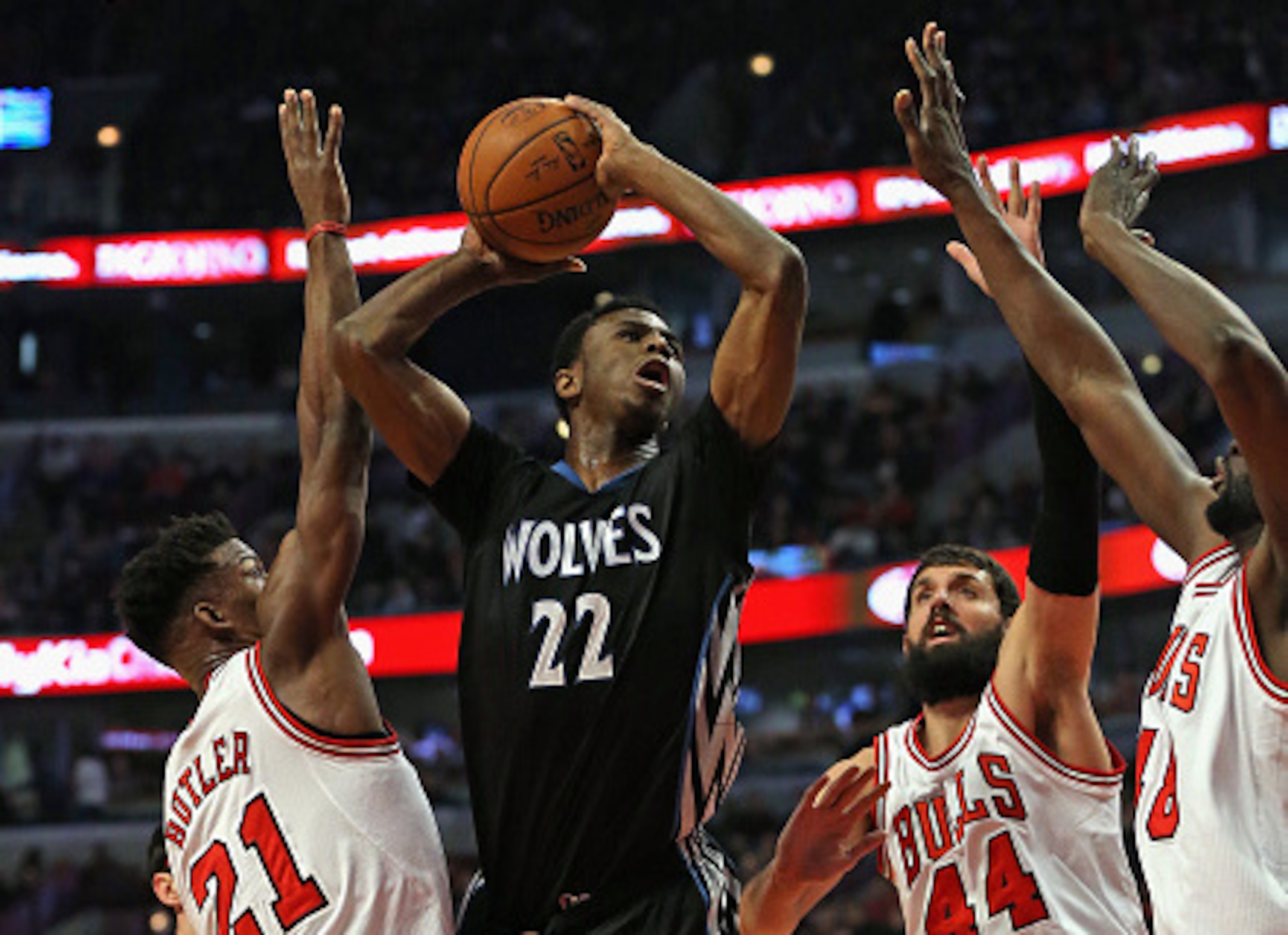
Odds: 1-20
March has brought with it a bit of madness to the NBA's Rookie of the Year race. But as much as the likes of Nerlens Noel, Elfrid Payton and Nikola Mirotic have done to close the yawning gap between themselves and Andrew Wiggins, Minnesota's most promising Timberpup is still sprinting right along with the finish line in sight.
This month alone, Wiggins has averaged 18 points and 4.7 rebounds while getting to the free-throw line a total of 106 times, hitting 83 (78.3 percent). That includes the 25 points per game (on 49.3 percent shooting) that he's pumped in over his last four games.
And if this award really is Rookie of the Year and not Rookie of the Month, Wiggins doesn't have any actual competition. He's been the most productive and most consistent first-year over the course of the entire campaign, with more 20-plus-point games (25) than his top three challengers combined (15).
Of course, scoring isn't the be-all, end-all of ROY consideration, but the fact that Wiggins' 16.2 points so far outpace second place among currently active rookies (New York's Langston Galloway at 11.3 points) speaks as much to how much bigger the Torontonian's opportunity (and burden) is as to what he's been able to do with it.
As Hoops Habit's Aaron Mah wrote:
"...the ROY award has always been about opportunity and volume. Wiggins fits both categories. Not to mention, Wiggins has played every game, logging an insane amount of minutes [35.6 per game, the 12th-most in the league], and demands the undivided attention of opposing defenses on a nightly basis.
"
No other rookie can claim to have even sniffed such a load, much less shoulder it. As such, Wiggins should have little trouble carrying home the Eddie Gottlieb Trophy.
Runner-Up: Nikola Mirotic, Chicago Bulls (10-1)
If any rookie can stake his case on a strong March, it's Nikola Mirotic. The European import has led all newbies in scoring this month (20.8 points) while shining off the bench for a Chicago squad in the thick of a push for playoff seeding in the East.
Where Wiggins has the advantage of being a go-to guy at the tender age of 20, the 24-year-old Mirotic benefits from exposure. Of the top rookies, only Mirotic's Bulls are consistently on national TV, playing in games with postseason implications.
That doesn't necessarily make Mirotic better so much as it inevitably boosts his prospects of garnering votes from those in the media with ballots.
Defensive Player of the Year: Draymond Green, Golden State Warriors
5 of 7
Odds: 6-1
Defensive Player of the Year honors are typically awarded to the most important defender on one of the NBA's top defensive teams.
To that end, Draymond Green would be a worthy DPOY recipient. His Golden State Warriors have sported the league's stingiest defense all season, and his ability to guard all five positions has allowed the Dubs to switch assignments liberally and, in turn, unlock a scheme that not only bucks the NBA's conventional wisdom, but could rewrite it entirely.
The same could be said for Green winning this award. More often than not, the DPOY is reserved for big men who protect the paint, deter their opponents from approaching the rim and rack up tons of rebounds, blocks and steals in the process.
Green, on the other hand, would be the shortest winner, at 6'7", since the Basketball Player Formerly Known as Ron Artest, also 6'7", took home the honor as a member of the Indiana Pacers in 2003-04.
But the Michigan State product isn't exactly lighting up the leaderboard when it comes to conventional defensive stats. He ranks a respectable 17th in steals (1.61 per game), 22nd in blocks (1.31 per game) and 25th in rebounds (8.1 per game).
On the other hand, Green's 6.7 defensive boards per game are the ninth-most in the league among those qualified for the rebounding title, he's holding his opponents to a subpar 46.1 percent shooting on 6.2 at-rim attempts and exacts a similar toll on his foes' accuracy from just about every other spot on the floor.
In the bigger picture, no Warrior accounts for a bigger on-off impact defensively than Green, who makes Golden State's defense nearly seven points per 100 possessions stingier when he plays compared to when he sits, per NBA.com. He also leads the league in defensive win shares (4.9) and checks in third in defensive real plus-minus (4.95).
Truth be told, Andrew Bogut—who checks in No. 1 in DRPM, defensive rating and defensive box plus-minus—probably would've been the pick here had he not missed 12 games due to injury between December and January and/or had Golden State struggled defensively while he was sidelined. But he did, and they didn't. And Green's resume, with or without Bogut, speaks for itself.
Runner-Up: Tim Duncan, San Antonio Spurs (17-2)
If you took the cases of Green and Bogut and flipped them, you'd have a basic idea of Duncan's own DPOY candidacy. He's probably not the best or single most impactful defender in San Antonio anymore; that honor arguably belongs to Kawhi Leonard, who's emerged as the game's most devastating perimeter defender.
But Leonard has missed 18 games this season, while Duncan has sat just five times. All the time, the Spurs have hung around on the strength of their elite defense anchored by Duncan's textbook play on the interior.
Coach of the Year: Steve Kerr, Golden State Warriors
6 of 7
Odds: 2-1
If you're a coach and you want a bronze statuette of Red Auerbach to put on your mantelpiece, you'd best be served by either leading your team to the best regular-season record in the NBA or engineering a turnaround of some sort from the previous year.
So far, Steve Kerr is on track for both. His Golden State Warriors are poised to pace the Association in wins, and if they do so without losing more than one of their final nine games, they'll finish with one of the five best records in NBA history.
To be sure, the foundation on which Kerr built his juggernaut was already formidable. The Warriors won 51 games under Mark Jackson in 2013-14 on the strength of their third-ranked defense and an offense that, while ranked just 12th in efficiency, could score in bunches when it had to while playing at an above-average pace.
This year, though, the Dubs have cranked it up to 11 on both ends of the floor. Their offense has fluctuated between No. 1 and No. 2 for much of the season, thanks to Kerr's renewed focus on spacing the floor and passing the ball rather than imploring his players to attack one-on-one matchups, as was Jackson's modus operandi.
More impressively, Kerr's Warriors will probably go down as the only team in the modern era to lead the league in defensive efficiency and possessions per game in the same season—which, as ESPN's Tom Haberstroh explained, is no easy feat:
"This is incredibly hard to pull off. Why? Because deploying elite-level defense burns so much energy that it's hard to do it exert such effort on both ends of the floor. It's no coincidence that the past five No. 1 defensive teams have ranked 20th, 25th, 26th, 22nd and 26th in pace factor.
"
Having the talent to play with pace and get after it on defense is one thing. Getting that talent to play that way from night to night over the course of an 82-game campaign is another. To that end, Kerr has been a master motivator and salesman, just as he was in quelling any concerns veteran All-Stars like Andre Iguodala and David Lee had about coming off the bench.
And just as he's been for most of the roster, not only squashing a potential mutiny in the aftermath of Jackson's ousting, but earning the trust of the old coach's most fervent acolytes.
Runner-Up: Mike Budenholzer, Atlanta Hawks (5-2)
Had the votes been tallied at the All-Star Game, Budenholzer might've been the biggest hardware winner in his profession. But the Atlanta Hawks' 12-7 record since then, while more than respectable, has hampered Budenholzer's candidacy somewhat, especially when compared to the NBA-best 18-4 mark that Kerr's Warriors have posted since the break.
Still, Budenholzer would be a worthy winner any day. His Hawks are on pace to set a new franchise record for single-season victories, despite lacking true superstars and being shadowed by a summertime debacle that led to general manager Danny Ferry's season-long suspension and the team itself going up for sale.
Most Valuable Player: Stephen Curry, Golden State Warriors
7 of 7
Odds: 3-2
Basketball-Reference.com has already pegged Stephen Curry as the MVP favorite based on past voting results.
Its probability figures align closely to the facts on the ground. Curry is the best player on a team that's not just the NBA's best this season, but could go down as one of the best ever. That, by default, puts Curry close to the catbird seat among MVP candidates.
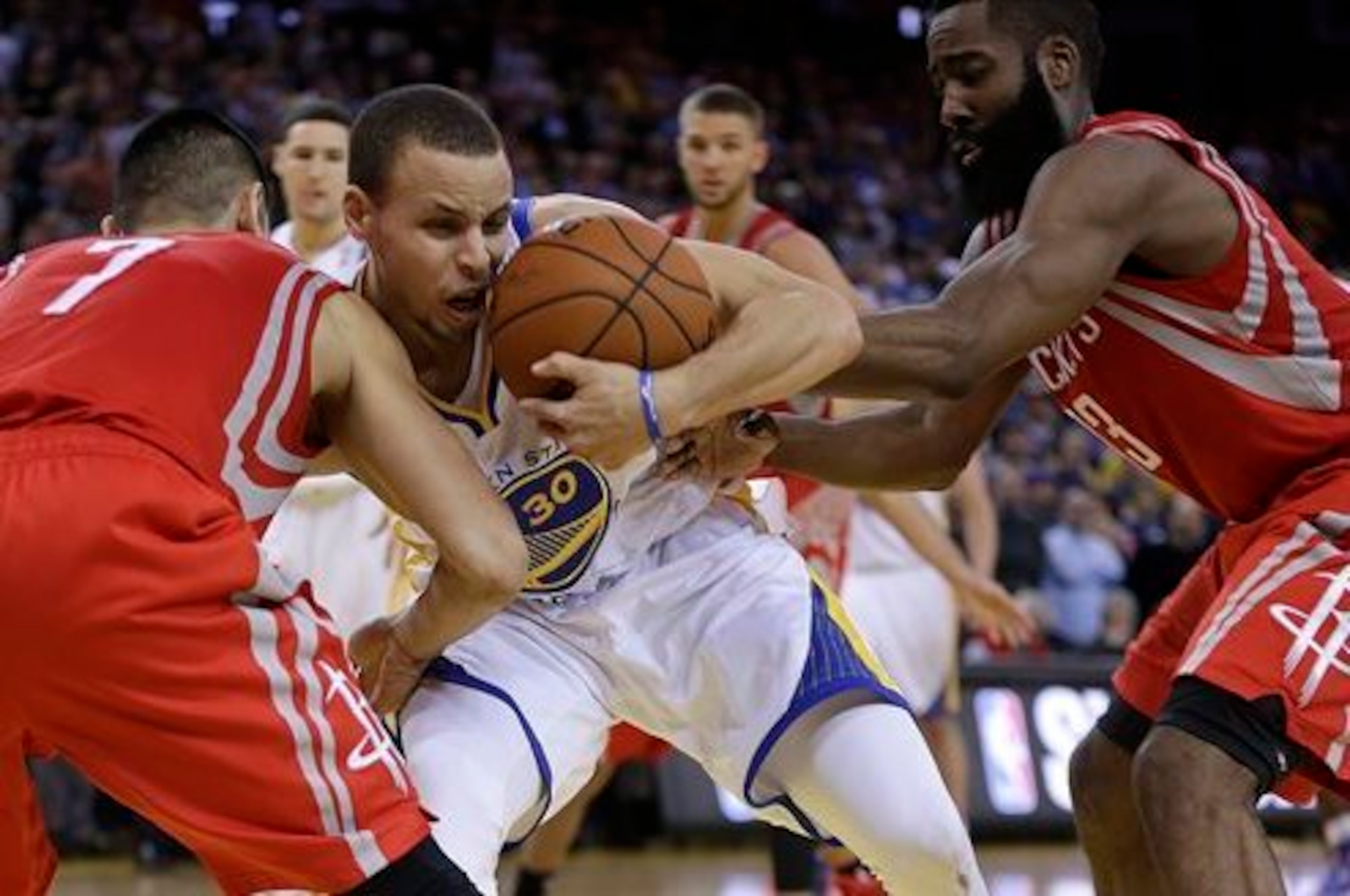
But Curry has done more than enough to earn that position on the strength of his own merits. He's one of two players in the league, along with Russell Westbrook, to rank among the top six in points (23.7) and assists (7.9), and he stands alone when factoring in his sixth-best three-point percentage (.431).
What's more, a whopping 42.9 percent of Curry's league-leading 3.5 three-point makes per game have been unassisted, despite playing within a pass-happy offense.
In other words, Curry is just as comfortable creating for himself, despite intense defensive pressure from night to night, as he is doing so for his teammates.
Curry applies plenty of his own pressure to his foes on the other end. According to NBA.com, Curry's marks have shot 2.9 percent worse from the field against him than they have against the league. He's also pestered his opponents enough to swipe 2.1 steals per game (third-best in the NBA).
All told, no player has had a more dramatic impact on his squad (statistically speaking, anyway) than Curry has had on his Warriors. Per NBA.com, Curry paces the Association's regulars in net rating, with Golden State outscoring the opposition by a staggering 17.5 points per 100 possessions when he plays. Take Curry out of the equation, and the Warriors' advantage slips to 0.9 points per 100—a hair better than what the Phoenix Suns and Milwaukee Bucks have posted all season.
Last I checked, nobody's picking the Suns or Bucks to get even a whiff of the Larry O'Brien Trophy. The Warriors, on the other hand, look like the favorites to win it all, thanks largely to Curry's all-around excellence and his ability to partake in all but two of Golden State's games thus far.
Runner-Up: James Harden, Houston Rockets (2-1)
Harden and former OKC teammate Russell Westbrook figure to split votes among those who prefer the Maurice Podoloff Trophy to go to the guy who's done the most with the least. Westbrook has performed at an historic pace while dragging the Thunder into the No. 8 spot out West in the absence of the reigning MVP (Kevin Durant) and one of the league's best pick-and-poppers and interior defenders (Serge Ibaka).
Harden, though, has done Westbrook one better. The Beard has carried his Rockets into the top three, despite spending nearly half the schedule (i.e. 38 games) without Dwight Howard and watching two other starters (Patrick Beverley and Terrence Jones) struggle to avoid serious injury. Moreover, Harden has missed just one game as opposed to the 15 Westbrook has sat out due to injury.
All stats accurate as of the morning of March 30 and courtesy of Basketball-Reference.com, NBA.com or ESPN unless otherwise noted.
Josh Martin covers the NBA for Bleacher Report. Follow him on Twitter.


.jpg?w=2560 "Love's Body Already 'Tired'")
.jpg?w=2560 "Tyreek Deal May Come Soon")
.jpg?w=2560 "Ward Nearly Walks Out of Presser ▶️")

.jpg?w=2560 "NFL investigating 2 referees for separate viral exchanges")