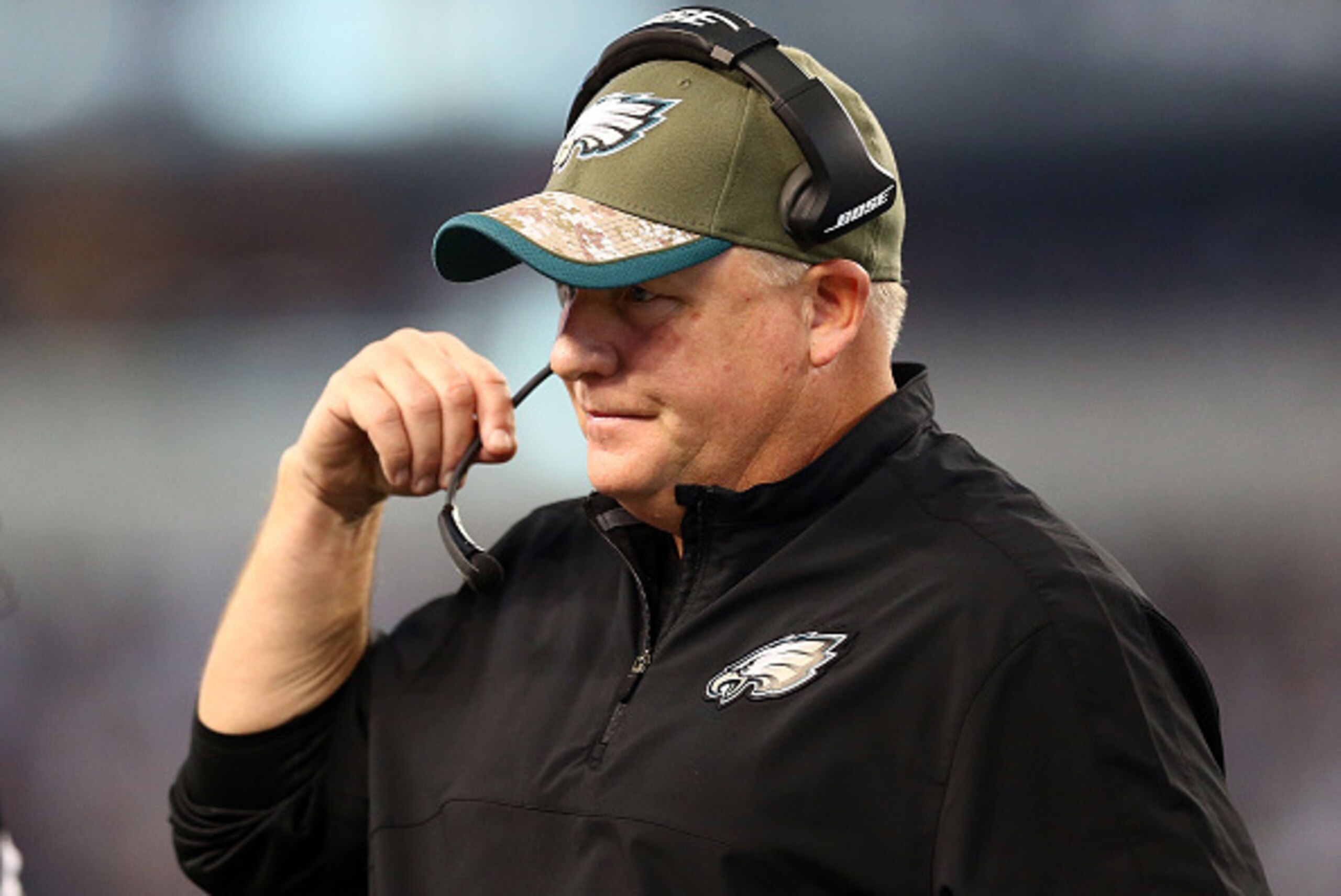

5 2014 Stats Philadelphia Eagles Must Improve in 2015
In 2013, the Philadelphia Eagles finished with a 10-6 record, winning seven of their final eight games to capture the NFC East title in Chip Kelly's rookie season. They exceeded all expectations, with Nick Foles turning in a career year and the rest of the team staying relatively injury-free.
But in 2014, the Eagles, despite an identical 10-6 record, were one of the most disappointing teams in the National Football League. That's because their ugly stretch of losses in December will stick in the minds of the fanbase over the 9-3 start. Never mind that the Eagles struggled with injuries to key players, notably Foles, the offensive line and DeMeco Ryans, for the majority of the year.
The biggest reason for the Eagles missing the playoffs was either their insane number of turnovers on offense or their dismal showing as a secondary on defense. Both need to be improved in 2015 if the Eagles want any chance of competing for a Super Bowl title in Kelly's third season.
The following slides will take a look at five key numbers from the 2014 Eagles that need to be fixed in 2015. These are stats that can be controlled by the Eagles. So while it was frustrating watching the Eagles lose so many key games by starters to injuries, that cannot be controlled in any given year (don't tell that to Kelly, though).
36 Turnovers
1 of 5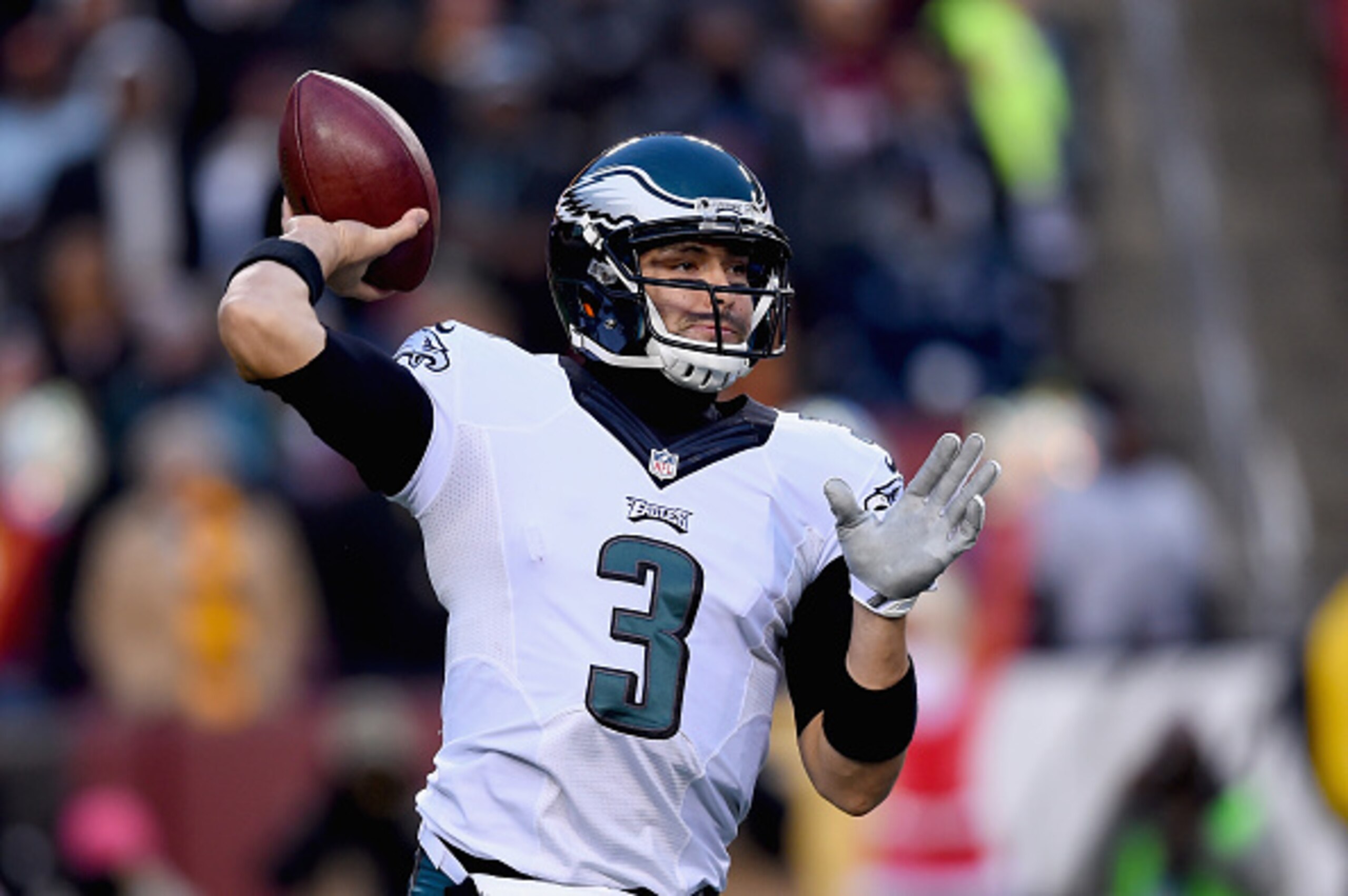
Turnovers saved the 2013 Philadelphia Eagles. They were the death of the 2014 Philadelphia Eagles. In 16 games, the Eagles turned the ball over 36 times. That's 2.25 times per game. By comparison, they turned the ball over just 19 times in 2013, about half as many.
A year after Foles threw just two interceptions in more than 300 passes, he tossed 10 in eight starts in 2014. Backup Mark Sanchez fared no better in 2014, throwing 11 interceptions in seven starts. Combined, the 21 interceptions thrown by the two quarterbacks ranked as the most in the National Football League.
Oh, and the Eagles also lost 15 fumbles. That ranked as the second most in the NFL.
The defining turnover for the Eagles came in the 15th game of the season against the Washington Redskins. With the Eagles tied 24-24, Sanchez was intercepted by rookie Bashaud Breeland near midfield in the game's final two minutes. The Redskins drove for an easy field goal that all but eliminated the Eagles from playoff contention.
Expect the amount of turnovers to drastically decrease in 2015. First of all, it's not practical to expect 36 turnovers in any given year, especially one coached by an offensive coach as intelligent as Kelly.
New quarterback Sam Bradford has been mediocre during his tenure in St. Louis, but he has proven to be adept at not turning the ball over. He's ranked fourth in NFL history in lowest interception percentage.
Even if new running back DeMarco Murray continues to put the ball on the ground every fourth game, the Eagles should be average, at worst, in total offensive turnovers in 2014.
4.2 Yards Per Carry
2 of 5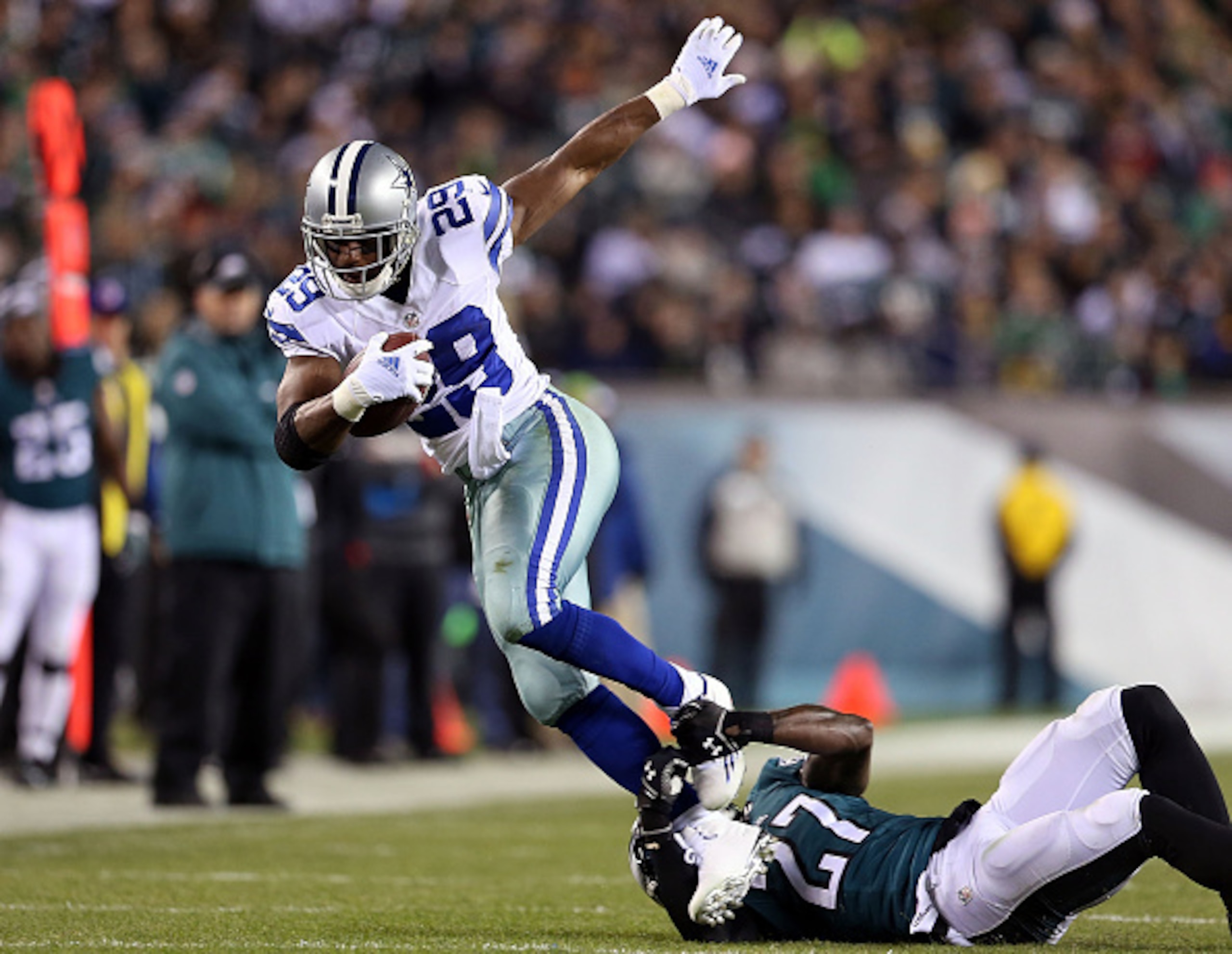
Kelly has made it extremely clear what he plans to do with the Eagles' offense during the 2015 season. He's going to pound the ball with a four-headed rushing attack.
New free-agent acquisitions DeMarco Murray and Ryan Mathews were both signed by Kelly during the first week of free agency, while Darren Sproles and Chris Polk should each continue to see three to five carries per game.
For the Eagles to win games with their rushing attack in 2015, however, they're going to need the combination of Murray and Matthews to produce significantly better than LeSean McCoy did in 2014. Even though McCoy rushed for 1,319 yards and averaged 4.2 yards per carry, he clearly wasn't his usual dominant self. He had three games in which he averaged fewer than two yards per carry. That's as bad as it gets, and it's completely unacceptable for a running back who led the league in rushing yards the previous season.
If Murray can stay healthy in 2015, which could be difficult after touching the ball almost 500 times during the 2014 season, his downhill running style will be a much more ideal fit for Kelly's offense than McCoy. Throw in Mathews, with his solid career yards per average of 4.4, and you have one of the best backup running backs in the game. Oh, and Sproles and Polk just seem to produce every time they carry the ball too.
With an Eagles offensive line that will likely be much more healthy in 2015 than they were in 2014, it's very realistic to expect the Eagles running game to resemble its 2013 success.
58 Defensive Penalties
3 of 5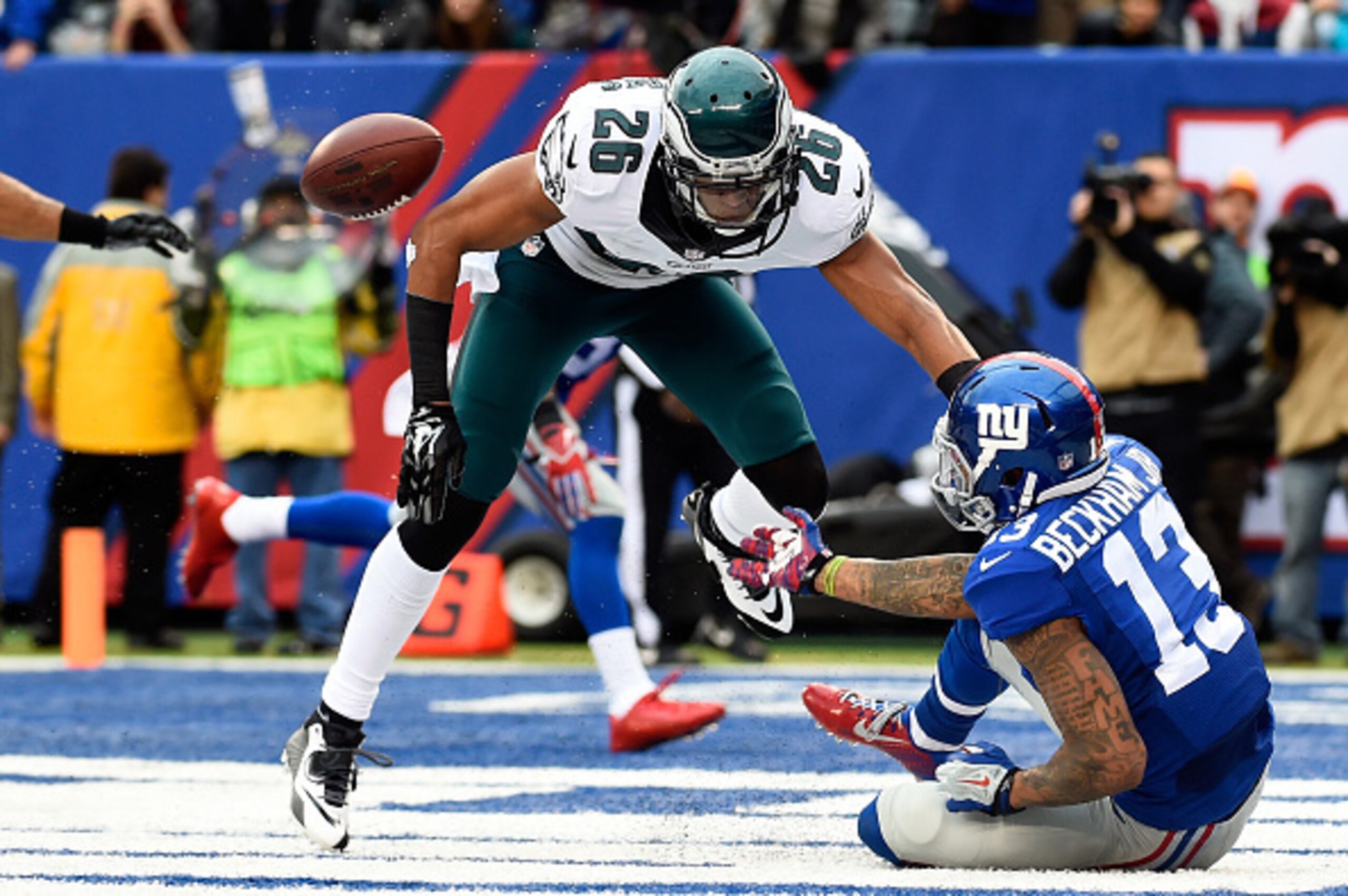
The Eagles committed 58 penalties on the defensive side of the ball during the 2014 season, per Pro Football Focus. Compare that to Kelly's first year as Eagles head coach when the team committed just 44.
The most troubling statistic in 2014 was the insane number of penalties by the defensive backs. Both starting cornerbacks, Cary Williams and Bradley Fletcher, each committed seven penalties, while nickel cornerback Brandon Boykin added five of his own. That's 19 penalties from the top three cornerbacks.
The breaking point came against the Dallas Cowboys in Week 15 when Williams was whistled for three penalties: two illegal penalties and a critical 40-yard pass interference penalty on 3rd-and-long.
With Williams and Fletcher both gone, expect fewer penalties from the defensive backfield and, as a result, the team in 2015. Then again, new corner Byron Maxwell committed nine penalties in 2014, per Pro Football Focus, more than any player on the entire Eagles defense.
While it's impossible to predict the number of penalties for a defense in any given season, it seems unlikely that the Eagles average close to four a game for another full season.


.jpg?w=2560 "Cardinals Giants Football")
30 Passing Touchdowns Allowed
4 of 5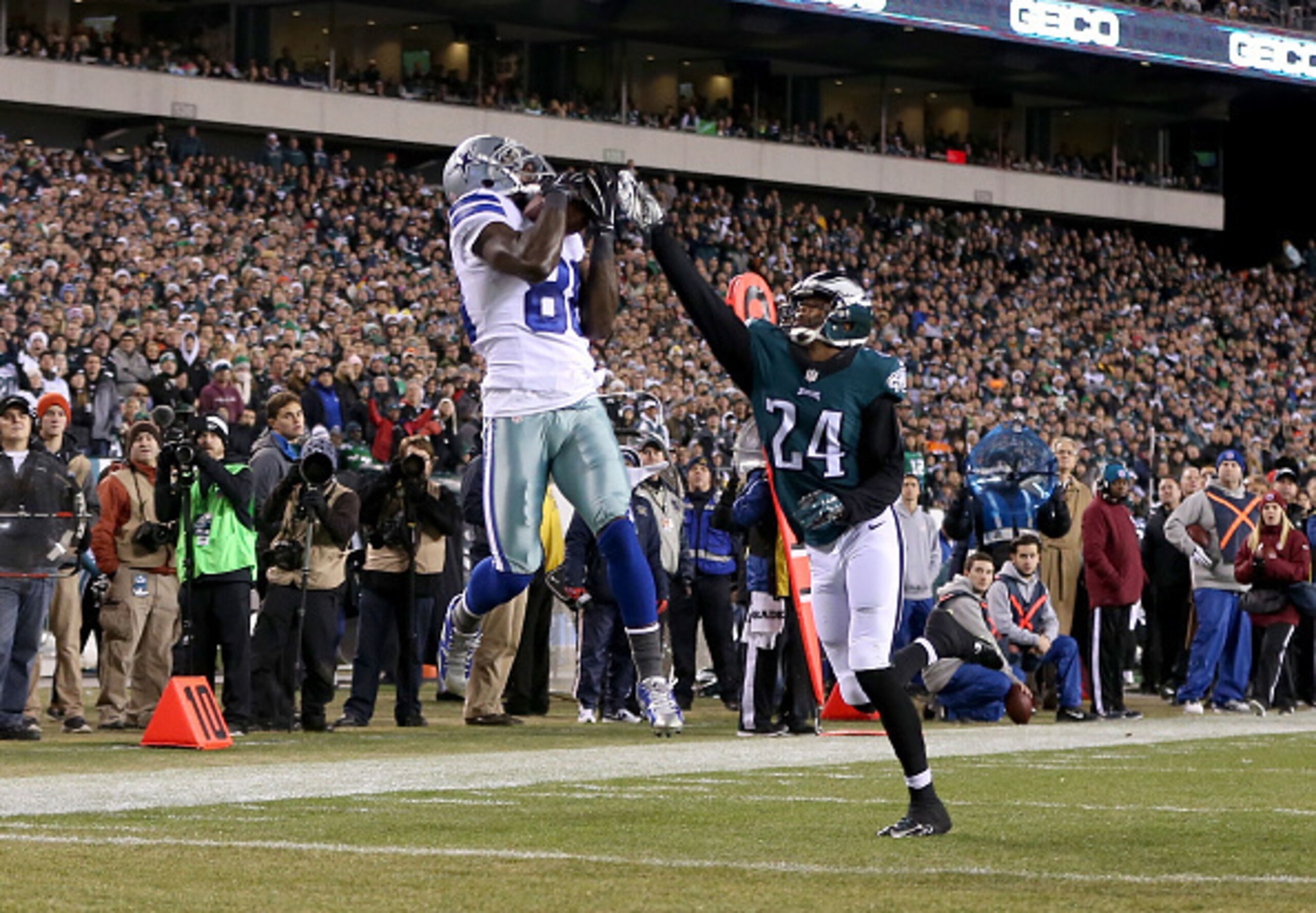
Cary Williams and Bradley Fletcher: Say the names to Eagles fans, and they'll shake their heads and tell you how glad they are that both are no longer in Philadelphia.
And while Williams wasn't quite as bad as fans remember, and even Fletcher had his rare moments, together the two were an abomination in 2014. As a duo, they allowed more than 1,800 passing yards, which includes a league-high 1,072 from Fletcher. Williams allowed five touchdowns, while Fletcher allowed nine, the second most in the NFL.
Those 14 touchdowns, plus five more allowed by veteran safety Nate Allen, make up almost two-thirds of passing touchdowns allowed by the Eagles in 2014.
All three are gone. Although the Eagles still need a replacement for Allen at safety, they brought in the top free-agent cornerback, Maxwell, who allowed just a single passing touchdown last year. They could also look to add another potential starter through the draft.
Maxwell and either Walter Thurmond, Nolan Carroll or Boykin is a significantly better starting duo than Williams and Fletcher, and whoever the Eagles bring in at safety likely won't allow more than Allen's five passing touchdowns. After all, only two safeties allowed more in 2014, per Pro Football Focus.
Time of Possession: 26:40
5 of 5
For the second straight season, the Eagles ranked last in the NFL in time of possession. They controlled the ball an average of just 26 minutes and 40 seconds per game, a full 31 seconds less than the Jacksonville Jaguars, the next lowest team.
That's, of course, because of Kelly's philosophy in scoring as fast as possible. Per Pro-Football-Reference, the Eagles ranked last in the NFL in average time of possession, at just 2:06.
Kelly's method of not huddling and scoring as fast as possible is something he might need to consider improving in 2015, because his defense has played more snaps than any other defense for two straight years. He's going to end up shortening the careers of all the players on his defense if he doesn't seem to care how much time they spend on the field.
The addition of Murray, as well as Mathews, should improve the Eagles' league-worst time of possession. Murray won't lose as much yardage as McCoy, which should equate to fewer three-and-outs and more time for the offense on the field. Oh, and perhaps Kelly could try huddling every once in a while. When his team has a lead late in the game, there's really no reason to not burn as much clock as possible.

.jpg?w=2560 "Jets Dolphins Football")
.jpg?w=2560 "Ward Nearly Walks Out of Presser ▶️")
