

Cleveland Cavaliers Surging from Good to Great in Time for the 2015 Playoffs

When the Cleveland Cavaliers smashed the Memphis Grizzlies on March 25, it was more than just a final missive to the Western Conference that not everyone in the East is a total pushover.
It was also an announcement to the league at large: The Cavs, or at least the version that has existed since a January shuffle revamped the roster, are to be feared.
Of course, LeBron James doesn't think any such signal should have been necessary in the first place.
TOP NEWS
Jokic says booing fans not welcome in Denver

Brown with an all-time summary of relationship with Tatum
Worst NBA Predictions 🫣
He told reporters, per Joe Vardon of Northeast Ohio Media Group:
"As far as sending a message, we've done our job in this league this year, letting other teams in the league know what we're about. We don't need another game to send another message, we need another game to continue to sharpen our (own team) going forward.
"
Maybe James is right about the message thing, but it's that last part—about sharpening an already frighteningly keen team—that should worry everyone.
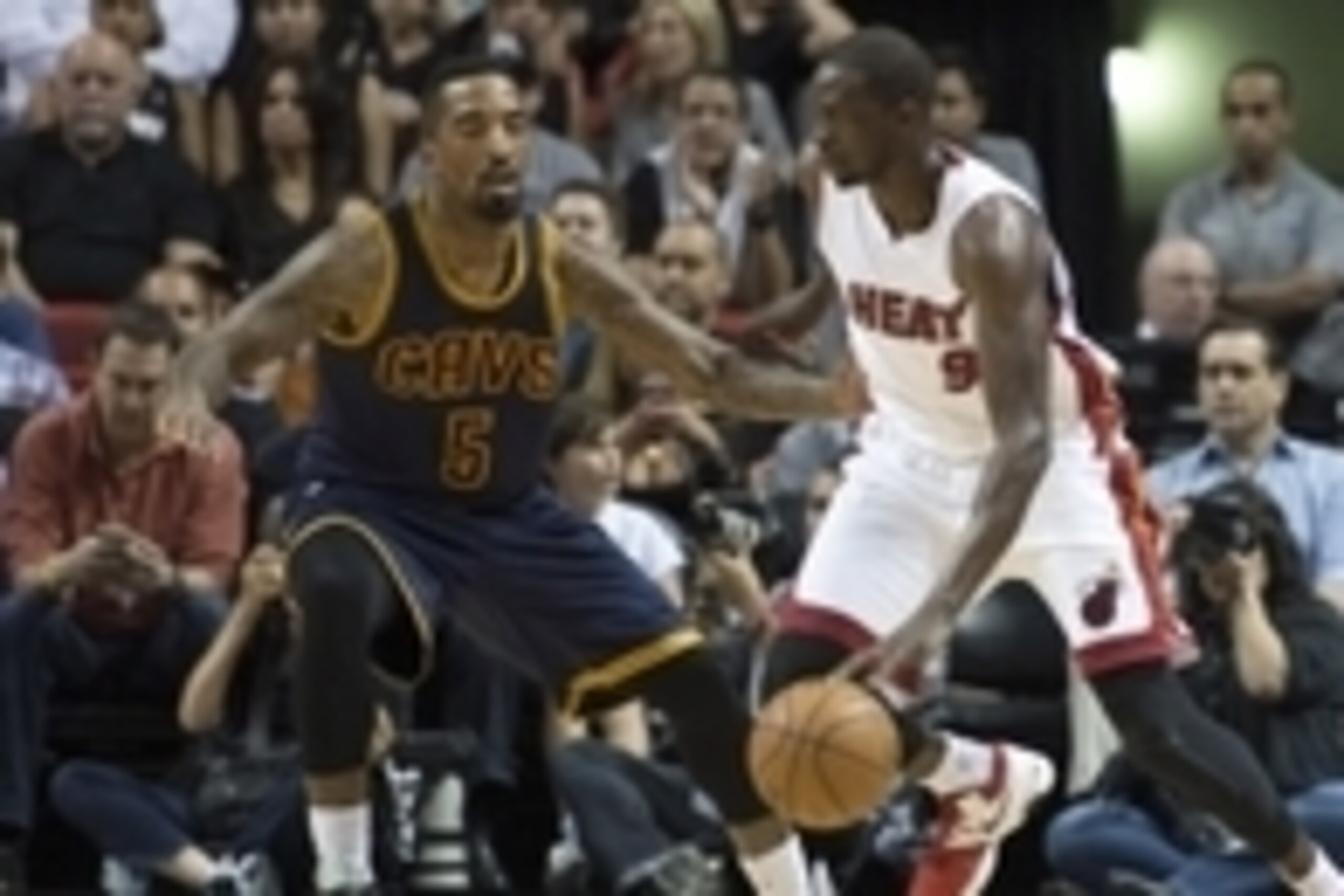
Cleveland has been a beast since bringing in J.R. Smith, Timofey Mozgov and Iman Shumpert on Jan. 7. Though it took a few games to get roles hammered out, once James returned from his two-week hiatus, the Cavaliers started rolling.
Since Jan. 15, the Cavs have a league-leading offensive rating of 112.3 points per 100 possessions, according to NBA.com. They've limited opponents to 101.8 points per 100 possessions, which ranks 13th in the Association during that span.
The resulting net rating of plus-10.5 trails only the unstoppable Golden State Warriors, and the next-closest club, the San Antonio Spurs, has only managed a plus-5.7 since Jan. 15.
Thanks to Synergy Sports, we can see just how effective Cleveland's top three players have been in March:
If per-100-possession ratings and detailed shot charts aren't your thing, consider this simpler metric from ESPN Stats & Info:
It's not like James is simply carrying the Cavaliers either. Though his on- and off-court splits reveal him to be an immensely positive influence, we've also seen Kyrie Irving erupt for multiple scoring binges. Because James is such a willing passer, it might be more difficult to develop a scheme that takes him out of the game than it would be for any other superstar.
But now, even if opponents find ways to minimize James' impact, Cleveland has developed a secondary weapon capable of winning games by himself.

And the Cavs may be well on their way to unlocking another one.
As Rob Mahoney of Sports Illustrated observed, Love's recent efforts hint that an already dominant offense is capable of even more:
"The Grizzlies experienced that devastating potential first-hand. Love played 32 minutes of seamless, proficient basketball—perhaps his most comfortable game of the season. His offense was encouraging in its variety. Love got the best of Memphis' defenders on cuts, deep post-ups, and pops off screens, avoiding those extended stretches of parked irrelevance on the weak side of the floor.
"
You could make the case that if Cleveland's improvements stopped right now, it should still be the East favorite.
But the scariest part about the Cavs is how much room for growth they still have—particularly on defense, where they simply haven't been very good.
We glossed past that fact earlier, but it's important to address it now. Even if we limit our look to the Cavs' post-Jan. 15 run, we still see a team that ranks 13th in defensive rating. Put simply, a rating outside the top 10 typically isn't part of a championship profile.
| 2014 | Spurs | 102.4 (3) |
| 2013 | Heat | 103.7(9) |
| 2012 | Heat | 100.2(4) |
| 2011 | Mavericks | 105 (8) |
| 2010 | Lakers | 103.7 (4) |
| 2009 | Lakers | 104.7 (6) |
| 2008 | Celtics | 98.9 (1) |
| 2007 | Spurs | 99.9 (2) |
| 2006 | Heat | 104.5 (9) |
| 2005 | Spurs | 98.8 (1) |
Though Cleveland can't expect its defense to keep pace with its offense (there's only so much head coach David Blatt can do with this group of personnel), it's easy to predict some improvement. And that's probably enough because the Cavs don't need an elite defense; they just need to be a little better on that end when it counts.
That's where James comes in.
Suppose he ratchets up the intensity, flips that switch, for just a few possessions here and there in the postseason—as we've seen him do countless times before. Won't that make a significant difference? Teammates like Love, Irving and Smith won't find it so easy to get away with a laissez-faire approach on D if they see their leader buckling down.

Not only that, but we should also expect better chemistry and preparation from the Cavs as the season winds down and the playoffs ramp up. They have a soft, all-East schedule for the balance of the regular season, which should afford plenty of time for rest and fine-tuning on D.
And with more off days in the postseason, Blatt will have the kind of practice time the regular campaign rarely affords.
More than anything, as Cleveland's relatively new core gets to spend more time with one another, we should see improved chemistry, which can only help a defense. Already, we're seeing the signs of deeper bonds, though they're revealing themselves in ways only NBA players can understand, per B/R's Ethan Skolnick:
Remember, the Cavs don't need drastic improvements on defense. They just need to shave a point or two off of their per-100 rating. You'd have to think that James dialing up a handful of superhero defensive possessions per game would do that on its own.
Cleveland is clearly the class of the East—notably better than the Atlanta Hawks if we're judging by recent play—and it has been quietly stout against the West as well. Since Jan. 15, the Cavaliers have gone 7-1 against current West playoff teams.
The Cavs have been very good, and it's easy to see the path to great from here.

.jpg?w=2560 "Mahomes Told Teammate to Leave Meeting")
.jpg?w=2560 "5 Teams Eyeing Jonathan Taylor")
.jpg?w=2560 "Baker Gets Glove From Rays 🧤")
.jpg?w=2560 "🚨 Week 8 AP Top 25 Poll")
.jpg?w=2560 "NFL investigating Eagles")
.jpg?w=2560 "Steelers Roll Saints in Paris")
