


The imbalance in the NBA today is certainly no secret.
The mighty Western Conference reigns supreme, with 10 teams currently over .500, including the defending champion San Antonio Spurs.
For the lowly Eastern Conference, just six teams can make such a claim. The defending Finals representatives, the Miami Heat, are 30-36 overall and may miss the postseason altogether.
TOP NEWS

Jokic says booing fans not welcome in Denver
Worst NBA Predictions 🫣

Power Ranking Every NBA Team's Starting Lineup 🔢
While the East may lack the overall star power and competitiveness of the West, the Cleveland Cavaliers are doing their best to buck the current trend.
The Cavaliers are 17-12 against the West on the season. Of those 12 losses, five have come when Cleveland was either without James or Irving. Another four were in the first three weeks of the year.
The Cavs have been shredding the West's mighty titans as of late, going 13-1 against teams from the left coast since Jan. 15. They've come away victorious against 14 of the 15 total teams at least once, and were a few free throws away on a March 1 loss to the Houston Rockets from beating them all.
Here's how the Cavaliers have excelled against the once-thought-to-be-indomitable Western Conference and why history shows their success will carry over come playoff time.
Changing Perceptions
The East has received a poor reputation the past few years, and for good reason.
This will mark the third straight season that a below-.500 team will reach the playoffs. Almost remarkably, it's a near certainty that two teams will hold this (dis)honor come mid April.
For comparison, the current No. 7 seed, the Indiana Pacers, are 30-36. That would tie the Utah Jazz for 11th in the West. Utah is six-and-a-half games behind the Oklahoma City Thunder for the final playoff berth.
Even Cleveland, 43-26 and in sole possession of No. 2 in the East, would fall to No. 7 should it switch conferences.
Such disparity has led to Twitter jokes from franchises themselves in the past and prompted Dallas Mavericks owner Mark Cuban to propose a conference realignment.
While jokes and proposals can be made now, one thing is clear regardless of geographical location: No one will want to play these Cavs come playoff time.
As ESPN's Tom Haberstroh writes, the East in general can no longer be bullied:
"In February, the East outscored the West in its 59 head-to-head matchups by 13 points. Thanks to some foibles late in games by the East, the West actually ended up having the superior record at 31-28, but it's clear the East isn't a laughingstock anymore. After it looked like the "Leastern Conference" was getting even worse after losing 73.1 percent of its games against the West last season, the East has returned to respectability lately.
"
Cleveland and the Atlanta Hawks are leading the charge when it comes to commanding respect in the East. The Cavaliers began the season just 4-11 against teams from the West while still trying to make all of their new pieces fit. Since then, they've gone a dominant 13-1, including 5-1 away from Quicken Loans Arena.
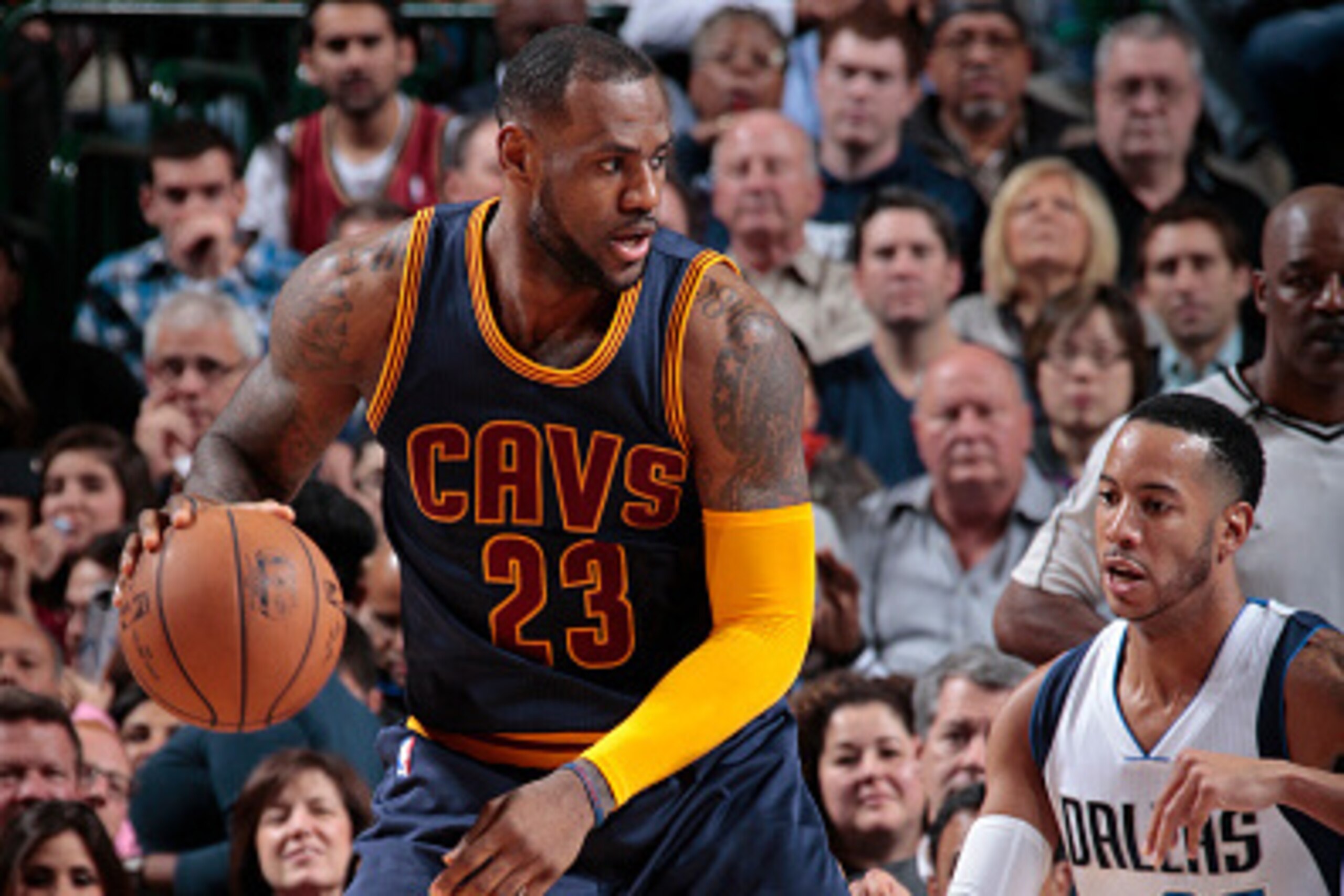
Even the Houston Rockets, the only Western team still undefeated against the Cavs, shouldn't be in any hurry to see them again
In the team's first loss against the Rockets on Jan. 7, Cleveland was without LeBron James, had not yet traded for Timofey Mozgov and watched J.R. Smith go 0-of-5 shooting off the bench in his Cavs debut. When it dropped a 105-103 overtime thriller in Houston on March 1, Kyrie Irving sat with a shoulder injury and James was a dreadful 3-of-11 from the charity stripe.
A healthy and clicking Cavaliers team may very well be the best the NBA has to offer, regardless of conference.
Success Out West
Even when given the opportunity to feast on a watered-down East, the Cavaliers have actually been better against the powerful West.
Since Jan. 15, Cleveland is 11-5 against its own conference, compared to that 13-1 record stated before.
It's not just wins and losses that are making the difference between the Cavs' split success, but some other key statistical areas help paint the picture as well.
In addition to scoring, Cleveland has been more efficient when facing the West. It's shooting better from the field (47.2 percent compared to 46.7) while also holding opponents to a slightly stingier success rate (43.1 percent to 43.7).
As Kevin Love pointed out to Jason Lloyd of the Akron Beacon Journal, the Cavs have made it personal against the Western powers they faced earlier in the year:
"Kevin Love has referred to it at least a few times this season. It almost seems as if Love keeps a list in his wallet of all the teams that took advantage of the Cavs in the season’s early stages. Now he’s out looking for revenge.
“We owed them one,” Love said of the Dallas Mavericks.
"
Love was referring to the Cavaliers' 127-94 victory in Dallas on March 10. The Mavericks are one of eight Western Conference teams that Cleveland has defeated after previously losing to in the season.
One possible reason for the Cavs' increased play against the West has been the production from James. Save for assists, he's been better in nearly every offensive category.
Call it "getting up for a game" or whatever it may be, but James and the Cavaliers have simply been better when playing out of conference.
What It Means for the Postseason
A peek back at the last Eastern Conference Finals representative gives us a hint of the correlation between success against the West and in the playoffs.
For the Miami Heat, one could recognize a noticeable pattern.
In their first year together with James, Dwyane Wade and Chris Bosh in 2010-11, the Heat finished 20-10 (66.7 winning percentage) against the West. A strong record, no doubt, but not to be considered elite. Miami made it to the Finals that year but fell apart when facing the veteran Mavericks.
In the following two seasons, however, the Heat went a combined 36-12 when facing out-of-conference teams, good for a winning mark of 75 percent. That's a success rate only two teams (Hawks, Golden State Warriors) have accomplished this season overall, and one that can be viewed as elite.
The difference?
Miami, of course, captured the title both seasons, besting the Oklahoma City Thunder and Spurs in the Finals, respectively.

So why didn't the Heat capture a three-peat and take down San Antonio once again in the 2013-14 championship? While one could point to air conditioning problems or simply a vengeful Spurs squad, Miami's regular-season record against the West stands out. Like their first year together, the Heat slipped back to 20-10 when playing out of conference, a significant drop from their dazzling 25-5 record of a season before.
Given that information, it's difficult to tell just where the Cavaliers stand. They're probably not good enough to keep up a 13-1 pace, but they definitely deserve to be considered better than 17-12.
Recent history tells us that beating up Western Conference teams before the playoffs helps equal facing them again in the postseason, if not winning it all.
For the surging Cavs, this is an extremely encouraging sign.
Greg Swartz has covered the Cleveland Cavaliers and NBA for Bleacher Report since 2010.
All stats provided by Basketball-Reference.com unless otherwise noted.

.jpg?w=2560 "Mahomes Told Teammate to Leave Meeting")
.jpg?w=2560 "🚨 Week 8 AP Top 25 Poll")
.jpg?w=2560 "Baker Gets Glove From Rays 🧤")
.jpg?w=2560 "Steelers Roll Saints in Paris")

.jpg?w=2560 "NFL investigating Eagles")
.jpg?w=2560 "5 Teams Eyeing Jonathan Taylor")
.jpg?w=2560 "Updates from EVERY Game")