Ranking Minnesota Vikings' Best Remaining Free-Agency Options
The Minnesota Vikings aren’t quite done with free agency. Though clarity is still needed in the Adrian Peterson situation, other areas of the team remain unaddressed and in need of upgrades.
Entering free agency, the Vikings had a number of holes to fill and immediately expanded their need profile by trading away their backup quarterback. Since then, they’ve signed a backup quarterback and exchanged one underperforming receiver for another without doing much else.
With questions at safety, receiver, linebacker, guard, defensive end, tackle and cornerback (not to mention punter and long snapper) there are any number of directions they can go in.
Considering there are so many holes in the roster and also a lack of available talent at those positions, the Vikings will not address every one of their needs in free agency.
For now, these are the five best options they can pursue.
5. Jeron Johnson, S
1 of 5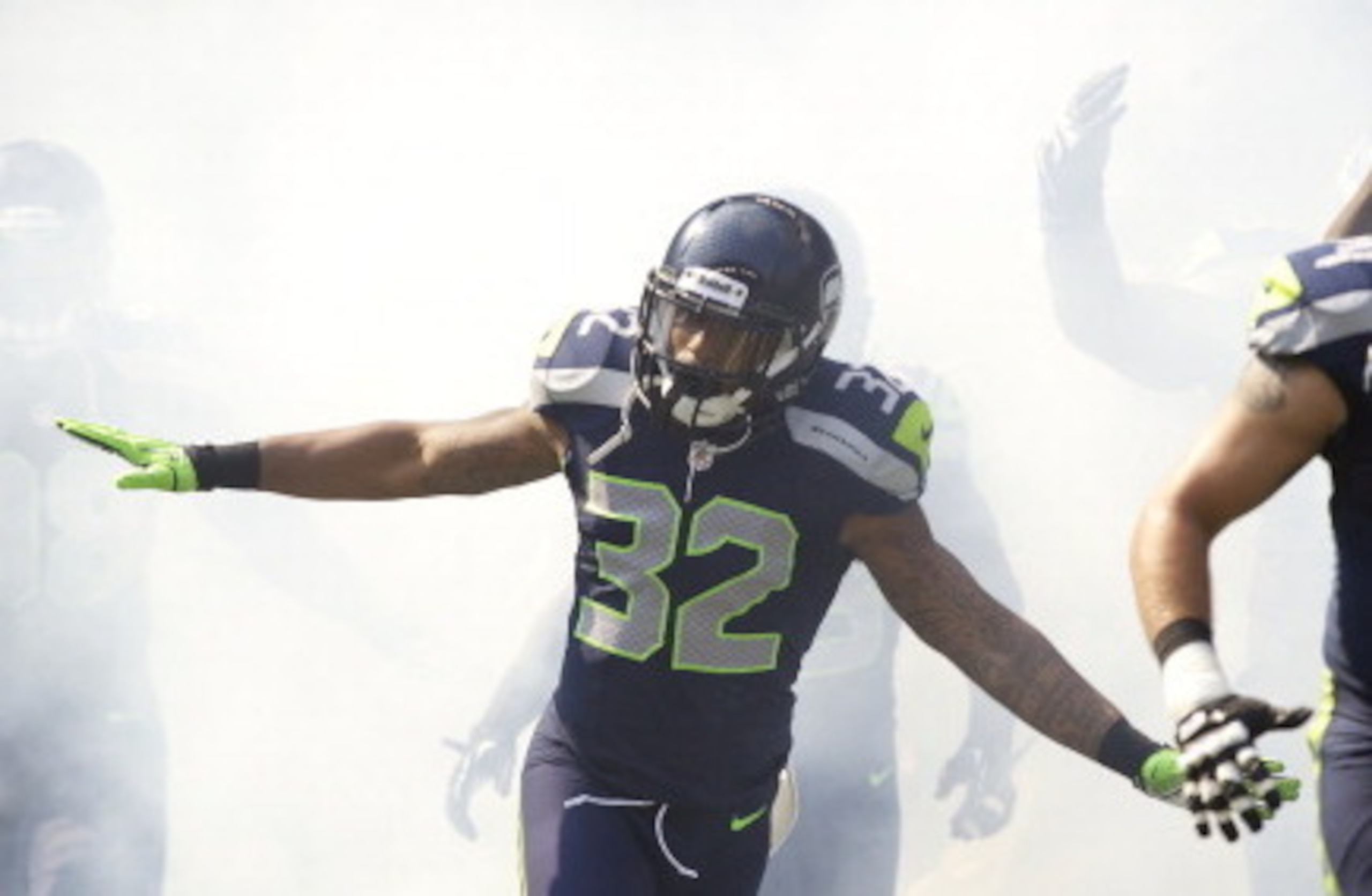
Having only played 275 snaps, in the NFL since entering the league in 2011 as an undrafted free agent out of Boise State, per Pro Football Focus, the presence of Jeron Johnson's name on any ranked list of free agents may seem suspect.
But Johnson seems like the real deal, if only because of his stellar play in those snaps, even early in his career. Stuck behind talented (and healthy) safeties in Seattle, Johnson didn't have the ability to prove himself much before hitting the market but certainly took advantage of all his opportunities.
Though Johnson is much more of a box safety than a free safety, he has the ability to play both positions well. He possesses more fluidity and agility than strong safety Kam Chancellor and is capable in man coverage against athletic tight ends despite his size (5'10").
A powerful hitter with good instincts against the run, Johnson provides a lot in run support that many other safeties in the free-agent market typically do not.
Instinctive in his limited showings as a free safety, Johnson reacts quickly from deep coverage to new developments, whether in the running or passing game. Though it's difficult to gauge his ability to stay disciplined in play action or other constrained-play situations, he has at least shown relatively sound skills in those areas when given the chance.
He breaks quickly to the ball and has good instincts for reading receivers in coverage, though it is difficult to say if his ability to read the quarterback is at a high level—something critical for free safeties and very important for strong safeties.
For the most part, however, he's a solid-looking safety with excellent play on special teams. Plus, he has the upside of being a high-level starter as a versatile safety option and a floor as a backup who's likely already better than some of the safety depth the Vikings currently have.
Johnson presents value (he likely will be cheap and could be signed without offering too much in guarantees) with an instant upgrade in depth and the upside to be a long-term starter. At 26 years old, he's also the kind of young player the Vikings covet in free agency and may be able to develop.
Because of his youth, upside and likely cheap contract value, Johnson ends up as the fifth-best option for the Vikings to pursue in free agency.
4. Stevie Johnson, WR
2 of 5
An argument could be made for the other receiver from the San Francisco 49ers, Michael Crabtree, but Stevie Johnson had a better year and was cut (instead of playing out his contract), making him a better option to retain compensatory draft picks in 2016; free agents who were cut don't count against the formula, while those with expired contracts do.
With Greg Jennings gone, there's very little in the way of reliability on the roster at receiver. Though the slot option is theoretically filled by Jarius Wright, the Vikings can still make gains by adding Johnson to the roster.
Wright has been less about short-area quickness throughout his NFL career and more about straight-line speed, exhibiting less route diversity than Jennings as well as a rawer style.
That isn't to say he doesn't have quickness, but rather that he doesn't use it while running routes, choosing to play stiffer and use other kinds of deception. Johnson has the ability to combine his fluidity and route running with good releases off the line of scrimmage and tricky work at the route stem in order to break free.
Johnson and Wright are two different kinds of receivers who can offer different solutions to various problems in the passing game and could complement each other well. They both have experience in and out of the slot and can be moved around to take advantage of perceived weaknesses in the opponent's secondary.
On intermediate routes, Johnson is excellent at finding ways to get open and has exciting after-the-catch ability. If it really is the case that the Vikings have taken the top off the defense with the Mike Wallace acquisition, then there's no better way to take advantage of it than by adding receivers who are good after the catch and underneath.
Johnson has had issues with drops throughout his career which are not entirely quarterback-related. In that sense, he's not adding "reliability" to the roster but is a known quantity who's consistently open.
Johnson has the added benefit of having produced big numbers with struggling quarterbacks, something no receiver on the roster has done. He more than makes up for those drops by finding ways to damage opponents and has taken on roles as the primary, secondary and tertiary receiving options.
For a roster struggling to find players who can get open, Johnson can be a godsend.
3. Brandon Spikes, LB
3 of 5
Two-down linebackers are consistently maligned throughout the offseason, especially during the draft process, for providing so little value to a team. That's not quite fair and, given the importance of those two downs, somewhat baffling.
The Vikings generally need to improve on those first two downs in order to force better situations on third down. While the average NFL defense face 3rd-and-long (3rd-and-7 or longer) 50 percent of the time, according to Pro-Football-Reference.com, the Vikings only created that situation 44 percent of the time.
Improving on the first and second downs can go a long way toward bettering chances on third down, and Spikes may be the linebacker to help here.
Given their general struggles against the run (they ranked 22nd in yards per carry allowed, while ranking 14th in net yards per pass attempt allowed, per Pro-Football-Reference), it makes sense to add a run-stuffing middle linebacker who can help take care of the defense at times when the opposing running back remains a threat.
With Jasper Brinkley off to Dallas, the Vikings have a big opening at the spot, and Spikes fits like a glove. Possibly the best run-stopping linebacker in the NFL, Spikes provides a cheap, young option to take over the middle while the Vikings fill in spots elsewhere, and he immediately improves their defense in that area of the field.
Though stiff in coverage, Spikes does an excellent job getting to the ball-carrier both by shedding blocks quickly and by blowing through offensive linemen. He has a nose for the ball and wraps up well. He would immediately improve the Vikings run defense despite the questions at their outside linebacker spot.
Spikes also isn't as bad in coverage as advertised and even excels there given limited responsibility, thanks in part to his fantastic instincts and high football intelligence.
.jpg?w=2560 "Cardinals Giants Football")
.jpg?w=2560 "Jets Dolphins Football")
2. Stefen Wisniewski, G
4 of 5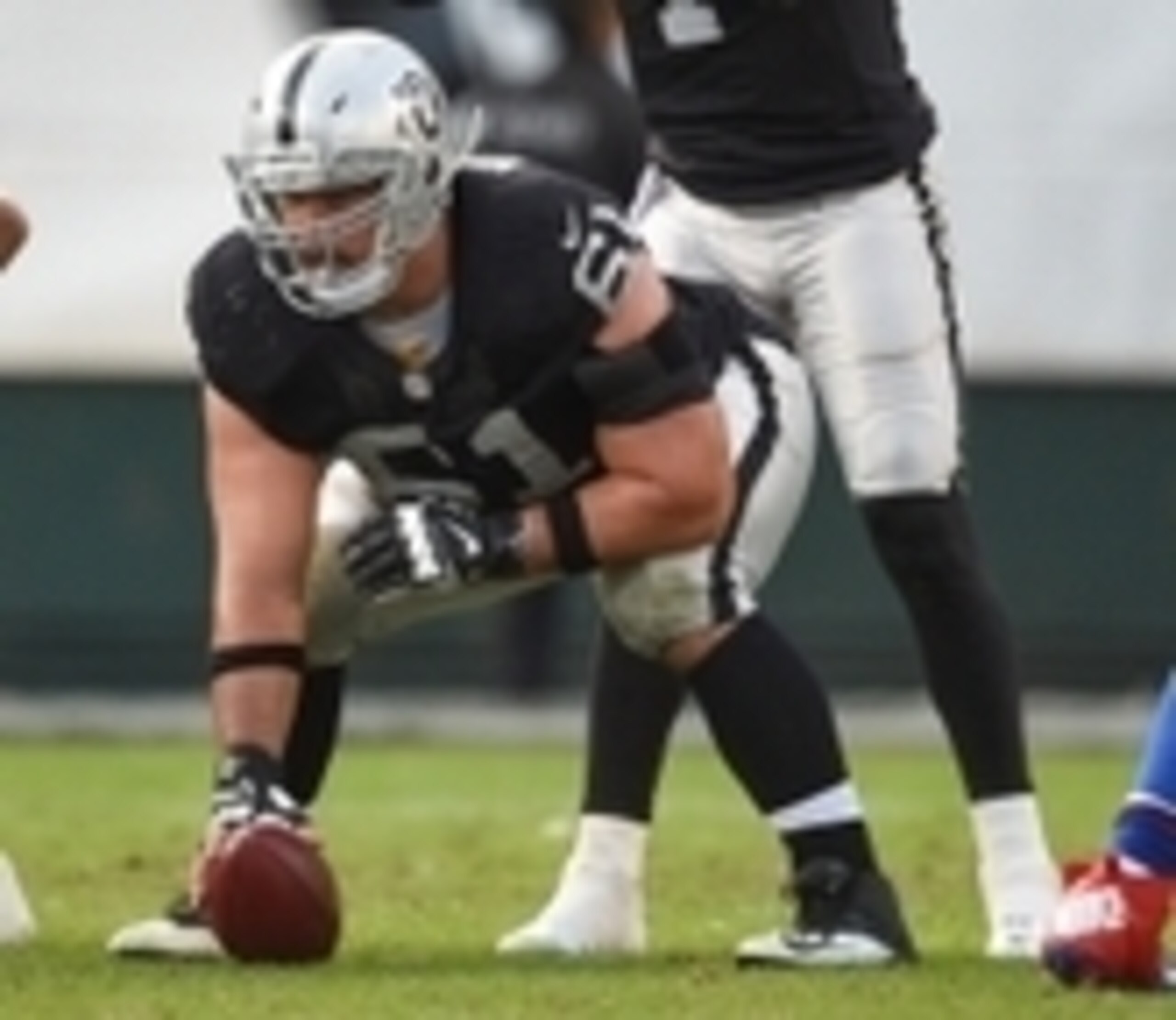
Having played both center and guard in his time in Oakland, Wisniewski is a high-value option at either position and one of the better interior offensive linemen to hit free agency.
He's deciding between a few options (he has visited Seattle as well as Tampa Bay) and is unlikely to be an option for the Vikings, but pushing for him would make sense.
Though without the dominating power of some offensive guards, Wisniewski's functional ability is still better in the run game than most others'. He plays with more than enough strength and excellent leverage and technique to consistently open up holes in the middle for running backs. He has excellent footwork and quickness and stymies opposing defensive tackles hoping to make a play.
Often left on an island as a center, his only serious issues at the position come when left alone against behemoths like Terrance Knighton and Paul Soliai. He rarely has issues with 3-techniques or with help against linemen over 340 pounds—and he still did well against bigger players like Vince Wilfork and Justin Ellis.
His quickness also helps him play well as a pulling lineman, something that was underutilized in Oakland and that Minnesota needs, as former guard Charlie Johnson pulled far more often than right guard Brandon Fusco.
Wisniewski will be 26 to start the season and would be a massive upgrade at the position. The Vikings should at least consider him, even if he seems to have narrowed down his choices.
1. Rolando McClain, LB
5 of 5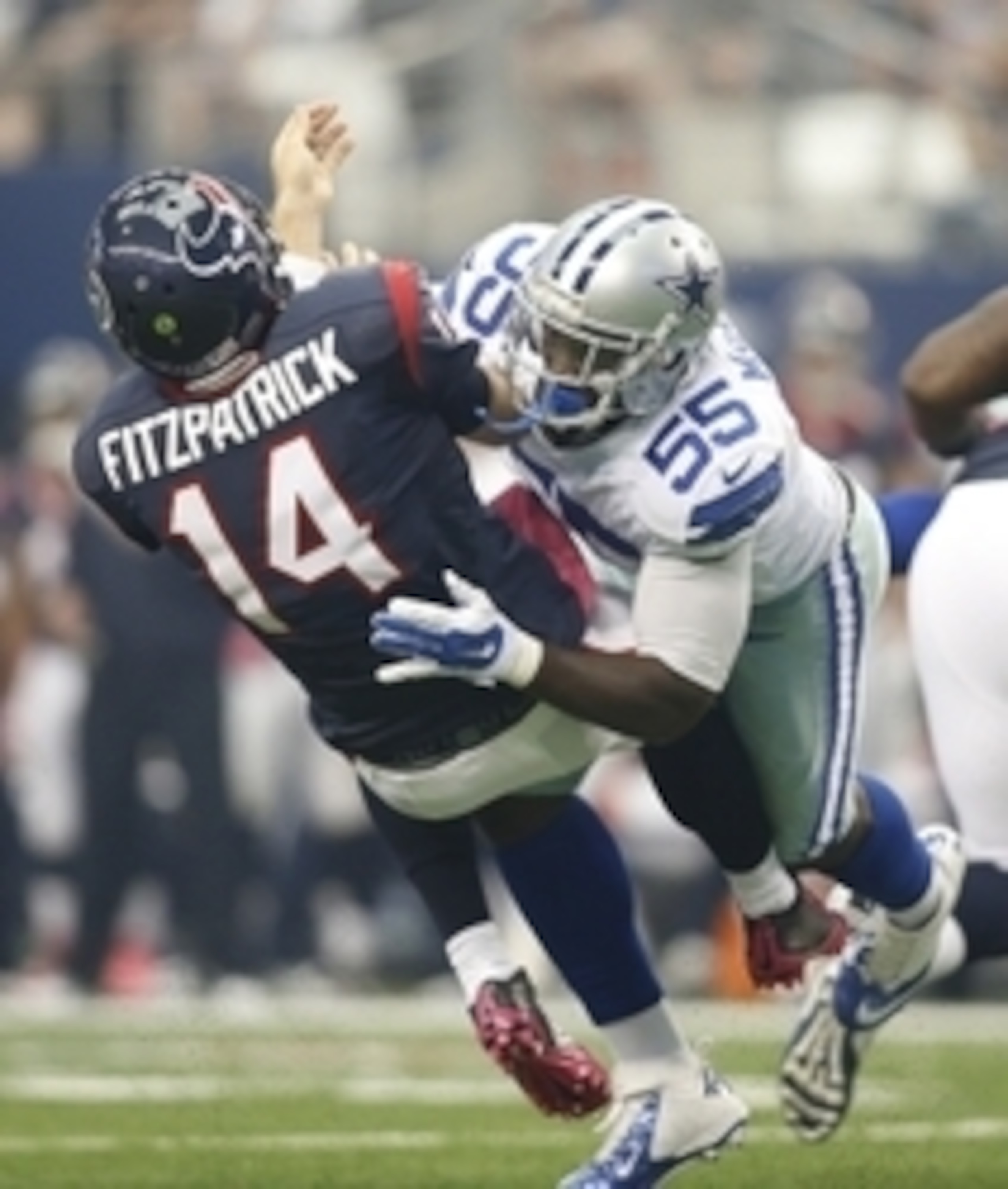
Though only one violation of the NFL drug policy away from a four-game suspension and playing with a questionable injury history, Rolando McClain's revival in Dallas cannot be ignored.
A complete linebacker for the Cowboys, McClain provided upgrades in both pass coverage and run defense and did an incredible job getting to the running back at or behind the line of scrimmage on a consistent basis. He also had the single-highest run-stop percentage for inside linebackers in Pro Football Focus' eight-year history of data.
His instincts are excellent, and his ability to take on blockers is a plus. Though he still has to work out issues with tackling angles and wrapping up, McClain is an excellent run defender and can provide an improvement at either open linebacker spot, be it the "Mike" spot in the middle or the "Will" spot over the 3-technique defensive tackle.
He's an excellent zone defender who reads the quarterback's eyes well and possesses the fluidity and speed to keep up with most players in man coverage. He is better in zone than man, if only because he looks uncomfortable running up the seam with receivers, but he still provides value in most coverage schemes and can provide big benefits for the Vikings.
They would do well to bring in McClain, even if only for a bridge year while they find a long-term solution.
.jpg?w=2560 "Titans Ravens Football")

.jpg?w=2560 "NFL investigating 2 referees for separate viral exchanges")