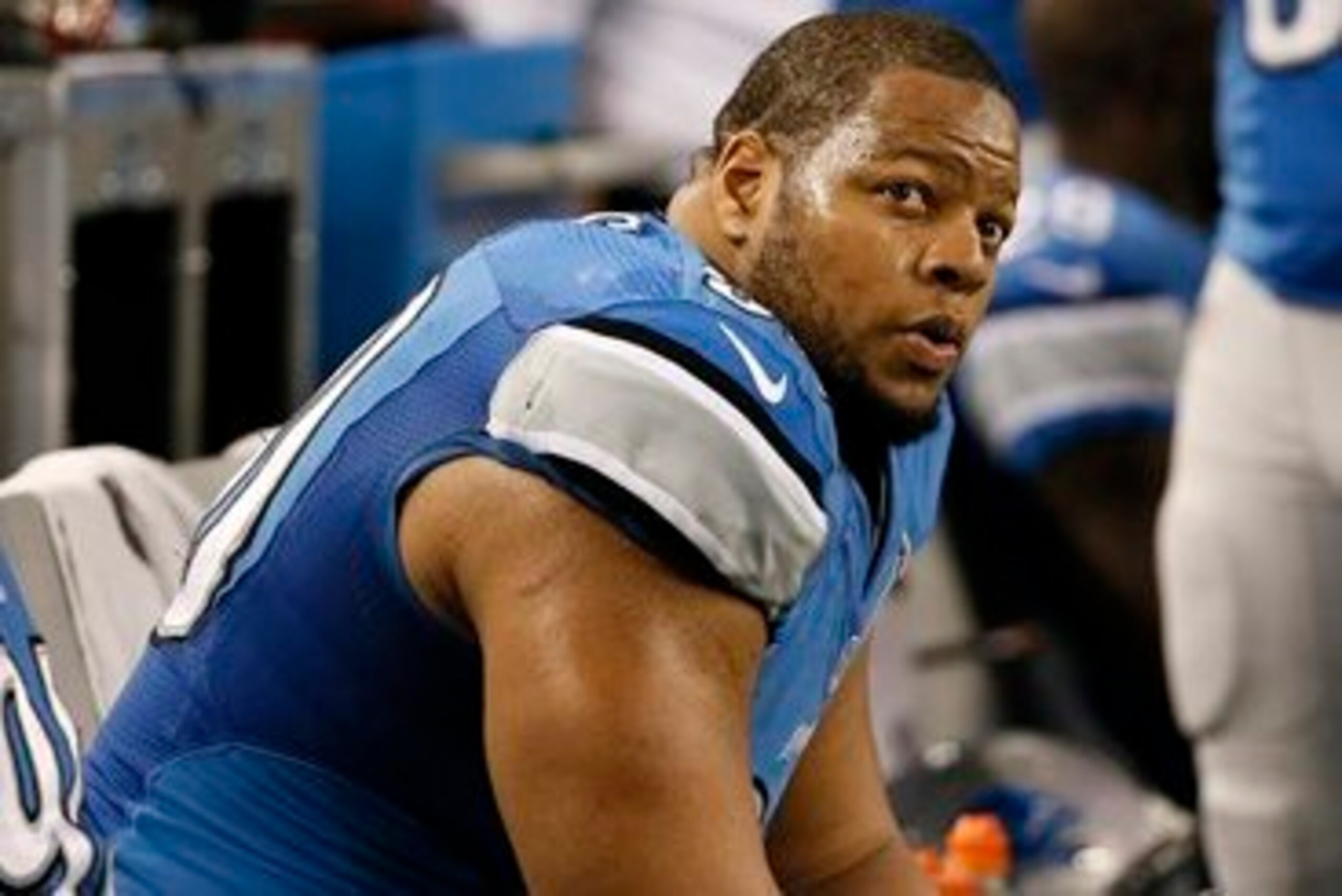

2015 NFL Draft: Needs and Targets for Teams After 1st Week of Free Agency
NFL coaches and general managers often discuss the process of building an NFL team.
Each and every year, that process begins with free agency. The NFL began its version of insider trading Tuesday. Numerous franchise-changing acquisitions were made over the past seven days.
Players such as Ndamukong Suh and DeMarco Murray, for example, changed the faces of multiple franchises simply by deciding to take their services elsewhere.
But free agency is only the first step in the process. The NFL draft is the second major opportunity for teams to replenish their rosters.
What happened in free agency, though, always has an effect on teams' decisions during the draft. The two feed off each other.
The landscape of each and every team is different today from what it was only a few days ago. It's time to reassess where each organization currently stands and its priorities as the draft approaches.
Arizona Cardinals
1 of 32
Key Acquisitions: Linebacker Sean Weatherspoon, guard Mike Iupati, outside linebacker LaMarr Woodley, center A.Q. Shipley, defensive ends Corey Peters and Cory Redding
Remaining Draft Needs: Linebacker, running back, nose tackle, cornerback
As other teams splurged in free agency, Cardinals general manager Steve Keim quietly went about his business and signed multiple key pieces to fill needs.
The offensive line is now far stronger with Iupati inserted into the lineup. The team's depth issues at defensive end after the loss of Darnell Dockett were addressed with the acquisitions of Corey Peters and Cory Redding. And Weatherspoon, a former first-round pick, helps resolves the team's issues at inside linebacker due to Daryl Washington's unresolved status.
There are still concerns on the defensive side of the ball that need to be addressed, though.
Those start at nose tackle. As one of the better run defenses in the NFL, it all starts at the point of attack. The organization re-signed Alameda Ta'amu, but Dan Williams left via free agency. The team will need to invest in another wide body to remain a top defense.
Also, Alex Okafor emerged during his second season, but he requires a running mate at outside linebacker for the Cardinals to generate a consistent pass rush.
Finally, head coach Bruce Arians still believes in running back Andre Ellington, but the sub-200-pound ball-carrier couldn't withstand a full season of blows as the team's lead back. If a top running back prospect isn't acquired, quality depth could be found in the mid rounds due to a deep class.
Potential Draft Targets: Georgia's Todd Gurley (pictured above), Oklahoma's Jordan Phillips, Virginia's Eli Harold, Florida State's Ronald Darby
Atlanta Falcons
2 of 32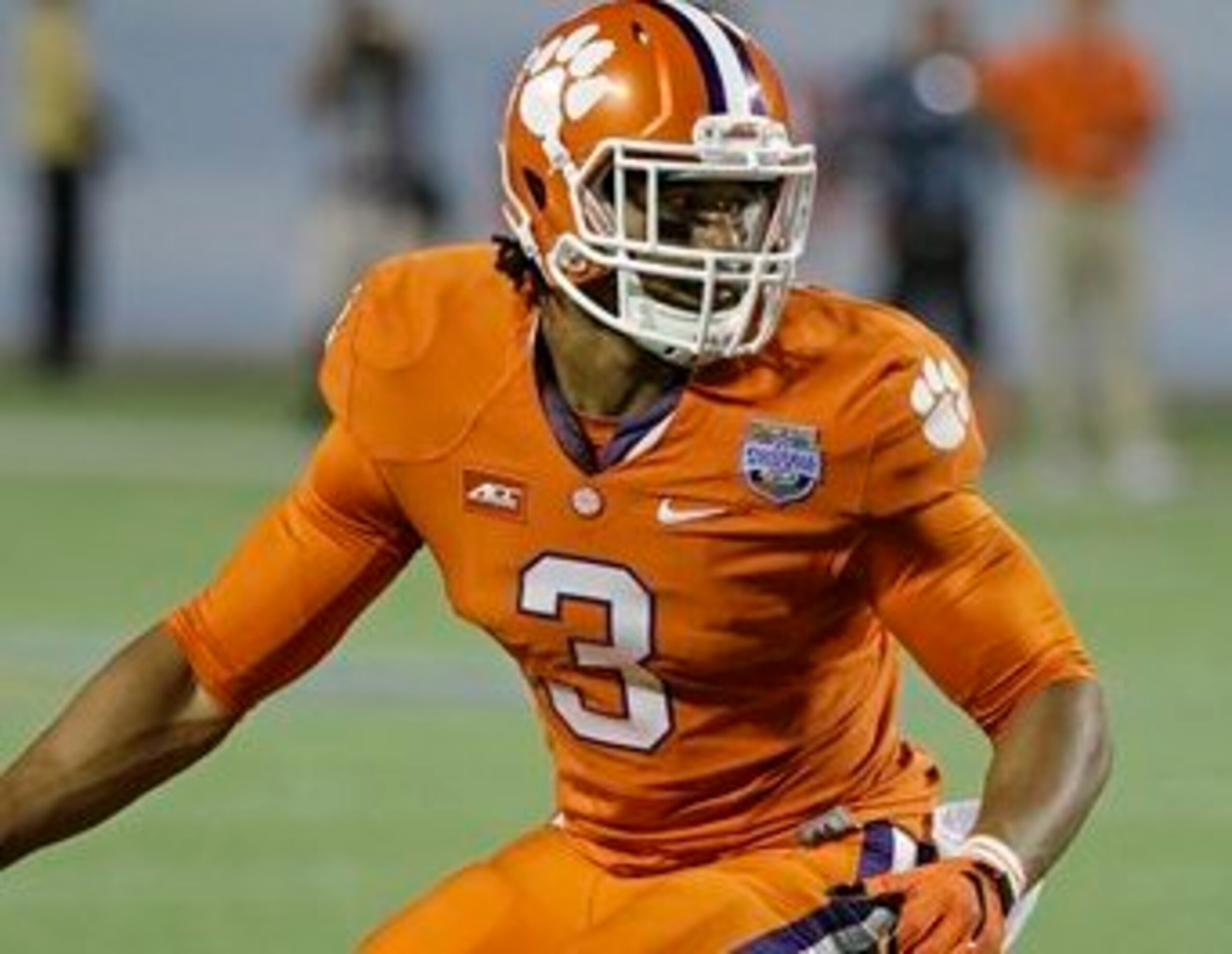
Key Acquisitions: Defensive end Adrian Clayborn, wide receiver Leonard Hankerson, cornerback Phillip Adams, linebackers Justin Durant, Brooks Reed and O'Brien Schofield
Remaining Draft Needs: Edge-rusher, guard, cornerback, free safety, running back
Head coach Dan Quinn was hired with the purpose of improving the Falcons' 32nd-ranked defense. After all, this is the same man who led the "Legion of Boom" defense in Seattle over the last two seasons.
While the Falcons didn't sign any marquee free agents, Quinn's fingerprints are all over their recent acquisitions.
The organization lacked overall depth and talent at linebacker and among its pass-rushers. The signings of Durant, Reed and Schofield certainly don't grab headlines, but their athleticism and versatility within Quinn's scheme make them upgrades over the players previously found on the roster. Reed and Schofield, for example, can line up at outside linebacker or defensive end if needed. Durant could prove to be a defensive leader if he can remain healthy.
These additions are simply the beginning, though. There are still gaping holes in the Falcons roster that won't make Quinn forget about his time with the Seahawks.
The team lacks a true "Leo" edge-rusher, who is one of the primary catalysts in the scheme. In a draft chock-full of hybrid pass-rushers, the Falcons could be in perfect position to select one with the eighth overall pick in April's draft.
Quinn also prefers more length at the cornerback position than what's already found on the roster, and free safety remains a massive need.
Not nearly as many needs are found on the offensive side of the ball.
Offensive coordinator Kyle Shanahan will mold a star out of a former mid- to late-round running back (Devonta Freeman?) like he always does, but the position lacks depth. Also, left guard needs to be addressed after veteran stalwart Justin Blalock was released.
Potential Draft Targets: Clemson's Vic Beasley (pictured above), Iowa's Brandon Scherff, Minnesota's David Cobb, Utah's Eric Rowe
Baltimore Ravens
3 of 32
Key Acquisitions: Running back Justin Forsett (re-signed)
Remaining Draft Needs: Cornerback, defensive end, edge-rusher, wide receiver
The Baltimore Ravens don't rebuild. Ravens general manager Ozzie Newsome simply reloads the roster.
If a player negatively affects the team's salary-cap structure, either a new deal is reached or Newsome moves on. It doesn't matter if that player is a former five-time All-Pro either. Haloti Ngata was an easily tradable asset on the wrong side of 30 years old with a huge cap hit. The outstanding defensive lineman is now a member of the Detroit Lions, while Newsome will continue to build his team in the same way he always does.
The Ravens build primarily through the draft. This offseason isn't any different.
Newsome can move players such as Ngata, because the general manager selects prospects such as Timmy Jernigan, who develop and eventually take over starting roles.
The losses of Ngata, Pernell McPhee and Torrey Smith also mean Newsome must replenish the roster each year, while still addressing previous needs.
The Ravens were obliterated at cornerback last season. The secondary remains a primary concern. Wide receiver also emerged as a major need due to Smith's departure in free agency. Plus, depth can be improved at multiple key positions.
Newsome has some work to do.
Potential Draft Targets: LSU's Jalen Collins (pictured above), Mississippi State's Preston Smith, Arizona State's Jaelen Strong, Washington State's Xavier Cooper
.jpg?w=2560 "Cardinals Giants Football")
.jpg?w=2560 "Jets Dolphins Football")
.jpg?w=2560 "Titans Ravens Football")
Buffalo Bills
4 of 32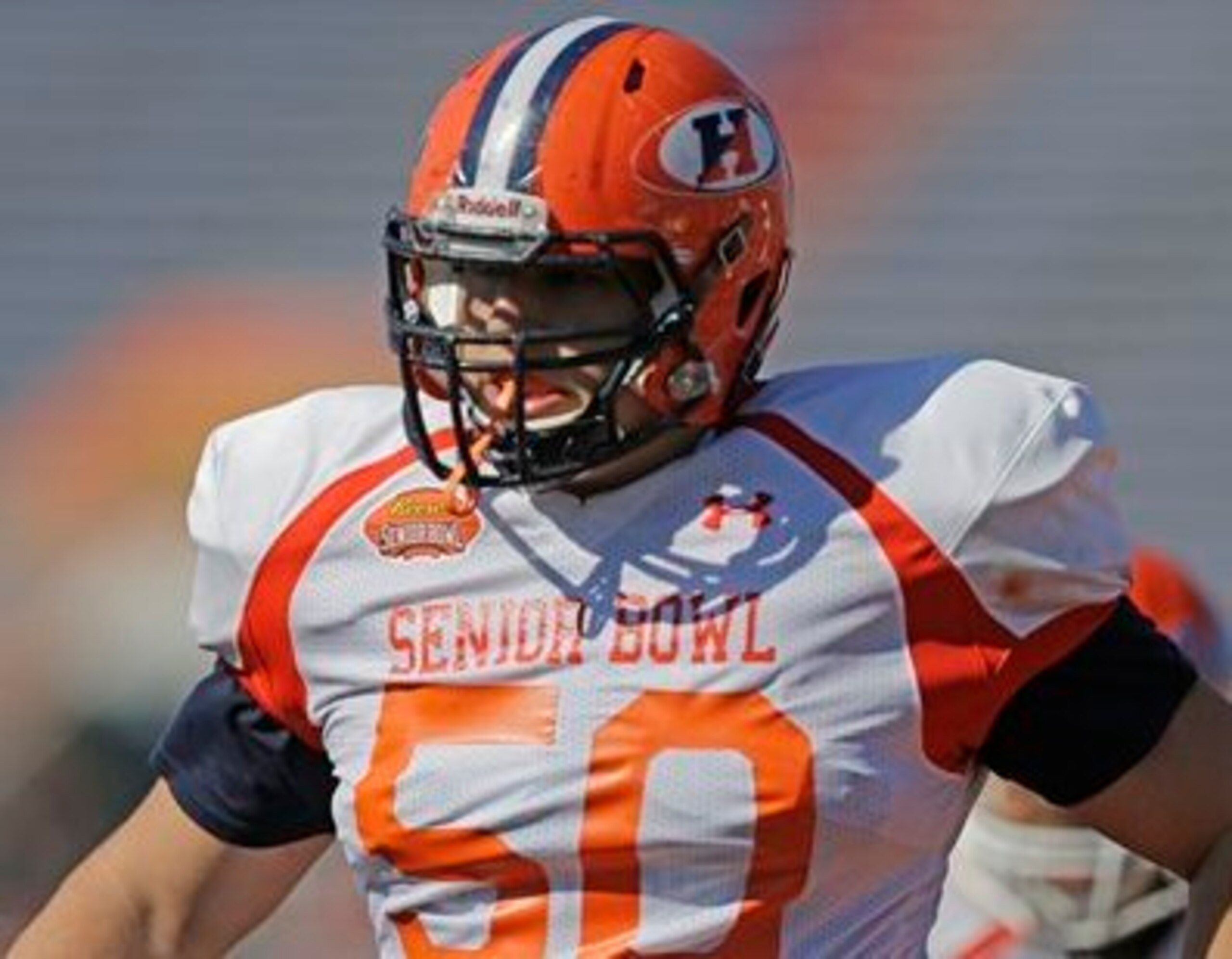
Key Acquisitions: Quarterback Matt Cassel, edge-rusher Jerry Hughes (re-signed), running back LeSean McCoy, fullback Jerome Felton, wide receiver Percy Harvin
Remaining Draft Needs: Interior offensive line, tight end, strong safety, quarterback
The Buffalo Bills quickly assumed the personality of their brash new head coach, Rex Ryan.
LeSean McCoy's acquisition left mouths agape and proved this is a team that wants to win immediately by establishing a strong ground game and even better defense.
The Bills are already starting to resemble Ryan's teams in New York. The organization is going to ask new quarterback Matt Cassel to not lose games, while the defense sets the tone.
It's now up to the organization to add more talent along the offensive line to build a dominant running attack that protects the strong play-action quarterback.
Not a single interior blocker on the Bills roster received a positive grade from Pro Football Focus in 2014. Buffalo must add toughness and a nasty disposition to those who will pave the way in the run game.
Unfortunately, the team doesn't own a first-round pick due to last year's Sammy Watkins trade to immediately address the area. However, quality centers and guards tend to slide into the second and third rounds. The Bills should be able to acquire an immediate starter along the offensive line even without that precious opening-round commodity.
Potential Draft Targets: Hobart's Ali Marpet (pictured above), Florida's Max Garcia, Samford's Jaquiski Tartt, Ohio State Jeff Heuerman, Colorado-Pueblo's Chris Bonner
Carolina Panthers
5 of 32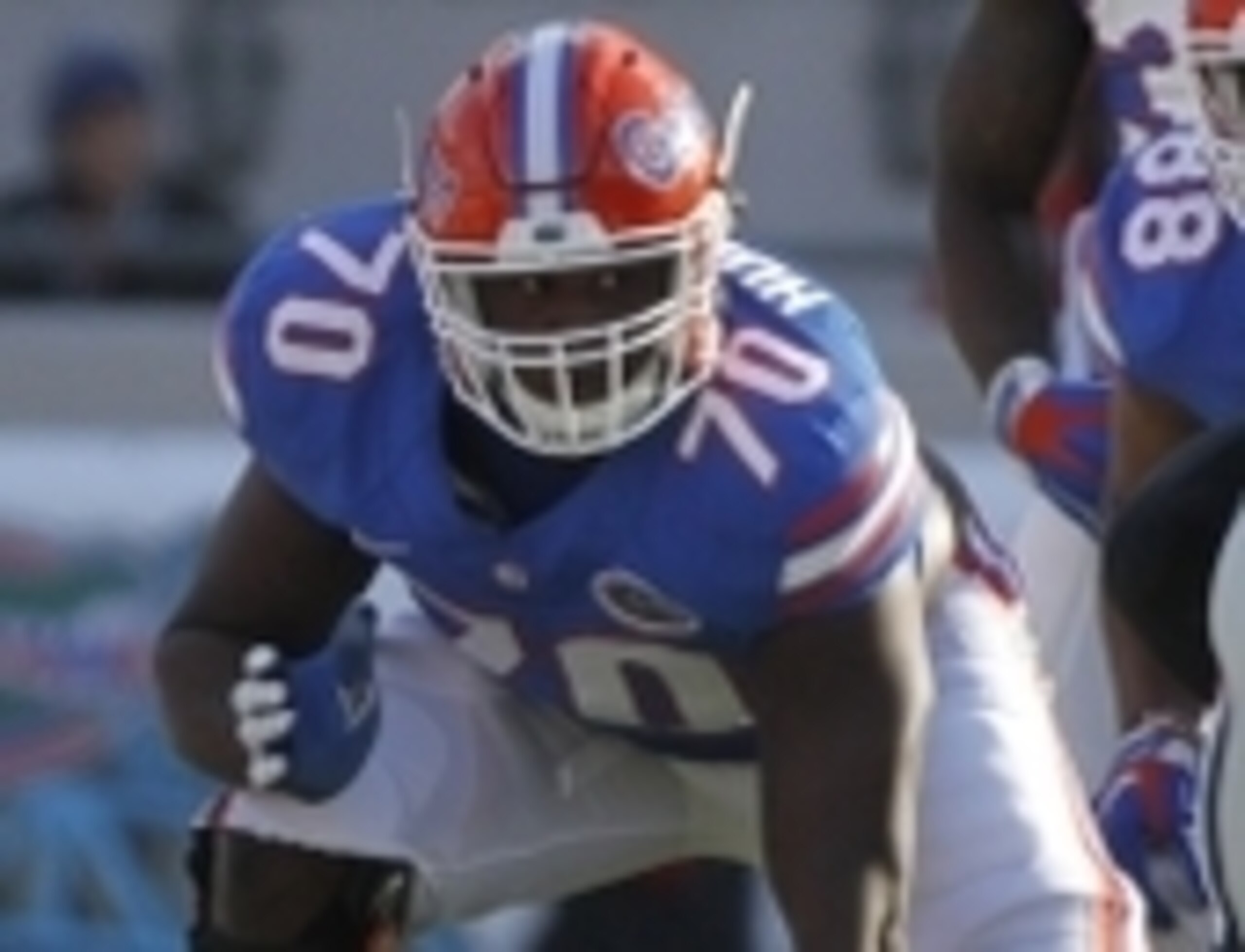
Key Acquisitions: Offensive tackle Michael Oher, wide receiver Ted Ginn Jr., tight end Ed Dickson (re-signed)
Remaining Draft Needs: Left tackle, defensive end, wide receiver
The Carolina Panthers are a perfect example of not knowing exactly what they have until it's gone.
Two franchise stalwarts, left tackle Jordan Gross and wide receiver Steve Smith, left the Carolina Panthers last year. Fast-forward a year, and the organization still hasn't replaced either of them.
As the team enters another offseason, those two positions remain the Panthers' top priorities even after signing Michael Oher and Ted Ginn via free agency. Neither of those acquisitions adequately addresses the team's biggest holes. They're simply insurance just in case the Panthers aren't in position to add quality talent during the draft.
Left tackle remains the team's No. 1 need in order to protect the franchise's investment in quarterback Cam Newton.
The key in this year's draft, particularly for those teams picking in the latter half of the first round, is to properly decipher which offensive tackle prospect can actually play on the blind side. It's an unusual class where even the top offensive line prospects aren't projected to play left tackle in the NFL. This is the fine line the Panthers must walk during the evaluation process.
The Panthers offense also requires a complement to last year's first-round selection, wide receiver Kelvin Benjamin. The Florida State product performed well as a rookie, but it's all about putting the proper pieces around Newton for the entire offense to succeed.
Meanwhile on defense, Greg Hardy remains a free agent. His return to the organization is unlikely, but the Panthers still require a consistent pass-rush threat opposite Charles Johnson.
Potential Draft Targets: Florida's D.J. Humphries (pictured above), UCLA's Owamagbe Odighizuwa, UCF's Breshad Perriman
Chicago Bears
6 of 32
Key Acquisitions: Linebacker Pernell McPhee, safety Antrel Rolle, wide receiver Eddie Royal
Remaining Draft Needs: Nose tackle, wide receiver, quarterback, safety
New Bears general manager Ryan Pace publicly committed to quarterback Jay Cutler last week. It shouldn't be perceived as a long-term commitment, though.
The Bears will have an interesting conundrum on their hands if Oregon's Marcus Mariota or Florida State's Jameis Winston happens to slide to the seventh overall selection.
The organization can finally get out from under Cutler's contract prior to the 2016 season. Can the team afford to pass on the (potential) opportunity to select a franchise-caliber replacement?
It's an interesting question to ponder as the Bears remold the franchise under the direction of Pace and new head coach John Fox.
After taking the quarterbacks off the table and considering other options, the Bears have yet to adequately fill a gaping hole at nose tackle for Vic Fangio's 3-4 defensive scheme. Also, Antrel Rolle may have been acquired to play free safety, but the team still needs a presence at strong safety.
Also, the trade of veteran Brandon Marshall opens a major hole at "X" receiver. Jeffrey could potentially move into that role, but the offense may be best served by adding another top talent opposite the South Carolina product.
Potential Draft Targets: Oregon's Marcus Mariota (pictured above), Washington's Danny Shelton, Alabama's Landon Collins, Louisville's DeVante Parker
Cincinnati Bengals
7 of 32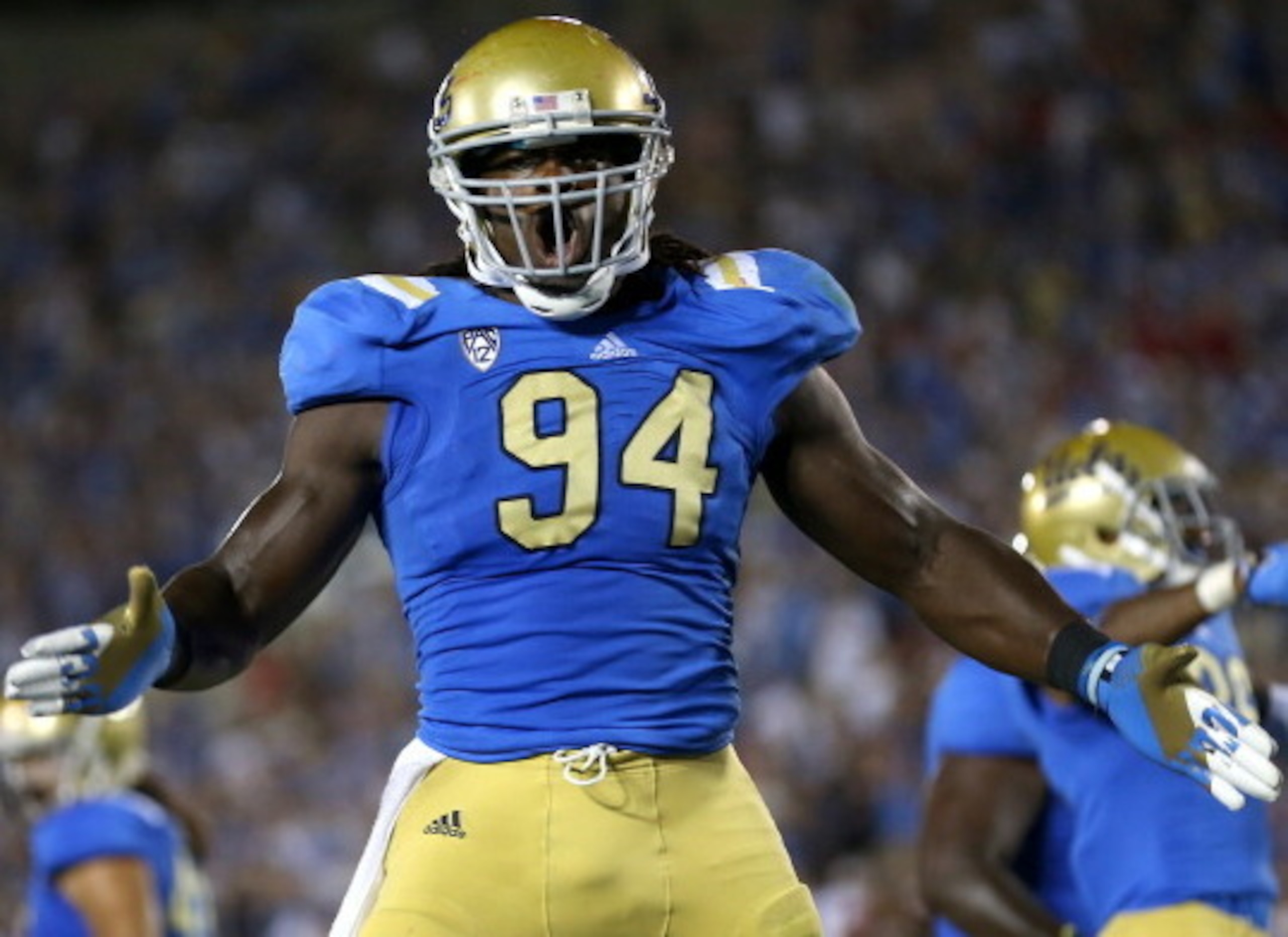
Key Acquisitions: Guard Clint Boling (re-signed), defensive end Michael Johnson, linebackers A.J. Hawk and Rey Maualuga (re-signed)
Remaining Draft Needs: Defensive end, cornerback, wide receiver, defensive tackle
Most of the Cincinnati Bengals' offseason work centered around retaining the team's top available talent, and it's a solid course of action considering two primary starters, Rey Maualuga and Clint Boling, are back in the fold. Both are 28 years old or younger and signed through at least the 2017 season.
When teams draft well, it isn't simply about getting cheap talent on rookie deals. It's also an opportunity to keep those talented players around through the course of their career once they're up for their second contracts. Thus, the Bengals didn't create extra holes on the roster by simply letting either of the aforementioned players walk in free agency.
Instead, the organization can concentrate on its primary issues. Namely, the defense's inability to generate a pass rush during the 2014 campaign. The Bengals finished dead last with only 20 sacks last season.
The problem was twofold.
First, the Bengals lack a legit pass-rush presence opposite Carlos Dunlap. Second, the interior push from the defensive tackles was nonexistent at times. Domata Peko will turn 31 years old during the upcoming season, and Geno Atkins clearly didn't display the same level of explosiveness he had prior to a torn ACL he suffered nearly a year-and-a-half ago. The Bengals were aggressive in bringing Michael Johnson back, but there is a reason why the Buccaneers recently cut the veteran defensive end.
Cincinnati should load up on defensive line talent in this year's draft, while sprinkling in picks to address the team's aging secondary and lack of consistency at wide receiver opposite A.J. Green.
Potential Draft Targets: UCLA's Owamagbe Odighizuwa (pictured above), Florida State's Eddie Goldman, Miami's (Ohio) Quinten Rollins, Ohio State's Devin Smith
Cleveland Browns
8 of 32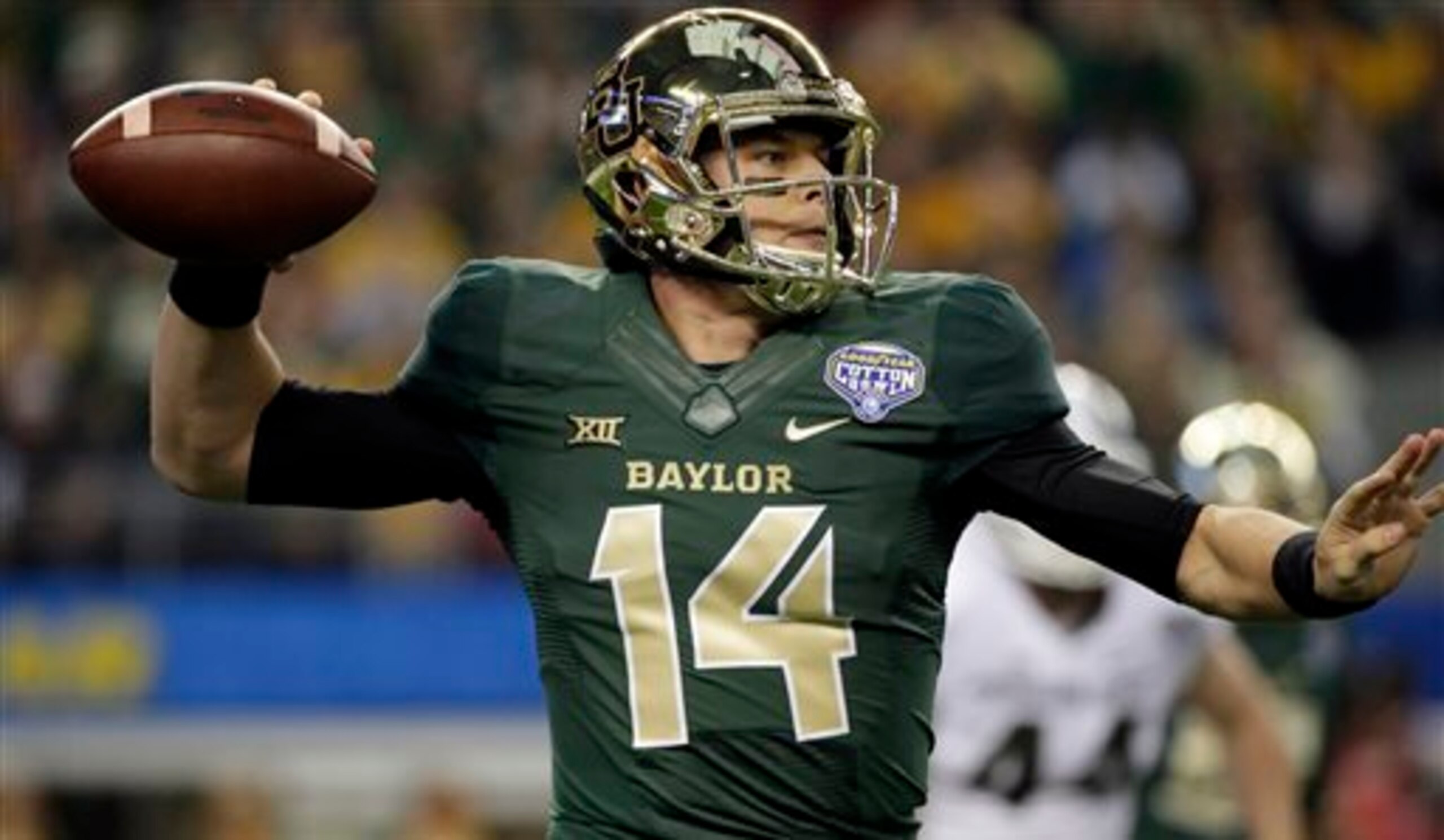
Key Acquisitions: Quarterback Josh McCown, wide receiver Brian Hartline
Remaining Draft Needs: Defensive line, wide receiver, edge-rusher, tight end, quarterback
With the addition of Josh McCown, the Browns provided a Band-Aid to address the game's most important position. The team is also awaiting the return of Johnny Manziel, who entered a treatment facility earlier in the offseason. The team isn't necessarily done with the position either. It wouldn't be a smart business venture to enter next season with a 36-year-old journeyman and an unreliable former first-rounder.
Thus, quarterback can't be ruled out as an option in this year's draft.
Hartline is essentially the same type of acquisition as McCown at wide receiver that was forced, in part, by Josh Gordon's indefinite suspension from the league.
These types of moves don't move the needle for a franchise that's continually stuck in the AFC North's basement. Yet the Browns decided not to make any significant moves during the first week of free agency.
In order to the close the gap on the Bengals, Ravens and Steelers, the Browns are placing undue pressure on general manager Ray Farmer to draft exceptionally well and head coach Mike Pettine to develop the young talent already on the roster.
The team has numerous issues to address besides quarterback and wide receiver, too. The team's biggest concern in this year's draft is fixing a defensive front that finished dead last against the run in 2014. Paul Kruger desperately needs a running mate as well to create a consistent pass rush.
Potential Draft Targets: Baylor's Bryce Petty (pictured above), Texas' Malcom Brown, Washington's Danny Shelton, Louisville's DeVante Parker, Minnesota's Maxx Williams
Dallas Cowboys
9 of 32
Key Acquisitions: Wide receiver Dez Bryant (re-signed), linebacker Keith Rivers, fullback Jed Collins, tackle Doug Free (re-signed), running back Darren McFadden
Remaining Draft Needs: Defensive line, secondary, running back
The Dallas Cowboys finally established an identity in 2014 to pull the franchise out of its perpetual 8-8 mediocrity. That identity was built around the most talented offensive line in football.
In three of the last four drafts, the Cowboys spent a first-round pick on an offensive lineman. After building a dominant offensive front, Dallas finally made the leap to being a 12-4 team and the NFC East champions.
The team can now head in two directions.
The Cowboys could continue to build the team's identity around the offensive line by acquiring a top running back prospect to become their new workhorse, or the organization could put the same concerted effort into building its defensive line.
Both positions are very deep in this year's class, and the Cowboys will have options. Quality running backs, in particular, will be available throughout the early rounds of the draft. Talented defensive linemen, though, will come off the board very quickly.
Defensive coordinator Rod Marinelli also did a wonderful job implementing his version of the Tampa 2 defense. The unit flew to the ball and generally played sound football. Yet that side of the football still lacks talent at key positions. It starts up front with improvements needed on applying pressure on the quarterback, which could shield some of the deficiencies within the secondary.
Cowboys owner Jerry Jones proved to be brilliant by passing on the mercurial Johnny Manziel in last year's draft for the far less sexy selection of Zack Martin. Boring picks should become a trend in Big D.
Potential Draft Targets: Wisconsin's Melvin Gordon, Florida State's P.J. Williams, Ohio State's Michael Bennett, LSU's Danielle Hunter
Denver Broncos
10 of 32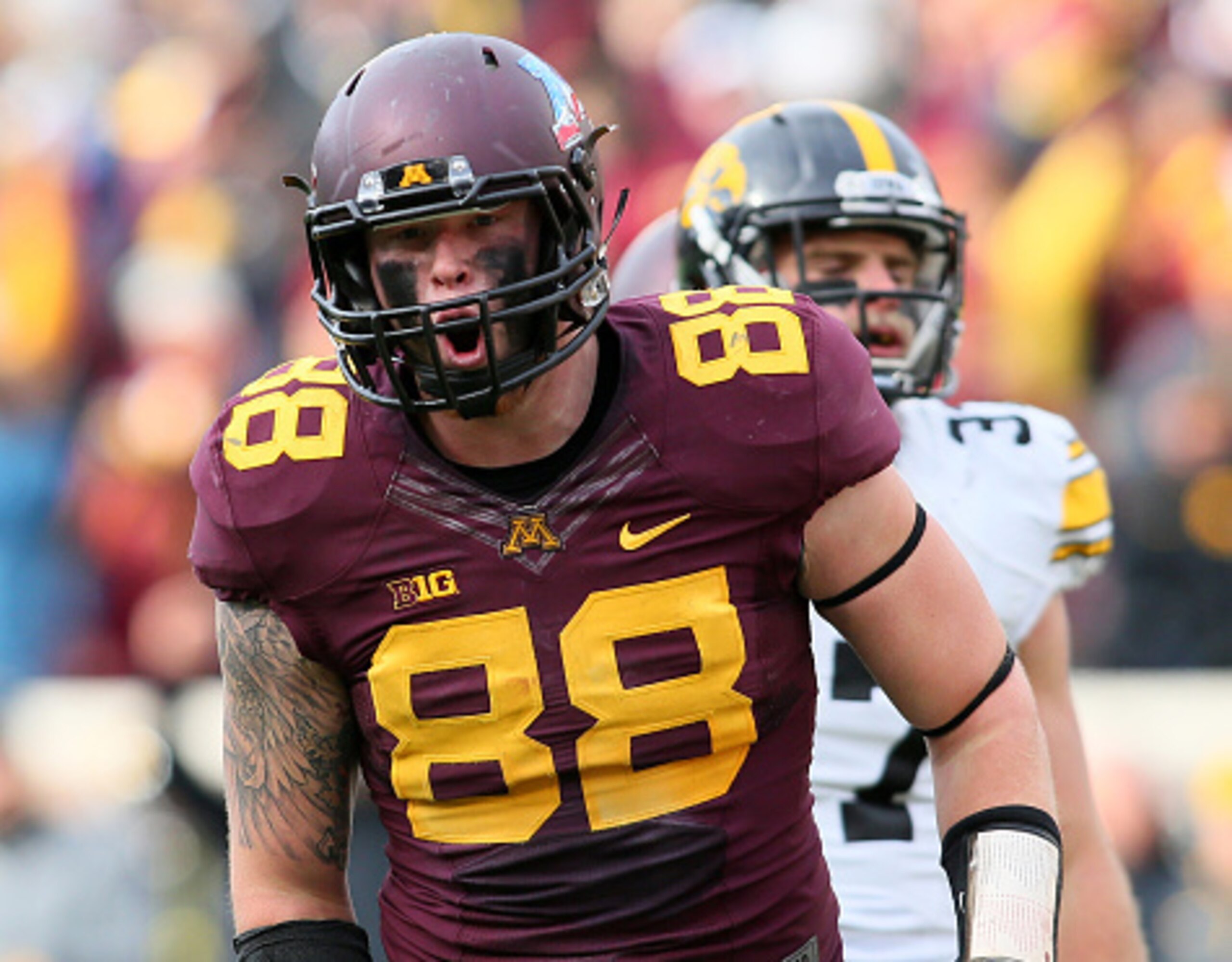
Key Acquisitions: Tight end Owen Daniels, defensive tackle Vance Walker
Remaining Draft Needs: Tight end, nose tackle, guard
A new era is set to begin in Denver. Fortunately for new head coach Gary Kubiak, quarterback Peyton Manning is still calling the shots for the Broncos offense.
It's pretty safe to say Kubiak's bootleg game won't be prevalent in the Broncos offense during the upcoming season. However, the Broncos' running game and tight end usage should reach another level under the supervision of Mike Shanahan's star pupil.
The Broncos' run game will now be built around the zone stretch, and the tight end position will become the No. 2 target within the offense behind star wide receiver Demaryius Thomas. The organization was already busy this offseason re-signing backup tight end Virgil Green to replace Julius Thomas. Veteran tight end Owen Daniels also followed Kubiak to the Mile High City. But the team lacks a true in-line "Y" tight end. The aforementioned players are generally considered H-backs or "move" tight ends.
Also, Kubiak's system requires a complete commitment from the organization, particularly along the offensive line. Smaller and more athletic linemen are needed. With Orlando Franklin's departure, the team can add a completely different style of player at guard and still experience positive results.
The defense will also transition to a 3-4 base scheme under new coordinator Wade Phillips.
Phillips is a defensive mastermind and always sees results. The roster itself projects pretty well to make a relatively smooth transition. The loss of Terrance Knighton, however, leaves a void at nose tackle. Phillips likes to use quicker, one-gap nose tackles, but it's still an area that can be addressed.
Potential Draft Targets: Minnesota's Maxx Williams (pictured above), Oklahoma's Jordan Phillips, Oregon's Jake Fisher
Detroit Lions
11 of 32
Key Acquisitions: Defensive tackles Haloti Ngata and Tyrunn Walker
Remaining Draft Needs: Cornerback, wide receiver, running back, defensive tackle
The offseason of Ndamukong Suh is now over, but it won't soon be forgotten.
The Lions, though, made it much easier to accept his loss and that of his running mate, Nick Fairley, in free agency with a pair of shrewd moves to address defensive tackle.
What better way to replace an All-Pro interior defender than by acquiring another? That is exactly what Detroit did when it traded for Haloti Ngata. The former member of the Baltimore Ravens turned 31 years old in January, but he can still be a dominant defender.
Walker's acquisition obviously didn't receive the same amount of recognition, but he proved to be a disruptive presence when on the field for the New Orleans Saints. Walker's game is similar to Fairley's, but he might prove to be a healthier option.
Plus, the team can still continue to build depth along its defensive interior.
Meanwhile, it seems like cornerback is a need every single year in Detroit. Darius Slay developed into a very good young player. He lacks a bookend, though. Last season, the Lions relied on the 34-year-old Rashean Mathis. The team would be well served to find a long-term cornerback option opposite Slay.
On offense, two positions require depth. Running back Joique Bell remains on the roster, but Reggie Bush signed with the San Francisco 49ers. Also, wide receiver Calvin Johnson owns a gargantuan cap hit in 2016, per Spotrac. Both positions should be addressed at some point during April's draft.
Potential Draft Targets: Florida State's Eddie Goldman (pictured above), Connecticut's Byron Jones, Michigan State's Jeremy Langford, Auburn's Sammie Coates
Green Bay Packers
12 of 32
Key Acquisitions: Wide receiver Randall Cobb (re-signed), right tackle Bryan Bulaga (re-signed)
Remaining Draft Needs: Inside linebacker, nose tackle, cornerback, tight end
It's not a secret that the Packers win with offense as orchestrated by the NFL's reigning MVP, quarterback Aaron Rodgers.
For the organization to reach the heights it did four years ago when the team's season culminated in a Super Bowl victory, it needs more than just a Rodgers-led explosive offense.
Green Bay is particularly weak along the middle of the defense and finished 23rd overall in run defense. Defensive coordinator Dom Capers eventually resorted to playing Clay Matthews at inside linebacker due to the previous lack of athleticism and impact players at the position. As a result, the long marriage between the Packers and A.J. Hawk finally ended this offseason.
The Packers lack a true field general in the middle of the defense. Inside linebacker is a glaring hole, and it has been a problem over the course of a few seasons.
The issue is only exacerbated by the team's lack of a true nose tackle currently on the roster.
General manager Ted Thompson should be actively searching for a space-eater in the middle of the defense and an instinctive tackling machine early in the draft.
Cornerback Tramon Williams, who led the entire defense in snaps last season, is also a free agent, and his return doesn't appear likely.
All three levels of the Packers defense remains problematic after an uneventful free-agency period.
Potential Draft Targets: UCLA's Eric Kendricks (pictured above), Iowa's Carl Davis, Ohio State's Doran Grant, Penn State's Jesse James
Houston Texans
13 of 32
Key Acquisitions: Cornerback Kareem Jackson (re-signed), safety Rahim Moore, quarterbacks Brian Hoyer and Ryan Mallett (re-signed), tackle Vince Wolfork (per ESPN's Adam Schefter)
Remaining Draft Needs: Nose tackle, wide receiver, outside linebacker
Let the exhilarating quarterback competition between Bryan Hoyer and Ryan Mallett begin!
Now that the quarterback situation is (sort of) addressed in Houston, the franchise can concentrate on other issues throughout the roster.
Houston finally parted ways with the franchise's all-time leading receiver, Andre Johnson. With Johnson out of the picture, it's now DeAndre Hopkins' show as the Texans' new No. 1 target.
While no one is exactly sure who will be throwing the ball to the wide receivers, Hopkins needs a new running mate. No rookie should be expected to step in and replace a veteran of Johnson's caliber, but Houston can add size to the position after losing the 6'3", 230-pound target. No one remaining on the roster is taller than 6'1".
Finally, depth at outside linebacker in Romeo Crennel's 3-4 scheme is vital. With the the loss of Brooks Reed in free agency and Jadeveon Clowney's recent injury history, the position may receive higher priority from Texans general manager Rick Smith than initially anticipated.
Potential Draft Targets: Washington's Danny Shelton (pictured above), Michigan's Devin Funchess, Louisville's Lorenzo Mauldin
Indianapolis Colts
14 of 32
Key Acquisitions: Guard Todd Herremans, running back Frank Gore, outside linebacker Trent Cole, defensive end Kendall Langford, wide receivers Duron Carter and Andre Johnson
Remaining Draft Needs: Offensive line, running back, defensive end, safety
The Indianapolis Colts are all-in and ready to make a run in the AFC during the 2015 season.
Free agency is an opportunity for teams to adequately address all of their needs in order to take the best player available during the draft.
Colts general manager Ryan Grigson placed his team in that exact situation. Indianapolis could field a team tomorrow, and all of its glaring needs have been addressed to varying degrees. The roster still needs plenty of work, though.
The additions of talented yet aging players such as Andre Johnson, Frank Gore, Todd Herremans and Trent Cole are only short-term solutions. Each of their respective positions still needs to be infused with young talent to develop.
For example, Gore has been a workhorse in the league for a long time. Daniel "Boom" Herron, Zurlon Tipton, and Vick Ballard add quality depth. Yet without the Gore addition, the Colts would be searching for a running back upgrade in the draft. That plan shouldn't change.
Two areas, though, remain particularly weak.
Strong safety and the right side of the offensive line are problem areas. Mike Adams, who turns 34 years old this season, can't hold up forever in the secondary, while both right guard and tackle can be upgraded to protect quarterback Andrew Luck.
Potential Draft Targets: Oregon's Arik Armstead (pictured above), Ole Miss' Cody Prewitt, Miami's Ereck Flowers and Duke Johnson
Jacksonville Jaguars
15 of 32
Key Acquisitions: Defensive end Jared Odrick, right tackle Jeremy Parnell, tight end Julius Thomas, cornerback Davon House, outside linebacker Dan Skuta, safety Sergio Brown
Remaining Draft Needs: Edge-rusher, safety, cornerback, running back
No team spent more in free agency than the Jacksonville Jaguars, but the job isn't complete.
The Jaguars took advantage of a massive amount of cap space, no state income tax and an aggressive front office by signing three major contracts at the start of free agency. In doing so, the team filled a massive hole at right tackle, found a security blanket for quarterback Blake Bortles and upgraded the team's run defense.
After finishing 3-13 last season, though, it's only a strong start. Teams rarely win in December after doing so in March. It's all about supplementing the roster with the right parts in order to build a strong foundation for long-term success.
Head coach Gus Bradley has yet to field a defense in Jacksonville with the proper talent to run his scheme. The organization added pieces over the last two years, but the team is now in position to get a cornerstone for its defense.
The "Leo" position, in particular, can be filled with multiple edge-rushers potentially available with the third overall pick. Veteran Chris Clemons, who turns 34 years old this season, will only remain productive for so long.
Also, Bradley's scheme requires certain types of talent in the secondary. A roaming free safety has yet to be added, while more length can always be supplied at cornerback.
Running back remains in the equation as well. Denard Robinson was a pleasant surprise in 2014, but he couldn't withstand the beating of being the Jaguars' workhorse, while Toby Gerhart proved he isn't a starting-caliber ball-carrier. There was a reason why the Jaguars were interested in DeMarco Murray before he signed with the Philadelphia Eagles.
Potential Draft Targets: Florida's Dante Fowler Jr. (pictured above), USC's Leonard Williams, Arizona State's Demarious Randall, Auburn's Nick Marshall and Cameron Artis-Payne
Kansas City Chiefs
16 of 32
Free-agent Acquisitions: Wide receiver Jeremy Maclin, safety Tyvon Branch, guards Paul Fanaika and Ben Grubbs
Remaining Draft Needs: Wide receiver, inside linebacker, secondary
One statistic will be regurgitated over and over again prior to the NFL draft regarding the Kansas City Chiefs—zero touchdown receptions from the team's wide receivers in 2014.
Even with the acquisition of Maclin, Chiefs general manager John Dorsey shouldn't be finished adding talent to the wide receiver position.
Maclin is a proven 1,000-yard receiver, and he'll transition smoothly into the Chiefs offense due to his previous familiarity with head coach Andy Reid. However, the rest of the team's wide receiver depth is questionable at best.
There is some young talent on the roster that could continue to develop, but that's a risky proposition. A first-round wide receiver should remain in play as the Chiefs attempt to rebuild their wide receiver corps.
Besides wide receiver, inside linebacker is a sore spot.
Veteran Derrick Johnson is coming off a season-ending Achilles injury, while the team's lack of depth at the position was exploited last season with Johnson out of the lineup.
An addition of a high draft selection would provide insurance for Johnson and potentially upgrade the NFL's 28th-ranked run defense.
Finally, Eric Berry's uncertain future unfortunately forces secondary help to be much higher on the Chiefs' list of needs than it would be if he were in the lineup.
Potential Draft Targets: Missouri/Oklahoma's Dorial Green-Beckham (pictured above), Clemson's Stephone Anthony, UCLA's Anthony Jefferson
Miami Dolphins
17 of 32
Key Acquisitions: Defensive tackle Ndamukong Suh, cornerback Brice McCain, wide receiver Kenny Stills, tight end Jordan Cameron
Remaining Draft Needs: Wide receiver, secondary, left guard, linebacker
The Miami Dolphins were the big winners in free agency simply by signing the top player available on the market, defensive tackle Ndamukong Suh. The fiery defensive lineman is now the face of the franchise, and he is expected to help the Dolphins finally overcome the New England Patriots' stranglehold of the AFC East.
Suh will need plenty of help, though. The defensive tackle wasn't the final piece of the puzzle. He was simply the biggest (and most expensive).
A splash in free agency, however, doesn't always prove to be beneficial for a team. The Dolphins learned this first hand after they traded away wide receiver Mike Wallace and linebacker Dannell Ellerbe this offseason after signing them to big contracts two years ago.
Miami added a few key pieces, and it will now use the draft to fill in the rest of the roster.
Quarterback Ryan Tannehill was provided with a couple of talented young players in wide receiver Kenny Stills and tight end Jordan Cameron. The Dolphins shouldn't be done addressing the skill positions, though. A second outside receiver is still needed.
It's also important to protect the talented young signal-caller. The team spent heavily on its offensive line last offseason, yet it didn't adequately address left guard.
Holes also remain at free safety and linebacker. The team was never able to find a consistent free safety, while one of the starting spots along the second line of defense is now open after Ellerbe's departure.
Potential Draft Targets: Michigan State's Trae Waynes (pictured above), Louisville's DeVante Parker, Arizona State's Damarious Randall, Utah's Jeremiah Poutasi, Washington's Shaq Thompson
Minnesota Vikings
18 of 32
Key Acquisitions: Wide receiver Mike Wallace, quarterback Shaun Hill
Remaining Draft Needs: Left guard, middle linebacker, defensive end, secondary
When the Minnesota Vikings completed a trade to acquire wide receiver Mike Wallace from the Miami Dolphins, the organization also changed its course in how to build around quarterback Teddy Bridgewater.
Wide receiver is no longer the team's No. 1 need. The trio of Wallace, Charles Johnson and Cordarrelle Patterson form a young and talented group of receivers with speed, athleticism and plenty of potential. Another wide receiver with the 11th overall pick might simply be overkill.
Vikings general manager Rick Spielman can now concentrate on fortifying a porous offensive line.
It may be too early for the team to give up on left tackle Matt Kalil, but the play of the former fourth overall pick has gotten progressively worse in each of his three seasons. A backup plan is needed if he can't bounce back to the player seen during his rookie campaign.
Left guard is particularly problematic after the team released starter Charlie Johnson last month.
A versatile lineman who can help bring a new attitude would be a crucial piece to a burgeoning offense with Bridgewater leading the way.
While the building plan revolves around the young quarterback, head coach Mike Zimmer is a former defensive coordinator who will continue to improve that side of the ball if he is provided talented players who can be molded.
The team will be searching for a prospect who can provide more of a consistent pass rush opposite Everson Griffen. Brian Robison is a solid performer, but his play dropped off during his eighth NFL season.
At the second level, middle linebacker remains a concern. With Chad Greenway and Anthony Barr on the outside, the team is set there, but Jasper Brinkley agreed to a two-year deal with the Dallas Cowboys.
Finally, Zimmer's secondary played above expectations in 2014, but depth could be added to both cornerback and safety.
Potential Draft Targets: LSU's La'el Collins (pictured above), Miami's Denzel Perryman, Kentucky's Za'Darius Smith, Samford's Jaquiski Tartt
New England Patriots
19 of 32
Key Acquisitions: Safety Devin McCourty (re-signed), wide receiver Brandon Gibson, defensive end Jabaal Sheard, tackle Alan Branch (re-signed)
Remaining Draft Needs: Outside receiver, guard, running back
As long as Bill Belichick remains the head coach and quarterback Tom Brady is calling the shots, everything will be OK for the reigning Super Bowl champions.
The Patriots are continually searching for potential upgrades to the roster. The bottom end of the roster seems every bit as important to Belichick as his top players. But there are a few key areas in which New England can still improve.
As good as the Patriots can be on offense, it's not a complete unit. Brady still lacks a true deep threat, and it has been that way since Randy Moss was traded.
Also, the offense was at its absolute best the last two seasons when a consistent ground game was established. It didn't matter which of the running backs on the roster produced as long as one did each week. With Shane Vereen gone and Stevan Ridley expected to leave via free agency, that leaves LeGarrette Blount and the one-hit wonder, Jonas Gray, as the team's primary ball-carriers.
In a talented running back class, the Patriots could be in prime position to land the No. 1 running back.
To build a strong running game, though, the offensive line must play at a consistently high level. Last year, the Patriots took nearly the entire season to find a starting five that eventually proved to be the catalyst to the team's late-season surge. However, left guard remains a question mark after last year's Logan Mankins deal.
Potential Draft Targets: Ohio State's Devin Smith (pictured above), Duke's Laken Tomlinson, Georgia's Todd Gurley
New Orleans Saints
20 of 32
Key Acquisitions: Center Max Unger, cornerback Brandon Browner, running backs Mark Ingram (re-signed) and C.J. Spiller
Remaining Draft Needs: Linebacker, guard, quarterback
A changing of the guard is taking place in New Orleans, but the Saints organization isn't ready to fully acknowledge its current state of upheaval.
With Tom Benson's ownership being brought into question, salary-cap issues and an aging quarterback with diminishing skills, the Saints experienced multiple changes in the past few months.
For the team, general manager Mickey Loomis made two absolutely mind-boggling moves by trading away All-Pro tight end Jimmy Graham and the team's best young wide receiver, Kenny Stills. Veteran guard Ben Grubbs was also traded to the Kansas City Chiefs.
In return for those three players, the Saints received center Max Unger, a couple of draft picks and salary-cap relief. If this were baseball, this scenario would be referred to as a "fire sale."
The Saints didn't adequately prepare for the future, and the organization is now dealing with the consequences.
All of this came after a 7-9 campaign where the team still had a chance to make the playoffs during the final weekend of the regular season. But the bottom line is the bottom line, and the Saints were more than $20 million over the projected salary cap, per ESPN.com.
Very little was brought back besides Unger. Cornerback Brandon Browner was signed to an incentive-laden deal to provide insurance opposite Keenan Lewis. Running back Mark Ingram was re-signed as well.
Otherwise, the Saints will rely on the draft if they expect to make any type of significant improvement this fall.
Outside linebacker jumps to the forefront of the team's issues due to Junior Galette's off-the-field concerns. Even if he's on the field for the Saints, Galette still needs a bookend at outside linebacker. Parys Haralson is a reliable veteran, but teams don't game-plan around his ability to get to the quarterback.
Brees also requires added protection. Without Grubbs, there is a hole at left guard. Due to the quarterback's slight stature (6'0", 209 lbs), the ability to retain a strong pocket is essential for the offense's success.
Finally, the Saints need to consider a potential replacement plan for the 36-year-old signal-caller.
Potential Draft Targets: Kentucky's Alvin "Bud" Dupree (pictured above), Kansas' Ben Heeney, LSU's La'el Collins, Baylor's Bryce Petty
New York Giants
21 of 32
Key Acquisitions: Running back Shane Vereen, wide receiver Dwayne Harris, offensive tackle Marshall Newhouse, linebacker Jonathan Casillas
Remaining Draft Needs: Offensive line, defensive tackle, safety, middle linebacker
New York Giants general manager Jerry Reese obviously knew exactly who the franchise wanted to target in free agency, and he quickly went about his business.
Players such as Marshall Newhouse, Dwayne Harris and Jonathan Casillas weren't considered top free agents, yet Reese was able to sign each of them within the first few days of free agency because they fit certain roles that will specifically help the Giants.
Vereen was also an important piece of the puzzle due to his versatility out of the backfield as a receiver. Andre Williams has the type of potential to be a 250-plus-carry-per-year running back. But he's presents very little value on third down. Vereen was arguably the NFL's best third-down back last year, and he'll help add another dimension to the offense while keeping quarterback Eli Manning out of trouble, too.
For Manning and Vereen to be effective, though, the Giants offensive line must give them time to allow passing plays to develop.
Injuries curtailed the team's offensive line and didn't allow the unit to build any real chemistry. With the losses of Chris Snee and J.D. Walton, the Giants' offensive interior is of particular concern. While the team should expect more from Geoff Schwartz in 2014, one guard spot remains wide open after Weston Richburg returns to his natural position of center.
The team's defense also needs work at multiple spots.
Johnathan Hankins displays plenty of potential, but the defense relied far too heavily on veterans Cullen Jenkins and Mike Patterson.
Safety Antrel Rolle will be difficult to replace. No defender was on the field more for the G-men in 2014.
Meanwhile, Jon Beason took a pay cut, which granted him another chance in New York, but his injury history is scary at best.
Reese will be prudent during the draft just like he was in free agency. The Giants general manager has proved he has an eye for talent, and he'll target certain players who best fit what the team wants to do on both sides of the ball.
Potential Draft Targets: Iowa's Brandon Scherff (pictured above), Texas' Malcom Brown, Stanford's Jordan Richards, TCU's Paul Dawson
New York Jets
22 of 32
Key Acquisitions: Linebacker David Harris (re-signed), wide receiver Brandon Marshall, guard James Carpenter, quarterback Ryan Fitzpatrick, safety Marcus Gilchrist, cornerbacks Buster Skrine, Darrelle Revis and Antonio Cromartie
Remaining Draft Needs: Outside linebacker, quarterback, safety
Rex Ryan must be looking on from Buffalo completely flabbergasted by the amount of money spent and the overall talent acquired to finally upgrade the New York Jets secondary.
A weakness over the past two seasons quickly developed into a strength by bringing Darrelle Revis and Antonio Cromartie back into the fold and paying handsomely for the services of Buster Skrine to serve as the team's nickel corner.
Those weren't the only impact acquisitions, though.
Jets general manager Mike Maccagnan reacted quickly once wide receiver Brandon Marshall became available on the trade market. Maccagnan flipped a late-round pick to the Chicago Bears, and the Jets' starting wide receivers became an imposing duo with Marshall and Eric Decker.
Everything now falls on quarterback Geno Smith. There will be no more excuses if he fails. And the Jets made sure to hedge their bet at the position by acquiring veteran Ryan Fitzpatrick, who is already familiar with Chan Gailey's offensive scheme.
The Jets will still consider the top two quarterbacks if either is available with the sixth overall selection. Until that actually happens, the assumption is Smith will remain at the helm with everything to prove.
On defense, the Jets still don't have an explosive edge-rusher to pair with the team's dynamic defensive front. New head coach Todd Bowles proved he can scheme with the best of them during his time with the Arizona Cardinals, but a top pass-rusher makes life easier for everybody in the defense.
The Jets were active at the onset of free agency, and they've put themselves into a very good position for the start of the draft.
Potential Draft Targets: Missouri's Shane Ray (pictured above), USC's Josh Shaw, Oregon's Marcus Mariota and Ifo Ekpre-Olomu
Oakland Raiders
23 of 32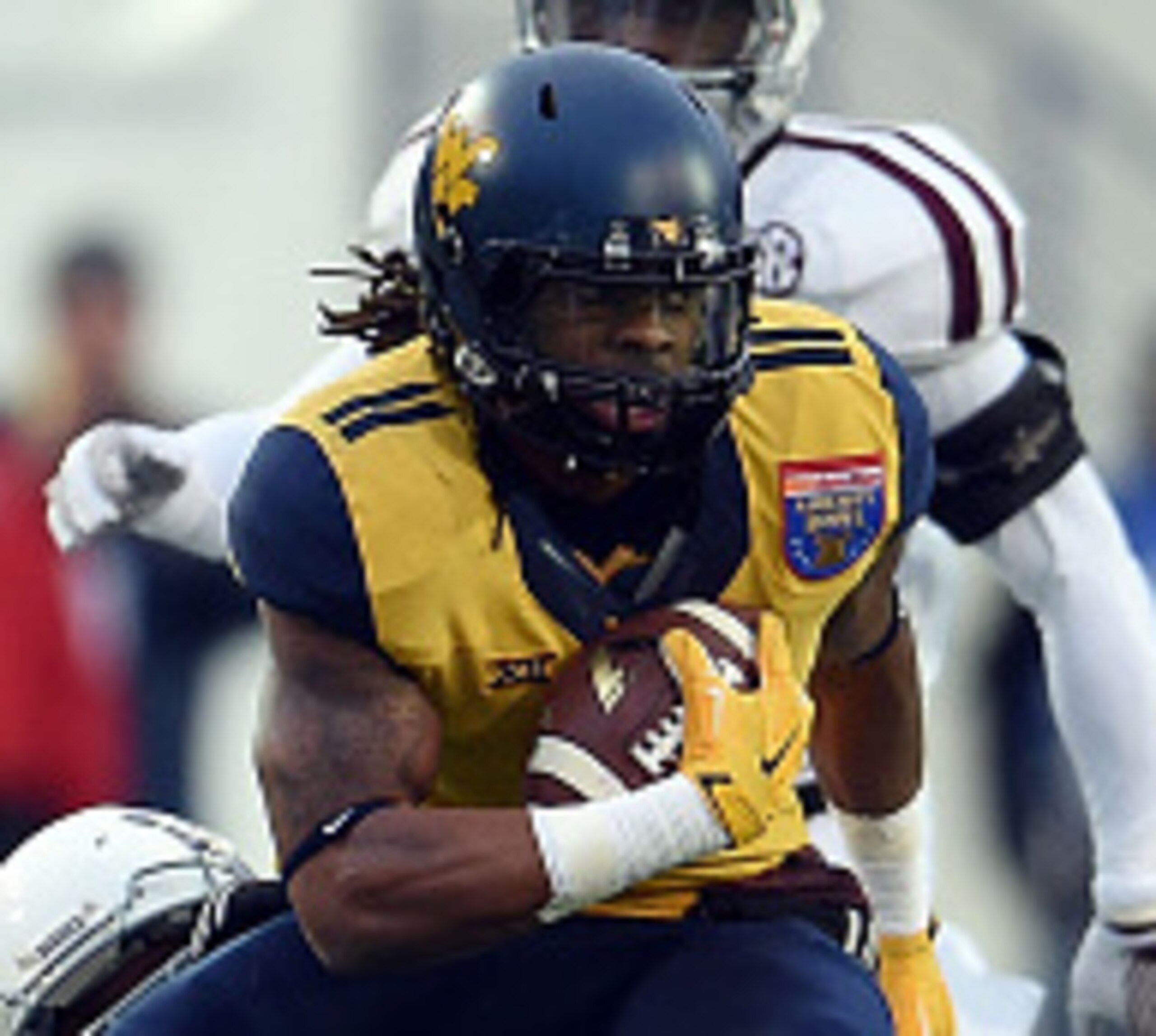
Key Acquisitions: Center Rodney Hudson, running back Roy Helu, tight end Lee Smith, defensive tackle Dan Williams, safety Nate Allen, linebackers Curtis Lofton and Malcolm Smith
Remaining Draft Needs: Wide receiver, defensive end, running back, cornerback
A year ago, the Raiders targeted a bunch of 30-somethings in hopes of building up the roster enough to become competitive. A 3-13 season ensued, and Raiders general manager Reggie McKenzie had to start all over again during this year's rendition of free agency.
Fast-forward 12 months, and the Raiders were a more enticing option due to the acquisition of Khalil Mack and Derek Carr to the roster via last year's draft and the hire of new head coach Jack Del Rio. Instead of signing older players to short contracts, the Raiders were able to acquire the services of multiple free agents in the prime of their careers.
The organization is legitimately building a foundation, whether it's finally laid in Oakland or some other city.
The next step is adding yet another successful draft class. With the fourth overall pick, McKenzie is in position to add another major building block.
Two obvious starting points would be to build around the two players selected in the first two rounds of last year's draft.
McKenzie could decide to build upon an already impressive accumulation of talent along the team's defensive front. Along with Lofton, Williams, Justin Tuck, Sio Moore and Justin Ellis, a top-end pass-rusher will be available with the fifth pick to place opposite Mack. The defensive front seven would then become the strength of the team.
Carr also requires talent around him to maximize his ability. Latavius Murray is expected to move into the role of lead back, while veteran James Jones returns as the team's top target at wide receiver. They're both solid options, but Murray has never been a full-time starting back, and Jones turns 31 years old later this month.
Whatever direction McKenzie decides to take, the team will be in position to add a top talent.
Potential Draft Targets: West Virginia's Kevin White (pictured above), Alabama's Amari Cooper, Florida's Dante Fowler, Jr., Alabama's T.J. Yeldon, Florida State's Ronald Darby
Philadelphia Eagles
24 of 32
Key Acquisitions: Quarterback Sam Bradford, running backs DeMarco Murray and Ryan Mathews, linebacker Brad Jones, cornerbacks Byron Maxwell and Walter Thurmond
Remaining Draft Needs: Wide receiver, offensive line, safety, quarterback
No one can accurately predict the direction the Eagles will take now that head coach Chip Kelly is fully in control of the roster. Even before the power struggle that landed Kelly atop the organization pyramid structure, the franchise selected Marcus Smith with a first-round pick and released top receiver DeSean Jackson.
The team's current trajectory is merely an advanced continuation of what began a year ago. So, no move that Kelly could imagine should surprise at this point.
Before going any further, a couple of clarifications should be made.
First, it's unlikely that Kelly traded for quarterback Sam Bradford with the intention of flipping him in yet another trade. Bradford operated in one of the fastest spread offenses in college football history. It made him a Heisman Trophy winner and the No. 1 overall pick.
Second, Kelly's system is predicated on varying tempo and running the football. Nowhere in there is it specified that the quarterback needs to be mobile.
These things also don't mean that the Eagles will pass on selecting a quarterback in this year's class. Bradford's injury history is enough to scare a team into considering the possibility.
Even with all the moves the Eagles made, Kelly must now surround his latest acquisitions with the most talent possible for the entire system to operate at a high level.
A downfield threat at wide receiver would provide a dynamic in the offense that the Eagles currently lack with Riley Cooper and Jordan Matthews. The team is also old along the offensive line. Jason Peters and Evan Mathis, who could be traded at any moment, are both over 33 years of age.
Potential Draft Targets: UCLA's Brett Hundley (pictured above), Oregon's Jake Fisher, Miami's Phillip Dorsett, Louisville's James Sample
Pittsburgh Steelers
25 of 32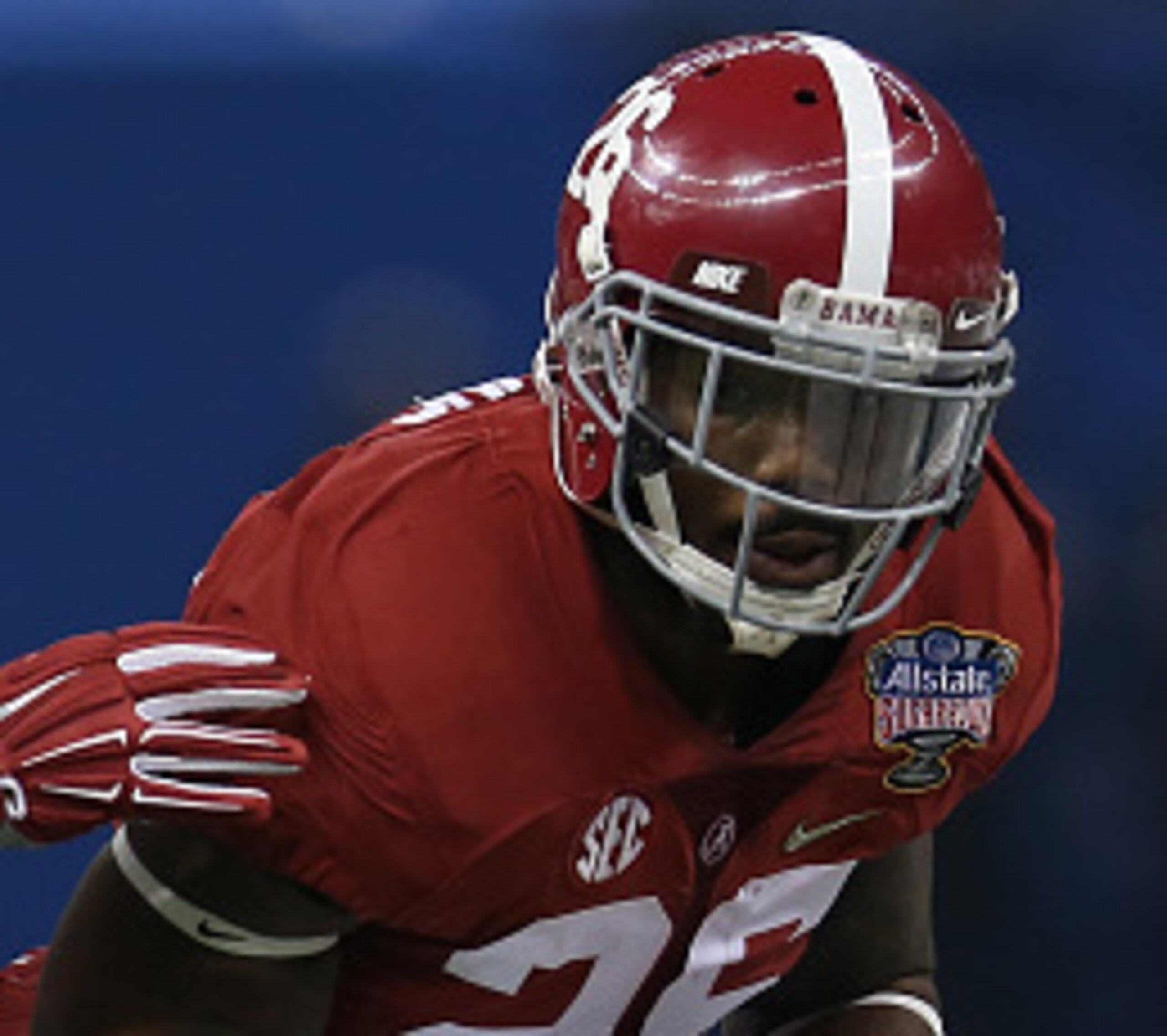
Key Acquisitions: Outside linebacker Arthur Moats (re-signed)
Remaining Draft Needs: Secondary, outside linebacker, defensive end
In an odd twist of fate, the Pittsburgh Steelers are no longer a team built around a stout defense.
After 30 years of finishing in the league's top 10 in total defense, Dick LeBeau's half of the squad faltered in 2013. After another down year, LeBeau resigned from his position on the staff.
Keith Butler now takes over with no help coming courtesy of free agency. Thus, the Steelers will rely on the draft to fix multiple issues at each level of the defense.
In order to rebuild a once-proud defense, Steelers general manage Kevin Colbert should make a concerted effort to add plenty of talent to that side of the ball. The offense can score points with Ben Roethlisberger behind center, but he shouldn't be asked to carry the team to victory each week.
There are a couple of pieces in place with Cameron Heyward and Lawrence Timmons, but the organization allowed itself to get old at key positions due to the team's loyalty toward Troy Polamalu, Ike Taylor and Brett Keisel. Yet, adequate contingency plans were never put in place.
The Steelers now need to rebuild on the fly as a result. Unless the defense isn't vastly improved in short order, the organization can't consider itself a legitimate Super Bowl contender, and that's the goal in Pittsburgh each and every season.
Potential Draft Targets: Alabama's Landon Collins (pictured above), Stanford's Henry Anderson, Kentucky's Alvin Dupree, Connecticut's Byron Jones
St. Louis Rams
26 of 32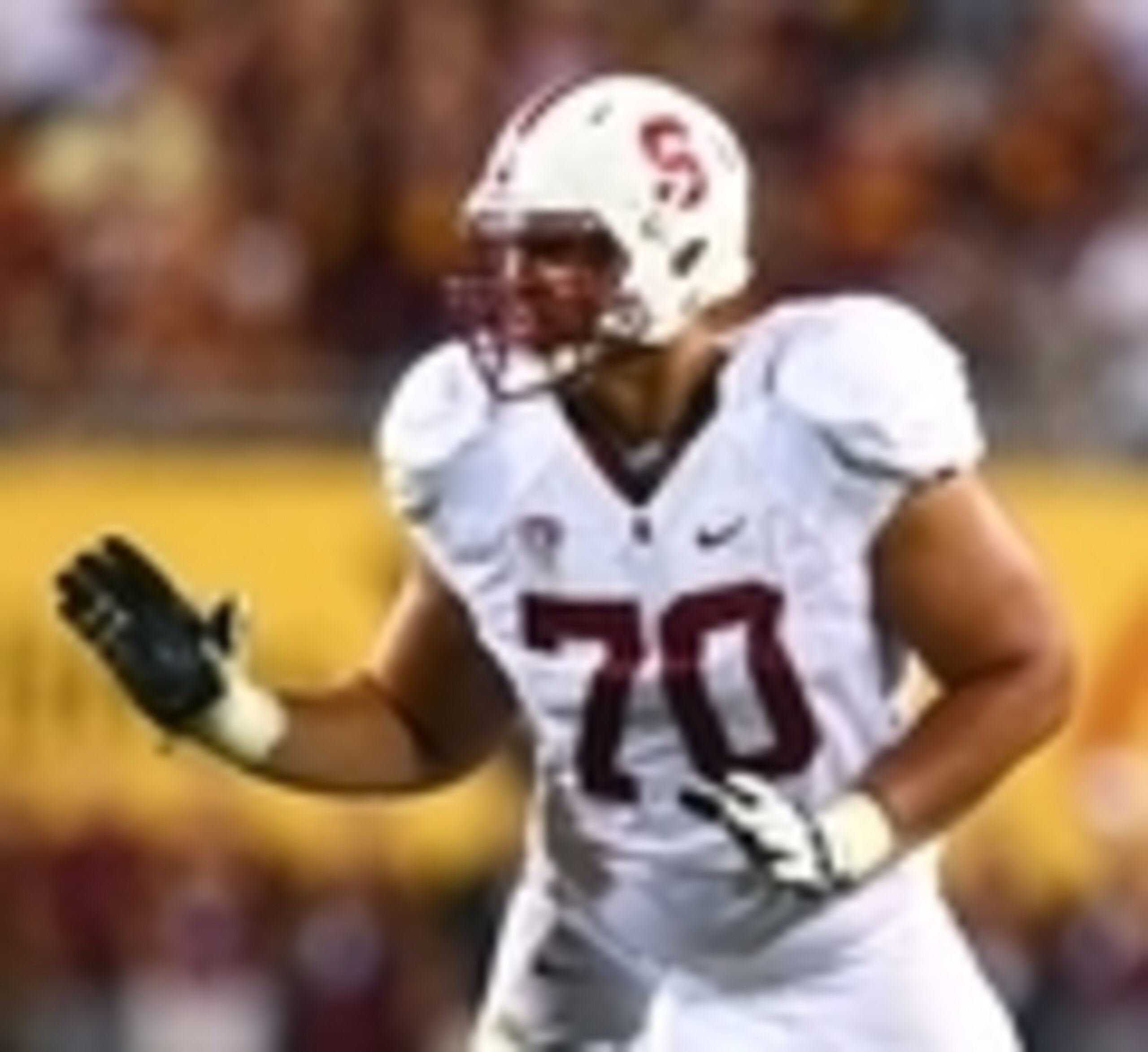
Key Acquisitions: Quarterback Nick Foles, tight end Lance Kendricks (re-signed), outside linebacker Akeem Ayers, defensive tackle Nick Fairley
Remaining Draft Needs: Offensive line, wide receiver, quarterback
The Rams will be one of the NFL's scariest teams this fall due to the most intimidating defensive line in the sport. With the addition of Nick Fairley via free agency, the Rams will come at opposing quarterbacks in waves.
The other side of the football isn't nearly as impressive.
After years of hoping quarterback Sam Bradford would develop into a franchise cornerstone, the former No. 1 overall pick couldn't stay healthy. In a stunning move, Rams general manager Les Snead traded Bradford to the Philadelphia Eagles for Nick Foles.
Foles could finally prove to be the team's answer behind center, but who is snapping to him and protecting the quarterback remains an issue.
Veterans Scott Wells, Jake Long and Davin Joseph no longer make up three-fifth's of the Rams' starting offensive line. The team hasn't pushed to re-sign Joseph Barksdale either.
The only two pieces still on the roster that are expected to start along the offensive line are Roger Safford and last year's No. 2 overall pick, Greg Robinson. Otherwise, the Rams should be expected to place a heavy emphasis along their offensive front during the draft.
Along with the offensive line, the Rams still haven't found a reliable target at wide receiver. After years of spending multiple valuable picks on the position, the organization still hasn't gotten it quite right.
Finally, the team appears genuinely excited about Foles as its new quarterback. However, he's yet to start an entire season. The organization would be wise to hedge its bets at the position by adding another talented quarterback in the middle rounds.
Potential Draft Targets: Stanford's Andrus Peat (pictured above), Florida's Max Garcia, Alabama's Amari Cooper, UCLA's Brett Hundley
San Diego Chargers
27 of 32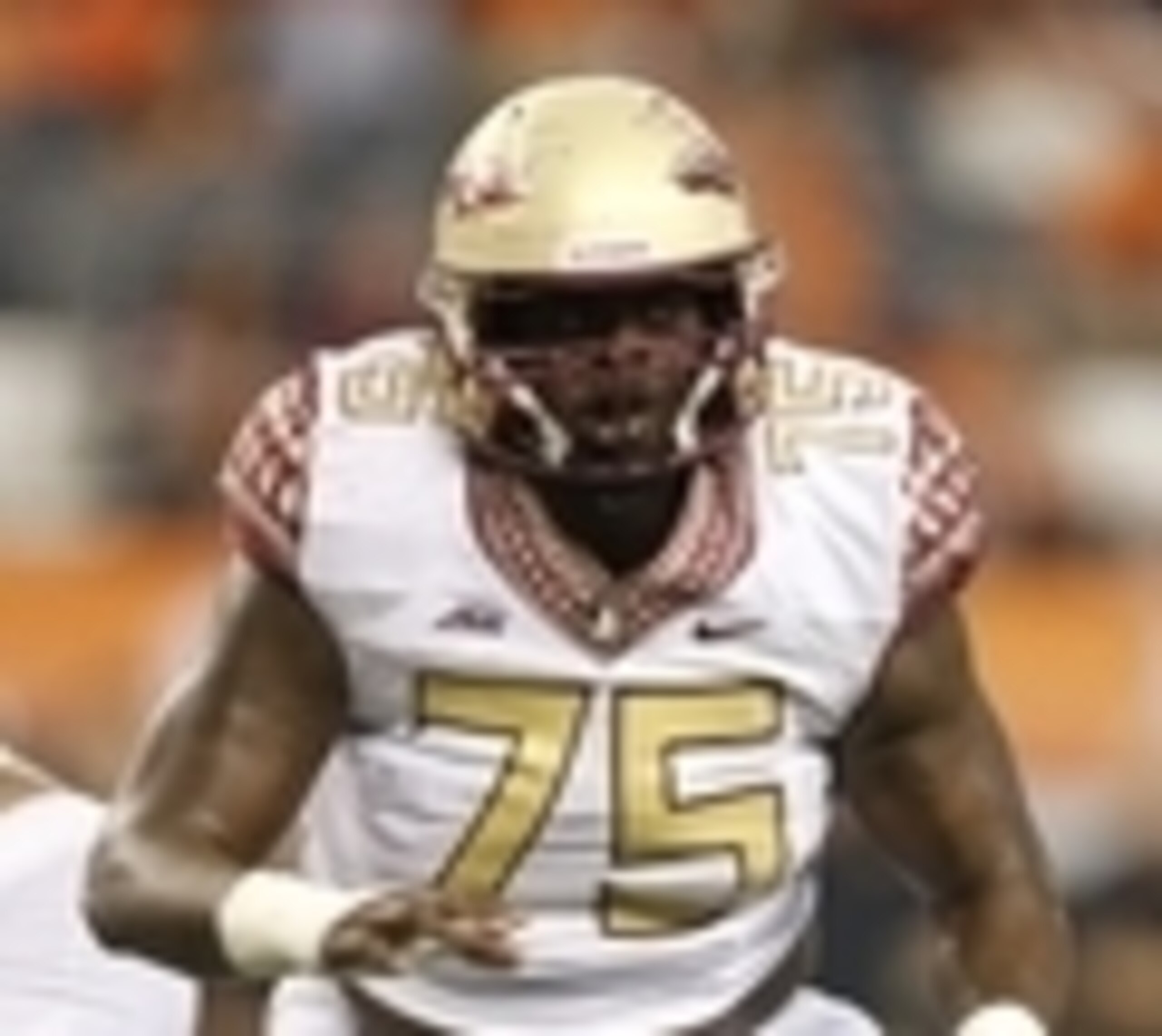
Key Acquisitions: Left tackle King Dunlap (re-signed), cornerback Brandon Flowers (re-signed), wide receiver Jacoby Jones, guard Orlando Franklin
Remaining Draft Needs: Center, outside linebacker, running back, nose tackle
San Diego Chargers general manager Tom Telesco knows that quarterback Philip Rivers is the team's best hope to propel San Diego toward a long playoff run. But the team couldn't keep the 33-year-old signal-caller healthy last season.
As a result, Telesco is building an absolutely mammoth offensive line to protect the franchise's top asset. Left tackle King Dunlap (6'9", 330 lbs) re-signed with the team prior to the start of free agency. Dunlap will rejoin D.J. Fluker (6'5", 339 lbs) as the team's starting offensive tackles.
Meanwhile, the organization's crown jewel in free agency was guard Orlando Franklin (6'7", 320 lbs). With Johnnie Troutman (6'4", 330 lbs) at right guard, four of the five starting positions are filled. Only center remains an issue after Nick Hardwick's retirement.
As well as building up the offensive line, Telesco gave Rivers a deep threat in Jacoby Jones to open up the offense vertically. Jones isn't a top target, but his speed on the outside will create more space for Keenan Allen. The team could also add a second threat as well.
The Chargers also have to address the middle of the line of scrimmage on defense. The team requires a more consistent presence at nose tackle on run downs. If the Chargers perform at a higher level against the run—the unit finished 26th overall in the category—it will present more opportunities for the team's underachieving pass-rushers to get to the quarterback.
Melvin Ingram, Jeremiah Attaochu and Tourek Williams combined for six sacks in 2014. The loss of Jarrett Johnson to retirement creates even more depth issues at the position.
A poor run defense with an underwhelming pass rush made life difficult for the Chargers' talented secondary.
Potential Draft Targets: Florida State's Cameron Erving (pictured above), Utah's Nate Orchard, Boise State's Jay Ajayi, UCLA's Ellis McCarthy
San Francisco 49ers
28 of 32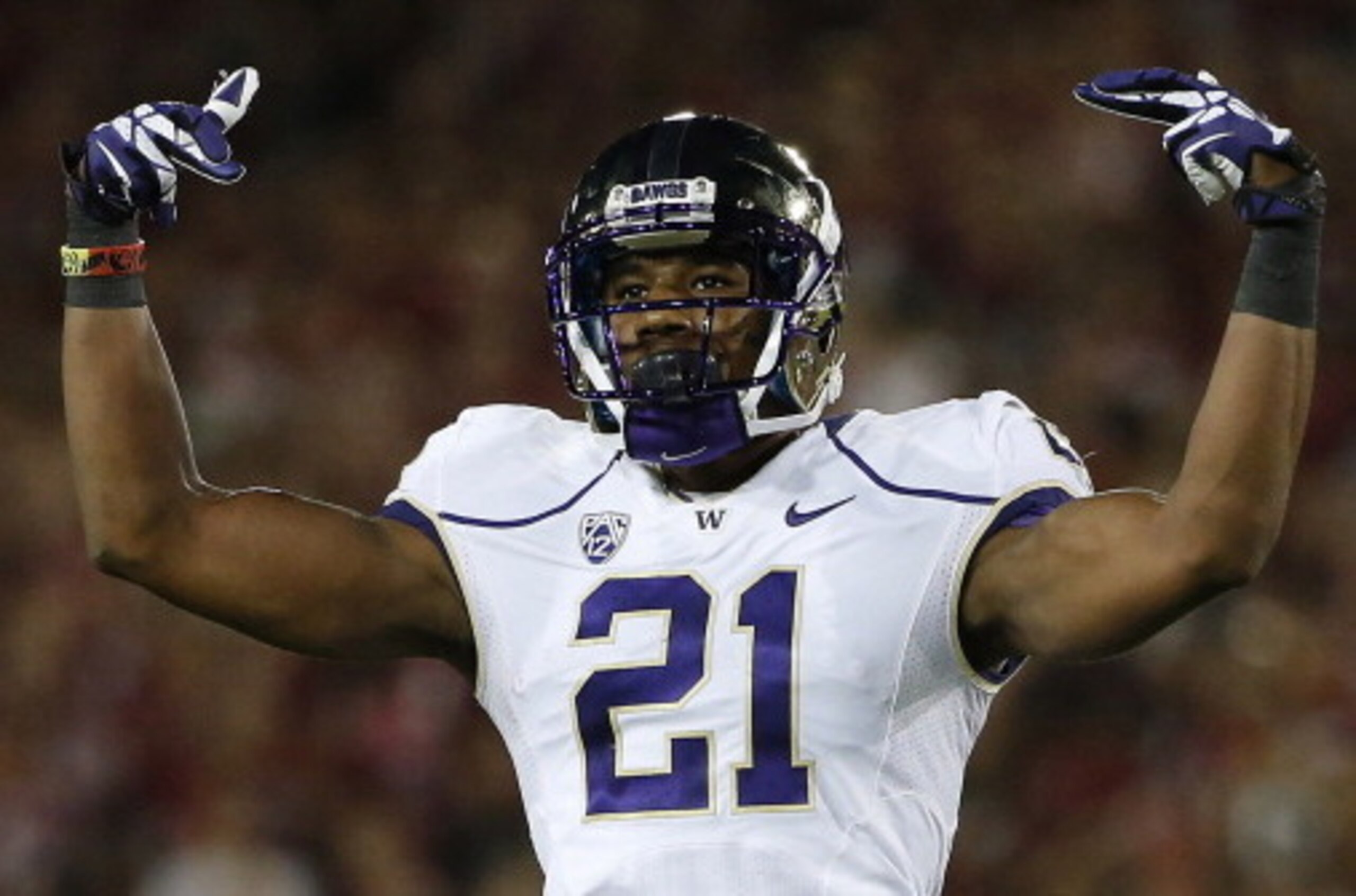
Key Acquisitions: Defensive end Darnell Dockett, wide receiver Torrey Smith
Remaining Draft Needs: Cornerback, guard, outside linebacker, running back
The San Francisco 49ers' Super Bowl window appears to have closed as quickly as it opened.
The team's brass finally cut ties with head coach Jim Harbaugh after four tenuous seasons. The team simply needed an excuse, and a non-playoff year was more than enough reason to completely reshape the franchise.
Harbaugh wasn't the only major loss this offseason.
All-Pro linebacker Patrick Willis retired due to lingering toe issues. Pro Bowl guard Mike Iupati left the organization but stayed in the division when he signed a megadeal with the Arizona Cardinals. Cornerbacks Chris Culliver and Perrish Cox were courted and signed by other teams. And running back Frank Gore was released.
The 49ers are now entering a new phase in the franchise's history with numerous issues to address.
Losing one starting cornerback is always a problem, but both could be a catastrophe if not properly addressed. San Francisco already has plenty of talent at safety with two former first-round picks at the position, but cornerback needs extra attention during this year's draft.
Along with cornerback, the 49ers' defensive front could use added depth.
Last year, the team invested a mid-round pick in former Clemson left tackle Brandon Thomas. After suffering an ACL injury during a pre-draft workout, Thomas could be ready to fill Iupati's ample shoes. If the team isn't comfortable, another high pick could be used on a physical interior blocker to keep the 49ers' running game chugging along. The running game needs to add another back alongside Carlos Hyde.
Potential Draft Targets: Washington's Marcus Peters (pictured above), South Carolina's A.J. Cann, Washington's Hau'oli Kikaha, USC's Buck Allen
Seattle Seahawks
29 of 32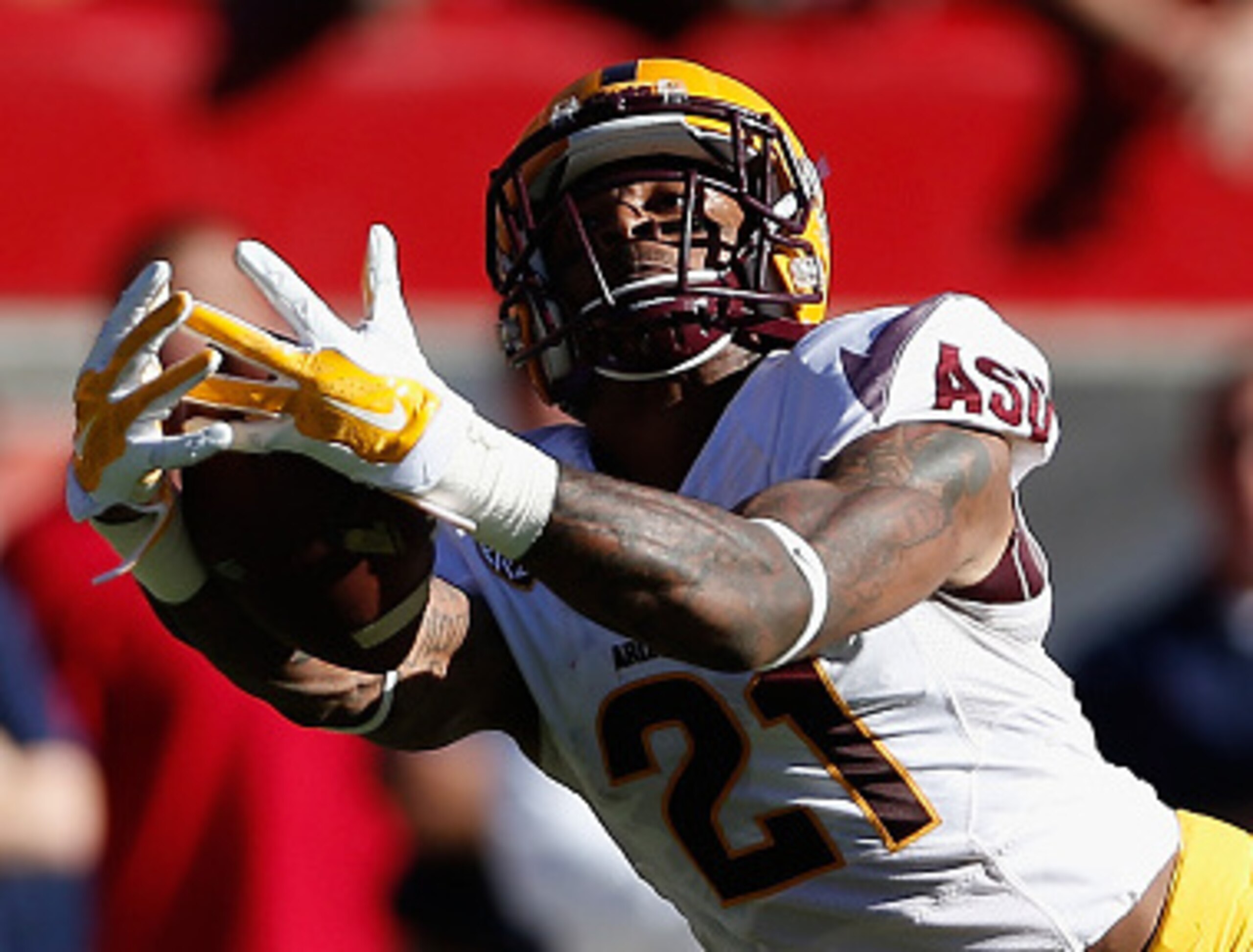
Key Acquisitions: Tight end Jimmy Graham, cornerbacks Cary Williams and Will Blackmon
Remaining Draft Needs: Wide receiver, center, defensive line
The Seattle Seahawks were one yard away from becoming back-to-back Super Bowl champions. However, it was clear that head coach Pete Carroll wasn't comfortable with his offensive line's ability to get one yard against the New England Patriots' goal-line package.
Sometimes football is a sport of asserting one's will. It's not always about matchups. Yet the Seahawks coaching staff decided it was a better decision to play the odds instead of trying to assert its will against the Patriots' overstuffed defensive line. Clearly, it wasn't the right decision.
Since that point, the Seahawks lost starting left guard James Carpenter in free agency and center Max Unger via trade. Young veterans Allen Bailey and Patrick Lewis will be expected to step up and replace those previous starters, but the Seahawks could be presented with an opportunity to upgrade those positions to an even greater degree.
After all, general manager John Schneider has selected eight offensive linemen in his five drafts with the organization.
The acquisition of All-Pro tight end Jimmy Graham was part of the deal that sent Unger to the New Orleans Saints. He automatically becomes the top target in the offense, but the Seahawks could still benefit from adding more talent to their overachieving group of wide receivers.
Defensively, the secondary is a concern due to the injuries Richard Sherman and Jeremy Lane suffered during the playoffs. The acquisitions of Cary Williams and Will Blackmon lessen the blow delivered to the "Legion of Boom" secondary. However, Carroll and Schneider won't pass on players who fit their system, particularly along the defensive front.
Potential Draft Targets: Arizona State's Jaelen Strong (pictured above), Clemson's Grady Jarrett, Oregon's Hroniss Grasu and Jake Fisher.
Tampa Bay Buccaneers
30 of 32
Key Acquisitions: Defensive tackle Henry Melton, linebacker Bruce Carter, safety Chris Conte
Remaining Draft Needs: Quarterback, offensive tackle, guard, defensive end, safety
The Tampa Bay Buccaneers are on the clock.
If seems to be a foregone conclusion that the organization will select a quarterback with the No. 1 overall pick to follow in the pressure-filled footsteps of Vinny Testaverde.
Whether the franchise finally settles on Florida State's Jameis Winston or Oregon's Marcus Mariota is only part of the equation. Buccaneers general manager Jason Licht must then properly build the team's roster around its new quarterback.
With Vincent Jackson, Mike Evans, Austin Seferian-Jenkins, Doug Martin and Bobby Rainey already at the skill positions, the offensive line should receive the most attention through the rest of the draft. The entire right side of the Buccaneers' offensive line needs to be rebuilt, particularly if Demar Dotson remains on the left side.
Once quarterback and the offensive line are adequately addressed, Licht can then turn his attention to building Love Smith's defense.
All three of the team's free-agency acquisitions were obtained due to their familiarity with the scheme. The system is far from complete, though.
The ability to apply pressure off the edge is a crucial aspect of the Cover 2 scheme, and Michael Johnson proved to be a free-agent flop. Upgrades at defensive end will help pair with the team's disruptive defensive tackles to form a formidable front.
Potential Draft Targets: Florida State's Jameis Winston (pictured above), Oregon's Marcus Mariota, Texas A&M's Cedric Ogbuehi, Miami's Anthony Chickillo, Virginia's Anthony Harris
Tennessee Titans
31 of 32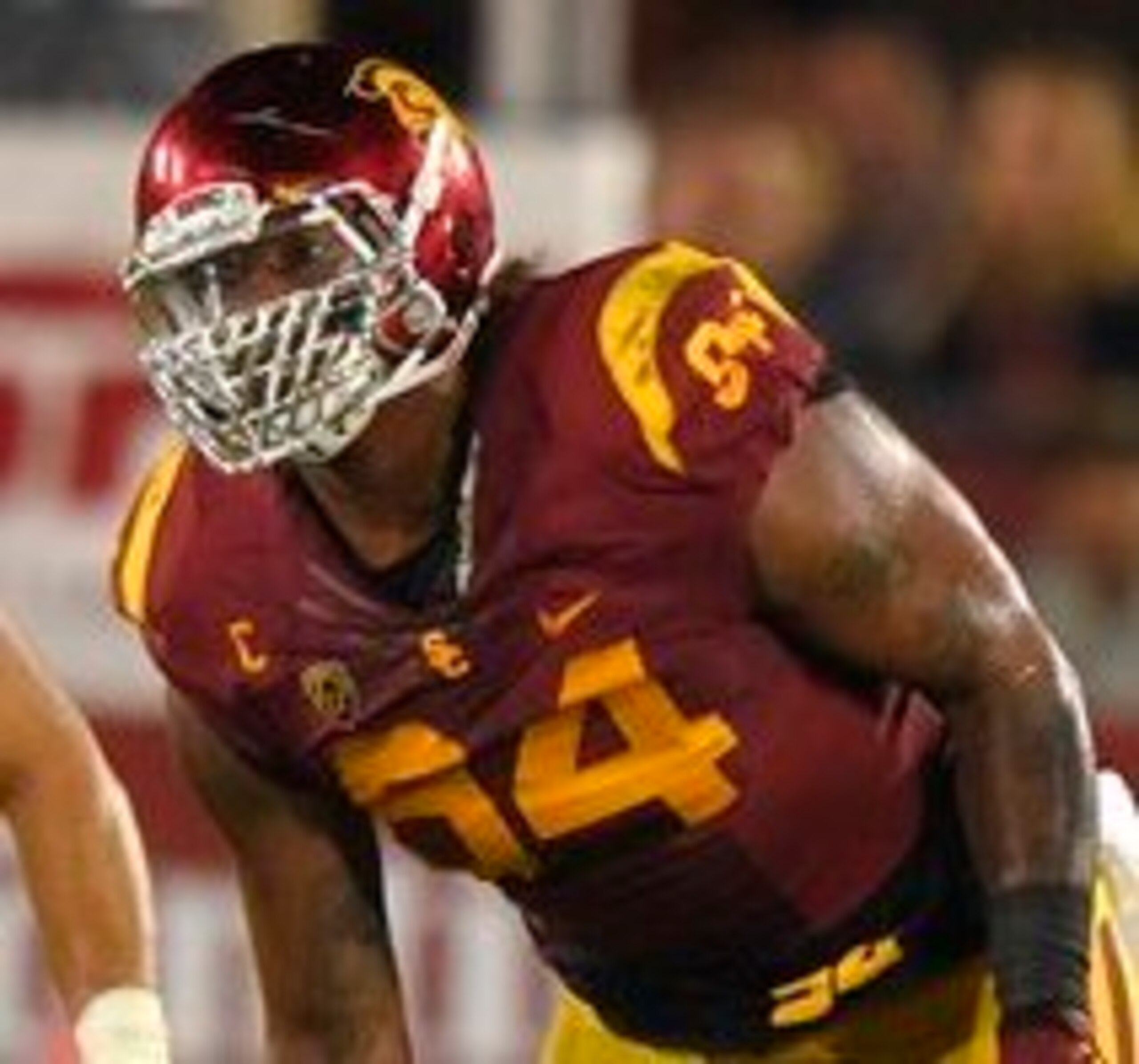
Key Acquisitions: Wide receiver Harry Douglas, safety Da'Norris Searcy, cornerback Perrish Cox, outside linebackers Brian Orakpo and Derrick Morgan (re-signed)
Remaining Draft Needs: Defensive line, quarterback, right tackle
Will the Tennessee Titans select a quarterback with the second overall pick or not? The complexion of the 2015 NFL draft will be determined by this decision.
The organization's choice will be largely dependent on its opinion of Zach Mettenberger. As a rookie, the LSU product showed promise. Mettenberger completed nearly 60 percent of his passes with a positive touchdown-to-interception ratio. But he didn't lead his team to any victories during his six starts, and he finished the season on injured reserve due to a shoulder injury.
The team's quarterback decision also relies on its evaluation of the top signal-callers in this year's class. An unfavorable assessment will make it much easier for the team to simply select the best player available.
By selecting the best player, the Titans could address another major need on the roster, particularly on the defensive side of the football.
Tennessee already went hard after specific talent in free agency to mask some of its defensive deficiencies. However, the talent still isn't fully in place to run defensive coordinator Ray Horton's scheme. The defensive line could receive a boost with one of the top talents in the draft. Also, an athletic edge-rusher may still be needed even after the Brian Orakpo and Derrick Morgan signings.
On offense, offensive tackle was viewed as a strength a year ago. Michael Roos has since retired, and Michael Oher was released. Taylor Lewan remains, but an upgrade at right tackle is required.
Potential Draft Targets: USC's Leonard Williams (pictured above), Oregon's Marcus Mariota, Wisconsin's Rob Havenstein
Washington Redskins
32 of 32
Key Acquisitions: Defensive end Ricky Jean-Francois, defensive tackle Stephen Paea, nose tackle Terrance Knighton
Remaining Draft Needs: Outside linebacker, safety, cornerback, running back
Where's the beef? It's in the nation's capital.
The Washington Redskins obviously made it a priority to revamp their defensive line this offseason, and they did so with resounding success.
All three of the team's major signings were defensive tackles who fit different needs. Ricky Jean-Francois provides flexibility having played defensive end in a three-man front during his entire professional career. Paea is an ascending player, who was the lone bright spot in the Chicago Bears' porous defense last season. Knighton, meanwhile, is a true wide body at nose tackle, who accepted a one-year contract in Washington to prove himself.
With the team now more stout at the point of attack, the Redskins can continue to build from the inside out.
The loss of Brian Orakpo to the Tennessee Titans via free agency created a void at outside linebacker opposite Ryan Kerrigan. Trent Murphy could be asked to step up into a full-time starting role, but the organization should be looking for a more athletic option in a draft class absolutely loaded with hybrid pass-rushers.
Safety, meanwhile, continues to be a thorn in the side of the franchise. Ryan Clark was signed last year in free agency, but he was only a Band-Aid placed on an open wound. It's been a long time since Sean Taylor patrolled the Redskins secondary, but Washington is still searching for an impact safety.
On offense, head coach Jay Gruden will continue to (begrudgingly?) build his scheme around Robert Griffin III. If RG3 doesn't show any progress, the running game will be extremely important. Alfred Morris is proven, but the loss of Roy Helu in free agency was a blow to the team's depth.
Potential Draft Targets: Nebraska's Randy Gregory (pictured above) and Ameer Abdullah, Virginia's Anthony Harris, Wake Forest's Kevin Johnson


.jpg?w=2560 "NFL investigating 2 referees for separate viral exchanges")


