

Serge Ibaka Building Dark-Horse Case for 2015 Defensive Player of the Year
Oklahoma City Thunder power forward Serge Ibaka is emerging as a sneaky contender for the 2014-15 Defensive Player of the Year. While up against some tough competition, Ibaka's elite rim protection and ability to guard outside of the paint should put him right in the mix.
Ibaka has re-invented himself as a stretch 4, and his offensive improvement has taken some attention away from what he does best: blocking shots.
The Congo's favorite native son has been serving up rejections left and right this season. He leads the league with 150 total swats, which is a category he has dominated the past four years.
TOP NEWS

J-Dub Suffers Gruesome Injury

Embiid Out vs. Pistons

Terrible Contracts NBA Teams Wish Would Disappear 🫣
The 25-year-old has been on a tear since the All-Star break, notching 29 blocks in his last nine games. Ibaka's penchant for re-directing opponents' weak mess out of his house hasn't gone unnoticed by head coach Scott Brooks, per Anthony Slater of The Oklahoman.
"You [typically] look at it that 'Oh, this guy’s in an offensive zone,'" Brooks said. “But there’s times in [Ibaka’s] career where he’s been in a defensive zone, where he’s altering everything, blocking a lot of shots and really on top of his game."
Ibaka has made the NBA's All-Defensive First Team three times in his six-year career, but the award for top defensive honors has always eluded him. The closest he ever came was finishing second to Tyson Chandler in 2011-12.
This year, he's up against some heavy hitters. Draymond Green is doing a great job of locking down opponents for the Golden State Warriors. San Antonio Spurs legend Tim Duncan continues to turn back the clock, putting up a solid defensive effort at 38 years old. The New Orleans Pelicans' Anthony Davis and Los Angeles Clippers' DeAndre Jordan have helped their teams put a manhole cover on the basket, as well.
Still, while Ibaka isn't the favorite, he doesn't have as much ground to cover as you might think.
Elite Rim Protection
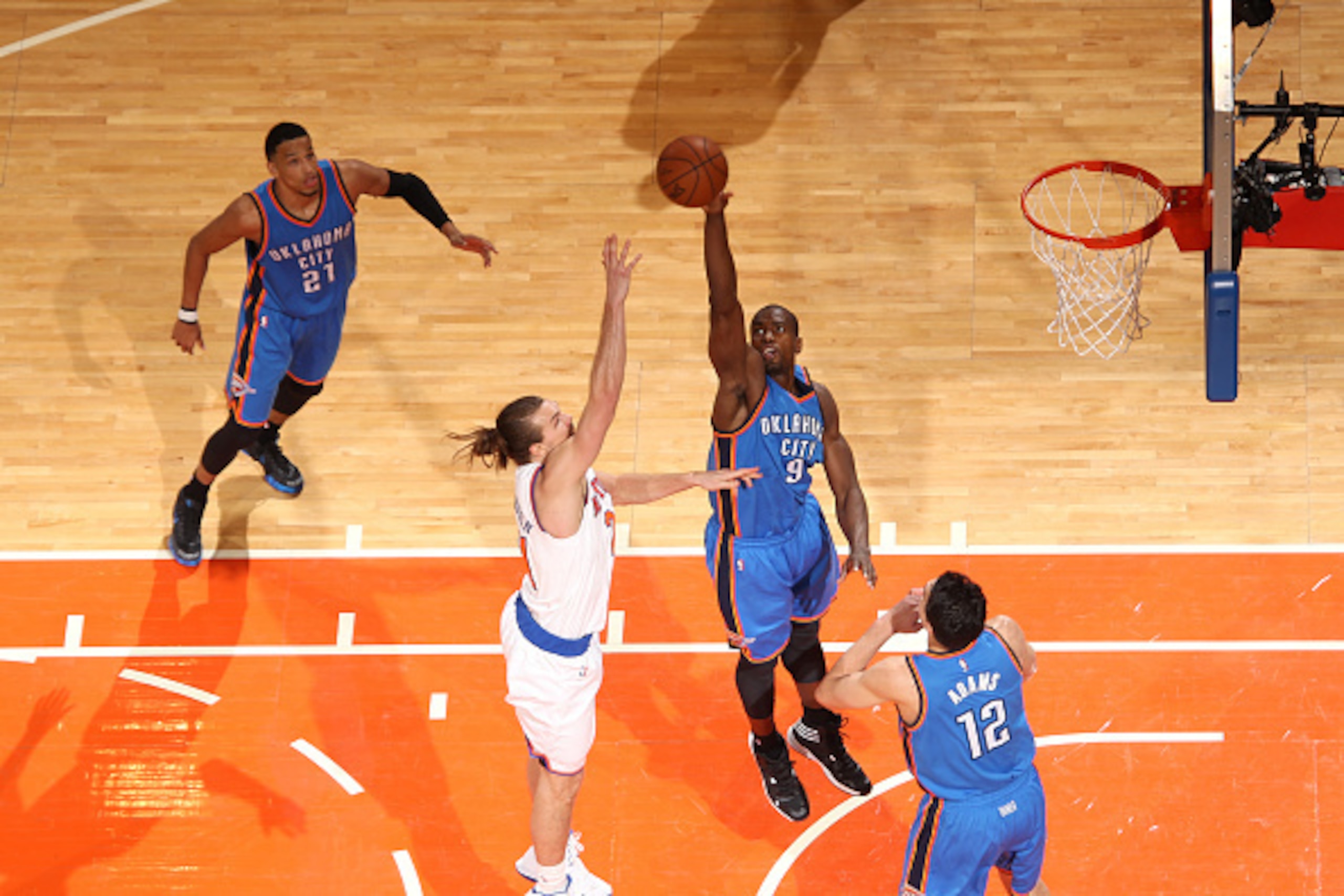
Ibaka has been the league's premier shot-blocker for almost five years now. Young players such as Davis and the Indiana Pacers' Roy Hibbert have come to the pros with a reputation for serving shots into the stands, but none have been able to swat Spaldings at the rate Ibaka has.
For further proof, take a look at the graphic below of the top rim protectors during the last three years. The gap between Ibaka and the second-place finisher (Hibbert) is pretty wide.
Ibaka has an unique combination of speed, athleticism, timing and long arms. As seen in this block on the Los Angeles Lakers' Jordan Hill, he does a nice job of baiting opponents inside before closing on them with the aggression of an eagle snatching a fish.
In short, Ibaka takes protecting the rim almost as serious as he does finding his missing water bottle.
While it is fun to watch Ibaka do his best Dikembe Mutombo impression, what really makes him a great rim protector is how he affects the shots he doesn't get his hands on.
In the chart below, you'll see the impact he has on opposing shooters from various ranges and how that compares to other DPOY contenders.
| Name (Team) | Overall | Normal (differential) | Defended Three-Point Percentage | Normal Three-Point Percentage | Frequency Defending Three-Pointers | Less Than Six Feet | Normal Percentage From Less Than Six Feet (Differential) |
| Serge Ibaka (OKC) | 40.8 | 46.4 (-5.6) | 30.7 | 35.5 (-4.7) | 21.3 | 45.7 | 59.4 (-13.7) |
| Draymond Green (GSW) | 38.8 | 45.6 (-6.8) | 26 | 34.8 (-8.9) | 21 | 52.3 | 58.4 (-6.4) |
| Tim Duncan (SAS) | 45 | 47.4 (-2.5) | 35.7 | 35.6 (+0.2) | 6.1 | 51.6 | 59.9 (-8.3) |
| Anthony Davis (NOP) | 40.2 | 46.4 (-6.1) | 27.1 | 35.9 (-8.8) | 17.5 | 52.5 | 59.7 |
| DeAndre Jordan (LAC) | 46.9 | 47.5 (-0.6) | 34.4 | 34 (+0.5) | 10.1 | 57.6 | 60.2 (-2.6) |
The -13.7 percent differential only bolsters Ibaka's case as a force inside, but his ability to step out and defend the perimeter is also impressive. It is rare for guys who stand 6'10" and 220 pounds to be able to fluctuate between patrolling the paint and chasing outside shooters as fluidly as Ibaka does.
With the big man on the floor, the Thunder can afford to take some defensive risks because they know he'll be there to clean up any mistakes.
After the Thunder's Feb. 22 win over the Denver Nuggets, new teammate Enes Kanter was quick to acknowledge the luxury of having a elite defender like Ibaka around, per Reuters.
"When you play with Serge, you just feel more comfortable," Kanter said. "You know he has your back."
Ibaka's defensive importance was never more obvious than in last year's Western Conference Finals. He missed the first two games against the Spurs with a quad injury, and the Thunder gave up 117 points per game in the two losses. He returned in Game 3, and Oklahoma City allowed 104.5 points in the next four games.
"To know how I am very important to my team on defense, how my teammates need me on defense, it means a lot to me,” Ibaka said last June, per Mayberry. “I’m sure they are going to help me get better, too.”
This season, opponents are posting an offensive rating of 103.3 with Ibaka on the floor versus 104 when he's on the bench, according to Basketball-Reference.com. These differences are a testament to how his defensive presence can alter a game.
Advanced Stats Comparison
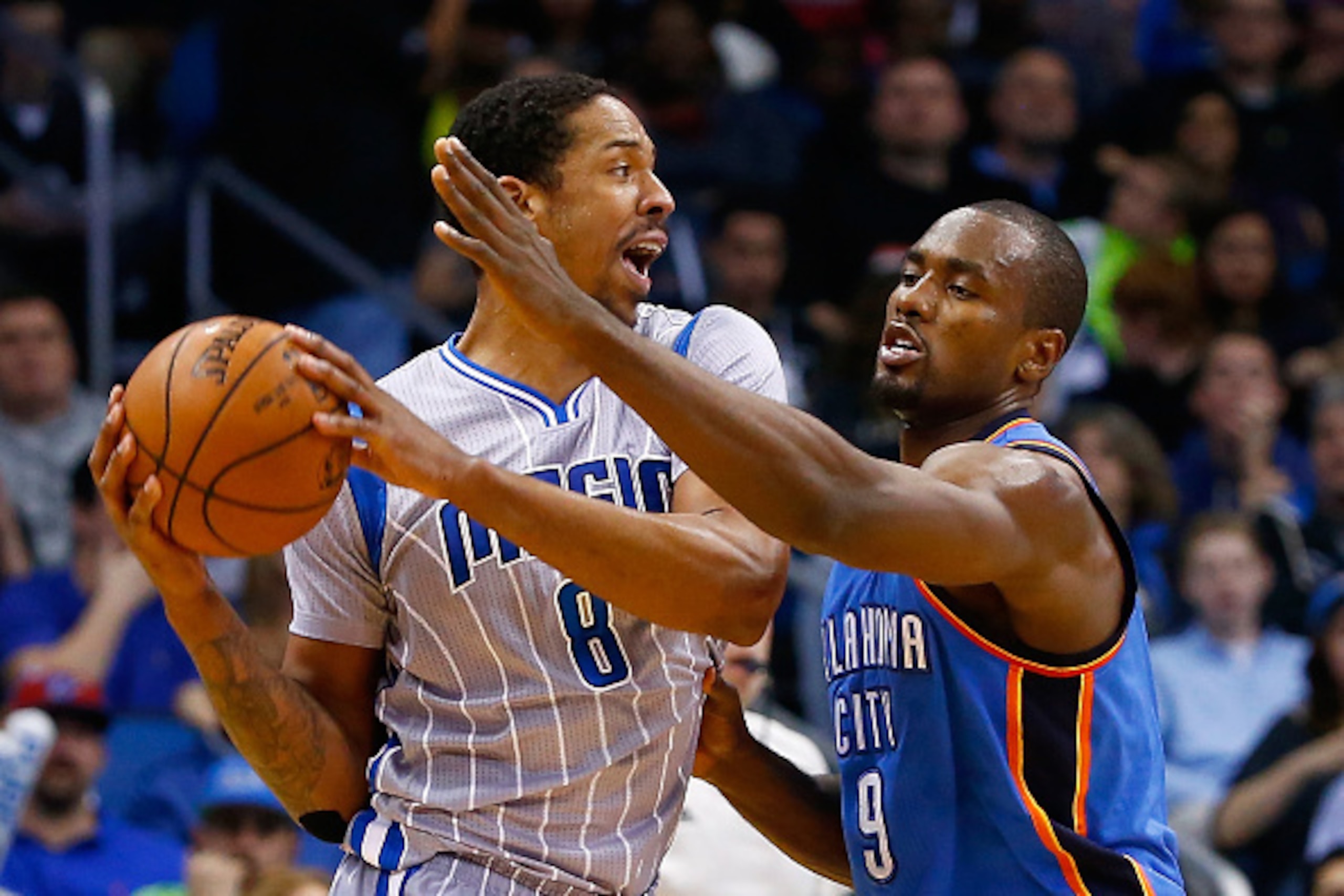
If Ibaka is going to strengthen his case for Defensive Player of the Year, he'll need to improve on his advanced statistics. On the surface they are pretty solid, as he's third in block percentage and 12th in defensive win shares, per Basketball-Reference.com.
When compared to both past DPOY winners and this year's top contenders, those numbers come up a bit short. For instance, here are the defensive ratings of the last 10 Defensive Player of the Year winners. Unlike it's offensive counterpart, the lower defensive number a player has, the better he is at making life miserable for scorers.
None of those players had a rating worse than Chandler's 99 in 2011-12, while Ibaka has accrued a rating of 102.
Now, let's take a look at how Ibaka stacks up against this year's competitors.
| Name (Team) | Defensive Rating | Blocks Per Game | Block Percentage | Defensive Win Shares | Defensive Box Plus/Minus |
| Ibaka | 102 | 2.4 | 5.8 | 3.1 | 1.5 |
| D.Green | 96.7 | 1.4 | 3.3 | 4.0 | 4.2 |
| Duncan | 96.6 | 2.2 | 4.7 | 3.4 | 4.5 |
| A.Davis | 101 | 2.8 | 6.0 | 2.8 | 2.3 |
| D.Jordan | 99 | 2.3 | 5.5 | 3.9 | 3.0 |
Much to no one's surprise, The Serge Protector's biggest advantage can be found in the blocked-shot categories. However, he's lacking in the stats that show how his defense more directly contributes to his team's success, such as Defensive Win Shares (estimate of wins contributed due to a player's defense) and Defensive Box Plus/Minus (a box score estimate of defensive points a player contributes above the league average, per 100 possessions).
While the Thunder would certainly be in trouble without Ibaka patrolling the paint, his defensive impact isn't as obvious as it is with the rest of the group. For Ibaka to garner more attention from voters, his stout defense will have to translate into more wins for OKC.
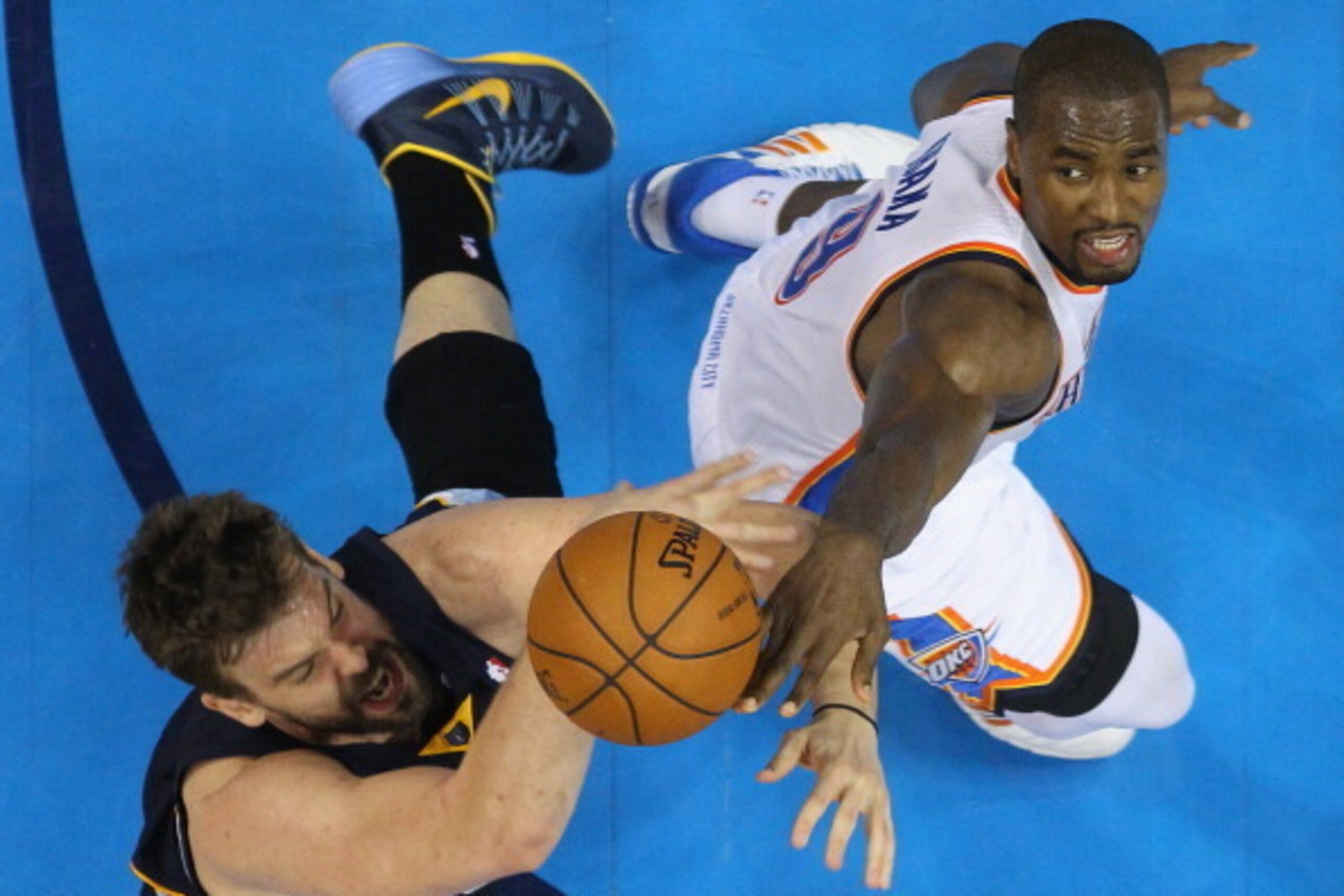
Since entering the league in 2009, Serge Ibaka has been hosting an annual block party and nearly everyone in the NBA has been invited. He has established himself as one of the league's best rim protectors and most versatile defenders, but he has never done enough to win Defensive Player of the Year.
He has a little more than a month to do whatever it takes to fill that void. The field is loaded, but Ibaka's candidacy grows with every brazen scorer who dares to challenge his storied reputation.

.jpg?w=2560)

.jpg?w=2560 "Raiders Could Start Mendoza")
.jpg?w=2560 "Rodgers Iced Out on Plane 💎")
.jpg?w=2560 "🚨 Week 8 AP Top 25 Poll")
