

How Will Boston Celtics Adjust Following Jared Sullinger's Season-Ending Injury?
Power forward Jared Sullinger had emerged as the Boston Celtics' leading scorer and rebounder during the past two months following the trades of Rajon Rondo and Jeff Green.
Head coach Brad Stevens must now deal with the challenging task of replacing Sullinger’s production after the team announced Sunday that he would miss the rest of the season due to a left metatarsal stress fracture.
It’s the second season-ending injury for the 6’9’’ big man during his third NBA season. Sullinger, 22, underwent back surgery to repair a lumbar disk in February 2013 that sidelined him for the final three months of his rookie campaign. The 280-pound forward has dealt with conditioning issues throughout his career, as reported by Jay King of MassLive.com last June.
TOP NEWS

LeBron's Special Helicopter Deal

MJ Makes Record-Setting Donation 🙌
Collins on Brooks Scuffle 👀
Concerns about Sullinger's weight will likely only grow louder in the wake of another major injury, but the Celtics have bigger concerns for the time being.
The team is currently just two games out of the final playoff spot in Eastern Conference. If the Celtics are going to stay afloat in the playoff race, Stevens is going to have to figure out how to best fill the Sullinger void over the next 30 games.
The questions are seemingly endless for the head coach. Is Tyler Zeller or Kelly Olynyk a wiser choice to replace Sullinger in the starting five? Is Boston better off playing small-ball instead of relying on a frontcourt that lacks depth? And how do the new additions like Jonas Jerebko factor into the equation? For the short term, the onus is on an undermanned frontcourt to pick up the slack.
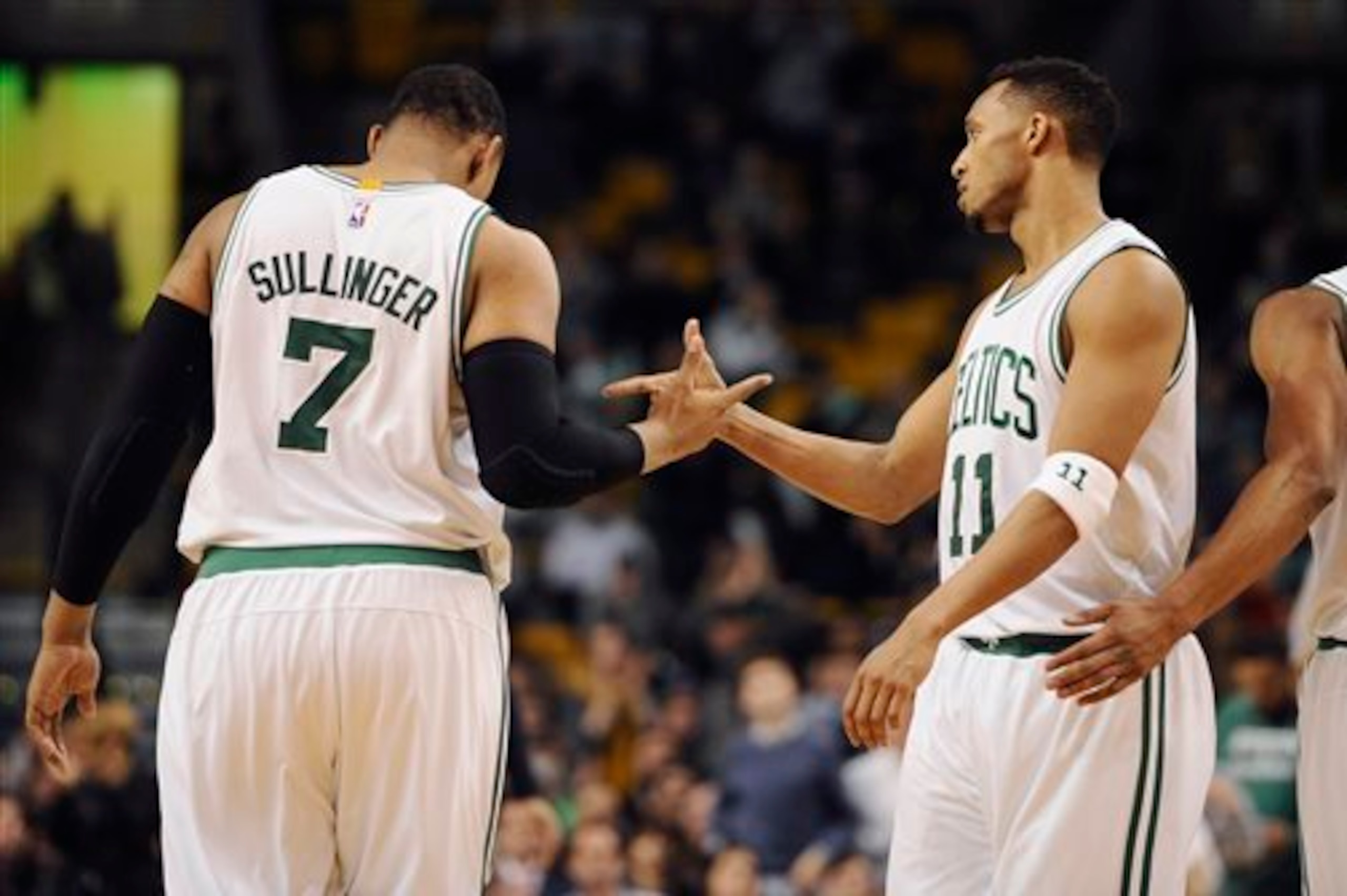
Sullinger's production won't be easy for that group to replace. He posted new career highs with 14.1 points and 8.1 rebounds over 28.7 minutes per game this year. He also started 49 of the 51 games he played and was a regular contributor during crunch time.
“It creates some need for guys to step up as far as guys filling what he did in the stat sheet for us,” Brad Stevens told Mark Murphy of the Boston Herald. “We won’t have anybody be exactly like him or replace what he did in 28 minutes of action for us.”
In the interim, the heaviest load will be placed on the current starting frontcourt of Zeller and Brandon Bass. Both players have seen their minutes per game skyrocket to the mid-30s in Sullinger’s absence over the last two contests, thanks to an already injury-depleted front line.
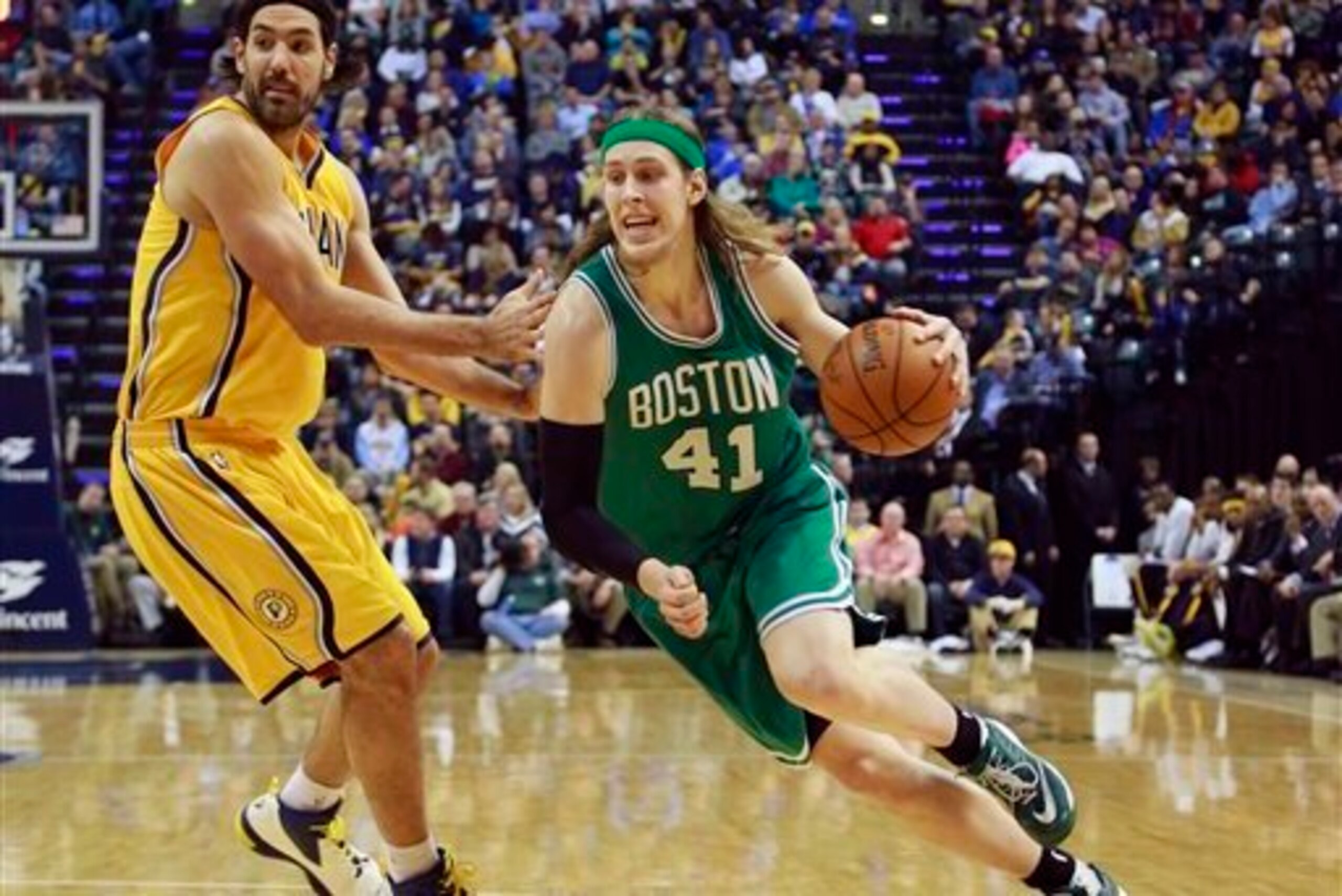
The offensive-minded Olynyk has missed the past month with a sprained right ankle but is expected to return to the lineup late this week. Until then, look for Bass (21.5 minutes per game) and Zeller (20.4 minutes per game) to continue seeing 30-plus minutes per contest. Stevens will rely heavily on the two most experienced members of his frontcourt while the Celtics get adjusted to life without Sullinger.
Olynyk’s return to the rotation will create an interesting conundrum for Stevens in determining his starting lineup. Sullinger has provided adequate floor spacing from three-point range (3.4 attempts per game) all season, despite not shooting well from that distance (28.9 percent).
Zeller and Bass are not consistent three-point threats, but Olynyk’s outside shooting is one of his greatest strengths. He’s hitting 35.3 percent of his attempts from beyond the arc this season.
In order for Boston’s starting unit to succeed offensively, floor spacing from big men like Sullinger is crucial. It would not be surprising to see Olynyk replace Zeller in Boston’s starting five in order to replicate the floor balance Sullinger provided.
Zeller is a better defender and rim protector than Olynyk, who is subpar at this stage of his career, so Stevens would be sacrificing defense for offense if he makes the move.
No matter who earns a full-time spot in the starting lineup out of Olynyk, Bass and Zeller, all three players will also have to hit the glass harder without Sullinger.
The wide-bodied big man was the team’s best rebounder on both ends, and the Celtics are just a league-average rebounding team with a healthy Sullinger. Without him, there may be a serious drop-off, as evidenced by the team's giving up 17 offensive rebounds in a loss to the Sacramento Kings on Friday night.
The bigs, as well as the team’s backcourt, will all need to chip in nightly for the Celtics to continue holding their own on the glass.
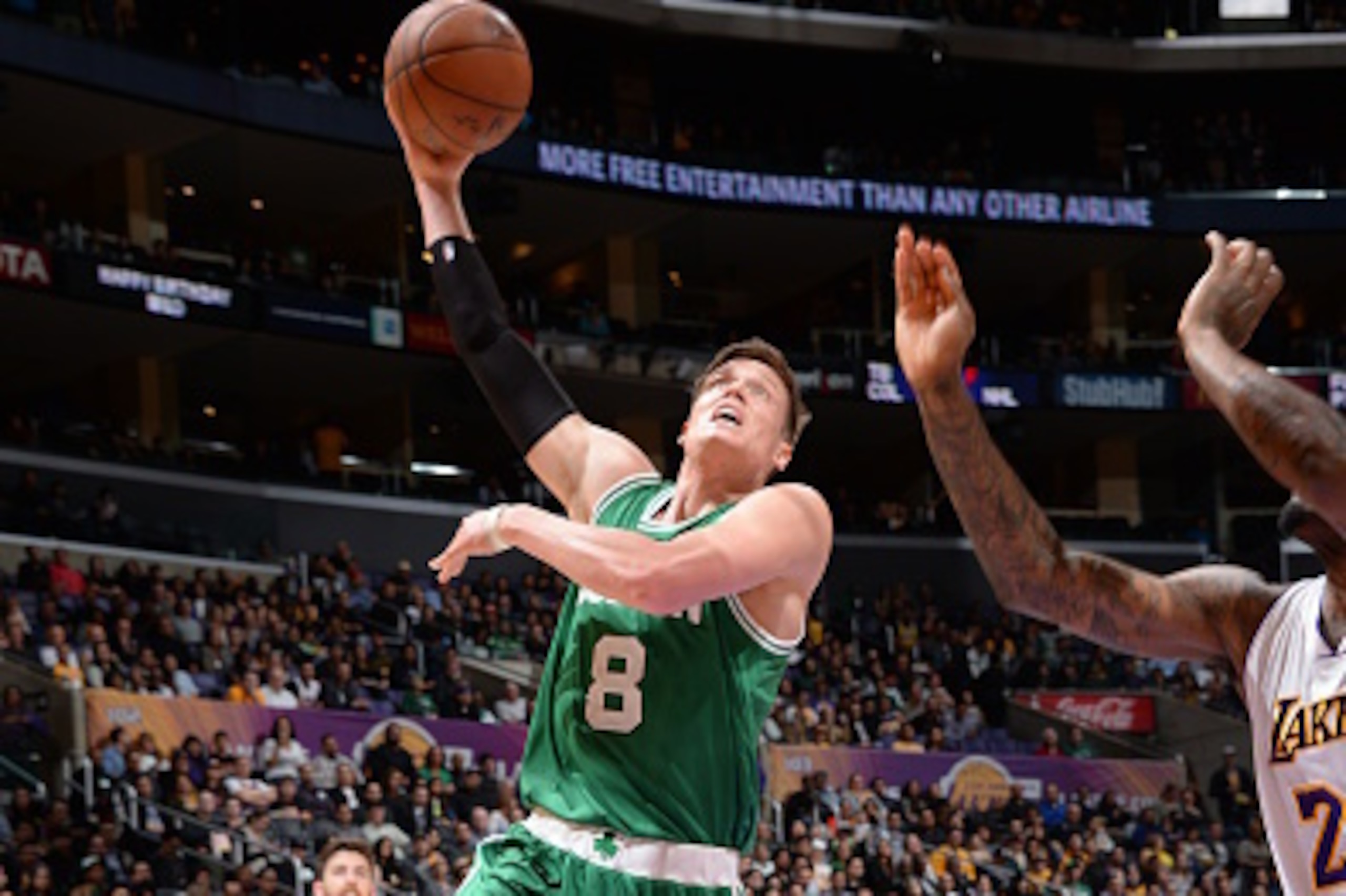
Boston’s newest acquisition, Jerebko, won’t help very much in the rebounding department, but his outside shooting will make him an immediate contender for minutes in Stevens’ rotation.
"He's a big that can shoot, play the 3 or the 4, space the floor,” Stevens told Jay King. “I think what he's really good at is driving closeouts, so I like his skill set."
Jerebko saw inconsistent playing time with the Detroit Pistons earlier this year, averaging 5.2 points and 3.1 rebounds in 15.3 minutes per game. By joining Boston, he immediately becomes one of the team’s best three-point shooters, averaging 36.4 percent from beyond the arc.
Jerebko’s 6’10’’ size will give Stevens another option to stretch the floor with a big man, which should help to balance out the floor when he’s paired with an interior presence like Zeller.
While all of Boston’s bigs will have ample opportunity to secure additional minutes, there is a real possibility Stevens could elect to go with a smaller lineup more often.
Boston’s strength lies within its backcourt, especially after the team acquired Isaiah Thomas from the Phoenix Suns last week. In fact, you could make a case that the best three healthy players on the roster right now are Thomas, Avery Bradley and Marcus Smart.
The wing spot is also crowded with talent, with James Young and Jae Crowder fighting for minutes behind Evan Turner and Bradley.

With Olynyk sidelined in recent weeks, the Celtics have had some success by playing small with Crowder at the power forward spot and going with just one big. Stevens also briefly went with a Thomas-Bradley-Smart lineup against the Los Angeles Lakers on Sunday night before Thomas was ejected.
The lack of size for Boston’s top guards is a concern, but that’s a grouping that can wreak havoc defensively with constant ball pressure and give Boston additional offensive firepower. Going small also forces some other teams to remove bigs from their lineup to adjust, which could help the Celtics mask some rebounding issues in Sullinger’s absence.
Overall, it will be a balancing act for Stevens to weigh these options as he attempts to integrate Thomas and Jerebko into the team’s rotation. There's no player on the roster who can replace Sullinger's skill set, so Stevens will need to explore all of these possibilities before finding the best fit for Boston’s new-look rotation.

.jpg?w=2560 "Grading WWE Raw 🔠")


.jpg?w=2560 "Viral Rams Coach Vid 🖕")
.jpg?w=2560 "Injury-stricken Seahawks signing veteran RB")