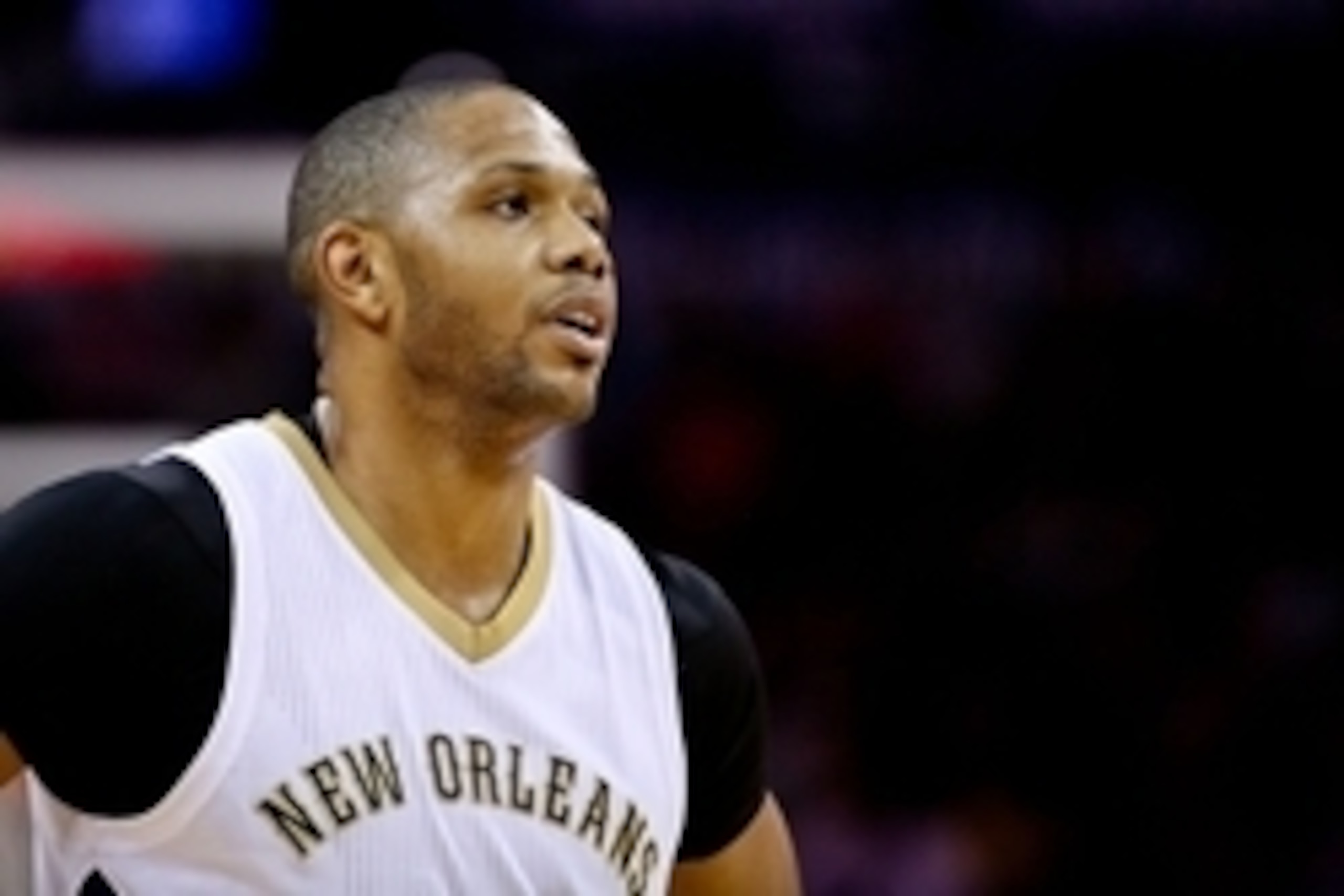

Eric Gordon Trade Ideas for the New Orleans Pelicans
We know this time of year as "winter." Eric Gordon knows it as "trade season."
Whenever Feb. 19 rolls around, the 26-year-old shooting guard is perennially mentioned in all kinds of pre-deadline buzz.
However, this year, Gordon’s fourth with the New Orleans Pelicans, talks have been relatively quiet.
On Feb. 13, Gordon implied to Jimmy Smith of The Times-Picayune that the Pels gave him "word that they’re not trying to make a move."
Here’s more from the 6’4” shooter:
"I'm never worried about ever getting traded. I'm just here to play basketball. I've been playing well and showing the team what I can do. When you put the ball in my hands and force me into situations where things get tough, or to make a play, I'm able to do that.
…
It's always good for a team [to] give you a word that they're not trying to make a move. You never know what can happen or what someone else's mindset is when they want to trade you. But I haven't thought about that. I just go out there and play.
"
Due close to $30 million over the next two years, Gordon is by far the highest-paid player in New Orleans.
Early this year, though, he didn’t play like it...at all.
The six-year vet started slow through the Pelicans’ first 12 games, contributing just 9.5 points and two assists while shooting 39.8 percent. But after missing the next 21 games with a shoulder injury, Gordon returned with a vengeance on Jan. 15.
Since coming back, he’s averaged 14.5 points (43.3 percent), 4.9 assists and three rebounds a game.
If the Pelicans want to trade Gordon, now is the time to sell high.
The following deals were created using ESPN's Trade Machine.
Should New Orleans Trade Him?
1 of 5
If the 27-26 Pelicans can get a decent haul in exchange for Gordon, then yes—they should trade him without a single ounce of hesitation.
He’s been playing at such a high, if unsustainable, level that his stock might never be higher before his deal runs out following the conclusion of next season.
However, it’s important that New Orleans refuses to compromise. The team could very easily keep him around until his contract expires and then either re-up at a sane price or let him walk.
Gordon is not causing locker-room problems or lashing out against coach Monty Williams. And most importantly, he’s balling.
There’s no pressure. He's not the problem; his contract is. Plus, the Pels appear to be headed toward a playoff push—and that needs to be kept in mind.
"At this point I do feel like this is the team we're going to have," Williams said on the possibility of making a trade, per Smith. "All that stuff you hear, a lot of it is speculation and most of it is just bad. So I'm going into the All-Star break thinking this is the team we're going to have."
If the right deal—like any of the three presented on the following slides—comes along, the Pels should trade Gordon. But if the market isn’t sufficient, there’s no point in compromising the franchise’s future simply to get rid of his burdensome contract.
The Pelicans must get all they can out of Gordon. Whether that means using him in a NOLA uniform or as part of a deal will be for general manager Dell Demps and the front office to decide.
Contract, Draft Pick Information
2 of 5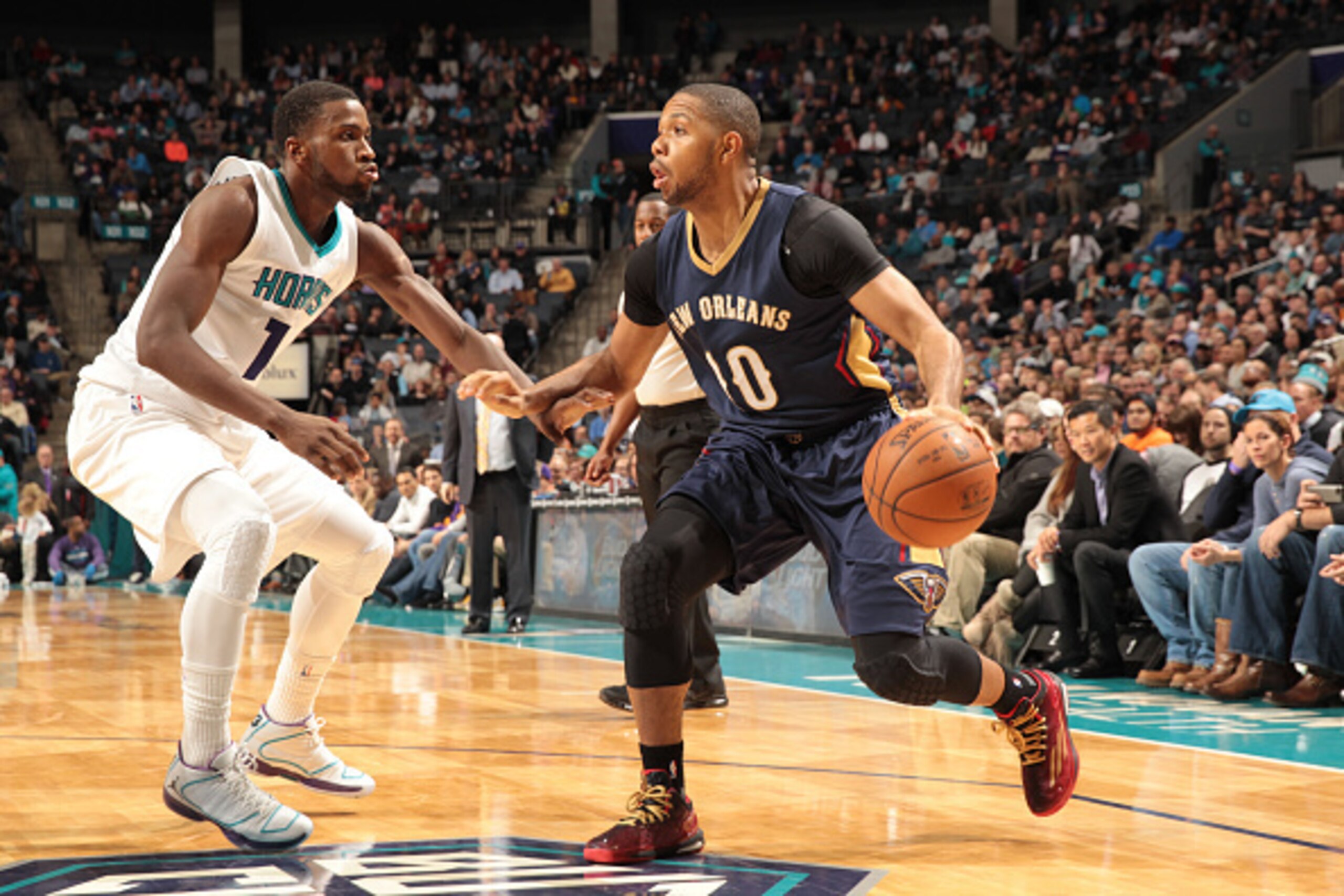
Before jumping right into the main course, let’s first set the table with a refresher on where the Pelicans stand in terms of contracts and draft stock.
Contracts
Tyreke Evans, Jrue Holiday, Ryan Anderson, Anthony Davis, Quincy Pondexter and Gordon, who has a player option, are the only Pelicans on the books next year for a total of about $56 million, per HoopsHype.
Omer Asik, Alexis Ajinca, Jimmer Fredette, Jeff Withey and Dante Cunningham are all current, valued players who will hit the market this summer. Demps will have to make decisions about those five, plus newcomers, as he fills out the other roster spots.
Gordon's contract—or its absence—will either complicate or simplify things for the front office.
Draft picks
For the next few years, the Pels are moderately stocked.
According to RealGM, New Orleans has outgoing picks in 2015 (first and second round), 2016 (second) and 2017 (second). However, the team has incoming selections in 2015 (second) and 2016 (second).
That leaves the Pels with six spots (three firsts, three second-rounders) in the next four drafts.
As we’ve learned, first-round draft choices are a premium entity in today’s NBA. Unloading Gordon’s contract, depending on the potential suitor, could definitely include the Pelicans giving up a pick in order to receive a comparable talent haul.
Trade 1: Gordon Gets His Original Wish
3 of 5
Pelicans get: Isaiah Thomas, PJ Tucker
Phoenix Suns get: Eric Gordon, John Salmons, first-round pick
As a restricted free agent in the summer of 2012, Gordon wanted to be done with New Orleans. The Phoenix Suns offered him a four-year max deal worth $58 million, and the often-injured guard fell in love.
“I strongly feel they are the right franchise for me. Phoenix is just where my heart is now,” Gordon said, per Chris Broussard of ESPN.com, before the Hornets eventually matched the deal.
“Phoenix just showed a lot more interest, overall, and definitely in how they negotiated,” he said, according to Bleacher Report's Ric Bucher, then writing for ESPN The Magazine. "I don't know what New Orleans' plans are for me. There are no negotiations right now. ... They drafted another shooting guard [Austin Rivers], a combo guard like me, which tells me they have another plan.”
Despite his public preference, New Orleans matched the offer and took on one of the league’s ugliest contracts.
As Smith wrote for The Times-Picayune in April, the team had no choice:
"New Orleans had to match the offer to keep Gordon or the Chris Paul trade would have essentially ended up being a multiple All-Star, future Hall of Famer and the best point guard in the game in exchange for Al-Farouq Aminu and Austin Rivers. There was no choice.
"
With this deal, Gordon gets what he wanted.
According to ESPN.com's Marc Stein, Phoenix is reportedly open to dealing point guard Isaiah Thomas, who would be an interesting fit in either a dual-PG backcourt or as Holiday’s backup.
Tucker is overpaid, and Salmons is an expiring deal, which compensates for the difference between Thomas and Gordon’s contracts. In terms of personnel, the Pels would slightly win this swap—which is why the first-round pick is necessary.
However, assuming the Suns believe they can re-sign Goran Dragic, it will improve both squads. Phoenix is way overpopulated at the 1 and thin at the 2, while New Orleans could use some help (and insurance for Holiday) at point and off the bench.



Trade 2: No Sleep Till...
4 of 5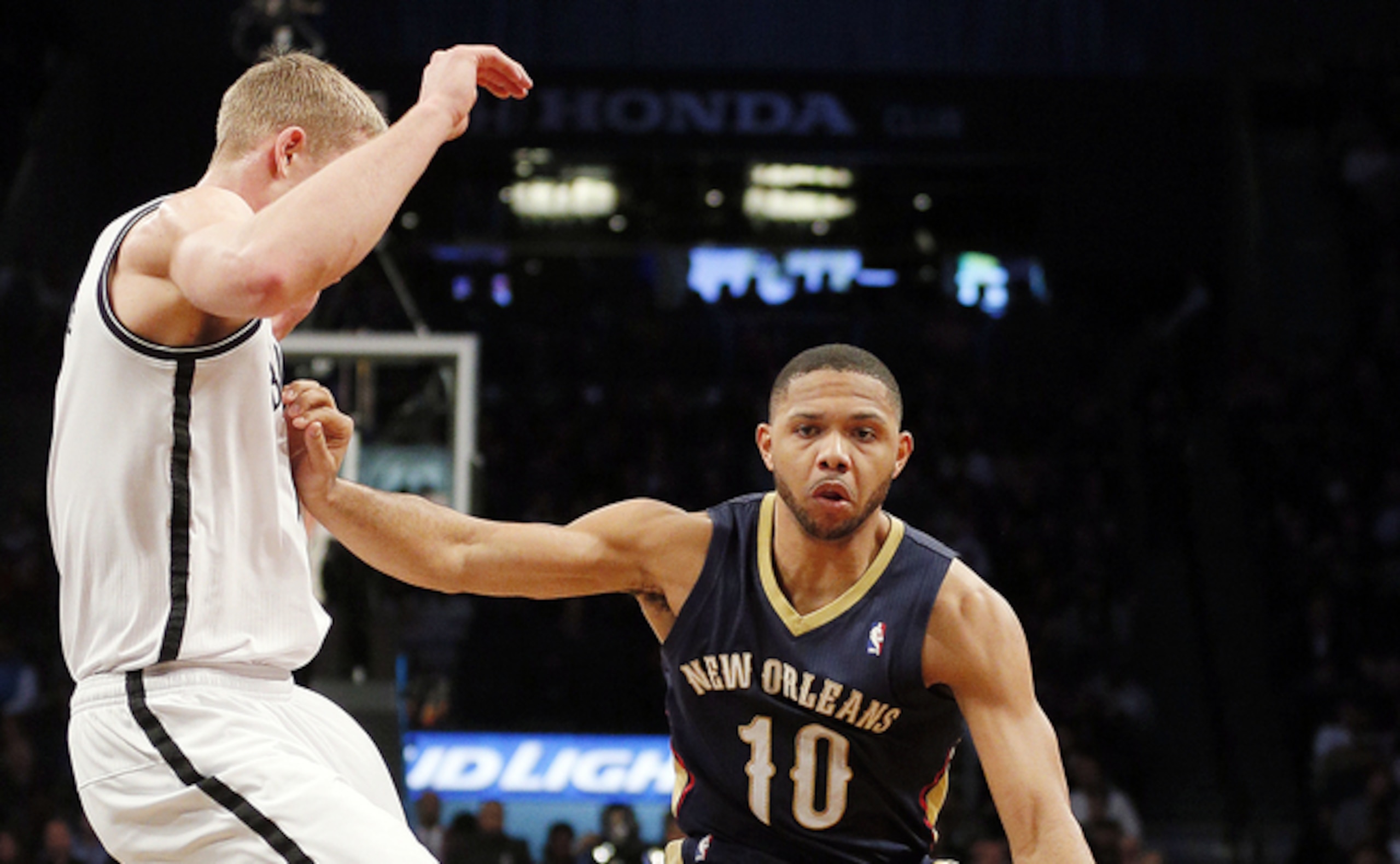
Pelicans get: Joe Johnson, Bojan Bogdanovic, Mason Plumlee
Brooklyn Nets get: Eric Gordon, Ryan Anderson, 2017 first-round pick
Deal No. 2 is a bit more out of the blue than the first. It makes sense for both sides, though. The Pels and the Brooklyn Nets would each benefit greatly from the exchange.
At a price of nearly $50 million over the next two years, Joe Johnson is overpaid—but he would serve as an invaluable veteran asset to a young team on the verge of playoff contention.
And while Johnson is currently the Nets’ best player, they would be thrilled to start unloading those seemingly immovable contracts in order to have a shot at Kevin Durant in 2016.
Bogdanovic and Plumlee are solid, young pieces the Pelicans can add to their already-young core. Plus, they're a whole lot cheaper than Gordon. For as precious as those picks are, throwing in one would be worth it.
Brooklyn would pull the trigger—and bite the bullet on green talent in Bogdanovic (25) and Plumlee (24)—in order to meet two of its biggest goals: dumping one or more of the Big Three contracts (Johnson, Deron Williams and Brooklyn Lopez) and acquiring draft stock.
Plus, Anderson and Gordon will make up for the losses of three big-minute players and help keep the Nets in play for the postseason.
New Orleans gets deeper, more experienced and younger all at the same time. Brooklyn gets two bona fide players and reprieve from its draft-pick drought.
Everybody wins.
Trade 3: Flying Up North
5 of 5
Pelicans get: Greivis Vasquez, Landry Fields, future second-round pick
Toronto Raptors get: Eric Gordon
First we looked West in Phoenix and then East in Brooklyn. Now, it’s only right that we turn our attention north of the border to the Toronto Raptors.
Greivis Vasquez broke out as a member of the Hornets in 2012-13. The Venezuelan floor general tallied career highs in scoring (13.9 points, 43.3 percent) and distributing (nine assists per game), and in recognition for his leap, he was honored as the league’s Most Improved Player.
That summer, the Hornets dealt their starting point guard as part of a three-team exchange that resulted in Tyreke Evans’ arrival in New Orleans.
Since the trade, Vasquez has never been the same, averaging just 9.6 points and 3.9 dimes in his past two seasons..
This year, he’s playing about 23 minutes and scoring 9.6 points a night for the Raptors.
Vasquez would be a welcomed addition in the Pels’ limited point guard rotation, and Fields’ expiring contract makes him attractive.
Bringing in Gordon would add to an already deep backcourt in Toronto that includes Kyle Lowry, DeMar DeRozan and Lou Williams. The team barely plays Fields, and Vasquez is more expendable than the other guards.
Provided Gordon can earn Dwayne Casey’s trust with bringing up the ball—admittedly, a bit of a question mark—his long-range ability will wreak havoc on opposing second units.
All stats are courtesy of Basketball-Reference.com.

.jpg?w=2560 "Raiders Could Start Mendoza")

.jpg?w=2560 "Rodgers Iced Out on Plane 💎")
.jpg?w=2560 "🚨 Week 8 AP Top 25 Poll")
.jpg?w=2560 "Packers Safety Slams Refs 🤬")

.jpg?w=2560 "Fantasy Waiver Wire Stars 🤩")