

Josh Hamilton's Latest Injury Could Mark Permanent End of MLB Stardom
A couple of weeks ago, Josh Hamilton was predicting not just a strong season, but a full-on return to stardom in 2015. He claimed a .300 average, 30 home runs and 100 RBI were "very attainable."
But that was before the Los Angeles Angels slugger went in for shoulder surgery. And with that done, it's fair to wonder if stardom has abandoned him for good.
If you missed the news, the Angels announced that Hamilton went under the knife to repair the AC joint in his right shoulder last week. That's the lefty swinger's lead shoulder, and this tweet from Mike DiGiovanna of the Los Angeles Times makes the state of it sound messy:
TOP NEWS
Yankees Sloppy in Game 2 Loss 😬

Realistic Offseason Trade Ideas 💡

Players Who Were Worse Than You Think in 2026 ⚾
For the record, this is also the same shoulder that bothered Hamilton throughout 2014. But before you go yelling at the Angels for not acting sooner, know that surgery wasn't truly needed until recently.
"It didn't bother him throughout the offseason," Angels general manager Jerry Dipoto told Alden Gonzalez of MLB.com. "He went into his offseason training and never had an issue until last week, when he started swinging full throttle again."
The Angels expect that Hamilton will need between six and eight weeks to recover. That puts his readiness for Opening Day in doubt.
This, certainly, is not what Hamilton had in mind when he set those lofty goals for himself. It's a punch to the ol' gut for both him and the Angels, and it's made worse in the context of what Hamilton did in his first two seasons in Anaheim.
To refresh your memory:
| 2013 | 151 | 636 | 21 | .250 | .307 | .432 | .739 | 1.5 |
| 2014 | 89 | 381 | 10 | .263 | .331 | .414 | .745 | 1.5 |
Granted, Hamilton has been better than a lot of players during his time with the Angels. But next to the .913 OPS, 161 homers and 24.8 career WAR through six seasons that he carried into Anaheim, he's been considerably worse than the old Hamilton.
Take that next to how he's due to turn 34 in May, and it appears a return to stardom always was a long shot. In the wake of his shoulder surgery, however, it might be altogether impossible.
For if there's one thing worth fearing now, it's what we can call the "Adrian Gonzalez Effect."
In fairness, Gonzalez is still a good player. But we bring him up because of how he represents a cautionary tale of what a bad lead shoulder can do to a hitter's power.
When the left-swinging Gonzalez first started experiencing problems with his right shoulder in 2010, FanGraphs can show that his isolated slugging (slugging percentage minus singles) declined sharply from where it had been in 2009. Ever since he had surgery on the shoulder in the winter of 2010, his power production has been inconsistent while remaining well south of that 2009 peak.
According to the man himself, this is no accident.
As Gonzalez told Howard Megdal of Sports on Earth: "There's some things that I was able to do when I had a healthy shoulder that I can't do now. I mean, my shoulder is healthy, but I'm talking about before surgery."
And Bill Shaikin of the Los Angeles Times: "I can still hit home runs. That is not going to be an issue. [But] the full power is not the same."
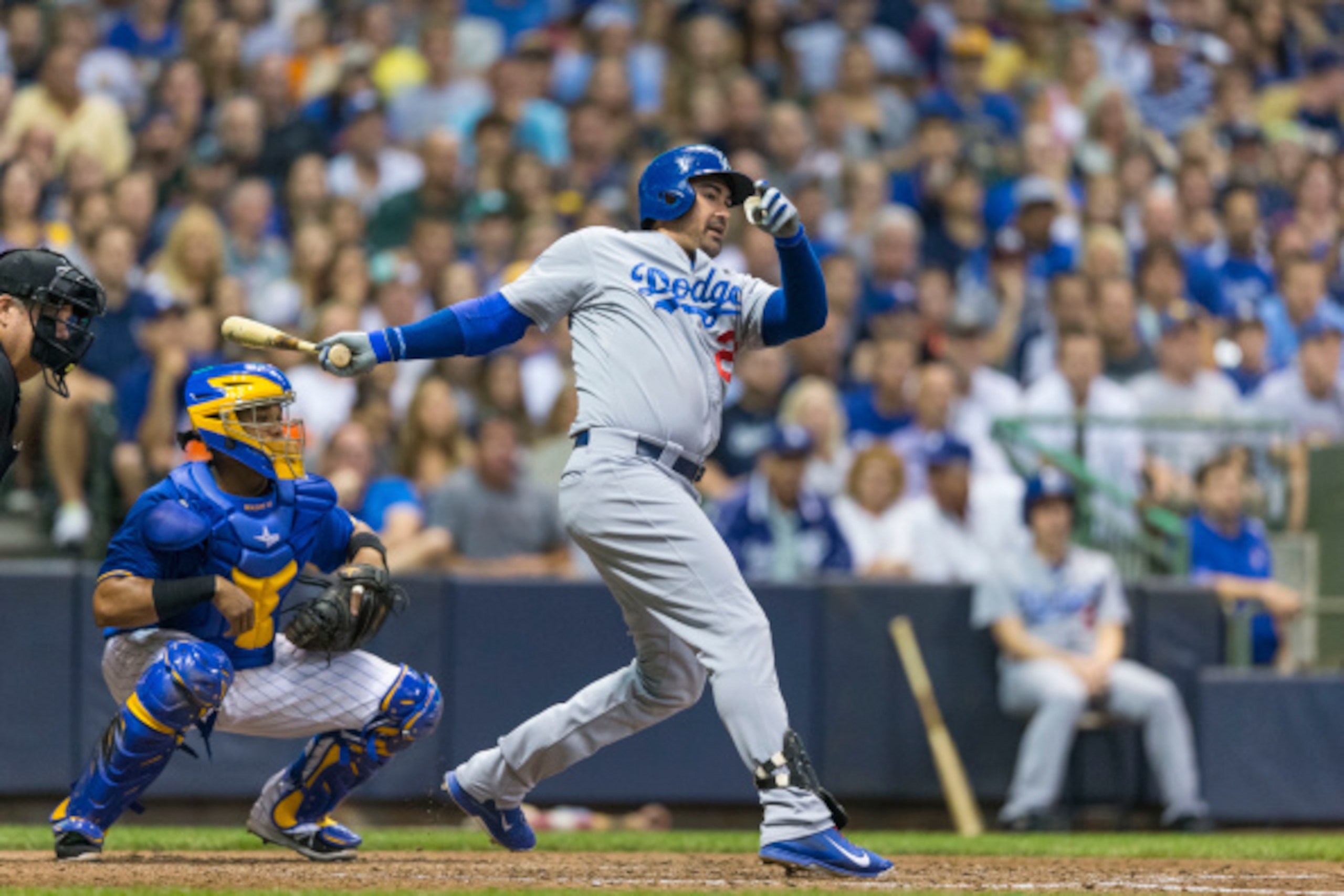
What did Gonzalez change, exactly? Shaikin summarized it by saying Gonzalez switched from "an upward swing that produces more power" to "a flatter swing that generates more line drives."
In other words, Gonzalez's shoulder issues forced a change in mechanics. It turns out this isn't unusual for hitters who suffer shoulder injuries, as Dan Farnsworth looked into a few examples at Hardball Times last September and found a recurring theme of altered swing mechanics.
On a related note, it's not unusual for a hitter to struggle with his power after dealing with shoulder problems. Matt Kemp has only recently rediscovered his power after having left shoulder surgery in 2012. Hanley Ramirez's power has come and gone after left shoulder surgery in 2011. The same goes for Brian McCann's power after his right shoulder started acting up in 2012.
In light of all that, the primary victim of Hamilton's shoulder surgery could well be his power. Like the others, the shoulder in question is his lead shoulder. Like the others, this could force some compensation that restricts his ability to drive the ball.
Question is: How worried should the Angels be about this?
Pretty worried. After all, Hamilton's power has already taken a turn for the worse since he's been an Angel:

The 2009 season notwithstanding, Hamilton's power was well above average in his six seasons with the Cincinnati Reds and Texas Rangers. But in the last two, his power has begun flirting with the league average.
This isn't a mirage. According to BaseballHeatMaps.com, the average distance of Hamilton's fly balls has declined like so:
- 2007-2012: 295.9 FT
- 2013: 273.5 FT
- 2014: 275.6 FT
Driving this decline in power is likely a combination of things. The move from Texas to Anaheim probably hasn't helped. Neither has Hamilton's advancing age, and he's also had to deal with other injuries. He was hit with his usual array of nagging injuries in 2013 and thumb and calf injuries in addition to his shoulder injury in 2014.
Whatever the case, it's not a good look for a hitter who's looking at a real challenge in coming back from surgery on his lead shoulder. If the surgery forces Hamilton to compensate and cuts his power even further, where there was once elite power will likely be below-average power.
This isn't a happy thought for the Angels. Because if you take away Hamilton's power, there's not much left.
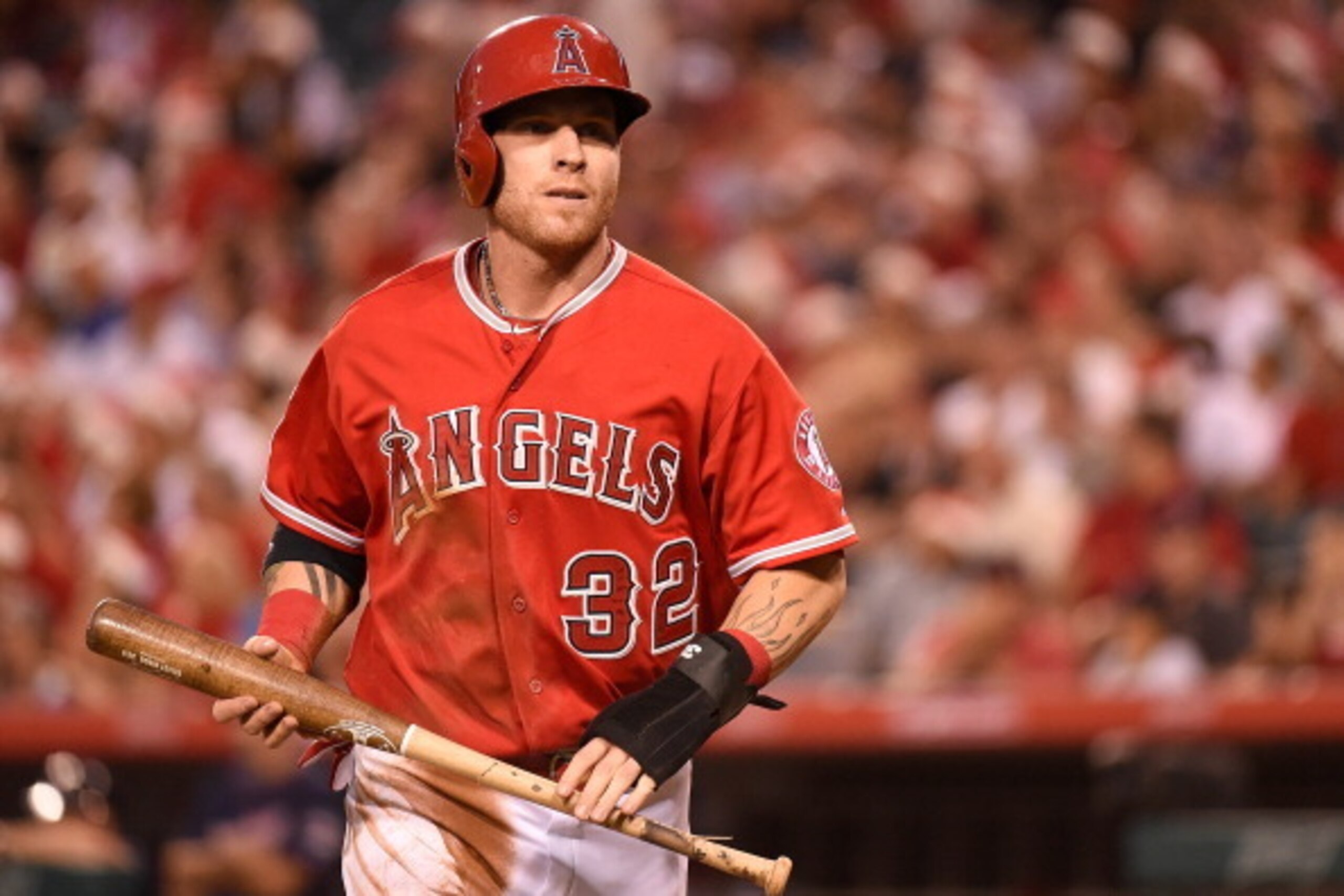
If Hamilton's power dips below average, his best hope of being a productive hitter will be swapping slugging percentage for on-base percentage. That is, a switch from a hitter who's powerful to a hitter who's at least consistent.
Knowing what we know about his approach these days, this isn't the most likely of scenarios.
Though it looks like Hamilton has only been declining since the end of 2012, I noted in a recent piece how he's really been declining since early in the 2012 season. He hit .313 with a .371 OBP in his first 2,658 plate appearances, and just .254 with a .319 OBP in 1,510 plate appearances since.
In addition to declining power in the last two seasons, what's been killing Hamilton's consistency has been obvious. He's faced a decrease in fastballs, and his inability to adjust has created an increasingly free-swinging and whiff-happy approach.
As a result, Hamilton's walk rate has remained stuck right around average while his strikeout rate has skyrocketed. When you're a hitter like that, you can't waste balls in play. They must produce results.
Because a loss of power would make that difficult, virtually Hamilton's only hope of being productive would be to become a high-BABIP (Batting Average on Balls In Play) hitter. And while the good news is that he was one of those in 2014, the bad news is that he generally hasn't been one in his career.
In short, Hamilton being a good hitter even despite a loss of power is hard to imagine. And without good hitting, a player's ability to carry his own weight comes down to his baserunning, defense and durability.
Unfortunately, Hamilton's outlooks in those departments aren't any sunnier. He's never been a big base stealer. The defensive metrics confirm what the eyes say about him being a subpar fielder. A lack of durability has been one of the defining qualities of his career, and that's more than likely not changing.
So the Angels better hope Hamilton can somehow overcome his shoulder surgery without losing any power. If he can keep his power, he can help them by at least continuing to hit the ball hard on occasion. With enough luck, a player like that can author star-level production.
But if Hamilton's power goes, his days as a star will go from being on life support to being dead and buried. Because once it's gone, the player who is Josh Hamilton will look absolutely nothing like the player who was Josh Hamilton.
Note: Stats courtesy of Baseball-Reference.com unless otherwise noted/linked.
If you want to talk baseball, hit me up on Twitter.

.jpg?w=2560 "Grading WWE Raw 🔠")


.jpg?w=2560 "Viral Rams Coach Vid 🖕")

.jpg?w=2560 "Injury-stricken Seahawks signing veteran RB")
