

Introducing the Atlanta Hawks' Fearsome Starting 5
With victories in 41 of their first 50 games, the Atlanta Hawks have been the toast of the NBA during the pre-All-Star-break portion of the 2014-15 season. Head coach Mike Budenholzer is the presumptive front-runner for Coach of the Year, the bench has largely impressed, and the starting five has done something never before seen in the history of the Association.
In November 2002, Steve Nash, Michael Finley and Dirk Nowitzki shared Player of the Month honors for the Dallas Mavericks. But these Hawks now have the first five-way tie, as Jeff Teague, Kyle Korver, DeMarre Carroll, Paul Millsap and Al Horford all split January's Player of the Month award in the Eastern Conference.
It was a fitting reward for a team that went 17-0 in the opening 31-day period of 2015—the first team in NBA history to accomplish such a feat. Sure, divvying out such an honor to five distinct players completely shatters precedent and may create a slippery slope down the road, but who exactly was going to be left out?
Each member of the Hawks' starting five has been integral to the success of the Hawks, even though there are more second-round picks than lottery selections contained in it. And if you've resisted getting to know a team that looks very much like a legitimate title contender—mediocre history of the franchise be damned—then it's time to get acquainted with each of the central figures.
Jeff Teague: The Spark
1 of 5
Position: PG
Age: 26
Drafted: No. 19 in 2009 by Atlanta Hawks
2014-15 Per-Game Stats: 17.0 points, 2.6 rebounds, 7.5 assists, 1.7 steals, 0.4 blocks, 21.9 PER
"I don't know what qualifies as a superstar but I know this: Nobody in the league can keep Jeff Teague in front of them. Nobody," Boston Celtics coach Brad Stevens said earlier this season, per ESPNBoston.com's Chris Forsberg.
The ball rarely sticks in the Atlanta offense. But when it does, it's largely because Teague is breaking down his defender off the bounce. It's tough enough for point guards to keep this sixth-year player from Wake Forest out of the paint, but if the Hawks manage to draw a switch on one of their many screens, it's just about game over.
The 26-year-old floor general has always possessed this type of game-changing speed, but what's made this campaign different than his past go-rounds is an increased ability to finish in traffic. Lanky defenders no longer deter him to the same extent, as he's honed all of his touch shots around the basket—floaters, runners, pull-up jumpers, you name it.
That's the primary reason he's knocked down 50.9 percent of his two-point attempts this season, as opposed to only 46.9 percent in 2013-14.
One of the commonly used slights against the Hawks during their remarkable run has been that they apparently don't possess one go-to guy who can get buckets when the offense breaks down in the playoffs. Except that's false, and it's Teague who disproves the notion.
Atlanta has continued to run unselfish offense when opponents keep things tight in the fourth quarter—which hasn't happened often in 2015—but the ball does stick slightly more in Teague's hands. According to NBA.com, he's produced 19.6 points and 8.7 assists per 36 minutes in clutch situations, doing so while shooting 46.7 percent from the field and 33.8 percent from beyond the arc.
Even within the metronomic flow of the Atlanta offense, Teague serves as the spark, regardless of how much time is left on the clock.
Kyle Korver: Gravity Personified
2 of 5
Position: SG
Age: 33
Drafted: No. 51 in 2003 by New Jersey Nets (draft-day move to Philadelphia 76ers)
2014-15 Per-Game Stats: 12.9 points, 4.2 rebounds, 2.8 assists, 0.7 steals, 0.4 blocks, 15.7 PER
Kyle Korver's shooting numbers are absolutely insane.
Through his first 49 appearances, the veteran sniper is hitting 51.7 percent of his looks from the field, a league-best 53.2 percent of his three-point tries and 92 percent of his attempts from the charity stripe. He's on pace to become the first qualified player in NBA history to earn membership to the 50/50/90 club, and that accomplishment can't possibly be sold short.
But what's even more impressive is it really doesn't even matter where the defender is. Per NBA.com, he's actually drilling 55.6 percent of his triples when a defender is within two feet. Even when his man is basically in his jersey, it hasn't mattered. Korver just focuses on the rim—the top of the rim, mind you—and lets the ball rip through the net.
That's actually only one of 20 keys to his deadly shot, as he explained to Jeff Zillgitt in a fantastic profile on USA Today:
"I'm not going to check every single one of them every time. There's a certain point, a certain feel I'm trying to get to every day. Some things, you do more naturally. Some things, I have to think about them. As I'm shooting, I have this list in the back of my head, and I know I'm not doing one or two of them. Once I feel I get all 20 of them clicking, then I'm going to have natural rhythm in my shot.
"
However, Korver does so much more than shoot.
He's constantly on the move without the ball, which compromises the entire focus of the opponent's defense. Few players in the league are better at intelligently using screens to find even the smallest modicum of space, and a tiny sliver of daylight is usually enough for Korver to catch, lean into his motion and let fly. But even if he doesn't get open, he uses his gravitational pull to open things up for his teammates.
No defender is ever going to leave Korver wide open, so help defense from that mark simply isn't an option. In fact, everyone tends to shift over to his side of the court, which creates plenty of options for everyone else. It's one of many reasons why, per Basketball-Reference.com, the Hawks score 13.7 additional points per 100 possessions when he's playing.
Korver isn't just a gravitational field unto himself, though. He's a savvy screener who's become a master at pinning down and taking two men out at once. He's a solid team defender and a relentless rebounder when the ball escapes the paint-bound trees. He's an underrated passer who's never afraid to take a deep outlet attempt or work the ball into the interior.
All of that pales in comparison to his shooting touch and ability to shape a defensive scheme, but let's not just forget about it.
DeMarre Carroll: Junkyard Dog
3 of 5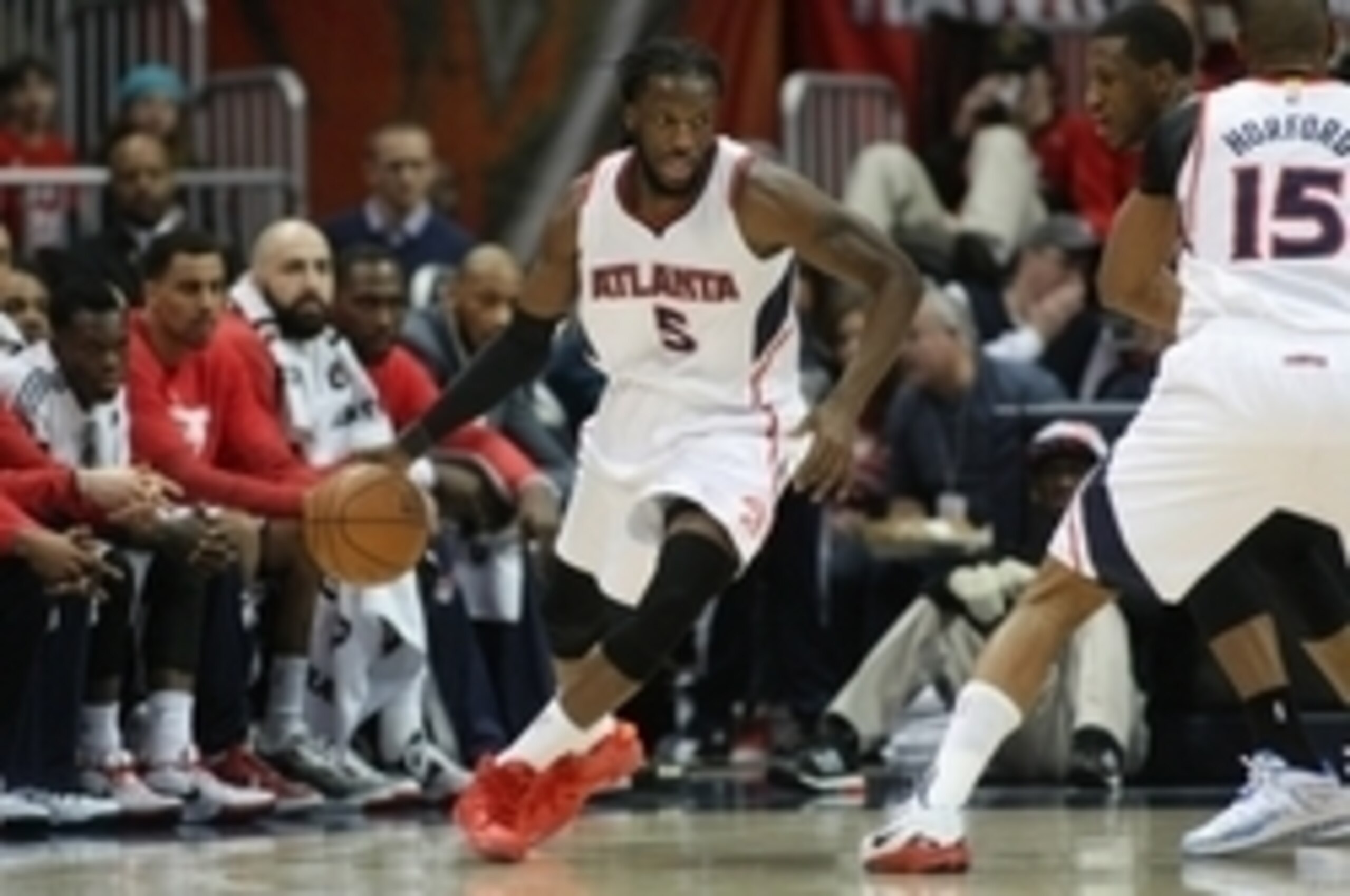
Position: SF
Age: 28
Drafted: No. 27 in 2009 by Memphis Grizzlies
2014-15 Per-Game Stats: 11.7 points, 5.2 rebounds, 1.5 assists, 1.2 steals, 0.2 blocks, 14.2 PER
"Junkyard Dog" couldn't be a more applicable nickname for a small forward who has constantly used his toughness and unrelenting passion to overcome the odds. After all, DeMarre Carroll absolutely shouldn't be in this position, as his life has been filled with one obstacle after another.
Bleacher Report's Jared Zwerling, leading off a must-read story from the 28-year-old himself, explains further:
"This starting small forward traveled the kind of road to NBA success few have experienced. The personal challenges he's had to face still linger in his mind, from the pain of his oldest brother's passing to being shot to his diagnosis of a rare form of liver disease that might require a transplant years from now. And then there was the numbers game in the NBA that saw him waived several times while playing for five different teams in five seasons.
"
Through it all, Carroll has remained resilient. He's fought for every skill he has in his arsenal, and the Hawks are now giving him the perfect opportunity to put them all together.
Three of Atlanta's starters will be going to New York City as All-Stars. Korver may end up joining them if Dwyane Wade can't play. At the very least, he'll always be considered a 2015 snub. But Carroll was never in the discussion for All-Star consideration.
"I know what got me here basketball-wise," he wrote, via Zwerling. "It's playing defense and being the 'Junkyard Dog,' and I think if I can keep adding on to that, I can have a long, successful career."
Well, this campaign has seen him add to it.
Carroll is one of the team's best perimeter defenders, even if his on/off numbers don't reflect that due to the long-armed presences of Thabo Sefolosha and Kent Bazemore off the bench. He's willing to switch on screens and never seems intimidated when facing off with a bigger-name player. But he's also doing far more than playing hard-nosed defense.
The small forward is taking a career-high 4.3 three-point attempts per game, and he's drilling 40 percent of them, which allows him to serve as yet another floor-spacing threat. He's putting the ball on the floor and working his way to the charity stripe more often than ever before. And perhaps most importantly, he never seems to make mistakes, recording only 0.9 turnovers during the average contest.
Carroll's game will never blow you away, and he certainly doesn't fill up the box score very often. But the Junkyard Dog of the Hawks no longer only specializes in just defense. There's a reason he was honored along with his fellow starters, even if they are more glamorous players.
Actually, there are plenty of reasons.


Paul Millsap: The Mold Breaker
4 of 5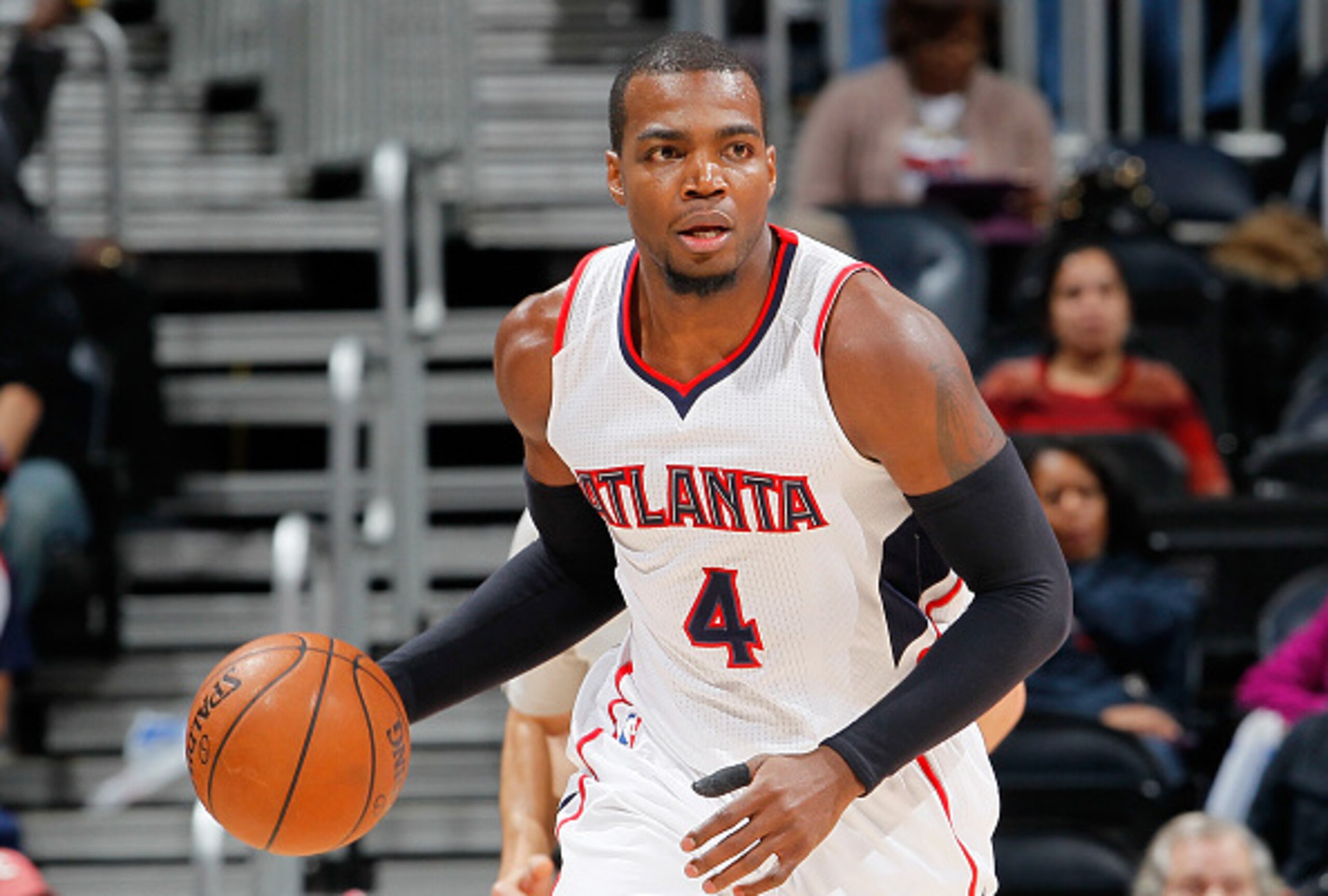
Position: PF
Age: 29
Drafted: No. 47 in 2006 by Utah Jazz
2014-15 Per-Game Stats: 17.1 points, 8.0 rebounds, 3.0 assists, 1.8 steals, 0.9 blocks, 20.1 PER
Paul Millsap has never been one for tradition on the basketball court.
Undersized throughout his playing days, he refused to let his height slow him down while going to work at Louisiana Tech, and the 6'8" little big man ended up leading the NCAA in rebounds per game for three consecutive seasons. That's especially notable since he only played collegiate ball for three years. After making his way to the NBA as a second-round pick, he slowly turned into a high-quality asset for the Utah Jazz.
Now with the Atlanta Hawks, he's a star—a two-time All-Star, in fact—who continues to break the mold. But it's no longer because of his height.
Millsap doesn't have a singular role on the Hawks. Whatever defenses plan for him that night, he will alter his playing style and attack in a way that forces mid-game adjustments by the opposition.
If the defense gives him the baseline, he's more than capable of bouncing along underneath the basket, running from one corner to another and waiting for put-back opportunities and interior feeds. If he's forced out to the perimeter, he can torture defenses with his mid-range jumpers and three-point stroke. In fact, he's hit 36.4 percent of his triples this year, as well as 45.6 percent of his two-point attempts from beyond 16 feet, per NBA.com.
And when the Atlanta offense breaks down or he's squaring off against a slow-footed frontcourt player, he can create his own shots off the dribble. Millsap has always been a face-up player from the wings and elbows, but he's been particularly successful this year. Even though opponents know it's coming, it's been rather difficult to stop him from breaking down a defense and getting to his bread-and-butter: a touch shot from the right block while he's on the move.
One of the deadliest up-fakes in the Association and the mere threat of his perimeter jumper have only aided his driving ability, as defenders are basically forced to play him tight and bite on those pumps, leaving them even more prone to blow-bys.
"Millsap isn't Jeff Teague-quick, but he's swift for a power forward," writes Mark Bradley for The Atlanta Journal-Constitution. "He has a first step that seems to cover 10 feet, and when those 253 pounds are put in motion, the man is a load. He can get from the 3-point arc to the hoop as fast as any power forward in the sport, and therein hangs a tale."
Al Horford: Super Glue
5 of 5
Position: C
Age: 28
Drafted: No. 3 in 2007 by Atlanta Hawks
2014-15 Per-Game Stats: 15.5 points, 7.1 rebounds, 3.3 assists, 0.8 steals, 1.4 blocks, 21.9 PER
Typically, functioning as a proverbial glue guy and being a star player are mutually exclusive roles. But that's not exactly the case for Al Horford, who has been the lynchpin of the team with the NBA's second-best record.
So let's call him "Super Glue." The normal variety simply won't cut it here.
Horford may not put up superstar numbers, as he's perfectly content to do the little things—pin-down screens to free shooters, perfect rotations on defense that lead to ill-advised kick-out passes, etc. But the impact he has on this Atlanta squad would make some household names rather jealous.
With a wonky-looking mid-range jumper that sees him cock out his left elbow and place that hand on the very top of the ball, the 28-year-old is a tremendous floor-spacing threat. His range doesn't extend out to three-point range, where he's gone 8-of-24 this season, but defenses simply can't leave him alone by the elbows.
If they do, the sweet sound of a swish will soon be ringing through their ears, almost without fail. Per NBA.com, Horford has knocked down 59.2 percent of his two-point attempts when the closest defender isn't within six feet. And somehow, that type of shot is still occurring 3.7 times per game.
The big man is also a tough interior player who's willing to use his strength to his advantage. He doesn't spend an inordinate amount of time in the paint, but he typically makes those moments count and isn't afraid to follow up a miss with a relentless pursuit of the offensive board.
Add in some fantastic passing that allows him to serve as one of Mike Budenholzer's hubs, and you have the makings of a rather complete player on the offensive end.
And defensively, Horford has been just as valuable.
Though he's not a shot-swatting athletic presence on the interior who specializes in rim protection, the Florida product always seems to make the right decisions and possesses a solid knack for putting his hands in effective places. He's one of only 11 qualified players averaging at least 0.8 steals and 1.4 blocks per game, and his versatility and quick feet allow him to guard all types of big men.
"Can they win the East? Probably not, but they can be a factor in the league and get to the Eastern Conference semifinals. They have a nice young point guard, a shooter and one of the top front-line tandems in the league. But the key to their entire team is Horford," an anonymous NBA executive told ESPN Insider Jeff Goodman three days before the Hawks rattled off the first of their 19 consecutive wins.
Oh, how wrong and right that executive was at the very same time.
Note: All stats, unless otherwise indicated, come from Basketball-Reference.com and are current heading into Feb. 5's games.

.jpg?w=2560 "Grading WWE Raw 🔠")

.jpg?w=2560 "Bijan's INSANE 1st Half 🤩")
.jpg?w=2560 "Viral Rams Coach Vid 🖕")
.jpg?w=2560 "Injury-stricken Seahawks signing veteran RB")

.jpg?w=2560 "2 NFL Officials Suspended")